THRASH (2026)
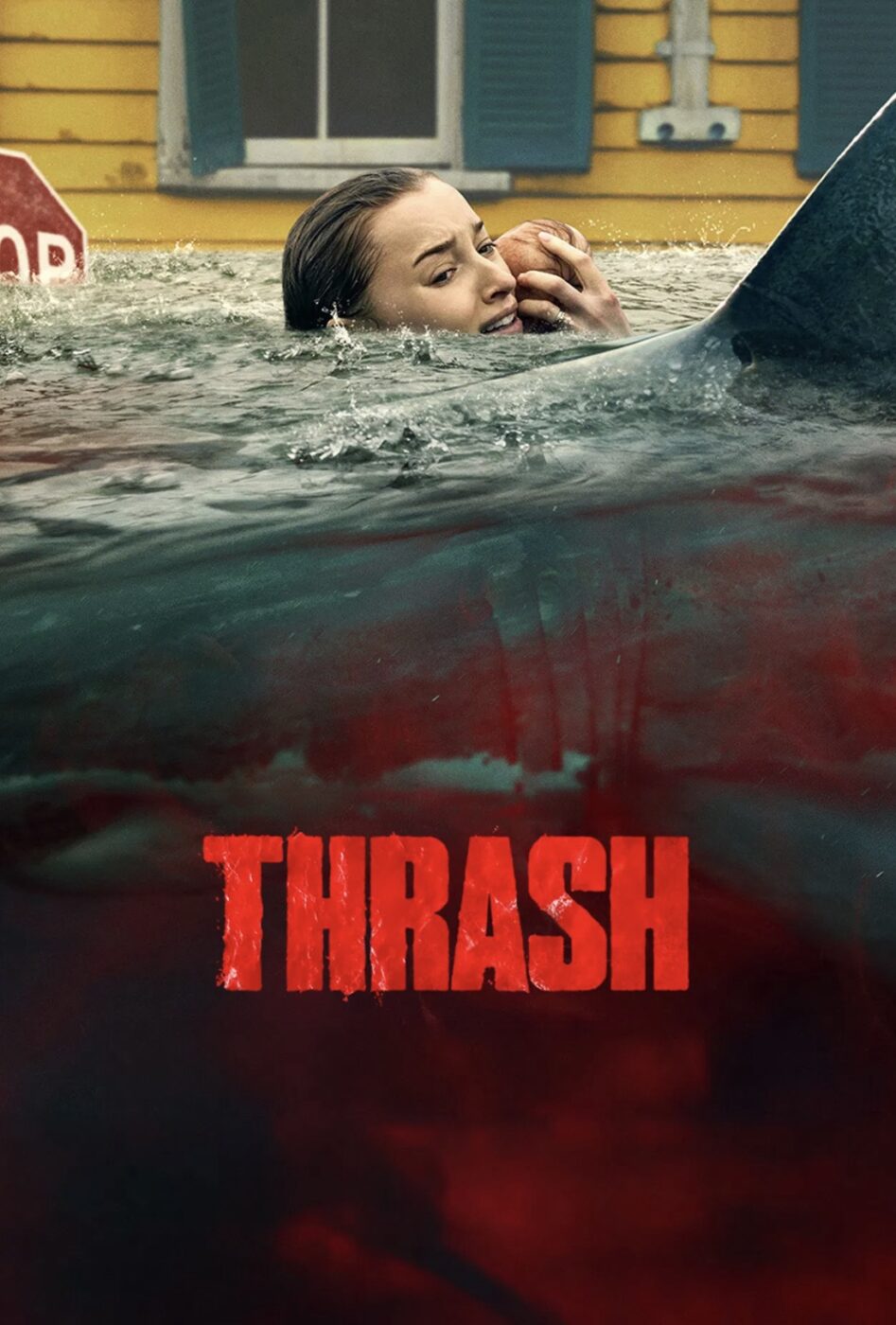
When a Category 5 hurricane decimates a coastal town, the storm surge brings devastation, chaos and something far more frightening: hungry sharks.

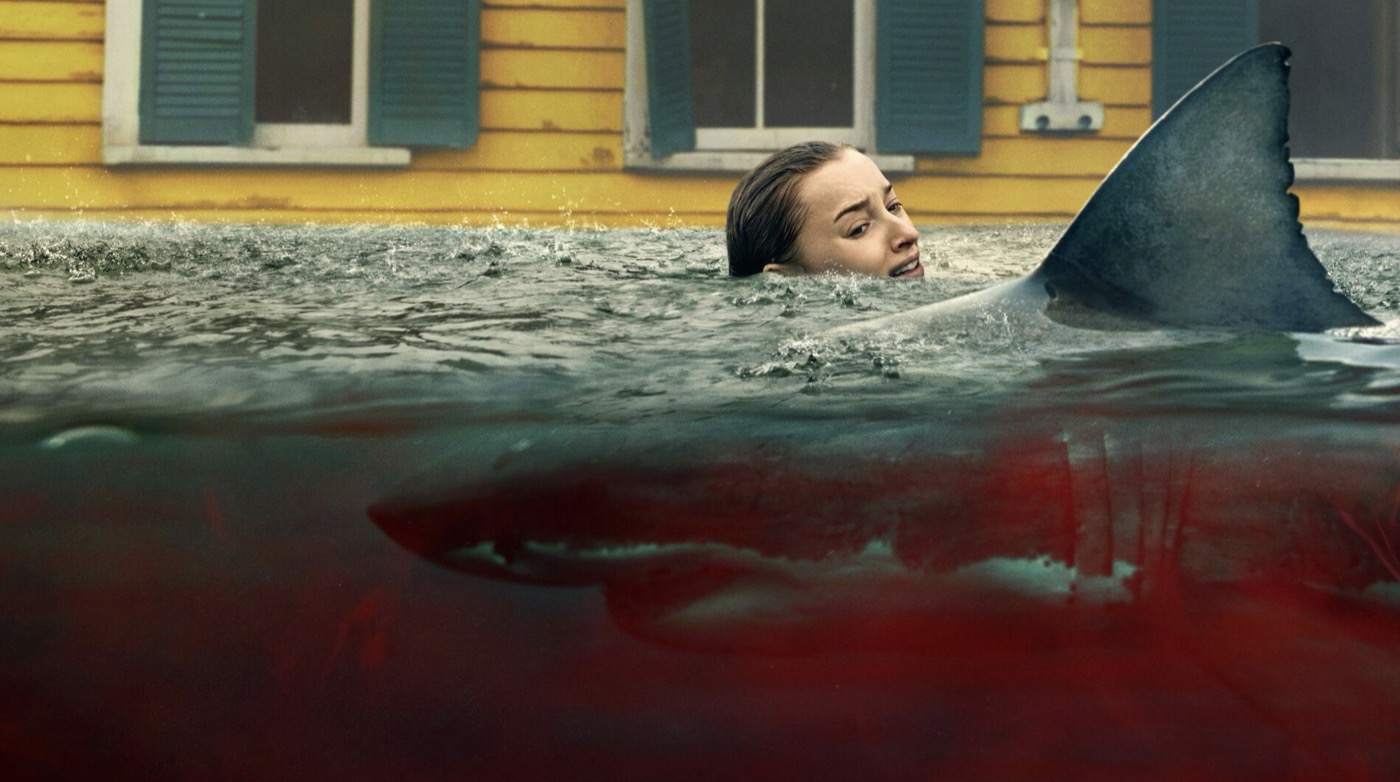

When a Category 5 hurricane decimates a coastal town, the storm surge brings devastation, chaos and something far more frightening: hungry sharks.
Disaster and “creature feature” movies, like most genre flicks, exist on a spectrum ranging from the excellent (Jaws) to the god-awful (San Andreas). With these two films serving as the anchoring outliers, the rest of the genre veers either towards Steven Spielberg’s masterpiece or towards Dwayne Johnson’s worst outing. Netflix’s Thrash sits almost dead centre, though it tilts slightly towards Jaws.
Like many modern disaster films, the opening crawl warns of the dangers of climate change. While this borders on cliché, quick cuts of anxious horses, lightning, and news clips create a tension that genuinely draws the viewer in.
The film follows three storylines, two of which overlap while one remains entirely unrooted from the rest of the plot. Dakota (Whitney Peak) is a young woman struggling with severe anxiety following the death of her mother, which has left her unable to leave the house. She becomes the sole hope for Lisa (Phoebe Dynevor), a pregnant woman trapped in a flooded car just outside Dakota’s home.
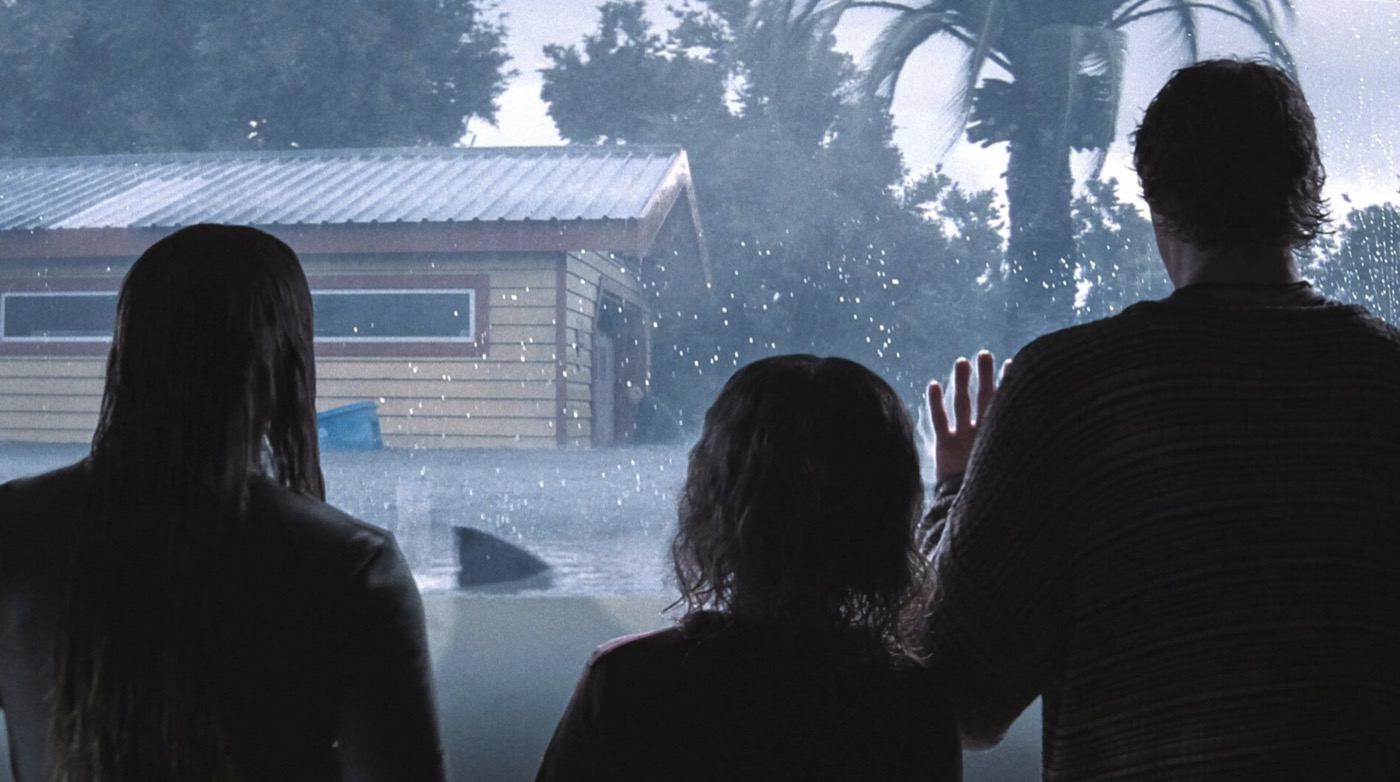
Meanwhile, Dakota’s uncle, Dale Edwards (Djimon Hounsou), a marine biologist studying Great Whites and Bull Sharks, attempts to navigate the flooded streets to reach his trapped niece.
The lone straggling plot involves three foster children—Dee (Alyla Browne), Ron (Stacy Clausen), and Will (Dante Ubaldi)—who are abandoned by their foster father, Bill Olson (Matt Nable), in a flooded house with at least three bull sharks.
It is interesting that while many contemporary creature features, such as Crawl (2019), have opted for a minimalist approach by focusing on a small handful of characters, Thrash returns to the multi-storyline structure of 1990s disaster epics. In many such films (San Andreas being the worst offender), a bloated cast is often the story’s undoing. Thrash largely avoids this trap. By sticking to three major storylines, the film maintains a tight focus while illustrating the plight of different characters.
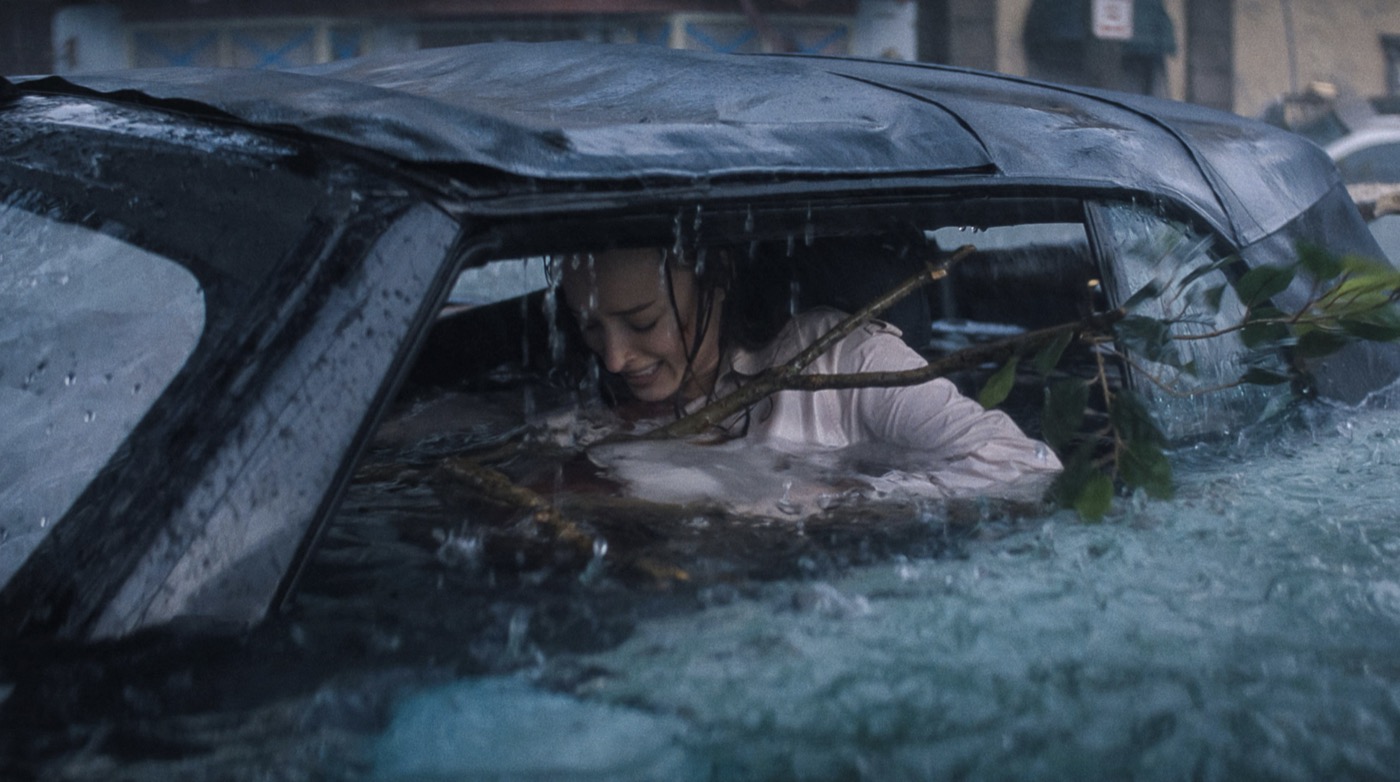
The convergence of the storylines involving the two women and the marine biologist provides a relatively satisfying arc. It also helps that all three plots involve interesting characters facing real stakes; at the very least, the audience isn’t bored by a weak subplot, a common flaw in lesser films.
That said, the foster siblings’ lack of connection to the primary storyline is disappointing and leaves a sense of incompletion. This is compounded by the fact that the children provide some of the film’s best performances, alongside the story’s only human villain.
While “evil foster parents” is a tired and occasionally damaging trope, Matt Nable’s performance as the overconfident and supremely selfish Bill Olson elevates the caricature. He is more than a “pure evil” stepfather; he portrays a man who genuinely believes he is more intelligent than everyone else, convinced that every decision he makes is correct. This nuance makes him far more loathsome than a traditional villain—so much so that when his character receives a surprise “encore”, it is welcomed by the viewer.
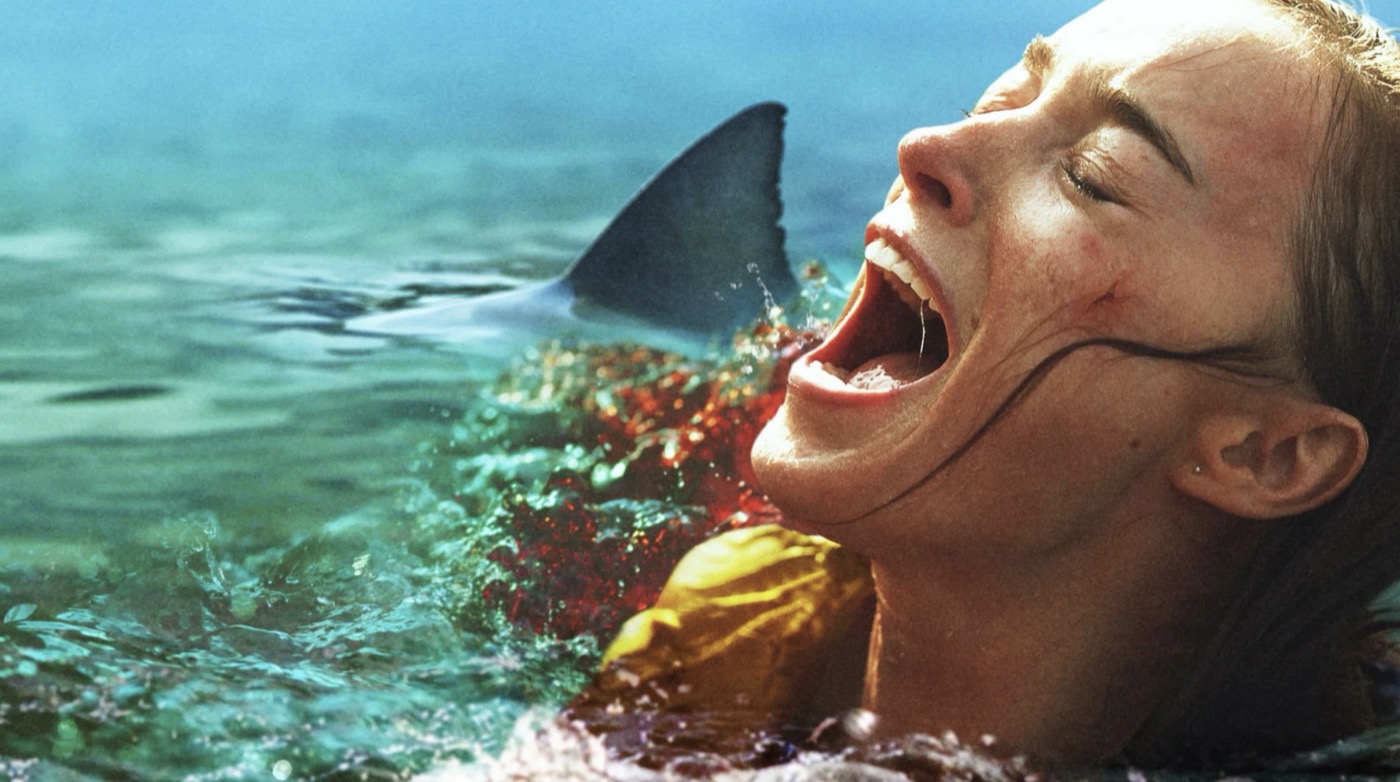
The film’s only other significant weakness is the lack of genuine peril regarding the sharks. While shark behaviour is discussed briefly by the marine biologist, these bull sharks fail to present the visceral, terrifying threat seen in Crawl or Jaws.
This isn’t due to the acting, which is genuinely good, nor the lack of shark sightings—they are shown frequently and with decent effects. Rather, the characters treat the predators as minor annoyances, viewing the hurricane flooding as the true existential threat. Consequently, while billed as a creature feature, the film feels much more like a traditional disaster movie.
It works well enough in that regard. However, when a film is hyped as a “monster-in-the-house” thriller, the lack of gravity given to the eponymous creatures is a letdown.

Those seeking jump scares or impressive creature effects will likely be disappointed. Much of the shark action occurs beneath the surface. While this was also true of Jaws, Steven Spielberg used clever camera angles, musical stings, and intense character reactions to make the audience terrified of an invisible threat. In Thrash, the music is serviceable but lackluster, and the camerawork—aside from the interesting opening montage—is largely run-of-the-mill. It functions, but it fails to evoke a physical reaction.
Ultimately, some strong writing and a steady pace keep the film from sinking into San Andreas territory. A standout monologue about hippos and bull sharks in Africa, delivered excellently by Djimon Hounsou, manages to educate the audience while providing insight into Dale’s character and subtly mocking Western stereotypes of African nations.
Overall, Thrash is a middling but entertaining addition to the streaming “airplane film” catalogue. Much like Carry On (2024) or The Woman in Cabin 10 (2025), it will keep passengers entertained until the next drinks service. Expecting anything more from streaming services seems a tall order, but on the bright side, Netflix’s output remains slightly higher quality than a poorly written action flick starring The Rock.
AUSTRALIA • USA | 2026 | 86 MINUTES | 2.39:1 | COLOUR | ENGLISH

writer & director: Tommy Wirkola.
starring: Phoebe Dynevor, Whitney Peak, Djimon Hounsou, Matt Nable, Andrew Lees & Alyla Brown.