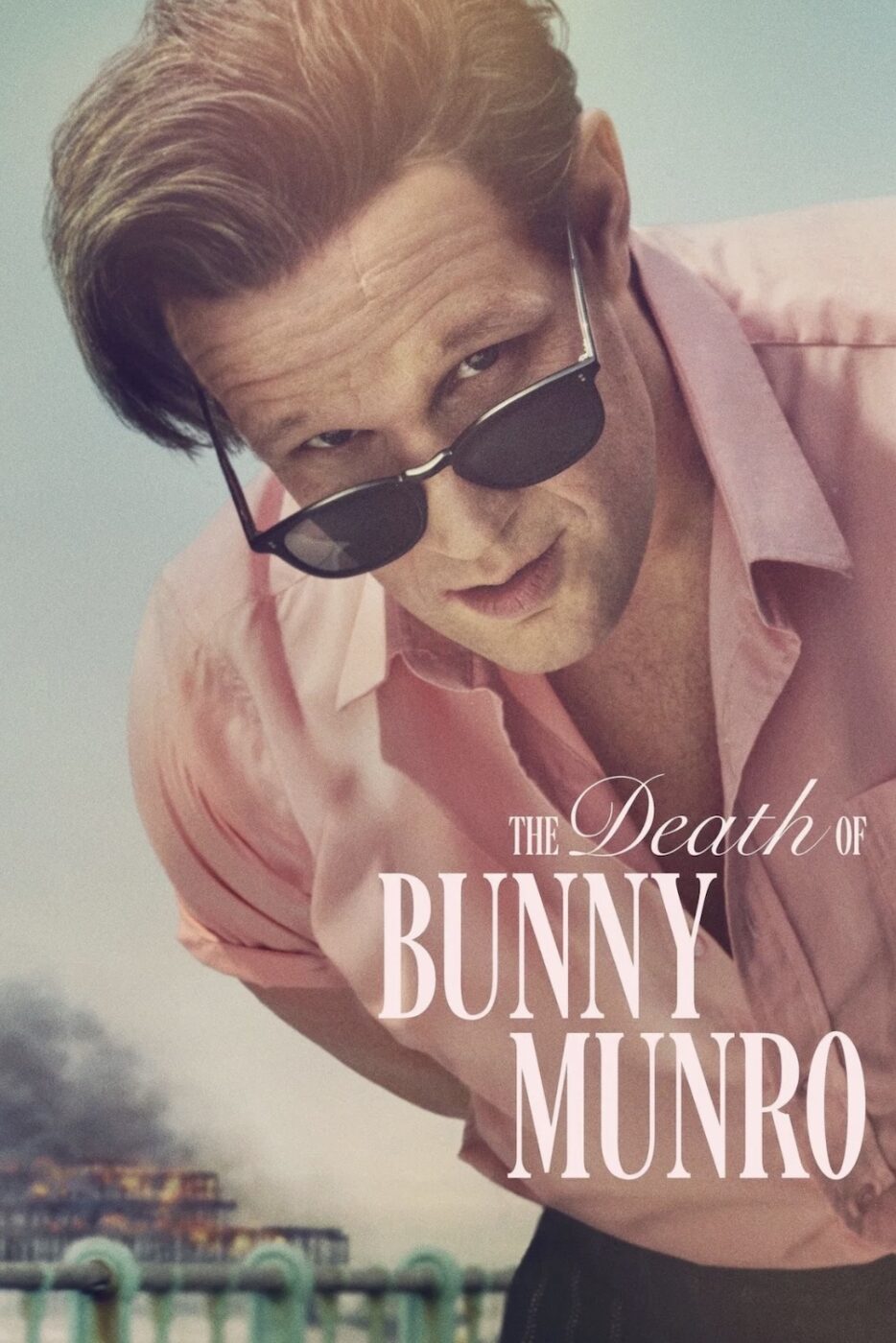
THE DEATH OF BUNNY MUNRO – Limited Series (2025)
A misogynistic middle-aged salesman takes his son on a road trip around Sussex after his wife's suicide, at the same time as a serial killer is prowling the area...


A misogynistic middle-aged salesman takes his son on a road trip around Sussex after his wife's suicide, at the same time as a serial killer is prowling the area...
Based on Nick Cave’s 2009 novel, The Death of Bunny Munro follows the titular sex-addicted, hedonistic travelling salesman as he struggles to look after his son in the face of a family tragedy. Sad and eccentric in equal measure, this adaptation faithfully captures the essence of the source material while toning down some of the less tasteful elements of Cave’s writing.
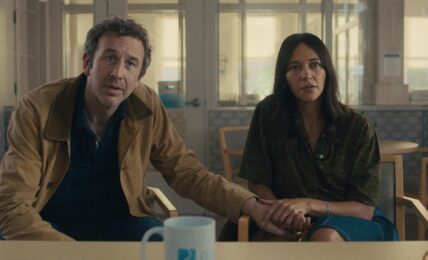
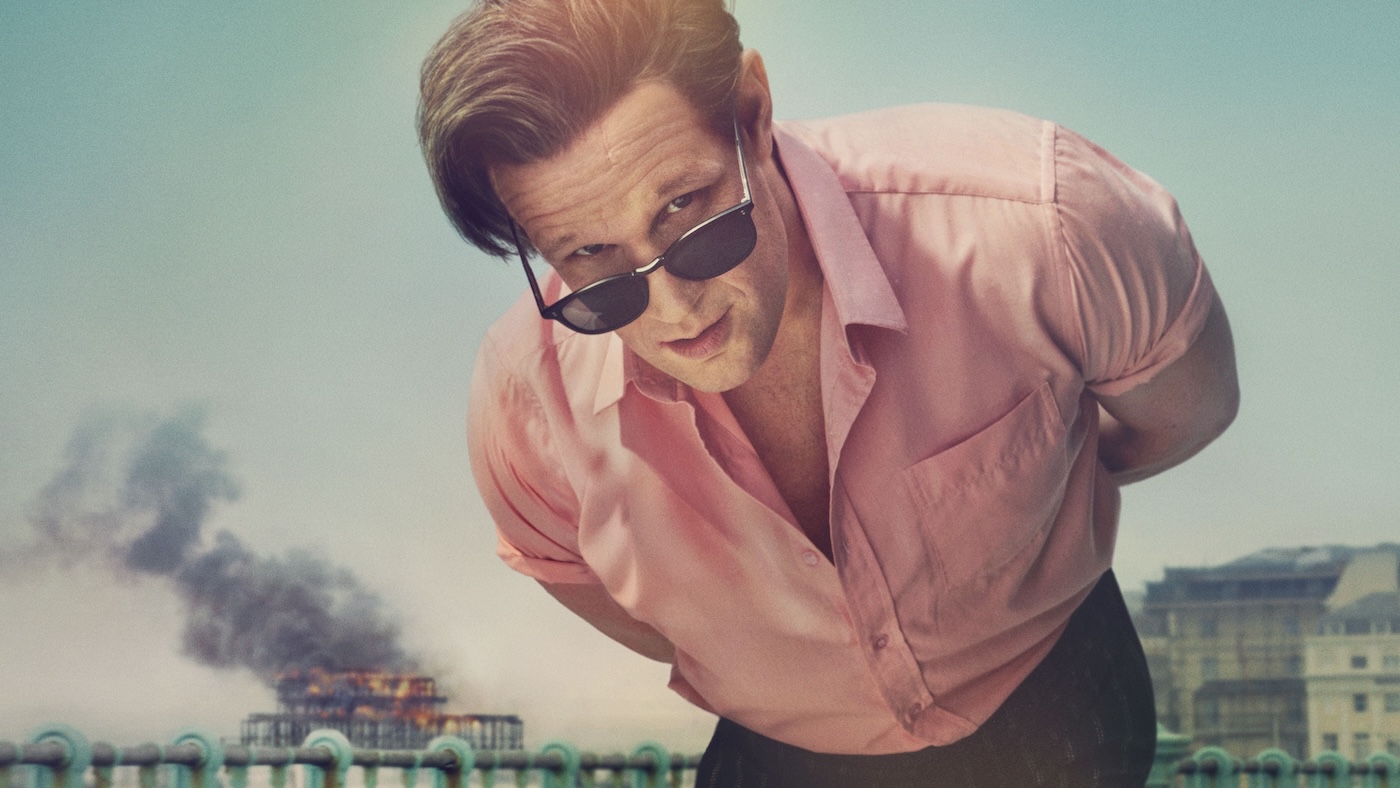
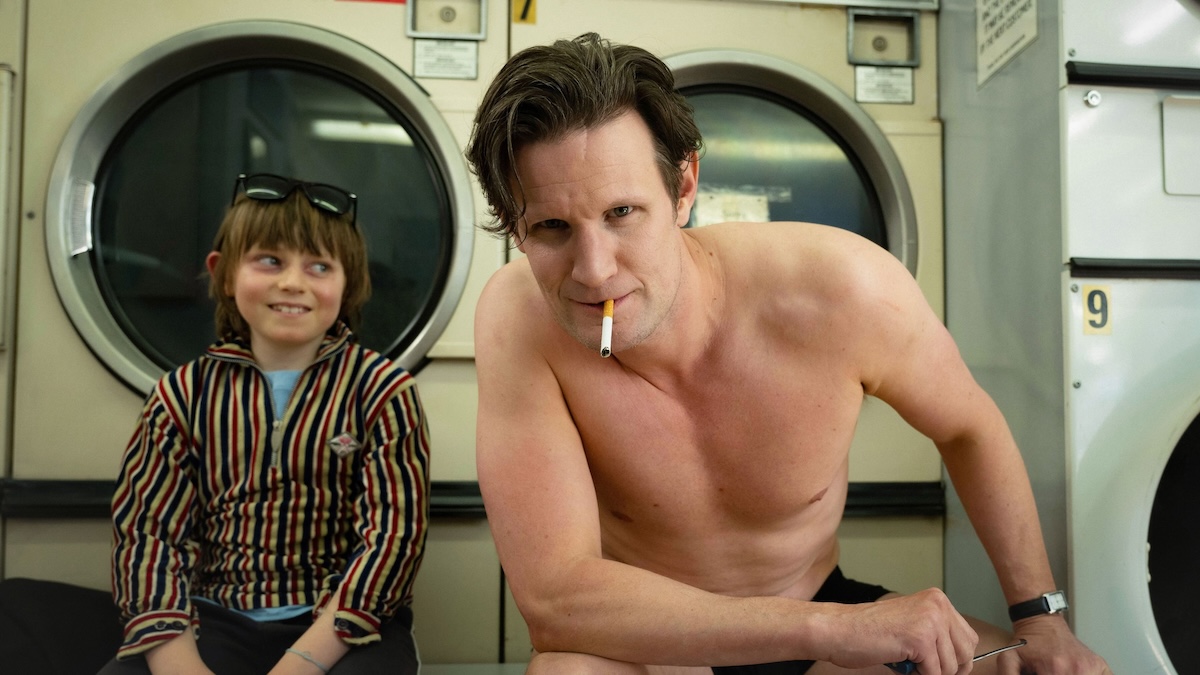
Bunny (Matt Smith) works as a door-to-door hand cream salesman, essentially acting as an escort to lonely housewives who just happen to also buy his lotions. He’s an absent father to nine-year-old Bunny Jr (newcomer Rafael Mathé), and an even worse husband to troubled wife Libby (Sarah Greene).
His life’s turned upside down when he comes home to find Libby has taken her own life. Initially, he seems strangely calm about the situation, but it triggers a self-destruct button so powerful that it doesn’t just take Bunny out, but hurts everyone around him. Over flashbacks throughout the six episodes, the family’s troubled history unfolds and makes their present even more tragic.
When social services arrive, Bunny Jr hasn’t been to school in three months, drugs litter the flat, and Bunny Sr’s current fling is walking around stark naked. It’s no surprise they decide he’s better removed from his father’s care. Unhappy with the decision, Bunny Sr kidnaps Bunny Jr and takes him on a road trip across the Brighton and Hove area. While the plot sounds like it could be a heart-warming father-son bonding trip, The Death of Bunny Munro is a bleak story about a man shaped by trauma and self-destruction.
Any demons that Bunny did have buried deep under his brash womanising persona come to the surface after Libby’s death. The once great salesman, who sold more than just lotions, can’t even sell himself anymore. Junior waits in the car as the lothario tries and mostly fails to flirt his way to sales, his act wearing thin as he struggles to hold back his grief.
Bunny Junior and Senior have a surprisingly sweet relationship. Even at his worst, Bunny genuinely cares for his son and offers the child more generosity than expected from someone in his state of mind. Smith and Mathé’s chemistry gives the terrible father something redeemable and makes his inevitable demise even more heart-breaking. Bunny’s relationship with his own hostile father (David Threlfall) is just one of the puzzle-pieces that put together a portrait of Bunny Munro.
In the background of their road trip is news that a serial killer dressed as the devil is roaming the area. Whether this is relevant or not depends on the audience’s personal reading of this story. Much of The Death of Bunny Munro is up for interpretation, forcing audiences to fill in the gaps of the Munro family’s life. Somehow, the saddest parts of this show are the silent gaps between Bunny’s bullish dialogue. It’s what the man can’t say, not the many things he does say.
Pete Jackson’s (Somewhere Boy) screenplay differs from the book, softening Bunny into a slightly more palatable version of the monster in Cave’s source material. Part of this softening is thanks to Smith’s more nuanced performance. The actor adds a level of pathos to the character, and while Bunny is no less despicable than on the page, he’s a bit more palatable despite his misogyny, selfishness and poor parenting. Smith is so naturally enigmatic that it’s impossible not to want the best for him, and Pete Jackson’s screenplays leans into this.
In general, the tone of The Death of Bunny Munro is much less shocking than the book. The sexual assault of an unconscious woman, which correctly earned outrage when the book was published, is sanitised in the series. When the media’s full of news about the atrocities men commit towards women, it’s not necessarily a bad thing that the male-on-female crime in the show is implied more than shown. Hiring a female director, Isabella Eklöf, was a wise choice considering the controversial line the book tread when it came to gender politics and sex.
The story becomes increasingly abstract as episodes pass. Reality and fiction begin to blur, and you’ll start questioning who and what was ever real. While the show can never recreate the sleazy internal monologue of the book, it effectively recreates the frayed psyche of a man on the edge.
What the show doesn’t say with words, it says with the music. Cave and his fellow Bad Seed Warren Ellis’ music score is a moody affair, adding a sombre tone to even the brightest scene. This score is paired with deep cuts from indie darlings and era-appropriate pop, circa 2003. An Elvis needle-drop in the last episode might be the saddest use of “Always On My Mind” since All Of Us Strangers (2023), while the use of Cave’s own “Bright Horses” does some emotional heavy-lifting in the show’s conclusion, but it’s no less earned by the audience.
Eklöf weaves a dreamlike atmosphere with her direction. No doubt inspired by films like Wild at Heart (1990), Natural Born Killers (1994), and Mulholland Drive (2001), the series is set in 2003 but has an ageless quality. Bunny could be a 1950s movie star, a 1960s pop star, or a 1970s sportsman, yet the world around him is distinctly early-21st-century. The way the show is shot makes the tale feel like a distant memory, hazy in places, and too bright in others. Bunny is disconcertingly a man out of time, dislodged from a specific time period. He lives in a retro world where this type of misogyny might be a little bit more accepted (in many ways Cave’s book was ahead of its time in its tackling of toxic masculinity).
The last two episodes pass like fever dreams. It won’t be a conclusion for everyone, but it’s a powerful piece of art. Smith commits fully to Bunny Munro’s weirdness and nastiness, making for an uncomfortable watch. While the resolution is inevitable, the way it gets there comes at you like a brick thrown.
Although advertised as a black comedy, The Death of Bunny Munro isn’t a laugh-out-loud jaunt. It’s a shocking and often difficult watch about grief, generational trauma and addiction. Held together by Matt Smith’s extraordinary performance, it’s a hallucinogenic journey into the disintegrating mind of a deeply unpleasant human being.
UK | 2025 | 6 EPISODES | 16:9 HD | COLOUR | ENGLISH

writer: Pete Jackson (based on the novel by Nick Cave).
director: Isabella Eklöf.
starring: Matt Smith, Rafael Mathé, Sarah Greene, Johann Myers, Robert Glenister, Alice Feetham, David Threlfall, Lindsay Duncan & Elizabeth Berrington.