CHRISTY (2025)
The life and the incredible career of Christy Martin, the most successful female boxer of the 1990s.


The life and the incredible career of Christy Martin, the most successful female boxer of the 1990s.
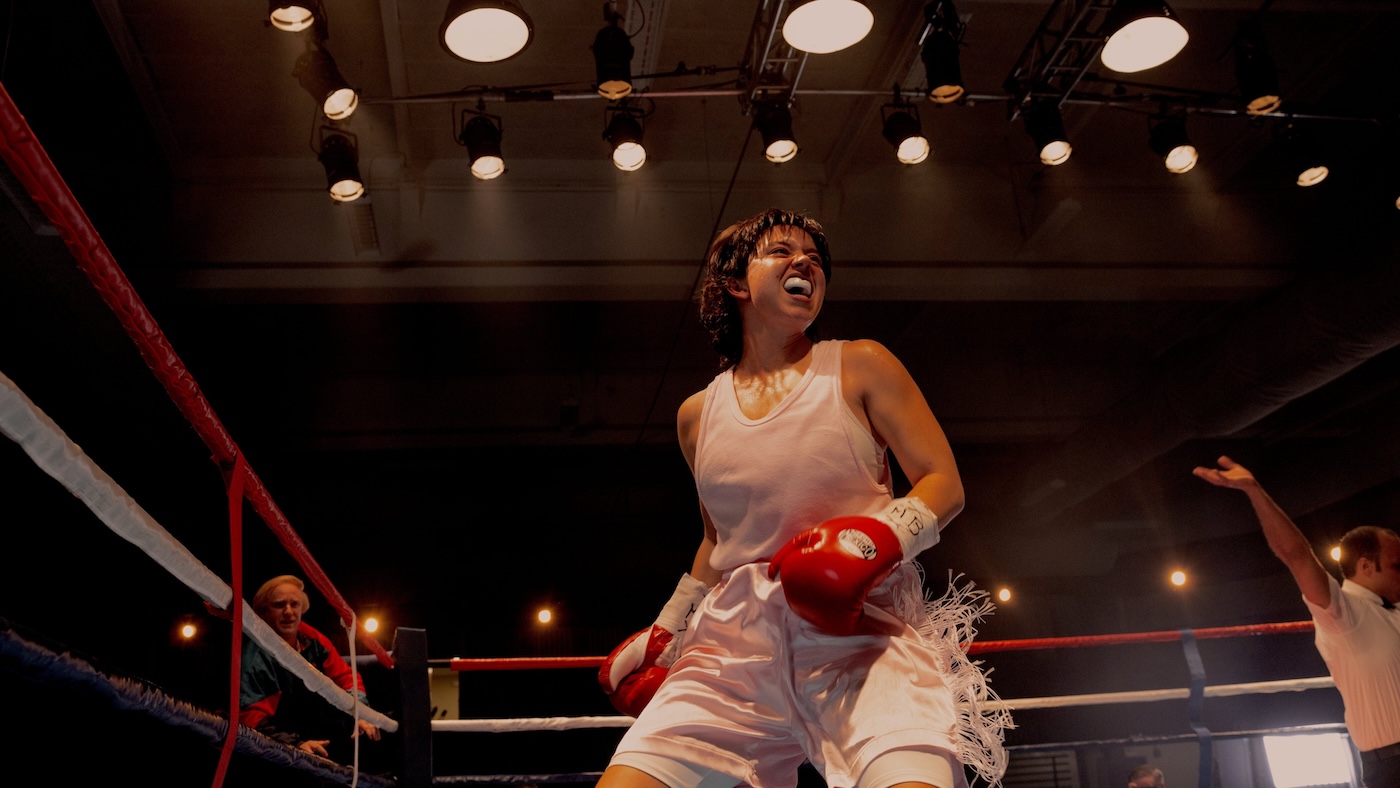
Boxing movies are almost always about more than just boxing. They use the ring as a metaphor for whatever personal struggle the athlete is going through. But in Christy, the control Christy Martin (Sydney Sweeney) shows in the ring and the control she has over her own life move in opposite directions. The stronger and more successful she becomes in boxing, the more trapped she becomes at home and in her personal life.
The film is based on the real-life story of Christy Martin, a female boxing pioneer who rose to fame in the 1990s. It covers a lot of ground—from her early days in rural West Virginia, to her first fights, to the height of her fame, and then through the darker parts of her life and career. It’s a movie about boxing, but it’s also about power, identity, and survival.
When we first meet Christy, she’s in her early-twenties, living at home with her family. Her parents are portrayed as stereotypical conservatives that are clearly uncomfortable with rumours circulating about Christy in a relationship with another woman. Her mother (Merritt Weaver) dials this persona up to an annoying degree as the film goes on. An aggressive athlete, Christy enters “toughman” contests and starts getting noticed for her violent style. That leads her to a boxing promoter, and eventually to Jim Martin (Ben Foster), the man who becomes both her trainer and her husband.
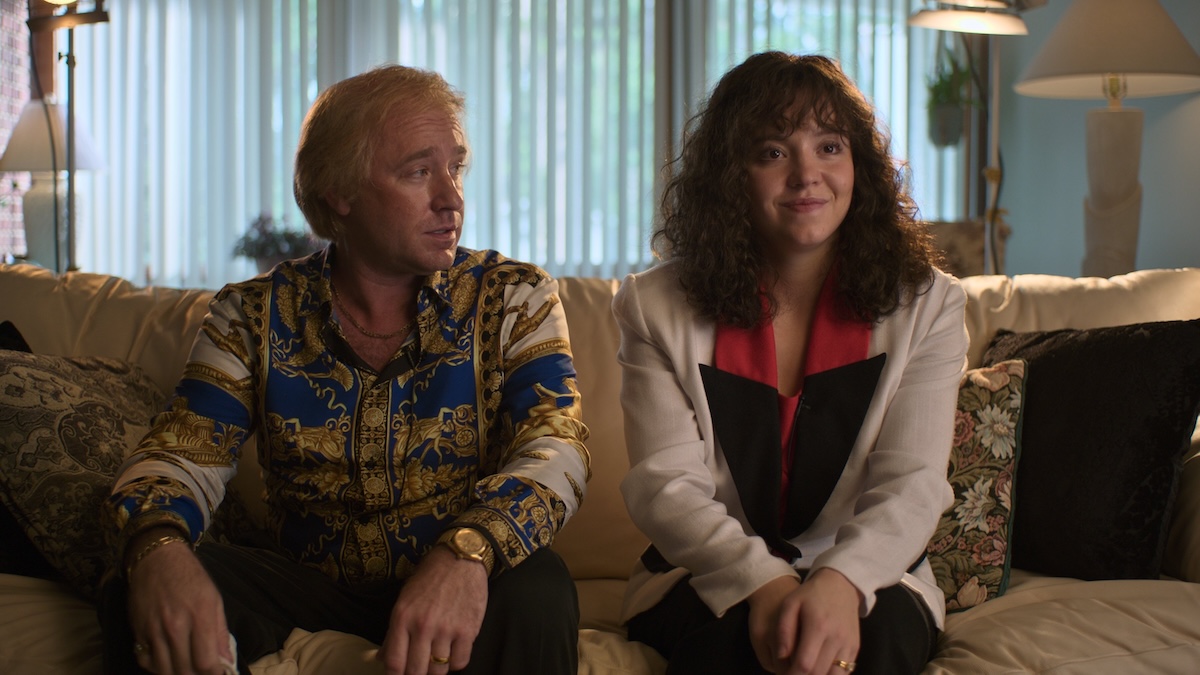
Their relationship is complicated from the beginning. The film does quick work to establish Jim as a villain. He goes from dismissing her outright, to hesitating to train a woman, to seeing a perfect opening to better himself at the expense of a young, talented, impressionable woman. He carefully and deviously takes over every part of her life—not only her training, but her finances and her own personal image. In an effort to make her more marketable, he buys her a pink personalized robe and matching boxing gloves and instructs her to grow her hair out. As she becomes more successful in the ring, she becomes less free in every other part of her life. She’s manipulated constantly and made to feel like her power only exists when someone else is managing it.
The movie doesn’t really stick to a traditional sports structure. It’s not a “one big match” type of story. There are a lot of boxing scenes throughout, but they don’t really build to a clear arc. Instead, the film focuses more on Christy’s personal life—her relationship with Jim, her closeted identity, and the way people around her either try to change her or ignore what’s happening.
There’s a lot of time covered in this film. It goes from the late-1980s all the way to 2010. Most of that time is told through montage, which makes the film feel kind of rushed. Some important events are sped through too quickly, and then other scenes feel like they last longer than they need to. There are several time jumps that aren’t always easy to follow, and while the title card explains what time the film is jumping to, narratively it feels like there’s no jump at all. It just picks right up with the story leaving the audience to wonder why seemingly nothing happened during that skipped time block.
As Christy gains enough stardom, she and Jim are able to open their own gym. It’s likely Jim’s exit plan for when there’s nothing of Christy’s career left to leech off of; perhaps there will be another star athlete he can do the same with. This introduces one of the more frustrating aspects of the movie. There are multiple staff members working closely with the couple and it’s painfully obvious that their relationship is one of abuse and control. The staff seems to go along with it or pretend not to notice, which is unfortunately not a stretch to believe—especially when it would require stepping up against their boss. It’s not right, but it’s realistic. What’s frustratingly unrealistic is that, in the end, Christy returns to these people as if nothing happened. That part doesn’t sit right. It feels like the movie lets those characters off the hook.
There are also moments where the movie’s messaging plays a bit heavy-handed. Some characters seem exaggerated in a way that almost takes away from the real pain of Christy’s story. Her mother is written in such a stereotypical way that it becomes easy to predict the words she’s about to speak. Much of Jim’s behaviour is so clearly toxic that it leaves zero space for complexity. Even Christy’s tamed demeanour becomes predictable.
To cap off a string of negatives, the fight choreography is probably the weakest part of the film. It’s not fair to compare a film about boxing to a real boxing match since the film is tasked with putting the audience in the ring with the fighters and sometimes gives the point of view of the fighter. But where this film falters is in making a modestly sports-savvy viewer believe these professionals would behave in this way in the ring. You’ll see one fighter leave their head wide open for several seconds as if they’re waiting for a hit. Too often, the fights look staged rather than competitive. It’s enough to pull any fan of the sport out of the moment. That’s especially disappointing for a movie about someone known for her real-life toughness and savviness in the ring.
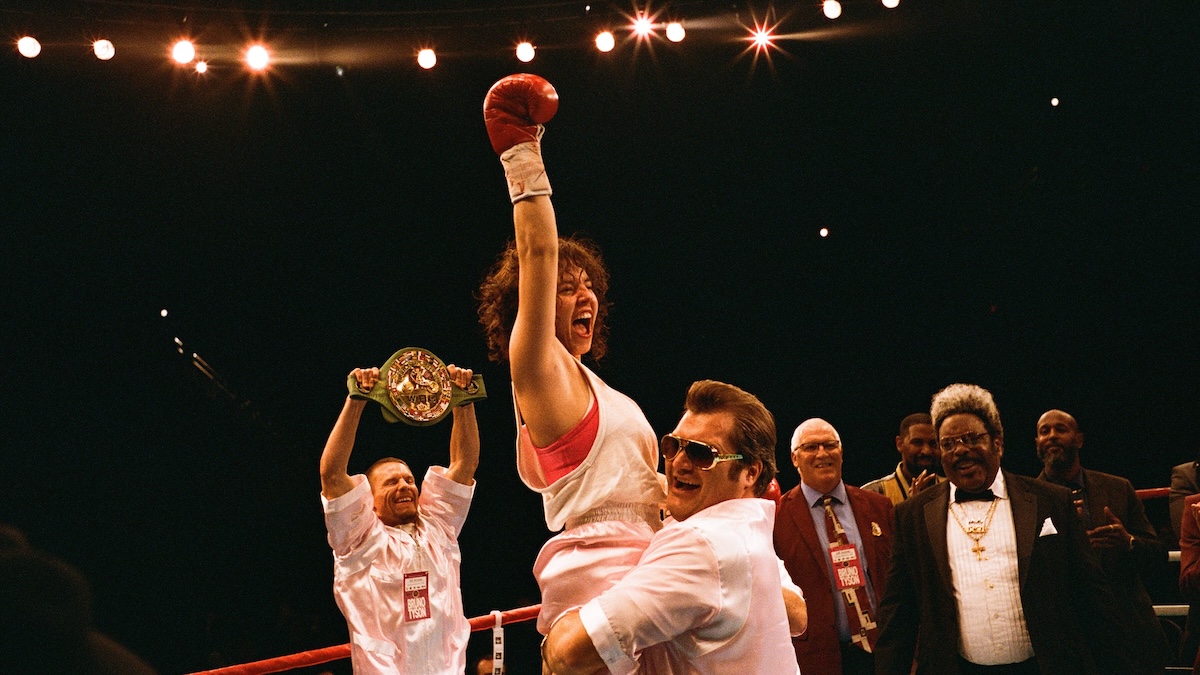
Sydney Sweeney (Immaculate) gives a strong performance. She’s in basically every scene, and she carries the emotional weight of the movie. There are moments where she really disappears into the role and moments where it still feels like you’re watching a famous actress act. Some people will bring baggage to her performance based on her public persona which is understandable. But in focusing on what is actually on screen, she does well, especially during the more physically distressing scenes.
Ben Foster is exactly as unlikable as he needs to be. His performance is intense and uncomfortable, which fits the role. He plays Jim as a pathetic, jealous, and fragile man who gets away with controlling someone much stronger than him. It’s likely a performance that won’t get much attention because of not only how blatant it is, but also because of how repulsive the character is.
An unexpected highlight of the film comes when Christy is introduced to Don King (Chad L. Coleman). Coleman offers a performance that’s loud and over-the-top, but so was King in his performative promoter years. It’s a fun performance that brings some flair to a part of the film that tries to start dragging narratively.
An undeniable strength of the film is Germain McMicking’s beautiful cinematography. McMicking has already shot two greats from earlier in the year in the horror thriller Together and the vastly overlooked Love Me. Here, he’s able to set the mood in each of Christy’s walk-ups to the ring. The first fight overlooks a dirt race track that follows Christy’s approach as the small crowd and makeshift ring slowly appear in the frame. Another approach plays with lighting in a way where Christy’s robe appears brown at first but as she moves closer to the ring, the lighting shifts revealing its actual pink colour. It’s a neat touch that can also be seen as symbolic of her personality having to shift as she enters the ring.
In the end, Christy is less about a boxing career and more about what it means to be trapped inside someone else’s idea of who you’re supposed to be. There’s pain and power in the story, but the movie doesn’t always know how to balance them. Still, it’s a story worth telling, even if the movie doesn’t always land the punch.
USA | 2025 | 135 MINUTES | 2.39:1 | COLOUR | ENGLISH


director: David Michôd.
writers: Mirrah Foulkes & David Michôd (story by Katherine Fugate).
starring: Sydney Sweeney, Ben Foster, Merritt Wever, Jess Gabor, Katy O’Brian & Chad L. Coleman.