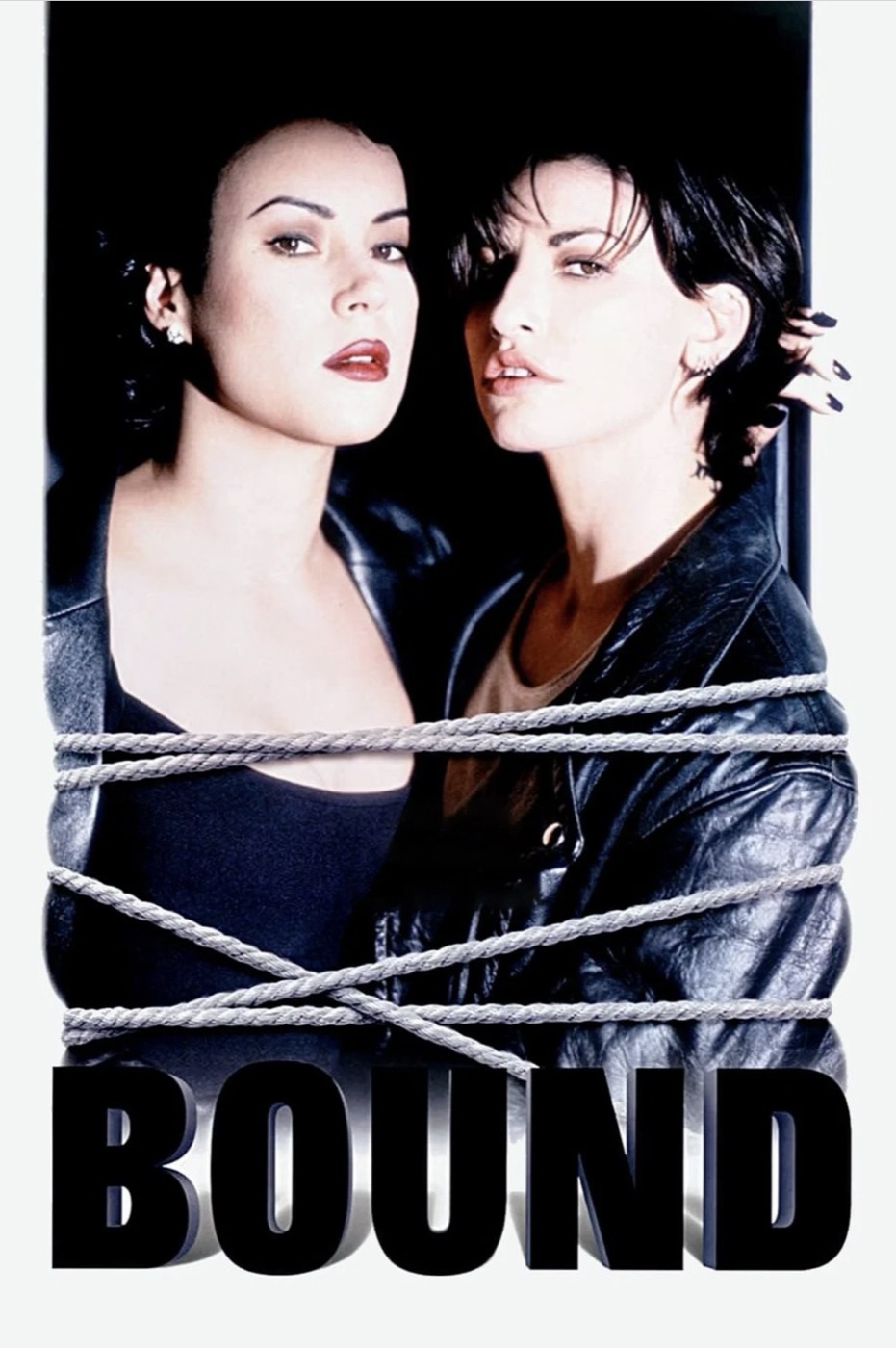
BOUND (1996)
Tough ex-con Corky and her lover Violet concoct a scheme to steal millions of stashed mob money and pin the blame on Violet's crooked boyfriend Caesar.

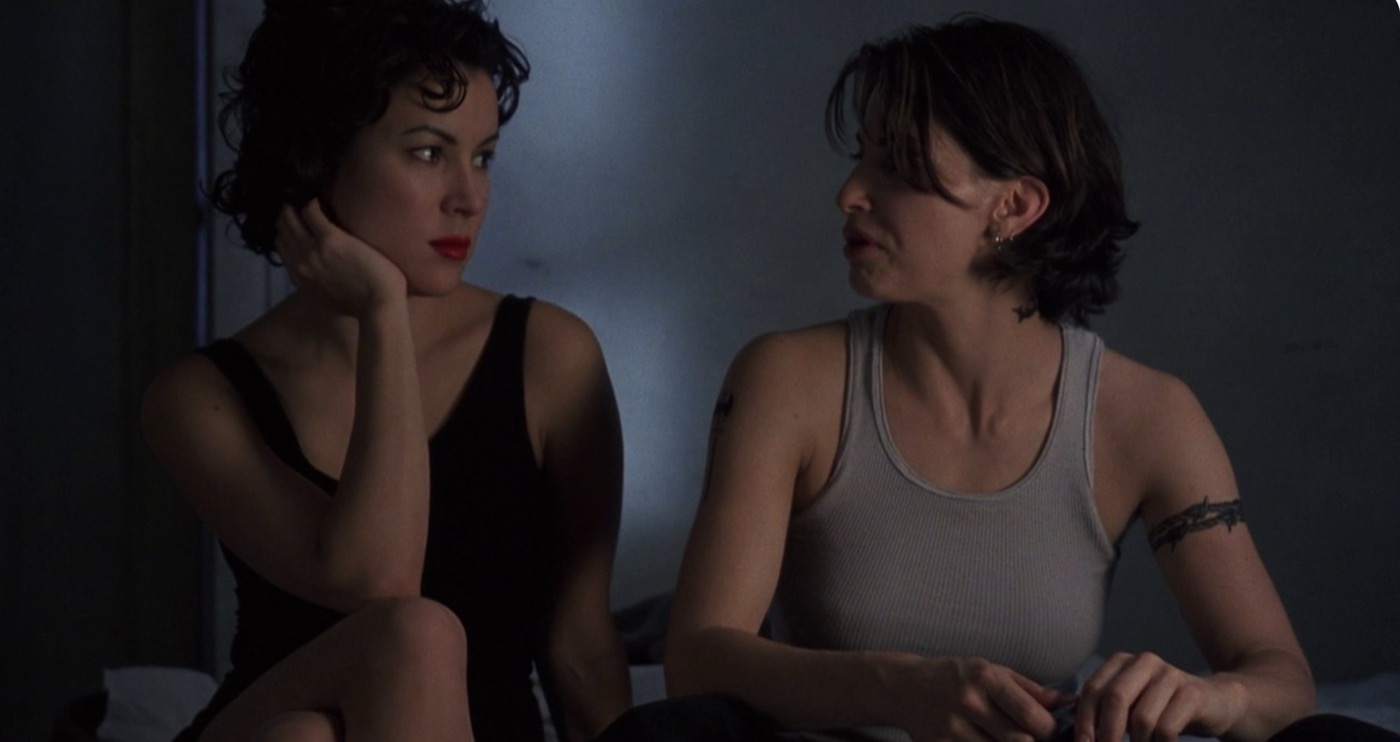

Tough ex-con Corky and her lover Violet concoct a scheme to steal millions of stashed mob money and pin the blame on Violet's crooked boyfriend Caesar.
A Coen brothers-esque film with welcome depictions of panicked, reckless people ensnaring themselves in inescapable traps, the Wachowskis’ debut feature Bound is a propulsive, sexy thriller. Yet while it is an impressively directed debut—with plenty of overhead shots depicting trapped characters alongside deadpan scenes that make frequent violence feel both brutal and comedic—it never quite captures the comi-tragic outlook of the Coens.
Outside of socio-political reasons to champion it, Bound is entertaining without amounting to anything profound. It’s particularly reminiscent of the Coens’ directorial debut Blood Simple (1984), a title that could double as a descriptor for both films given their frequent violence and straightforward plotting. There is a smallness to these worlds of gangsters,scheming, and duplicity that makes the storytelling potential feel limited from the start.
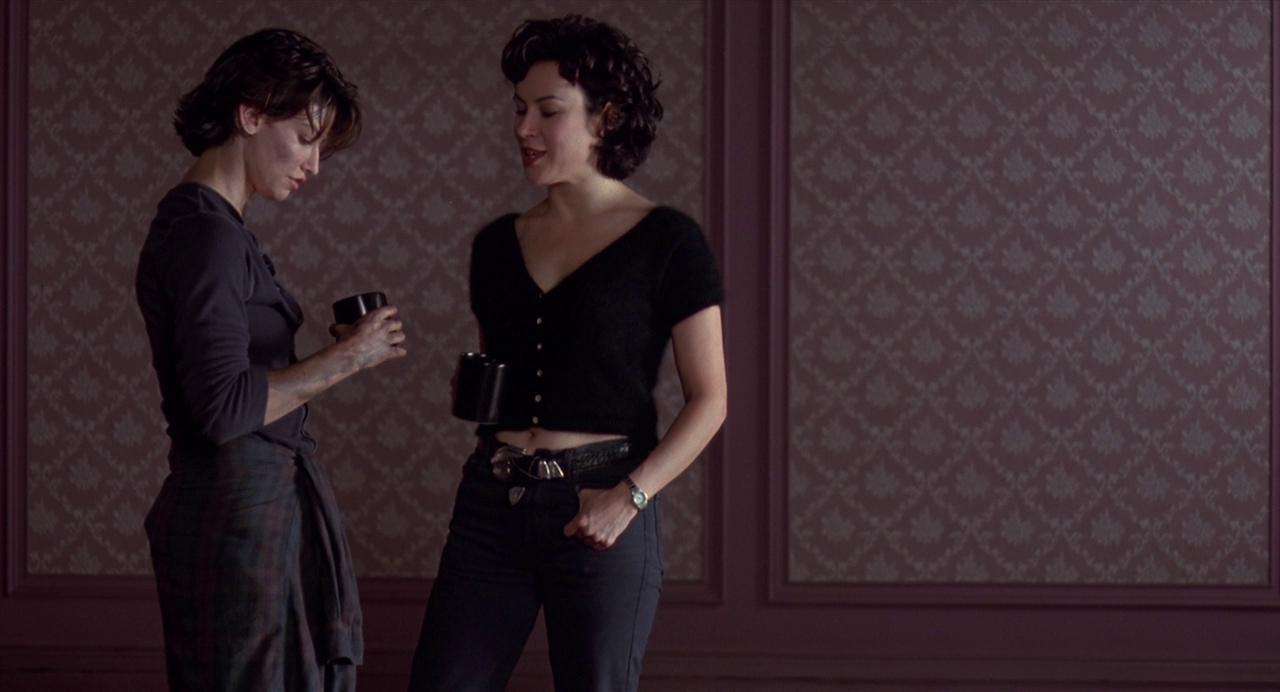
The opposite is true for the burgeoning relationship between ex-con Corky (Gina Gershon) and Violet (Jennifer Tilly), the mistress of Mafia money launderer Caesar (Joe Pantoliano). Opposites attract in the Wachowskis’ debut, where a grease-stained mechanic (Corky) finds herself in the crosshairs of a delicate waif (Violet). Both are seductive, but the narrative is far more enjoyable because Violet—so often the object of male attraction—makes the first move. She is lusted after and patronised all day, never given the chance to exercise autonomy. Bound finds its sensual footing in Violet’s desperate attempt to keep Corky in her and Caesar’s apartment just a little longer so they can explore one another.
It is easy to see how Bound inspired Rose Glass’s romantic thriller Love Lies Bleeding (2024), another lesbian romance pairing a muscular, tough woman with someone far more reserved. Glass’s film constantly expands and contracts,offering glimpses of freedom before ripping away the safety net. By contrast, Bound is surprisingly small-scale, setting almost the entire runtime within two adjoining apartments. This occurs despite the implication that Corky and Violet’s plan to steal $2M from Caesar will prompt an adrenaline-fuelled escape. Before they have even taken the first steps,you can already imagine the pair cruising through a flat, arid desert landscape in a battered truck, blood-stained bills fluttering in the air.
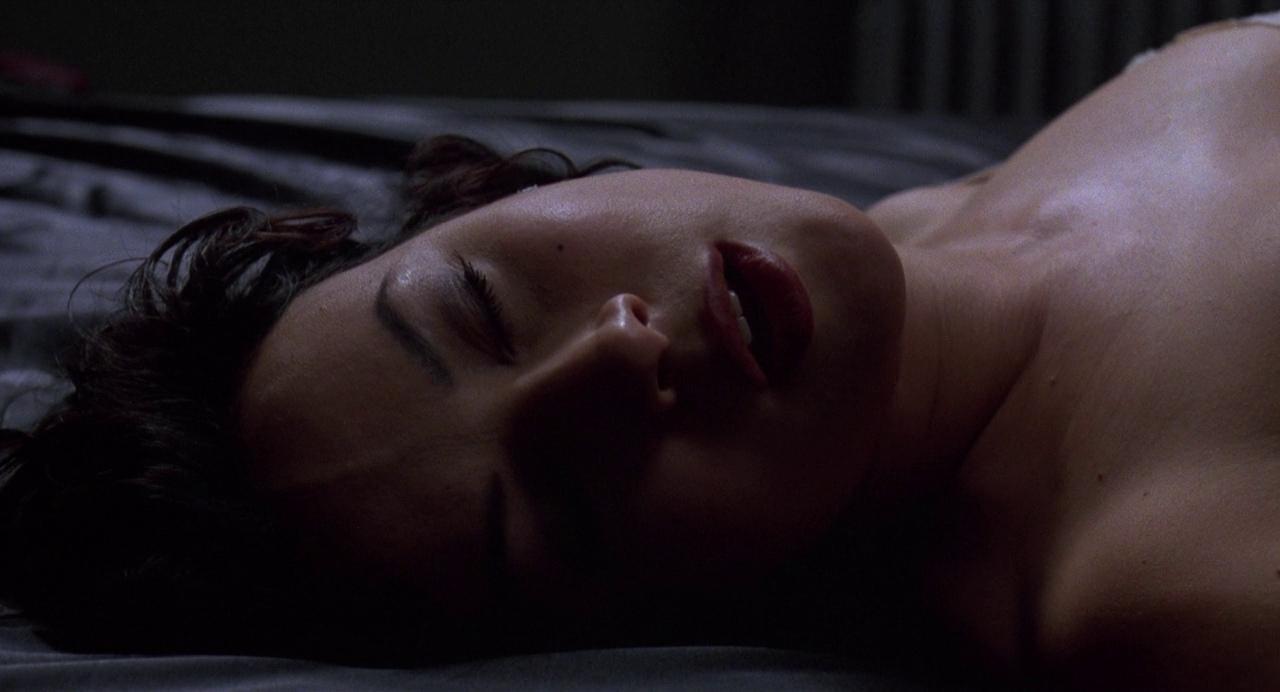
It feels wrong to call Bound slow-paced or slight, but there is so much restraint on display—whether around sex scenes or location changes—that the film constantly battles its budget. The comic absurdity of life isn’t nearly as well articulated here as in the Coen brothers’ filmography, but the Wachowski sisters still find compelling ways to portray shifting power dynamics and tides of fortune. They employ low and high angles to demonstrate when a character feels like God or one of his lowest subjects. Bound isn’t a thrill ride, as much as its erotic and endearing qualities would have you believe, nor does it fit neatly into the noir genre. In trying to be something else, it limits these characters’ potential as a counterplay to male-centred films that present protagonists as dominant, unstoppable forces.
Violet is bound by her femininity—a performance she must strictly adhere to around Caesar’s colleagues. She’s pleasant window dressing, with a voice so transparently seductive it’s as if she’s contorting her identity to lure men. We know as much from the outset, so watching the film test these limits isn’t nearly as invigorating as seeing Violet break through them, embarking with Corky on a passionate, desperate, and blood-stained adventure. Instead, the film sidelines Corky to demonstrate how Violet is sidelined as a gun moll—an intriguing setup that quickly hits its ceiling.
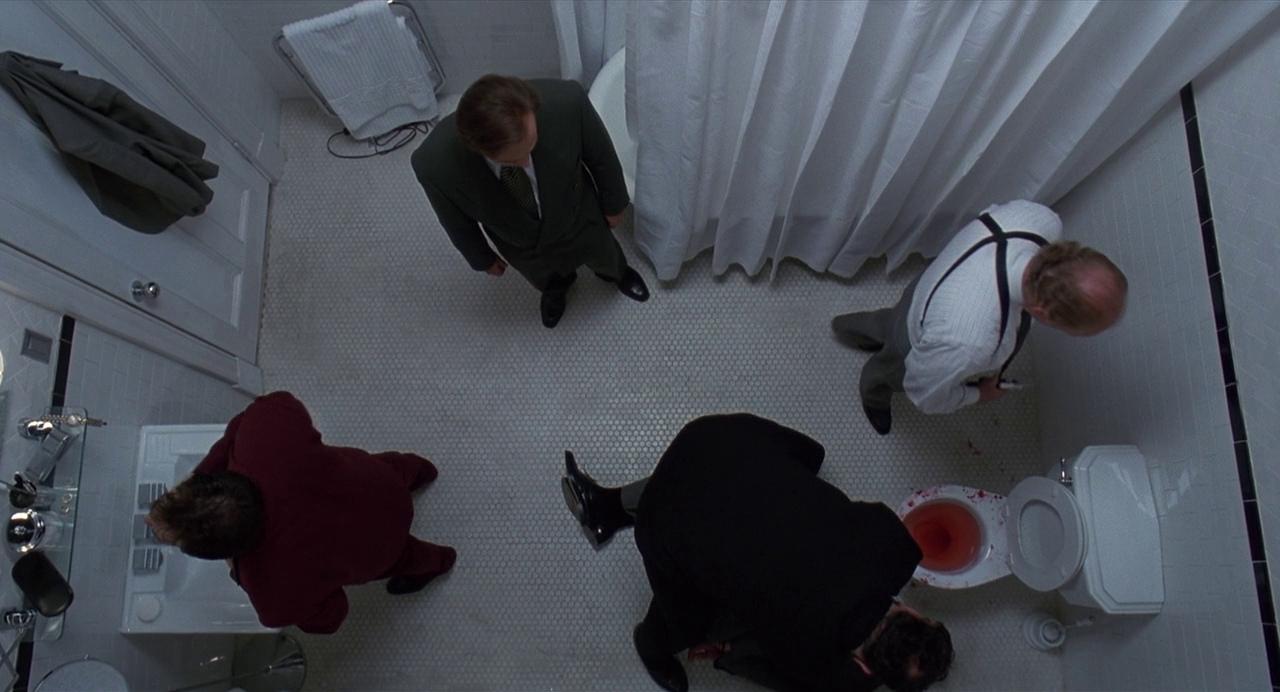
Speaking of ceilings, whilst Bound’s aerial shots cleverly reframe violence and quiet moments alike, they ultimately betray how frustratingly small this fictional world is. It’s a form of continued restraint that limits the scope too aggressively to build tension, even during fun plot twists.
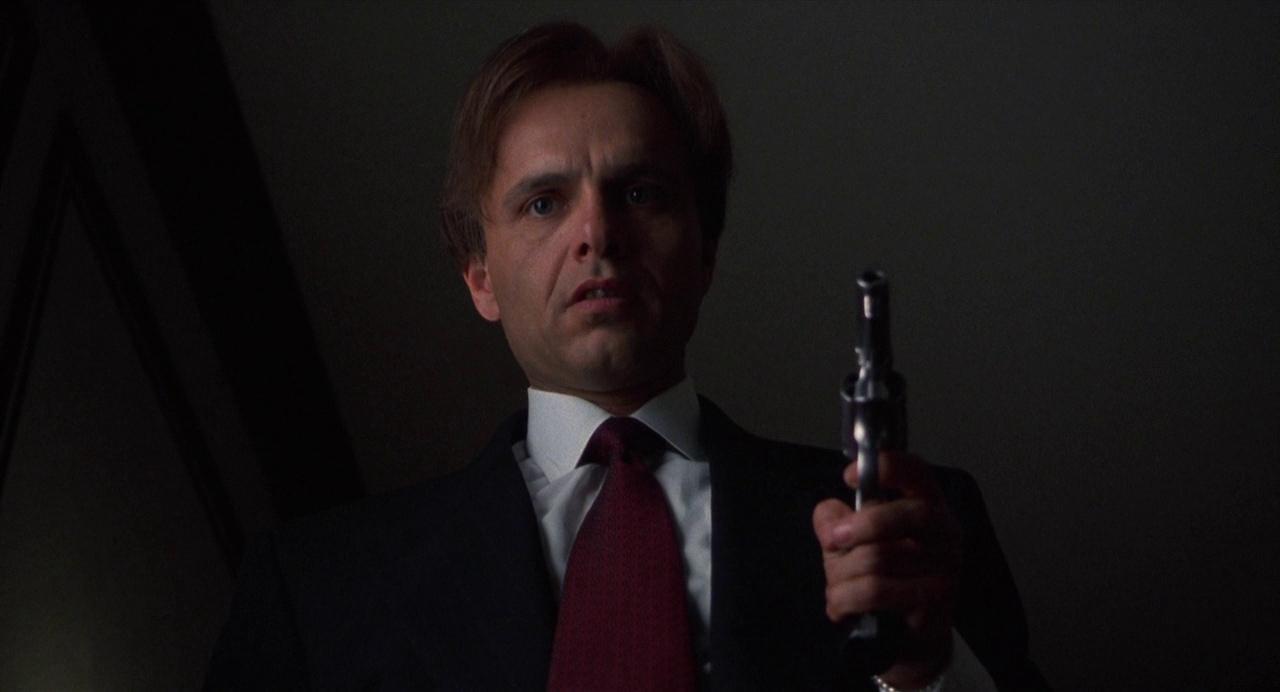
Gershon and Tilly were pitch-perfect casting choices, pairing their polar-opposite personalities with subtle chemistry. It is hard not to see shades of Pantoliano’s Ralph Cifaretto from The Sopranos (1999–2007) in his performance as Caesar,especially when he attempts to take control after discovering the $2M is missing. Any opportunity for Pantoliano to lose his cool and go a little crazy is welcome for viewers and the actor alike, who has called this his favourite film role.Caesar is a controlling, demanding, homophobic wretch, but in a world of cutthroat Mafia men, the fact that he isn’t a complete monster adds just enough unpredictability to prevent him from becoming a one-note villain.
More interesting than the film itself is exploring how it has influenced recent lesbian thrillers, such as Love Lies Bleeding and Drive-Away Dolls (2024). Both films thrive on depicting distinct women falling for each other, but they gain momentum through constant change, whether via madcap road trips or bizarre dream sequences. Their goofiness can be an annoying distraction, but it gives them an unmistakable identity. Bound is more accomplished than either feature, but only because it holds more potential. Much like Blood Simple, the Wachowskis’ debut is an enjoyable tale that is too narrow in scope to reveal the full breadth of its directors’ talents.
A common studio note given to the Wachowskis was to make Corky male—a suggestion they rightly rejected, stating it would result in a movie that had already been made a thousand times. Today, Bound is fondly remembered as a pioneering example of lesbian romance and LGBTQ representation that is sexy without being leering, and resonant without becoming sentimental. The directors were right to dismiss the executives. Yet, outside of this crucial demographic shift, Bound ultimately plays like an entertaining, propulsive riff on a movie you’ve already seen.
USA | 1996 | 108 MINUTES | RATIO | 1.85:1 | ENGLISH • ITALIAN

writers & directors: The Wachowskis.
starring: Jennifer Tilly, Gina Gershon, Joe Pantoliano, John Ryan, Christopher Meloni, Richard C. Sarafian, Barry Kivel & Mary Mara.