BLOOD OF REVENGE (1965)
Osaka, 1907. The upstart Hoshino gang tries to assassinate the boss of the Kiyatatsu syndicate, who are in charge of the construction business.

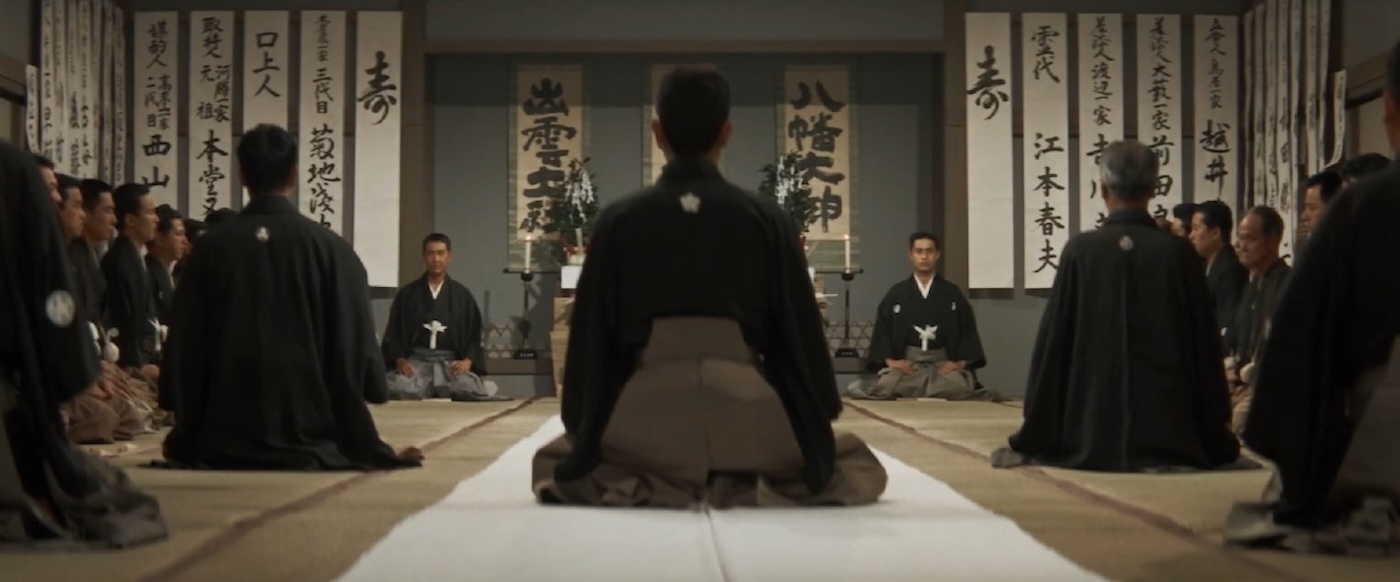

Osaka, 1907. The upstart Hoshino gang tries to assassinate the boss of the Kiyatatsu syndicate, who are in charge of the construction business.
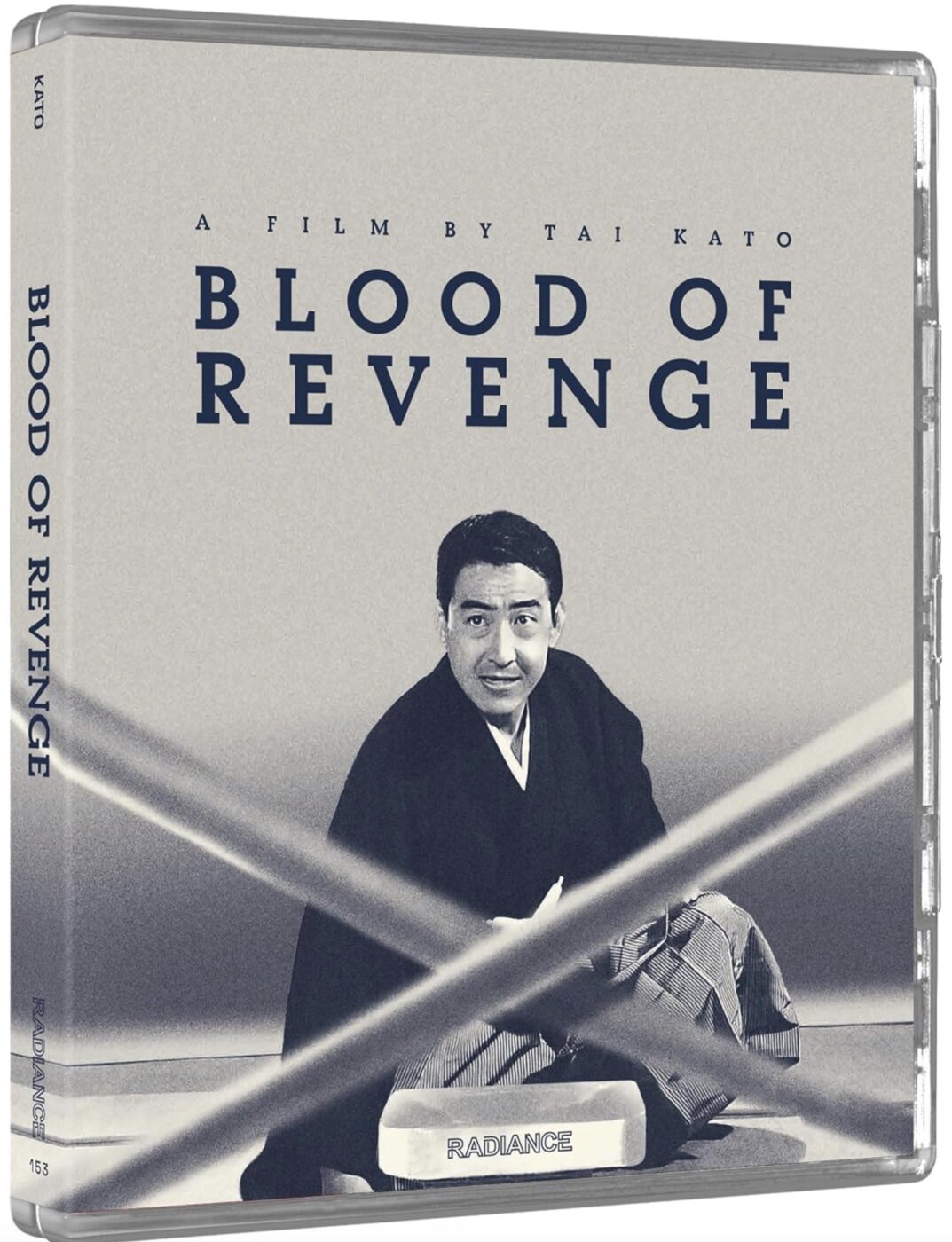
Not long ago, boutique Blu-ray labels were unearthing a wealth of classic Italian gialli and poliziotteschi. While a few gems surely remain to be discovered and polished for release, attention has recently—and delightfully—drifted further east. Alongside a glut of action and wuxia from Hong Kong, classic titles from Japan’s samurai and yakuza cinema have found an eager audience abroad. Many in that audience will be familiar with Tai Katō, cited as instrumental in defining the ninkyo eiga. It’s welcome news, then, that Radiance has sourced a crisp HD digital transfer of Blood of Revenge, the director’s first foray into this genre of chivalrous yakuza movies.
The Japanese title, Meiji kyokyakuden—sandaime shumei, roughly translates as Third Generation Successor: A Meiji Era Tale of Yakuza Honour—a succinct and accurate synopsis. Set in turn-of-the-19th-century Osaka, it’s a story of transitions: from one era to another, and from traditional bonds of honour to the corruption of contractual capitalism. This division is underscored by the mise-en-scène; those representing the rise of corporate dominance live in mansions filled with grandfather clocks, curtains, tables, and chairs, whereas the abodes of those upholding community values are minimalist spaces decked out with tatami mats, paper panels, and reed screens.
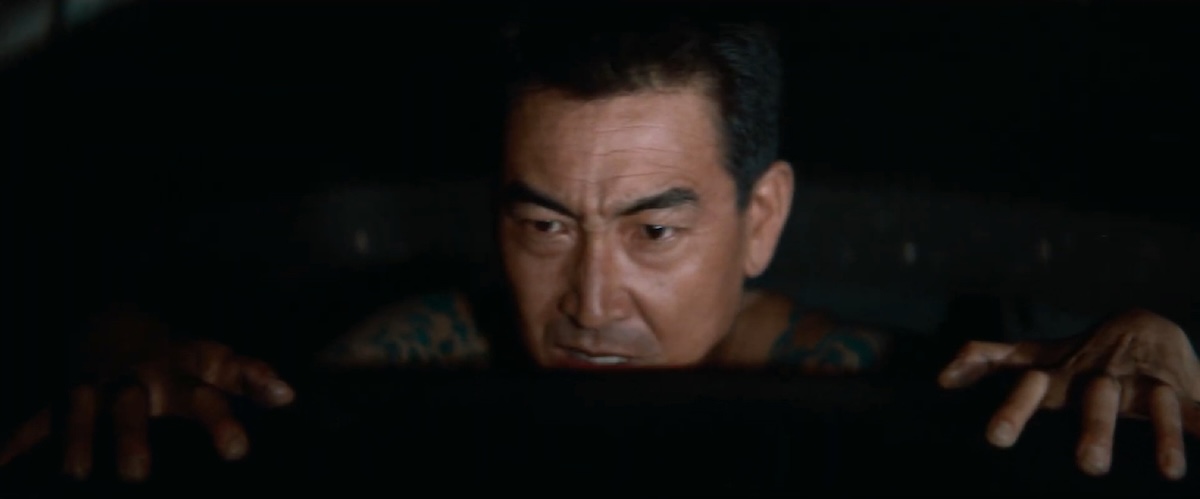
During a traditional Taiko Matsuri parade, Hukuichi (Kanjûrô Arashi), the elder of the Emoto family, is dishonourably stabbed in the back by a stealthy assailant, Karasawa (Tôru Abe). Haruo Emoto (Masahiko Tsugawa), the hot-headed heir to the family’s building supplies business, rightly suspects the attempt on his father’s life was instigated by a rival company run by Yutaro Nomura (Tetsurô Tanba). Haruo is eager for retaliation but is cautioned by Asajiro Kikuchi (Kôji Tsuruta), a clan boss loyal to the Emotos. It’s clearly a ploy to provoke a war that would bring the family into disrepute and cost them lucrative contracts.
When Hukuichi finally succumbs to his injuries, Asajiro is named his successor instead of Haruo. However, Asajiro chooses instead to work as a foreman at a construction site in Kobe. We know Nomura will keep provoking the family until a crisis point is reached, leading to tragic consequences that finally spur the restrained Asajiro into righteous revenge. Naturally, there will be blood.
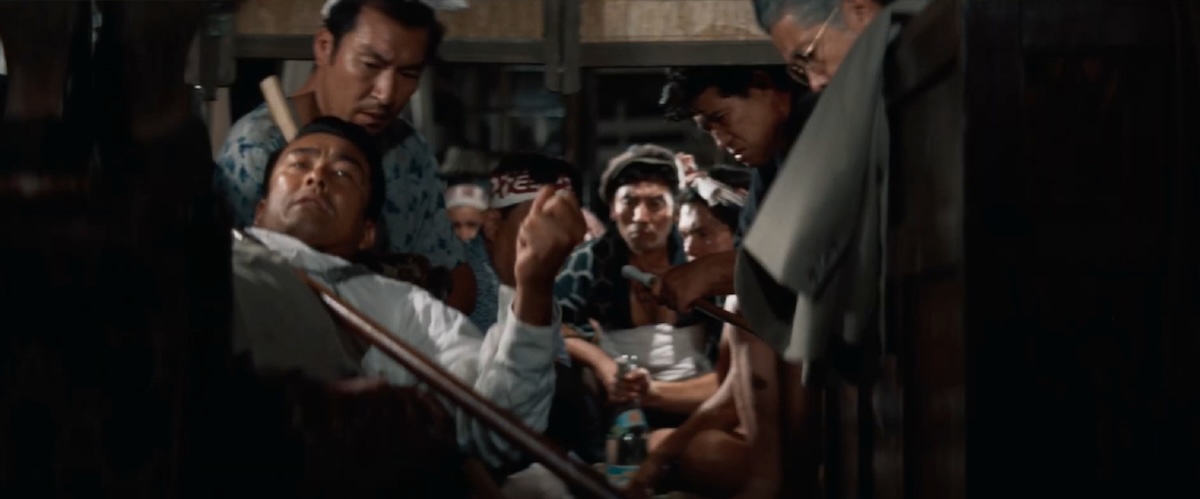
The narrative adheres to the typical ninkyo eiga formula, yet several factors set Blood of Revenge apart. Firstly, this is one of the films that actually consolidated that formula. Secondly, the storytelling is refreshingly measured compared to contemporaries that often get bogged down in dense inter-clan dynamics. Thirdly, its production values are exceptionally high for a film produced within the powerhouse of Japan’s post-war studio system.
Tai Katō’s career began at the outbreak of World War II, where he worked on documentaries and propaganda. Resuming his work after the war, he landed two notable assistant director roles: first for Daisuke Itō on Ōshō (1948) and then for Akira Kurosawa on Rashomon (1950). He was eventually fired from Daiei Studios for his leftist union activism. He made his directorial debut with the 1951 epic Troubles with Swords and Women, which impressed Toei Studios enough for them to hire him in 1956. There, he directed a succession of jidaigeki (period) movies that helped develop the distinctive visual style showcased here.
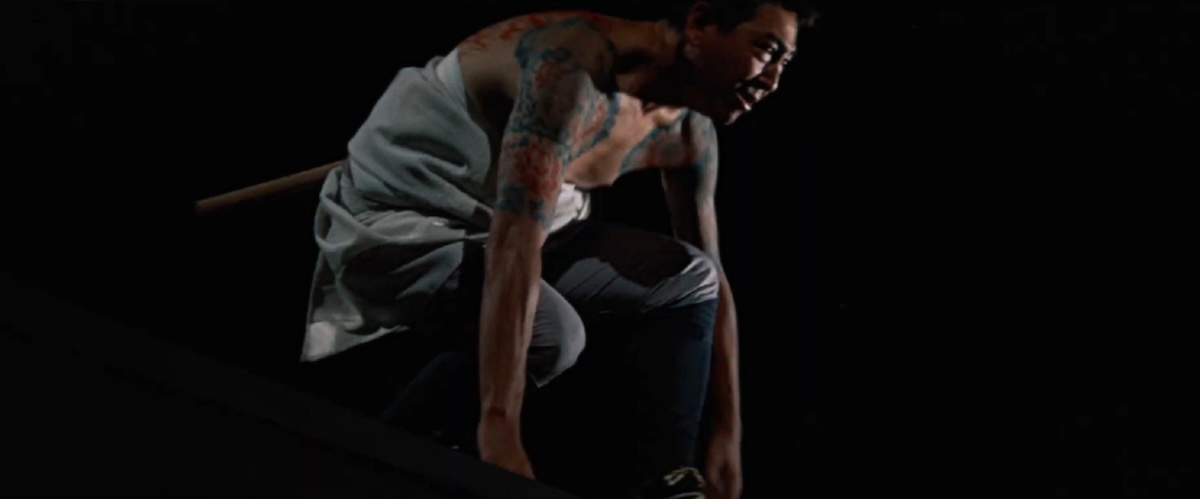
Katō became famous for his “impossible” deep-focus and low-angle shots. For the depth of field—often shooting from darkness into light without losing detail in the shadows—he shares credit with cinematographer Motoya Washio. To achieve his trademark low angles, Katō would famously remove sections of the stage floor and dig pits for the cameras. These innovations are thought to have influenced the dramatic visual identity of Sergio Leone’s Spaghetti Westerns.
Another of Katō’s traits is his swirling fight choreography. By shooting in close-up, he immerses the viewer in the action, using rapid cuts to create a collage of blurred motion and chaotic urgency. This approach was later adopted by the king of wuxia, King Hu, the famed director of Come Drink with Me (1966) and A Touch of Zen (1970-71).
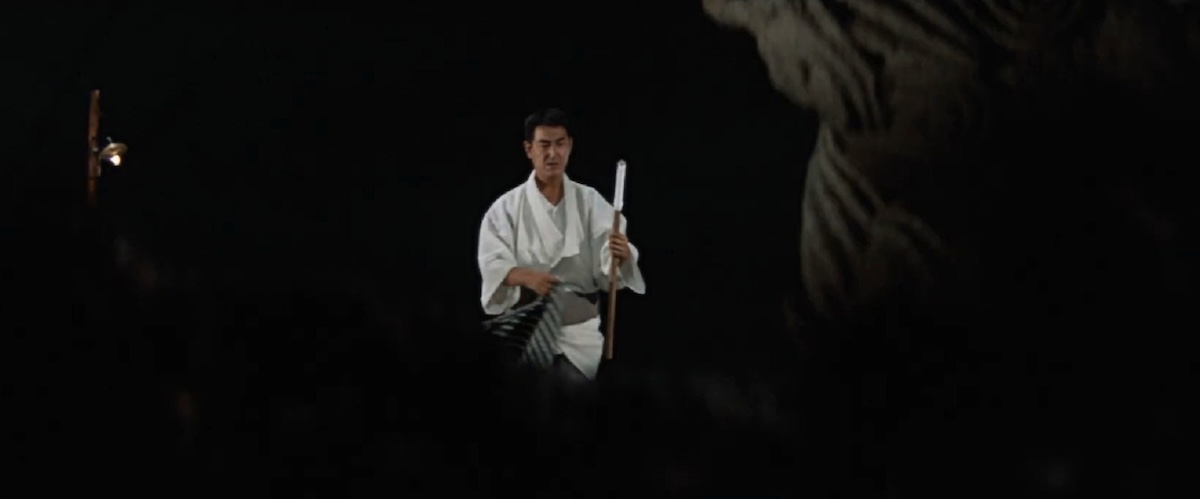
Katō is also adept at using lighting for narrative effect, particularly in the finale. When we reach the inevitable battle between the arrogant Karasawa and the noble Asajiro, the action plays out at night as the set disappears into solid black shadow. Whether this was due to budgetary constraints or artistic choice, it poetically emphasises their isolation and the human scale of the violence.
Though there are touches of lyrical melancholy, the narrative never wallows. The doomed romance may border on melodrama, but there’s genuine chemistry between the stoic Kôji Tsuruta and the excellent Sumiko Fuji (credited here as Junko Fuji). Though the acting style is of its time and bears a theatrical influence, both are adept at conveying passion and emotional pain through poetic restraint. They would work together many times, including in the hugely popular Valiant Red Peony (1968-69) series.
Blood of Revenge offers everything one could want from the genre: a handsome hero torn between love and honour, a fated romance, gangland machinations, and despicable villains. However, it’s also an ideal entry point for newcomers; the plot is easy to follow, the violence is grounded, and the tragedy is heart-rending without being overly bleak. There’s also a complex layer to the central character’s motivations that I can’t discuss without spoiling the end. All I can say is: stay with the film for a few minutes after the credits roll. When you consider the real reasons behind Asajiro’s actions, I don’t think revenge was the only factor.
JAPAN | 1965 | 89 MINUTES | 2.35:1 | COLOUR | JAPANESE


director: Tai Katô.
writers: Akira Murao & Norifumi Suzuki (story by Gohei Kamiya).
starring: Kôji Tsuruta, Sumiko Fuji (as Junko Fuji), Tetsurô Tanba, Tôru Abe, Hiromi Fujiyama, Minoru Ôki, Masahiko Tsugawa & Kanjûrô Arashi.