ALL THE PRESIDENT’S MEN (1976)
Reporters Bob Woodward and Carl Bernstein uncover the details of the Watergate scandal that leads to President Richard Nixon's resignation.

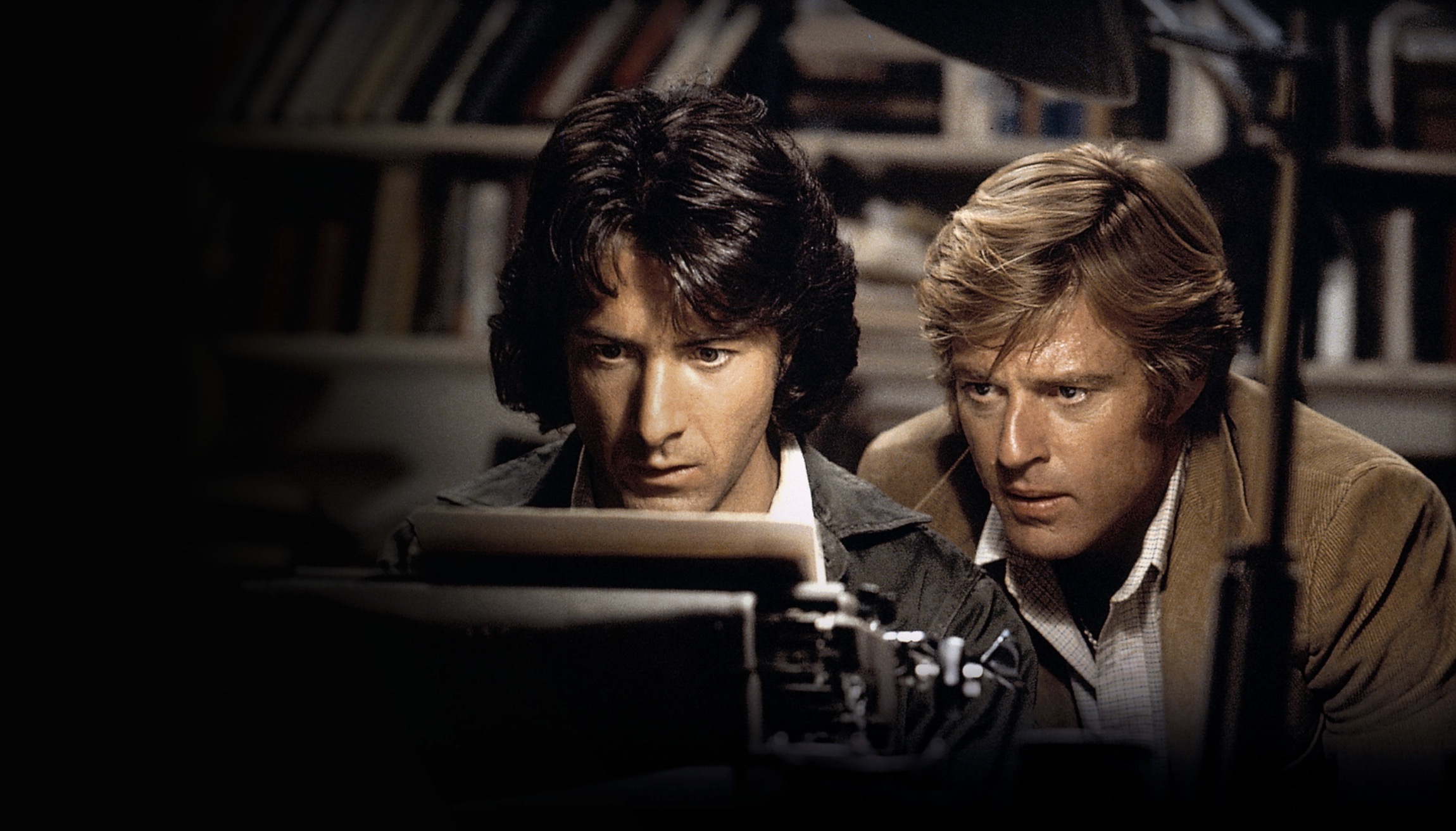

Reporters Bob Woodward and Carl Bernstein uncover the details of the Watergate scandal that leads to President Richard Nixon's resignation.
50 years is a long time—long enough to draw a distinct line between then and now, with a half-century receding from view like a bad dream. The concept of the “end of history”, and the hubris attached to it, invites a reading of the past as a vague shape in the process of working itself out, for better or worse. It offers us this pacifying wisdom: we know everything now, and we knew nothing then.
But really, fifty years isn’t a long time at all. Beyond the analogue tech, the flared jeans, and indoor smoking, not much has changed since 1976. There are few clearer demonstrations of this than All the President’s Men, a film released half a century ago that may as well have been released half an hour ago, given how applicable its action is today.
Based on Bob Woodward and Carl Bernstein’s 1974 book of the same name, the film accounts for the reporters’ attempts to uncover a story of vast corruption and conspiracy. At its centre is the Watergate Hotel, then home to the Democratic National Committee. On a balmy June night, the committee is broken into, burgled, and bugged by a group of five men.
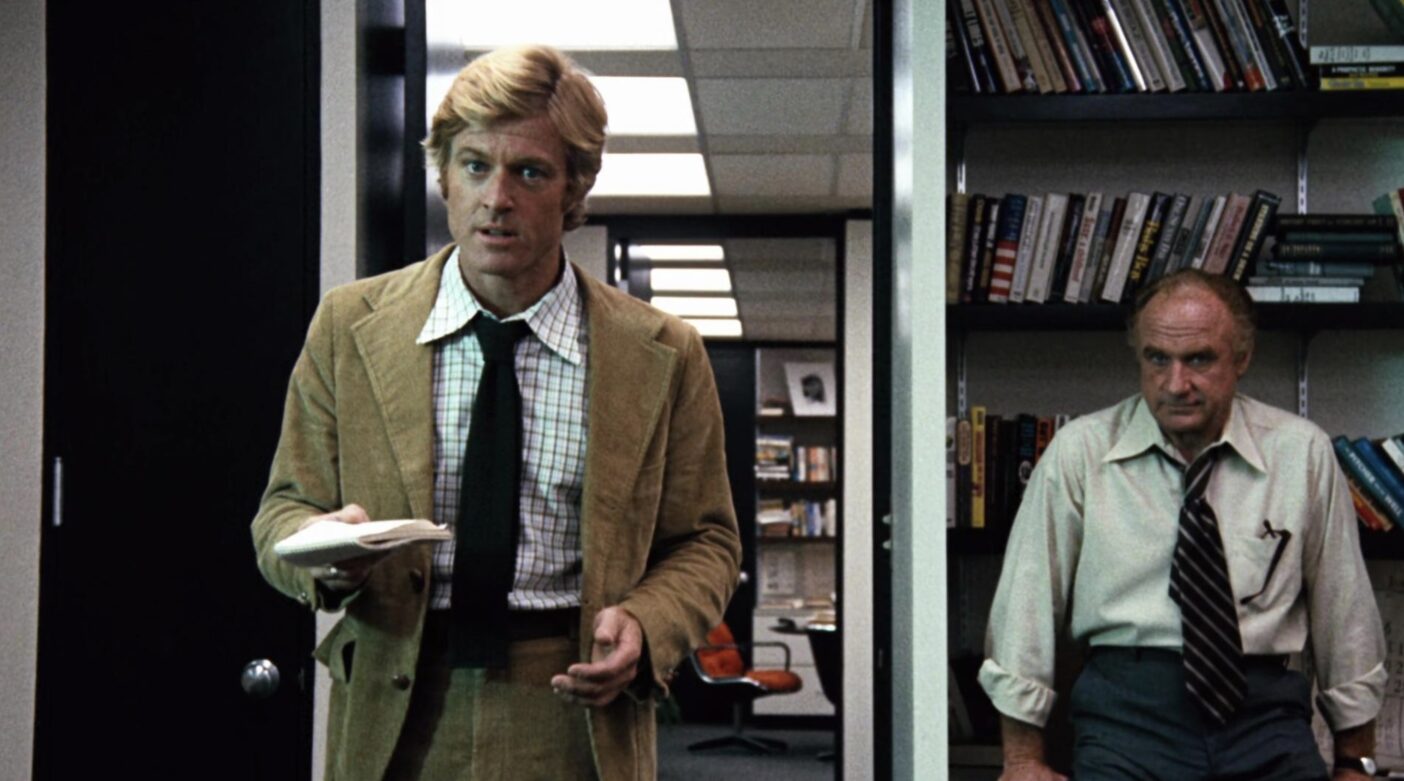
The crime initially fails to make waves in Washington, but Bob Woodward (Robert Redford) senses something more sinister hiding in plain sight. He’s right. Shuffling into a courthouse and leaning forward against the seat in front of him, Woodward chews his pen, takes notes, and mumbles to himself. He’s seen a thousand hearings of a thousand criminals like this—but not exactly like this.
The men facing charges include ex-CIA operatives, expensive “country-club” lawyers, and President Richard Nixon’s head of security, James W. McCord Jr, who also happens to be an electronics and surveillance expert. The crew has its brief moment in court before the next lot is brought in, their crimes destined to be shuffled into the inner pages of newspapers and inevitably forgotten—which they would have been, had Woodward not entered the courthouse that day in 1972.
If All the President’s Men retains the punchiness and fleet-footed nimbleness it possessed upon release, it’s partly due to the urgency with which it was made. Woodward and Bernstein’s book was published just two years after the Watergate scandal, and Robert Redford had already expressed interest in a screen adaptation. After the book’s release, drafts of the script passed through the hands of everyone from William Goldman (the sole credited screenwriter) to Redford, director Alan J. Pakula, and even a young Nora Ephron.
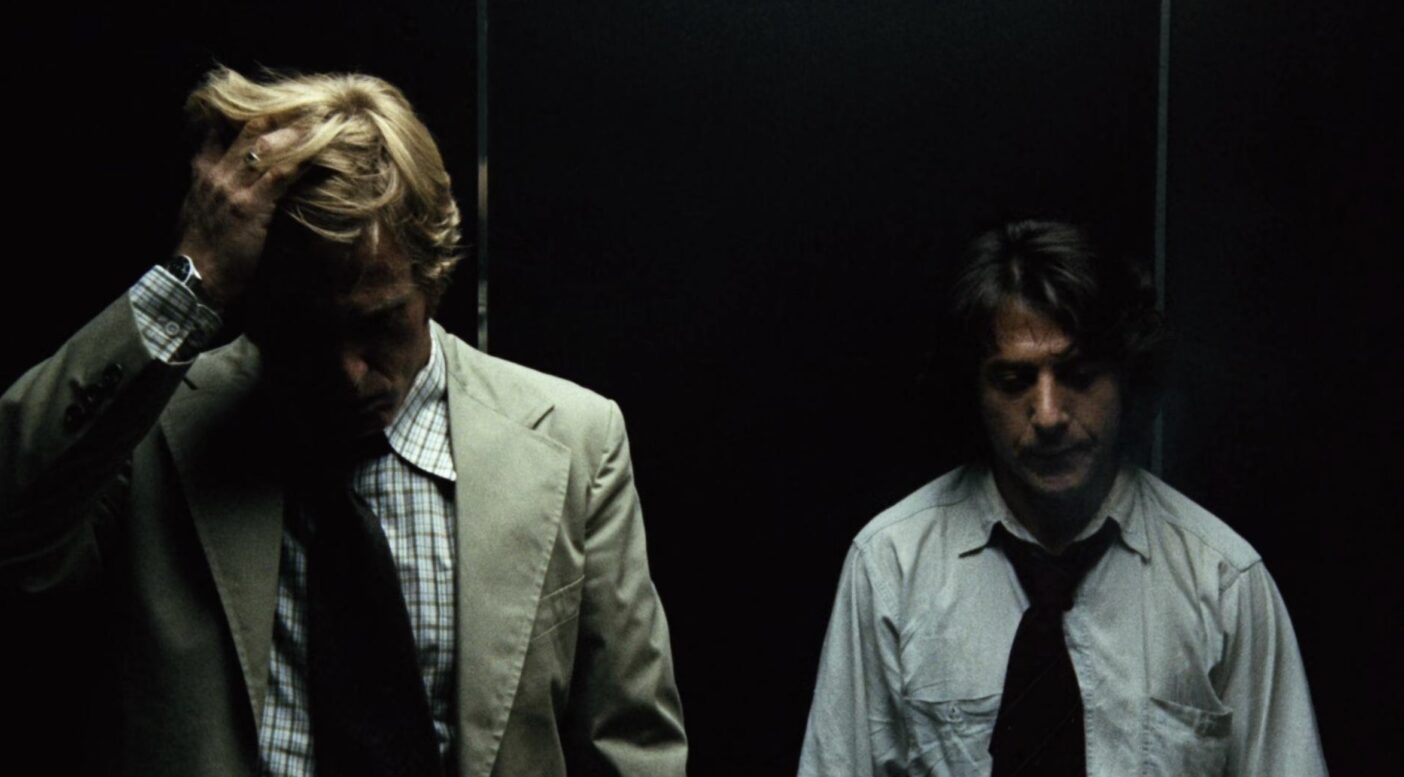
Yet, for all the behind-the-scenes disagreements, the film is shockingly direct, its exigency sprung from a nation attempting to process the worst presidential scandal of its time. The film’s lifeblood is its drive to wrangle accountability from the nihilistic void created by the men responsible. It often feels like banging one’s head against a brick wall. In that sense, nothing has changed.
Pakula and Goldman send us in circles alongside Woodward and Carl Bernstein (Dustin Hoffman), a wiry reporter reluctantly partnered with Woodward. Phone lines drop dead, doors are slammed in their faces, and in the sprawling mid-century offices, few colleagues ever stop by to see what they’re working on. Woodward scrambles out of bed hours after the office has opened, while Bernstein slinks into the office of editor Harry Rosenfeld (Jack Warden), hoping he won’t be asked about his missed deadlines.
It is journalism as a headache, but the most thrilling headache imaginable. Pakula captures typewriter keys hammering ink into the page like gunshots; notes and names are scribbled madly on newspapers and receipts. In one scene, Bernstein pulls out a dozen loose scraps of rubbish on which he has scrawled key points from an interview. Throughout, there is an urgency to this information as it is extracted, memorised, and purged onto paper. Each new name, fact, and date carries the pressure of a ticking bomb, yet so little of it makes sense.
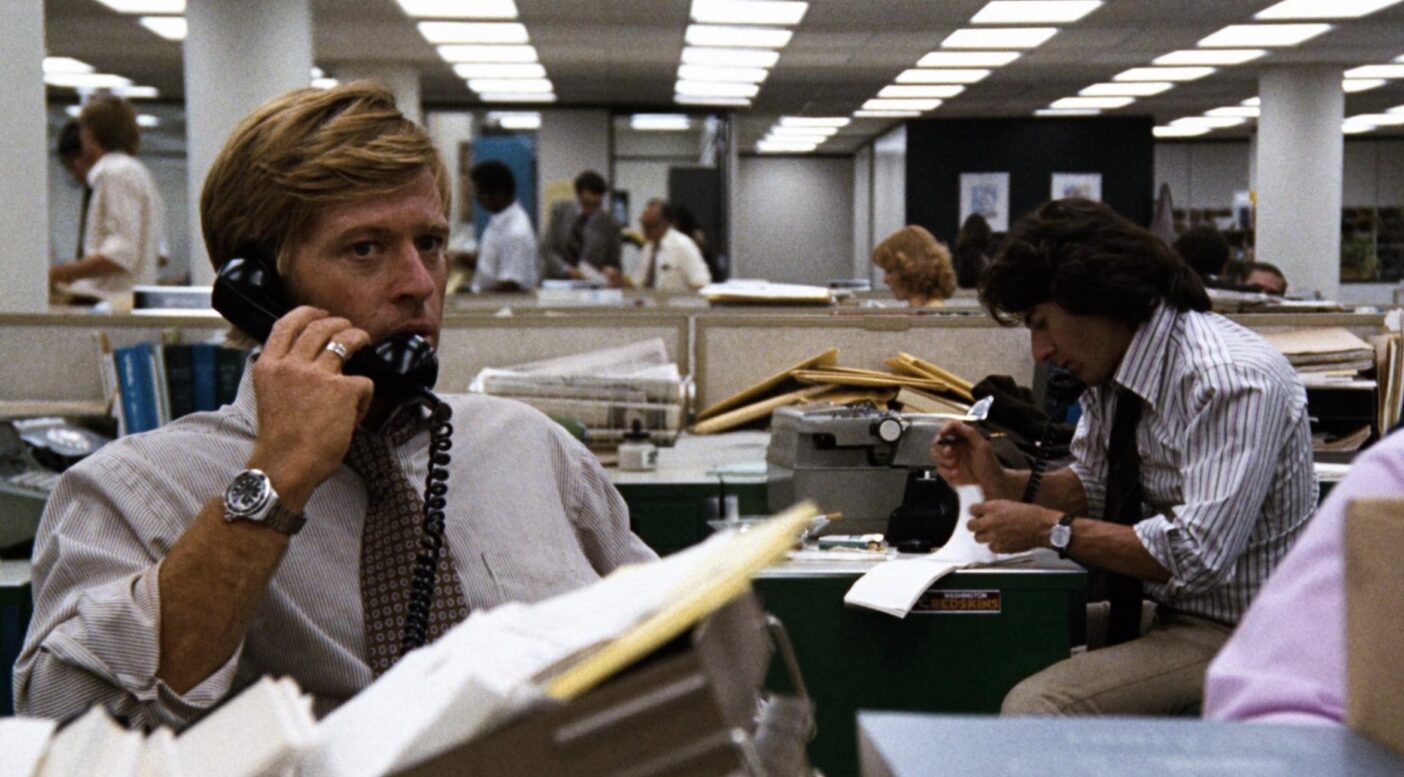
As exciting as the precipice of discovery feels, Pakula sends us tumbling back down rabbit holes. Each moving piece leads to another question mark, before we realise our protagonists are seeing only a fraction of reality—that Watergate is just the beginning. It is recognisably maddening: powerful people who can practically parade their corruption with a condescending wink that says you are powerless. What Woodward and Bernstein meet at almost every turn is a blanket of silence.
At the front door of one witness, the beleaguered pair meets a woman who seems to have been expecting a visit, yet tells them she cannot “destroy the lives” of the men who have done so much for her. Later, pursuing the library records of one of Nixon’s top brass, Woodward is told by a librarian that books were indeed checked out suggesting an investigation into the Democratic incumbent, Ted Kennedy. After being put on hold, the librarian returns to the phone claiming she has never heard of the man Woodward is asking about.
In a system where everybody owes somebody, debt becomes the primary currency. People pledge blind fidelity to those who have helped them, given them jobs, or visited their families. It becomes less about the truth and more about allegiances and self-preservation. Nobody wants to sell out their friends, and here, nobody feels they can. The party lines are drawn: if you’re not a friend, you’re an enemy.
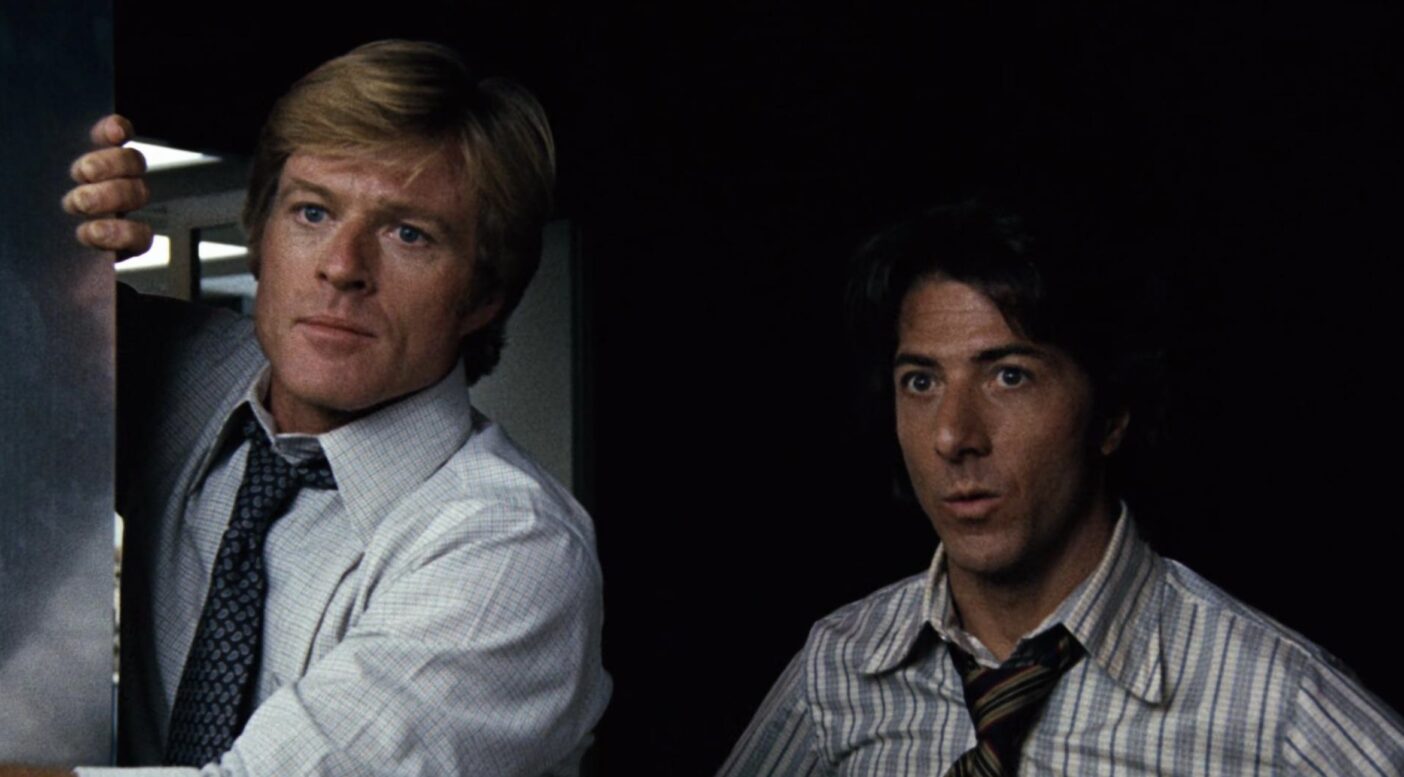
Woodward and Bernstein find sanity in their partnership. Redford brings Californian cool—a high-functioning slacker with the sun seemingly pouring from his skin—while Hoffman is pure East Coast: tightly wound, with a shag of dark hair shadowing an intellectual, probing face fuelled by black coffee and cigarettes.
The film is at its most easy-going when the two conduct meetings together, like a couple of guys out on the prowl. They even develop routines: knowing subjects won’t volunteer information, they design a back-and-forth mentioning a suspect by name. If the subject doesn’t correct them, they have their answer. Watching them work should feel like being manipulated; instead, it feels like being seduced.
Despite the glamourless calls from dingy payphones and clandestine meets in car parks, the film has a sexy allure. The diligence of these men and the integrity of their work—not to mention the casting of Redford and Hoffman—has true appeal. The tactility of their world (paper, pencils, coffee cups) could feel quotidian, but under Pakula’s direction, these are accessories. A folded newspaper is an extension of Redford in the same way a six-shooter is to Eastwood. It is the appeal of witnessing pure competency.
Pakula and Goldman are careful not to aggrandise the men with extraneous storytelling; we see nothing of their personal lives, no love interests, and no traditional heroics. Woodward and Bernstein are not portrayed as idealists. Rather, their drive comes from the need to produce accurate reportage before their competitors. We are mercifully spared sermonising; Pakula knows his audience is already disillusioned. A reminder of the weight of it all would only underline what is already written in bold: things are deeply, deeply broken.
Instead, All the President’s Men is knowing, sometimes smirking, and occasionally bleak. Executive editor Ben Bradlee (Jason Robards) is an immovable foe: “Half of the country never even heard of the word ‘Watergate’,” he growls. “Nobody gives a shit.” The men in charge—hard-bitten, chain-smoking, and over fifty—only want a complete story. It must have a conclusion. Nobody wants to find out over breakfast that their government has betrayed them and could do it again.
At every turn, there are dead ends. Men who have learned the art of control are all over Washington. One newspaperman quotes the picture on the wall of Charles Colson, special counsel to Nixon: “When you’ve got ’em by the balls, their hearts and minds will follow.” After all is said and done, the swamp is still a swamp. Each crime leads to something larger; each lie points to a power that won’t be unseated, or will be replaced by something more nefarious.
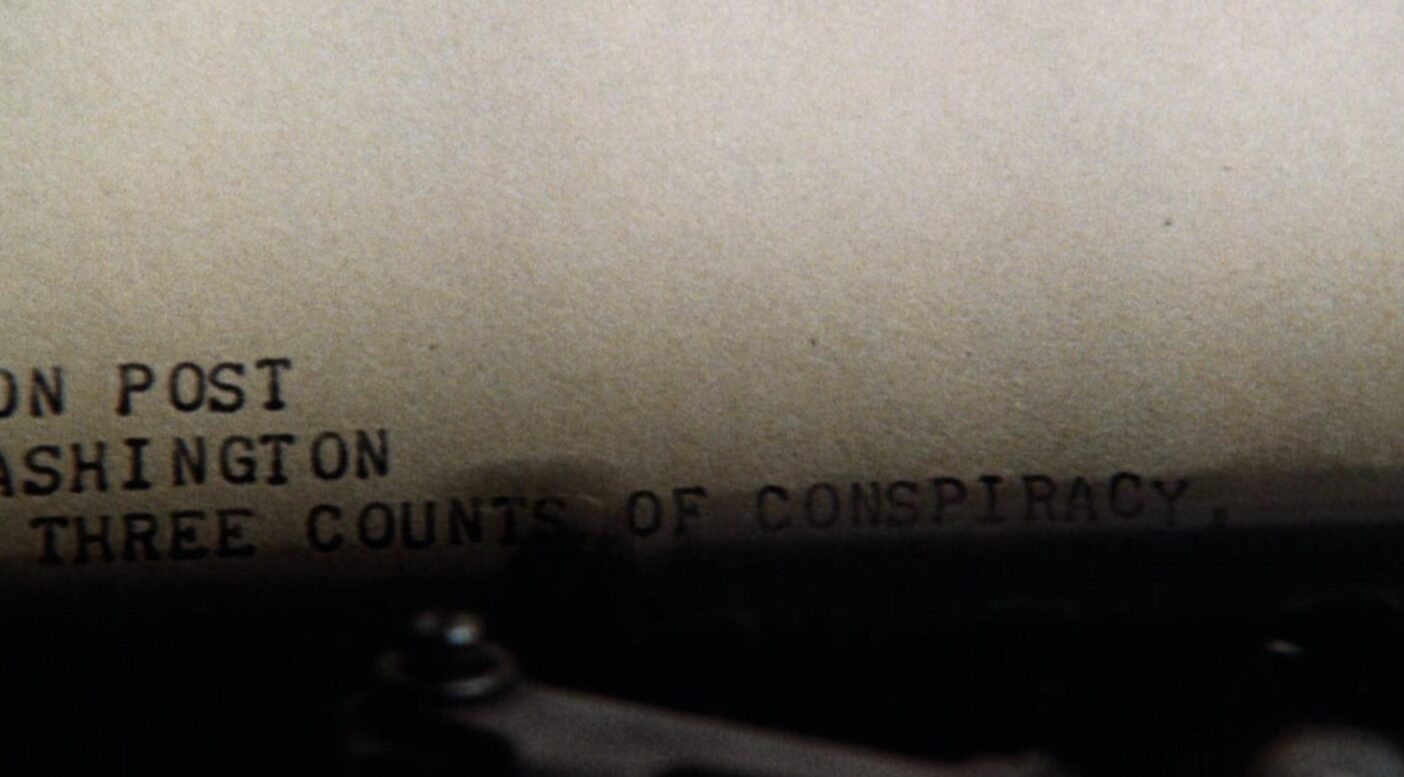
That is how the film retains its power half a century on. There is a sense that once the shadow world has been glimpsed, there is no going back. Pakula and Goldman offer no celebration—even Nixon’s resignation is relegated to a title card at the end.
The expunging of one evil only allows another darkness to rush in. And what about those whose names we don’t know, who make decisions affecting the entire planet? Pakula and Goldman don’t just question a presidency; they question the system that allowed it. Their film suggests no way forward besides continuing the work, even though we know from our vantage point that Watergate was just a drop in the bucket.
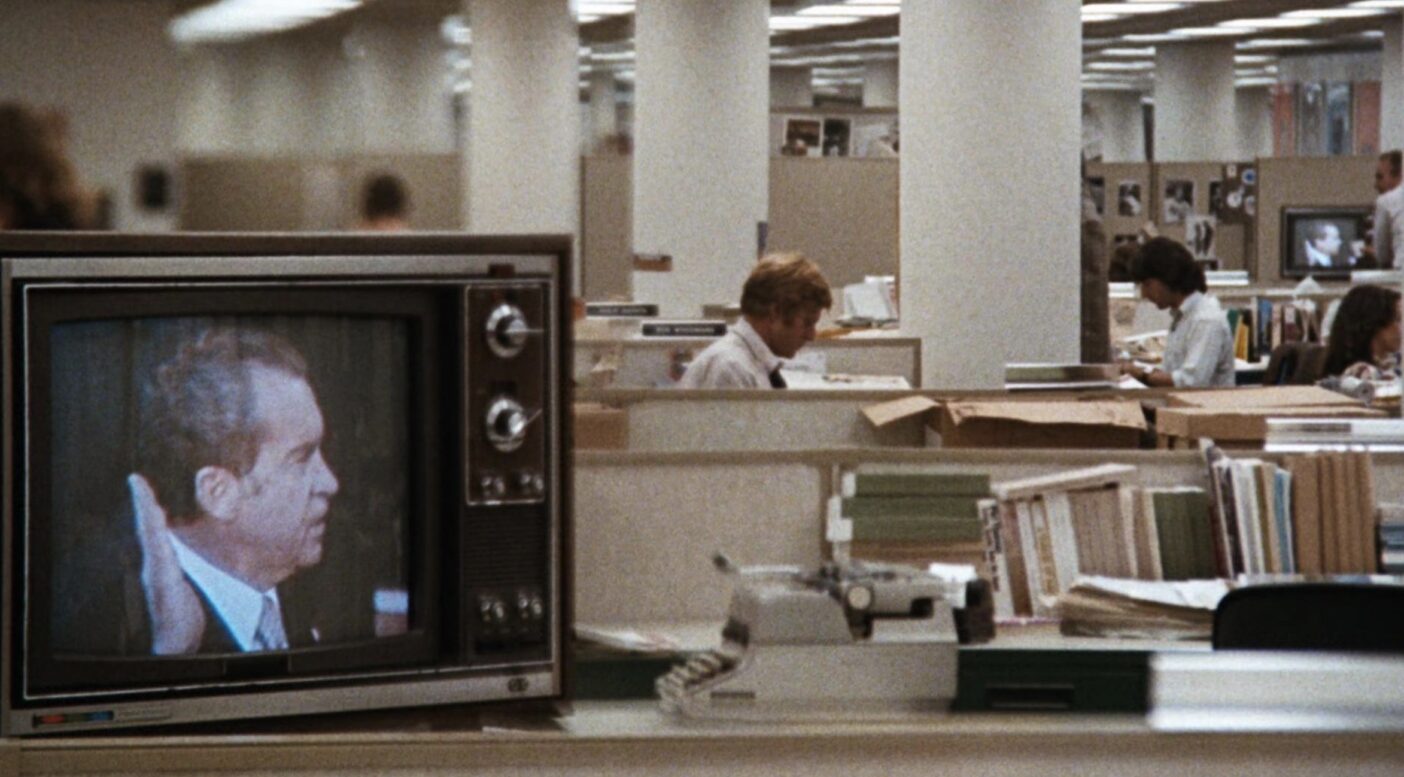
While Woodward’s colleagues gather around a television set, cheering and clapping, Pakula frames Woodward in the foreground, a split diopter separating the journalist from his peers. As the typewriters spit out headlines about impeachments and resignations, Woodward and Bernstein sit, continuously clacking away at their keys—telling a story that will never end, illuminating only the corners of a dreadful American experiment that will outlive them both.
USA | 1976 | 138 MINUTES | 1.85:1 | COLOUR | ENGLISH • SPANISH

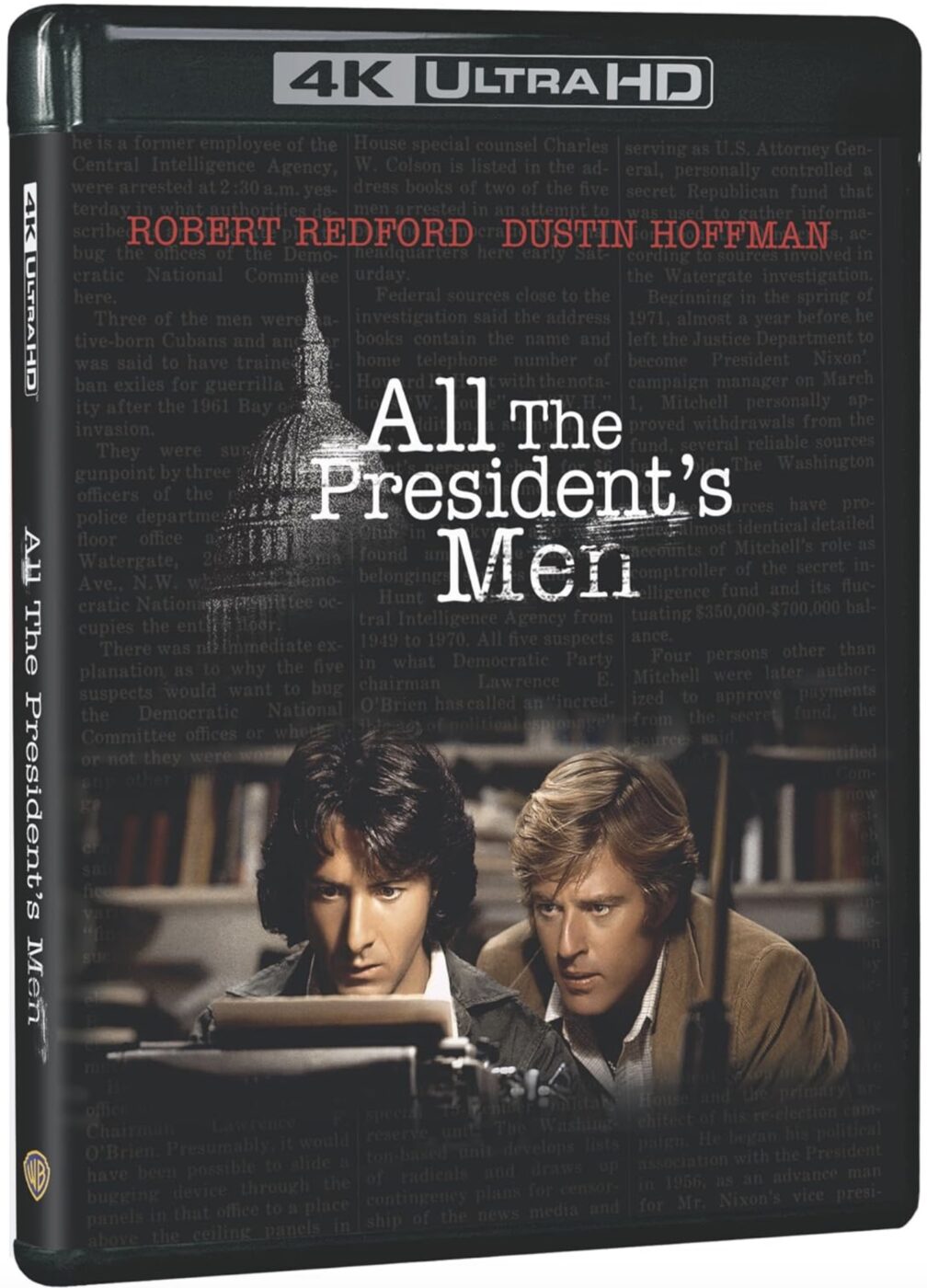
This 4K master of All the President’s Men looks absolutely stunning. Cinematographer Gordon Willis use of fluorescent lights and shadows look incredible here, with shadows and blacks looking deep and crisp, and highlights tasteful. A fair amount of grain has been retained which looks natural and filmic, and aside from that the image is exceptionally sharp and filled with detail.
David Shire’s superb score hums and pulses throughout, the horns and pianos crisp and rich sounding. It is a dialogue heavy film, and all is clear, legible and sounds bright and at the front of the mix. This is the best the film has ever looked and sounded.

director: Alan J. Pakula.
writer: William Goldman (based on the book by Carl Bernstein & Bob Woodward).
starring: Robert Redford, Dustin Hoffman, Jack Warden, Martin Balsam, Hal Holbrook & Jason Robards.