‘Beneath the Trees’: Folktales at DEFA 2 (1959-1987)
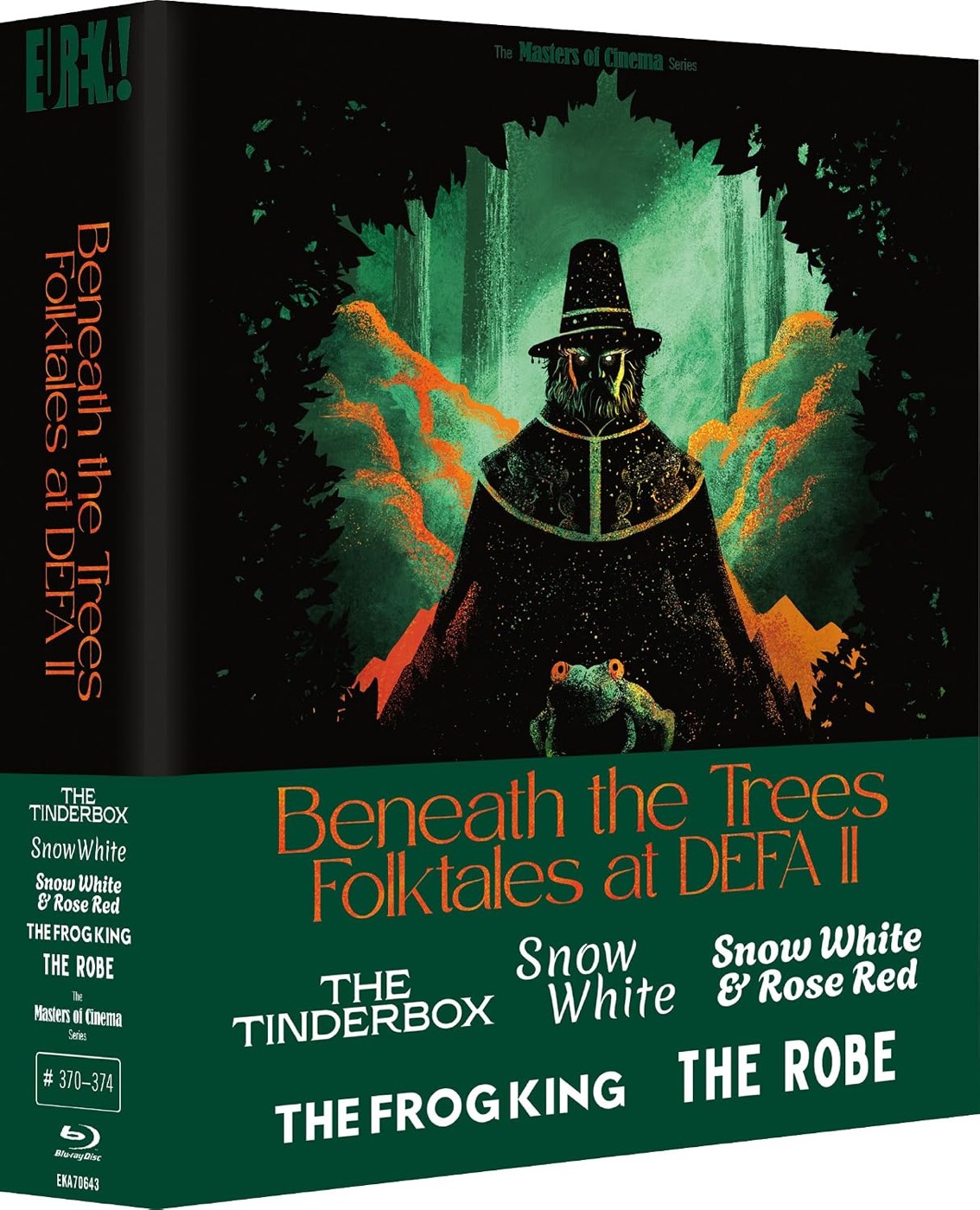
Collected are some of the greatest and strangest folktale films made in the German Democratic Republic: The Tinderbox, Snow White, Snow White and Rose Red, The Frog King, and The Robe.


Collected are some of the greatest and strangest folktale films made in the German Democratic Republic: The Tinderbox, Snow White, Snow White and Rose Red, The Frog King, and The Robe.
Following ‘Into the Forest’: Folktales at DEFA (1955–1977), an excellent introductory box set released earlier this year, Eureka presents another beautifully curated selection of fairy tale films made by Deutsche Film-Aktiengesellschaft (DEFA), East Germany’s state film studio. Alongside the five features is a selection of stop-frame short animations and some high-quality bonus material. These cinematic gems, lovingly restored by the DEFA Foundation and resplendent in all their luscious Agfacolor glory, will delight children of all ages and appeal to anyone with a scholarly interest in folklore and the history of European cinema.
The first of the five features is The Tinderbox (1959), which some may fondly remember from the BBC’s Tales from Europe series, first broadcast in the 1960s and occasionally repeated since. The set also includes Snow White (1961), perhaps the most faithful screen adaptation of the tale; Snow White and Rose Red (1978), featuring a different character of the same name; the inventive fantasy adventure The Frog King (1987); and the once-banned The Robe (1961), which remained unfinished and unseen for three decades…
There lived a soldier. He served the king and is now returning home. Once he met an old witch on the way, who promised him mountains of money in exchange for the fact that he would get her an old tinderbox.
Based on Hans Christian Andersen’s famous story, published in his first collection, Fairy Tales Told for Children, in 1835, The Tinderbox is perhaps the most narratively sophisticated example of the ‘spirit in the blue light’ tale type. Found around the world, though mainly in northern Europe, these tales usually feature a protagonist recently discharged from a position of service: commonly a soldier invalided out of the army or dismissed without pay, sometimes as a scapegoat for a superior’s wrongdoing. The protagonist is then swindled or robbed and trapped somewhere deep and dark, such as a well or cave. There, they find a magical object connected with fire that can summon helper spirits.
This is one of the finest renderings of the well-loved story, which DEFA has shaped into a clear socialist allegory about class division and the unequal distribution of wealth. It’s a simple tale, told effectively under the guidance of dramaturgist Margot Beichler, who also oversaw the scripts for two standout titles in Volume 1: The Singing, Ringing Tree (1957) and Rumpelstiltskin (1960).
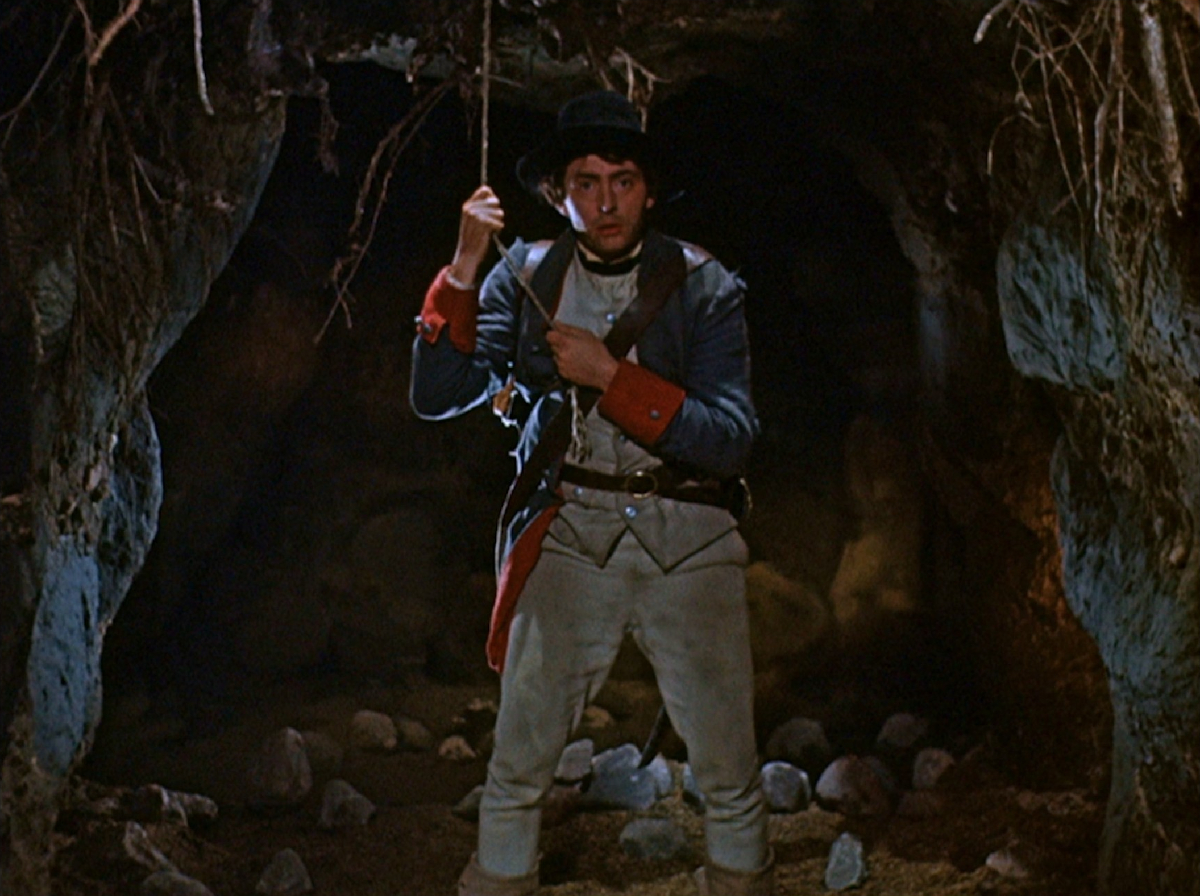
The vibrant colours and clarity are immediately striking, belying the print’s 67-year age. We meet our soldier (Rolf Ludwig) striding along a country road, singing and tightening his belt as he eats the last crumbs from his pockets. Clearly, he hasn’t been treated well after fighting for king and country. Director Siegfried Hartmann demonstrates his visual eloquence from the outset, and the opening minutes are rich in folkloric symbolism, with meaningful trees prominently placed. The nameless soldier passes a row of rowan trees, a symbol of protection against enchantment in nearly all European traditions. He then pauses, framed by an oak, a tree with many positive pagan associations, though also one tainted by superstition. On the one hand, it was sacred to the Druids; on the other, the goat of the witches’ sabbath has been depicted crowned with an oak garland. In Germanic tradition, however, the oak represents freedom, bravery and civic duty. Romantic writers and philosophers such as Goethe and Schiller promoted it as a symbol of the authentic German spirit. To this day, oak leaves and acorns appear on many coats of arms and currencies.
So what might the dead, hollow trunk of a great ancient oak represent? As the soldier pauses to ponder it, an old woman (Bella Waldritter) approaches and asks him to climb inside the tree to retrieve her tinderbox. She ties a rope around his waist and promises to help him back up, then whispers something persuasive in his ear. Being trusting, he doesn’t seem to consider that she might be a witch. Of course, the audience has noticed her impossibly hooked nose and will probably be yelling, ‘Don’t go in there!’ at the screen.
The descent into the abyss is a crucial stage in the hero’s cycle, as explained by theorist Joseph Campbell and based on psychologist Carl Jung’s theory of archetypes. It’s the point in a narrative when the protagonist reaches their lowest ebb but returns from a descent into darkness—literal or metaphorical—with something that can ‘heal the world’ and ‘redeem’ them. It usually comes later in a story, but the soldier’s journey is already under way. He has been away, experiencing a war that must have changed him, and now society has abandoned him, hungry and penniless.
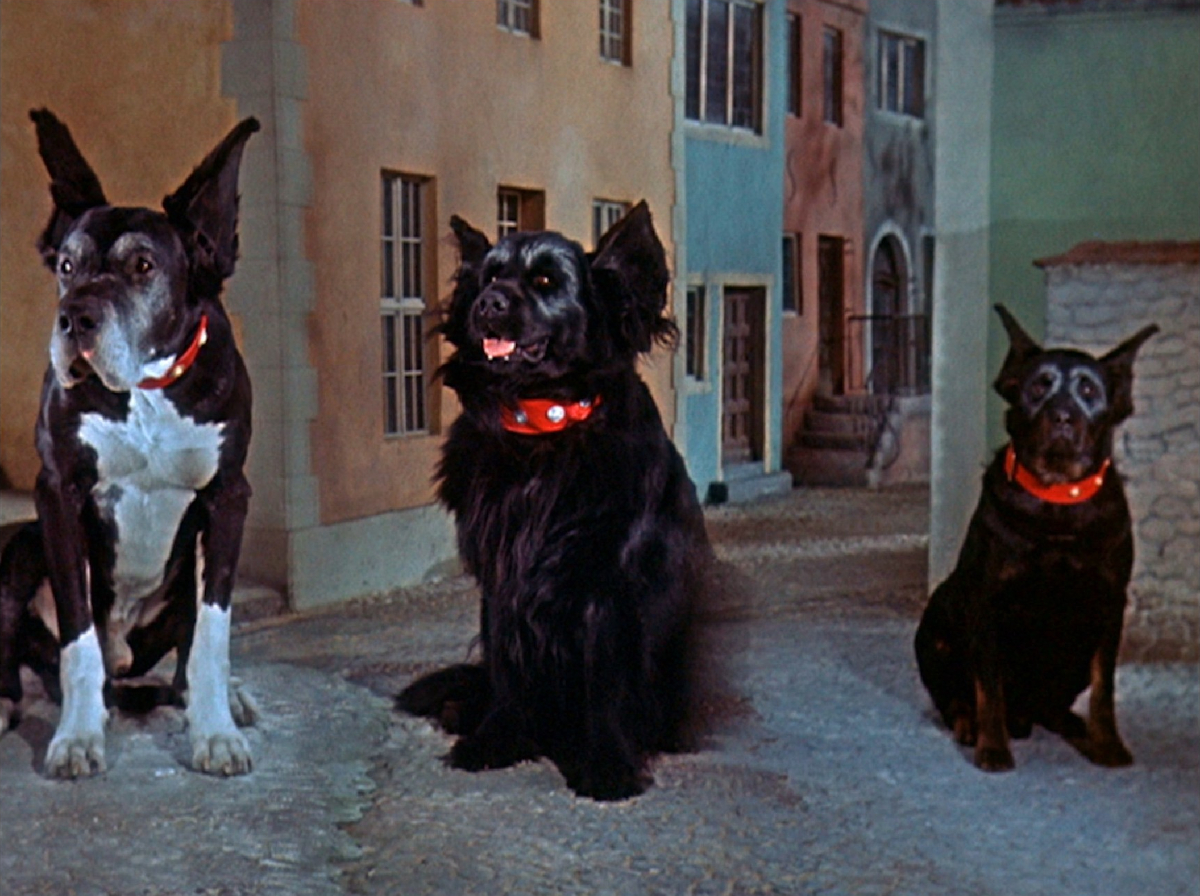
The hollow trunk of an ancient oak features in numerous folktales, often representing a portal to another realm. In a cavernous chamber among the roots beneath the tree are three doors. Each opens onto a treasure chest guarded by a giant hound with flashing eyes. The first chest is filled with copper coins, the second with silver and the third with gold. Each fearsome dog—though they’re actually very cute—is larger than the last. Surprisingly, after sizing up the soldier, they step aside and let him fill his satchel with treasure.
This is why the witch needed help: only someone good at heart could survive the test. Weighed down with his newfound wealth, the soldier needs help to haul himself out of the other world. He pauses only to pick up the tinderbox, almost as an afterthought. The witch demands that he throw it to her at once, then cuts the rope. She transforms into a levitating snake and attacks him.
This is when the soldier’s combat training pays off, in the only sequence likely to terrify younger viewers. From here on, the seasoned stage actor Rolf Ludwig maintains a pleasing lightness, at times reminiscent of Tommy Steele in Half a Sixpence (1967), whose character follows a very similar arc.
The soldier walks to the nearest town, where people judge him first by his shabby appearance, then by his spending power. He moves into the best room at the inn, enjoys a lavish feast and orders new boots and a suit. The innkeeper (Fritz Schlegel) goes from surly to obsequious at the first jingle of gold coins. Three dandy opportunists (Heinz Schubert, Rolf Defrank and Hannes Fischer) gather around the soldier, who is generous to a fault. He also sponsors the cobbler in taking on Hans (Detlef Heintze) as a young apprentice. Hans tells him of a good princess (Barbara Mehlan), kept locked away in the palace by the greedy king and queen.
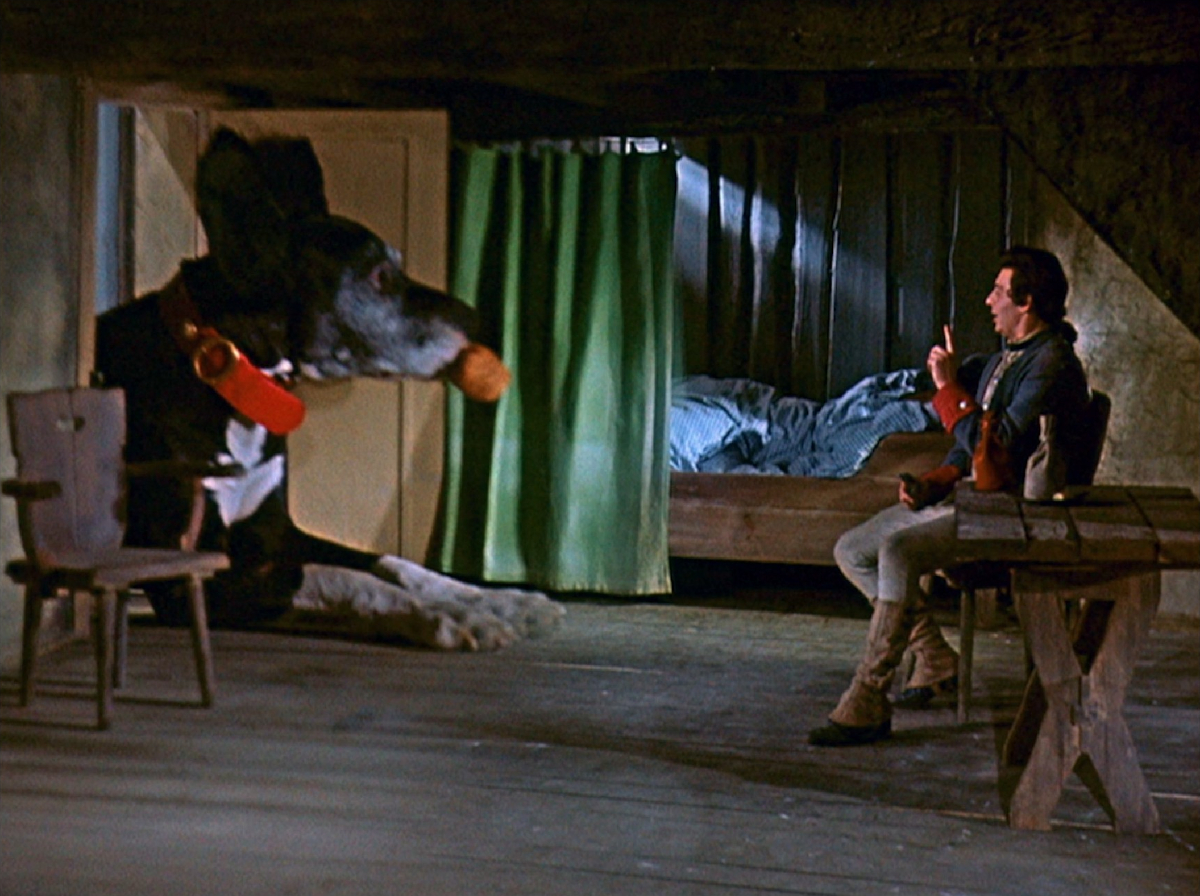
The inn’s decidedly working-class staff fear that the kind soldier is squandering his money on fair-weather friends who’ll desert him as soon as it runs out. That doesn’t take long. But as the soldier settles into his smaller, poorly furnished room, he absent-mindedly plays with the tinderbox. When he strikes a spark, one of the giant fairy dogs magically appears. The live dogs were photographed on wonderful miniature sets to make them look huge. Thanks to DEFA visual-effects maestro Ernst Kunstmann, who worked on Fritz Lang’s Metropolis (1927), they blend into the live action as well as any effects from the era. Kunstmann’s involvement in the Nazi propaganda film Triumph of the Will(1935) had also made him infamous. Here, he’s joined by his daughter Vera Kunstmann, to whom he would pass the baton, and assisted by production designer Hans Poppe.
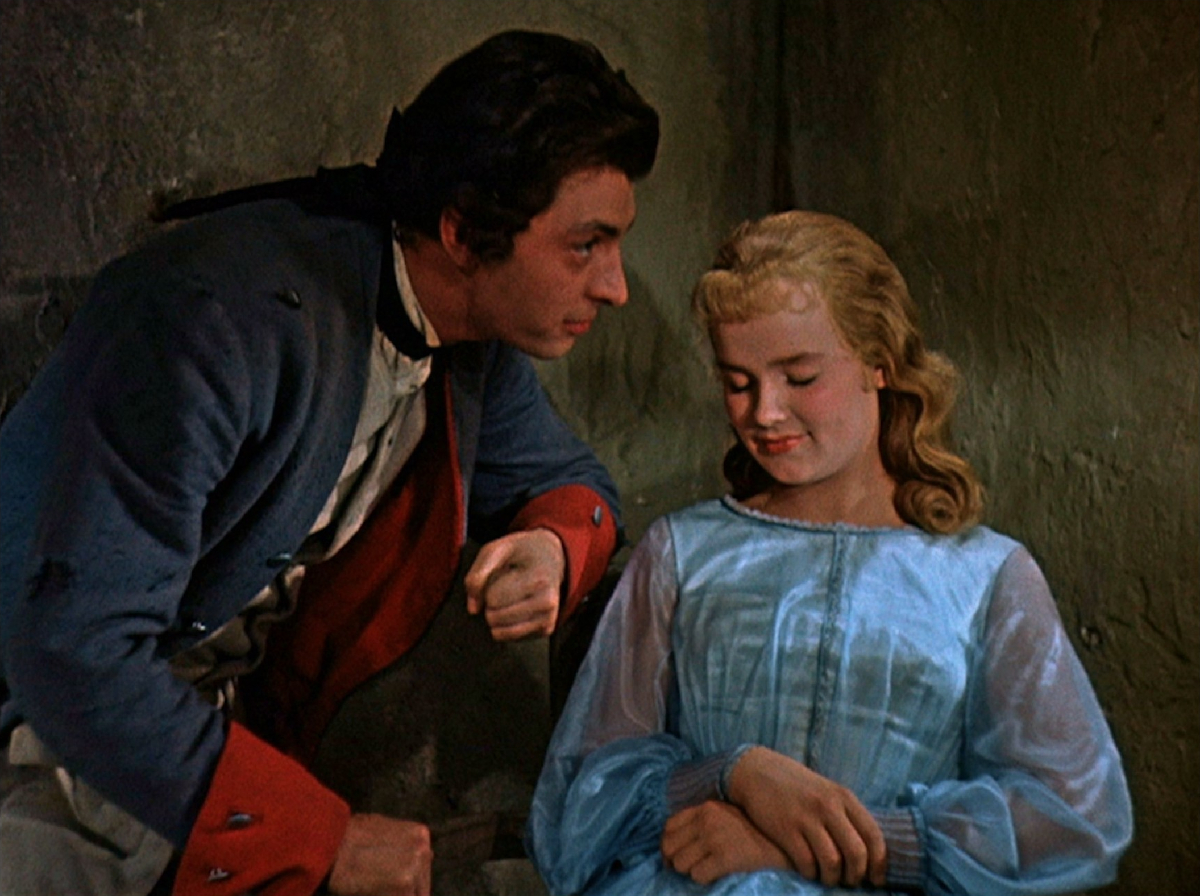
The soldier asks the dog to fetch a bag of coins, and it dutifully obliges. At last, he understands why the witch wanted the humble tinderbox. One night, he asks his helper hounds to fetch the princess from the palace so he can watch her as she sleeps. Romantic—or a little creepy? Impressed by her serene beauty, he ironically calls her a ‘fairy tale princess’ and promises to come and free her. The next morning, she wakes believing she has dreamt of a handsome soldier who will be her saviour.
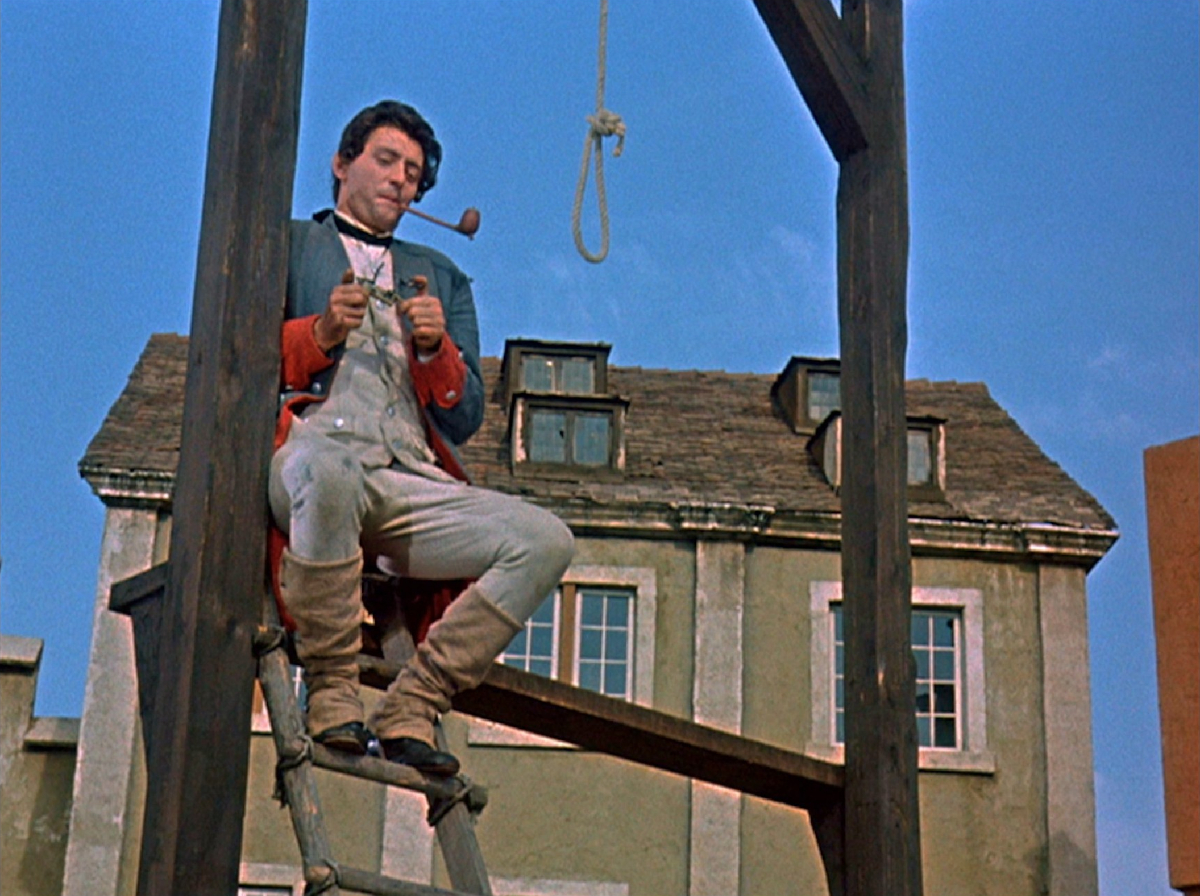
True to his word, the soldier tries to break into the palace but is captured and sentenced to death. He ends up in a dank, dark dungeon—his second visit to that archetypal abyss. If only he’d thought to bring the tinderbox with him. His fate looks bleak and, without money or magic, what hope is there?
EAST GERMANY | 1959 | 83 MINUTES | 1.37:1 | COLOUR | GERMAN
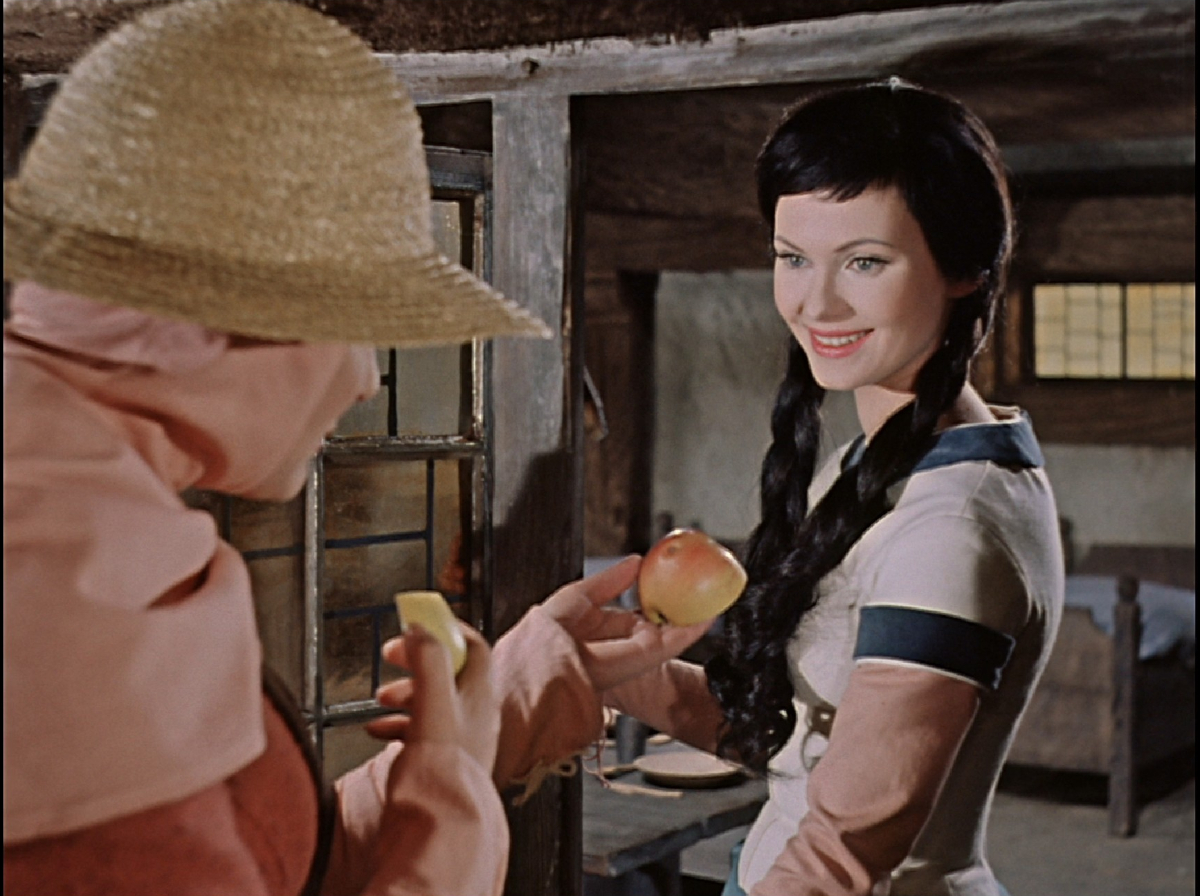
Hated by her jealous and bloodthirsty stepmother, Snow White flees a murder attempt and seeks shelter in the woods with seven kindly dwarfs.
One of the best-known fairy tales of all time, Snow White may seem familiar to anyone who knows Walt Disney’s pioneering animation, Snow White and the Seven Dwarfs (1937). But DEFA tells a different story. Although the adaptation serves the studio’s political agenda, it was again supervised by Margot Beichler and remains closer to the original tale collected by the Brothers Grimm and published in their first volume in 1812.
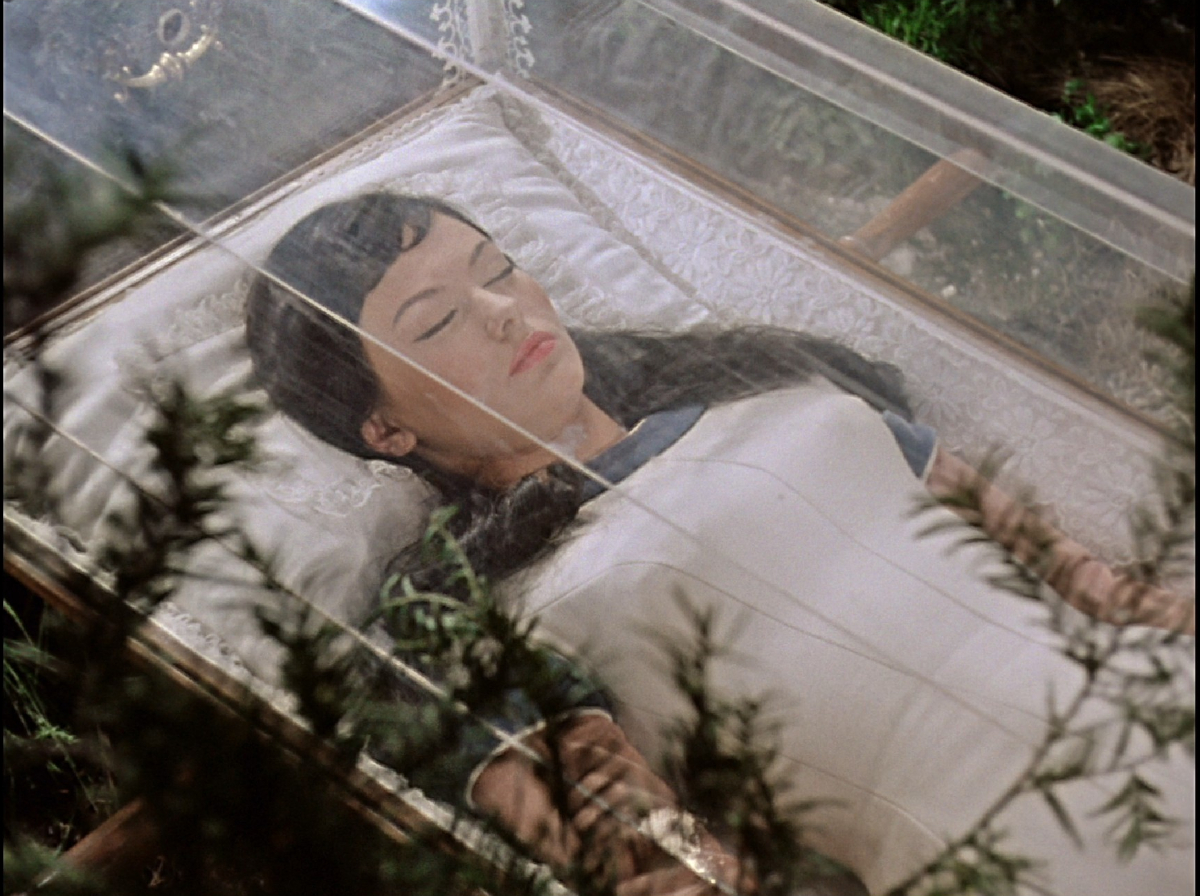
Like classic Disney adaptations of fairy tales, the film opens with a storybook, drawing us into the world of a young queen. After pricking her finger with a sewing needle, she is struck by the stark beauty of her blood against the snow and wishes for a daughter with skin as white as snow and lips as red as blood. The sets, once again designed by Hans Poppe, have a lovely illustrative quality, as if lifted straight from the pages of a picture book.
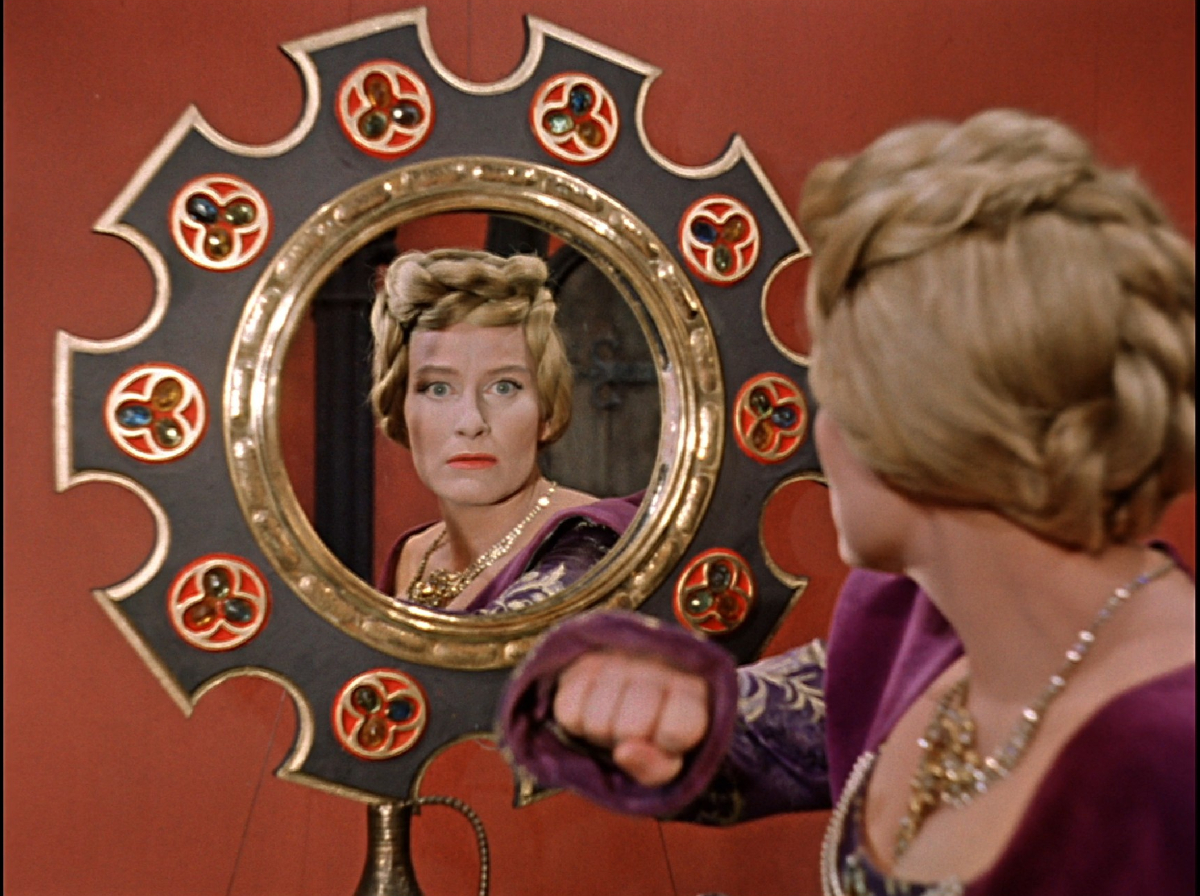
The story then flashes forward. The queen’s daughter has grown into the beauty her now-departed mother imagined. Young Snow White (Doris Weikow) is introduced as a down-to-earth friend to the working class. She enjoys helping the cook (Fritz Schlegel)—a much nicer character than the innkeeper in The Tinderbox—as the castle kitchens prepare yet another banquet for her stepmother. The new queen (Marianne Christina Schilling), who has already outlived the king, is obsessed with being the most beautiful woman in the land. She regularly seeks confirmation from her magic mirror and can’t bear it when a young prince at the banquet is clearly smitten with Snow White instead.
To eliminate the competition, the queen orders her huntsman (Harry Hindemith) to take Snow White into the woods and kill her. Knowing that the servants like the princess, she tells him to bring back her heart as proof. Instead, the honourable huntsman kills a wild boar and takes its heart, then releases Snow White in the forest. There, she eventually comes across a timber cabin furnished with miniature tables, chairs and beds.
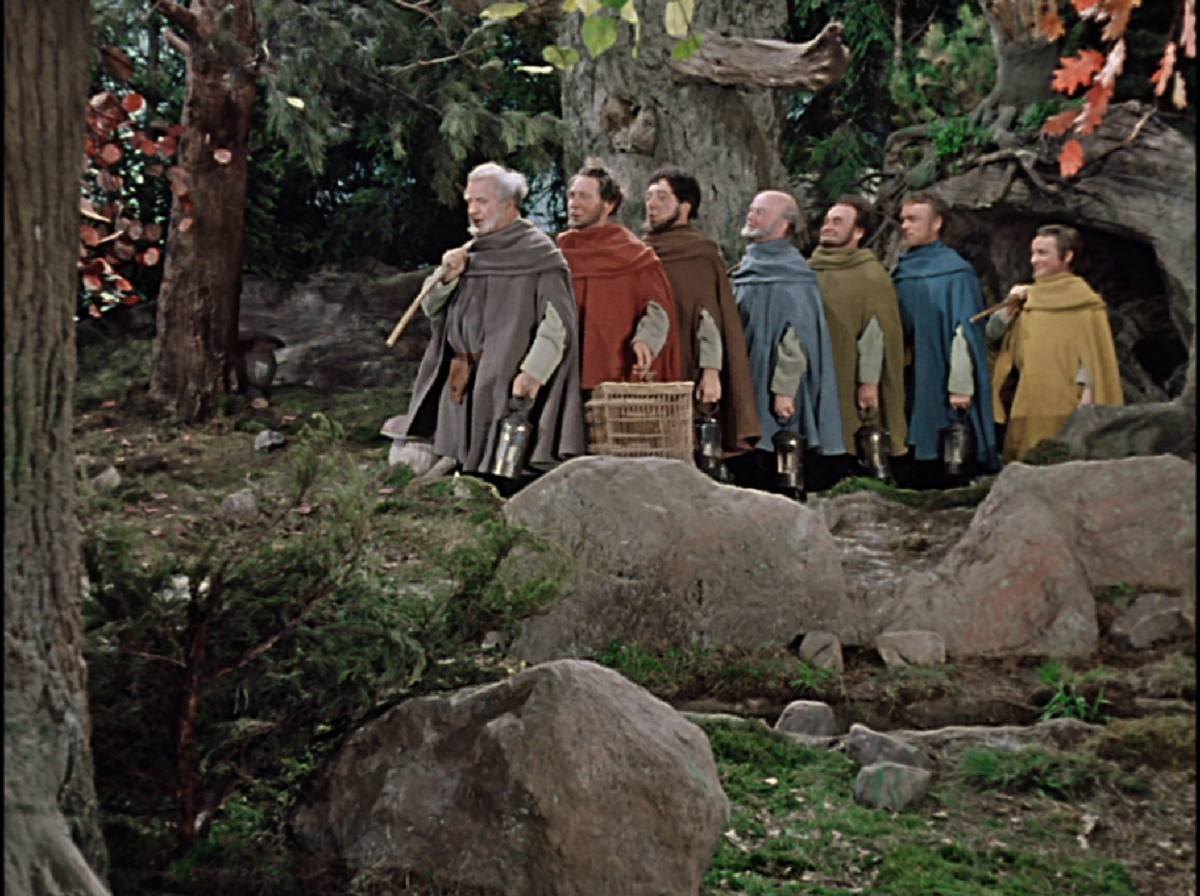
The dwarfs turn out to be genuinely likeable, rather than as annoying as they are in many adaptations. They’re more like the professors in Ball of Fire (1941) than Disney’s schmaltzy caricatures. Given their obvious range of ages, Snow White can be seen as fulfilling several typically female roles: daughter, sister, homemaker and mother. She finds fulfilment in all of them, making her one of the most fully realised female archetypes in fairy tales, while highlighting the Evil Queen’s failure in each of those same roles.
Alas, the magic mirror reveals the huntsman’s deception, and the psychotically insecure queen decides to finish the job herself. Rather than go straight to the poison apple, she tries a few alternatives. Disguised as an itinerant trader, she persuades Snow White to try on a fancy girdle that immediately stops her breathing. Fortunately, the dwarfs return just in time to save her. The queen tries again, then again. This sequence stays closer to the original story, with the final attempt apparently succeeding.
With a Hans Christian Andersen story, the odds of a happy or tragic ending are roughly 50/50. But with the Brothers Grimm, evil-doers are almost certain to get their just desserts and the pure of heart to prevail. Besides, we already know how this ends, don’t we?
EAST GERMANY | 1961 | 63 MINUTES | 1.37:1 | COLOUR | GERMAN
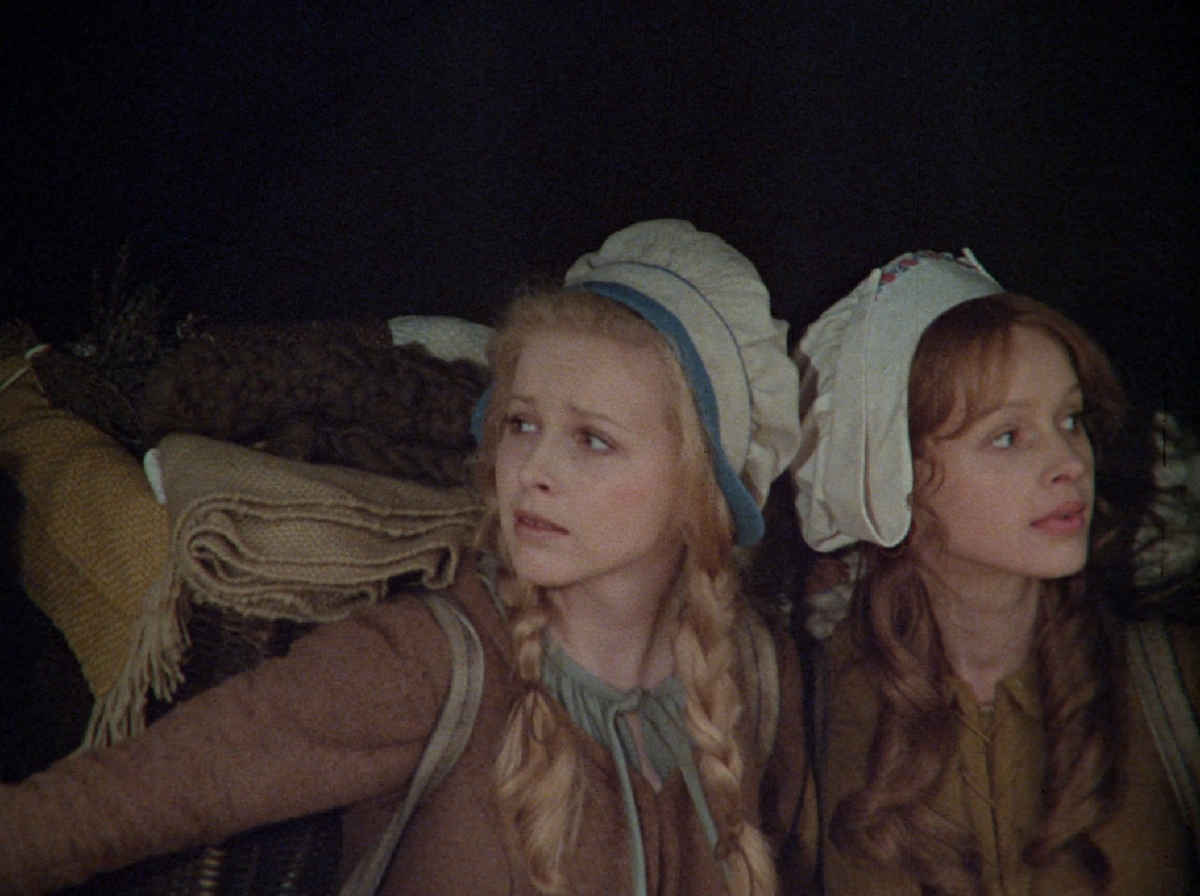
Two sisters, Schneeweißchen and Rosenrot, save Princes Michael and Andreas from the evil spells of the Mountain Spirit.
Siegfried Hartmann returns to the director’s chair, bringing the same clarity and pleasingly rounded characterisation as The Tinderbox. Margot Beichler is on script duties once more, adapting another tale collected by the Brothers Grimm and published in the third edition of their collection in 1837.
The change in style and Siegfried Mogel’s location cinematography immediately make it clear that this film was made almost two decades after Snow White. Freeze-frames, accompanied by Peter Gotthardt’s moody, melancholic score, give the opening sequence a poignant, distinctly 1970s nostalgia. The first fifteen minutes could easily lead into a classic folk horror film to rival The Blood on Satan’s Claw (1971) or The Wicker Man (1973). But although the story could lend itself to that treatment, it develops into a wholesome, family-friendly fantasy adventure.
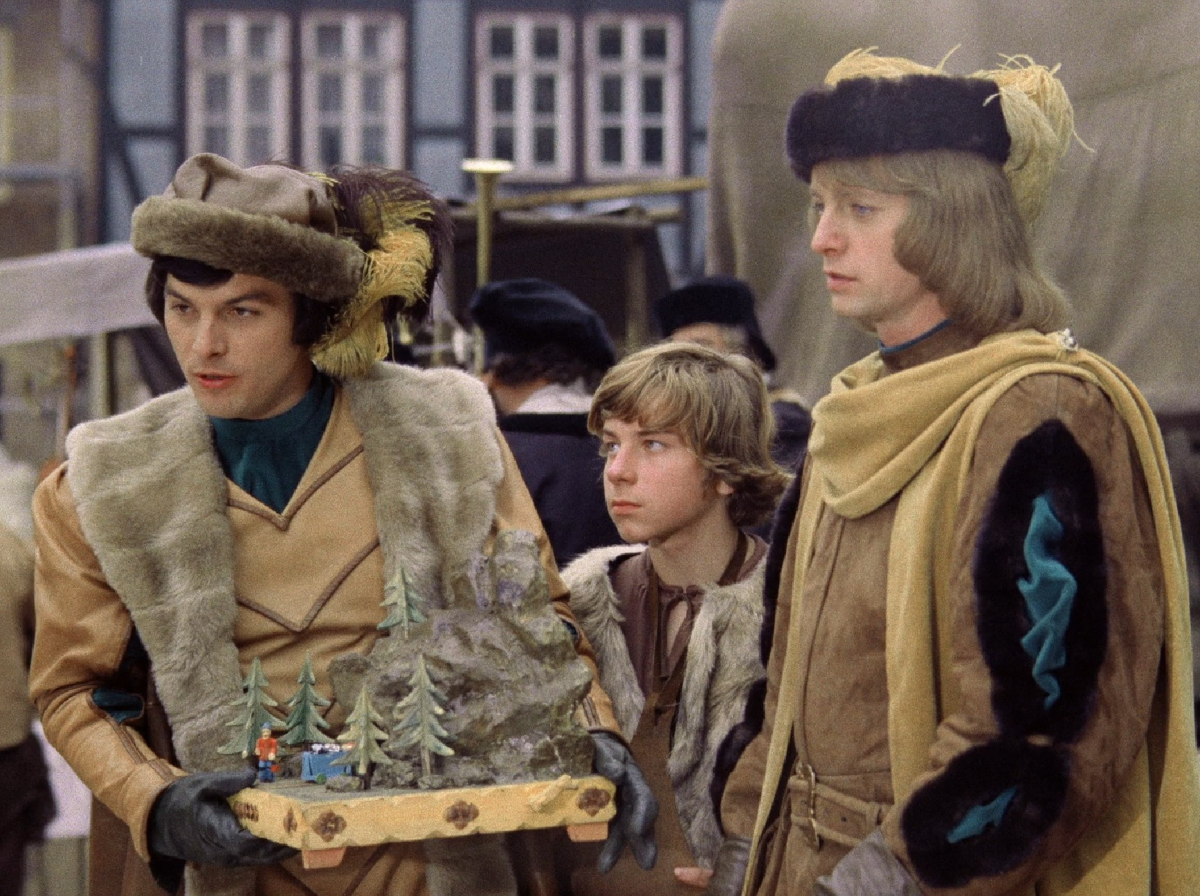
This Snow White (Julie Jurištová) isn’t a princess but a humble craftswoman who makes children’s toys and puppets. Her sister, Rose Red (Katrin Martin), is a weaver who makes blankets. They live with their mother in an idyllic, fairy tale cottage. Their father died in a mining accident, and the tunnel where it happened is now boarded up and believed to be cursed.
When the sisters sell their wares at market, they attract the attention of two of the king’s huntsmen, Andreas (Bodo Wolf) and Michael (Pavel Trávníček). The huntsmen are fascinated by the sisters and by the story of the disused local mine: they’ve just chased a mysterious figure through the woods, only for it to disappear into a tunnel like the one in the tale. Noticing Snow White’s distress at being torn between her kind nature and her need to earn a living, Andreas buys all her toys and gives them to children who can’t afford them. Michael buys all of Rose Red’s blankets and wraps. This may be a blatant example of hard work paying off and wealth being responsibly redistributed, but it’s also a neat piece of character exposition. It establishes the four-way, gendered dynamic that drives the rest of the story.
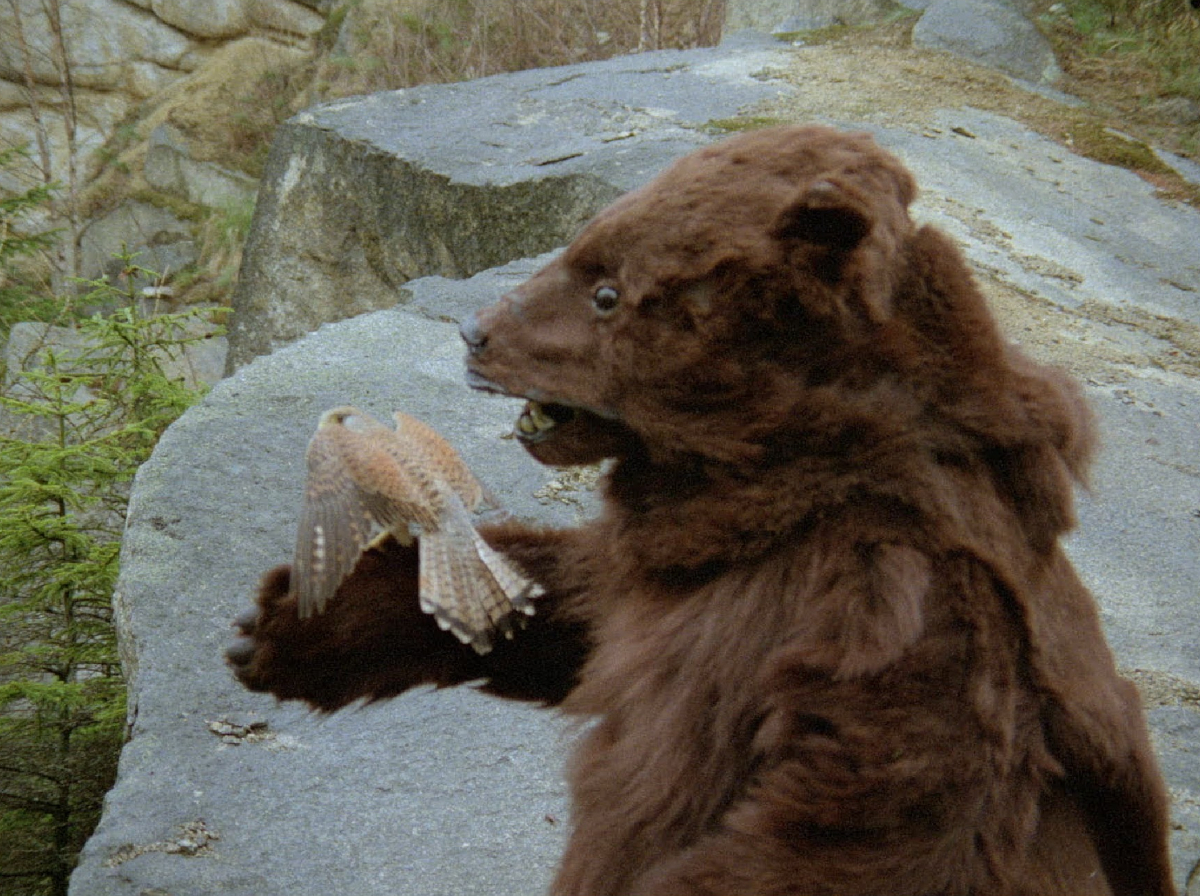
While the huntsmen investigate the abandoned mine with Grandfather Matthias (Johannes Wieke), falling rocks injure him, echoing what happened to Snow White and Rose Red’s father. The group escape their archetypal abyss, but after drinking from a spring, the young huntsmen are magically transformed: Andreas becomes a kestrel and Michael a bear. The spell recalls the enchantment placed on the prince in The Singing, Ringing Tree (1957). Here, it’s the work of a mean-spirited dwarf (Hans-Peter Minetti), who uses magic to protect the hoard of jewels hidden in his domain deep within the disused mine.
Like the hollow tree in The Tinderbox, the mine serves as a portal to another realm. For the characters, the forest is also a place of literal transformation. Many such stories recall a time when much of Europe was covered in foreboding forests inhabited by wild beasts. Dark woods also function as psychological terrain, representing the subconscious and offering a space for self-discovery and inner change. Snow White and Rose Red prove far from helpless damsels: they help rescue the honourable huntsmen and defeat the greedy dwarf, who represents the worst traits of a capitalist hoarding wealth instead of redistributing it for society’s benefit.
EAST GERMANY | 1978 | 70 MINUTES | 1.37 : 1 | COLOUR | GERMAN
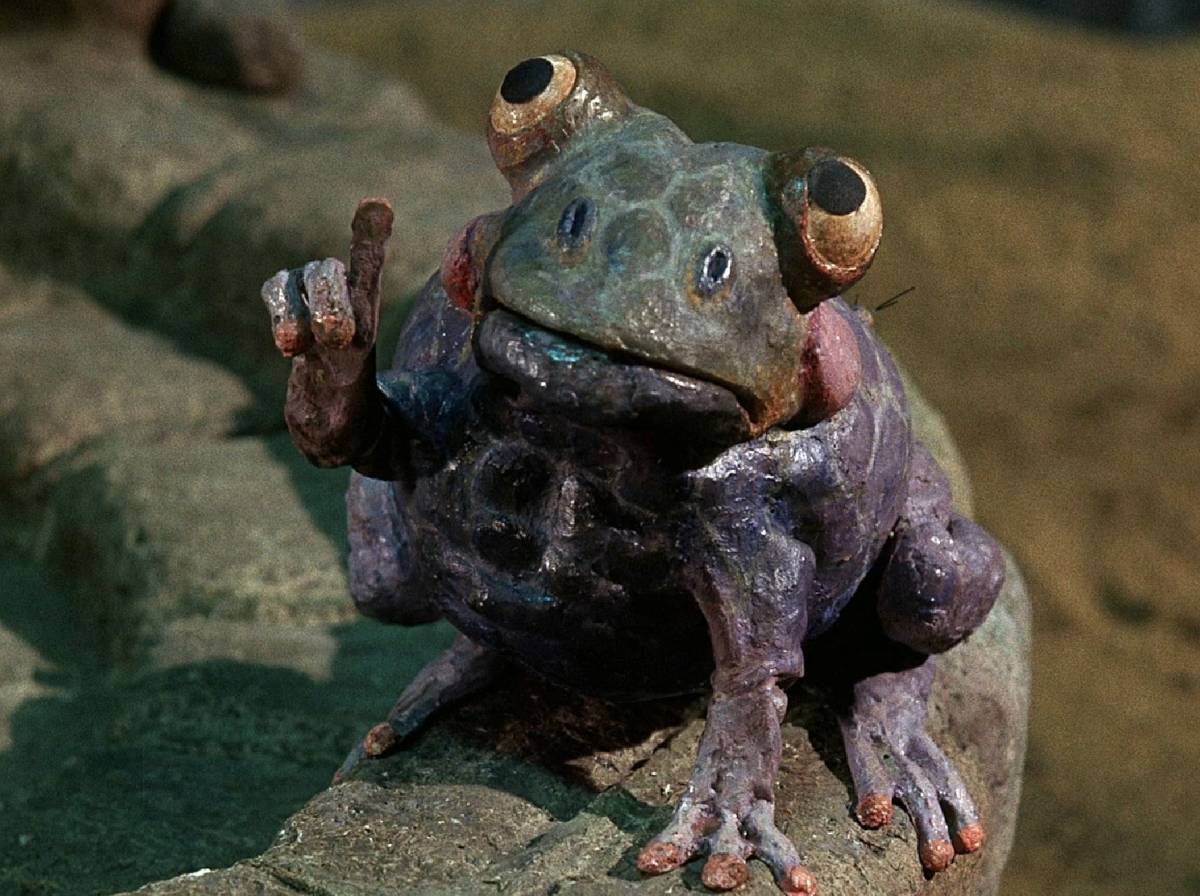
A princess fails to keep her promises and is taught a lesson.
For me, this is the most enjoyable of the five films, with humour that still lands well. Once again, the opening sequence has a languorous atmosphere that feels more evocative of the 1970s than the ’80s, making it an excellent follow-on from Snow White and Rose Red. Princess Henriette (Jana Mattukat) is playing gracefully with her ball when she drops it into a well and watches it sink into the depths. Believing it lost, she walks away dejectedly, only to be called back by a stranger’s voice. A large frog has emerged from the well with her toy.
The frog is an excellent combination of stop-frame animation and animatronic puppetry, sharing the frame seamlessly with the live action. It promises to retrieve the ball if Henriette agrees to let it drink from her cup, eat from her plate and sleep on her bed. She readily agrees, but when the frog returns, she simply takes the ball and skips away, with no intention of keeping her promise.
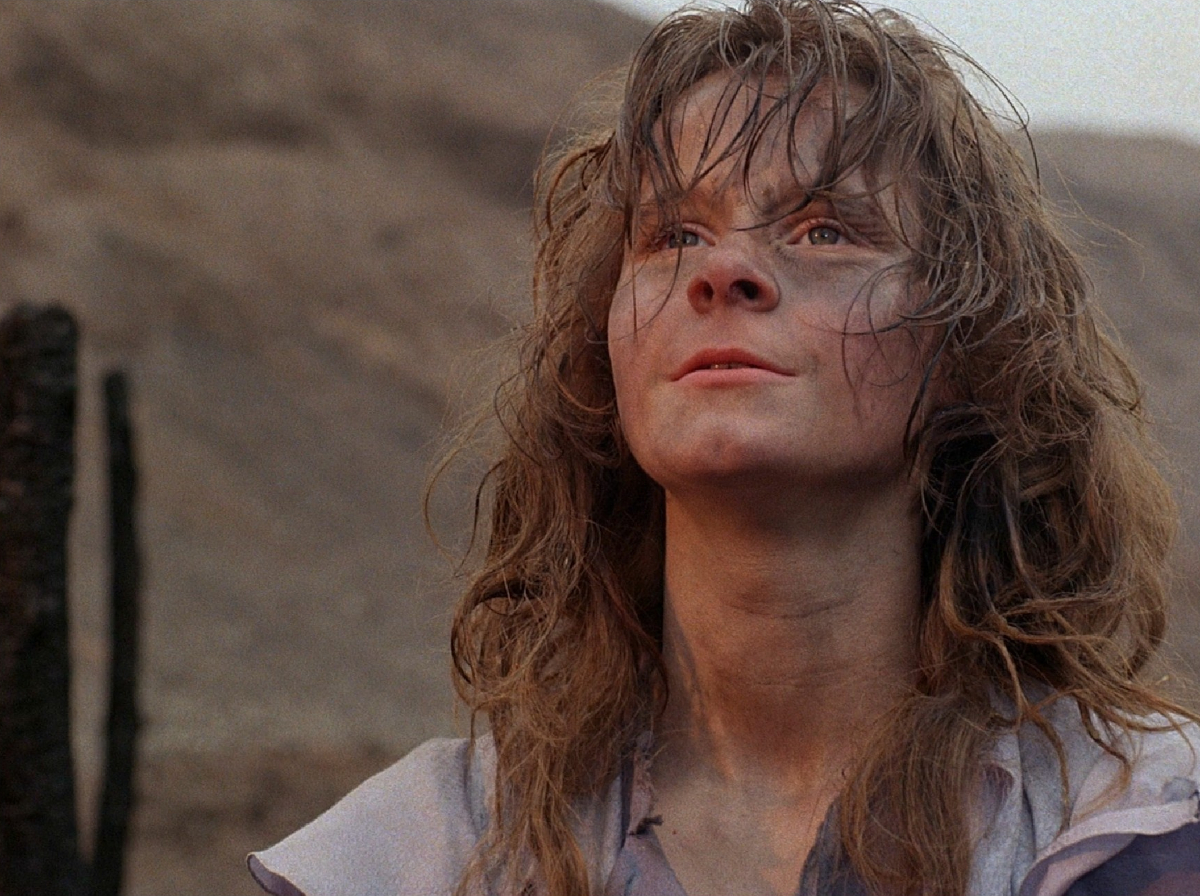
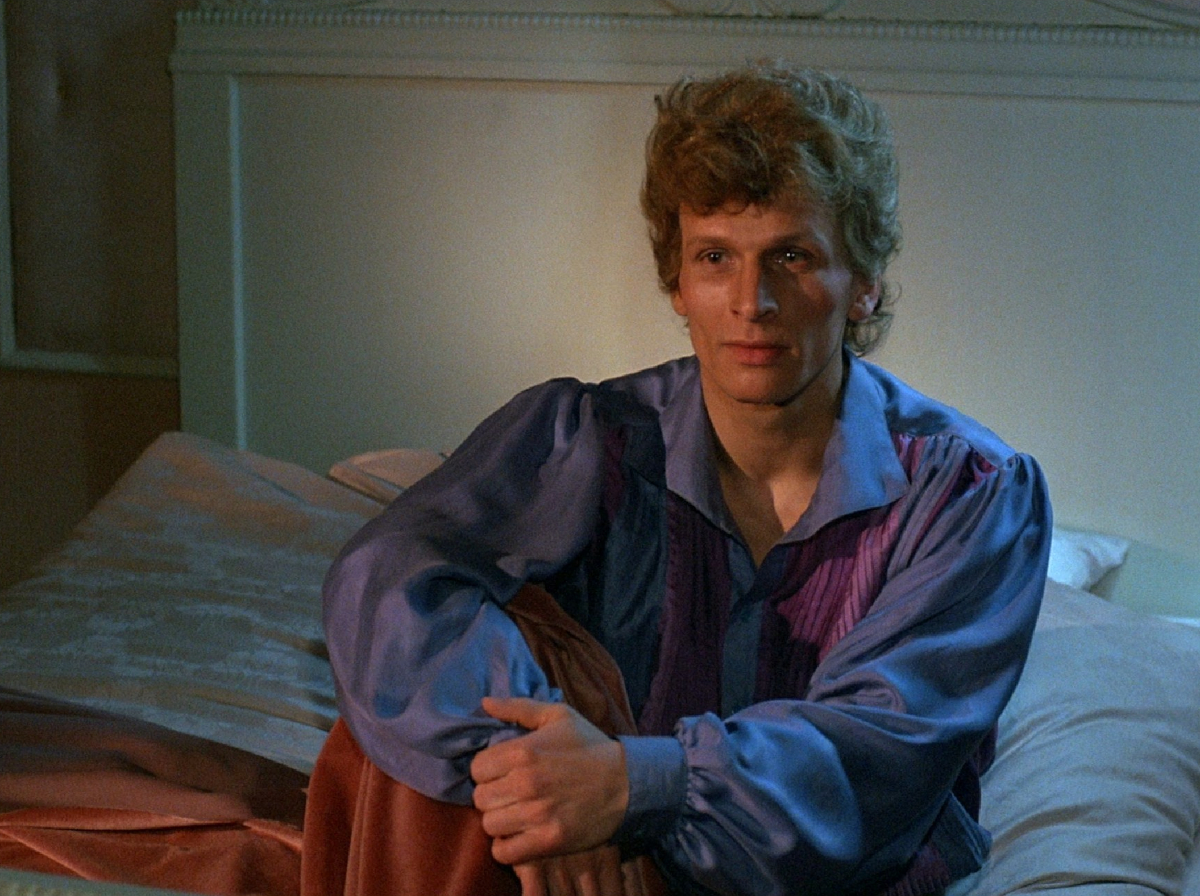
Later, while Henriette is dining with her father, the King (Peter Sodann), and her two older sisters (Franziska Glöss-Ebermann and Susanne Lüning), there’s a knock at the door. The frog has made its way from the well and intends to hold Henriette to her promise. For a king in a DEFA production, he’s unusually sympathetic and honourable. He wisely tells his daughter that a promise must be kept and lets the frog into the dining room. Showing it no respect, Henriette ungraciously tips wine from her cup onto the table for the frog to lap up, then practically hurls her food at it. When she carries the animal to her room at arm’s length, the King follows to stop her throwing it out of the window. Once in her room, she loses her temper and hurls the hapless creature against the wall. The shock transforms it into a handsome young man (Jens-Uwe Bogadtke). Well, that changes things: Henriette is suddenly thrilled at the prospect of sharing her bed with him. But he explains that this is now impossible. Although she sees him as a man, she didn’t willingly keep her promise, so he remains cursed to live a loveless life in his kingdom of desolation. He quickly leaves.
Henriette is consumed with remorse and desperate to make amends. Despite her father ordering a search of the four corners of the world, however, the kingdom can’t be found. Eventually, word of a mystical place in the far north, beyond the four elements, reaches the modest palace, and Henriette sets off.
Jana Mattukat gives an exceptionally strong performance as Henriette develops from an irritating brat into a likeable rogue and, finally, an emotionally mature young woman. Her endearing innocence survives the journey to experience. An extended sequence in which she must persuade each element to grant her passage takes the story into the realm of high fantasy. Eventually, she reaches the cursed king’s citadel, which resembles a drab, stone version of Superman’s Fortress of Solitude. But no women are allowed inside. To get past the guards, Henriette disguises herself as a boy and learns how to act like one by imitation as she tries to fulfil her three promises and lift the curse. This opens up a wealth of possibilities for exploring gender dynamics and comedy.
Writer-director Walter Beck develops a cohesive, well-paced narrative, using landscape and set design effectively to reflect the characters’ inner lives. Henriette’s first forest, for example, is a beautiful stand of silver birch. Later, she must cross a barren wasteland of charred tree trunks before eventually returning to where she began, profoundly changed. The citadel is an Escher-like maze of stairways, parapets and catwalks. Christoph Schneider’s impressive set draws on the tradition of German Expressionist cinema. Its oppressive interior reflects the King’s cold, empty heart and the tangled ‘forest’ of his psyche, which Henriette must cleverly navigate.
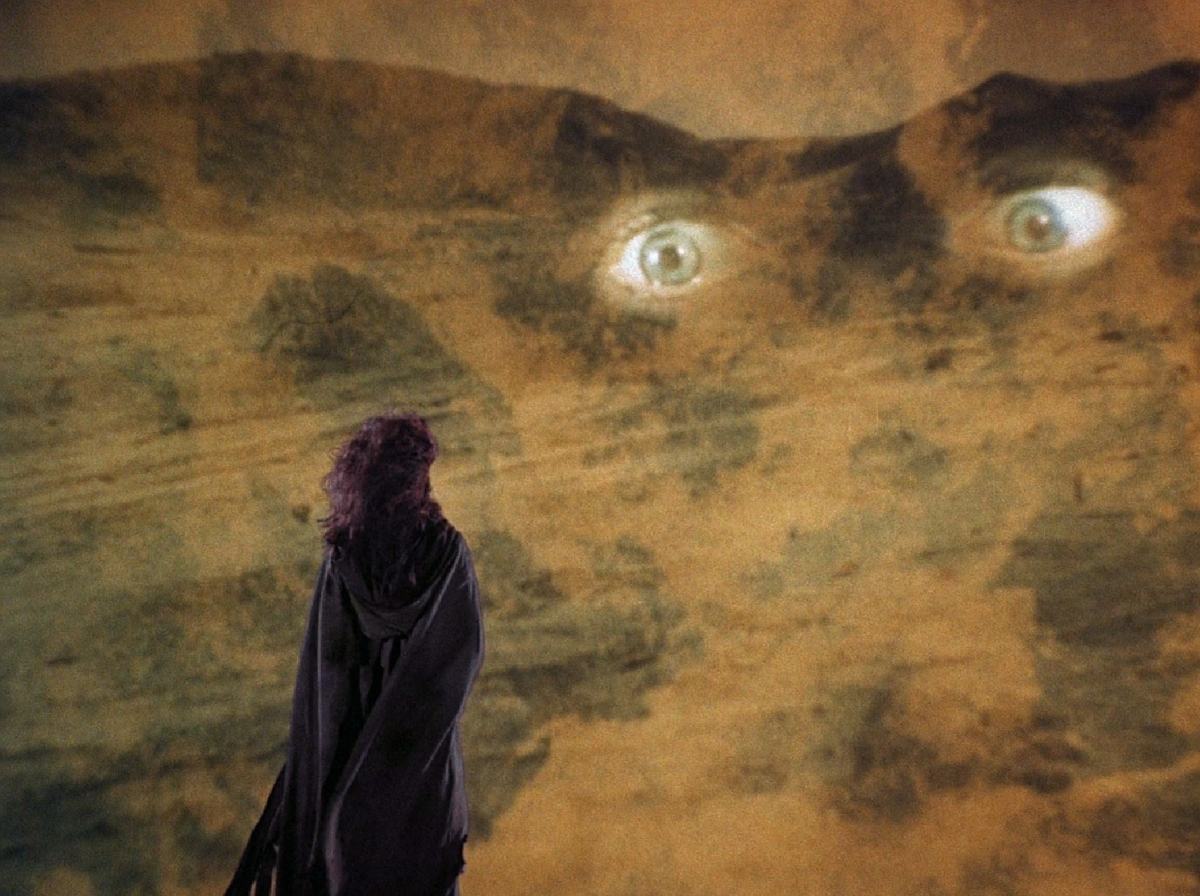
In the Brothers Grimm collection of folktales, first published in 1812, ‘The Frog Prince’ is traditionally the opening story. Here, the frog prince has been promoted to king. The tale fits neatly into what Bruno Bettelheim calls the ‘animal-groom cycle’ in his seminal work of Freudian fairy tale analysis, The Uses of Enchantment, first published in 1976. Such stories commonly feature a girl on the cusp of womanhood who is both attracted to and repelled by an enchanted beast. Over the course of the story—or in a reveal near the end—the monstrous creature is transformed into a desirable one through true love and acceptance. The best-known example is Barbot de Villeneuve’s Beauty and the Beast, first published anonymously in 1740. We’ve just had a double dose of the motif in Snow White and Rose Redand, of course, The Singing, Ringing Tree from Volume 1.
Bettelheim interpreted stories as a psychoanalyst might interpret dreams, identifying motifs that represent children’s fears about adulthood. The animal’s appearance symbolises a child’s perception of adult sexuality as alien and threatening. As the adolescent learns to see beyond lust and apprehension, the animal aspect gives way to the human. By tempering his basic instincts, the beast becomes gentle, patient and caring. The heroine, meanwhile, must learn to trust and understand him before love can develop and the ‘animal’ becomes a ‘prince’. For Bettelheim, this transformation isn’t literal; it represents a psychological shift in the heroine’s perception. What once seemed frightening becomes desirable through emotional maturity, leading to a mutual, loving bond.
EAST GERMANY | 1987 | 67 MINUTES | 1.37 : 1 | COLOUR | GERMAN
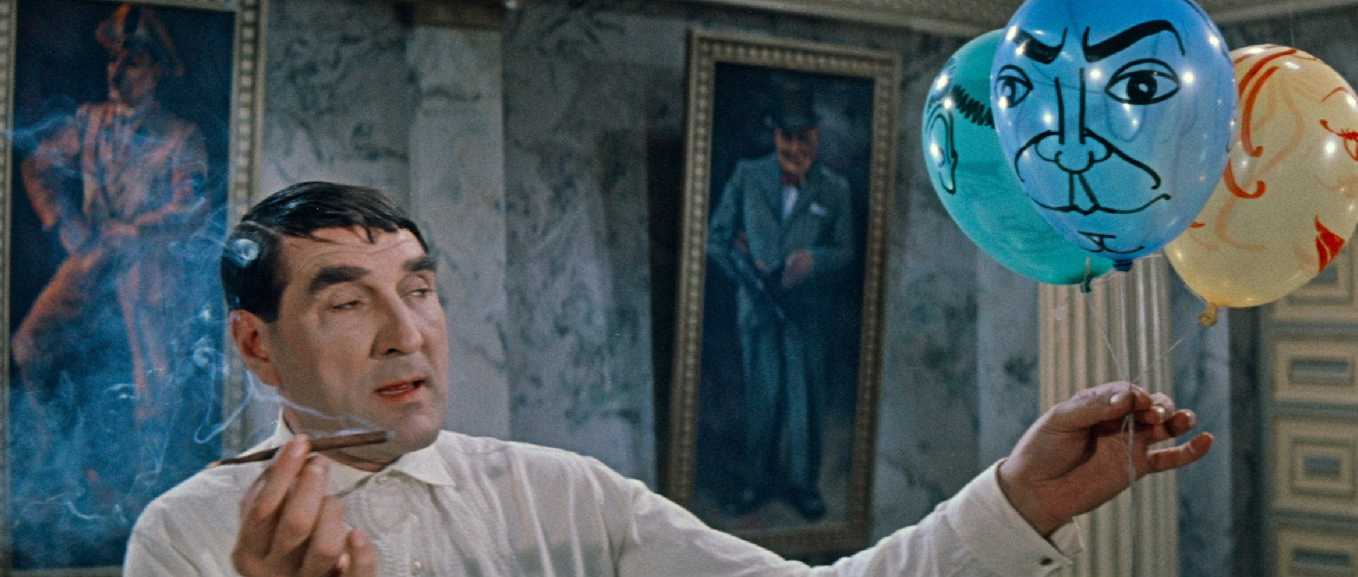
Hans and Kumpan repeatedly try to enter a town surrounded by a tall, impenetrable wall, where everyone is apparently very happy.
Freely adapted from Hans Christian Andersen’s The Emperor’s New Clothes, published in 1837 as the final instalment of his Fairy Tales Told for Children, The Robe follows two poor travellers, Hans (Horst Drinda) and Kumpan (Werner Lierck). They manage to infiltrate a heavily guarded, walled town where everyone is reputed to be very happy. Instead, they discover a self-contained micro-nation ruled by a vain but apathetic despot. Its officials are constantly afraid for their careers, while the populace is divided into rich businessmen, poor working-class people and mean cats.
Alas, this final offering detracts from an otherwise excellent collection. Its interest lies not in the film itself but in the story behind its 30-year production. Shot in 1961, alongside Snow White, it was left unfinished and shelved. We’re led to believe this was due to the political climate surrounding the division of Berlin, and to content deemed too contentious until after the Wall came down in 1989. The state censors’ decision not to approve the film is well documented, but I suspect the reason may simply have been that it’s a terrible film.
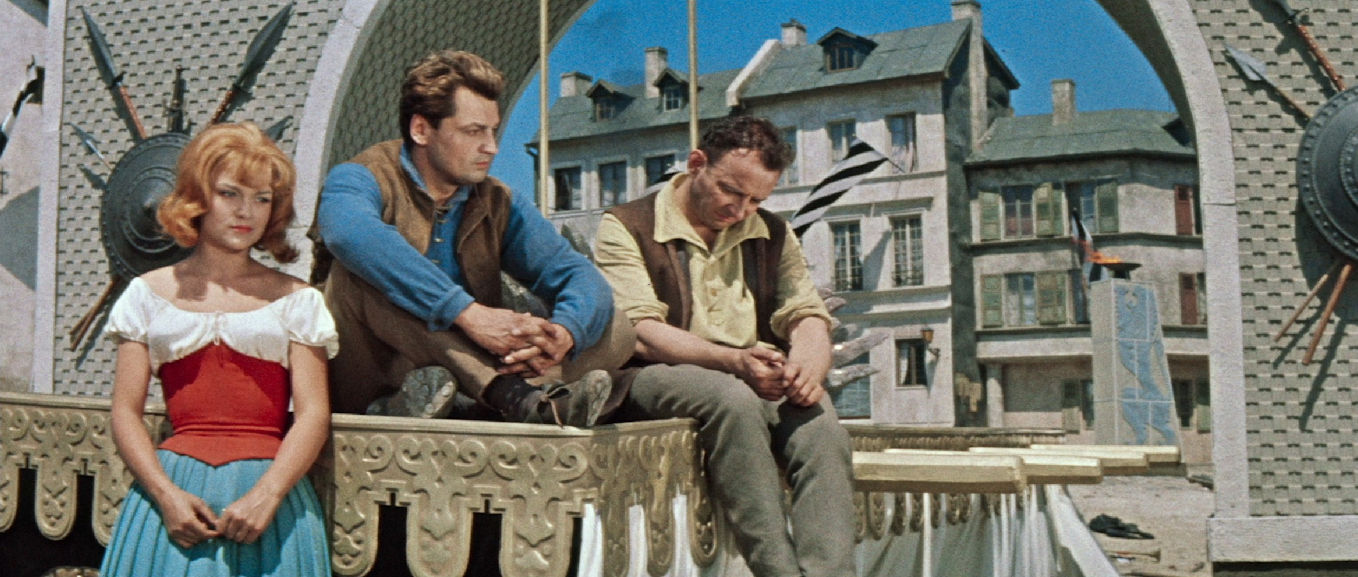
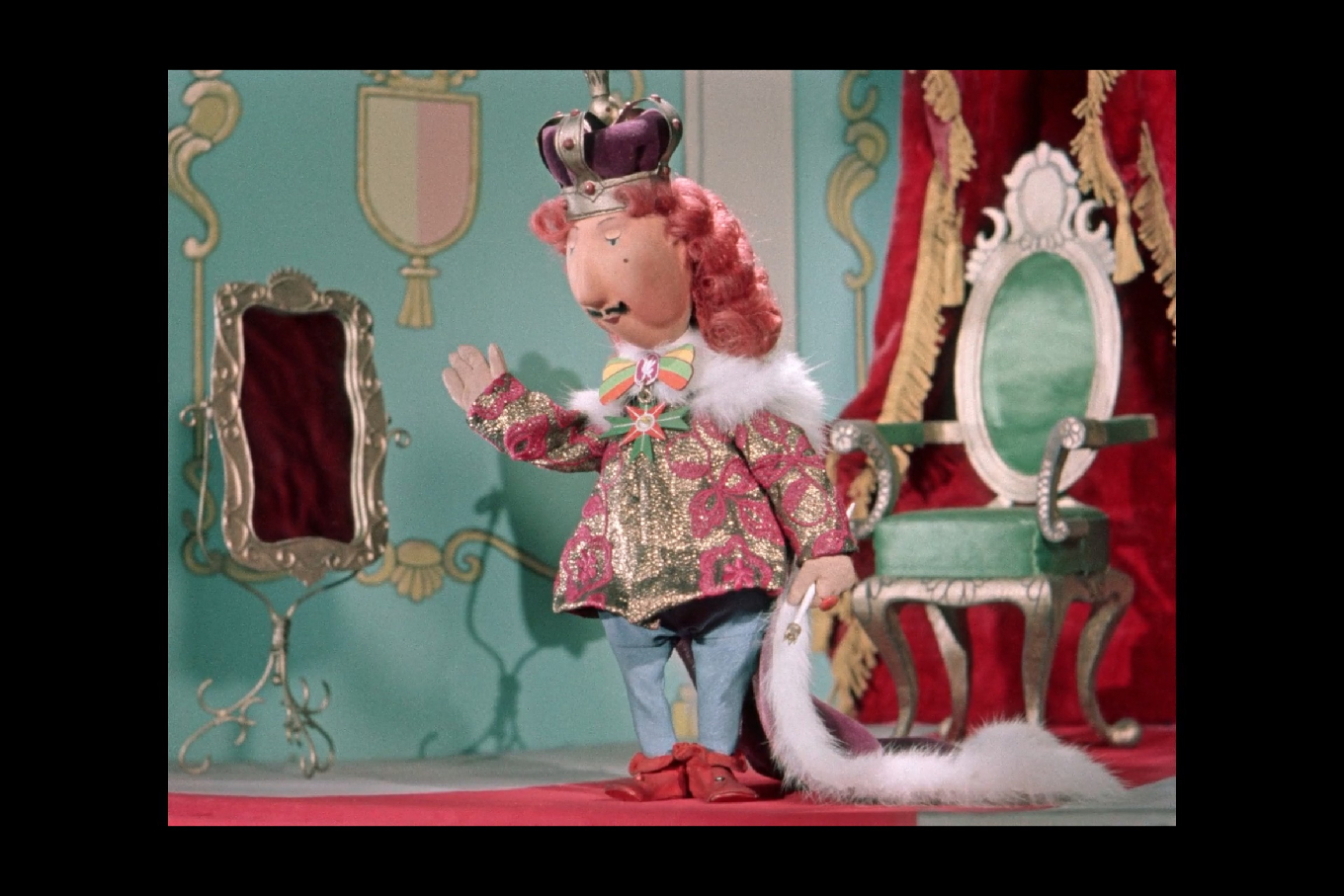
In 1991, the footage was recovered, redubbed with new voice actors where necessary, and edited according to director Konrad Petzold’s original script and notes. Although this amounts to a director’s cut, the narrative feels poorly paced and incomplete. A few incongruous short animations interrupt rather than enhance the story. They have no discernible bearing on the central narrative, apart from adding politically charged allegorical asides. In one, a vain, lipstick-wearing cat is threatened in a sexualised manner by a tomcat whose entitled arrogance parallels that of the town’s dictator. In another, the wind snatches the Emperor’s jacket and carries it through the clouds, leaving it on a scarecrow. What happened to the scarecrow’s original clothes? Or is the jacket all that remains of a similarly pompous victim, dressed in the invisible new clothes of a previous despotic scarecrow? Perhaps we’re reading too much into this, though evidently the state censor did so at the time. Still, there’s a touch of ironic humour, and the animations remain the film’s most memorable elements.
The Kaiser (played by the appropriately named Wolf Kaiser) seems equally bored and paranoid. On his orders, Hans and his companion Kumpan are placed under house arrest and told to produce the most magnificent robe ever seen, though he gives them neither a budget nor any materials. Without Katrin (Eva-Maria Hagen), who brings them food, they’d soon starve. The political metaphor is clear enough, right down to Katrin’s dress in the red, white and blue of the French Tricolour. Hagen was a politically vocal singer-songwriter and popular actress with working-class roots. She was eventually blacklisted, banned from working and, in 1977, stripped of her citizenship. After living in West Germany, she returned to East Germany after the Wall came down, resumed her stage career and also wrote and exhibited her paintings. Wolf Kaiser is good enough in the role, though the character is drawn in broad strokes, with little room for subtlety or nuance. He seems to be deliberately quoting Charlie Chaplin’s performance in The Great Dictator (1940), which I imagine would have been an obscure reference for children at the time.
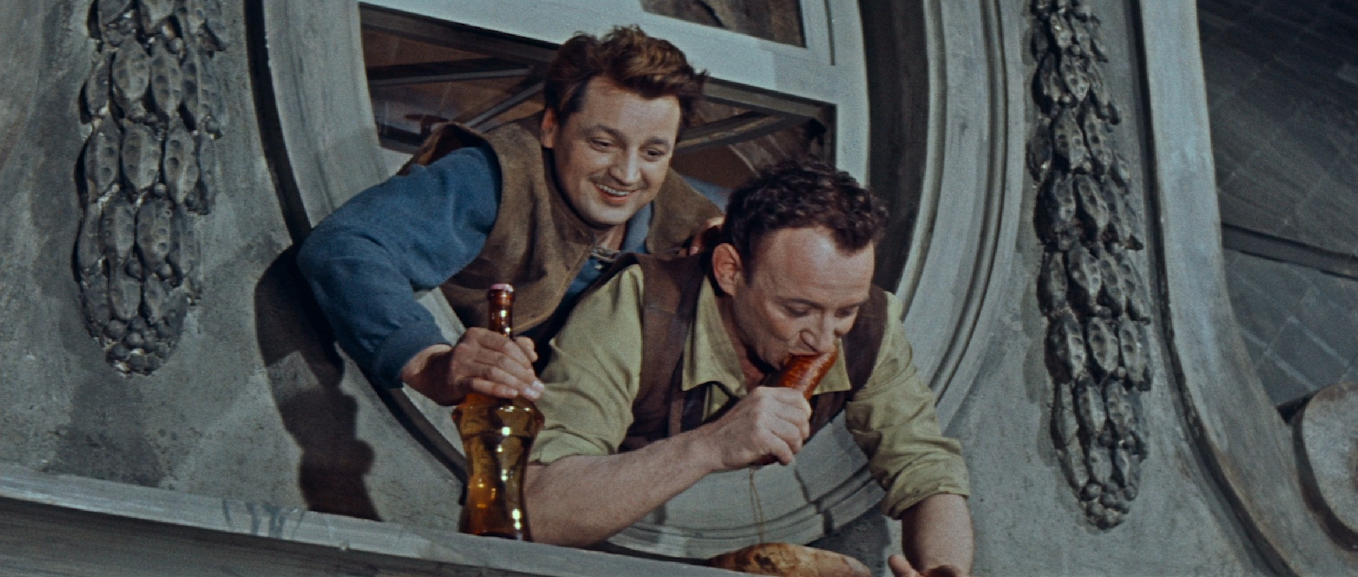
That said, the cast do a good job with the material they’re given. Unfortunately, the material is neither funny nor exciting, and its poorly delivered satire disguises neither shortcoming. For the film to work, it needs some sense of urgency or peril to hook the viewer. It also needs characters we can love, despise or simply care about. A basic understanding of storytelling structure would help, too—something Egon Günther’s script perversely avoids, even though it’s central to fairy tales. One could argue that the film deliberately subverts fairy tale conventions, but to what end? Defying expectations simply disappoints the audience unless a narrative twist surprises or delights while giving familiar material new meaning. Günther was already known for his political allegories and avant-garde approach, neither of which suits the source material in this monotonous failure. Children of all ages will be very bored.
Ultimately, it’s best to approach The Robe as a brave—or foolhardy—attempt to stretch a slight story into a feature-length narrative. It’s the longest film in the collection, and you’ll feel every minute. Apparently, after the state film board withheld approval, Petzold was advised to shorten it and make it more appealing to children, as the original brief required. He declined. Perhaps intended as a refreshing deconstruction of Andersen’s story, the film instead demonstrates the ‘Emperor’s new clothes’ idiom: a script that thinks it’s clever, but is so blatant that the viewer can see straight through it. No magic, no fun.
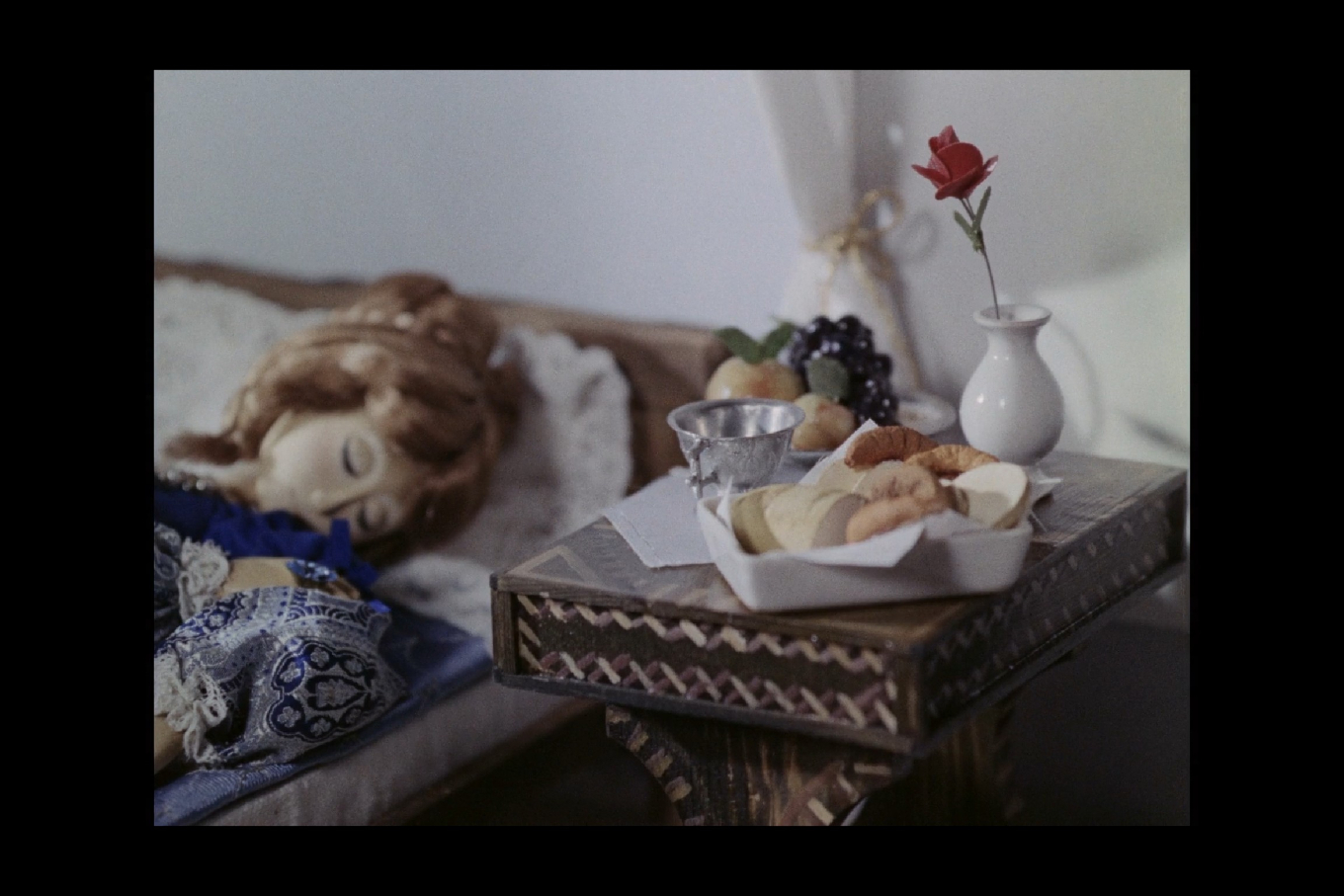
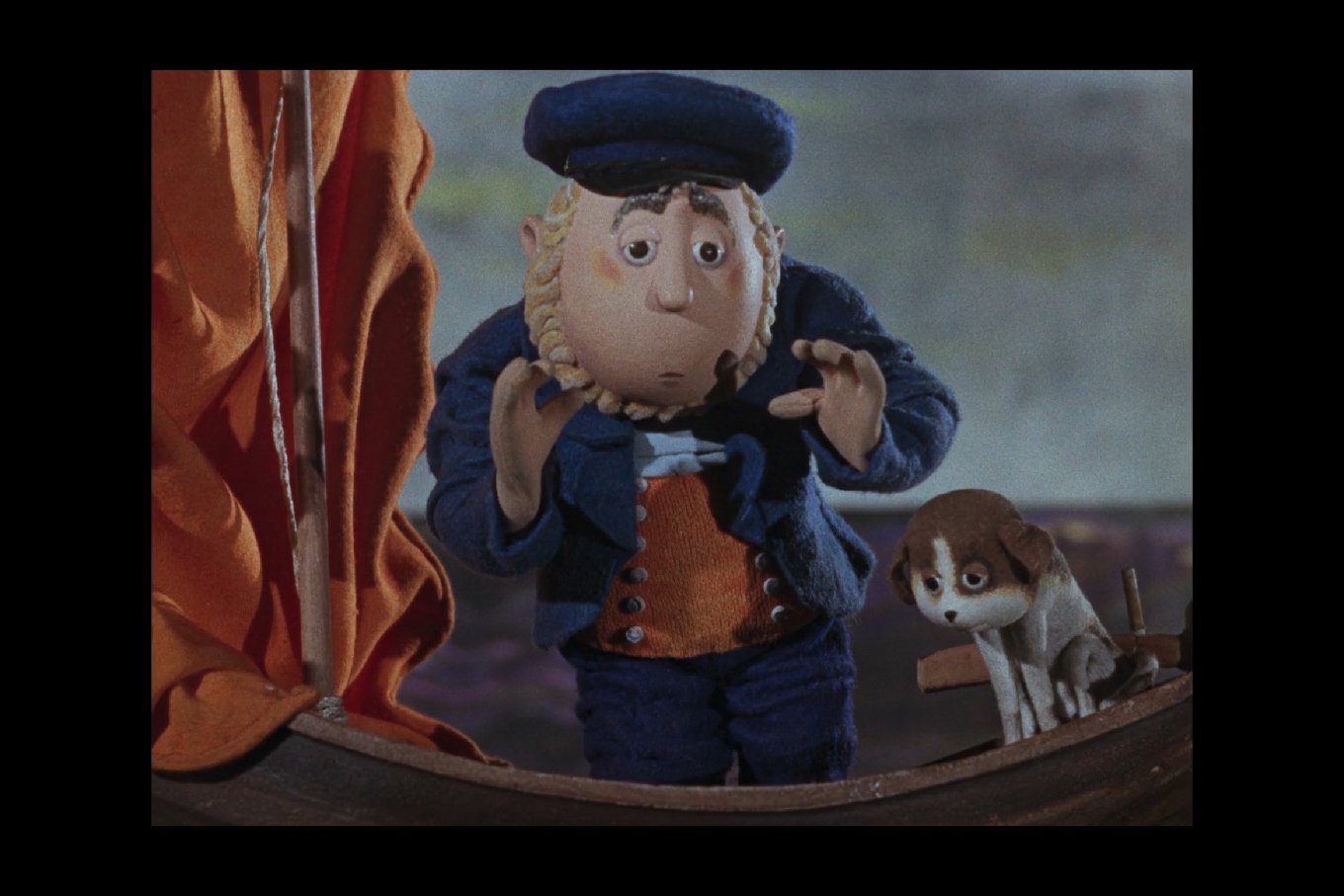
However, Michael Brooke’s excellent audio commentary makes The Robe a far more edifying and entertaining experience. The bonus material also includes a puppet animation telling the same story. It’s a far superior version: more faithful to Andersen’s original and, conveniently, much shorter.
EAST GERMANY | 1961 • 1991 (RELEASE) | 93 MINUTES | 2.35:1| COLOUR | GERMAN

directors: Siegfried Hartmann (Tinderbox & Rose Red) • Gottfried Kolditz (Snow White) • Walter Beck (Frog) • Konrad Petzold (Robe).
writers: Margot Beichler (Tinderbox, Snow White, Rose Red) • Siegfried Hartmann, Anneliese Kocialek, Fred Rodrian (Tinderbox) • Günter Kaltofen &
Gudrun ‘Rammler’ Deubener (Snow White) • Siegfried Hartmann & Willi Brückner (Rose Red) • Walter Beck & Gerd Gericke (Frog) • Egon Günther (Robe).
starring: Rolf Ludwig & Barbara Mehlan (Tinderbox) • Fritz Schlegel (Tinderbox & Snow White) • Doris Weikow, Marianne Christina Schilling, Heinz Scholz & Willi Scholz (Snow White) • Julie Jurištová, Katrin Martin, Pavel Trávníček, Bodo Wolf, Hans-Peter Minetti, Johannes Wieke & Hajo Mende (Rose Red) • Jana Mattukat, Jens-Uwe Bogadtke & Peter Sodann (Frog) • Wolf Kaiser, Horst Drinda, Werner Lierck & Eva-Maria Hagen. (Robe).