‘Into the Forest’: Folktales at DEFA (1955-1977)
These visually arresting and luridly colourful pictures drew on the works of authors such as Wilhelm Hauff, Hans Christian Andersen, and the Brothers Grimm.


These visually arresting and luridly colourful pictures drew on the works of authors such as Wilhelm Hauff, Hans Christian Andersen, and the Brothers Grimm.
There are some timeless tales we feel we already know. Yet it’s always a delight to be surprised by a forgotten detail or an unexpected twist. Seeing the familiar filtered through the cultural lens of a particular time and place is endlessly captivating. This entertaining and educational box set from Eureka Entertainment grants us a colourful window onto a handful of the famed fairy tale films made by Deutsche Film-Aktiengesellschaft (DEFA), East Germany’s state studio.
These were lavish productions with a distinct charm that, in their heyday, outperformed Disney’s efforts across parts of Europe. Their clarity of storytelling, lively pacing, and appealing colour palettes will no doubt appeal to children of all ages, though they may provide nightmare fuel for younger viewers. For the engaged adult, however, they offer rich historical and contextual insights, alongside unique imagery and pleasingly audacious production design.
Of the five feature films showcased here—lovingly restored in all their HD glory by the DEFA Foundation—The Singing, Ringing Tree (1957) will be the highlight for many who have fond or fearful childhood memories of seeing it during the early days of BBC children’s programming. Joining it are an underseen gem, The Devil From Mill Mountain(1955); a counter-culture reimagining of Rumpelstiltskin (1960); the uncanny, costumed creepiness of Little Red Riding Hood (1962); and the wacky, psychedelic hell of The Devil’s Three Golden Hairs (1977).
In 1946, following the end of World War II, DEFA was established as the state-run film studio of the Soviet occupation zone in Eastern Germany. It was initiated by military command to produce films that would educate and entertain while actively redressing more than a decade of Nazi propaganda. Two years later, in 1948, Germany was officially divided into clearly demarcated zones: the German Democratic Republic (GDR) under the control of the Stalinist Soviets, and the Federal Republic of Germany (FRG) controlled by the Western Allies. By the time the earliest films in this box set were produced, Joseph Stalin had died, and his brand of totalitarian Communism was slowly reverting to the more progressive ideology of revolutionary Socialism that had preceded him.
I can imagine some folklore ‘purists’ finding the free reinterpretation of these classic tales frustrating, especially the overt ideology superimposed upon them. Then again, a serious folklorist would never consider a story to be in stasis. There’s no true folktale, only versions that remain true to the culture that fixed them in a particular form. This is what makes the study of folklore so captivating: the stories become repositories of a culture’s dominant or desired attitudes and ideas, along with its wisdom and warnings.
Because fairy tales are aimed primarily at children, they’ve been engineered through countless retellings to demand attention, to be memorable, and to impart a message—a definition that also sums up propaganda. That’s why DEFA made around 40 live-action Märchenfilme (fairy tale films). Usually treated as prestige productions, they were shot in colour with high-end budgets. Some were written directly for the screen, a few were adapted from contemporary literature, and at least 23 were based on tales collected in the 19th century by Jacob and Wilhelm Grimm.
The source material for four of the five films collected in this excellent box set came from versions written down by the Brothers Grimm, perhaps the best-known European folklorists of all. In their extensive quest to preserve the oral storytelling traditions peculiar to rural Germany, they curated which tales deserved to be recorded for posterity. They then freely adapted them to suit their own predilections and the sentiments of the early-19th-century. Folktales nearly always function as morality tales, and DEFA was simply updating and repurposing this cultural heritage for the post-war political climate of the GDR. Significant changes to the original texts include reassigning evil to a human rather than supernatural source, as well as empowering heroines whom the Grimms had largely robbed of agency.
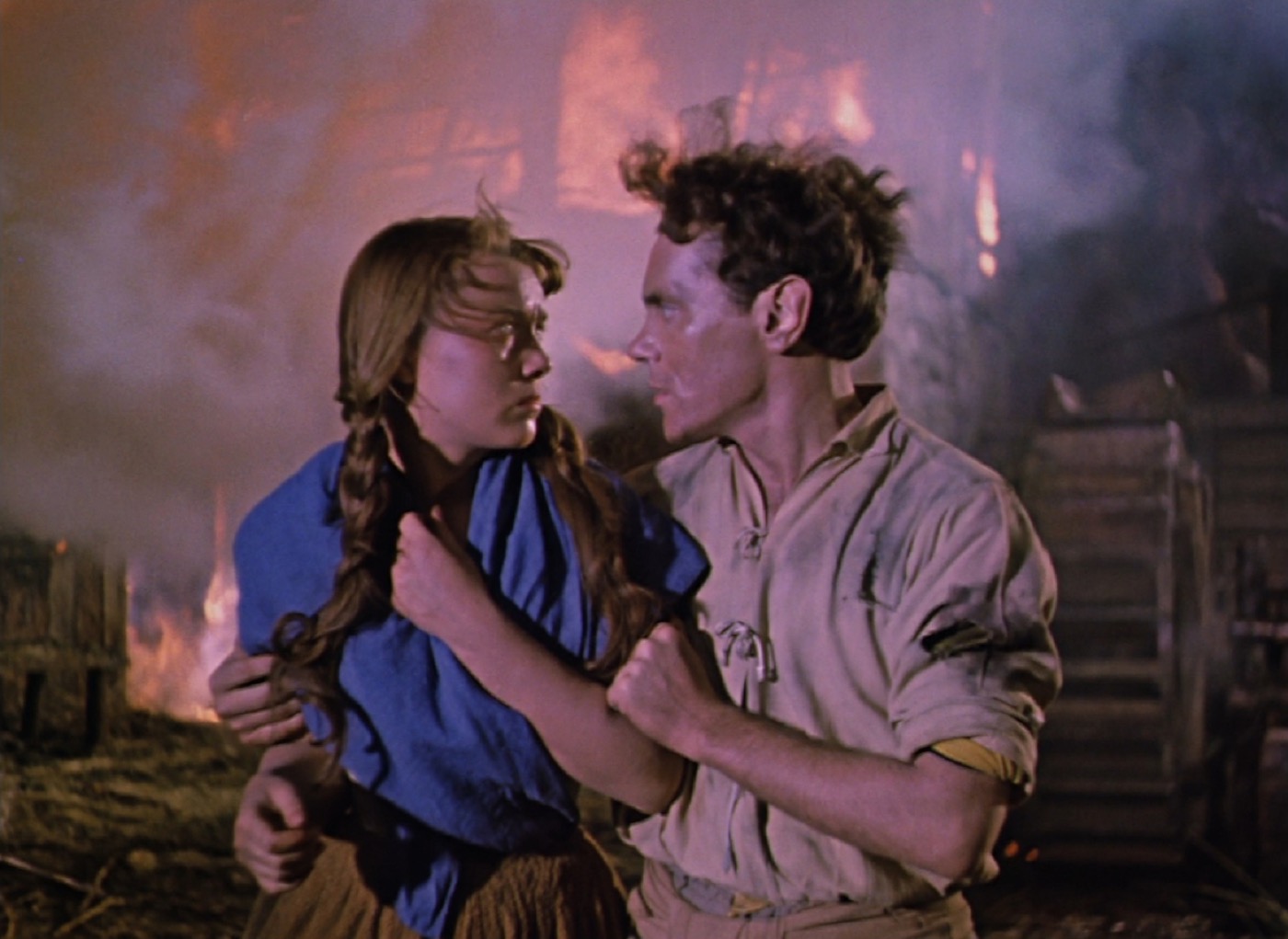
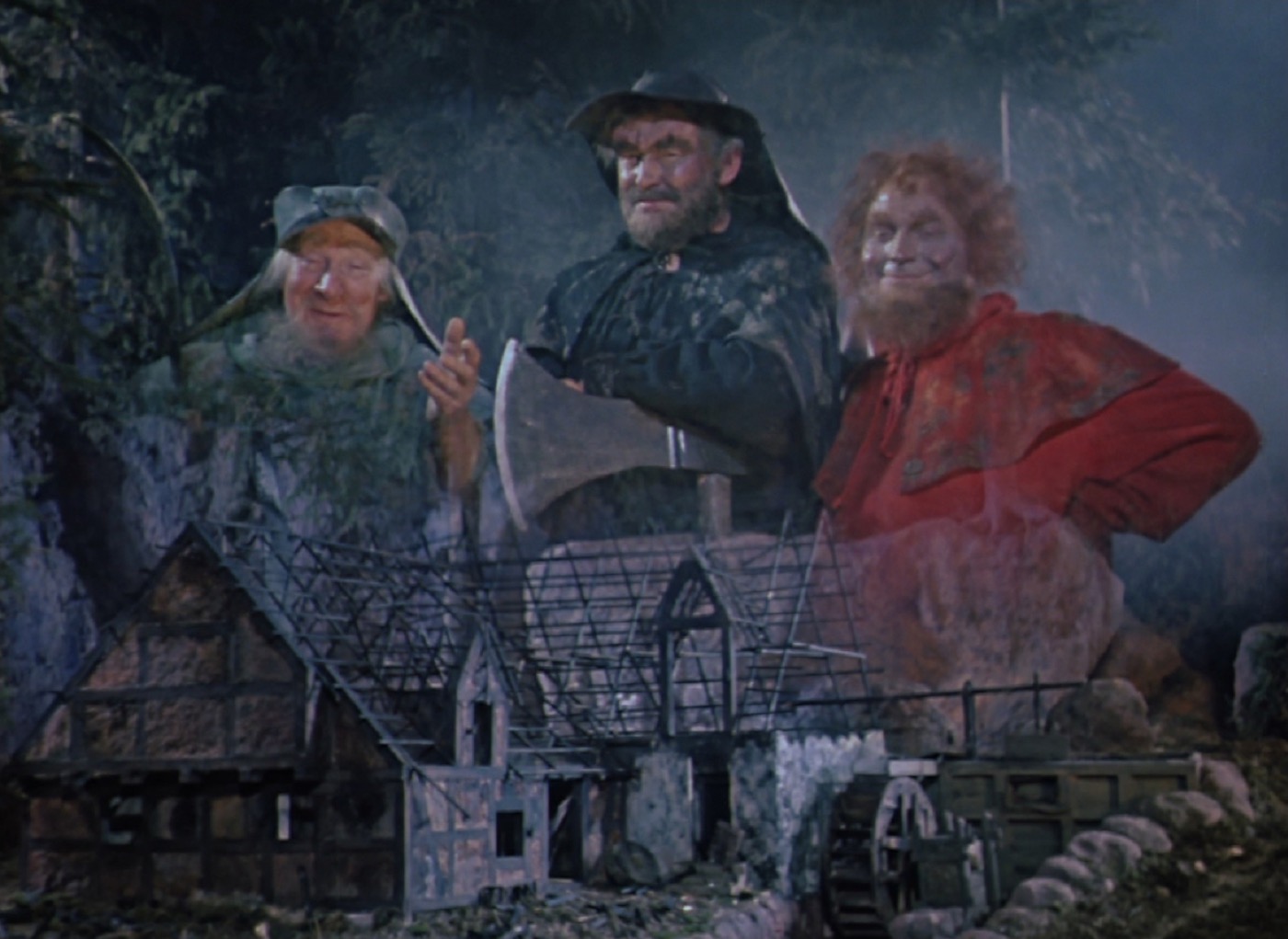
When an evil mill owner burns down a rival’s mill, a young servant girl uncovers the truth and is aided by three mysterious charcoal burners.
It’s not immediately clear which folktale serves as the inspiration here; it appears to be an original story drawing freely from the lore of the Harz Mountains in northern Germany. A preface informs us of an evil mill owner who was turned to stone by three good charcoal burners, and we are about to witness the preceding events.
The rock formations referenced in the set design are based on a section of die Teufelsmauer, which translates as “The Devil’s Wall”. As with most unusual rock outcrops and tors, several traditional tales explain how they came to be. The most popular story, recorded by the Brothers Grimm, has God agreeing to grant the Devil dominion over whatever land he could enclose within a wall built in a single night, from sunset to sunrise. However, a farmer’s wife, setting out for market in the early hours with a prize cockerel, stumbles over a partially completed section of the wall, startling the bird into crowing. The Devil, believing this to be the cock-crow of dawn, flies into a rage and kicks down most of his unfinished wall in frustration. Other stories imagine the pillar-like stacks of eroded sandstone were evil-doers punitively petrified. Indeed, such folklore attaches to similar geological anomalies the world over.
The three good charcoal burners sound as though they should have their own specific folktale. Yet, although I couldn’t find an obvious candidate, charcoal burners often crop up in European lore. In fact, Heart of Stone (1950)—the first of DEFA’s fairy tale films, which set a high bar—follows the misadventures of Peter, who starts out as a lowly charcoal burner. Like blacksmiths, charcoal burners were attributed with mystical qualities because they lived out in the woods, away from villages where their trade posed a fire risk, and closer to their required raw material. They tended their charcoal kilns day and night using skill and specialised knowledge, often trading with woodcutters and smiths—a triumvirate of marginalised folk credited with secret knowledge and associated with nature spirits, or even devils.
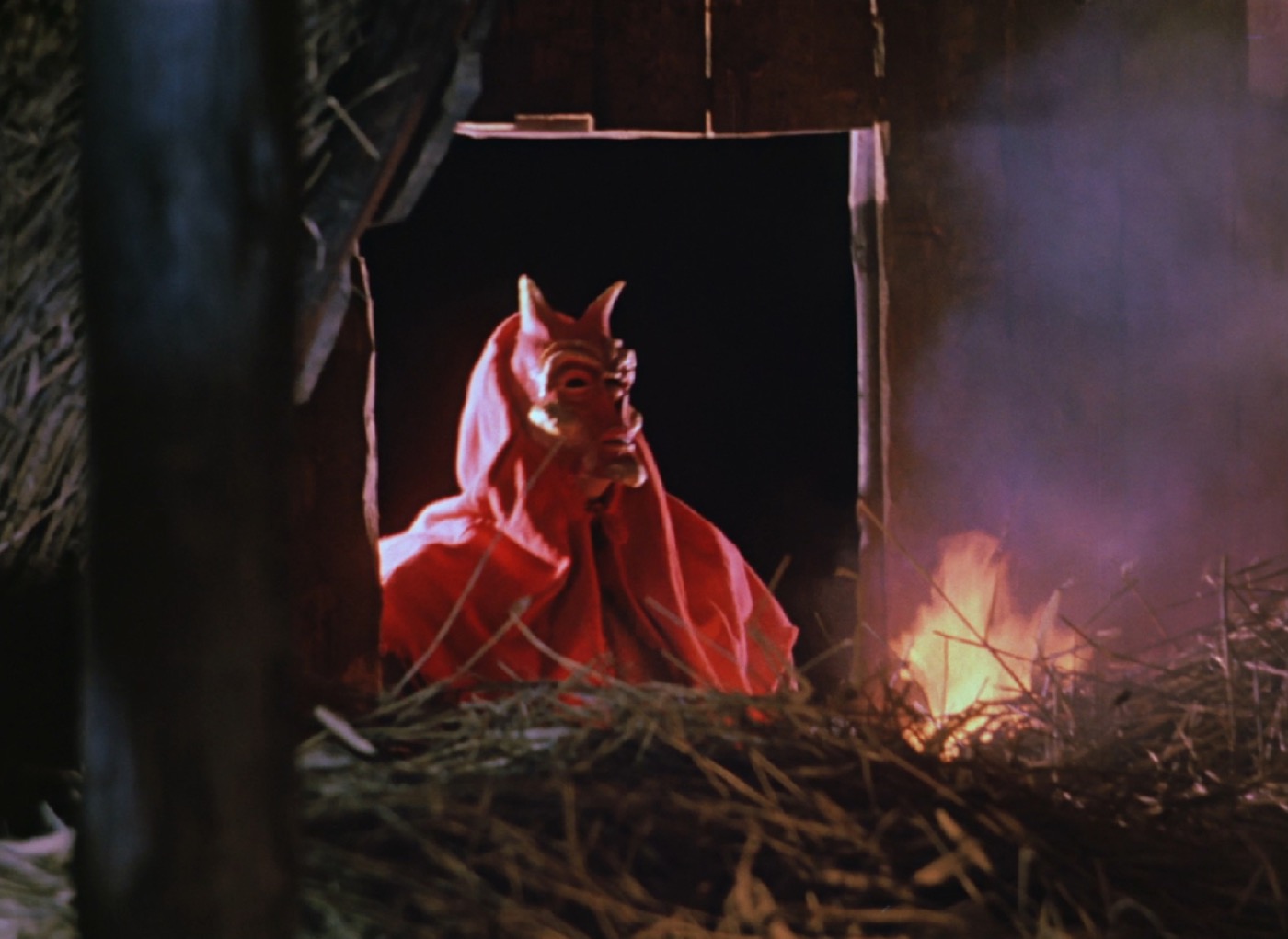
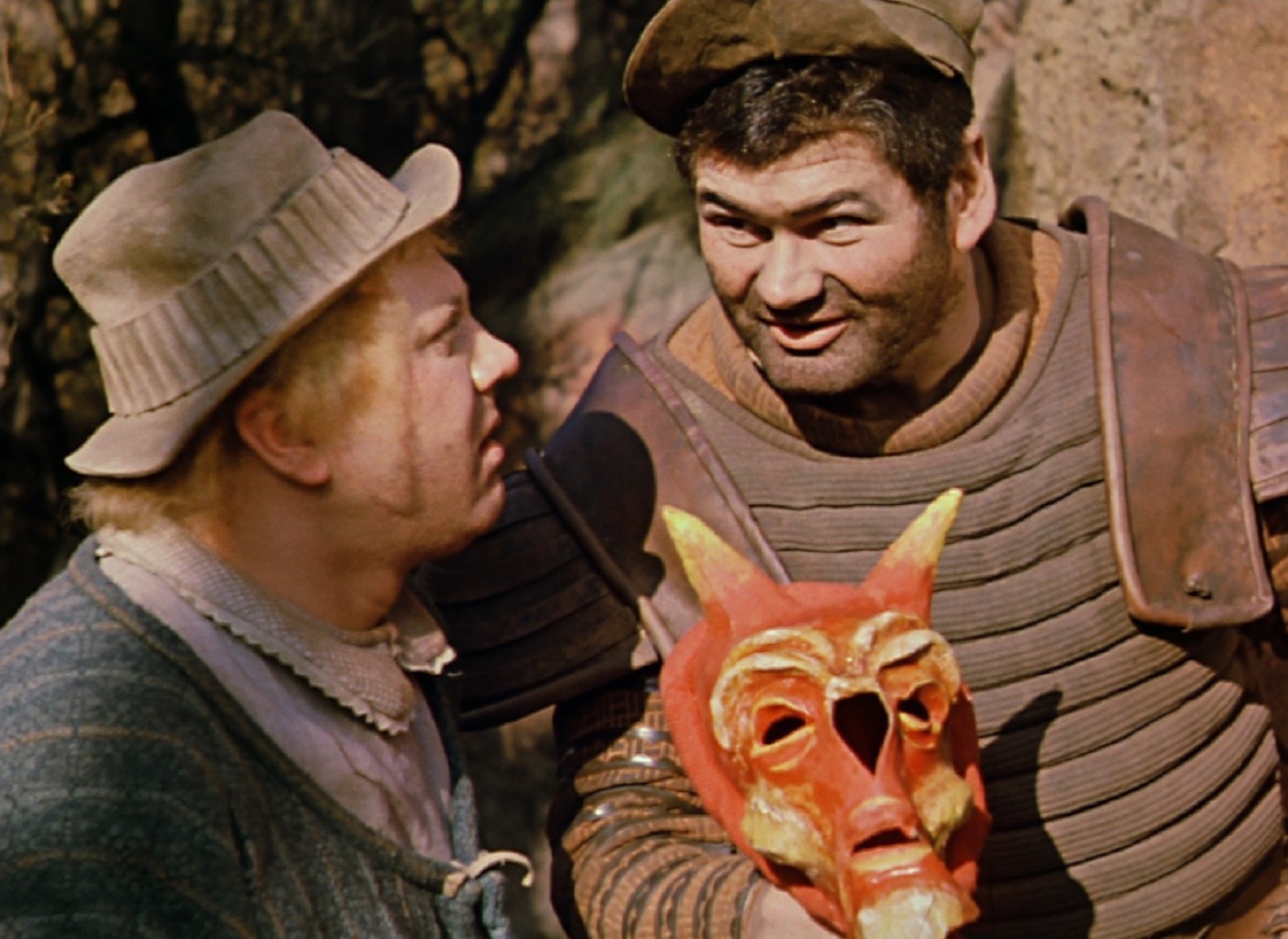
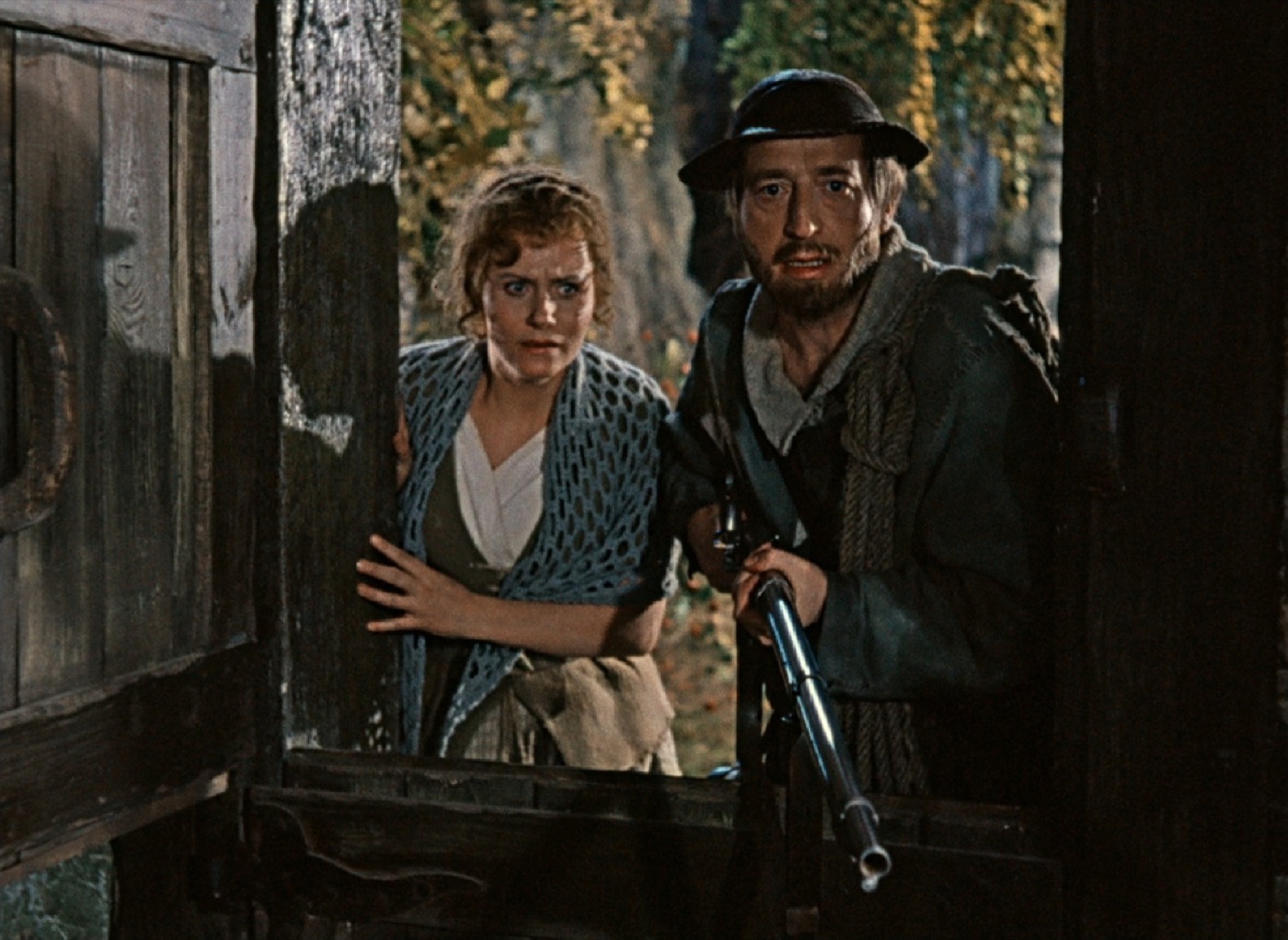
Despite the title, the Devil does not show up in person. Instead, it’s the owner of the ‘Mountain Mill’ (Willy A. Kleinau), assisted by Schulze the Bailiff (Gerhard Frei) and Raufer the Castellan (Werner Peters), who disguise themselves as devils to perform their dastardly deeds. That’s not giving too much away, as we see them riding out with the hooves of their horses and the wheels of their carts bound with straw to muffle them. Under cover of a lightning storm, they raid the grain store of the rival ‘Forest Mill’ before torching it. The plan is to plausibly blame the fire on a lightning strike and, if witnessed, have it dismissed by superstitious peasants as the Devil’s work.
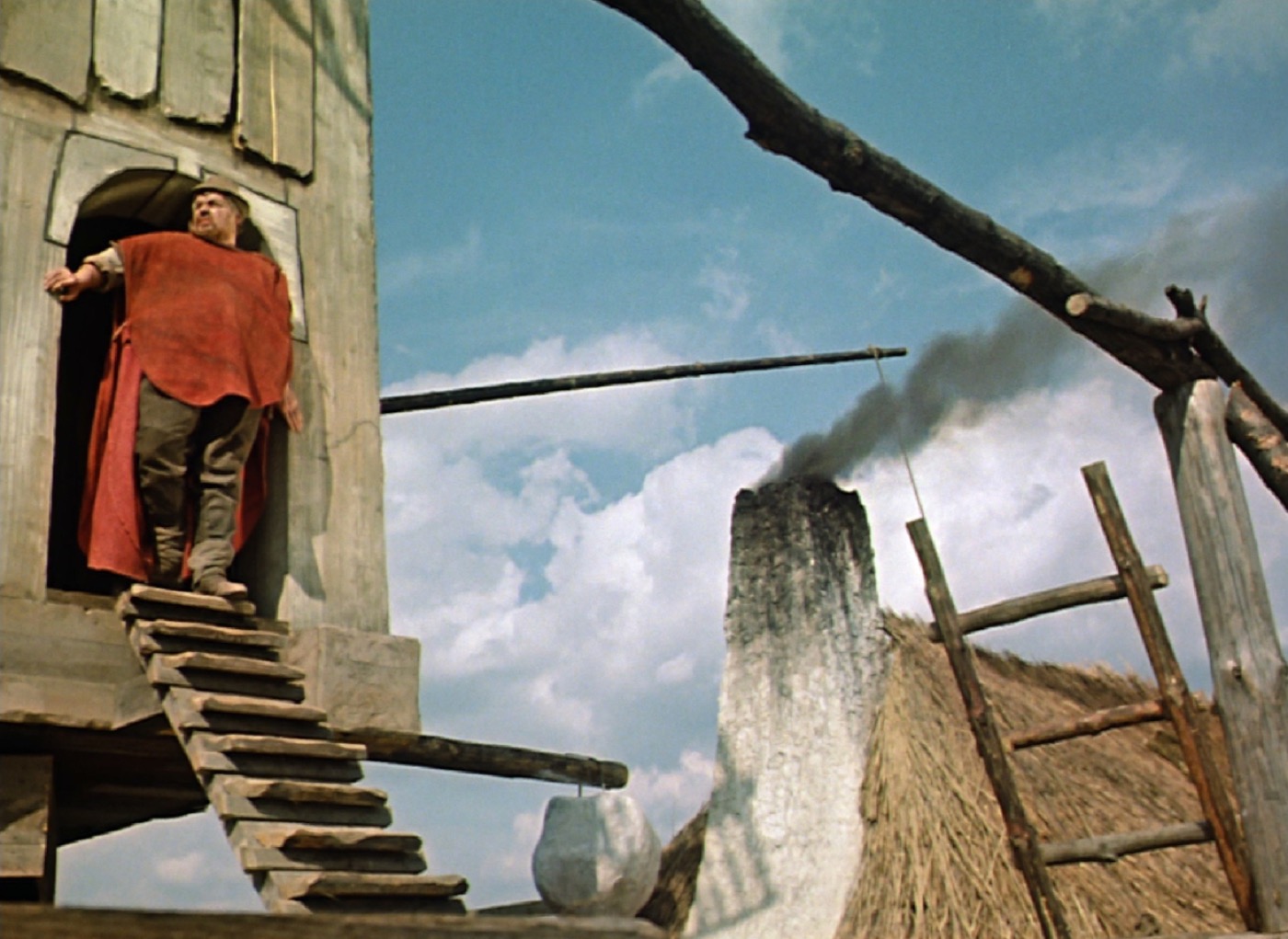
Here we have unscrupulous capitalism depicted at its most basic: three authority figures in cahoots to eliminate competition and exploit workers for personal gain—a pattern, sadly, still evident in today’s kleptocratic governments. The Mill Owner shows up in the aftermath of the fire and ‘generously’ offers to sell the villagers grain, which they can pay to have milled at his mill. Of course, the stolen grain he sells to them was theirs to begin with.
Young Anne (Eva Kotthaus) and mill worker Jörg (Hans-Peter Minetti) have both been made homeless by the fire. With lecherous intent, the Mill Owner offers Anne room and board as his maid and sets about dispatching Jörg to the dungeon on trumped-up charges. Once she begins working at the Mountain Mill, however, Anne turns detective and starts uncovering the truth while fending off unwanted advances from both the Miller and the Castellan.
The performances are strong all round, and while often larger than life for added comedic value, it’s clear the cast are experienced, mainly theatrical actors. Willy A. Kleinau was a hugely respected actor and a two-time recipient of the GDR’s National Prize, so for audiences of the day, his presence would have signalled quality; he clearly relished hamming up the villainy here. Hans-Peter Minetti is a likeable male lead who consciously counterpoints his emotional honesty with the brute masculinity of the antagonists.
Eva Kotthaus handles her first lead role with aplomb, perfectly imbuing the working-class Anne with dignity and determination. Far from the passive heroine of many a fairy tale, Anne becomes the energising force uniting the people against their oppressors. Along the way, she and Jörg are helped and guided by apparitions of the three charcoal burners, though these welcome supernatural elements are almost superfluous to a solid, Saturday-matinee-style drama. The gorgeous Agfa colour palette adds greatly to the viewing pleasure, alongside the all-round artifice of the production design.
The mills are realised through a combination of full-size sets (built outside) and miniatures merged in-camera under the supervision of DEFA’s resident VFX maestro, Ernst Kunstmann, who also worked on Heart of Stone and would become a regular contributor to DEFA’s fairy tale films. Immediately following the war, he had fallen from favour due to his association with Nazi propaganda films, including Triumph of the Will (1935), though anyone working in German cinema under Hitler’s regime had few choices. Notably, he had also worked with Fritz Lang on Metropolis (1927), assisting Eugen Schüfftan in refining the compositing method now known as the Schüfftan Process for combining live actors with miniatures. He’s reunited here with Walter Schulze-Mittendorf, the costume designer responsible for the iconic robot costume worn by Brigitte Helm in Metropolis.
EAST GERMANY | 1955 | 87 MINUTES | 1.33:1 | COLOUR | GERMAN
A handsome prince must find a magical tree to impress a beautiful but haughty princess, but is transformed into a bear.
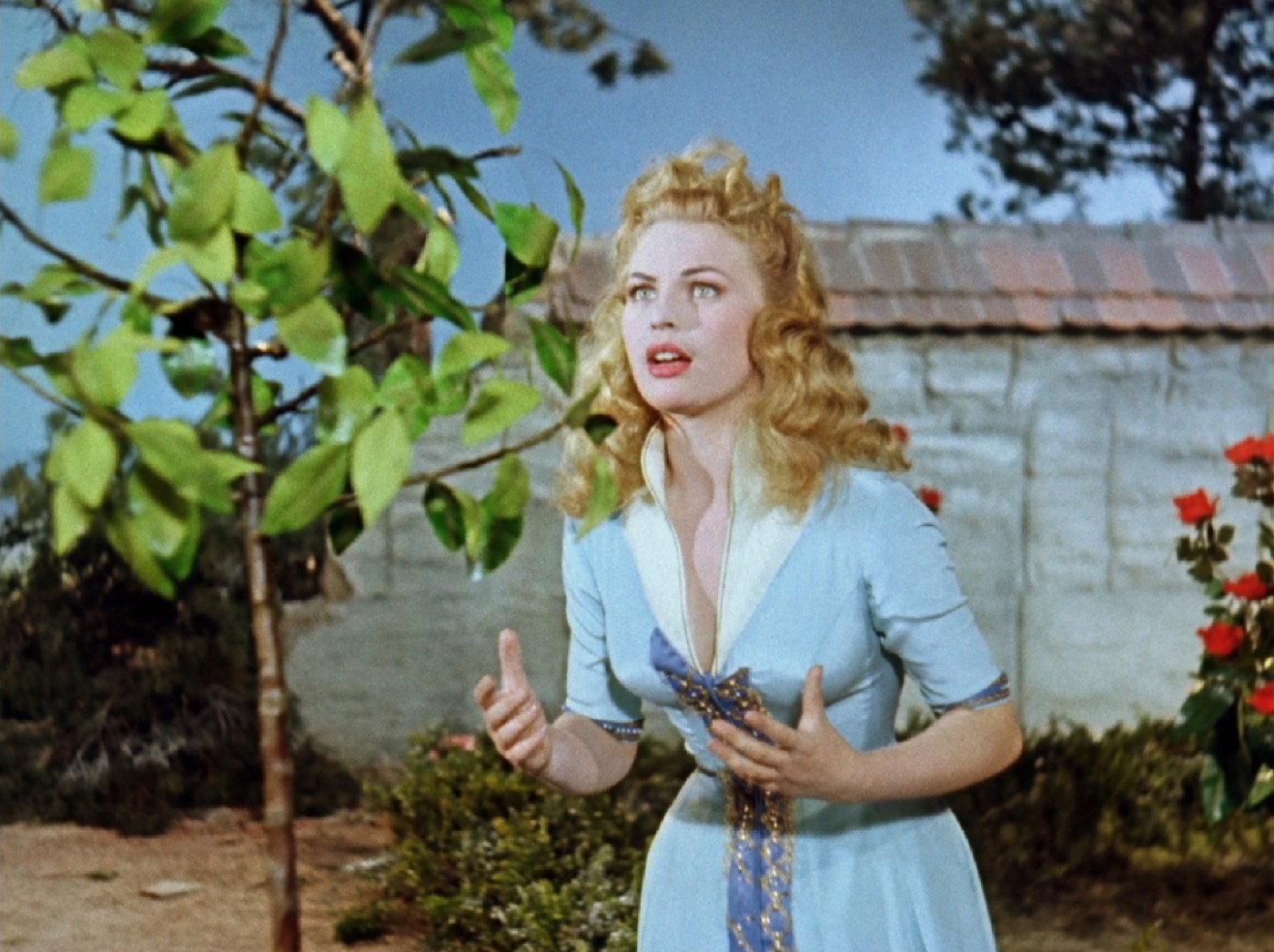
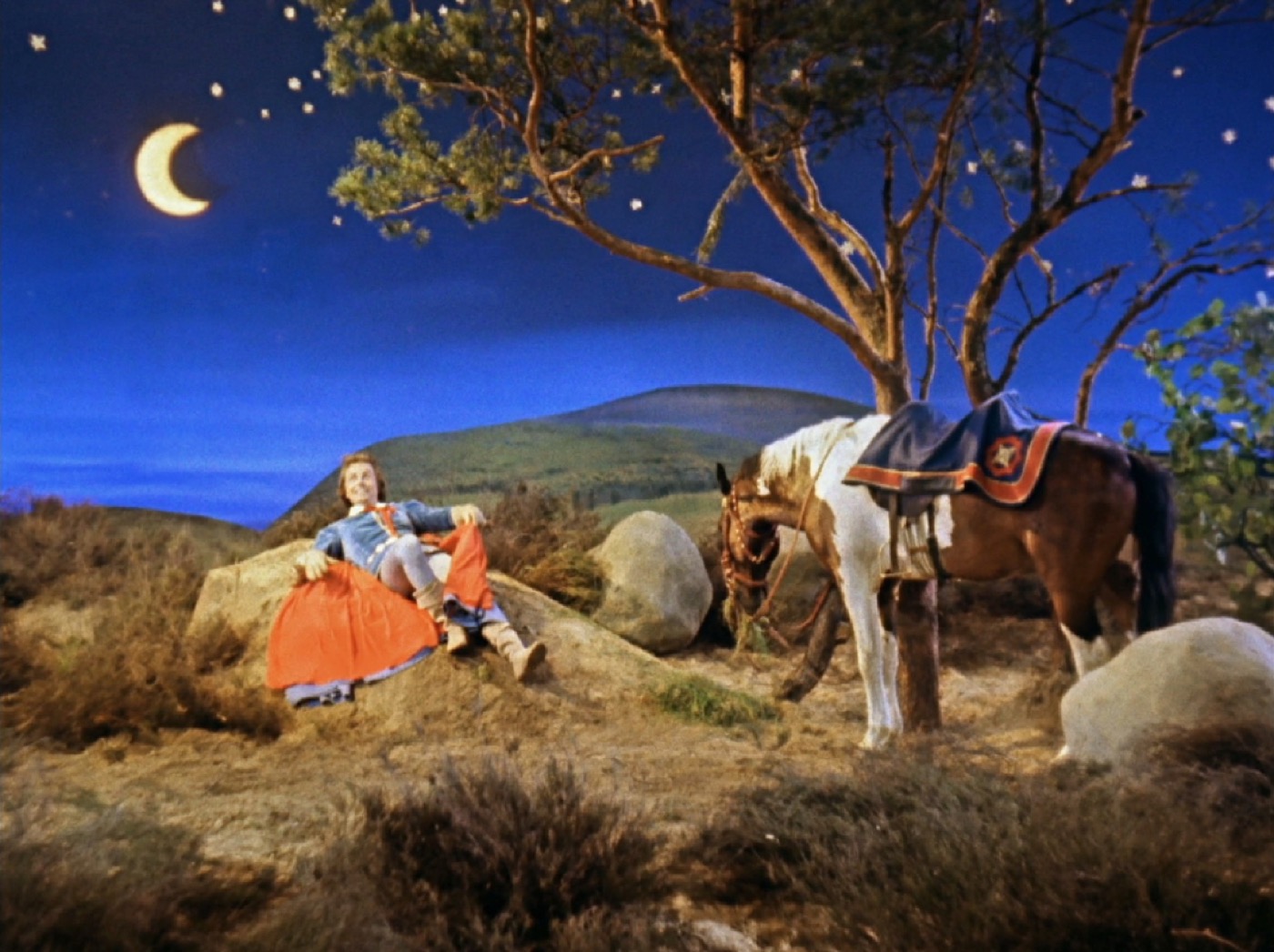
From the opening shots, the delightful ‘picture-book’ artifice is pushed to the next level as the young Prince (Eckart Dux) rides from day into night via a scenic painted backdrop of sunset, stopping to rest under a cartoonish sky decorated with a moon and stars. Throughout, the staged aesthetic continues to evoke Powell and Pressburger’s expressionistic The Tales of Hoffmann (1951), also inspired by Germanic fairy tales.
Again, this is not a straightforward retelling of an existing story, but a pick-and-mix of tropes from several. The title indicates it began as a reinterpretation of The Singing, Springing Lark, collected by the Brothers Grimm, but it resonates just as much with Beauty and the Beast. Here, the lark is replaced by an enchanted sapling and the leonine beast becomes a bear; though, of course, this is no ordinary bear.
The Prince is journeying into a neighbouring kingdom to seek the hand of its Princess (Christel Bodenstein), famed for her abrasive haughtiness as much as her breathtaking beauty. The Prince offers his fortune, which she rejects with contempt. The dismayed King (Charles Hans Vogt) clearly wants his royal line to continue and urges his daughter to reconsider. She agrees to marry the Prince on the condition that he finds “the singing-ringing tree” and returns with it, convinced that no such tree exists and she will never see him again. Suitors sent on impossible quests are a recurring device in folktales from around the globe; Japan’s The Tale of the Bamboo Cutter is perhaps the most notable example that remains relevant, recently retold in Cosmic Princess Kaguya! (2025).
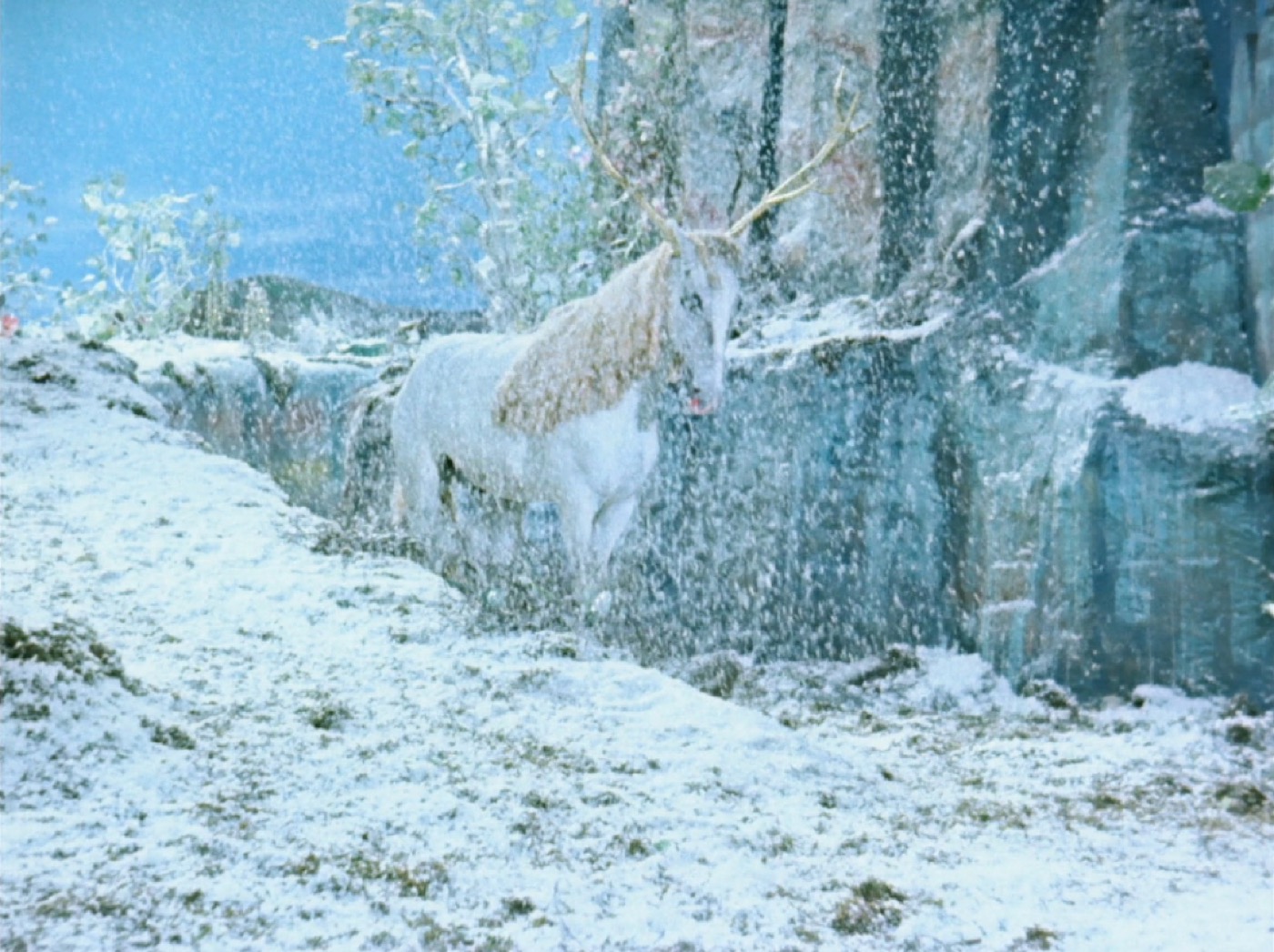
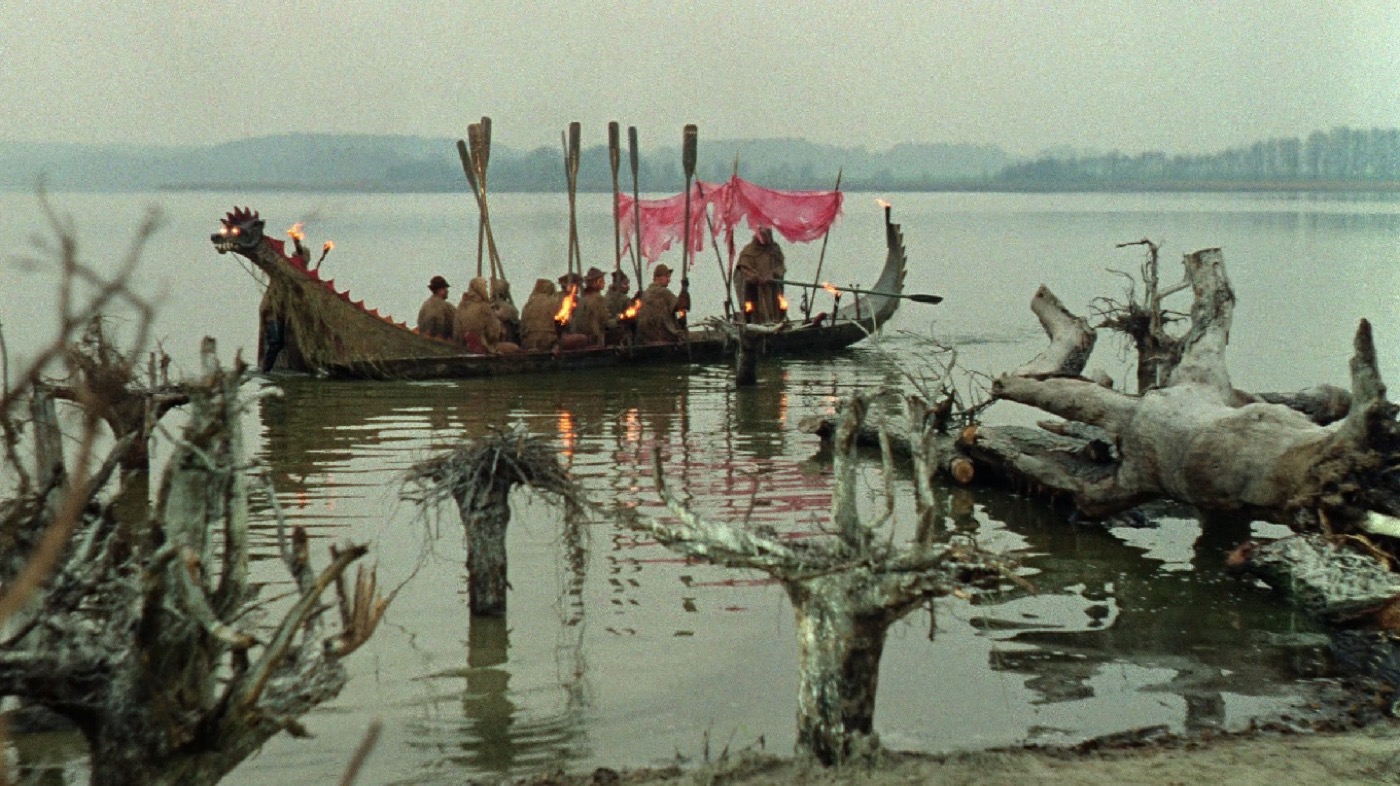
It turns out such a tree does exist in a fairy land presided over by a malicious and tricksy Imp (Richard Krüger). The Prince is allowed to uproot the sapling and take it to the castle for the Princess, but he is warned that it will neither sing nor ring unless she truly loves him. If she does not, he must return the tree to fairy land, where he will join the wild animals in the form of a bear. Predictably, the tree neither sings nor rings, and the unconvinced Princess sends him back. Later, however, she has second thoughts and, believing the tree may have been the real deal after all, sends her father to retrieve it.
He meets ‘the bear that walks like a man’, and they make a pact: in exchange for the singing, ringing tree, the first living thing to greet the King on his return to the castle will be delivered to fairy land. The King knows his hunting hound always senses his approach and assumes it would be fine in fairy land, so he agrees. Naturally, the avaricious Princess, eager to claim her magic tree, pushes the dog aside to be the first to greet her father. Riffs on this narrative twist appear across folklore, often involving the Devil building a bridge on the condition that he takes the soul of the first to cross—which usually turns out to be a cat or a cockerel. The father returning from an enchanted realm only to be replaced by his daughter also resonates with the classic story of Beauty and the Beast.
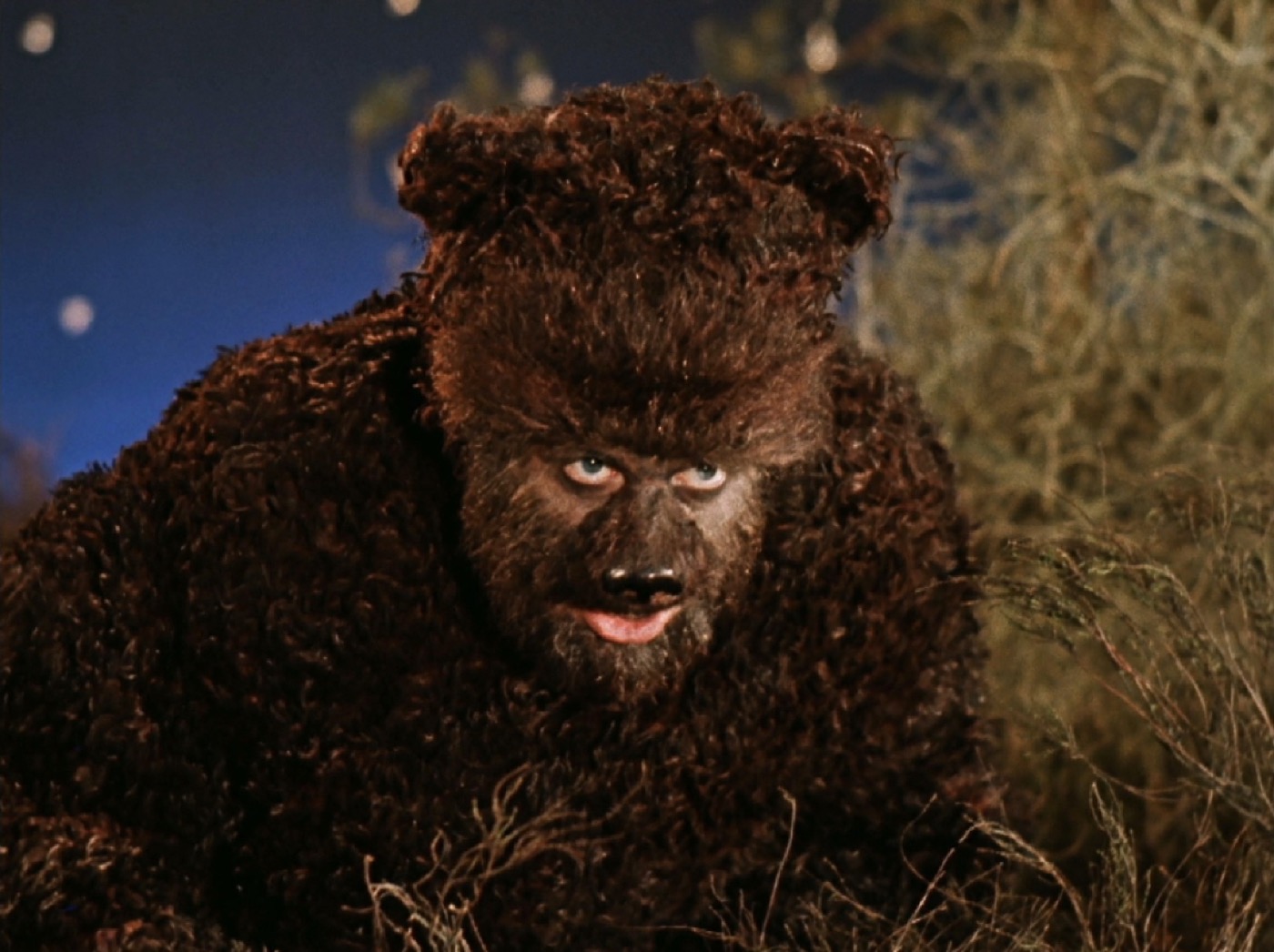
Here, the Imp’s interventions complicate matters as he curses the Princess so her physical appearance reflects her inner self. This leaves her ugly, with a misshapen nose, a terrible complexion, and mouldy-green hair. She actually looks rather cool and punk; like the Prince, however, she has lost her sense of self and must now find or redefine who she truly is. It’s a drawn-out process, but she soon learns that the animals of fairy land care nothing for beauty and respond only to kindness. The bear helps her and, gradually, she reciprocates, even engaging in manual labour to build a shelter. It also becomes apparent that if the tree starts singing and ringing, the malicious Imp will lose his power over them and the land.
Ernst Kunstmann is back in charge of designing and executing the effects, which play a major role in the movie’s unique visual identity—with the magical fish serving as a highlight. He collaborates effectively with production designer Erich Zander, another veteran of pre-war German cinema who had also worked on nationalist prestige films. Of course, DEFA’s films are also propagandist in that they have a definite remit to re-educate their audience in alignment with staunchly anti-capitalist, Marxist ideologies. With their fairy tale films, however, this doesn’t feel overly obtrusive, because the folktale serves as a vehicle for expressing the values and views of the society that retells it. That’s the whole point, and precisely what makes them so interesting to scholars.
Here, the nobility are magically stripped of their hereditary wealth and power. They completely lose their socially constructed identities and must rediscover their true selves by returning to basics: respecting nature, appreciating kindness, and getting along through cooperation and honest work—all of which should appeal to good people of any political persuasion.
EAST GERMANY | 1957 | 74 MINUTES | 1.37:1 | COLOUR | GERMAN
A drunken mill owner boast that his daughter can spin straw into gold and when the king demands proof, a strange little man comes to her aid, but demands that she compensate him with her first-born child.
In the version I know from childhood, Rumpelstiltskin was an angry, bitter little man who probably ate children and flew into such a rage that he either ripped himself in two or stomped up and down so hard he wore himself away to nothing. Here, however, my expectations are first exploited and then confounded.
The premise is laid out during a title sequence of cut-out animation, setting the scene for a storybook-style telling of the famous tale. The mood is elevated immediately as we switch to live action and Hans, the Miller’s Boy (Reinhard Michalke), directly addresses the audience—breaking the fourth wall and pulling us into the narrative. He’s an honest, hardworking young man beleaguered by the yoke of his selfish master (Karl-Heinz Rothin), who invariably drinks away the mill’s profits and can’t afford to pay the King’s taxes. Right there, we have the labouring class being exploited by a decadent capitalist, who is in turn ruled over by a greedy yet ineffectual elite. It’s all plainly laid out in the first few minutes for anyone taking a proper gander.
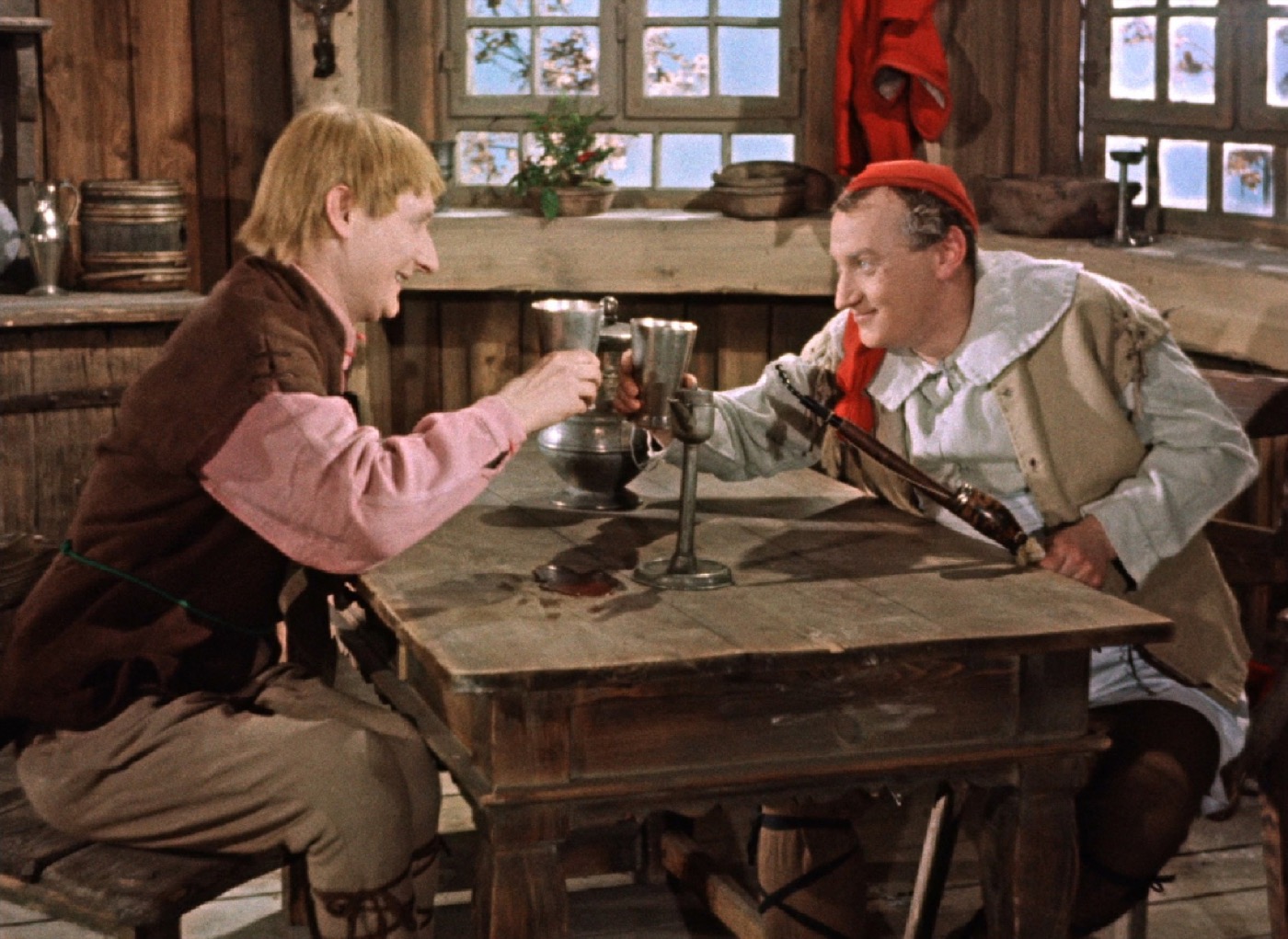
Unable to pay his taxes, the Miller drunkenly boasts that he will be able to raise the cash overnight because his daughter Marie (Karin Lesch) can spin pure gold thread out of straw. The King (Nikolaus Paryla) decides to test this claim by locking Marie in a straw-stacked room with just a spinning wheel; if it proves true, he vows to waive the Miller’s debt and marry Marie. Things aren’t looking good for poor Marie. There are dire implications if the boast is proven false, and if true, she’ll have to marry her oppressor. A mysterious man clad in red (Siegfried Seibt) appears, however, and offers her a solution—miraculously using the spinning wheel to convert the straw into a bounty of gold coins. Yet this is merely a stopgap. Naturally, the King isn’t satisfied with just one batch of coins and demands his new wife continue living the lie her father fabricated.
Now beholden to the little magic man, Marie faces his increasing demands. Initially accepting payment in jewels, he finally sets his price as her firstborn child. What could he possibly want with a baby? The scenario is reminiscent of Arthurian myth when Merlin, after granting King Uther’s desires, demands his son and heir be handed over at birth to be raised as the future King Arthur.
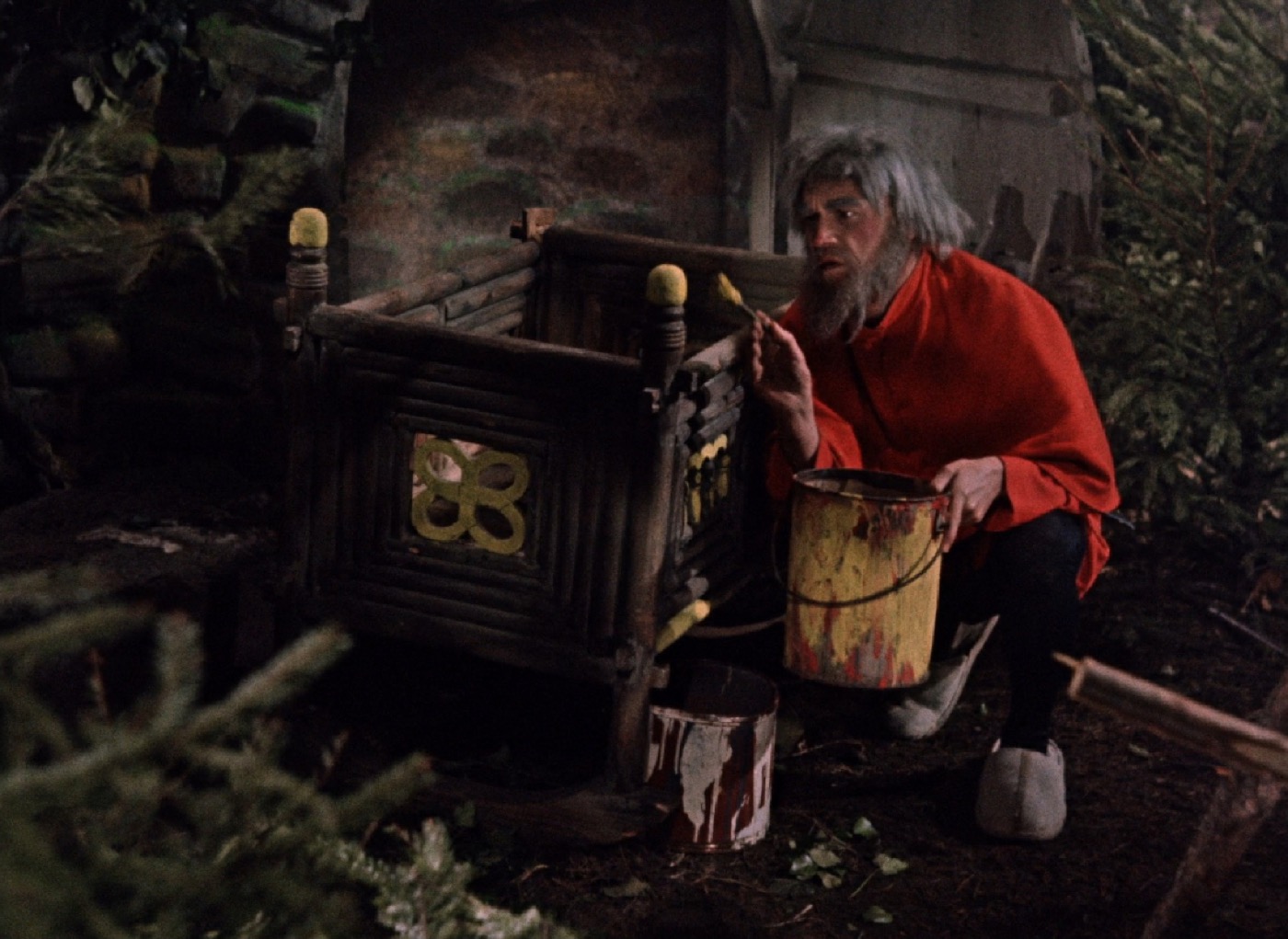
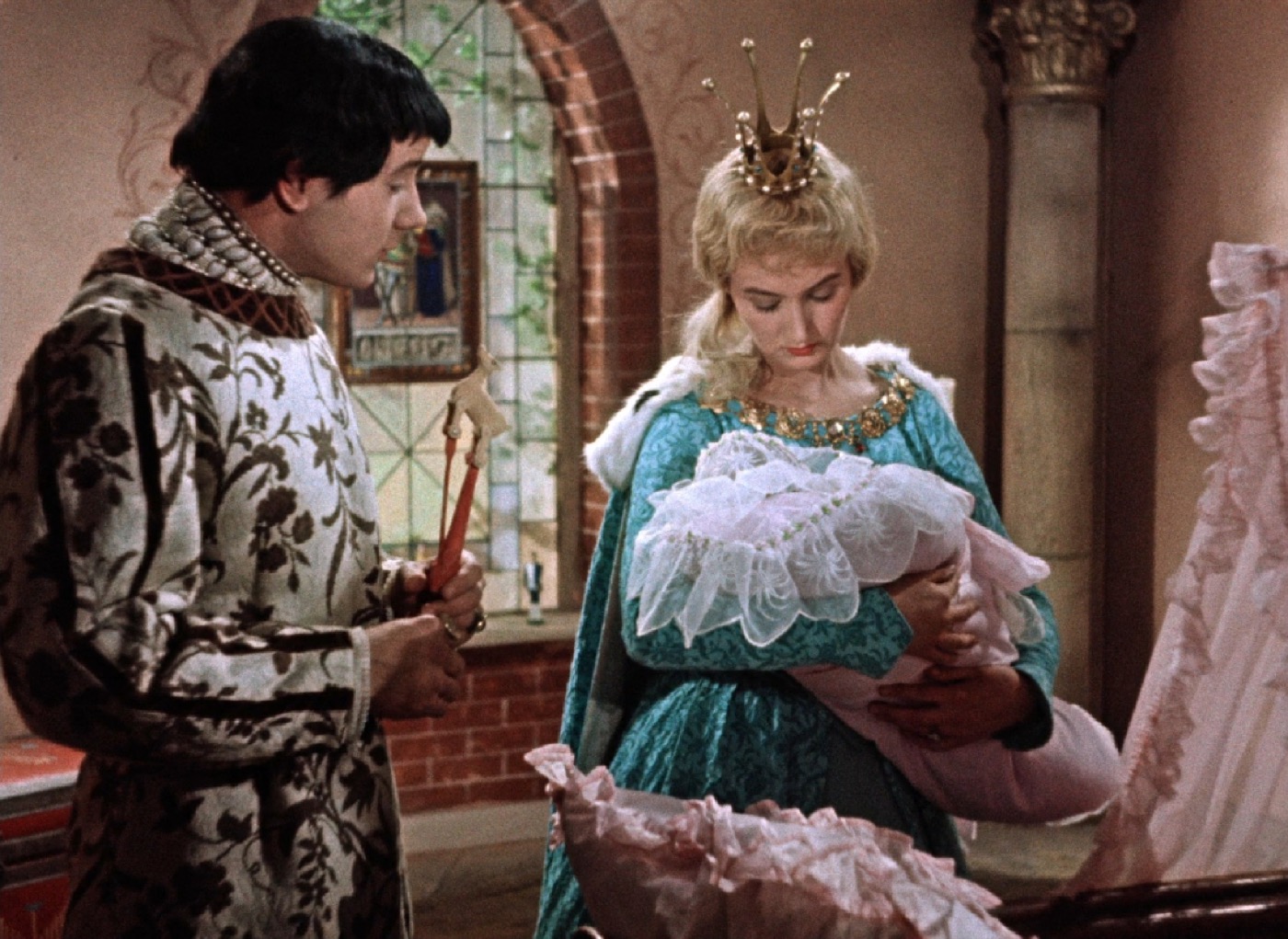
In the DEFA version of Rumpelstiltskin, our worries are partly assuaged when we see the mysterious imp making and painting a crib in his woodland retreat. He begins to look less like a malicious imp and more like a hippie counter-culture activist, reframing the character from cunningly villainous to cleverly heroic. Clearly, he intends to raise the child away from the influence of a corrupt, materialistic society. Yet when he senses that the King and Queen genuinely love the baby more than worldly wealth, he relents and agrees to let them keep the child—if Marie can guess his name in three days. And that is something she won’t be able to do alone.
EAST GERMANY | 1960 | 73 MINUTES | 1.37:1 | COLOUR | GERMAN
A little girl on her way to visit her grandmother is led astray in the woods by a big and decidedly bad wolf.
Among the most told and retold fairy tales of all, the earliest recorded version of Little Red Riding Hood was written down in 1697 by Charles Perrault. In his telling, the titular young girl and her grandmother are both devoured by ‘The Big Bad Wolf’—a gruesome morality tale warning of the hazards of straying from the path and ‘stranger danger’.
The later reworking by the Brothers Grimm added a rescue, ensuring the wolf’s evil was defeated. This version serves as the template for the DEFA interpretation, which adds the Fox as an accomplice to the Wolf and pairs our protagonist with an anthropomorphised, talking rabbit. However, the film fails to do anything genuinely innovative with the story, offering neither the terror of Perrault’s original nor a conclusive demise for the villains. Of the five films included here, it feels most like an adult’s idea of what a children’s film ought to be.
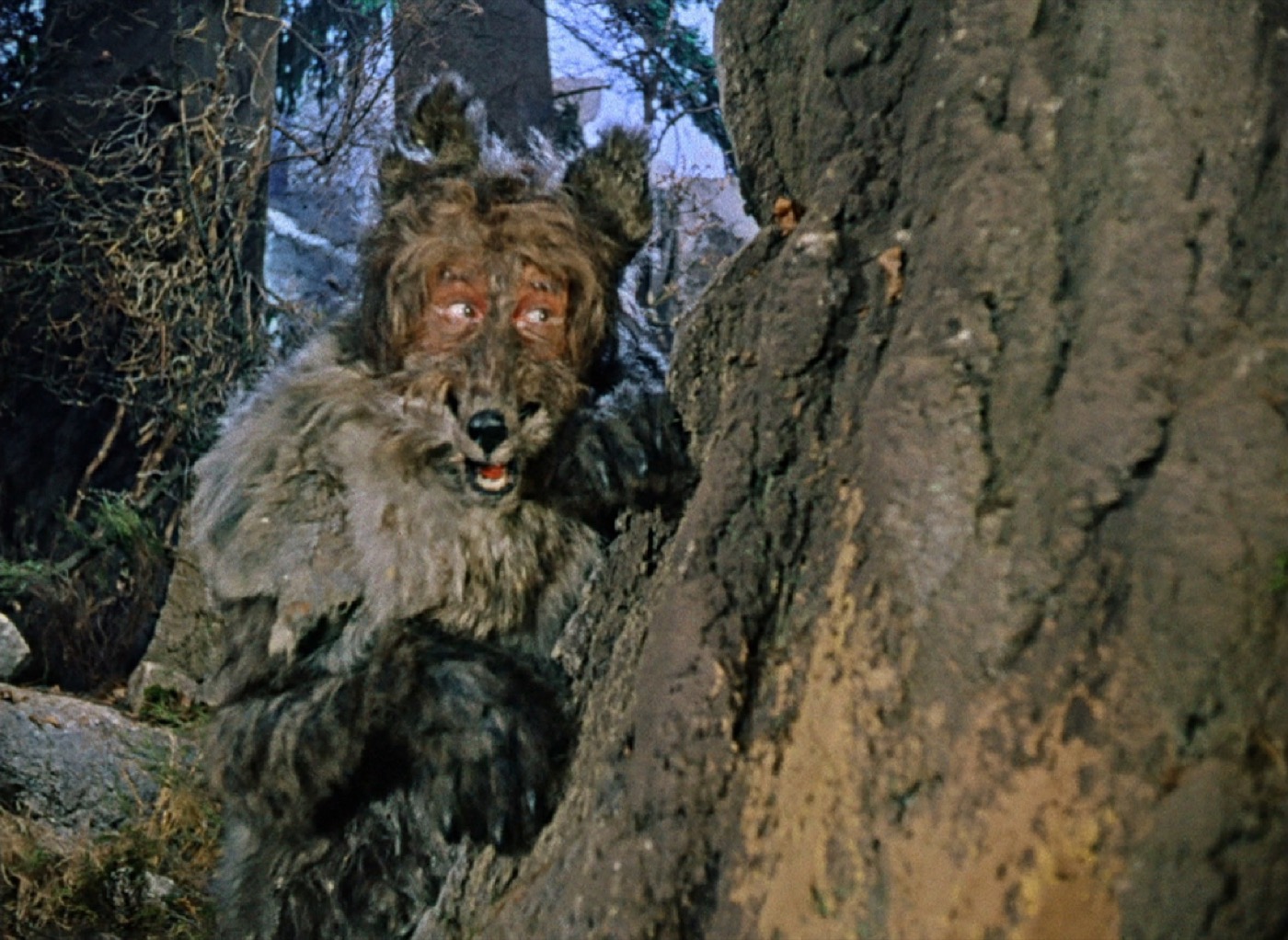
Its most appealing aspect is the staged, set-bound artifice. The wolf and fox suits designed by Walter Schulze-Mittendorf are exceptionally good—guaranteed to give younger children nightmares. Yet I recall being disappointed and disturbed in equal measure as a child by what were clearly people wearing unconvincing animal suits and masks in adaptations of Beatrix Potter tales and The Wind in the Willows. Here, the squirrel puppet made me chuckle; and while the young actor playing Bunny (Jochen Bley) does his absolute best with physical acting and mime, his unmasked human face falls square into the uncanny valley, severely testing any suspension of disbelief.
Making her debut, Blanche Kommerell carries the narrative as a feisty, fun Little Red Riding Hood—a role that kick-started a screen career spanning five decades. The deceitful Wolf (Werner Dissel), scheming Fox (Harald Engelmann), and blundering yet well-meaning Bear (Ernst-Georg Schwill) all deliver fine physical performances. Yet the narrative is laboured, and even its modest 72-minute runtime feels overlong. Director Götz Friedrich was better known for his stage productions, and this was his first—and only—attempt at transitioning to the screen.
EAST GERMANY | 1962 | 72 MINUTES | 1.37:1 | COLOUR | GERMAN
A well-meaning smith’s apprentice is tricked into making a journey to hell where he must steal three magical hairs from the Devil’s head.
It’s quite obvious from the pacing and general attitude that this film belongs to a different era, made some 15 years after Little Red Riding Hood. Another inspired by the version of the tale set down by the Brothers Grimm, it jumps in midway through.
The original story follows the fated protagonist from his auspicious birth; here, however, we join Jakob (Hans-Joachim Frank) as he starts work as a smith’s apprentice. His superpower seems to be an enduring innocence and an innate ability to accept his fate and make the best of whatever befalls him.
A mistake made while steadying a broadsword blade for the smiths to work on results in their hammers recoiling with such force that they fly through the roof and high into the sky. With cartoonish dream logic, the tools take enough time to fall back to earth for a complete scene to play out. The tax collector (Wolfgang Greese) arrives to collect protection money, ostensibly to fund men-at-arms to ward off robbers and bandits. When the smiths question the necessity of such additional taxes, the collector reminds them that bandits have never been seen anywhere in the region—an argument that is, of course, entirely flawed.
Clearly unsuited to smithing, Jakob sets out to find his calling, stumbling into a series of misadventures beginning with an ill-fated meeting with the King (Rolf Ludwig). Like the unscrupulous mill owners of earlier films, this mad monarch is obsessed with accruing wealth simply to fund his decadent, dipsomaniacal lifestyle. Due to a spectacular misunderstanding, Jakob is dispatched as a courier to the castle with a sealed royal edict. He soon finds himself in the midst of real bandits, forced into a life of crime because the King’s exorbitant taxes make an honest living nearly impossible. Believing him to be one of the King’s men, they lock him up and open the letter, only to discover that Jakob is delivering his own death warrant: it orders that, upon arrival at the castle, he be executed immediately.
Realising that Jakob is one of the common folk, the bandits send him on his way. First, however, they take the opportunity to alter the royal command so that it now orders him to immediately marry the King’s daughter (Katrin Martin) upon arrival at the castle. The unlikely couple are genuinely taken with each other. When the King returns, he cannot bring himself to order Jakob’s death in front of his daughter, but instead sets what he believes to be an impossible—and probably fatal—challenge. To prove himself worthy of the Princess’s hand in marriage, Jakob must travel into hell itself and return with three magic hairs from the head of the Devil.
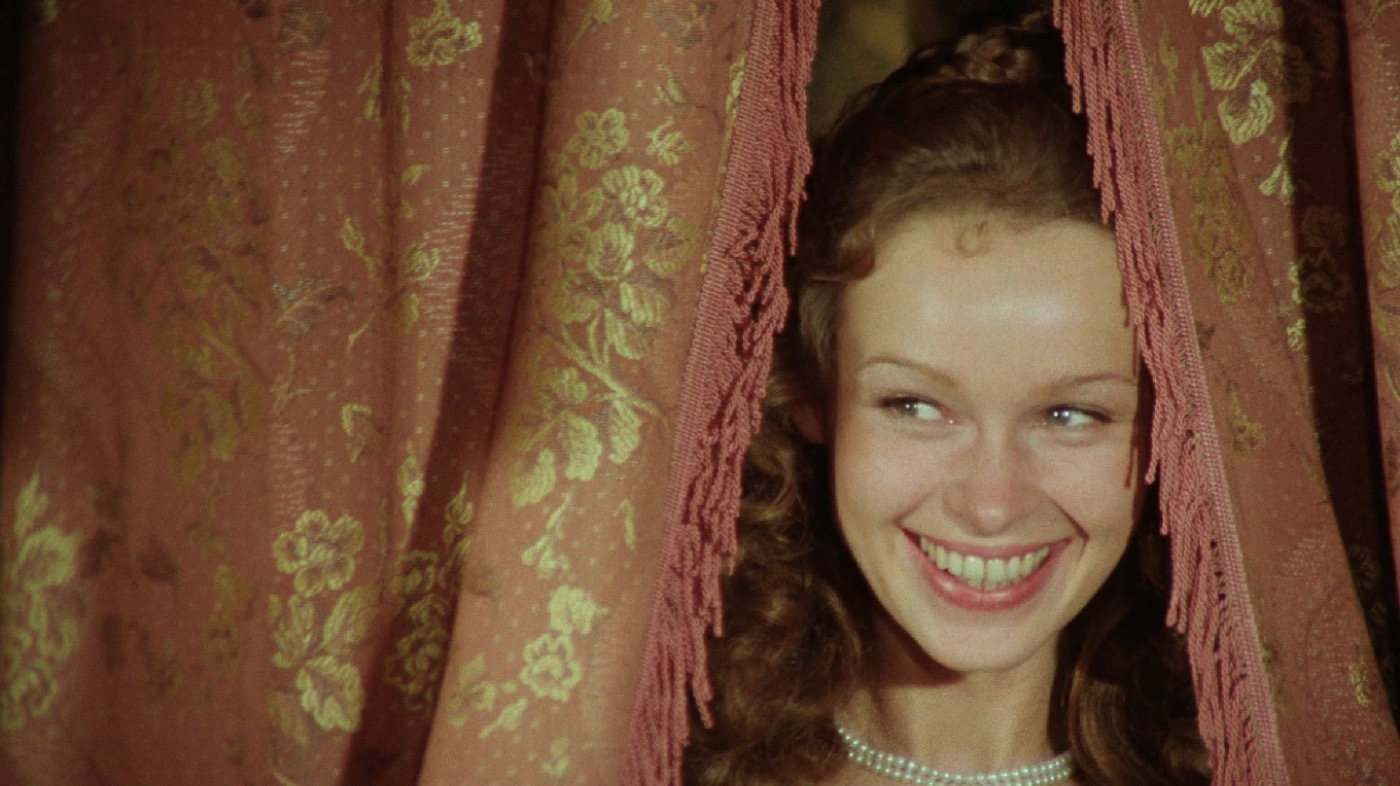
Egon Schlegel was tasked with directorial duties and also made his mark on the script. DEFA had its own approach to screenwriting, which almost always involved guidance from an omnipresent dramaturgist—a role more closely associated with theatre. The dramaturg oversees all aspects of the adaptation, from source material to finished script. They also steer the screenplay, liaising between writers, actors, and directors to maintain clear communication and ensure everyone involved understands the dramatic nuances and underlying subtexts. They are usually on hand during filming to advise on dialogue adjustments or to rethink scenes around technical issues. For The Devil’s Three Golden Hairs, the dramaturg was Inge Wüste-Heym, who worked closely with Schlegel throughout.
Schlegel was a bold choice given his reputation for unflinching documentaries, and his career trajectory was somewhat idiosyncratic. Whilst still a student, he was a founding member of Collective 63, which pushed for realism and produced films about contemporary social issues. His views were apparently deemed too radical, and his diploma was revoked by the government. This did not prevent the DEFA Studio for Documentary Films from hiring him as an assistant director in 1966. He eventually transitioned to features, making his directorial debut with Adventures with Blasius / Abenteuer mit Blasius ( 1974)—a children’s sci-fi adventure—with The Devil’s Three Golden Hairs being the second of just a handful of movies he went on to direct.
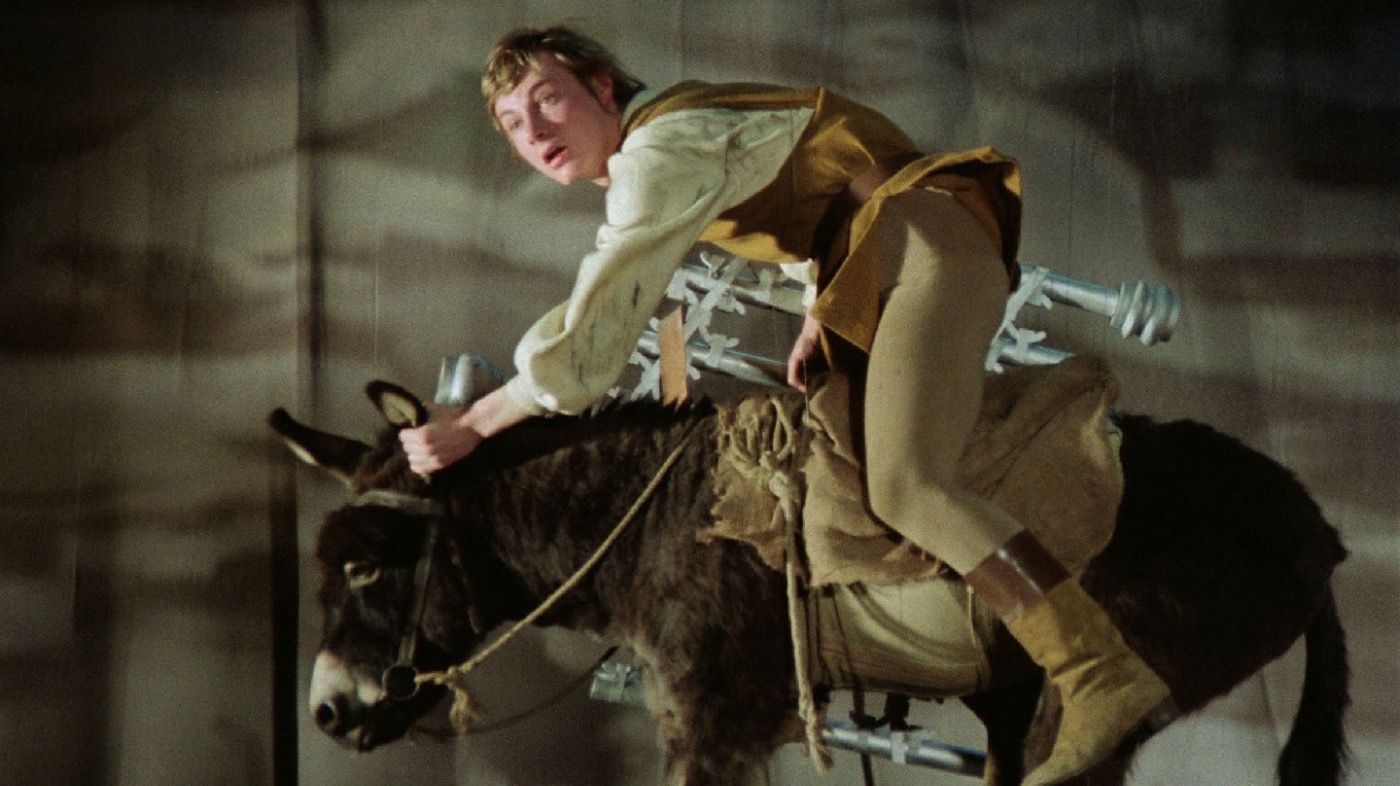
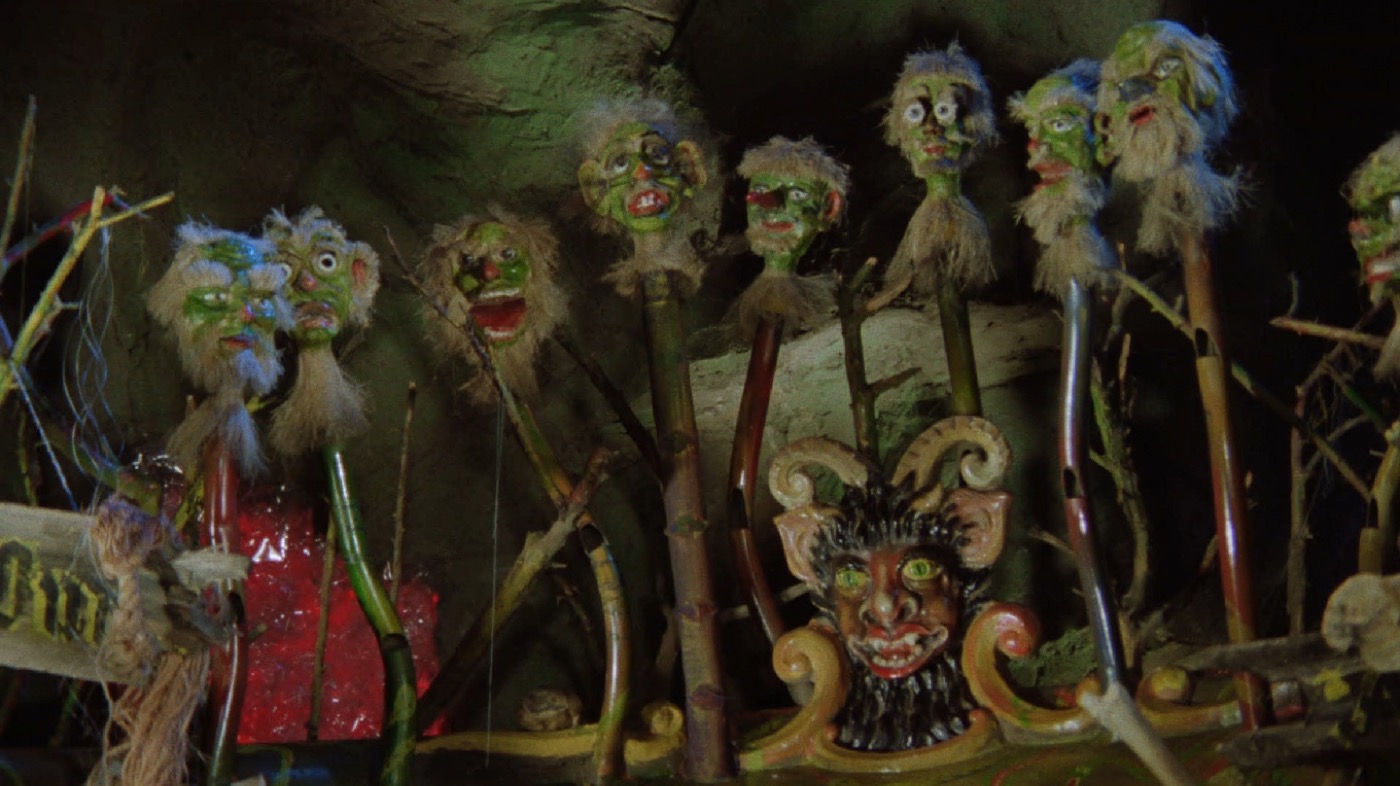
Although played for laughs, Hans-Joachim Frank’s central performance holds the episodic structure together. Jakob turns out so likeable that even the bandits and the titular Devil (Dieter Franke) cut him some slack. The Devil turns out to be a big buffoon who has been unfairly maligned. He explains that he’s not the source of evil in the world; he merely keeps a record of the evil men do—and therein lies the crux of the socialist message. People—in this case, the corrupt elite serving as stand-ins for capitalism—are responsible for society’s ills, yet are also capable of mitigating them. The movie, however, is closer to pantomime than propaganda, and its sustained exuberance is admirable. If its off-kilter comedy appeals—landing somewhere between the sillier surrealism of Monty Python and the boisterous lunacy of Mel Brooks—it’s an absolute barrel of laughs.
Ultimately, Eureka Entertainment’s box set serves as both a vibrant archive of forgotten European cinema and a fascinating cultural artifact. These films showcase the inventive artistry, lavish scale, and surprisingly nuanced political allegories that DEFA brought to classic folklore. Whether approached as nostalgic childhood treasures, surreal cinematic curiosities, or sharp social commentaries, this collection proves that East Germany’s fairy tale cinema retains every bit of its enchanting, subversive charm.
EAST GERMANY | 1977 | 92 MINUTES | 1.37:1 | COLOUR | GERMAN

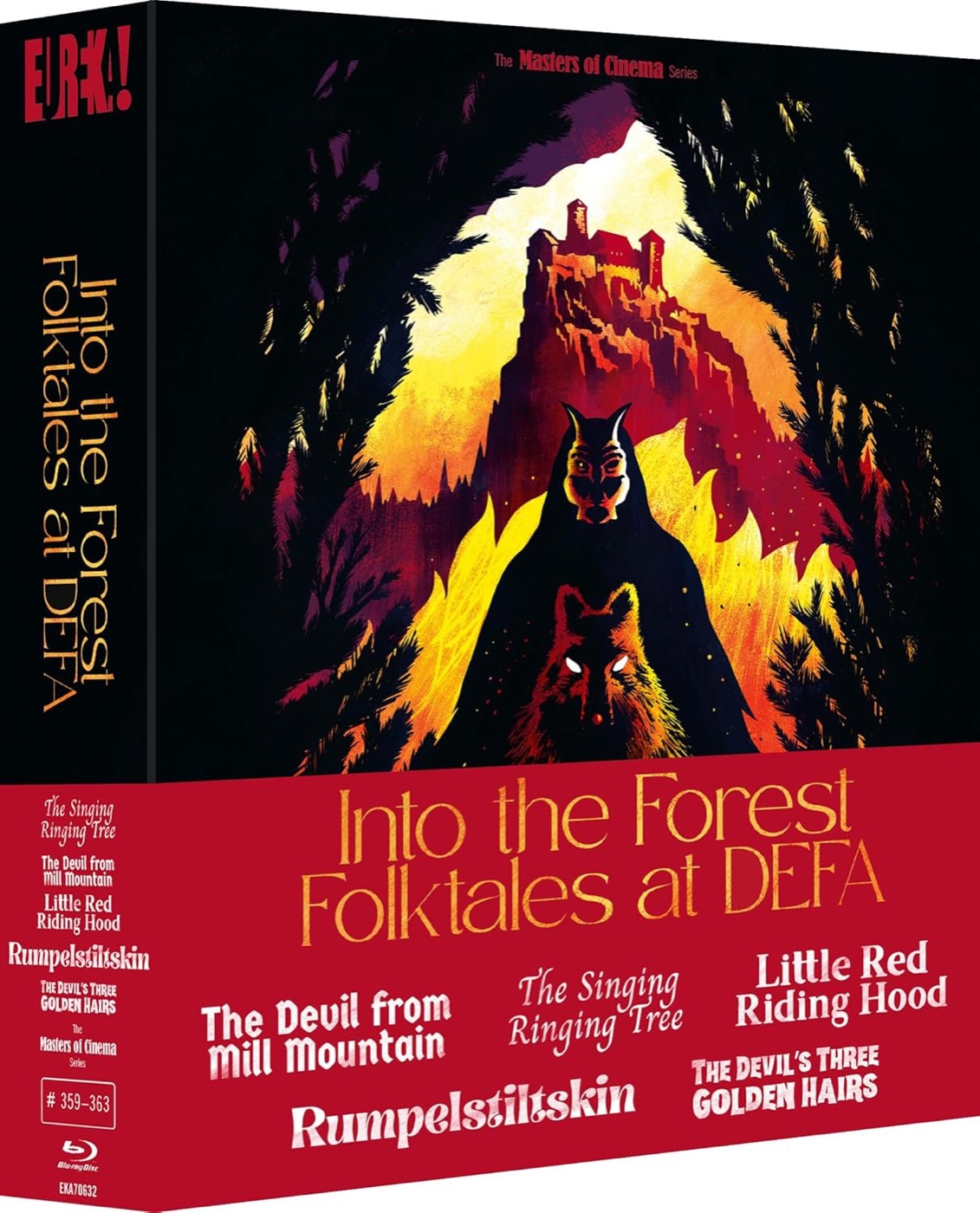
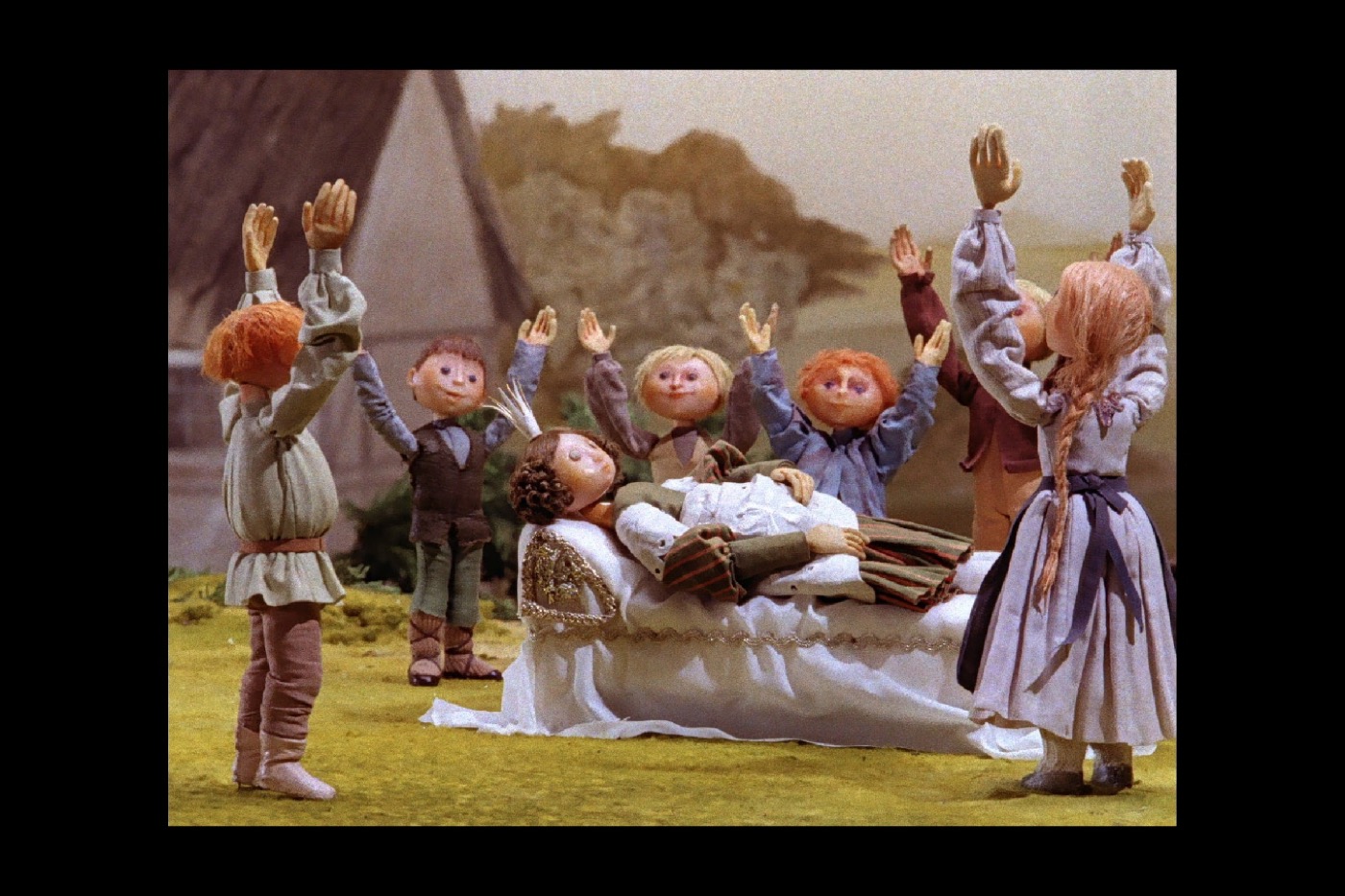
directors: Herbert Ballmann (Mill Mountain) • Francesco Stefani (Singing, Ringing) • Christoph Engel (Rumpelstiltskin) • Götz Friedrich (Riding Hood) • Egon Schlegel (Golden Hairs).
writers: Kurt Bortfeldt, Anneliese Probst & Walter Schmitt (Mill Mountain). Gudrun Rammler Deubener & Margot Beichler (Rumpelstiltskin) • Christoph Engel, Günter Kaltofen, Gudrun Rammler Deubener & Margot Beichler (Singing, Ringing) • Hans Rodenberg & Gudrun Rammler Deubener (Riding Hood) • Egon Schlegel & Inge Wüste-Heym (Golden Hairs).
starring: Johannes Arpe, Gerhard Frei, Heinz Kammer, Willy A. Kleinau, Eva Kotthaus, Hans-Peter Minetti, Gertrud Paulun, Werner Peters, Marianne Rudolph & Josef Stauder (Mill Mountain) • Fredy Barten, Maria Besendahl, Christel Bodenstein, Eckart Dux, Richard Krüger, Günther Polensen, Friedrich Teitge, Dorothea Thiesing, Egon Vogel & Charles Hans Vogt (Singing, Ringing) • Franz Bonnet, Peter Dommisch, Gerda Jawer, Hans-Hartmut Krüger, Karin Lesch, Bodo Mette, Reinhard Michalke, Nikolaus Paryla, Karl-Heinz Rothin & Siegfried Seibt (Rumpelstiltskin) • Jochen Bley, Werner Dissel, Harald Engelmann, Blanche Kommerell, Horst Kube, Waltraud Lohrmann, Friedel Nowack, Helga Raumer & Ernst-Georg Schwill (Riding Hood) • Hans-Joachim Frank, Dieter Franke, Wolfgang Greese, Hannjo Hasse, Hans Klering, Peter Köhncke, Fred Ludwig, Rolf Ludwig, Katrin Martin & Klaus Powollik-Ronay (Golden Hairs).