CLICK (2006)
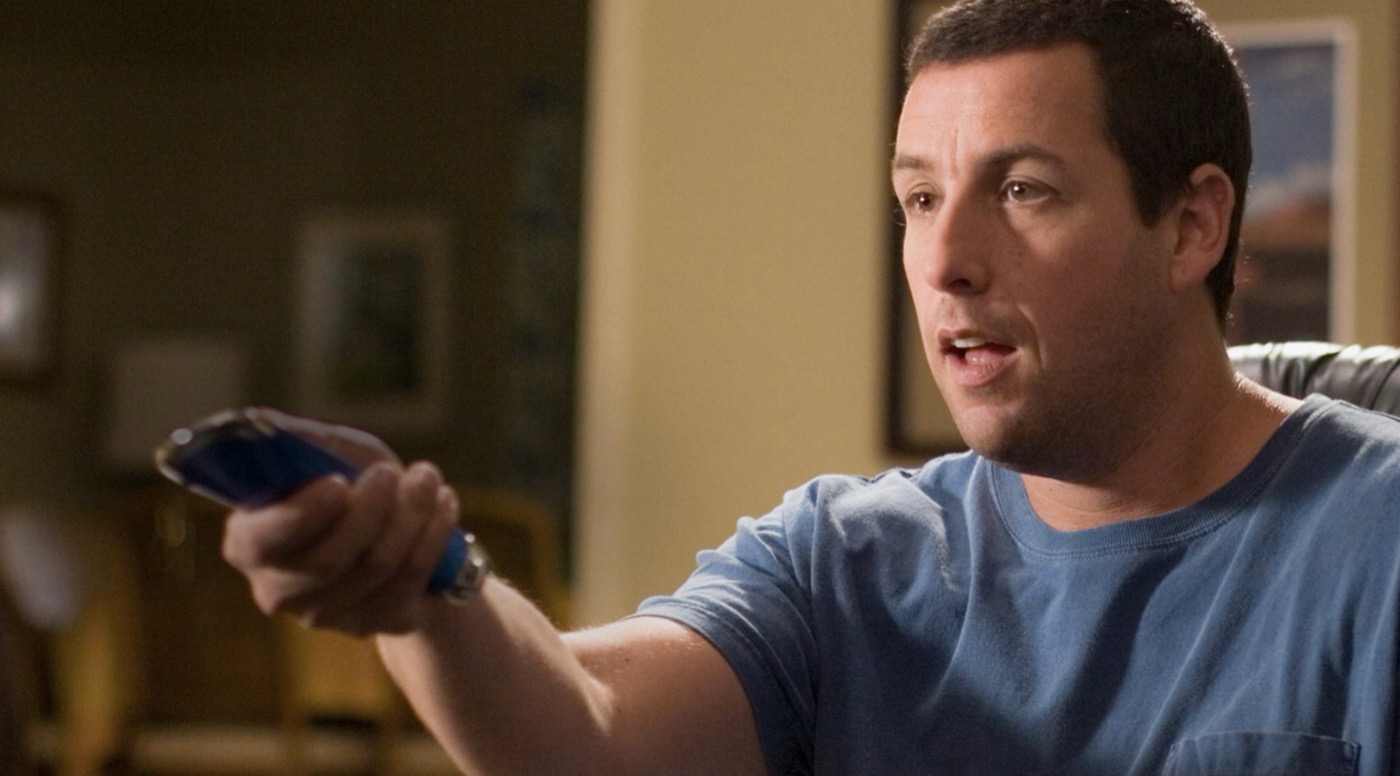
A workaholic architect finds a universal remote that allows him to fast-forward and rewind to different parts of his life.


A workaholic architect finds a universal remote that allows him to fast-forward and rewind to different parts of his life.
Click is a curious film, one at war with its own premise. Though the execution is middling, the central idea is a winner: an embittered, work-obsessed businessman, Michael Newman (Adam Sandler), finds himself skipping forward in time to reach a place of contentment. Many of us do this in figurative ways, listlessly letting time slip by, too caught up in our weary routines to notice life running out from under us. If you let the problem escalate, as Michael does to a horrifying extent, you risk waking up to the reality of your situation, observing the debris of your senseless lifestyle without being able to pinpoint when it started to crumble. At that point, it would be tempting to indulge a defeatist mindset—but there is no end, not as long as you are still breathing.
But that is reality. While Click has some worthwhile things to say about it, its central premise is far more terrifying. On a late-night trip to Bed, Bath & Beyond to purchase a universal remote, Michael bemoans his life and its constant complications. Issues at work are a given, firmly cemented in his mind as obstacles to overcome. His family is just another difficulty to heap onto the pile; loved ones become irritating obligations and family trips are cancelled in favour of changing work plans. Purchasing a remote is exactly the kind of minor inconvenience that would take very little out of Michael in calmer circumstances, but it proves to be the last straw for this overworked protagonist.
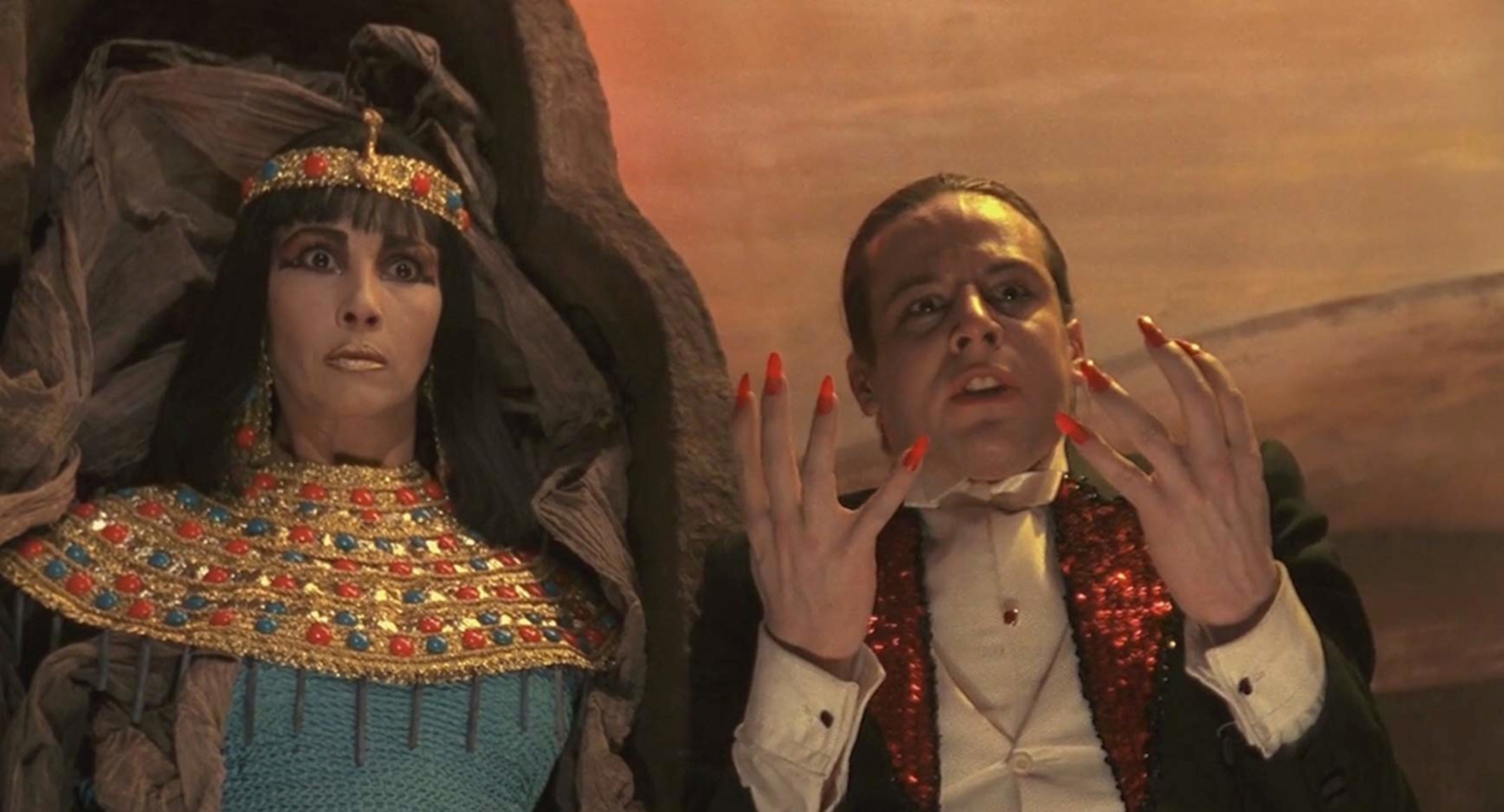
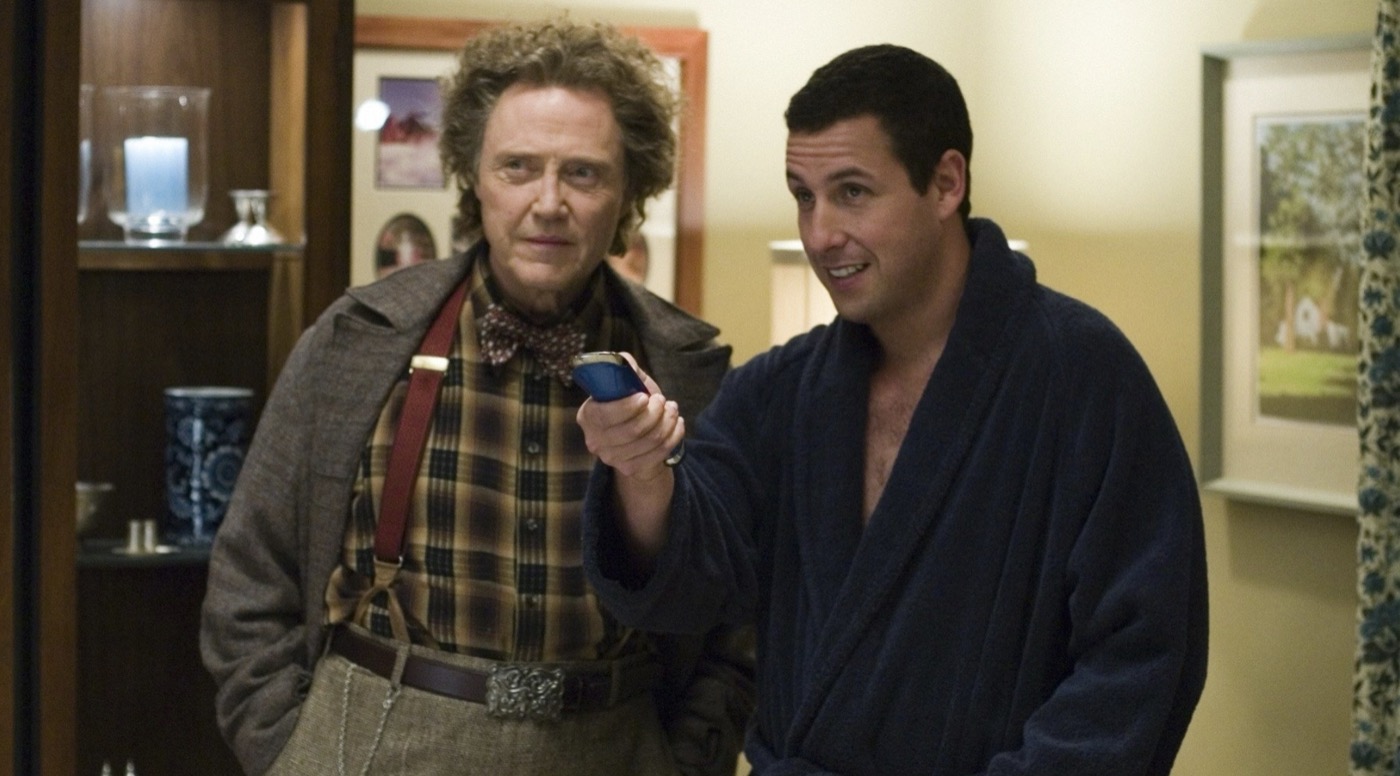
While there, he stumbles into a back room that resembles a blend of a warehouse and a laboratory. Only one worker is present: the mad-scientist-esque Morty (Christopher Walken). Anyone familiar with Walken will expect eccentricities before he even opens his mouth, and Click is no different. This odd, seemingly fantastic figure offers Michael the ultimate universal remote: a device that can alter time. The only downside is that the remote cannot be returned—but why care about that when it does exactly what is required?
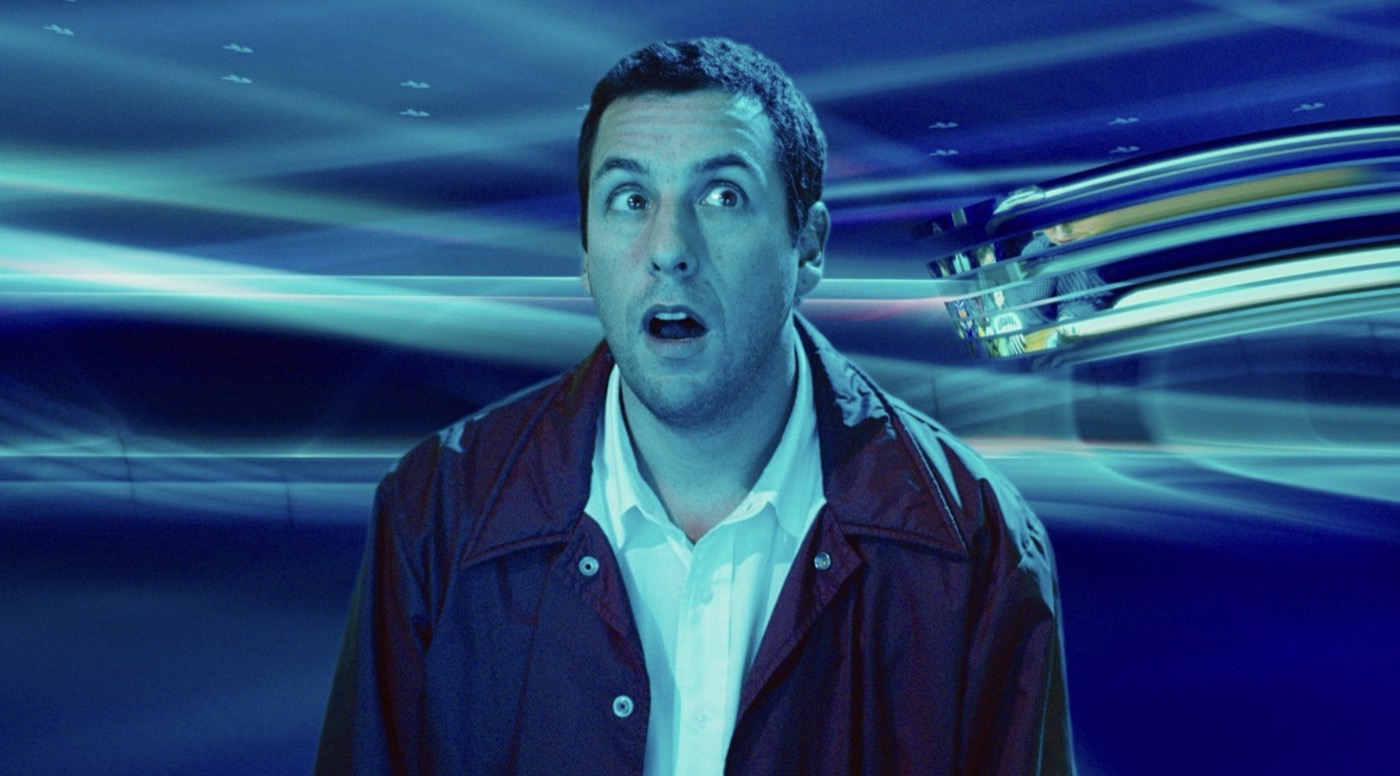
It’s only when Michael gets home that he realises this magical device can alter the very fabric of reality, contorting it to his anger-induced whims. If more time at work is needed, necessitating cancelled family plans and disappointed loved ones, what better use of the remote than to skip to the end of the project? What about just before sex, when his conspicuously gorgeous, perfect wife, Donna (Kate Beckinsale), asks for a massage? What could be the harm in fast-forwarding to skip right to the main event?
It does not take a keen analyst to recognise that this “too good to be true” premise is shaping up to be just that. By skipping through life, Michael removes all obligations and obstacles. But with his main difficulties gone, what about the new ones that will inevitably follow? Our lives are never problem-free; if they were, we would probably become as listless as Michael when he flash-forwards through time, these intervals of lost time continually expanding. By prioritising destinations, the journey of life is rendered null and void.
The protagonist does not disappear—that would be no good, since he needs to be physically present for Donna and his two children, Samantha (Danielle Tatum McCann) and Ben (Joseph Castanon). Instead, he effectively sleepwalks through life, present in body but offering little in the way of company or personality.
Click does not ignore the fantastical elements of its premise, working through them with ease. Viewers are never left baffled by the ridiculousness of the concept, which is mostly used to explore the human condition instead of genre flashiness. (A few short sequences laden with SFX would beg to differ, but they are few and far between and, surprisingly, do not look particularly dated.) The film’s starting point might be distinctly sci-fi, but this does not carry over to its beating heart. Michael continually makes the worst decisions possible, for reasons that are entirely understandable given his mental state and the terrible power with which he is burdened.
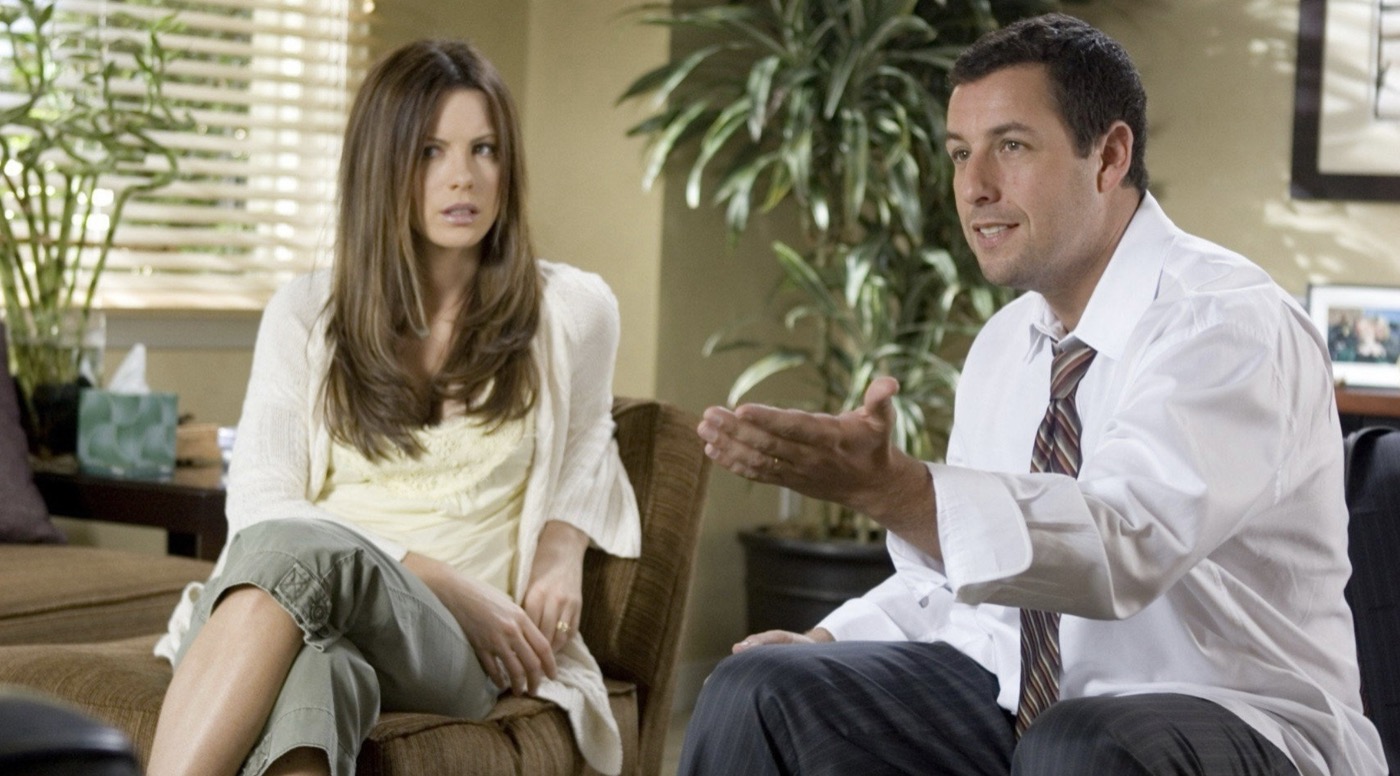
But a science-fiction premise and poignancy about the human condition are not the only tonal elements at work. The film is not nearly so capable of making its broad comedy or treacly sentimentality work, let alone effectively blending the two. On the latter front, Click is often overwrought; if it cannot wrangle a tear from your eye, it’s unlikely to win you over.
Yet just as frequent as the dramatic beats are the comedic notes, with Sandler finally putting a semi-human face on his typical comedic style, where a caricatural one usually resided. A titan of the genre by this time, with some of his greatest hits having just arrived in the rearview mirror, it’s difficult now to imagine how much Click shook up casual moviegoers’ expectations. Viewing it today, 20 years after its release and with its reputation as an unlikely tearjerker long since solidified, I found myself more surprised and distracted by the film’s dreadful comedy.
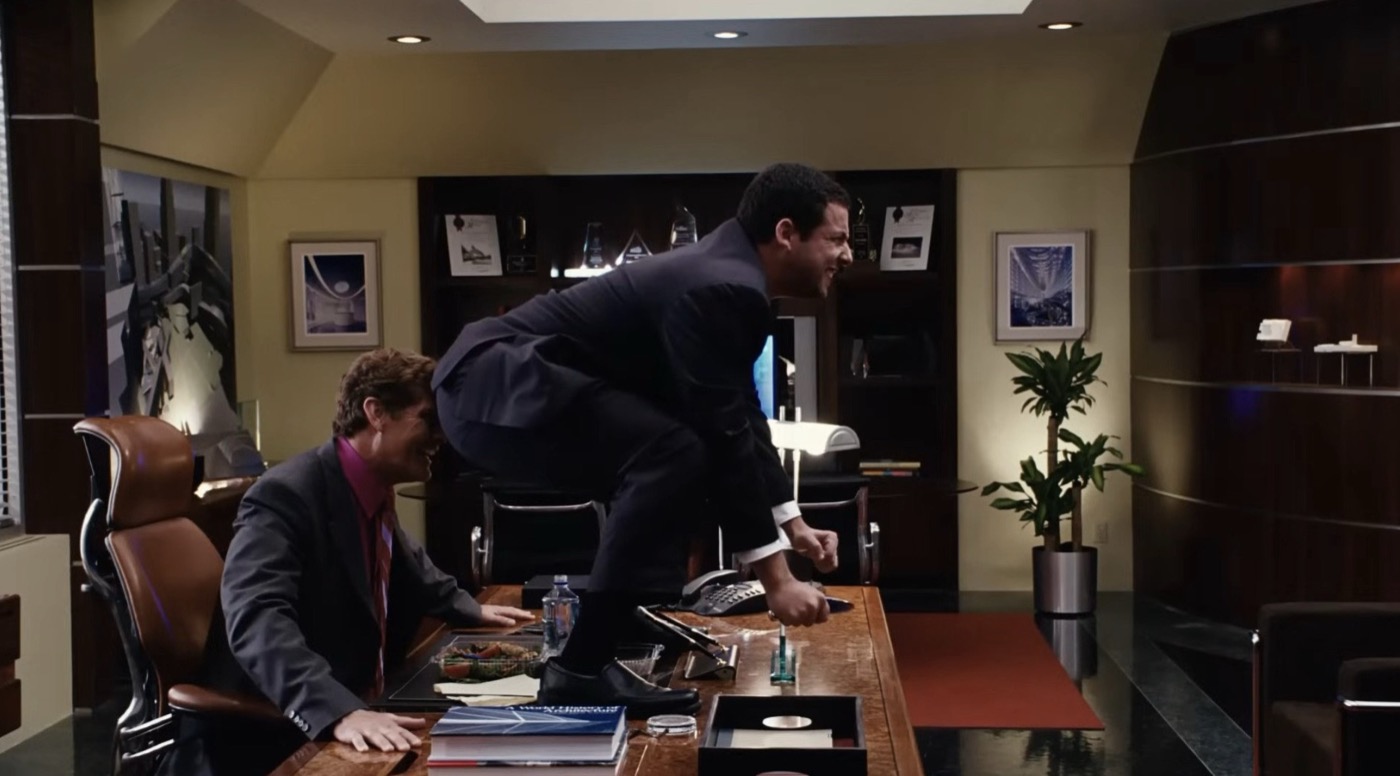
Click’s simple but profound poignancy is ignored for insufferable stretches—such as when Michael decides to freeze time just to wiggle his ass in his boss’s face and fart. In case any reader is clamouring to know whether pantsing and kicks to the nuts are incorporated, rest assured that every inane joke imaginable related to this premise occurs here.
Imagine, for a moment, if A Christmas Carol featured one of the ghosts farting in Ebenezer Scrooge’s face. Doing so brings you a few steps closer to understanding the tonal whiplash that enshrouds Click. There is room for comedy here, but not in the crass way this film taps into Sandler’s typical style. In this sense, and numerous others, the blueprint for Click’s success can be found in another Sandler film, Uncut Gems (2019), which presented an even more unconventional starring role for the superstar.
In Josh and Benny Safdie’s crime caper, comedy and drama intertwine seamlessly, coalescing around a garish, selfish, and pitiful gambling addict. The more time you spend with the protagonist, Howard Ratner (Sandler), the funnier and sadder the film becomes. Life is a sick joke for an unrepentant gambler chasing the next high and sprinting away from the enemies he amasses along the way. If you don’t laugh, you will surely cry.
You want to shake your head at this wayward loser—you even want to shake him by the scruff of his neck—but only because you care. Why we care about someone so openly selfish remains a mystery. Yet there is a strange charm in watching this brazen figure allow himself to be utterly repugnant, his natural charisma and crassness bleeding through in constant excess.
That same crass, selfish streak infects Michael, but it bleeds out in bland, formulaic ways: he lashes out at his faultless, impossibly gorgeous wife or angrily dismisses his kids’ efforts to win his good graces. He’s a stereotypical deadbeat dad by the time the film begins, and he only gets worse over time, as short-term ease corrupts any chance of long-term happiness. The treacly sentimentality—laid on so thick it’s hard to glimpse the emotional resonance at Click’s tragic core—is continually undercut by broad comedic bits that feel entirely disconnected from Michael or the wider film. Most of the gags could work just as well in any other movie.
There is nothing specific about Michael, who remains a walking, talking trope of the foolish businessman too focused on the corporate ladder to consider anyone else. He’s a ridiculous figure, just as much as Howard, but the influence of a capitalist, go-getting society has rid him of the ability to see it. Each hollow pay cheque is still real, even if chasing career success separates him from the people who matter most. Yet even at its most dumbed-down and heavy-handed, there are glimmers of storytelling gold, as the device maps onto Michael’s habits, skipping through giant chunks of his life in alignment with his previous wishes.
These sequences soar in brief snippets because of the ideas underpinning them and Sandler’s compelling lead performance. But screenwriters Steve Koren and Mark O’Keefe are too constricted by their limited ambitions and, presumably, the interests of appeasing financiers, to make viewers sit with Michael’s mistakes. In order for this waking nightmare to be at its most potent, these continued reminders of a wasted life should be slowly draped over the story, delivering a cold, sinking feeling that is as dire as it is inescapable.
Instead, these characters become unrecognisable over time, since there was little beyond a trope and a grand plot motivation guiding their characterisation. As Michael is forced to reckon with the tragedy of confronting his grown-up, unknowable children, another kind of tragedy emerges for the viewer: an inability to connect with his pain, since his children were always unknowable to the film’s creatives.
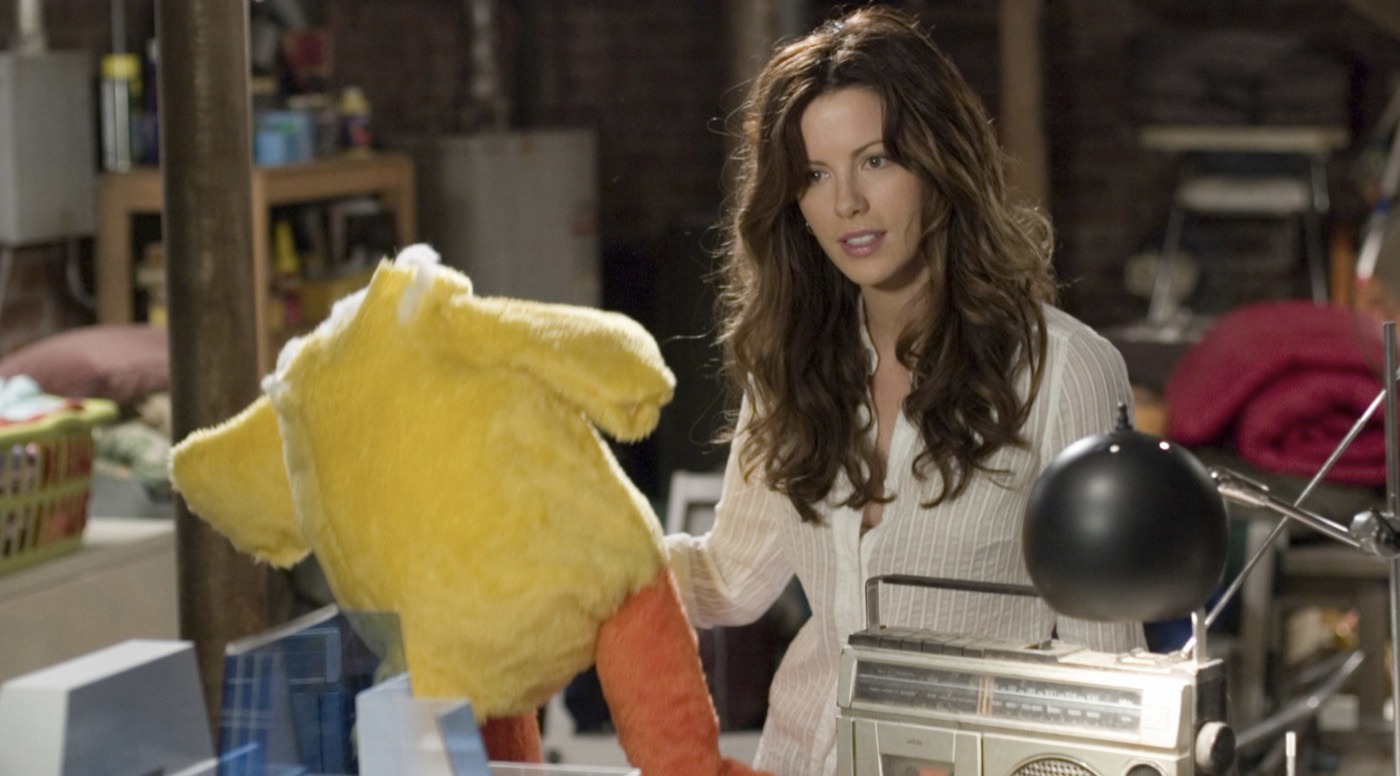
Just as Michael callously dismissed them before the magical remote control ruined his life, director Frank Coraci and writers Koren and O’Keefe do the very same thing throughout Click. Even minor glimpses of who they are—and who they might one day be—would be much appreciated. The less said of the oh-so-perfect wife, the better, as well as the couple’s cringe-inducing “falling in love” sequence, involving a cocktail napkin, trite sentiment, and lazy reincorporation.
Even with these flaws, there is a kernel of beauty and tragedy in Click that I cannot—and do not want to—ignore. This It’s a Wonderful Life-inspired tragicomedy might have little going for it in a comedic sense, but it has such a winning premise that it is hard not to root for its success. Watching Sandler in a dramatic role is less illuminating now than it must have been 20 years ago, but it’s still gratifying to see him flex that aspect of his creative arsenal, especially when it’s still utilised so rarely.
Few actors could have pulled off this film’s blend of abject tragedy and crass humour, so it’s appealing to watch him take that gamble and succeed. But why should anyone have to try? Click, desperate for a hook and a reason to justify its $85M budget, casts big names and employs a hundred unfunny jokes to deliver its poignant message, leaving so little time to focus on its dramatic core that it wields its emotional moments with the subtlety of a sledgehammer.
Living in the age of the remake is a painful reminder of the drudgery of mainstream cinema, but that does not mean there are no older films that could be successfully revived. One of them, undoubtedly, is Click, tapping into the timeless qualities of this script’s messaging. The only snag is that so few actors can pull off that blend of comedy and drama. So why blend the two at all?
USA | 2006 | 107 MINUTES | 1.85:1 | COLOUR | ENGLISH • SPANISH • JAPANESE • PORTUGUESE

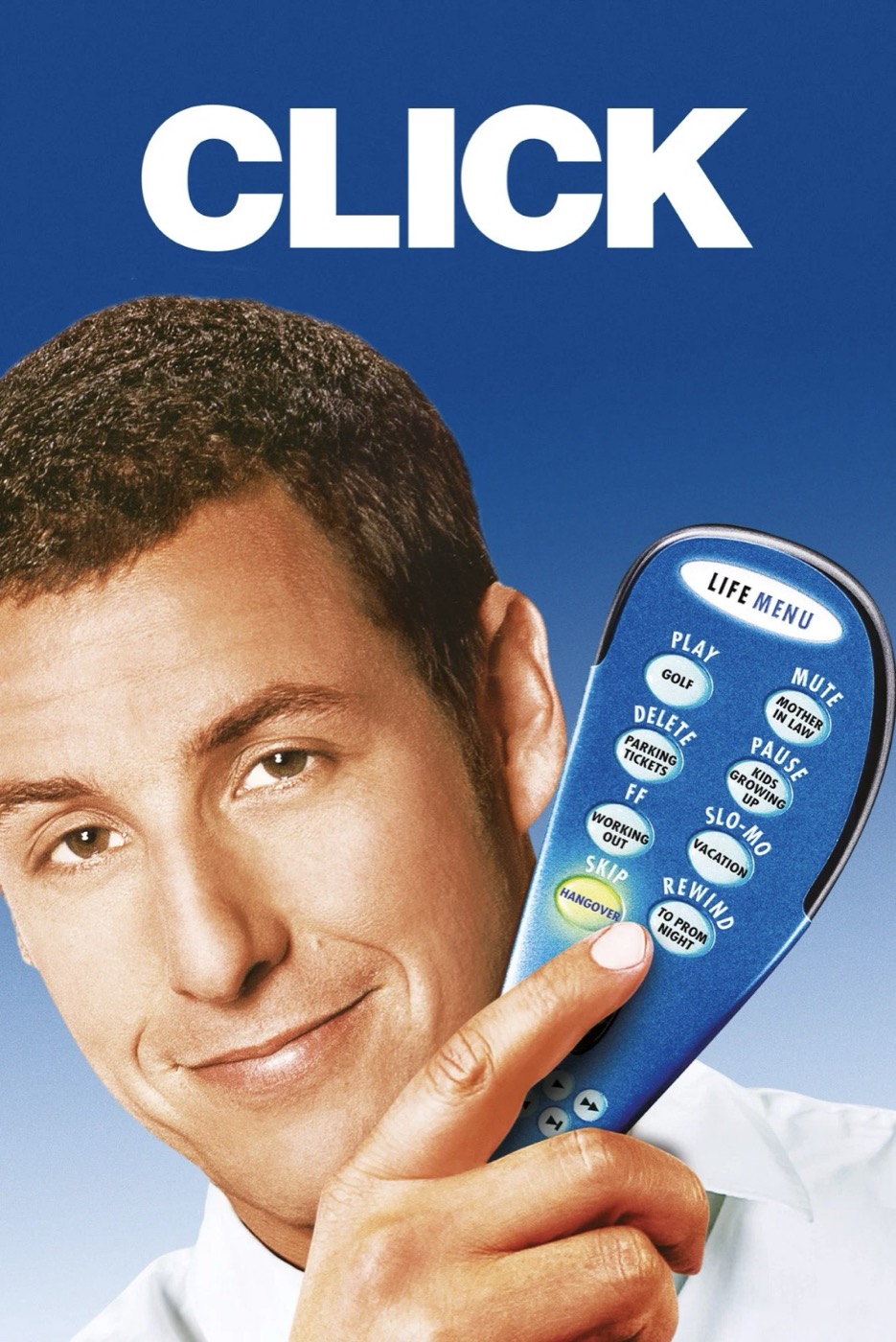
director: Frank Coraci.
writers: Steve Koren & Mark O’Keefe.
starring: Adam Sandler, Christopher Walken, Kate Beckinsale, Henry Winkler, Julie Kavner, David Hasselhoff, Sean Astin, Danielle Tatum McCann & Joseph Castanon.