THE KILLING (1956)
A crook assembles a five-man team to plan and execute a daring racetrack robbery.


A crook assembles a five-man team to plan and execute a daring racetrack robbery.
The Killing is the kind of early Stanley Kubrick that makes you want to revisit it. Not because it’s one of his unquestionable masterpieces, but because it reveals so much of what would later define him while remaining compact, lucid, and unexpectedly complete. It earns admiration quickly. It’s tight, intelligent, well-built, well-acted, and already recognisably the work of a serious director.
But admiration isn’t quite the same thing as awe, and that distinction matters here. This isn’t yet Kubrick at full strength. What it is, rather, is a remarkably good film in which many of his major qualities are already visible: structural intelligence, control of causality, economy of means, and a cold understanding of how fragile even the best plan becomes once it passes through human beings.
That last point is the film’s real subject. The Killing is often described as a heist film, which it is, but the label remains too simple. This isn’t merely a film about a robbery. It’s a film about the gap between planning and outcome—about the fact that intelligence can build an almost perfect system without ever being able to compel reality to honour it. What makes the film more interesting than a straightforward caper is that it never presents the robbery as a clean mechanism waiting to be derailed by a single decisive mistake. It presents it instead as a structure exposed from the outset to forces it can never fully master: weakness, desire, humiliation, greed, vanity, mistrust, and finally contingency itself.
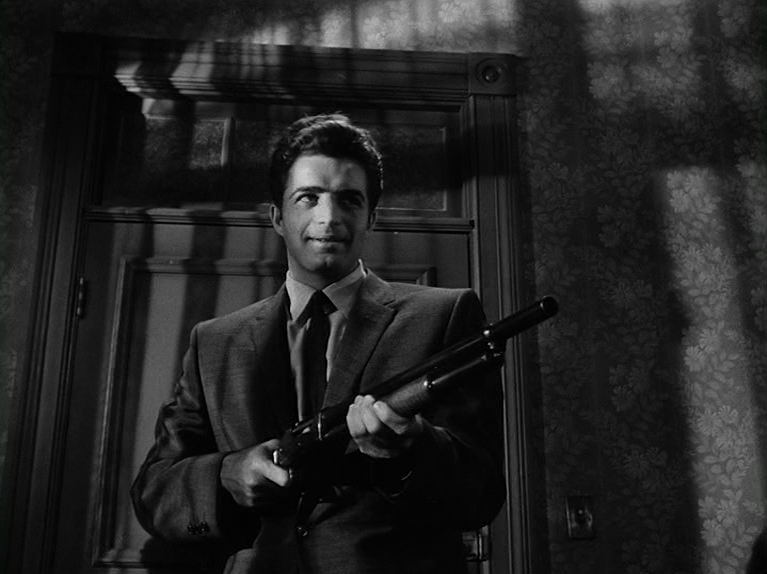
The Killing arrived at a pivotal moment in Kubrick’s early career. After the self-financed Fear and Desire (1953) and the low-budget Killer’s Kiss (1955), it was his first production with something like a proper Hollywood framework—made for United Artists with producer James B. Harris, who’d go on to collaborate with him on Paths of Glory (1957) and Lolita (1962). The script, adapted from Lionel White’s 1955 pulp novel Clean Break, was co-written with crime novelist Jim Thompson, whose influence can be felt in the psychological rawness of the dialogue and the almost clinical fatalism of the plot.
Shot in just twenty-four days on a budget of roughly $320,000, the film was made quickly and economically—constraints that, as it turns out, suited Kubrick’s instincts rather well. United Artists, reportedly uneasy with the fractured timeline, pushed for a more conventional linear cut. Kubrick resisted. The non-linear structure—with its repeated time markers and overlapping perspectives—survived intact and remains one of the film’s most distinctive formal achievements.
One of the most elegant things Kubrick does is refuse to hand us the plan as a fully transparent totality. We aren’t simply told everything in advance and then invited to watch the execution. Instead, the operation becomes intelligible gradually—through fragments, assignments, timings, dependencies, and functions revealed in action. That gives the film a particular kind of suspense. We’re not merely waiting for something to go wrong; we’re actively recognising how the system works while also sensing how vulnerable it is.
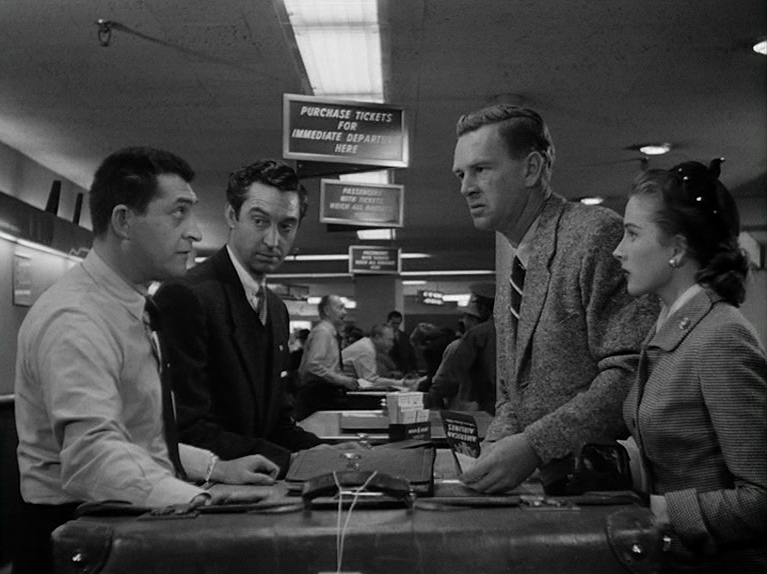
The film runs on two causal chains simultaneously. The first is the procedural chain of the robbery itself: who has to be where, who has to distract whom, who has to fight, who has to carry, who has to wait. The second is the psychological and relational chain running alongside it—wounded pride, erotic frustration, marital resentment, opportunism, the need to feel important, the inability to remain silent. The robbery isn’t undone by one neat technical error. It’s steadily compromised by a parallel sequence of human motives and reactions that the plan was never designed to absorb.
This is where George (Elisha Cook Jr) becomes the film’s emotional centre. He isn’t merely the weak link in practical terms. He’s the one figure who genuinely aches—humiliated, needy, hungry for love, desperate to feel larger than his life has allowed him to be. He doesn’t simply make an error because the script requires one; he acts out of recognisable, painful human need. In a film full of sharply drawn functional roles, George is the only character who becomes truly painful to watch. He stops being merely useful to the plot and starts arousing pity, discomfort, frustration, and sadness in equal measure.
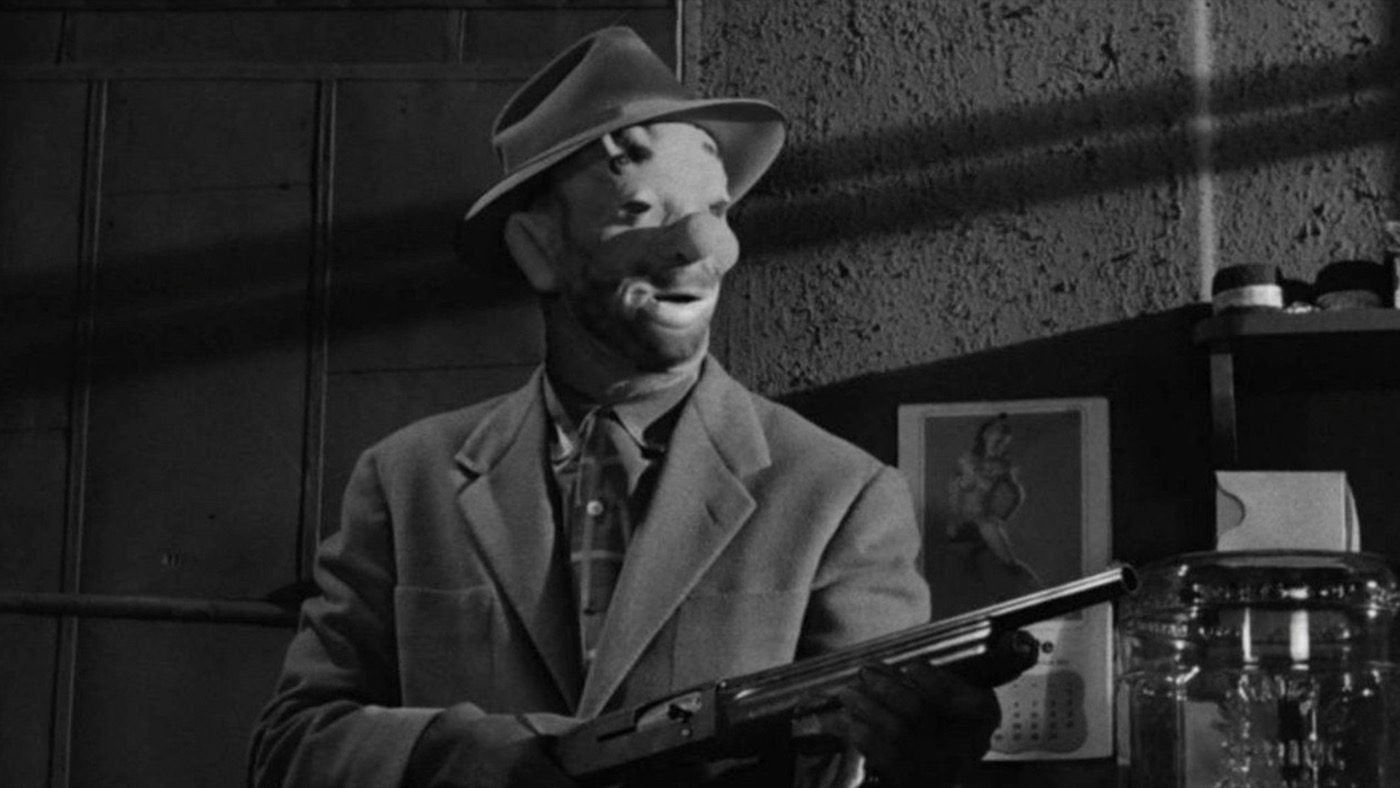
Around him, the rest of the cast is handled very well indeed. Maurice (Kola Kwariani), the wrestler who also plays chess, is splendidly conceived—one of those supporting figures who enlarge a film’s world simply by existing within it. The sharpshooter Nikki (Timothy Carey) isn’t just a technical instrument but a real presence with his own environment and tone. Johnny (Sterling Hayden), the mastermind, carries authority and intelligence without ever being sentimentalised. And Sherry (Marie Windsor) is particularly interesting: she seems at first glance to be one of the film’s more clear-eyed figures, but she consistently misreads almost everyone around her. What she has isn’t deep insight but tactical instinct. She can smell weakness and money, but she mistakes cynicism for intelligence.
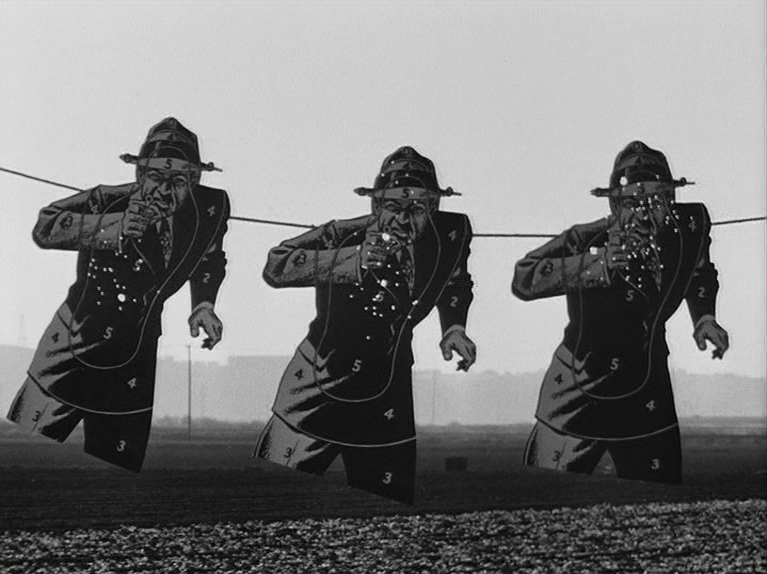
That’s one of the film’s subtler strengths. Its characters don’t only betray one another—they misread one another. Each person grasps only a usable fragment of the others. The film’s human world isn’t just morally unstable; it’s epistemically unstable. People act on partial readings, self-serving readings, frightened readings. That becomes one more source of pressure on a plan that was never as airtight as it appeared.
Kubrick reinforces this with precise, controlled filmmaking throughout. In the scene where Sherry pressures George to reveal details about the robbery, there’s an audible ticking beneath the conversation—like a metronome or a clock. It’s a small detail, but a telling one. The sound fuses domestic pressure with operational time, making the heist feel present in the room before it’s properly begun. That’s a miniature of the whole film: human conversation taking place inside a mechanism that doesn’t stop.
Visually, the film is equally effective. Lucien Ballard’s black and white is hard, clean, and sharply defined—not a foggy or voluptuous noir look, but something more severe, more controlled, more lucid. Interiors, corridors, offices, and track spaces all have a crisp, almost operational quality. Kubrick doesn’t try to display the racetrack as a fully expansive world. He gives us enough of its nodes for the place to exist convincingly: loudspeakers, windows, bars, gates, offices, corridors, snippets of horses in motion. Space is reduced to function, and that reduction suits the film perfectly.
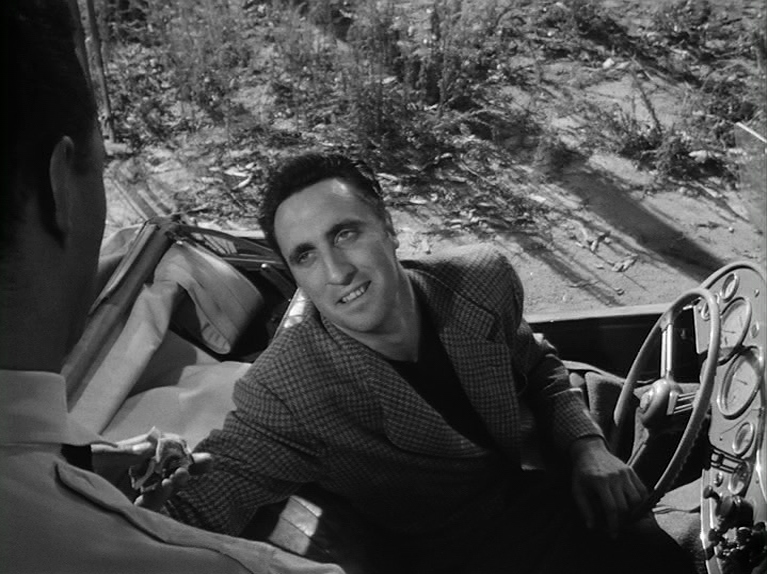
That said, this is also where the film reveals its limits. The Killing is directed with real intelligence, but not yet with full visual inevitability. Kubrick is already a strong constructor, but not yet fully the director whose framing, camera placement, and movement declare themselves with unmistakable authority from shot to shot. The signature is clearly emerging, but the full sovereign force of his visual authorship isn’t yet constant. One can already see the director Kubrick will become—in Paths of Glory the following year, and then in everything that followed—but one isn’t yet fully overwhelmed by him.
It’s also easy to see why one would want to revisit it. The film simply works. It has no real slackness, no conspicuous false notes, no major structural blur. It feels complete. It’s also refreshingly short—a reminder that a thoroughly satisfying film doesn’t need to overextend itself in order to feel substantial. In that sense alone, The Killing is a useful lesson in economy.
What lingers most is the film’s final tension between two uncomfortable readings. One part of me comes away thinking that crime doesn’t pay. Another comes away thinking something worse: not that the universe punishes wrongdoing, but that it’s cold, indifferent, and under no obligation to let intelligence become success. That’s what finally gives the film its aftertaste. Control is real. Planning is real. Intelligence is real. But none of them is sovereign. They improve the odds; they don’t abolish contingency.
The Killing doesn’t merely tell the story of a heist gone wrong. It tells the story of a plan that almost works, of men who distort it, and of a reality that doesn’t need to oppose human control in order to nullify it. That’s not just noir fatalism. It’s something colder.
USA | 1956 | 84 MINUTES | 1.66:1 | BLACK & WHITE | ENGLISH

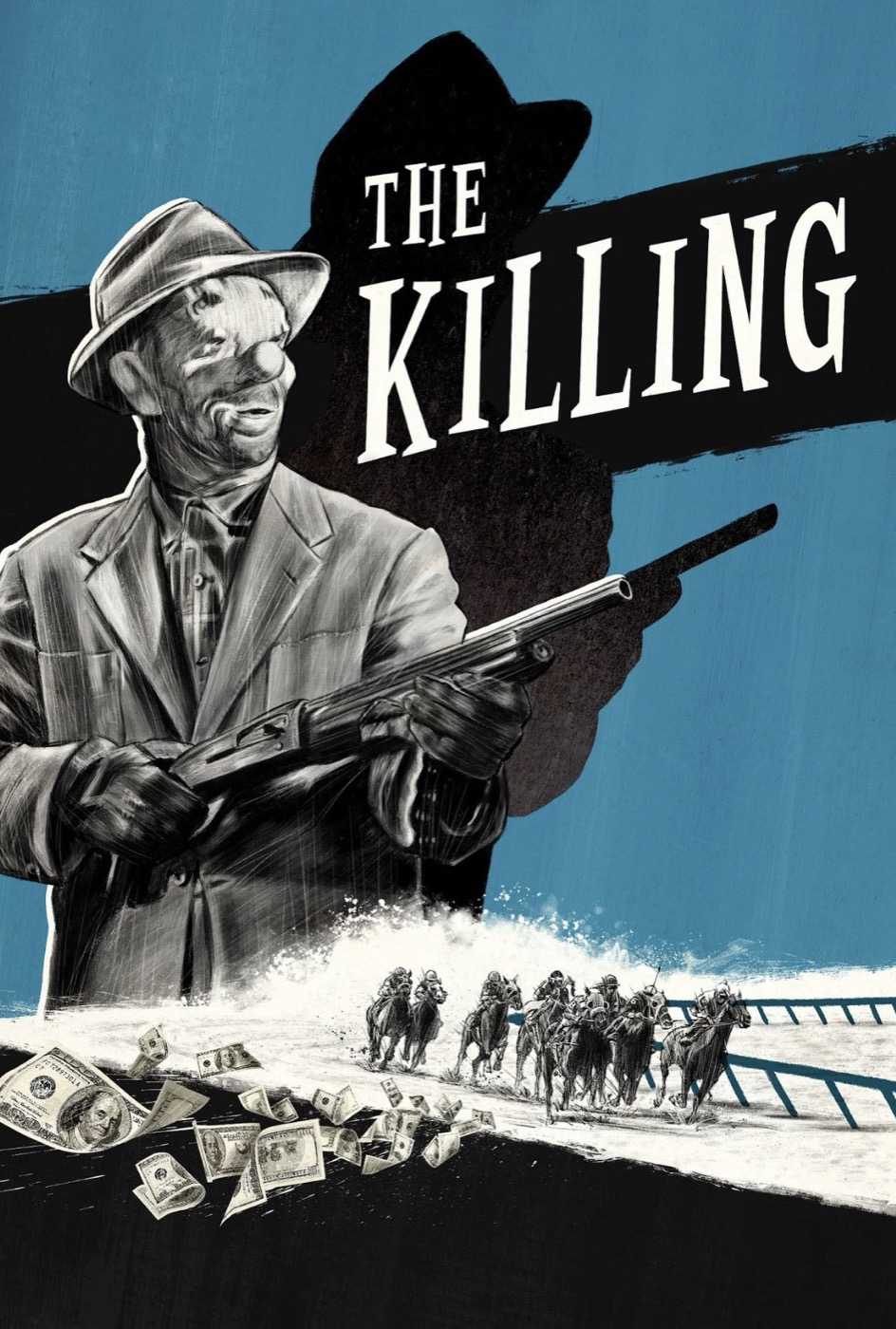
director: Stanley Kubrick.
writer: Stanley Kubrick (dialogue by Jim Thompson; based on the novel ‘Clean Break’ by Lionel White).
starring: Sterling Hayden, Coleen Gray, Vince Edwards, Marie Windsor, Elisha Cook Jr., Jay C. Flippen & Timothy Carey.