☆☆☆☆☆ ★★★★★

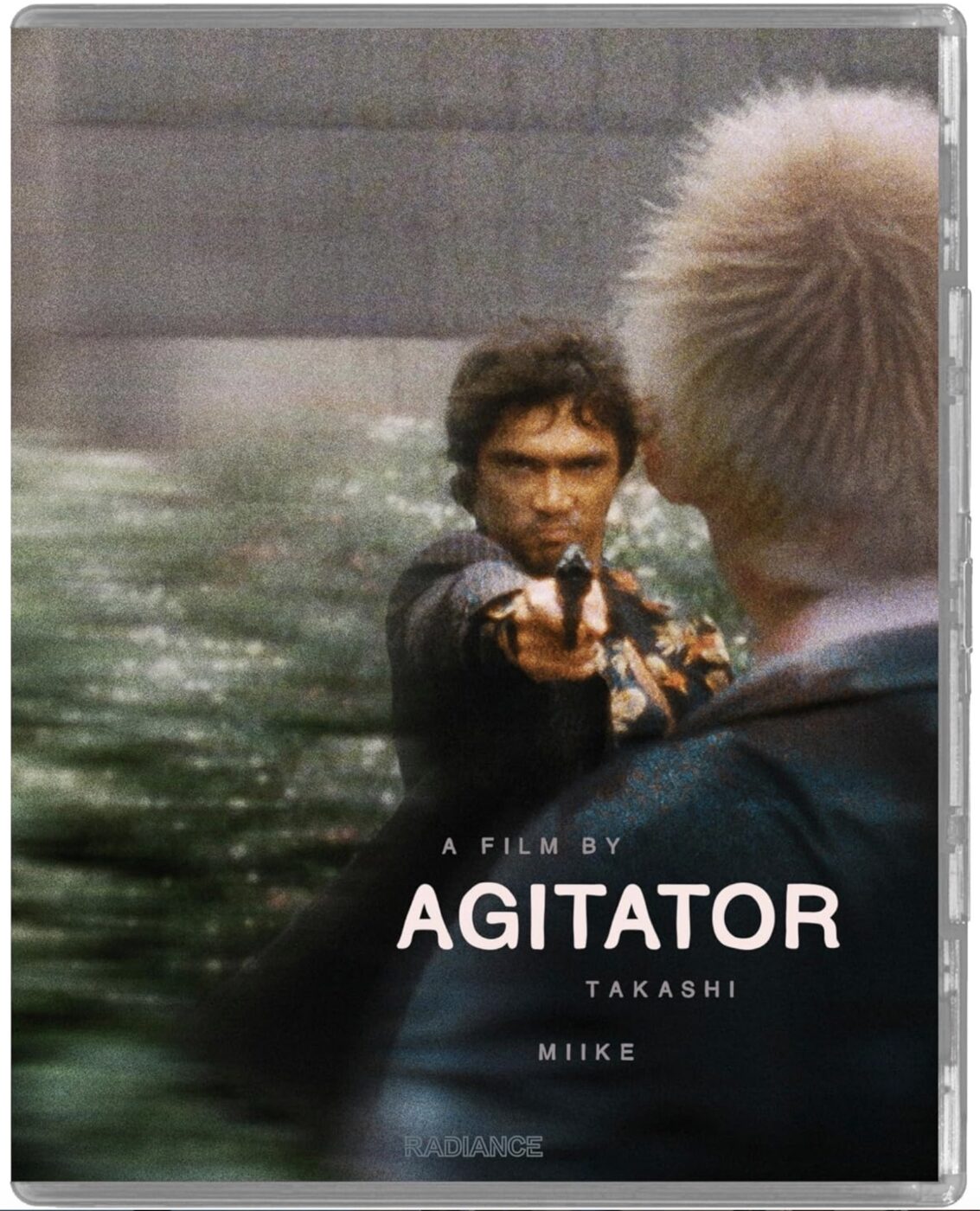
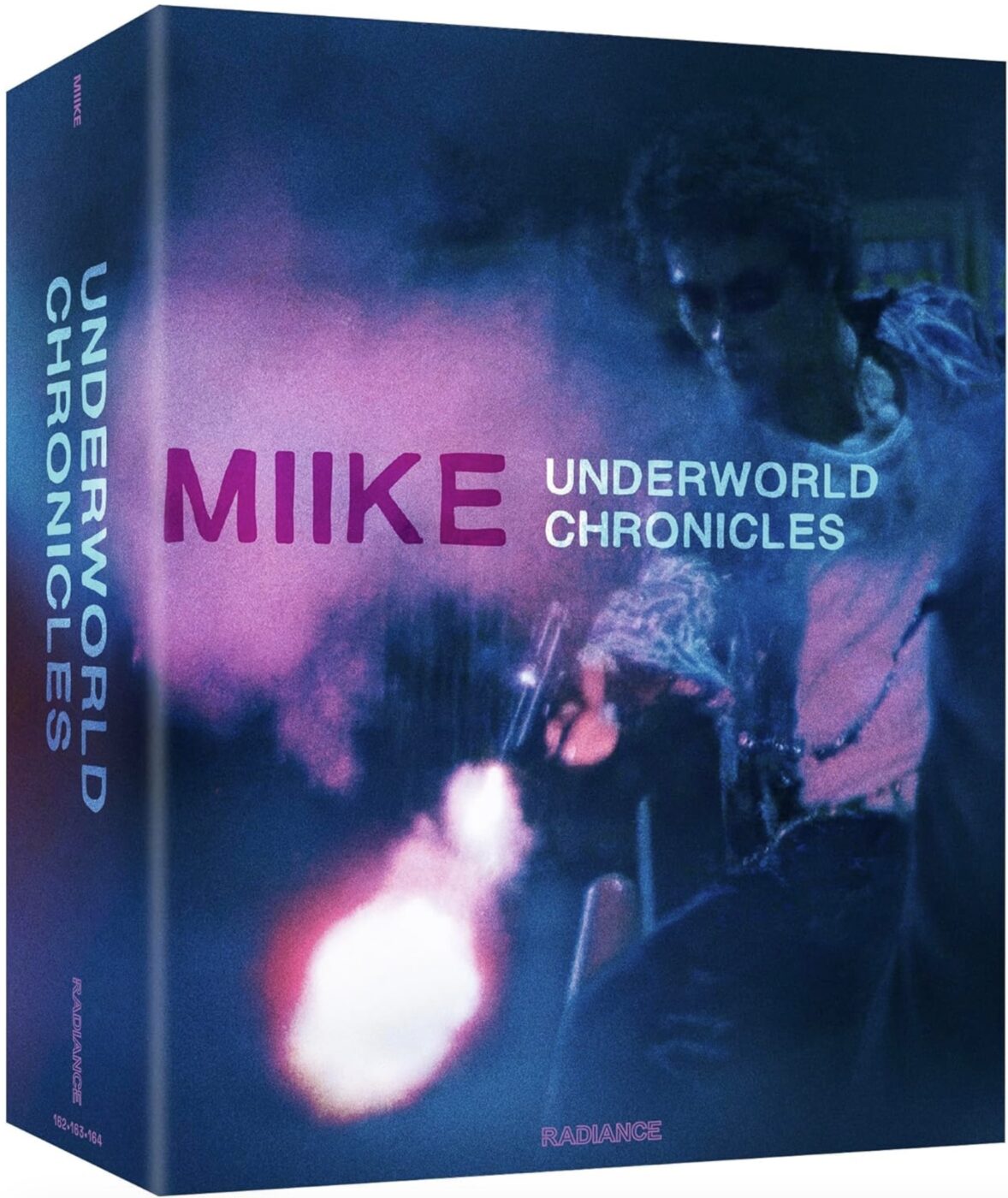
Historically, Japan’s more eccentric cinema has been difficult to access in the UK, particularly in areas lacking a local independent cinema. Often, the influential filmmakers who reshaped the nation’s cinematic landscape remain little known beyond Japanese shores. Consequently, after a long wait for UK boutique labels to unearth Takashi Miike’s extensive back catalogue, it’s refreshing to see three contentious classics arrive simultaneously in this handsome new Blu-ray box set from Radiance. Underworld Chronicles: Three Yakuza Fables collects a trio of the director’s early-career yakuza films, showcasing the unconventional approach that revitalised a well-worn genre.

Miike is best known for his extreme psychological thriller Audition (1999) and the ultra-violent Ichi the Killer (2001), though family audiences may recognise him for The Great Yōkai War (2005) and its sequel, Guardians (2021). More recently, his excellent, unpredictable thriller Lumberjack the Monster (2023) made a quiet debut on Netflix.

Although I’ve only seen a fraction of his prolific and wildly varied output, I’m yet to be disappointed. Surprised, certainly; challenged and even baffled, yes—but always exhilarated. The good news is that there are roughly 100 more Miike-helmed features to look forward to, not counting various side projects such as educational films, shorts, and music videos (including a current collaboration with British pop star Charli XCX).

Miike cites his first viewing of The Texas Chain Saw Massacre (1974) as one of the most formative moments of his life. It set him on a path to becoming a director who constantly strives to recapture the visceral excitement he felt as a 15-year-old. He still regards it as the benchmark against which he measures his own work, and he certainly brings that same energy and gleeful abandon to the films presented here.

Like many of Japan’s bold New Wave directors, Miike broke into the industry through “Original Video Movies” (OVM)—a distinctly Japanese market of low-budget, rapidly produced films released directly to VHS. These surged in popularity during the late 1980s when major studios like Toei introduced their “V-Cinema” lines. Their heyday coincided with the UK’s “video nasty” era; similarly, low budgets and direct distribution meant there was little oversight, lax censorship, and minimal interference from studio executives. With less financial risk involved, young outsider directors found they could experiment stylistically, pushing content beyond established boundaries into the realm of transgression.

The V-Cinema format provided an arena to challenge the societal values upheld by the immensely popular “Home Drama” genre—products of a socio-political climate where the post-war “economic miracle” was fading as Japan approached the 21st-century. Such conservative, television-friendly dramas tended to present idealised lifestyles that reinforced stereotypical gender roles.

Miike wasn’t the only rebel filmmaker to challenge these norms, but he does so with greater zeal than most. He deliberately sets out to rupture these representations, featuring masculinity pushed to breaking point, marginalised femininity, weaponised gender fluidity, and morally ambiguous characters on the fringes of society. Remarkably, he still manages to uncover their emotional core, even when violence is the only available form of expression. The yakuza movie, already a dominant genre, lent itself perfectly to such themes, and the V-Cinema format allowed him to tell shockingly subversive stories—starting with the first title in this set:


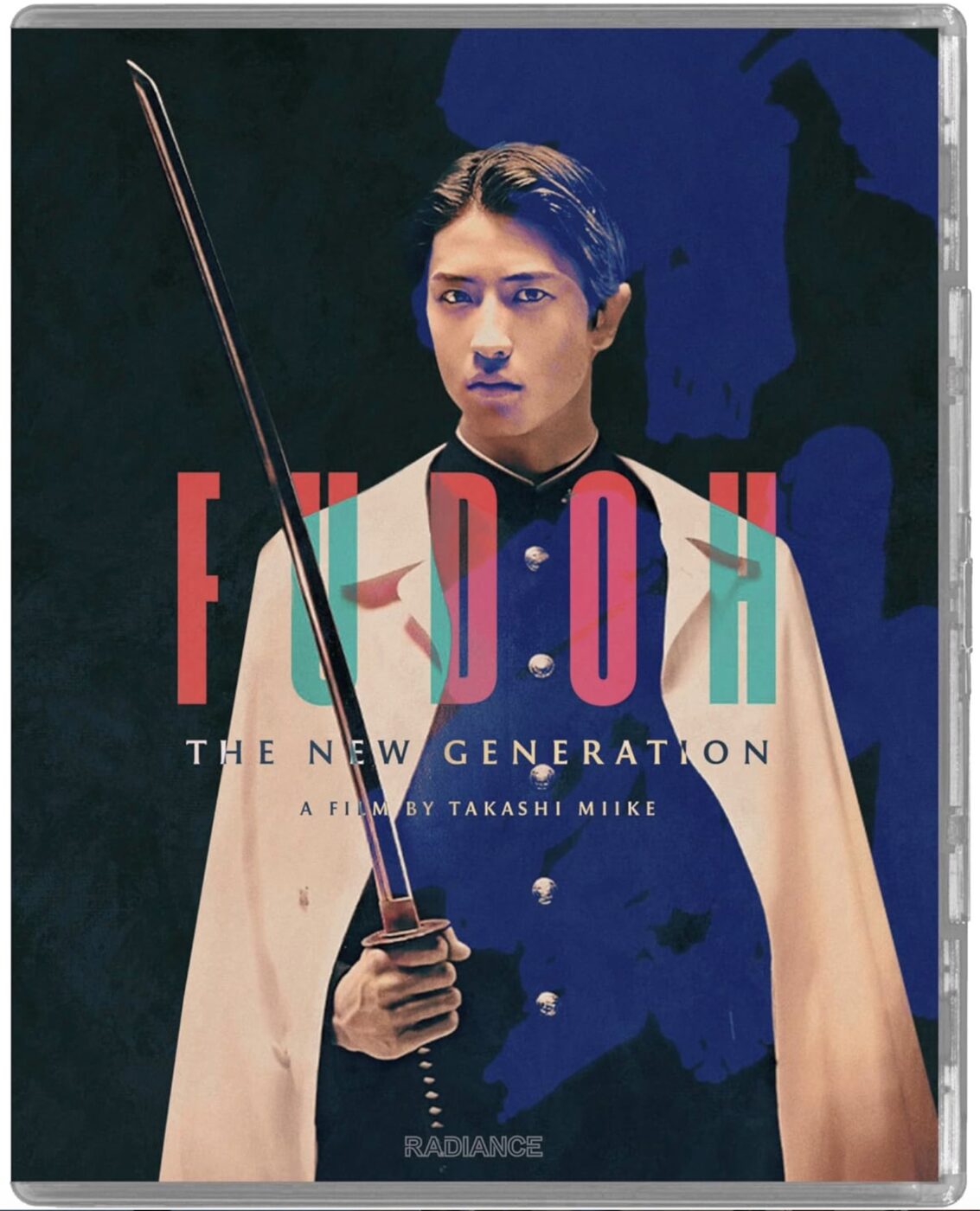
Fudoh: The New Generation / 極 道戦国志 不動 (1996)

☆☆☆☆☆ ★★★★★

A group of high school students and children form a deadly yakuza gang intent on taking control and punishing their elders.

Even the most unglamorous of deaths can become an adrenaline rush in the hands of Takashi Miike. The high-impact opening sequence involves a hail of bullets and grenades as a specialist hitman (Mickey Curtis) repeatedly shoots his mark (Tomorô Taguchi), propelling him through a series of public toilet stalls. There’s enough gun smoke to trigger the sprinklers, washing copious amounts of blood across the tiled floor and down the drain. We know nothing of these men or their motives; they’re defined solely through violence and death. It’s a nihilistic opening gambit, depicting the masculine power dynamic of boss and servant reaching its most toxic conclusion. In these first few minutes, we see a prime example of Miike’s recurring motifs: the penetrated male body in extremis, violence as a substitute for emotion, and blood flow as aesthetic.

Observant viewers will notice the walls and drenched doors beginning to wrinkle and peel, revealing them to be made of flimsy card and paper. We’re thus reminded that this is, thankfully, far removed from reality. The shortcomings of hasty set construction can be read as a clever meta-narrative: the action is lifted from the pages of manga, and the associated graphic conventions are echoed in the framing and high contrast. The movie retains a punk aesthetic, and its pervasive juvenile humour alleviates the fatalistic grimness lurking beneath the surface. It’s clear that Toshiyuki Morioka and Takashi Miike’s script remains fairly faithful to its source material—the manga series Fudoh by Hitoshi Tanimura—yet film remains a distinct medium.

We learn that the man killed in the toilets was an informant for the Fudoh family, made a bloody example of by an assassin from the Yasha gang. Ryu Fudoh hears the news while playing catch with his younger brother, Riki, and orders a retaliatory execution. In response, their father, Iwao Fudoh (Tôru Minegishi), is admonished by Nioh clan elders who demand an act of contrition to avoid a gang war. They joke that cutting off a finger, or even an entire arm, might not appease the dominant syndicate. His response is to present the severed head of his eldest son, Ryu—laughing maniacally, unaware that his youngest son, Riki, has witnessed the murder.

All this occurs before the titles, and the pace never slackens until the final frame. Already, Miike has established a central theme: the betrayal of a younger generation by its elders—the inheritance of a dysfunctional patriarchal structure. It’s a clear metaphor for a generation prepared to sacrifice its children’s future for short-term gain, much like the broken patriarchy of Imperial Japan sending its youth to war, or modern corporations profiteering from a climate catastrophe. This becomes even more apparent as the story jumps forward a decade.

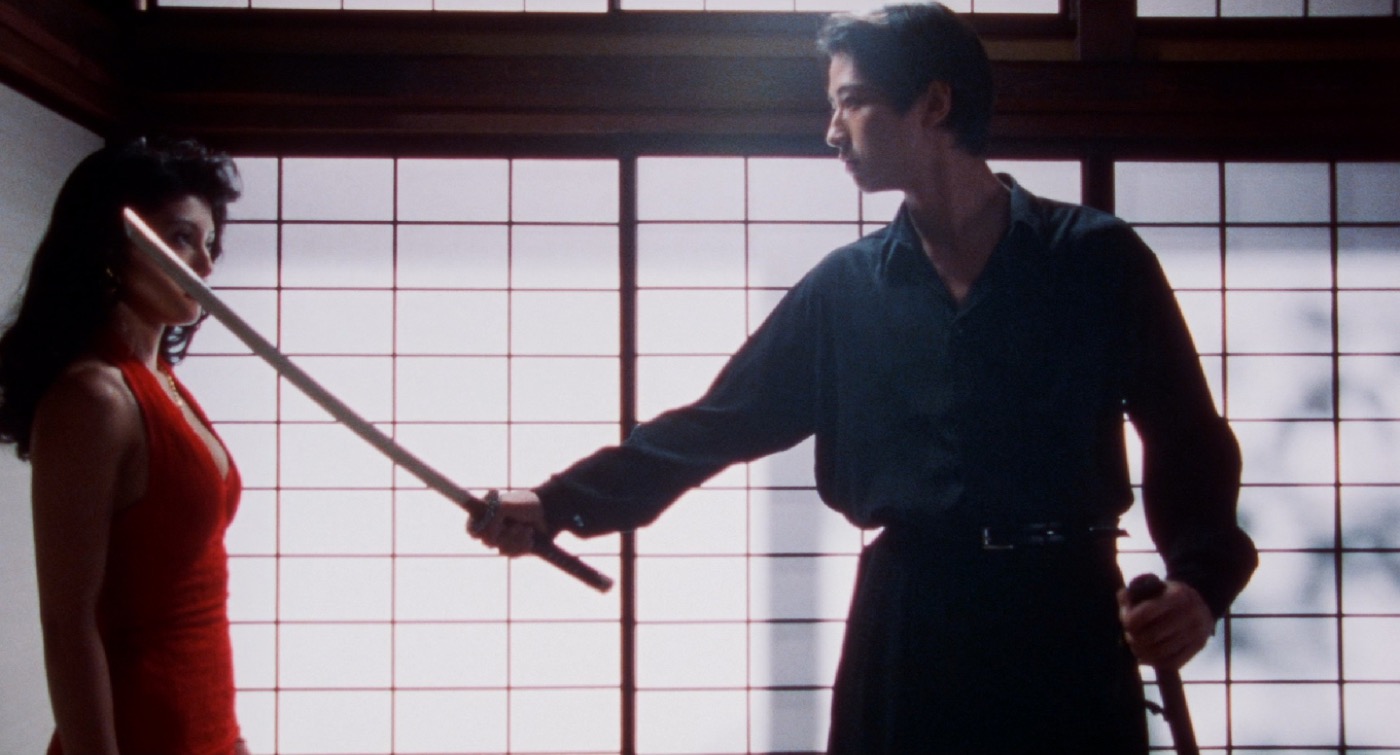
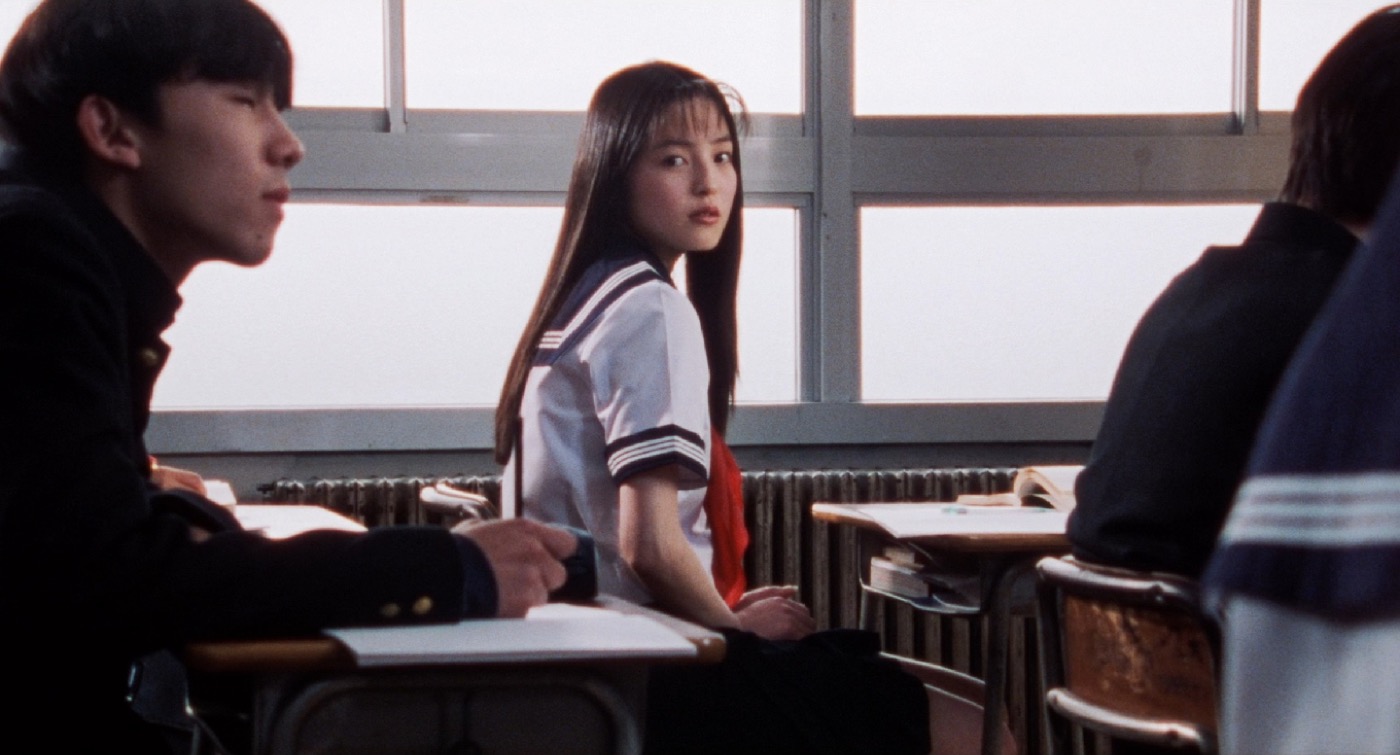
The adult Riki Fudoh (Shôsuke Tanihara) is now a senior school student and, like a rebel leader in occupied territory, has formed a secret gang of assassins among his classmates. From this unexpected power base, he begins systematically eliminating yakuza council members. Seeing children ruthlessly gun down targets is startling, but in a society built on respect for one’s elders, it’s nothing short of shocking. However, the action is accompanied by an outrageous sense of humour; Miike never forgets that cinema is, first and foremost, entertainment.

Riki’s two most trusted operatives are Touko (Tamaki Kenmochi) and Mika (Miho Nomoto). Touko wraps her midriff in the traditional white sarashi binding and seems to find a cathartic release when mowing down men with a machine gun. Yet that transgression is nothing compared to her colleague. Though Mika presents as a schoolgirl, she is a non-binary, intersex character who moonlights as a stripper. She’s also a crack shot with a poison blowpipe fired from the crotch—a deadly variation on exploitative “ping-pong” cabaret shows. The hyper-masculine murder scenes of the prologue are counterpointed by a scene where she spatters an adversary with menstrual blood. It’s strange that this remains a taboo when audiences are comfortable with gallons of gore from decapitations. It brings to mind Nick Zedd’s notorious entry in the “cinema of transgression”, War is Menstrual Envy (1992).

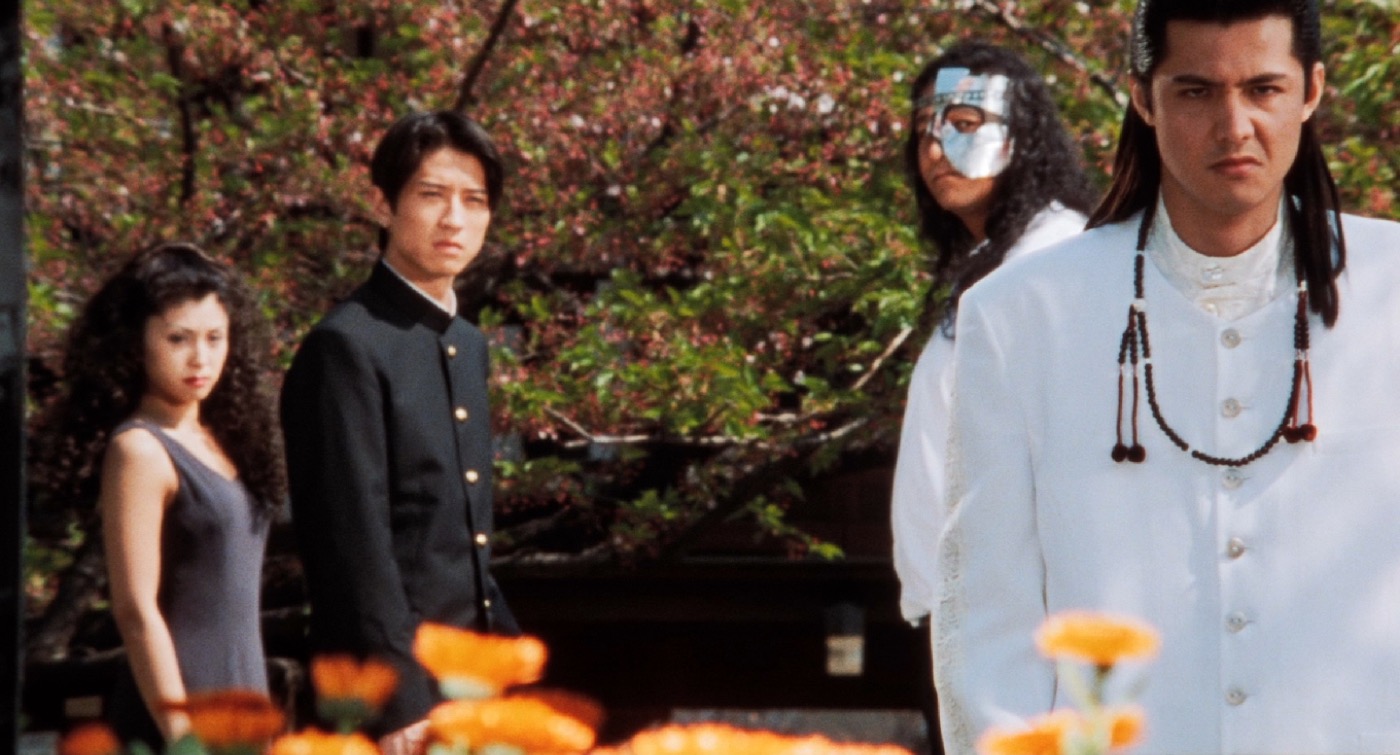
Fudoh is unbelievable in many ways. Shôsuke Tanihara is superb in the lead; despite being in his mid-twenties, his youthful appearance allows him to pass for a student. However, when the “man-mountain” Aizone (Kenji Takano) joins the class as a transfer student, any semblance of realism evaporates. The visual humour of a biker-giant in his 30s standing alongside diminutive schoolgirls is pure Miike. Everything about the film becomes progressively more outrageous, cruel, and gleefully shocking.

Luckily, I’d been primed by a recent viewing of several Takashi Ishii thrillers, which similarly mash up edgy sexual content with stylish crime. I doubt Miike would be producing this kind of content without the ground being prepared by Ishii. Of course, both owe a debt to the bold transgression of gekiga—the adult-orientated manga Ishii helped define.

Tanimura’s Fudoh manga was never finished, and the movie’s open ending cleverly sidesteps this by implying that generational cycles are perpetuated until a society destroys itself. It’s a metaphor, perhaps, for the disruption brought about by the waning of the post-war “economic miracle”. Around this time, Japan entered its “lost decades,” where the children of “boomers” found themselves disadvantaged while welfare costs for a top-heavy aging population soared.

Fudoh can be understood as a heavy-handed critique of this generational conflict. The narrative pivots on filicide, patricide, and kinslaying. One must pay close attention to keep track of the rapid power shifts, yet we still develop an emotional attachment to these problematic characters. We can’t help but cheer for those pursuing righteous vengeance. This is bolstered by excellent performances, including supporting roles filled by professional fighters who rely on sheer physical presence to carry their scenes.

Miike is a master of characterisation; he makes us prepared to forgive dire decisions, perhaps because he forces us to consider what our “shadow self” might do in similar straits. I’ve yet to see a Miike film where he seems hesitant to push the envelope, tear it open, and display the contents.

Although this was just one of six V-Cinema movies Miike directed in 1996, it was the one that brought him global attention. Producer Yoshinori Chiba pushed for a film print to be made, finding the budget to allow the film a limited theatrical run and festival appearances. While two sequels were made in quick succession, they were directed by Yoshiho Fukuoka without Miike’s involvement, though the original cast did return to face the “Revenge of Fudoh.”

JAPAN | 1996 | 98 MINUTES | 1.85:1 | COLOUR | JAPANESE


Agitator / 荒ぶる魂たち (2001)

☆☆☆☆☆ ★★★★★

The assassination of a top yakuza chairman triggers a bloody reshuffle of power rife with dirty deals and betrayal while a young hoodlum swears revenge for his boss and best friend.

By 2001, Takashi Miike was on a roll, churning out half a dozen films a year, even as the V-Cinema market suffered a disastrous decline. Agitator was another project that producers deemed strong enough for a theatrical release, marking Miike’s successful transition to studio-backed features alongside the independent projects he made with his regular ensemble crew. Other releases from that same prolific year included Visitor QThe Happiness of the Katakuris, and Ichi the Killer—a festival favourite that garnered a dedicated international cult following.

Two versions of Agitator were released: the theatrical print and an extended two-part V-Cinema edit. Both were fully controlled by Miike, who sought to offer subtly different experiences with each. This release features the tighter theatrical print, restored with a crisp HD transfer, while also presenting the overlong edit—a version that slows the pace with additional, and perhaps superfluous, “soapy” subplots. It also includes several roman-porno style sex scenes, hinting again at the influence of Takashi Ishii, further cemented by the casting of Ishii favourite Naoto Takenaka in a leading role. Ultimately, Agitator serves as an excellent showcase for the New Wave talent that rose to prominence as the Japanese studio system’s decades-long dominance finally waned.

From the outset, Agitator feels like a classic yakuza saga from the 1970s—a distinctive blend of the nostalgic and the contemporary that became a Miike signature. Of the three films in this collection, it’s the most measured in pace, offering a solid, traditional cinematic narrative reminiscent of American genre classics.

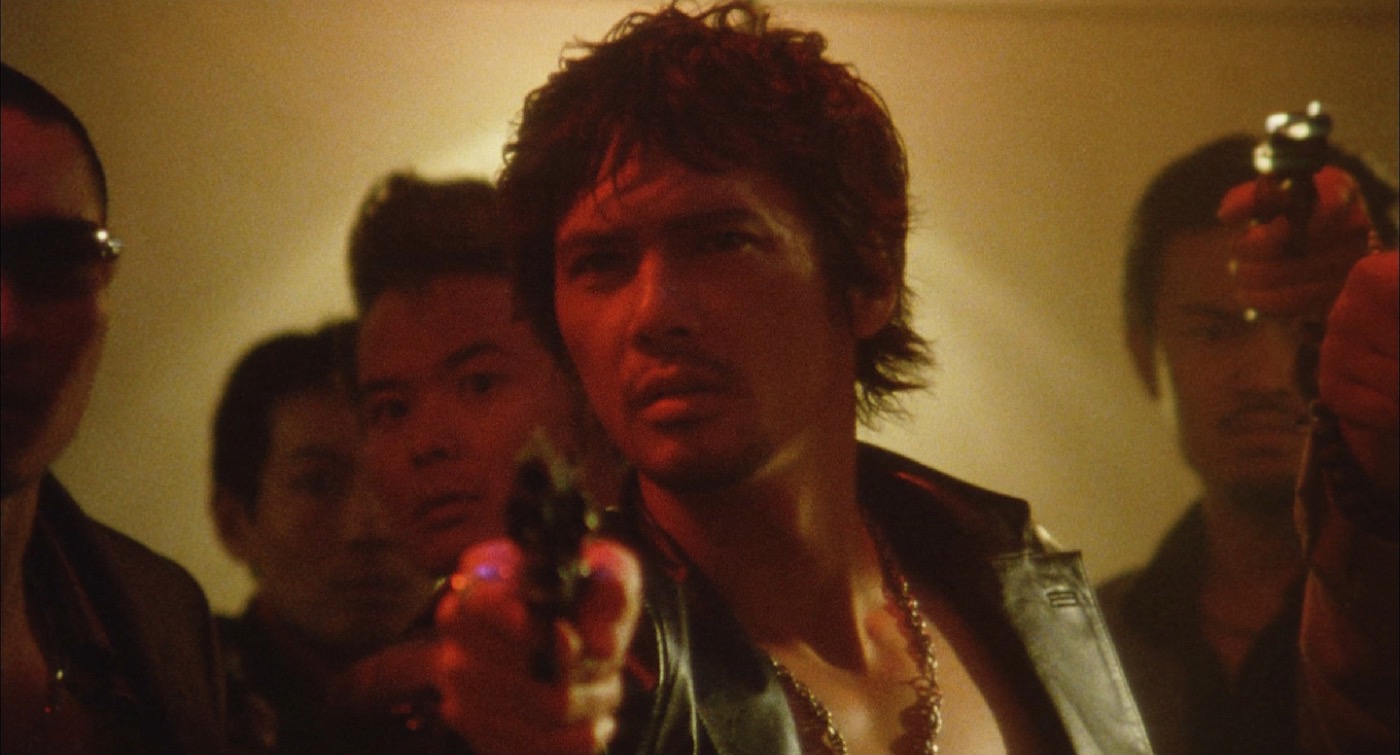
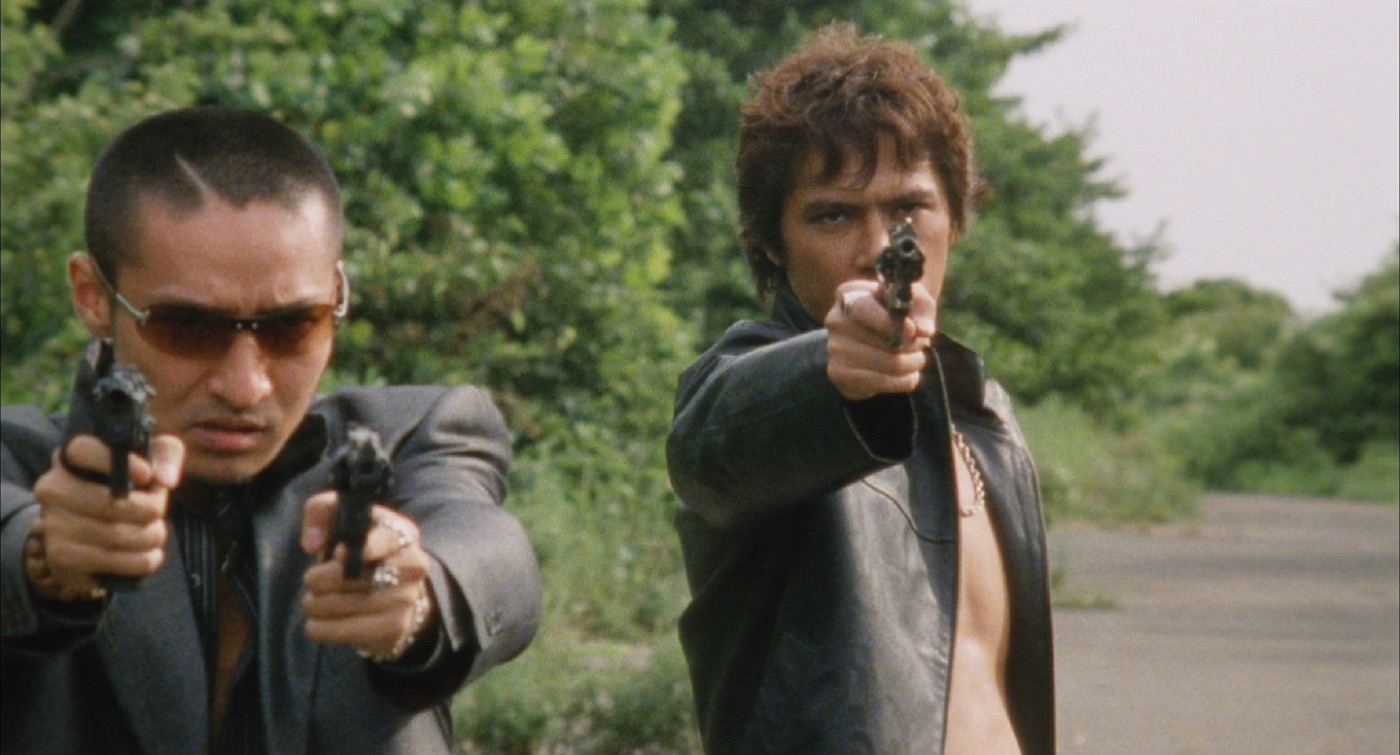
With his brooding looks and cocky swagger, the film’s protagonist, Kunihiko (Masaya Katô), owes a clear debt to Al Pacino’s Tony Montana in Scarface (1983). Meanwhile, the extended runtime and flashbacks to friendships forged in a deprived childhood recall the more ponderous tone of Sergio Leone’s Once Upon a Time in America (1984). Agitator stands comfortably alongside these heavyweights, yet brings its own cultural context and a grittier brutality, likely drawn from Kinji Fukasaku’s yakuza epics such as Sympathy for the Underdog (1971) and the Battles Without Honour and Humanity series (1973–76).

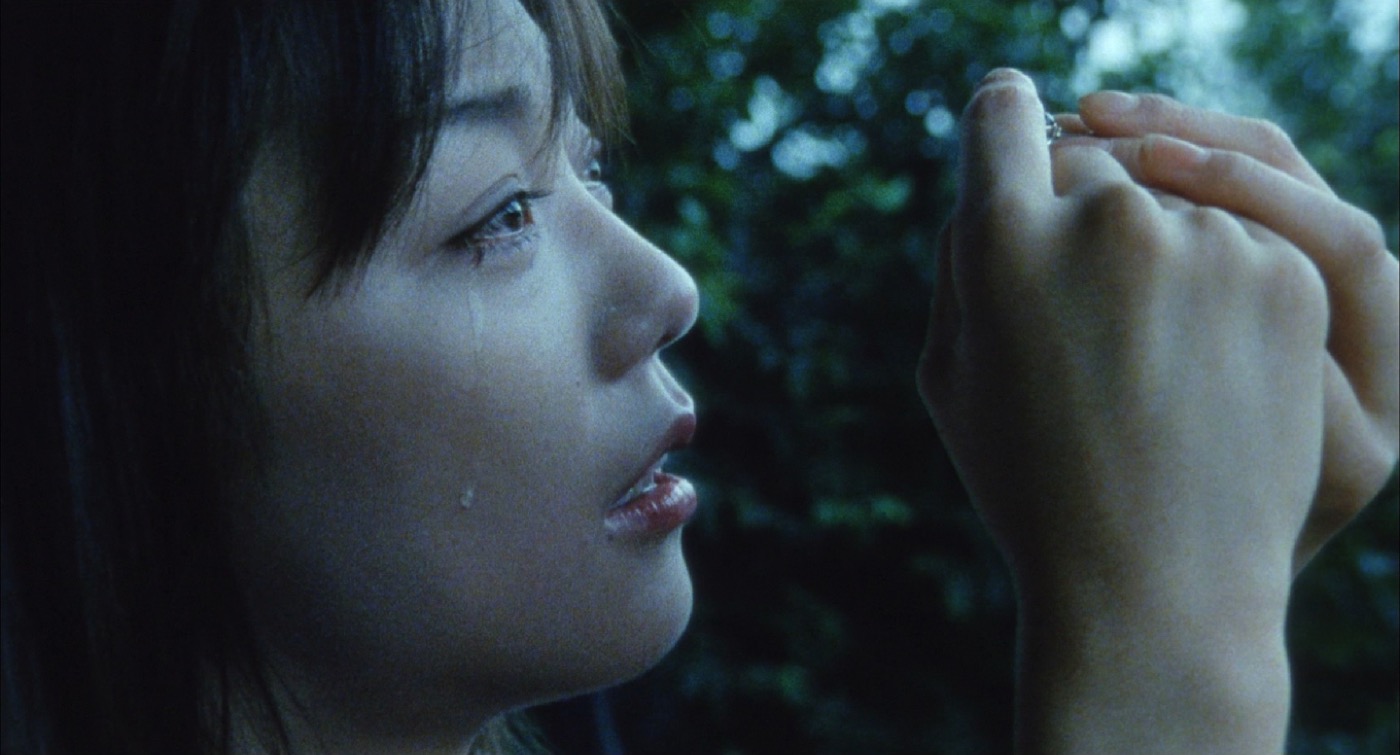
The opening scenes, saturated with film grain and the washed-out colours of memory, feature a young girl (Aya Kawamura) recalling her first meeting with Kunihiko in a bric-a-brac shop. She selects a kaleidoscope ring for him; years later, she peers into that same shifting field of colour, shedding a tear for a tragedy we don’t yet understand but can easily predict.

This colour field is a recurring visual motif. Kunihiko’s habit of gazing into it as a momentary escape recalls the titular fish in Francis Ford Coppola’s Rumble Fish (1983). Another fish—this time a dead goldfish—is slapped onto a coffee table while Kunihiko’s gang intimidates a corporate landlord, a possible nod to Brian De Palma’s Wise Guys (1986).

With Agitator, Miike delivers exactly what gangster fans expect, signalling his intentions with these references to genre giants alongside nods to Japan’s own Kinji Fukasaku and Takeshi Kitano. Shigenori Takechi’s script had reportedly been dismissed by others as too old-fashioned, but it reminded Miike of the classic movies he grew up watching; it was exactly the project he wanted.

The film is rife with stock characters: the honourable, the ruthless, the arrogant, and the “normal guy” just trying to survive. Here, Shinozaki (played by Miike himself) is the sociopathic hoodlum sent by the Kaito gang boss (Hiroki Matsukata) to cause trouble on Yokomizo turf, disrupting a fragile peace. In a scene far removed from classic yakuza thrillers, he assaults a hostess with a karaoke microphone. Acting on a tip-off, the Higuchi gang—the Yokomizo clan’s street-level enforcers—intervene and, as the situation escalates, are forced to kill Shinozaki. It’s widely assumed the director took this role himself to spare another actor the potential stigma of such an extreme scene; he is frighteningly convincing.

As is typical for these “realistic” sagas, names are dropped rapidly and inter-clan dynamics are complex. However, you don’t need to track every detail to appreciate the story. It’s clear who is devious and who retains a code. They may not be traditional “good guys”, but we know exactly who we’re rooting for.

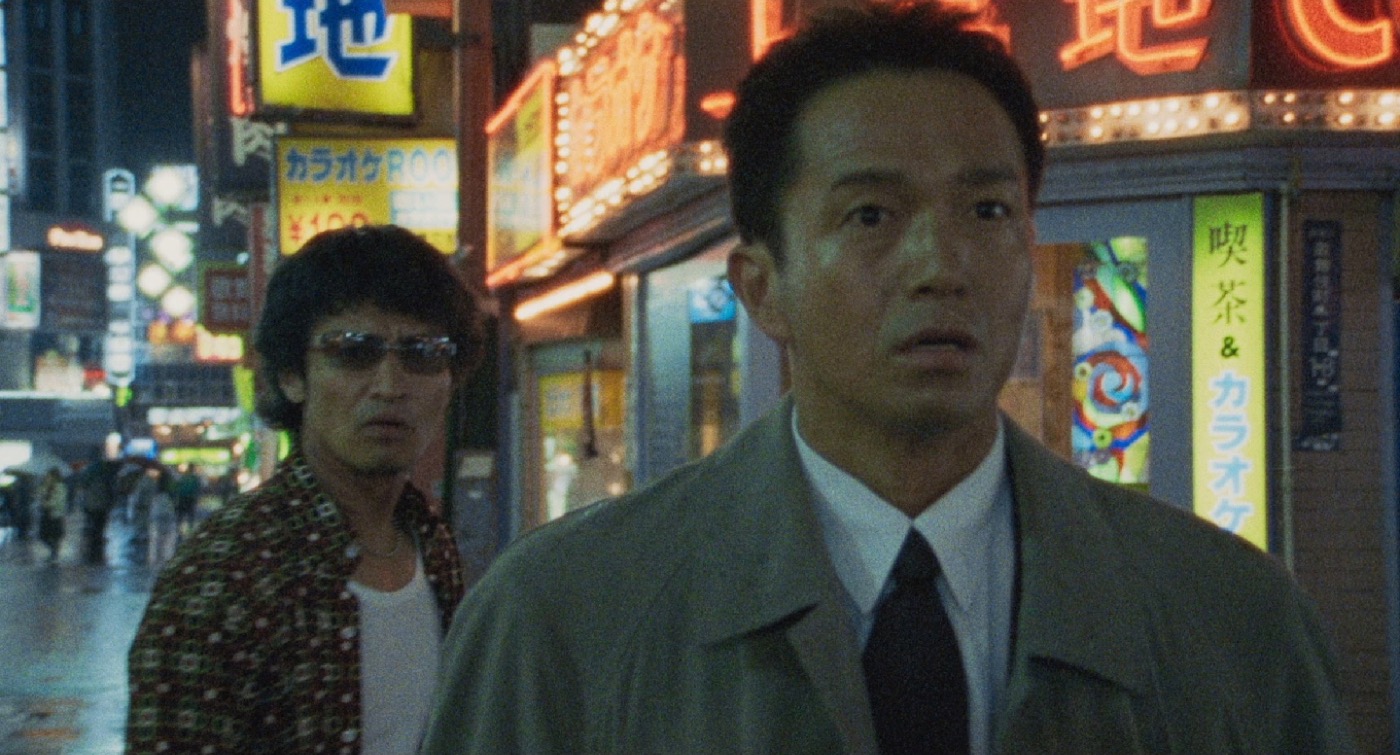
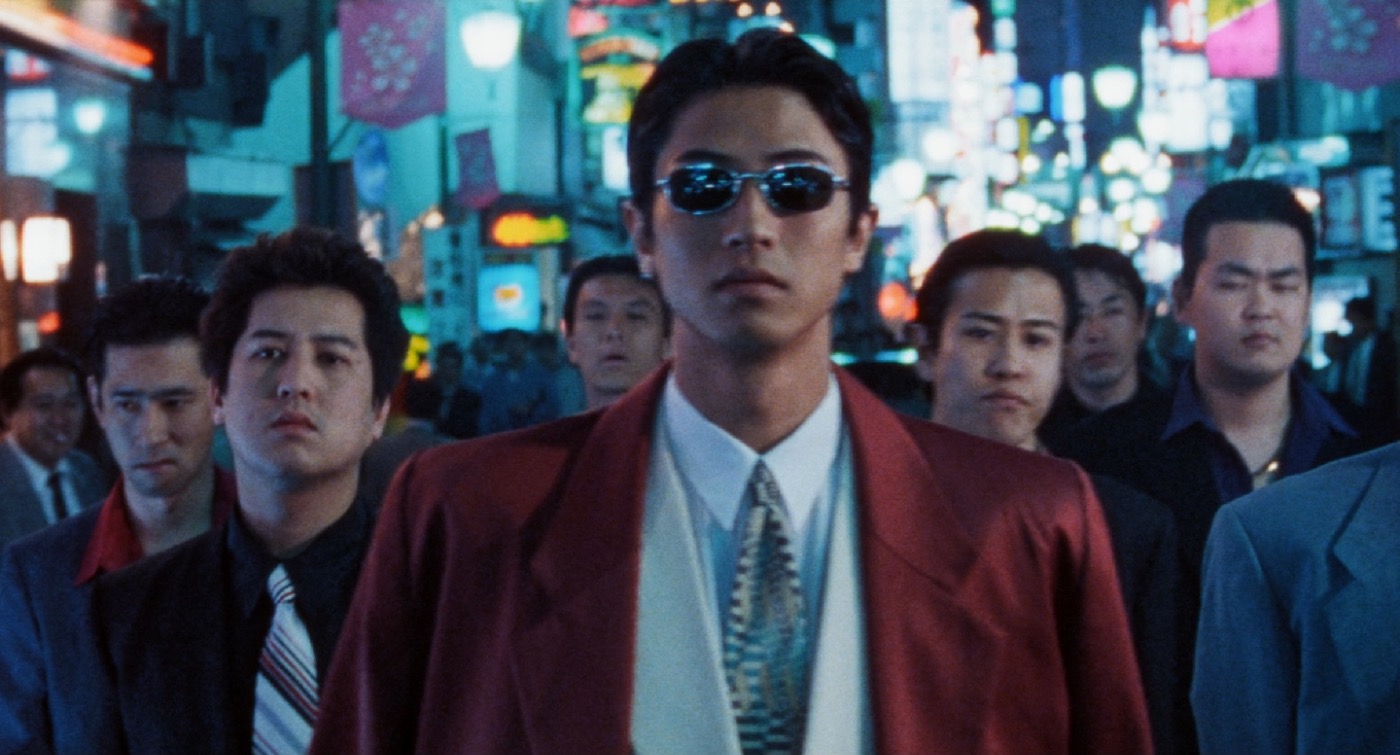
Viewers familiar with the genre will recognise the archetypal henchman in the background—leather jacket, open shirt, and shades. In Agitator, that young punk steps out of the shadows to become our protagonist. This is how Miike refreshes familiar tropes, reshuffling them with brash brutality.

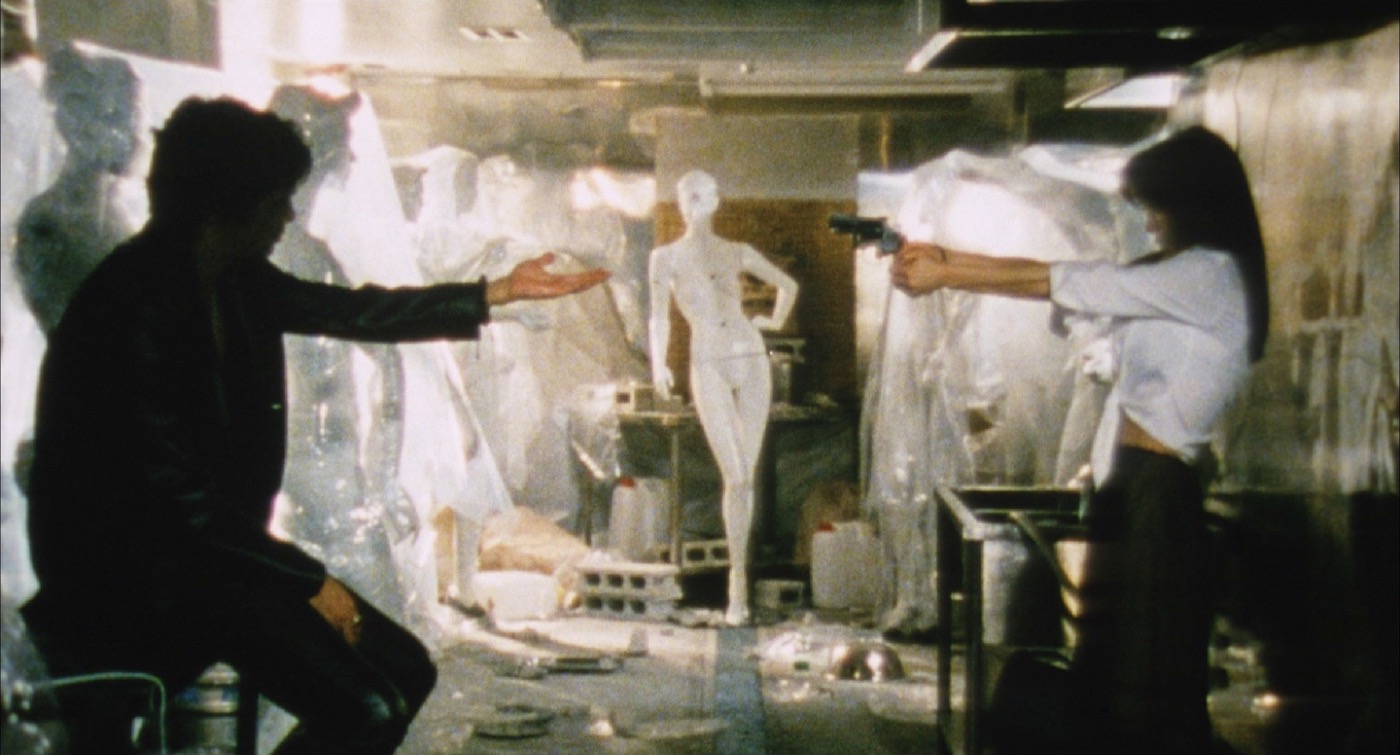
Unlike Fudoh, there is a conspicuous lack of instrumental women in this exclusively homosocial environment. Aside from Kunihiko’s girlfriend, who remains separate from his yakuza life, few female characters are granted agency. The prostitutes added to the extended cut serve as little more than vessels for male sexuality expressed as violence. In this world, men possess a stunted emotional vocabulary, speaking only through loyalty, betrayal, and bloodletting. The relationship between Higuchi (Naoto Takenaka) and Kunihiko, which veers toward the homoerotic, provides the only tender connection in the film—and serves as the catalyst for the inevitable tragedy.

JAPAN | 2001 | 150 MINUTES | 1.85:1 | COLOUR | JAPANESE


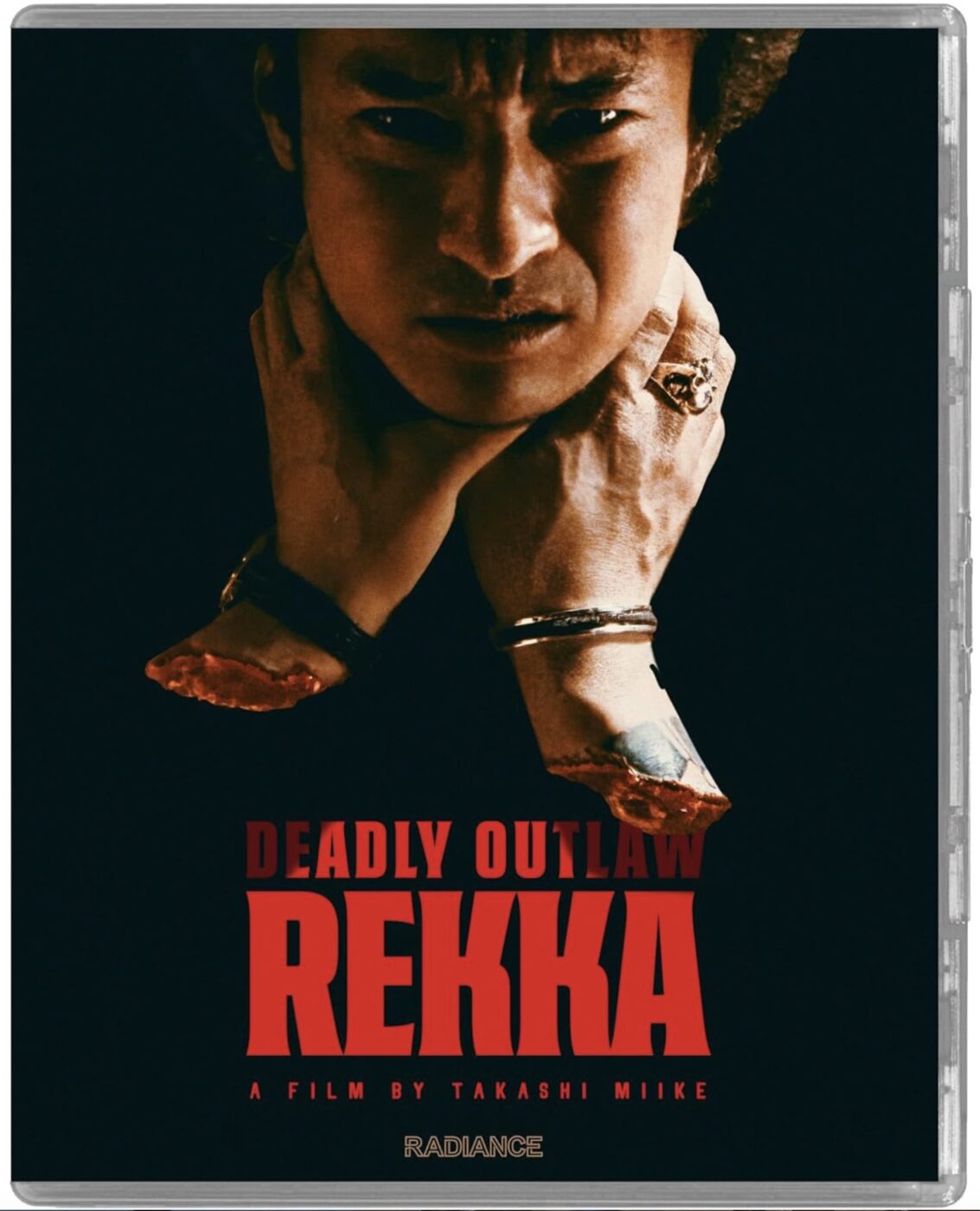
Deadly Outlaw: Rekka / 実録・安藤昇侠道伝 烈火 (2002)

☆☆☆☆☆ ★★★★★

When his beloved boss is murdered a furious young yakuza leaves a bloody trail of destruction as he and his right-hand man try to bring down all rival syndicates by any means necessary.

Deadly Outlaw: Rekka / 実録・安藤昇侠道伝 烈火 (2002) may be a confusing title for English speakers, who might naturally expect a protagonist named Rekka and wonder when he’ll arrive. In reality, the meaning has been partially lost in translation; the title is a phonetic reading of Rekka (烈火), which signifies a raging fire or conflagration, referring to the burning rage consuming our protagonist, Kunisada (Riki Takeuchi). The full Japanese title translates as Noboru Ando’s True Outlaw Tales: Raging Fire, implying it belongs to a series presented by the famous actor Noboru Ando and based on his experiences as a former yakuza boss. Although Ando is credited as a supervisor, it quickly becomes clear that the story is not strictly based on true events—or, if it is, they have been exaggerated beyond recognition.

Released as one of eight Takashi Miike films in 2002, this is the finest of the three presented in this set. It opens with a moment of meditative calm and a philosophical quote—perhaps paraphrasing Miyamoto Musashi—regarding a man who “walks the savage path alone with his gaze set on the fires of hell.” Then, all hell breaks loose. The film hits the ground running, grabs the viewer by the throat, and refuses to let go.

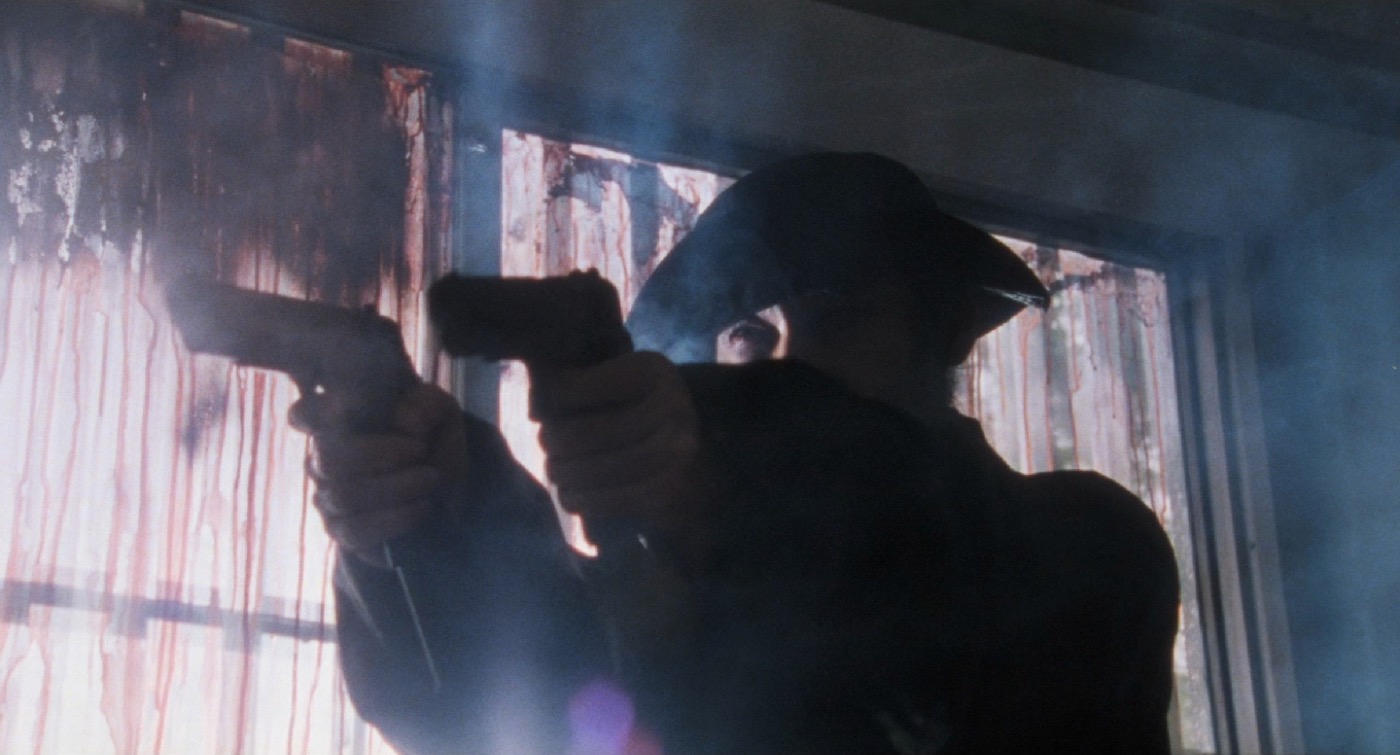
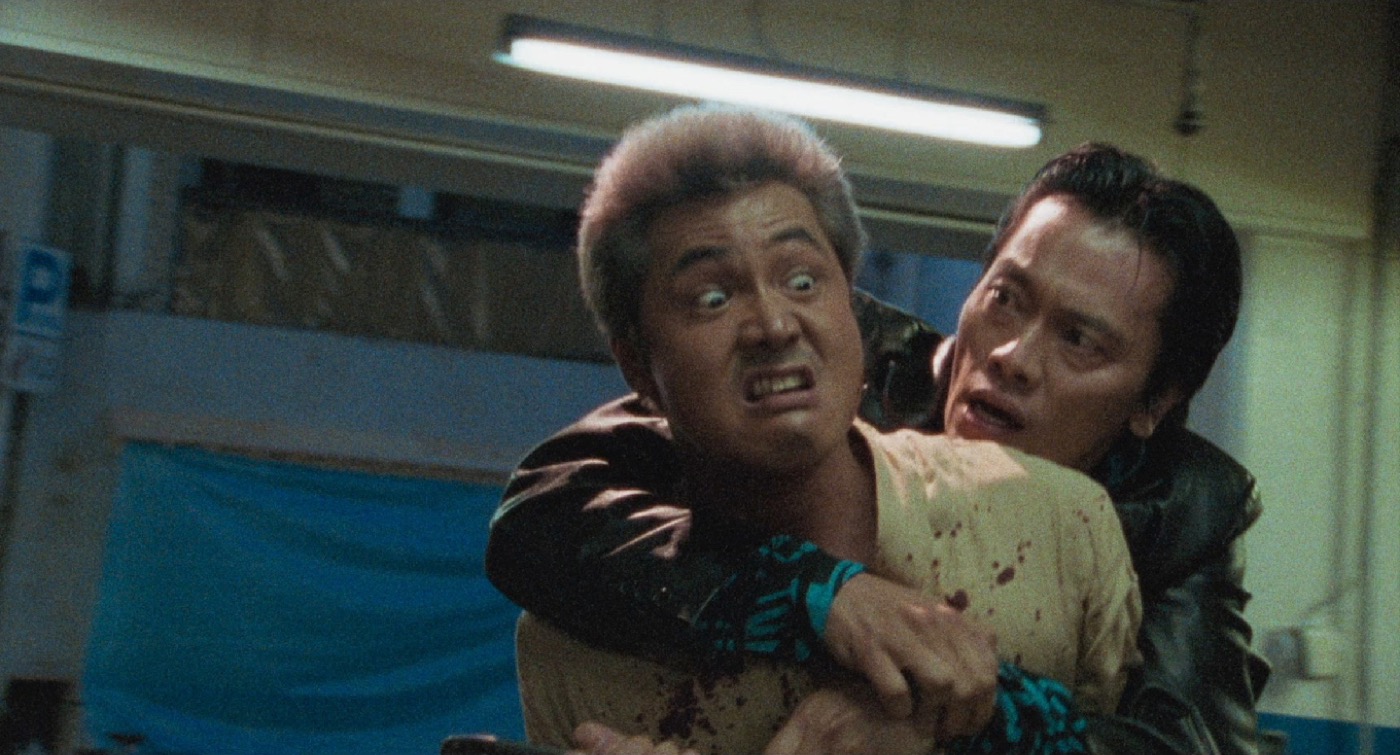
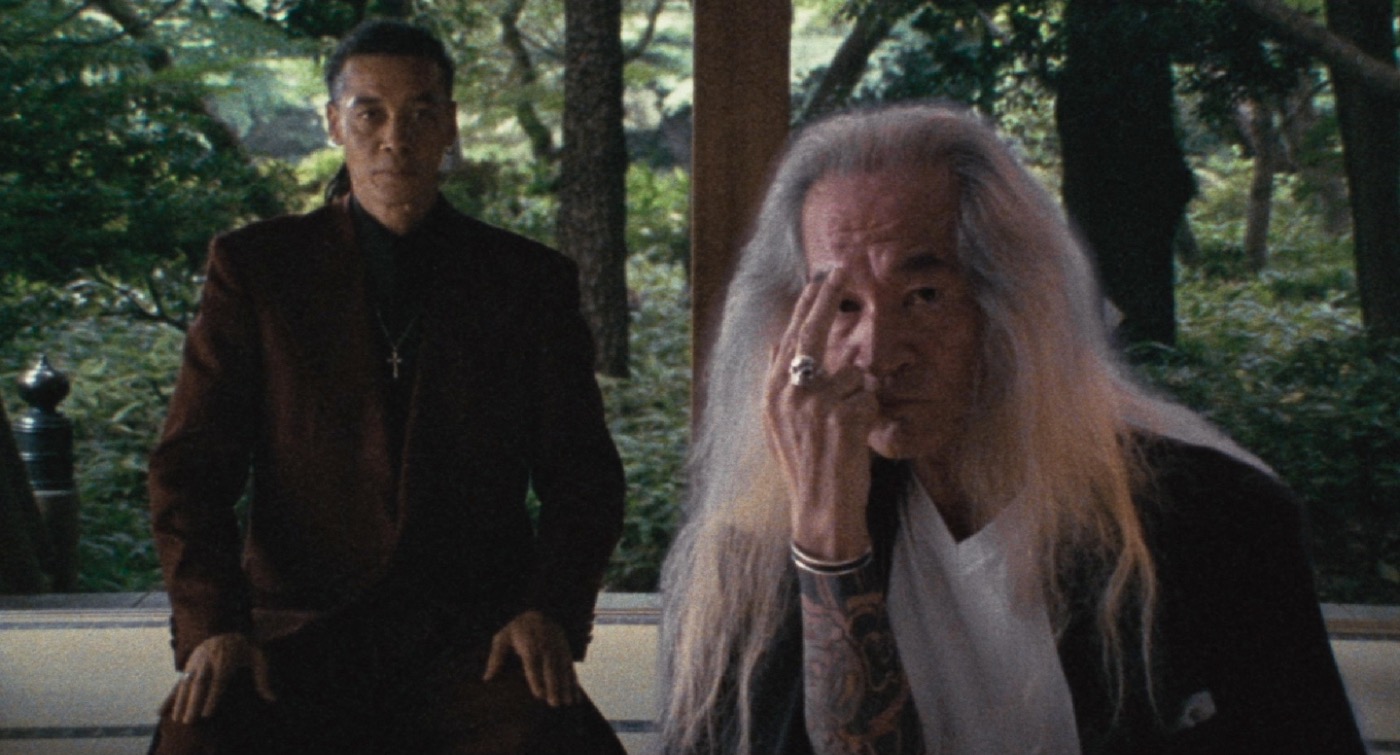
The man running at full tilt, a pistol in each hand, is Tabata (Yoshiyuki Yamaguchi), an elite hitman. His target is the head of the Sanada family (Yûya Uchida), a man with loose grey hair wearing a formal kimono complete with family crests and traditional white tassels. When they meet, an explosion of acrobatic physicality and ballistic violence dispatches the bodyguards, but Sanada himself proves harder to kill. Smiling, he absorbs hit after hit, relentlessly approaching his attacker until he finally begins to throttle him.

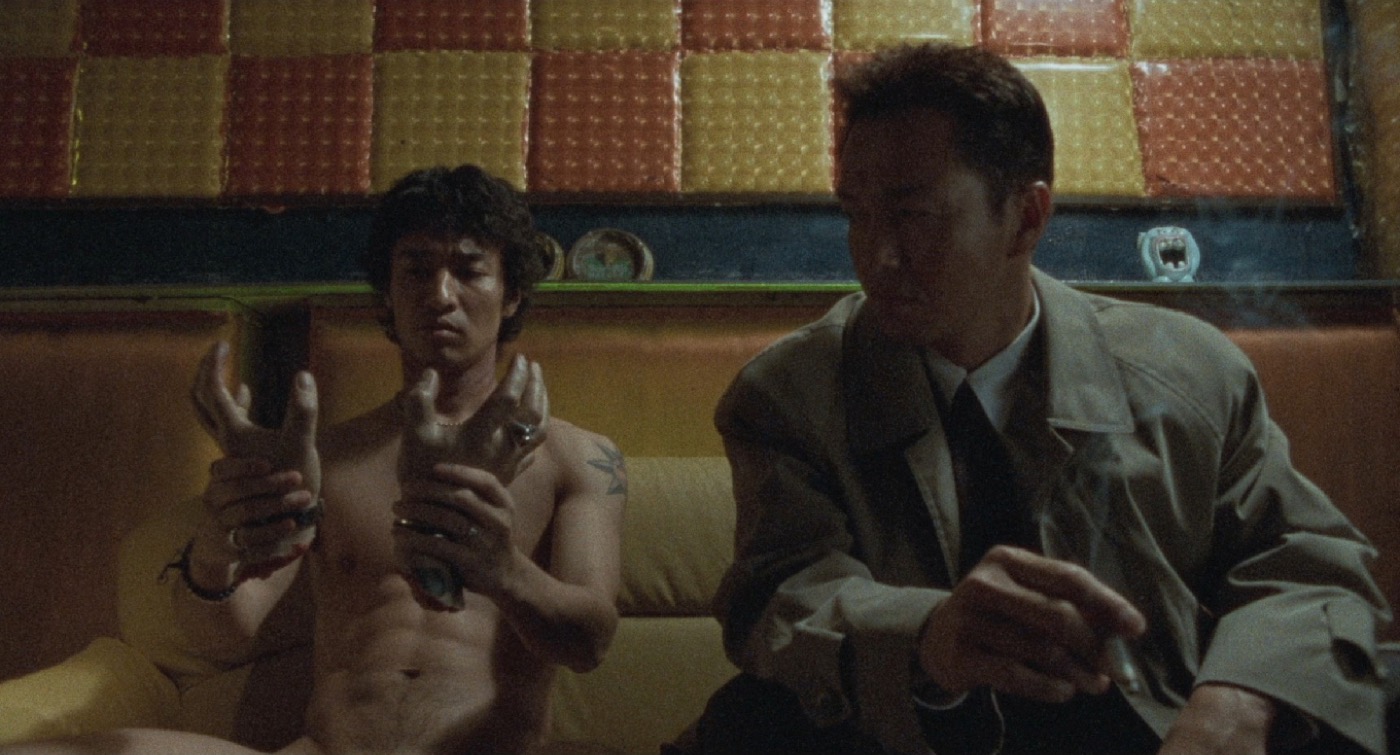
Sanada is eventually finished off by a headshot from Tabata’s mentor, Sudo (Ryôsuke Miki). Yet, even in death, he won’t relinquish his grip; Tabata is forced to cut off the dead man’s hands and wear them like a macabre choker until rigor mortis passes. Being strangled by the hands of the dead is another heavy-handed (pun intended) metaphor for generational conflict. This is intercut with Kunisada in a police interrogation, miming Sanada’s actions as if psychically linked—a hint at a supernatural twist that resurfaces in the finale.

Yûya Uchida was an influential musician and the producer of Flower Travellin’ Band, who provide the distinctive soundtrack of psychedelic and progressive rock. Miike reportedly played their 1971 album Satori on set to establish the mood; when it came to the score, he simply purchased the rights to the entire album, deploying it to great effect throughout. The band’s singer, Joe Yamanaka, also appears as a nightclub manager.

Since his role in Fudoh, Riki Takeuchi had appeared in Miike’s Dead or Alive trilogy (1999–2002). He looks remarkably different here, though his expressive sneer remains unmistakable. Miike preferred working with a recurring ensemble of collaborators on both sides of the camera, finding that shoots were more efficient when the crew was familiar with his experimental style.

Amidst the ultraviolence and surrealism, there are layers of metaphor to be mined. For instance, Kunisada’s attempt to bleach his hair—aided by his trusted colleague Shimatani (Kenichi Endō), who wraps his boss’s head in cling film—is a silly, humanising scene that reveals a relaxed friendship.

Frustrated by his inability to change the world, Kunisada decides to change himself. However, the dye fails to work as intended, making it appear as though he has gone grey overnight. Perhaps he can change things after all, but only by leaning into the cycle of violence instigated by previous generations while providing the furious energy of the new. What use are swords and pistols when anti-tank bazookas are available on the black market? The result is a shocking escalation of brutality, from crowbar-assisted skull smashing to military-grade hardware—excessive, yet undeniably entertaining.

Homosocial relationships are again under the microscope, particularly between Kunisada and Shimatani, and their nemeses, Sudo and Tabata. The latter pair cultivate a father-son dynamic that renders the villains almost likable. Additionally, two young Korean migrants, Myonghyang (Mika Katsumura) and Sung Hee (Miho Nomoto), pair up with the leads, and genuine relationships briefly blossom. The inclusion of Korean immigrants, who are often marginalised in Japanese society, adds another layer to the theme of the “outsider”—a subject close to Miike, whose father was born in Seoul during the Japanese occupation. The women provide a necessary counterpoint to the men, offering reflection and affection. Both actresses turn in excellent performances, though Miho Nomoto notably lacks her blowpipe this time!

During a lull in the action, it seems the group might simply escape the country to start anew. But will the men choose love, or—like Kunihiko in Agitator—are they trapped by a code that is worth dying for, but certainly not worth living by?

JAPAN | 2002 | 96 MINUTES | 1.85:1 | COLOUR | JAPANESE • KOREAN

Click image to buy through our Amazon affiliate link

Limited Edition Blu-ray Box Set Special Features:

  • High-Definition digital transfers of each film on 3x discs, on Blu-ray for the first time in the UK. These presentations look better than ever on home media, truly showcasing the choices of a director who utilises colour casts, tonal textures, and visual noise as deliberate elements of his visual vocabulary. Saturated colours are bold, and shadows are inky and deep.
  • Multiformat 4K UHD and Blu-ray presentation of Fudoh: The New Generation.
  • Standard definition transfer of 200 minute extended version of Agitator, presented in its original two-part form for the first time outside of Japan. Presented in its original two-part form for the first time outside Japan. This is the original V-Cinema version, which is paced more like a miniseries; it features snippets of additional dialogue and scenes of yakuza enforcers engaged in mundane daily activities—hanging out, sharing takeaways, and making phone calls. It also includes several explicit sex scenes that illustrate the men’s differing attitudes toward women, highlighting Kunihiko’s more respectful relationship despite his choice of gang loyalty over love. Neither edit is officially considered the “Director’s Cut”, as Miike oversaw both. The theatrical version is tighter, with a more focused narrative and superior pacing; the V-Cinema release was likely split into two parts simply to double rental revenue.
  • Uncompressed mono PCM audio
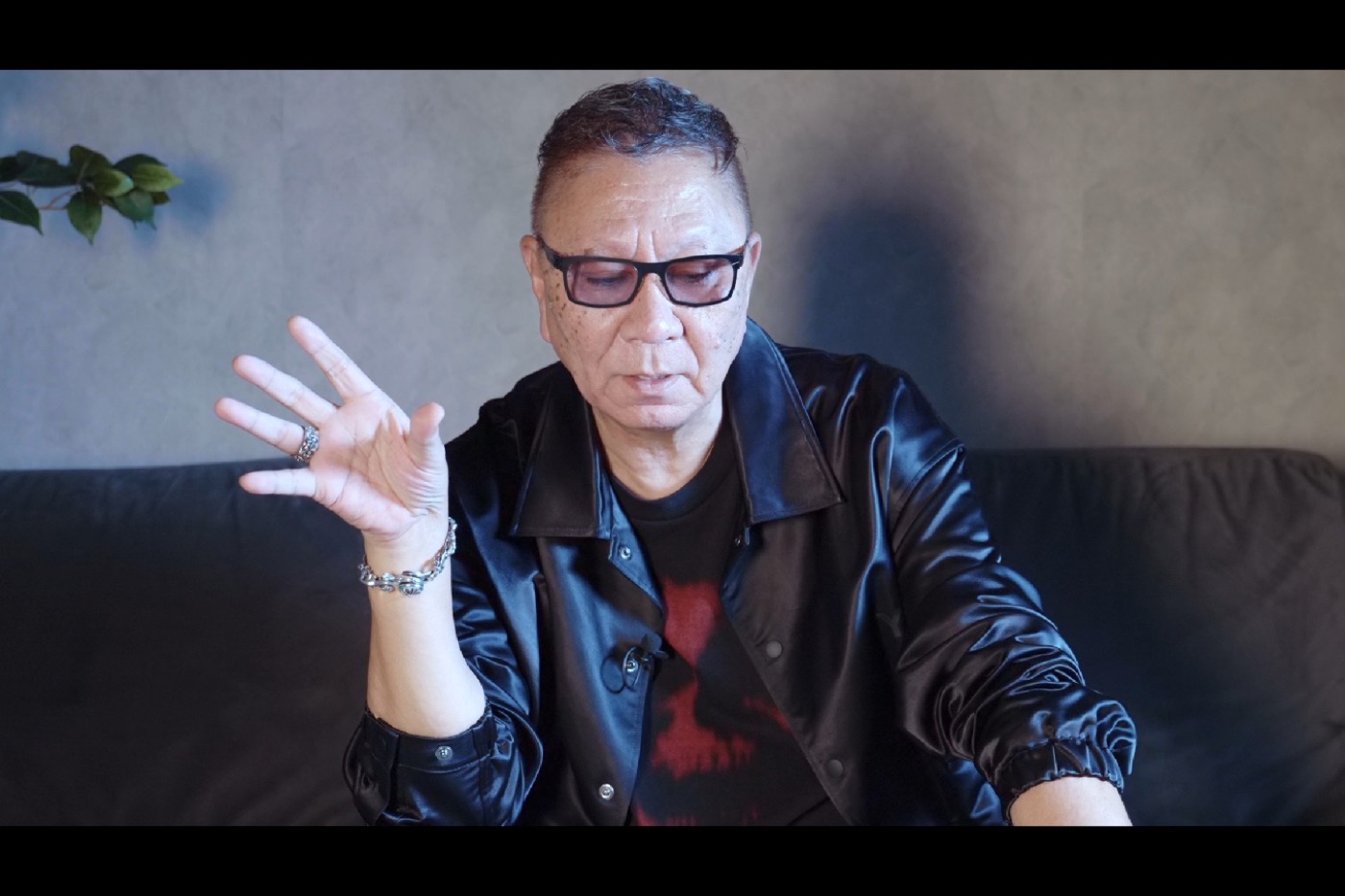
  • NEW recorded introduction by Takashi Miike on Fudoh (2025, 5 mins)
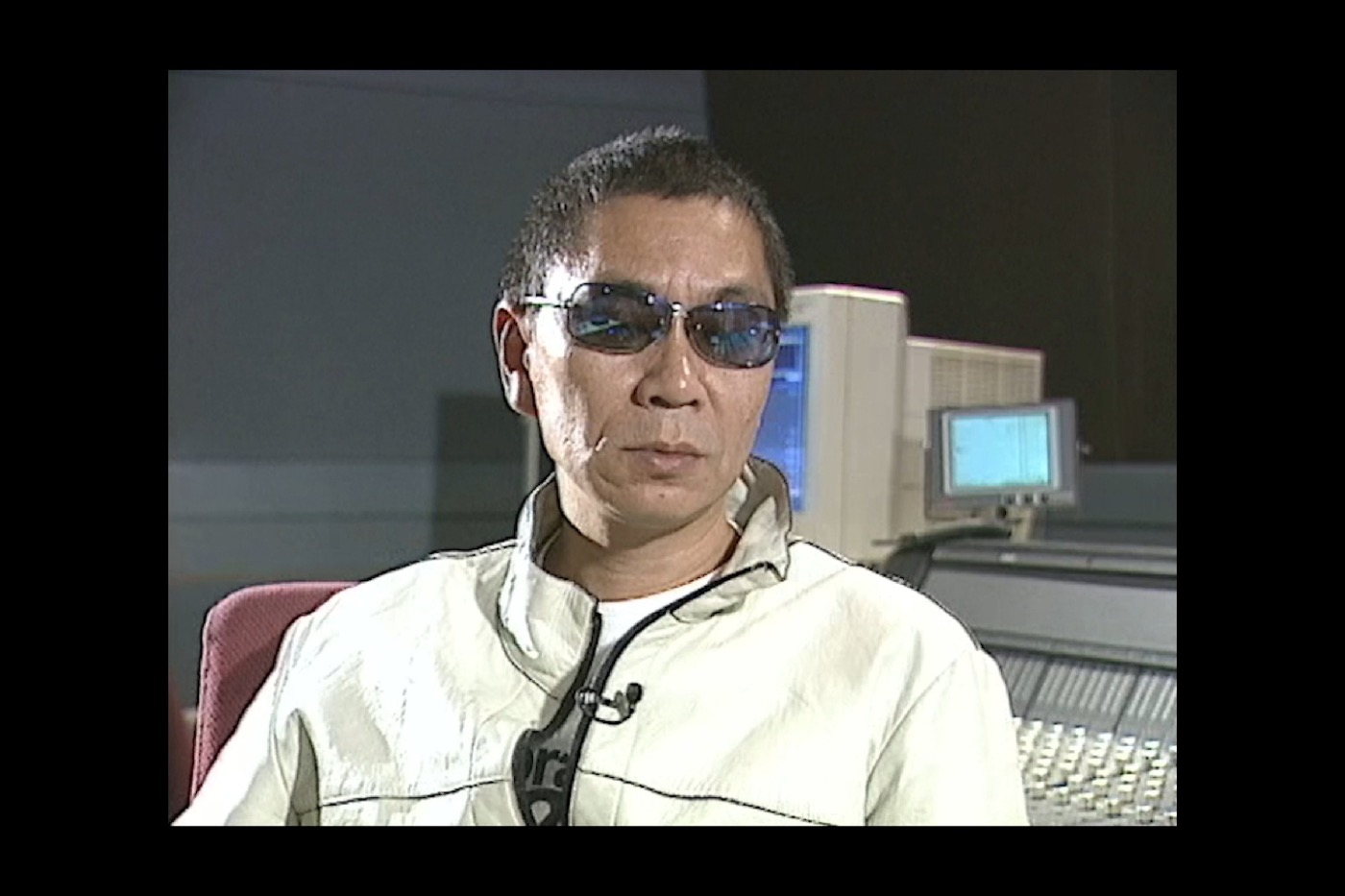
  • NEWfilmed interviews with Takashi Miike on Agitator (2025, 24 mins) and Deadly Outlaw: Rekka (2025, 19 mins.) The director shares details about of the productions, technical and anecdotal. He’s always down-to-earth and humble and I particularly admire his approach of making movies solely for the process and as and enjoyable and rewarding group activity. As he puts it, the cast and crew are the first audience and his priority is to ensure they have as much fun as possible – albeit in often challenging conditions. He posits that if those making the movie relish the experience, then the audience are more likely to enjoy it. He baulks at the idea of hardship and struggle to make a movie because the production is the life for the those involved and he believes quality of life is very important. His attitudes and insights are just as refreshing as his approach to genre.
  • Audio commentaries on Agitator and Deadly Outlaw: Rekka by Tom Mes (2025). He places the film against a broad historic backdrop, summarising the volatile industrial situation as the major studios struggled to responded in a rapidly developing environment by offering alternatives to television and exploiting new formats, such as V-Cinema. He shares his extensive cultural awareness and usefully points out relevant customs and discusses how the character accents are used to imply more about their backgrounds – details that foreigners will completely miss. He manages to weave an overview of Miike’s career and point out some of the interconnections with his other movies made with the ensemble cast and regular production crew. Alongside plenty of technical information, he also includes his own insightful analysis of prominent themes and character development.
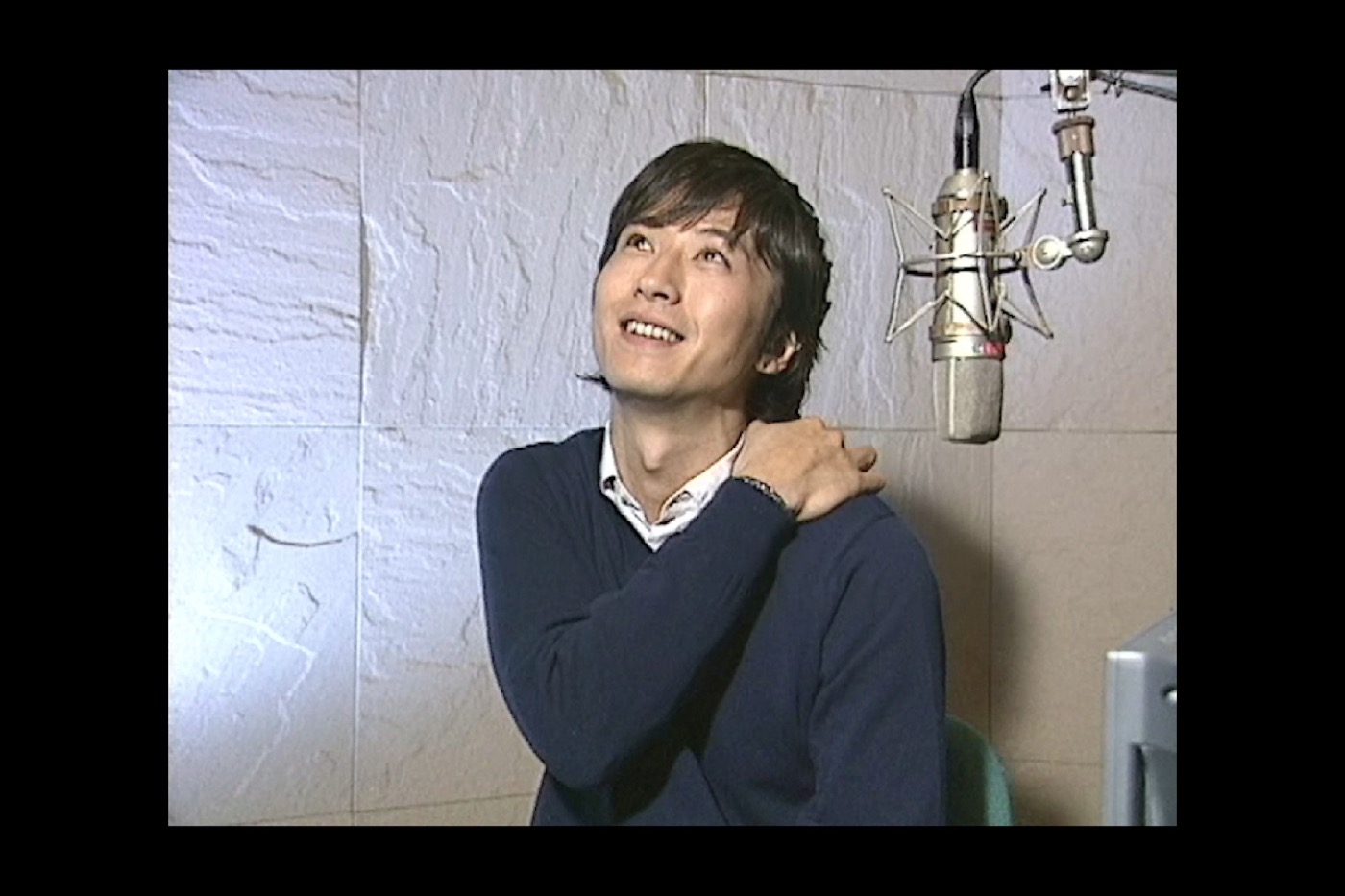
  • Audio commentary on Fudoh: The New Generation with Takashi Miike and Shosuke Tanihara (2003) In Japanese with English subtitles. Recorded at the same time as the standalone interviews, there is some informational overlap, yet it remains a pleasure to hear their reminiscences. Their relaxed, conversational approach is a joy—particularly when discussing the cast and their subsequent careers. They include enough asides to make the track highly entertaining, such as Mickey Curtis’s false-teeth pranks. Miike is as upbeat as ever, pointing out production details easily missed on a first viewing. Tanihara relives the apprehension of his first nude scenes and reflects on the liberating experience of “disrespecting” his elders as a rookie. He still regards this early performance as the yardstick by which he judges all others.
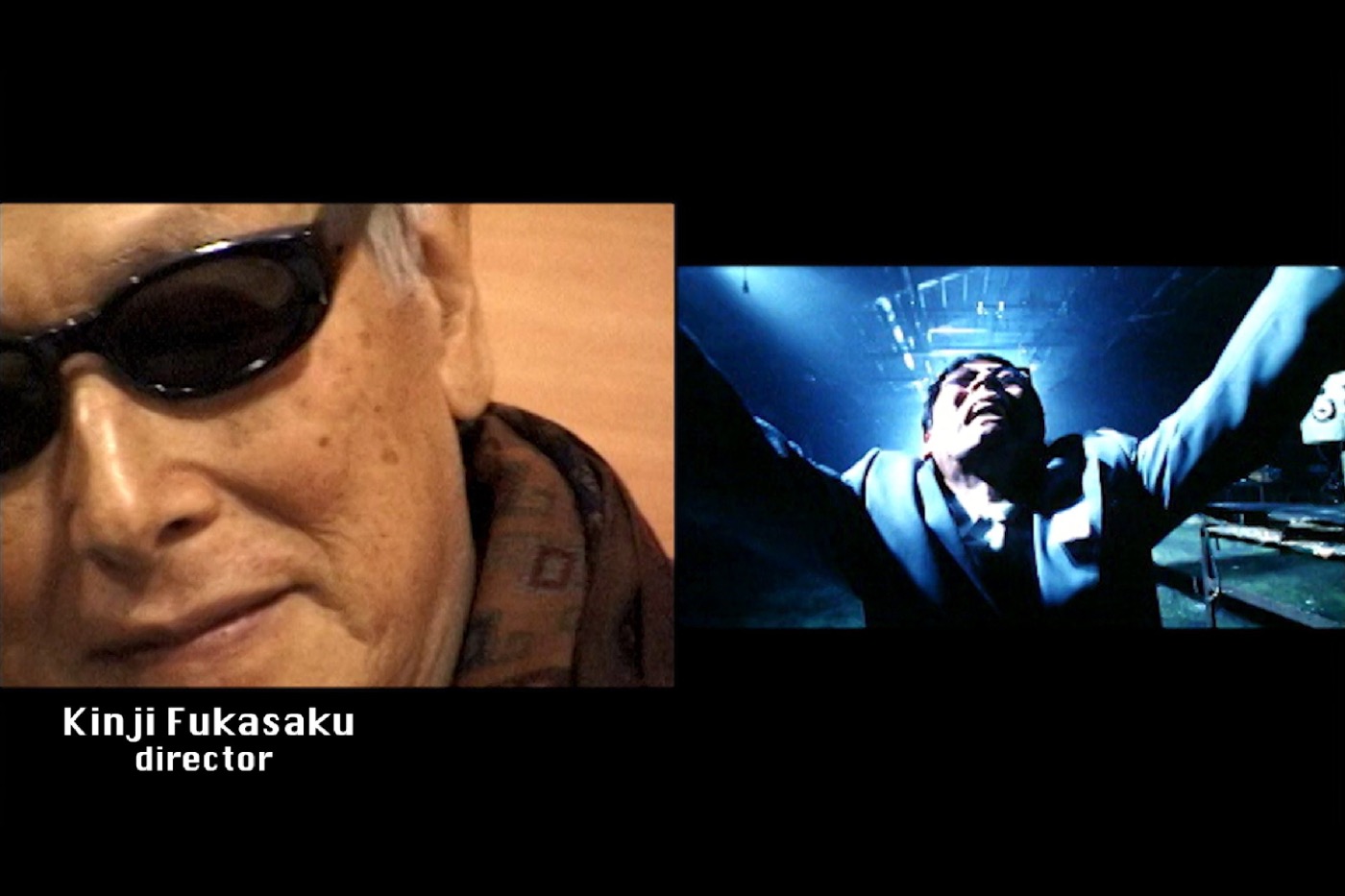
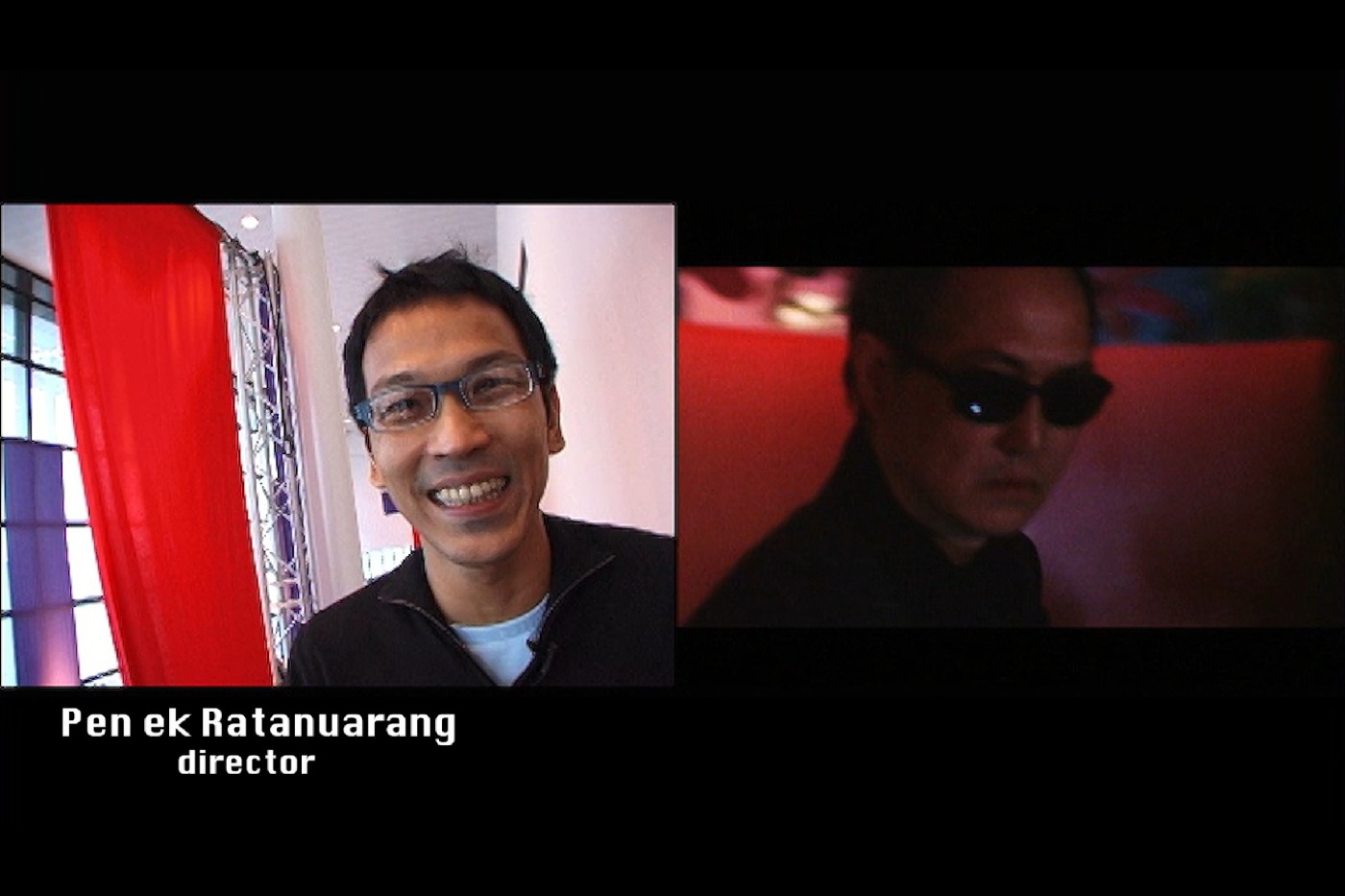
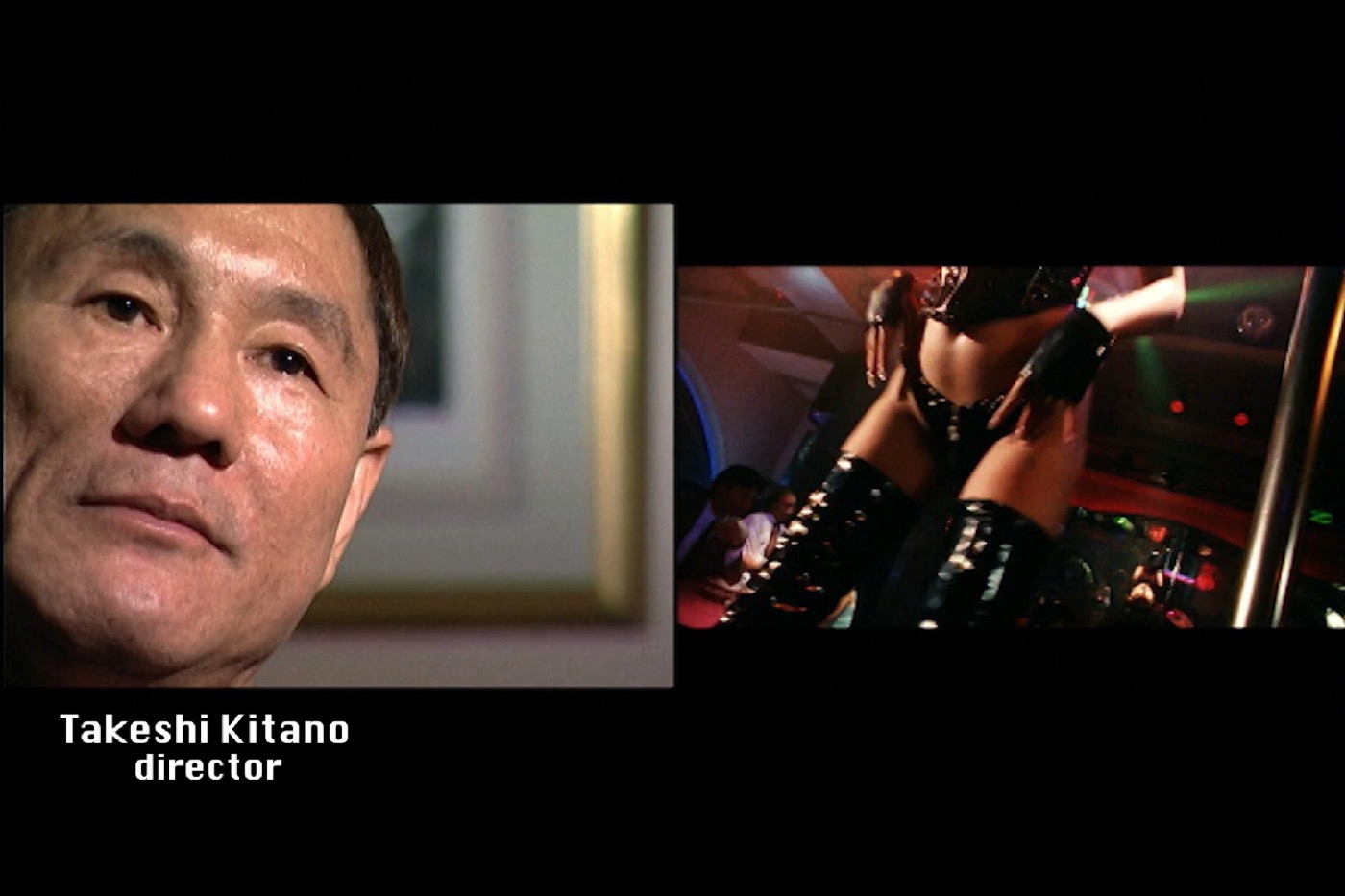
  • Electric Yakuza, Go to Hell!: documentary on Miike featuring interviews with Kinji Fukasaku, Takeshi Kitano, Shinya Tsukamoto and others (Yves Montmayeur, 2009, 59 mins.) This is an extensive appreciation by Miike’s contemporaries and fellow cineastes, who provide context while tracing his stylistic development. It’s an essential line-up for anyone interested in the maverick directors of Japan’s late 20th-century New Wave.
  • Archival interview with Takashi Miike (2012, 41 mins)
  • Archival interview with Shosuke Tanihara (2003, 16 mins)
  • Trailers
  • NEW and improved subtitle translations
  • Reversible sleeves featuring original and newly commissioned artwork by Time Tomorrow
  • Limited Edition 80 page bound book featuring new writing by Tom Mes and Colin Geddes, and archival writing from Tony Rayns. Not available at time of review.
  • Limited Edition of 5000 copies, presented in rigid box with full-height Scanavo cases and removable OBI strip leaving packaging free of certificates and markings.
frame rated divider

Cast & Crew

director: Takashi Miike.
writers: Toshiyuki Morioka (based on a manga by Hitoshi Tanimura) (Fudoh) • Shigenori Takechi (Agitator & Rekka).
starring: Shôsuke Tanihara, Tamaki Kenmochi, Marie Jinno, Kenji Takano & Takeshi Caesar (Fudoh)
Masaya Kato, Naoto Takenaka, Hiroki Matsukata, Masatō Ibu & Taisaku Akino (Agitator) Mickey Curtis (Fudoh & Agitator) Miho Nomoto (Fudoh & Rekka) Ryôsuke Miki, Ken’ichi Endô, Renji Ishibashi, Shigeo Kobayashi, Masaru Shiga & Yūta Sone (Agitator & Rekka) Riki Takeuchi, Yoshiyuki Yamaguchi, Rikiya Yasuoka, Kazuya Nakayama, Joe Yamanaka, Daijirō Harada, Shinobu Yamaguti, Sonny Chiba, Masaru Shiga, Mika Katsumura, Saki Kurihara, Yuya Uchida & Lily (Rekka).

All visual media incorporated herein is utilised pursuant to the Fair Use doctrine under 17 U.S.C. § 107 (United States) and the Fair Dealing exceptions under the Copyright, Designs and Patents Act 1988 (United Kingdom). This content is curated strictly for the purposes of transformative criticism, scholarly commentary, and educational review.