TUCKER & DALE vs. EVIL (2010)
Two affable hillbillies are on vacation at their dilapidated mountain cabin when they're mistaken for murderers by a group of preppy college students.

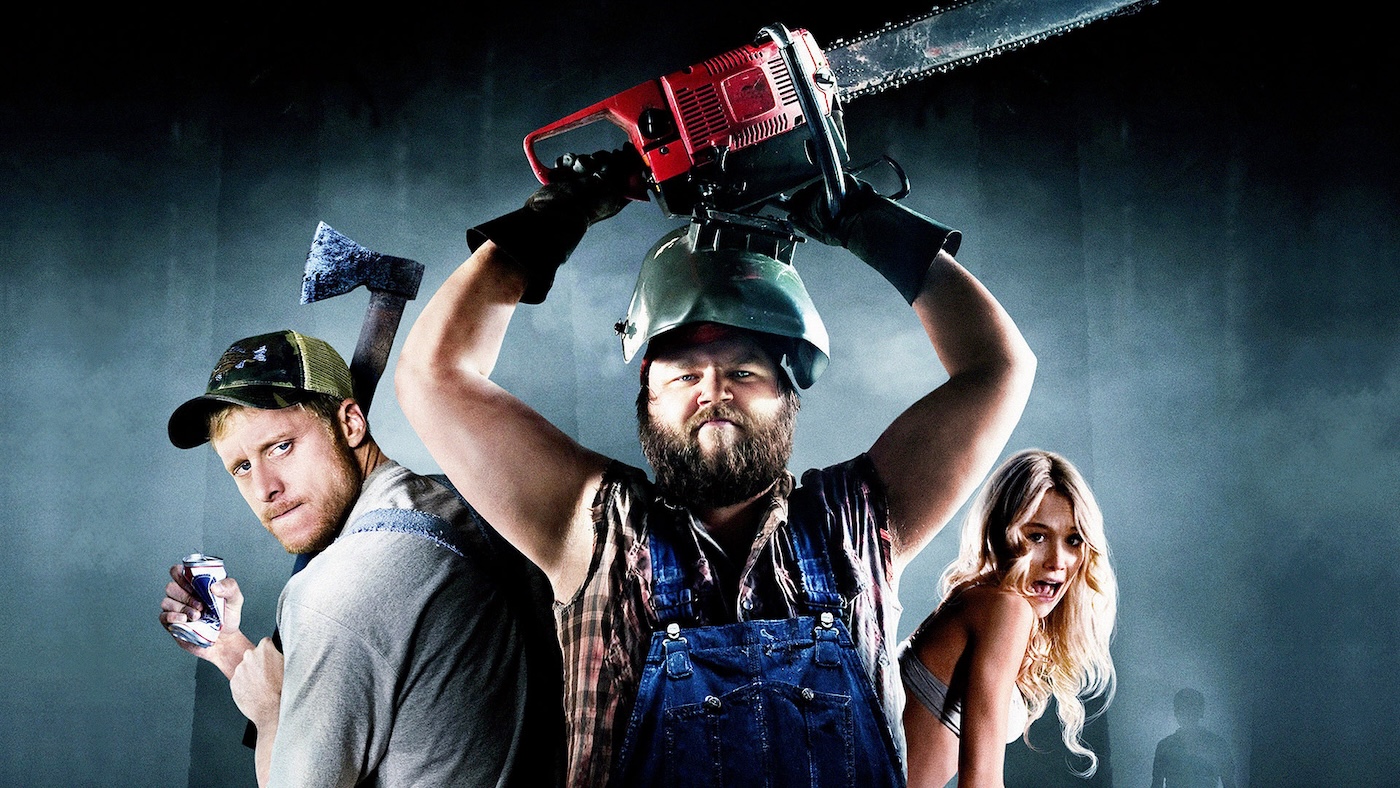

Two affable hillbillies are on vacation at their dilapidated mountain cabin when they're mistaken for murderers by a group of preppy college students.
The college kids, through their own stupidity, unfortunate timing, prejudice, and some admittedly creepy-seeming behaviour from the lovable hillbillies Tucker (Tyler Labine) and Dale (Alan Tudyk), believe that the duo are trying to kill them. Having no survival skills whatsoever, the youngsters wind up accidentally killing themselves whenever they try to apprehend or flee from Tucker and Dale. This is hilariously misconstrued by the survivors as further proof that these hillbillies are attempting to kill each of them.
What could have been a humorous short film or a depressingly thin feature is bursting at the seams with jokes. This is complemented by a heart-warming relationship between Dale, who is racked with low self-esteem, and Allison (Katrina Bowden), the only college student in this film with any semblance of good sense.
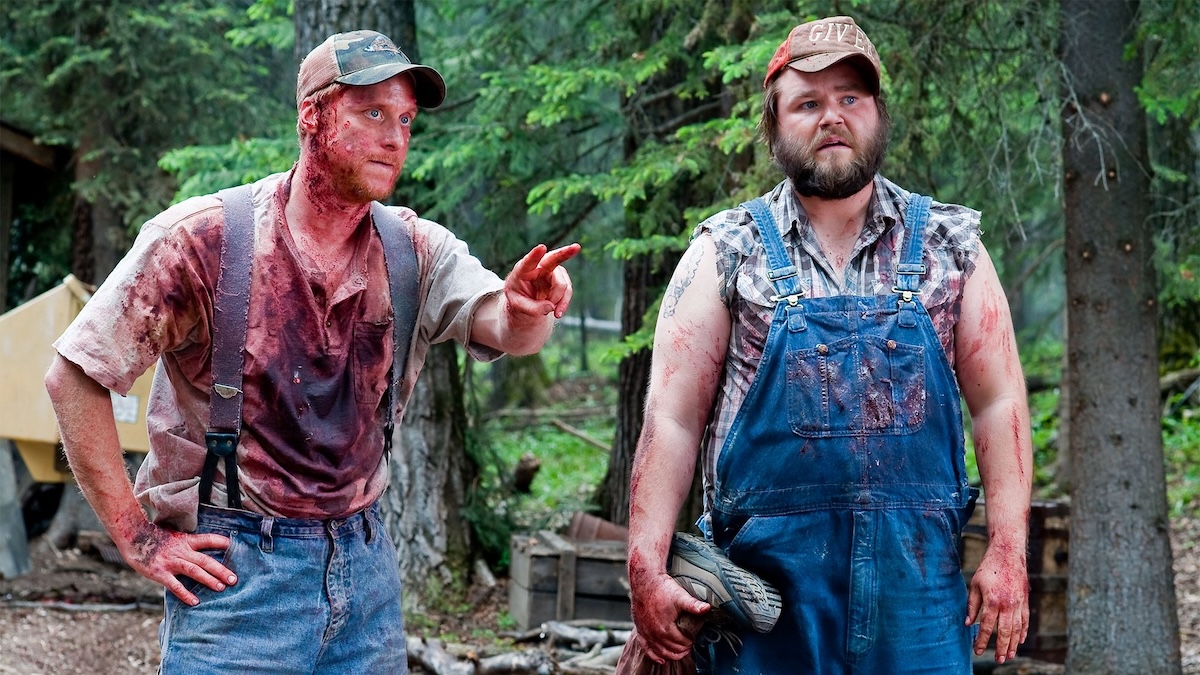
This film’s bread and butter is comedic misunderstandings, such as when a college kid runs for his life from Tucker, who runs alongside him while wildly swinging a roaring chainsaw like Leatherface from The Texas Chain Saw Massacre (1974). Or it can be found in Chad and the remaining survivors observing Dale from afar as he watches Allison dig a hole for an outhouse, presuming that Dale is so sadistic that he’s forcing this young woman to dig her own grave.
It would seem there’s desperately little to mine comedically from the group of youngsters, especially when we’re first introduced to them and watch as they collectively scream in terror at the prospect of having no beer for their country trip in West Virginia. Usually, one-note humour like this requires insincere ridiculousness to stop the well of jokes from running dry. But in this case, the film never tries to outdo itself through pointless gags, figuring out ingenious ways of sustaining laughs as it develops this story and deepens its primary characters. Besides, the grain of logic that supplies these teenagers with the murder-fuelled theories they espouse may be paper-thin, but some of their misunderstandings are understandable. We spend the entire movie being amused and moved by Tucker and Dale, two bickering best friends who operate on the same wavelength even when they’re exasperated with each other, so we have the benefit of seeing beyond their admittedly abysmal track record for first impressions.
You come to love this duo very quickly, warts and all, which only adds to the hilarity once they’re defamed as sociopathic killers. As well as a side-splitting buddy comedy and a sly subversion of horror tropes, Tucker & Dale vs. Evil is a charming romance. When Dale first approaches Allison and her friends with a scythe in tow, lacking confidence and exhibiting a nervous laugh that comes across as a menacing chuckle, he seals his fate in her friends’ minds, and his own, about what kind of person he is. To them, he’s a creep; to himself, he’s a loser. Putting himself out there further reminds him of his helplessness. Doubt replenishes itself within the deceptively complex mind of this lovable sad sack.
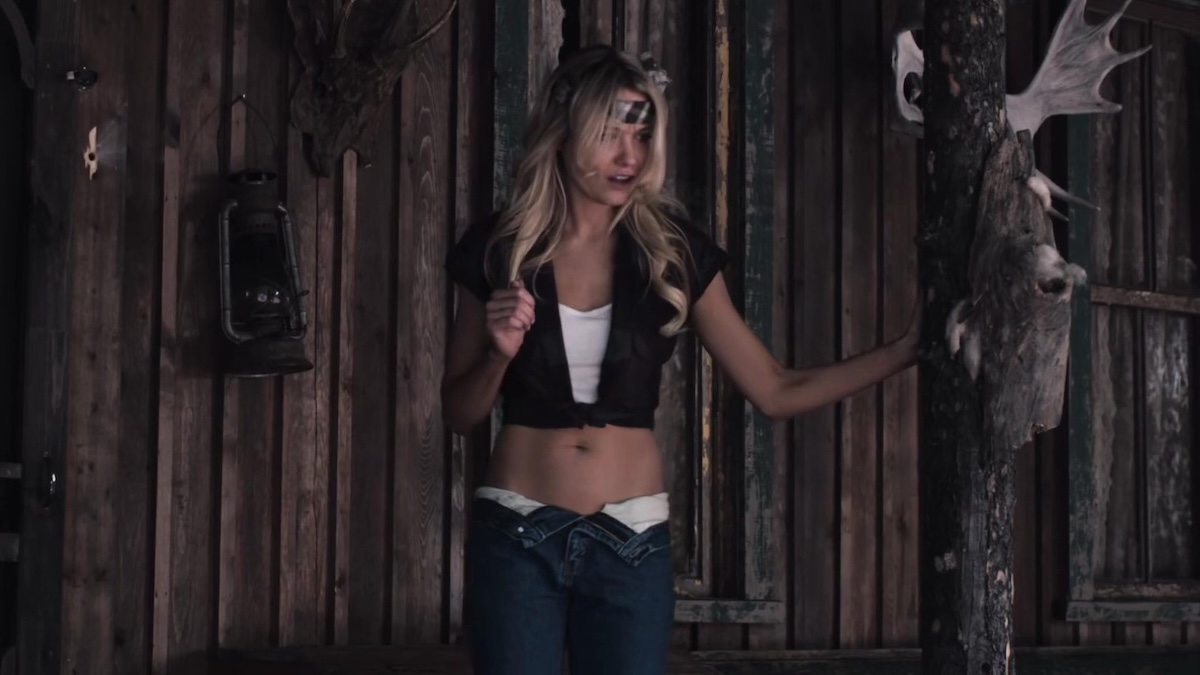
Tucker is more pragmatic, refusing to look inward as Dale so often does, instead making the most of the simple pleasures in life. Unfortunately, this includes ogling a half-naked young woman at dusk, secluded from her eye-line in a canoe with Dale. The innocent and sweet Dale can’t abide by this disrespect towards a young woman, especially when it’s Allison, the girl of his (very recent) dreams. Their bickering startles Allison as she stands at the water’s edge, causing her to tumble into the creek below, hit her head, and fall unconscious. As Tucker and Dale will come to learn throughout this film, any attempt on their part to aid one of these college kids is certain to end in disaster, with some of the others spotting the pair hauling Allison’s limp body onto their canoe, thus confirming their deductions.
Director and co-writer Eli Craig (who wrote the screenplay alongside Morgan Jurgenson) is like a slightly less talented Edgar Wright (The Running Man), crafting a slick comedy that is light on its feet, tightly plotted, and consistently hilarious. Though he doesn’t possess Wright’s visual flair, he matches the British director’s characterisation in this outing, a rare feat given Wright’s impeccable use of Simon Pegg and Nick Frost as unlikely best friends across his iconic Cornetto Trilogy.
Tucker, Dale, and Allison exist in a completely different world to the rest of these characters, who essentially operate within a metafictional film. We watch these two protagonists as they are, then as seen through the eyes of these young adults. Both halves of these respective sequences are completely different yet just as joyous as one another to behold. What could have been a one-note joke is instead an experience bubbling over with warmth and sensitivity, even as it recognises that none of these characters are beyond light mocking.
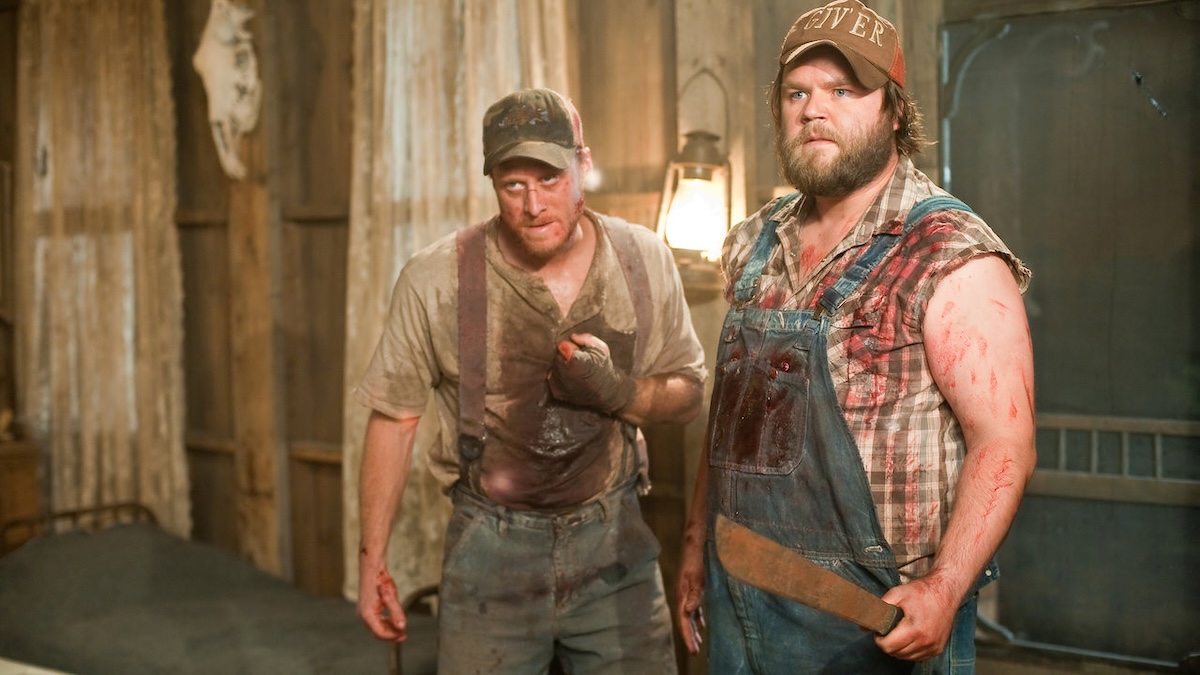
Not unlike Delbert Mann and Paddy Chayefsky’s Marty (1955), Tucker & Dale vs. Evil rejects the brutish nature of callous young men like Chad, who seek to conquer women instead of trying to form a loving union with them. Like the protagonist of the 1955 film, Dale is too hampered by low self-esteem to make a positive impression on women, but comes into his own once fate—a deliciously cruel and blood-drenched variant of it—intervenes, offering him the chance to secure the affection of a good woman and mend his weak spirit.
Chad, ever the aggressor in any social situation, thinks that constantly asserting his authority makes him a strong leader. They each balance each other out. Chad loves himself and looks down on others to an absurd degree, while Dale is kind towards others yet brimming with self-loathing.
Despite the impeccable craftsmanship in its screenwriting, the film does dip in quality in its final act, even while offering an impressive showdown for Dale to demonstrate his worth. Tucker & Dale vs. Evil’s visuals also leave much to be desired, from an opening shot whose background looks indistinct, to lacking colour grading across the entire film. But for a directorial debut and with a production budget of just $5M in tow, it’s remarkable that it was even made. Thanks to its constant jokes, endearing characters, and remarkable chemistry between performers, I relish the opportunity to re-experience this film every few years, happily sinking back into the comforting rhythm of a warm-hearted yet bitingly clever horror-comedy.
CANADA • UK • USA • INDIA | 2010 | 89 MINUTES | 2.39:1 | COLOUR | ENGLISH

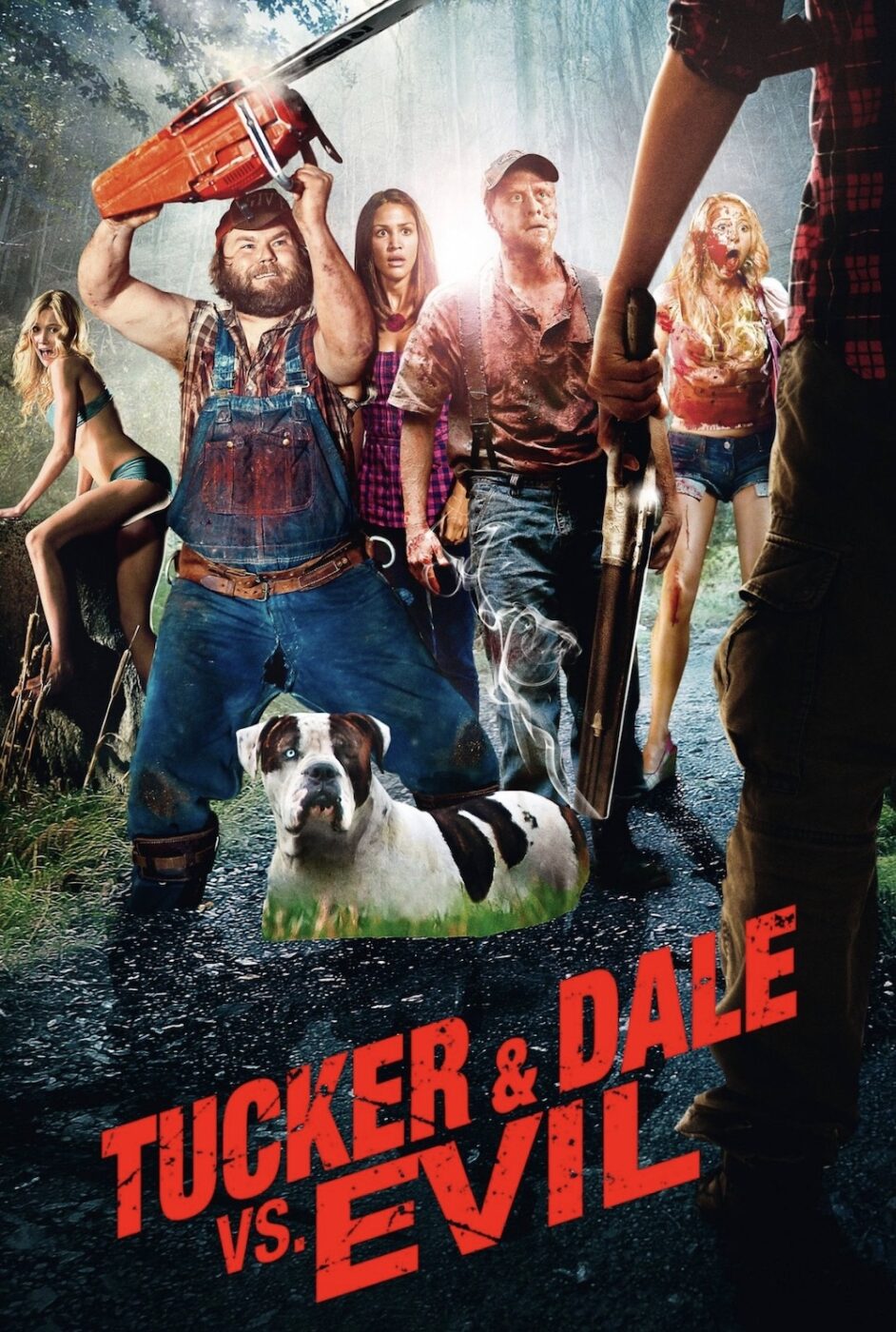
director: Eli Craig.
writers: Eli Craig & Morgan Jurgenson (story by Eli Craig).
starring: Tyler Labine, Alan Tudyk, Katrina Bowden, Jesse Moss, Chelan Simmons, Philip Granger, Brandon Jay McLaren & Christie Laing.