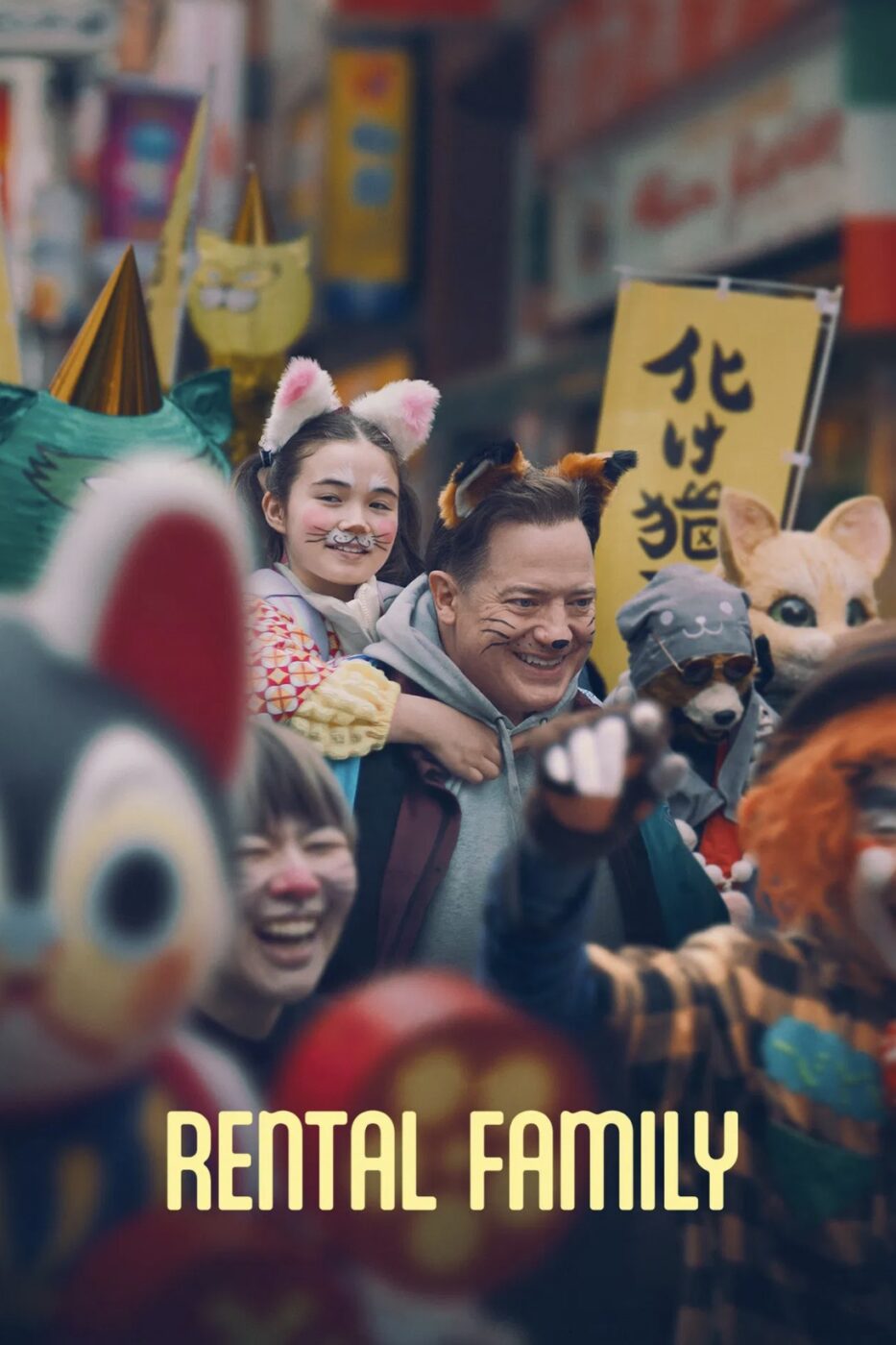
RENTAL FAMILY (2025)
An American actor in Tokyo struggling to find purpose lands an unusual gig: working for a Japanese "rental family" agency, playing stand-in roles for strangers.

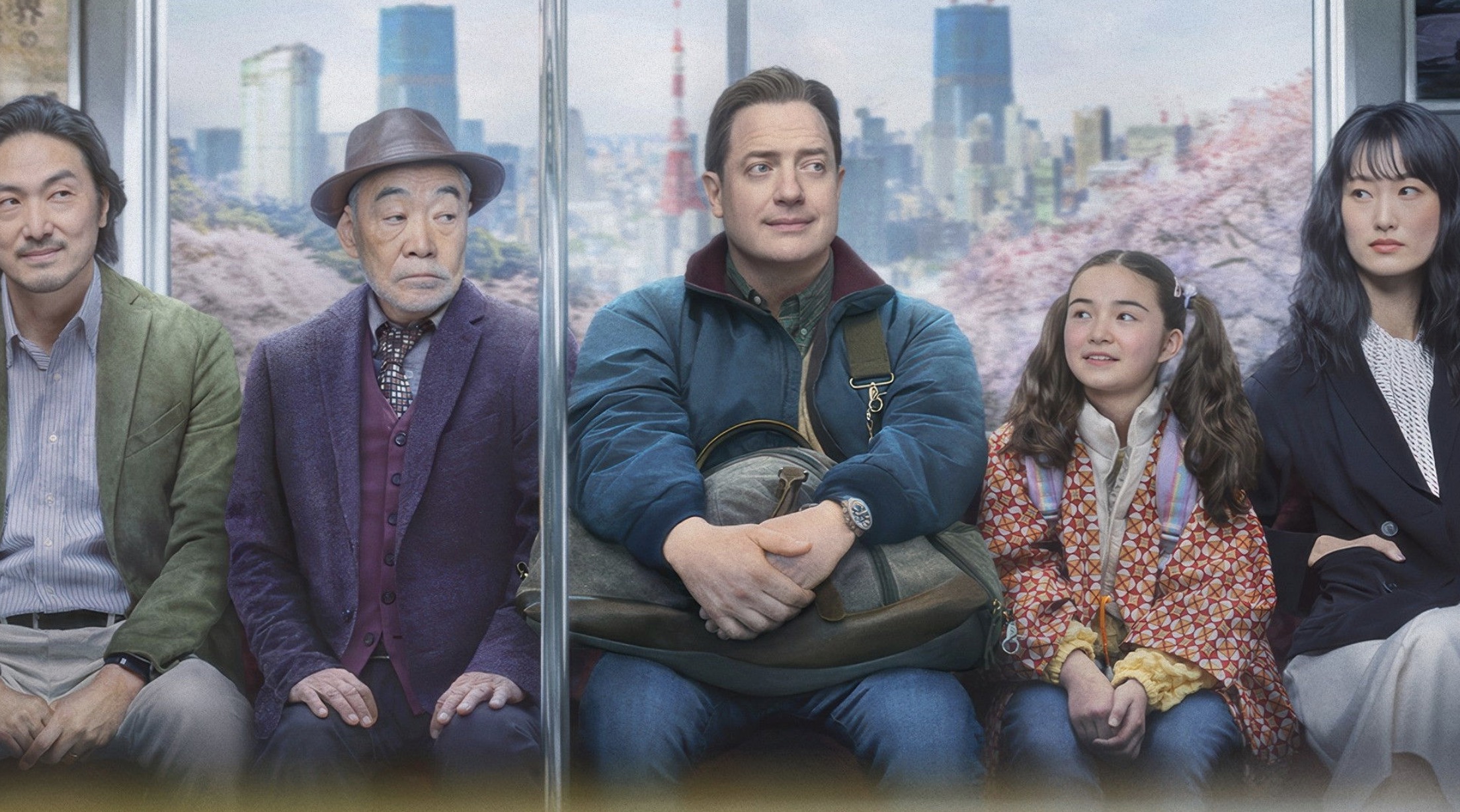

An American actor in Tokyo struggling to find purpose lands an unusual gig: working for a Japanese "rental family" agency, playing stand-in roles for strangers.
Japan didn’t invent the market for outsourced closeness, but cinema has certainly become obsessed with it. From Werner Herzog’s Family Romance, LLC (2019) to endless YouTube documentaries, the “rental family” industry—where clients hire actors to play fathers, spouses, or friends—has become modern shorthand for urban alienation. In Rental Family, director Hikari attempts to soften this dystopian premise into a crowd-pleasing dramedy. The result is a film suffering from a fundamental identity crisis: on the surface, it’s a gentle character study about the things we pretend to make life bearable; underneath, it’s a screenplay that misjudges the mechanics of consequence.
The film’s saving grace—and the sole reason it secures a passing grade—is Brendan Fraser. He plays Phillip Vanderploeg, an American actor who washed up in Tokyo seven years ago to star in a ‘Toothpaste Man’ commercial and never left. Now he scrapes by as a token gaijin extra, a man out of time and place.
Hikari and cinematographer Takurô Ishizaka make excellent use of Fraser’s physical presence to articulate his isolation. He’s constantly framed in spaces simply too small for him. Doorways cut off his headroom; tiny apartment kitchens constrict his shoulders. Watch him closely in early scenes: he doesn’t just look big, he looks afraid to move. He holds his hands close to his chest, shoulders hunched and elbows tucked, as if terrified that fully inhabiting his own body might break the delicate Japanese set around him.
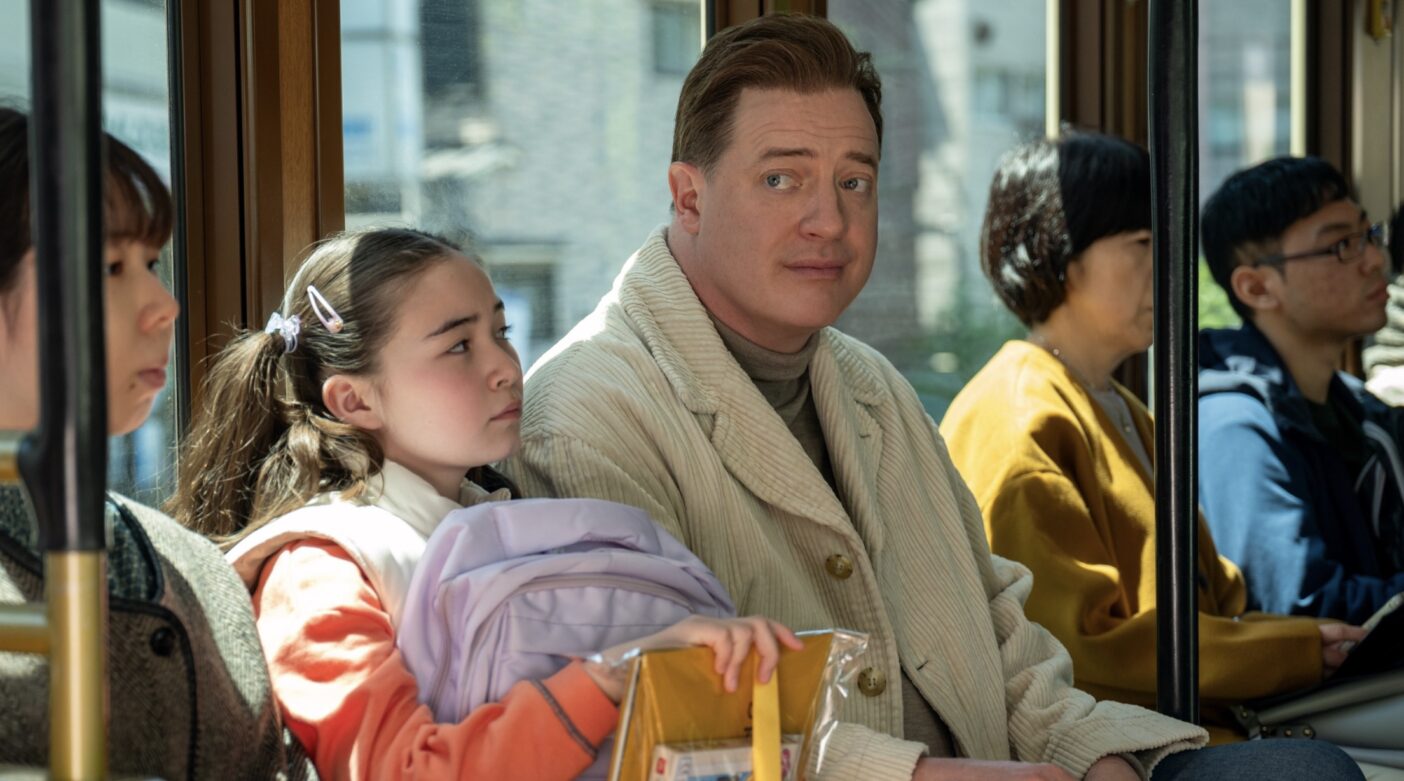
Fraser plays Phillip with a lumbering, wounded dignity that’s impossible to dislike. He works by subtraction, removing any trace of ego or cynicism. When recruited by the “Rental Family” agency run by pragmatic Shinji (Takehiro Hira), he approaches the job not as a con artist, but as a man desperate to be useful. Fraser imbues every interaction with a sincerity the script barely deserves.
The central conceit starts to disintegrate under scrutiny. The film asks us to believe in a business operating as if it were a self-managed psychiatric ward. Employees are sent into high-risk scenarios with little credible duty of care. Aiko (Mari Yamamoto), Shinji’s stern lieutenant, works what’s effectively an ‘Apology Service’, placing herself in confrontations marked by intense verbal aggression and the constant threat of physical escalation. Meanwhile, Phillip is despatched to play father to young Mia in a setup demanding she’s never told he’s an actor—conveniently ignoring the catastrophic breach of trust involved in gaslighting a child for weeks.
This leads to the film’s most fascinating subtext: these are actors without a director. No one calls cut. Everyone pays for the overrun. In a legitimate production, a director protects the performer from the role; here, there’s no safety net. The staff are emotional vampires, renting the families they can’t sustain in their own lives. Phillip isn’t doing it for the yen; he’s doing it to feel the phantom limb of fatherhood. The “bleed”—the role seeping into the self—isn’t a risk here; it’s the business model.
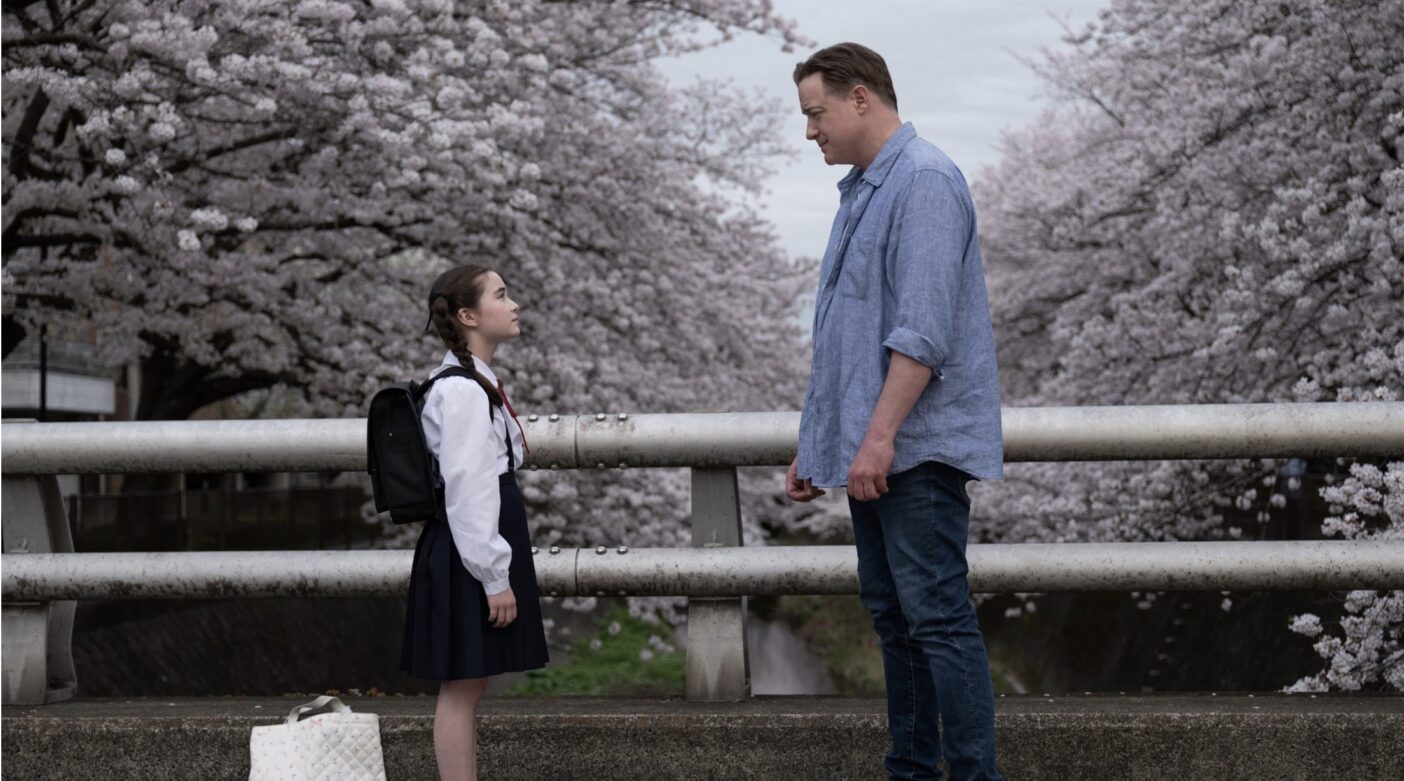
If the first half functions as an episodic, bittersweet comedy of manners, the second half reveals deep mechanical flaws. The transition from professional detachment to personal entanglement isn’t a gradual slope; it’s a cliff edge.
The pivotal conflict arises when Phillip bonds too deeply with Mia and, subsequently, with an elderly client, Kikuo (Akira Emoto), a retired actor suffering from dementia. When Phillip’s relationship with the child is abruptly terminated, the film needs a reaction. A coherent script would have him act out of immediate grief—displacing his need to be a saviour onto the elderly Kikuo. Instead, the third act delivers a belated confession: Phillip admits he missed his own father’s funeral years prior. It weakens his motivation just when it needs to be strongest.
This leads to the unauthorised road trip, where Phillip takes Kikuo to his hometown. Call it kidnapping or unauthorised removal—either way, it’s a legal and professional catastrophe. Yet the film resolves it with a narrative hand-wave. Shinji and Aiko, established for eighty minutes as risk-averse cynics, suddenly undergo a complete personality transplant. They rush to Phillip’s aid, impersonating a lawyer and a detective and taking implausible legal risks on his behalf.

Why? The screenplay provides no connective tissue to earn this loyalty. There are no scenes of bonding, no moments of shared vulnerability. The camaraderie is unearned. The writers needed a happy ending, so characters simply stop behaving like themselves and start behaving like plot devices. It’s a “found-family” ending pasted over a story that hasn’t earned it.
This lack of structural rigour is mirrored in the filmmaking. Hikari’s direction is aesthetically pleasing but narratively loose. Tokyo is shot with a softness that avoids neon clichés, capturing the grey, quiet melancholy of the city’s daytime spaces. However, the visual language often feels indecisive, oscillating between an intimate handheld style and flat, functional coverage.
The camera observes its subjects with studied, non-judgmental intimacy. But in a story rife with exploitation, this lack of judgement feels less like empathy and more like blindness. Atmosphere is no substitute for moral logic.

Rental Family desperately wants to be loved. It wraps its toxic premise in a warm blanket of soft scoring and gentle lighting, hoping the audience won’t ask too many questions. It suggests that the cure for deep-seated urban loneliness is simply to pretend harder—that if you role-play a happy family long enough, it will eventually become real.
The characters don’t heal because they’ve processed their trauma; they heal because the runtime is ending. Aiko quits her abusive job and smiles, cured of a lifetime of repression in a single cut. Phillip finds closure through a brief conversation on a bench. The messy, dangerous work of human connection is skipped over in favour of a sentimental landing.
Ultimately, Rental Family is a two-star film elevated by a five-star performance. Fraser prevents disaster but cannot transform it into success. He’s the gold in the kintsugi, holding together a fragile vessel but unable to restore the missing pieces. He’s so good, so tender, and so present that he almost makes you believe the lie. But once the credits roll and the warmth fades, you’re left looking at the mechanics of the plot and realising that, much like the services the agency provides, it was all just a performance. The therapy this film offers isn’t false because it’s acted; it’s false because it’s easy.
JAPAN • USA | 2025 | 110 MINUTES | 2.00:1 | COLOUR | ENGLISH JAPANESE

director: Hikari.
writers: Hikari & Stephen Blahut.
starring: Brendan Fraser, Takehiro Hira, Mari Yamamoto, Shannon Mahina Gorman & Akira Emoto.