MADAME BOVARY (1991)
In 19th-century France, the romantic daughter of a country squire marries a dull country doctor, so to escape boredom she has an affair with a suave landowner.

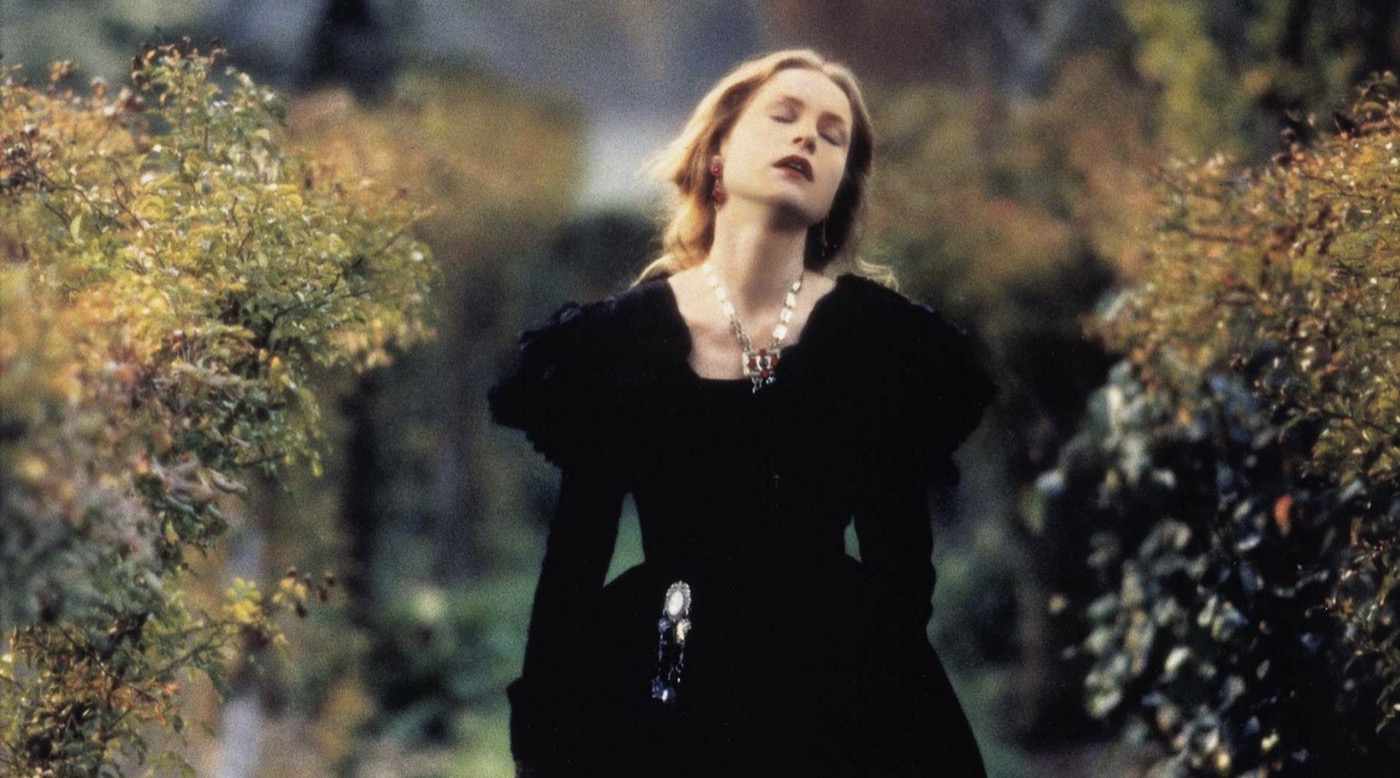

In 19th-century France, the romantic daughter of a country squire marries a dull country doctor, so to escape boredom she has an affair with a suave landowner.
Of all the performers to grace the silver screen, few are as illuminating as Isabelle Huppert. The French actress appears limitless in her potential, but that doesn’t mean there aren’t niches that most amply demonstrate her talents. Her propensity for playing rigid, austere women is a mainstay of her career, as is her incredible ability to make these characters sympathetic despite their numerous faults. While she’s worked with prestigious filmmakers throughout her decades-long career—currently holding the record for the most appearances by any actress in films shown at the Cannes Film Festival—Huppert can elevate even the most middling of movies.
Having starred in seven of Claude Chabrol’s films, Huppert is one of a handful of actors to have forged such a close collaboration with the director. She even appears in his masterwork, La Cérémonie (1995), rightly seen as the director’s most celebrated film. Less successful is his 1991 adaptation of Gustave Flaubert’s Madame Bovary, the 1857 novel whose unflattering portrayal of a helpless, adulterous protagonist has made it a staple of classic literature. Following the haughty romantic Emma Bovary (Huppert), we roam through a life defined by desire and repression. After marrying a kind but unexciting doctor, Charles Bovary (Jean-François Balmer), Emma finds herself trapped, longing to escape a passionless marriage.
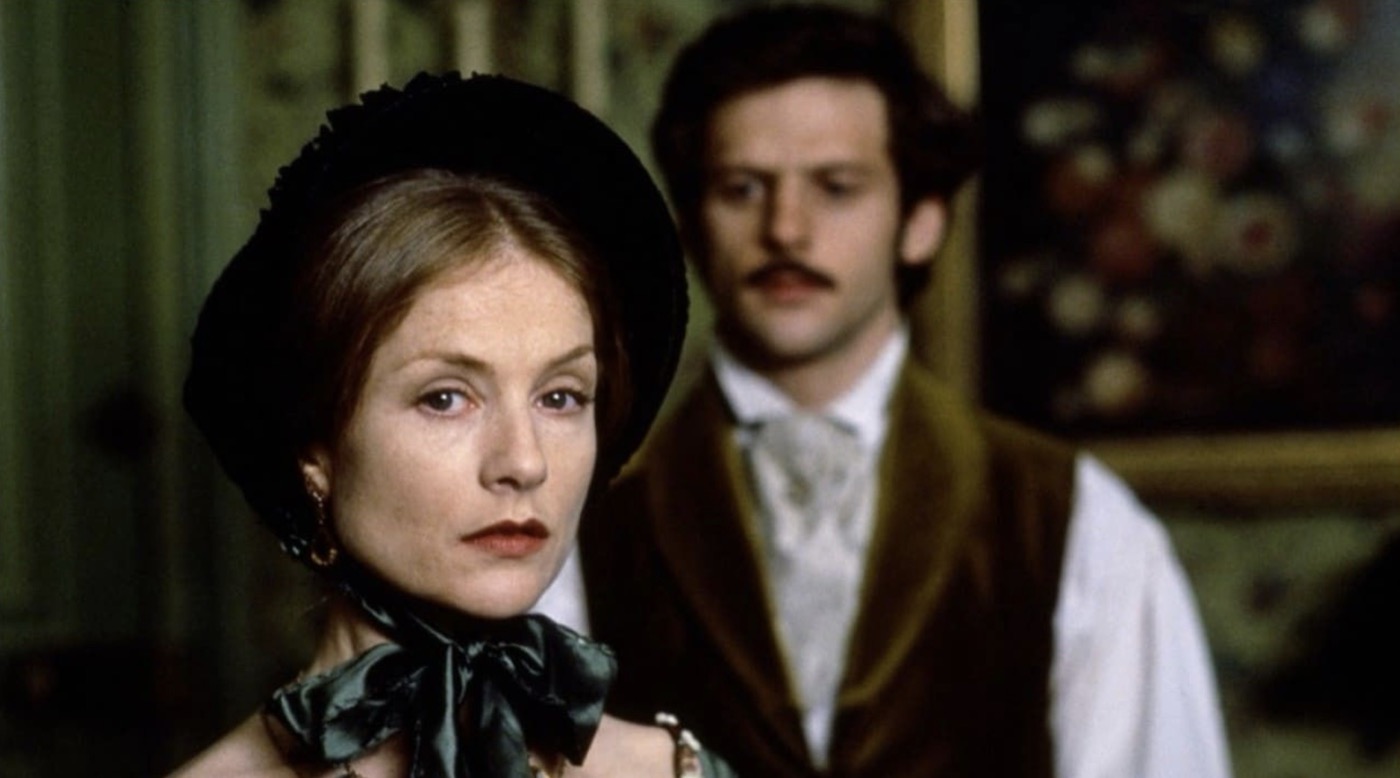
As for material gain, she wants for nothing, but that appears meaningless compared to her internal strife. As she finds passion in the arms of other men, we should be inclined to despise her lack of loyalty. But Huppert sinks so effortlessly into the protagonist’s despair that it’s surprisingly easy to pity Emma’s fate. Locked into a contract she never truly considered, she now has a lifetime to weigh up her mistakes. She’s locked herself in a figurative glass case, observing others despairingly, one hand pressed against the cool glass, hoping for some warmth to emanate in her direction.
She’ll be waiting an awfully long time for salvation, as Chabrol’s film coolly rejects her attempts at lasting connection while drawing us closer to her perspective. Every fibre of the film’s being is in service of Huppert’s performance, and vice versa. When Emma contends with the thrill and agony of a new lover, knowing it can’t end well, it’s remarkable how little focus is placed on anyone else. You hardly think about the other performances or the kinds of people these men are, especially given that the script is fairly unremarkable.
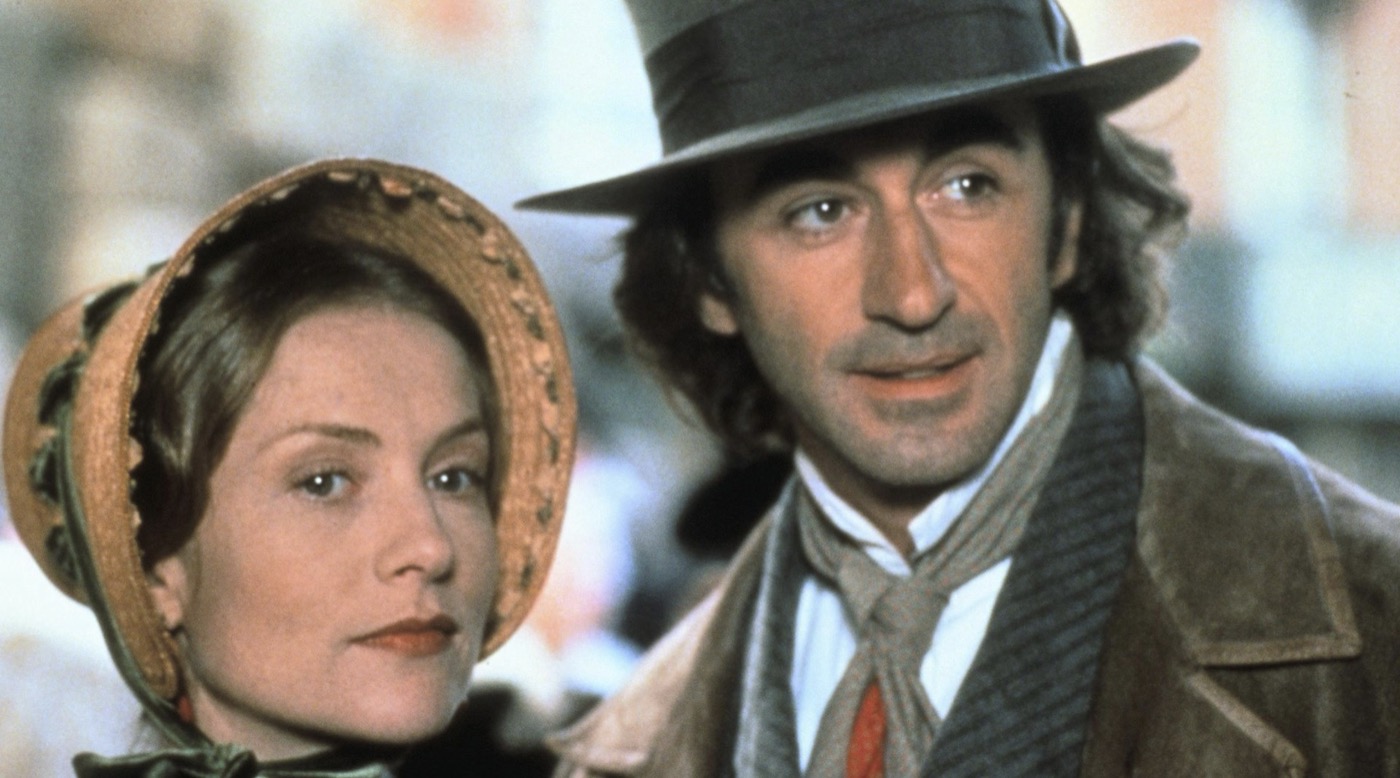
The film is replete with slow scenes possessing a glacial coldness—a quality Chabrol dispensed throughout his prolific career. The icy tension he superimposes over this world is better suited to his mainstay of thrillers, but it works effectively here to explore how lust can lurk beneath a banal surface.
One of the greatest troubles with film adaptations is making them feel like more than just a recreation of a pre-existing work. Often, the structure never quite coheres as well as it does on the page. There’s something disjointed about how the story plays out, suggesting the work was engineered as a tribute to another art form rather than its own entity. Whether that’s true of Madame Bovary is a mystery to me, as I haven’t yet read Flaubert’s novel. But it’s apparent that Chabrol’s film is at war with its own essence—to the point where it’s hard to define what that essence even is. The only worthy answer is Huppert’s scene-stealing performance, but one role, no matter how well-executed, does not make a film.
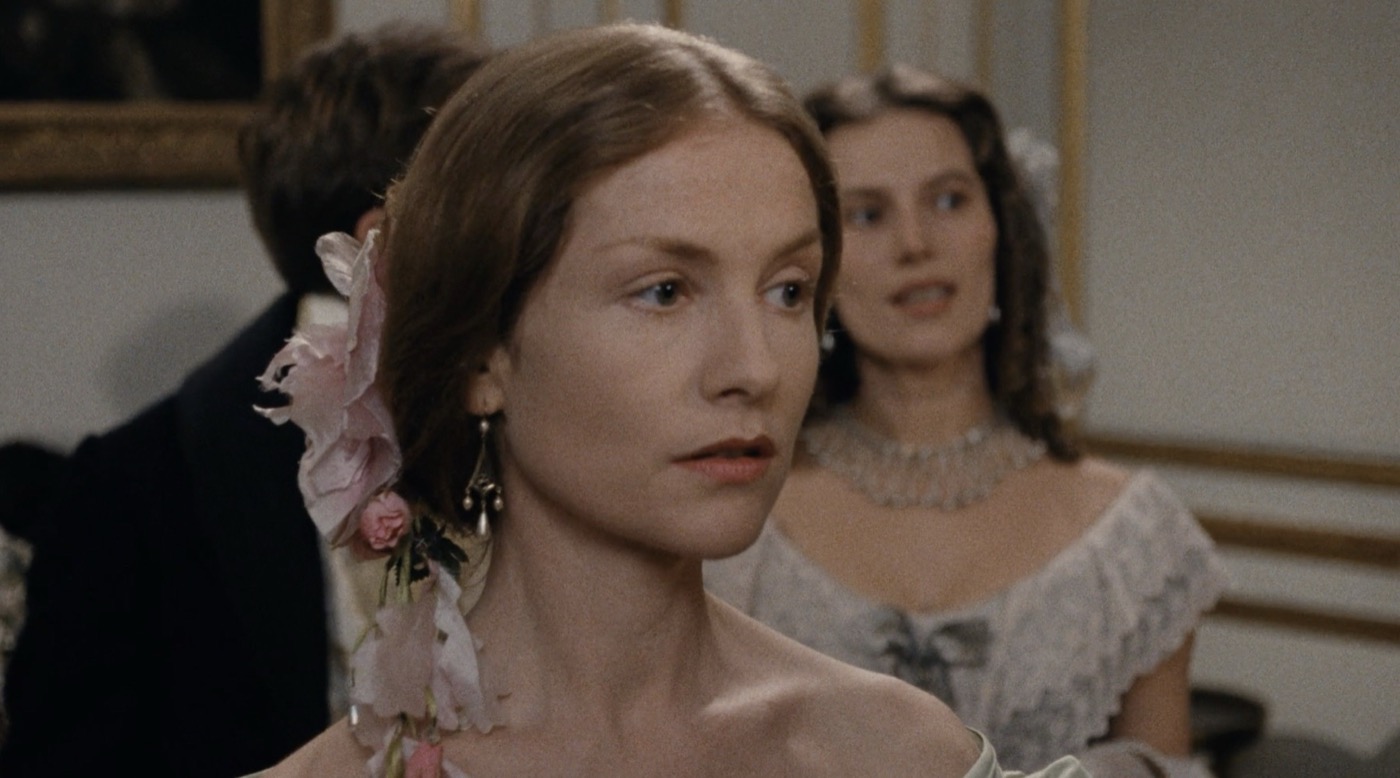
In individual scenes, the pacing is slow, yet the dry voice-over narration by François Périer feels as though it’s being uttered at 150% speed. The film also skips forward in time quickly; within the first 10 minutes, Emma and Charles are already wed. If Emma regards someone coolly, they are practically cleaved from the narrative. The protagonist’s daughter, Berthe (Eva Simonet), is an absence worth exploring further, especially as Emma’s disdain for everyday life causes her to ignore her family’s needs. Priority is given only to the things that pique Emma’s romantic desire—her need to escape into a worldview that matches the literature she devours.
Charles is the exception to that rule; his cluelessness never feels particularly pathetic, though there’s something amusing about how intransigent this couple is. They stumble blindly through life; Charles is totally unaware of what his spouse thinks of him, while Emma feels she understands his every thought. There’s a detached air to this adaptation that pairs well with the amorality of Emma’s actions. We know what she’s doing is wrong, but over time her affairs start to feel commonplace. She is a ridiculous, desperate protagonist, but an austere one. In one pivotal scene, she wanders through an aristocratic ball like a ghost, longing to embrace anyone.
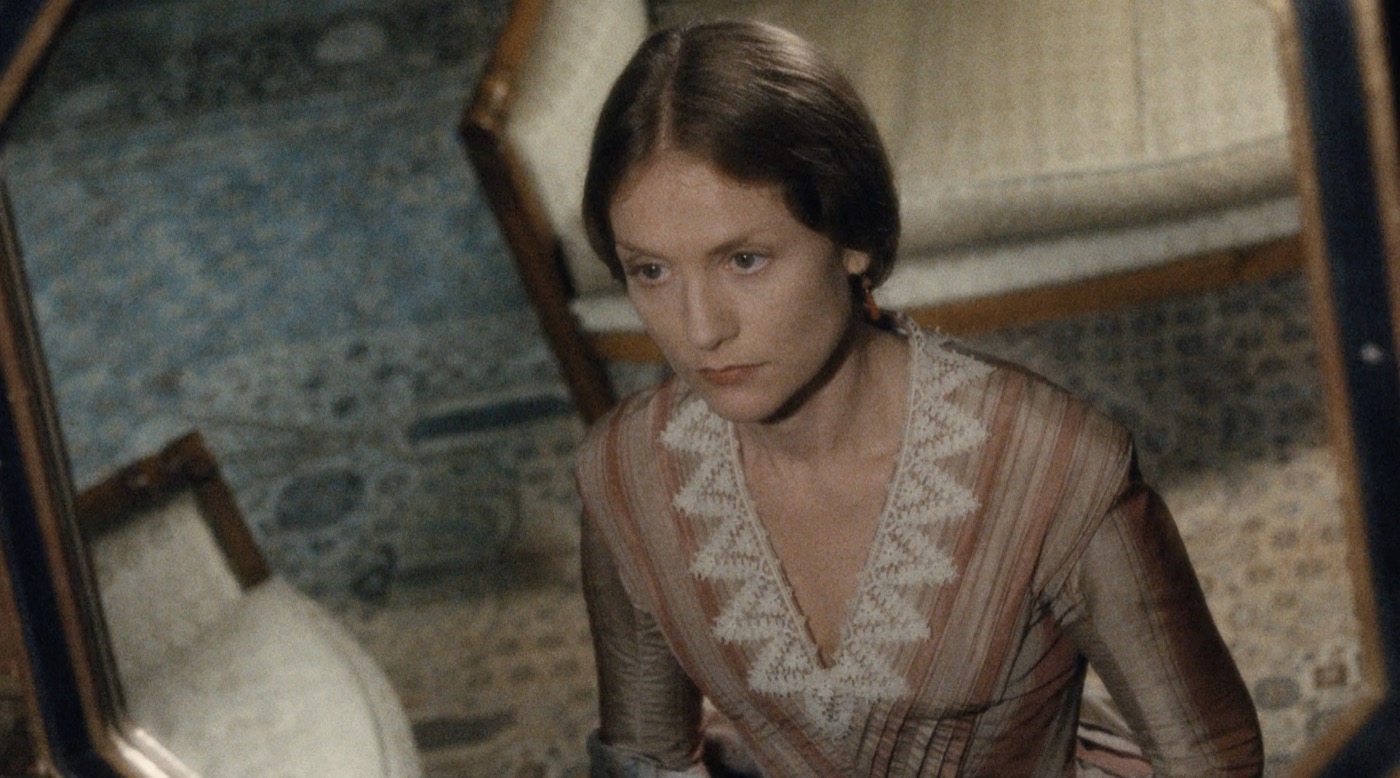
You feel an emotional truth to that desire and the pain that rears its head when it can’t be consummated. But it’s a lie, too, as Emma shuns her husband’s affections time and again. As a character piece, Madame Bovary is an invigorating exploration of how a person can be endlessly sentimental in thought yet callous and apathetic in action, shunning those who adore them while pining for strangers. This mentality shouldn’t make sense, but Huppert coheres it around reason.
The individual scenes are slow-paced, while the overall progression is rapid. Chabrol’s analytical depiction of French society makes Emma seem like a prisoner, but that sense of detachment also makes it hard to feel immersed. There is a cruel irony present, though the film is often sincere in its presentation of these characters. There’s a constant push-pull dynamic; it’s effortlessly easy to connect with the protagonist, yet the story remains emotionally inaccessible.
Chabrol excels at tension, but he’s pulled in too many directions by the story’s years-long chronology. Considering this is far more expansive than the vast majority of his films, this is one of the rare cases where a miniseries would have been more apt than a feature film. It would have allowed him to properly develop this world and, better yet, give viewers more precious time with Huppert’s masterful lead performance.
FRANCE | 1991 | 143 MINUTES | 1.66:1 | COLOUR | FRENCH • LATIN

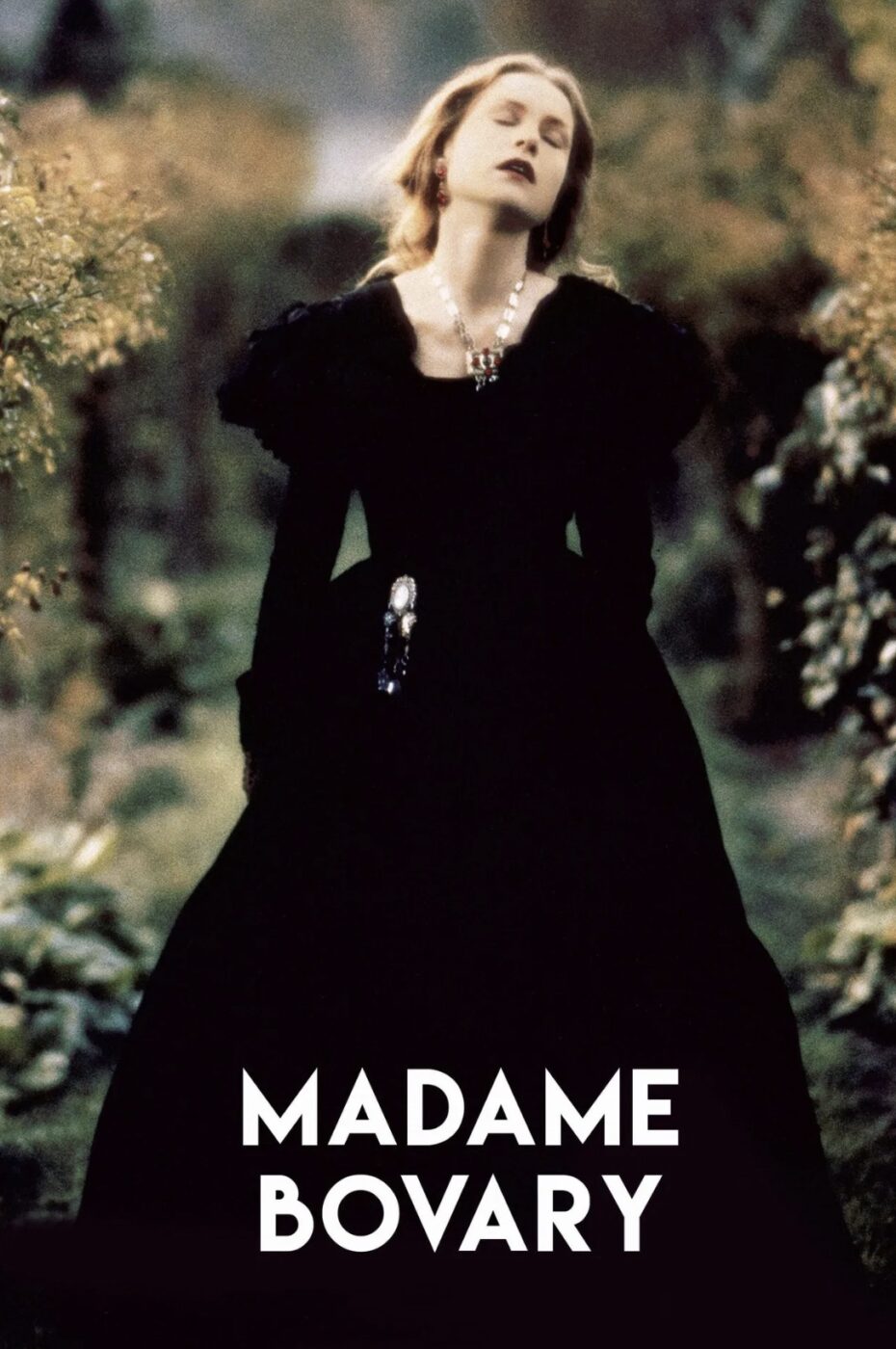
director: Claude Chabrol.
writer: Claude Chabrol (based on the 1857 novel by Gustave Flaubert’).
starring: Isabelle Huppert, Jean-François Balmer, Christophe Malavoy, Jean Yanne, Lucas Belvaux, Christiane Minazzoli, Jean-Louis Maury, Florent Gibassier & François Maistre.