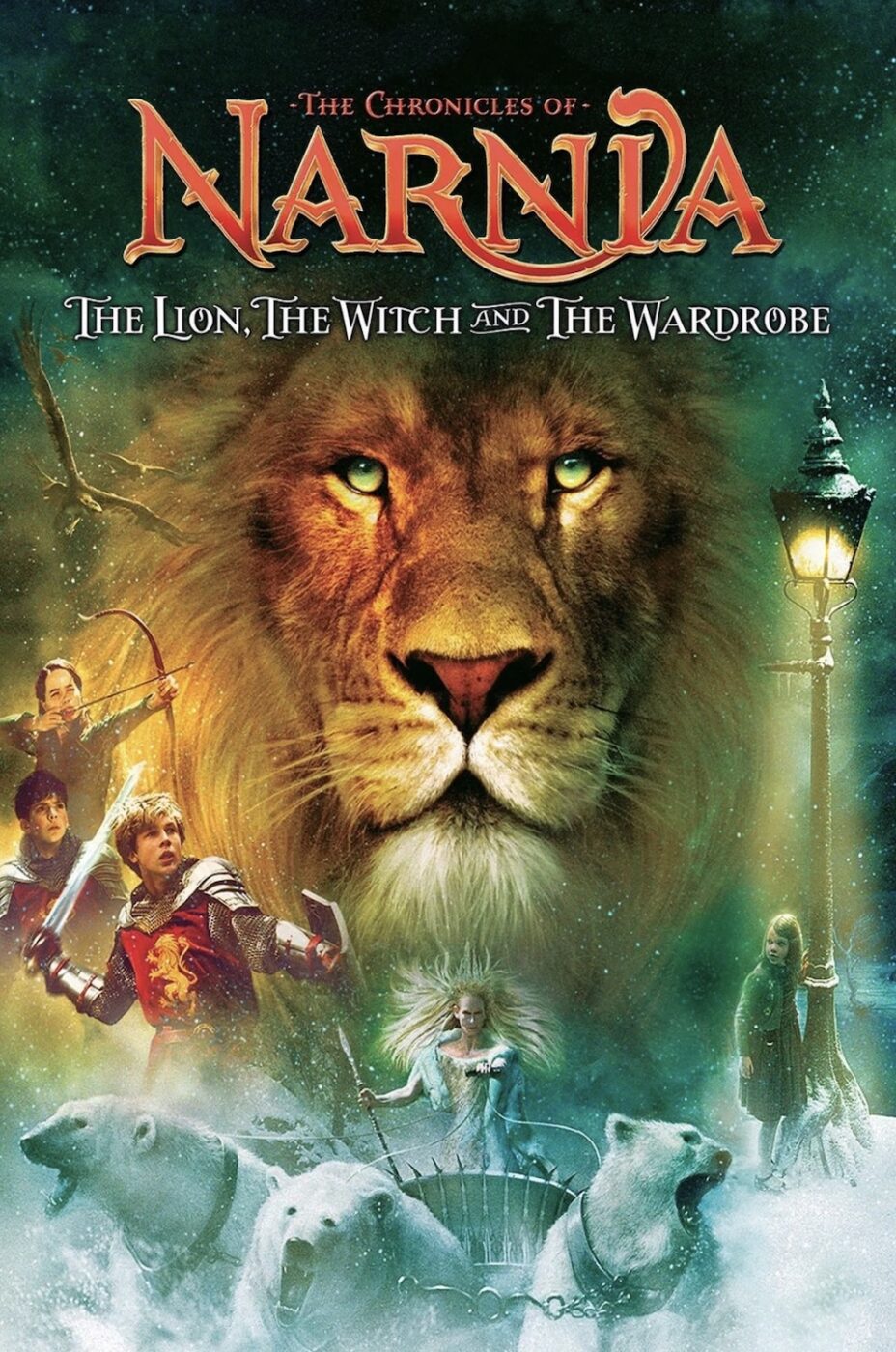
THE CHRONICLES OF NARNIA: THE LION, THE WITCH AND THE WARDROBE (2005)
Four siblings find a wardrobe that transports them in a mystical place where they must defeat an evil queen.

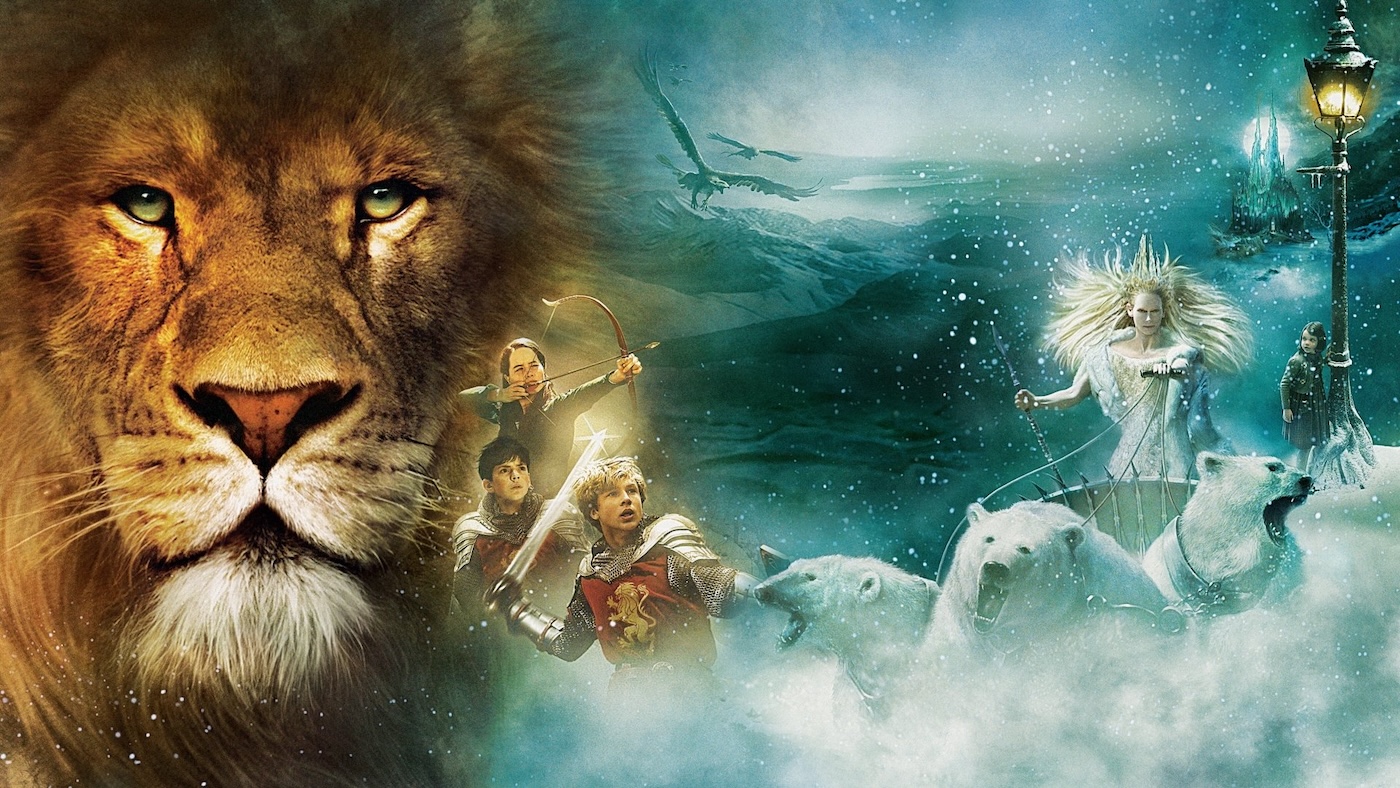

Four siblings find a wardrobe that transports them in a mystical place where they must defeat an evil queen.
I remember, very clearly, the first time I encountered C.S Lewis’s classic fantasy story The Lion, the Witch and the Wardrobe. I was eight years old on a summer evening, and my mom chose a weathered paperback book to read to my sister and I before bed. I was immediately entranced. The idea of walking into something as mundane as a wardrobe and finding a magical world inside caused my imagination to take flight. By the end of high school, I’d read all seven books in The Chronicles of Narnia series, multiple times.
While I’d seen and enjoyed the BBC TV series (1988-1990), as well as a stage play by a local theatre troupe, neither was able to capture the true scope and magic of the novels. In an age before lavish prestige TV, small-screen productions didn’t have the budget or technology to pull off fantasy epics. If you wanted to create a truly magical high fantasy world, you needed to put it on the big screen. The adaptation I’d been hoping for finally arrived in 2005. I was relieved to find that it met my expectations and helped to lighten a dark personal period in my life. Looking back, I only wish the filmmakers had the same esteem for the material and its author as I did.
The film follows the plot of the first book in the Chronicles of Narnia series closely, with only minor changes. The story begins during World War II, when four children are sent to the English countryside to escape the London Blitz. They live with an eccentric old professor who has a curious wardrobe in one of his bedrooms, which the children soon discover is actually a doorway to a magical world called Narnia. And as far back as anyone can remember, Jadis, the White Witch (Tilda Swinton), has ruled this land with an iron fist, making it exist in an eternal winter (but never Christmas). The siblings soon learn that they’re destined to unite with Aslan, the lion who created Narnia, fight the evil witch, and break the spell.
Upon a re-watch, The Lion, the Witch and the Wardrobe remains as magical and watchable as it was when I was a depressed 19-year-old trying to find my spark. Even so, I can’t help but feel a pinch of sadness and a small sense of loss when I pressed play. The magic remains, but there are times when I let my mind wander to what the rest of this movie series became and what it might have been. That alone causes a shadow to fall over Narnia. As good as it is, it’s less than what it could have been.
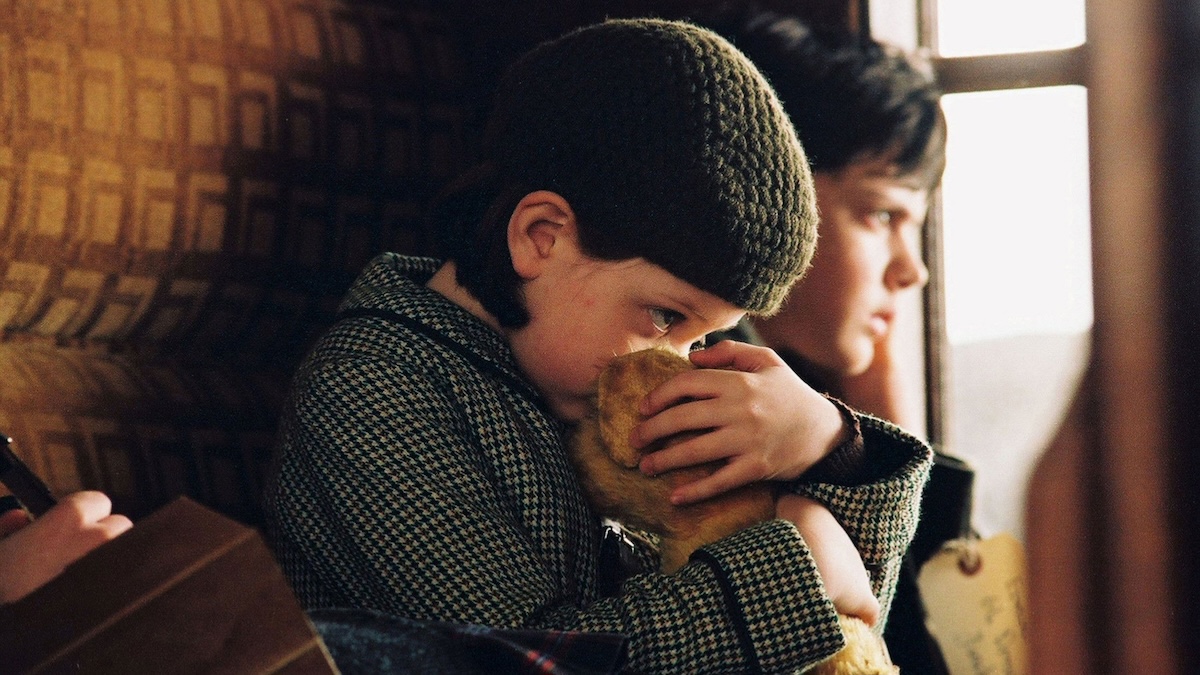
The Lion, The Witch and the Wardrobe is still a nice, cosy family fantasy. But what it could have been is an extraordinary, archetypal epic. So why wasn’t it? To answer that question, we need to go back to the beginning…
As with J.R.R Tolkien’s The Lord of the Rings before it, a variety of Hollywood studios and production houses vied for access to the material. One can still find stories of ‘studio pitches’ for a Narnia film from the late-1990s. And if these tales are accurate (and there’s evidence that they are), all of the pitches were terrible. Most involved transplanting the story from the UK to the US. Others involved removing the World War II backdrop and updating them to take place in modern times. Thankfully, these ideas never came to full fruition. Why? Because, much like The Lord of the Rings, The Chronicles of Narnia had a fierce defender at the head of C.S Lewis’s estate. Where Tolkien had his grandson Christopher to look after his interests once he had passed, C.S Lewis had his stepson, the producer and Australian TV/radio personality Douglas Gresham.
Gresham insisted that any adaptation of his stepfather’s books be (a) set in England, and (b) take place during the 1940s. Though Disney purchased the rights to adapt the book in 1996, no pitch they gave Gresham took either stipulation into account, and the gatekeeper of Lewis’s beloved series simply wouldn’t budge. So, after a few unsuccessful attempts to sway Gresham, the studio decided that the VFX budget would be too large anyway and shelved the project.
Then, something happened that turned the industry on its head: Harry Potter. When discussing the ultimate cinematic fantasy experience, people usually bring up Peter Jackson’s Lord of the Rings trilogy (2001-03). But while praise for his achievement is absolutely warranted, most people forget that the trilogy was being shot at the same time as Harry Potter was making literary waves… and that Harry Potter and the Philosopher’s Stone (2001) reached audiences first.
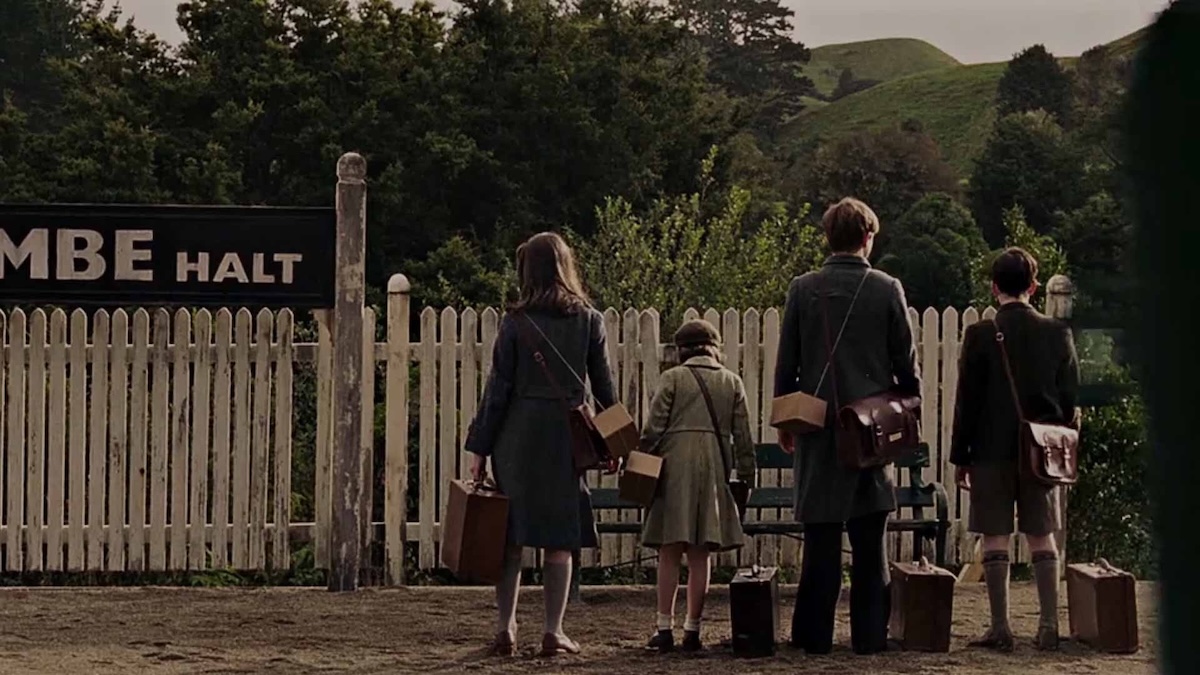
It was this movie, the first of the eight-part Harry Potter series, along with its massive box office success, that convinced Disney bosses that audiences would embrace a family-friendly fantasy film not set in the US and that didn’t look the least bit ‘modern’ in terms of style or substance. But what really compelled a major studio to adapt this classic can be summed up in one word: money.
Unlike with The Lord of the Rings, where a young fan called Peter Jackson relentlessly pitched his vision for his beloved series to multiple studios before New Line Cinema finally gave his full vision the green light, The Chronicles of Narnia was made not out of passion for the material but out of a desire to increase the studio’s bottom line. The film was intended to run on the Harry Potter template. It’s clear from the outset that Disney thought the two young adult fantasies were somewhat interchangeable. From the moment they announced the director and other key crew members, it was clear that they wanted this to be a copy-and-paste affair.
The director, Andrew Adamson (Shrek), making his live-action debut, was one in a line of filmmakers who’d been considered for the film. Like Chris Columbus, who directed the first two Harry Potter instalments, he was chosen because of his success with family-friendly material, not because he had an especially deep passion for the source material.
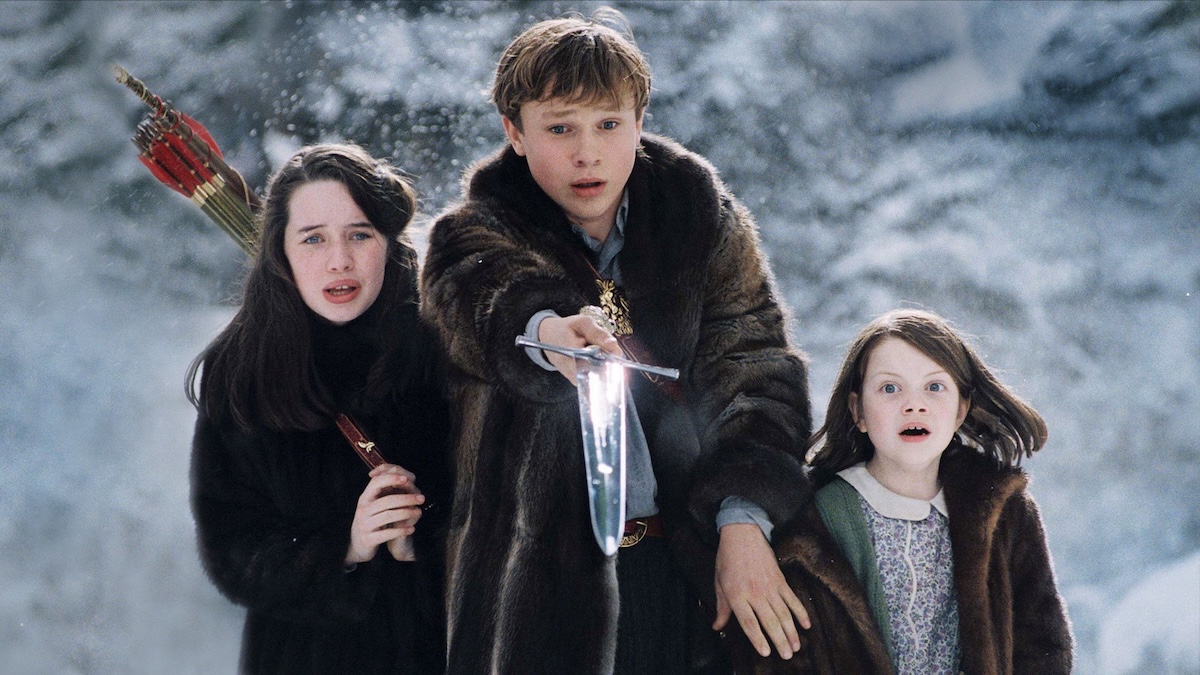
Though Adamson had read the books, he hadn’t returned to the original material since he was a child and deliberately chose not to re-read The Lion, The Witch and the Wardrobe again before writing a treatment for the film. Indeed, his inaccurate memories account for several of the changes between the film and the book. Aside from a few small missteps in memory, one can tell that Adamson didn’t have the true, deep, abiding love for the material that Jackson had for Tolkien’s work.
I’m not complaining about changes as such. There will always be certain differences when translating a story from a written medium to the screen. Besides, changes like opening with a Luftwaffe bombing raid rather than the children’s arrival at the professor’s house were smart and necessary. An opening that focuses on the children’s reactions and behaviour in a stressful situation is a smart and quick way to give us a glimpse into who these children are and what motivates them.
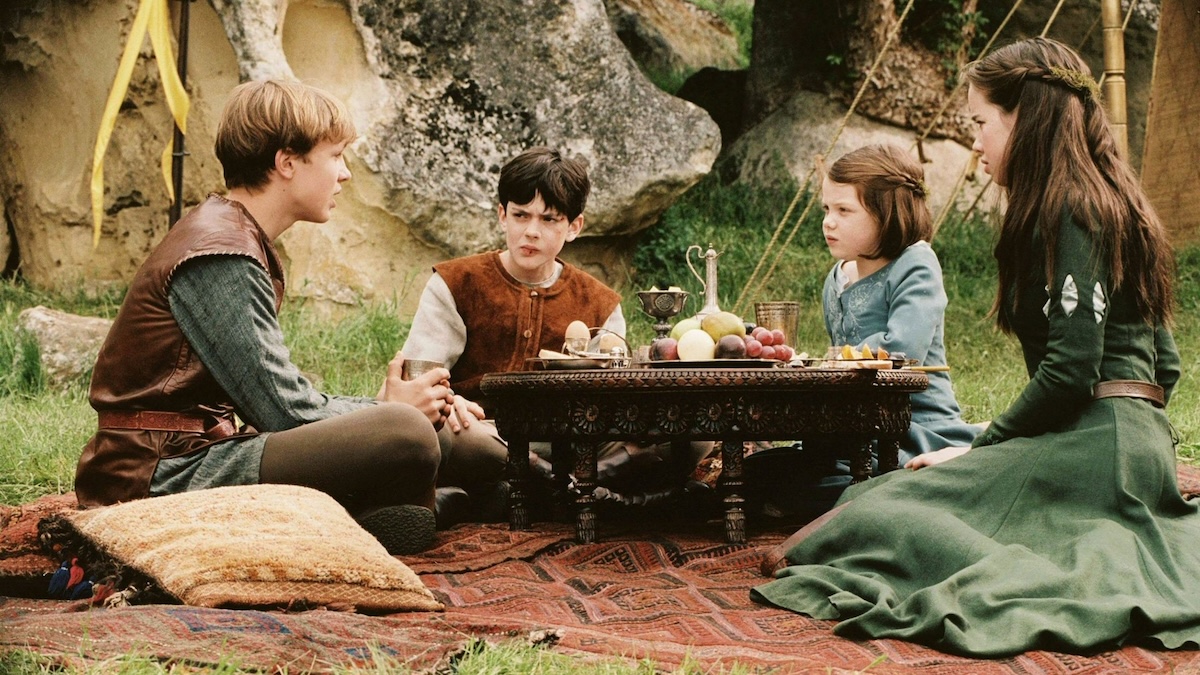
Particularly clever was the confrontation between the oldest brother, Peter (William Mosely), and Edmund, that sets the stage for their conflicts to come. Despite a slight action misstep from Mosely, who takes an inexperienced turn to the overly dramatic, the scene plays beautifully and serves to bring the audience into the entire experience.

The other scene early on that tugs on the audience’s heartstrings and all but pulls them into this new, magical land occurs between Lucy and the fawn, Mr Tumnus (James McAvoy). Lucy’s entered Narnia for the first time and her wonder at this new world and his fear of what a human in Narnia means is perfectly portrayed. This stands as one of the most faithful scenes from the book, and that’s mostly due to the acting. There’s a reason Georgie Henley was lauded for her turn as Lucy Pevensie in this film. Of the four child actors, she shows the most charm, poise, and promise.
Few people remember that this was also the first major film outing for James McAvoy (Split). Again, it’s clear from this first scene alone why he went on to have the Hollywood career he has now. The other character that seems pulled directly from the pages of Lewis’s book is Jadis, the White Witch. Tilda Swinton was the first actor cast in the film and the only person considered for this role. It’s easy to see why. Swinton’s easy icy stare and strangely cold beauty fit perfectly into the role.
It’s also worth noting that, despite Swinton’s occasional non-binary turns on screen, this villain feels uniquely feminine. She would rather scheme than punch, and she’s just as likely to utilise flattery and charm to get her way as she is to intimidate and threaten. The white, flowing gowns that she wears serve to accentuate this cold beauty, and it’s again easy to see why the costuming for the film was lauded.

What was also praised at the time but seems of mixed success today are the VFX and SFX. Weta, fresh off Lord of the Rings and a number of other movies, again created the motion capture effects for the various magical creatures that inhabit Narnia.
It was refreshing to see Centaurs on the screen, like General Oreius (Patrick Kake), played by competent actors rather than done in full, cartoon-like computer animation. It’s a bit of a bonus that the centaur and fawn effects in this film so shamed the makers of Harry Potter that they hesitated to show any centaurs after the first film, even though they play a prominent role in the fifth book.
The climactic battle is also spectacular. There’s a real difference in energy and feeling on screen when you see actual stunt people and extras fighting and battling each other rather than CGI. Performance capture, as well as Adamson’s insistence on using mixed practical gear and effects, gives the battle an epic yet human feeling.
The VFX for Aslan and the beavers, while cutting edge for its time, feels more than a bit flat in the current CGI-saturated climate. While the voice acting by Ray Winstone and Dawn French is perfectly charming and makes up for the slightly outdated feel of their creature effects, Liam Neeson’s Aslan often heightens the cartoonishness rather than diminishes it.
Neeson’s vocal performance in Chronicles of Narnia is rarely mentioned when discussing the actor’s best work. There’s a reason for that. Aslan is meant to be the creator and true ruler of all Narnia: a powerful, good, but untamed lion whose every word commands respect. But Neeson’s performance gives us more of a tired and overworked father figure who’s constantly trying to clean up his children’s mess. Of course, as Aslan is the Christ figure in this story, there’s an argument that weariness and the weight of responsibility are part of that character, but it shouldn’t make up the bulk of what we see.

Sure, his voice works well in Aslan’s own version of the Garden of Gethsemane. But, it certainly doesn’t work in his confrontations with the witch or in his monologues post-resurrection.
When Tumnus says to Lucy, at the end of the film, “he’s not a tame lion,” the audience is left a bit confused. Neeson’s lion seems pretty tame to us! The only time we get a real sense that this great beast is someone to be feared as well as admired is when Aslan’s mentioned in the White Witch’s presence. When Tilda Swinton repeats the name “Aslan?”, it’s with definite terror. For the first time, we see the White Witch lose her composure, her mask drops, and the fear behind her villainy’s on full display. It’s Swinton, not Neeson, who shows us that Aslan is to be feared.
That said, I’m not entirely sure that the taming of Aslan is the fault of Neeson. Instead, it speaks to a fundamental misunderstanding of the source material from those who made the film. It’s this misunderstanding that keeps The Lion, The Witch and the Wardrobe in the realm of “well-made, cosy, family film night” and not “epic classic to be loved as well as discussed and analysed.”
Disney and Walden Media were under two connected and incorrect assumptions when they made this movie: that they were making a children’s film, and that such a film should be treated as less than a movie intended for adults.
There’s a certain condescension that’s not necessarily spoken, but felt through the film. It’s in the way a cheap joke deadens an otherwise impactful scene (as an example, Lucy’s line to Susan, “See, I told you he was real” in the Father Christmas scene lessens the impact of what Father Christmas represents to Narnia in that moment). It’s in the over-the-top, almost cartoonish direction of certain landscapes and characters.
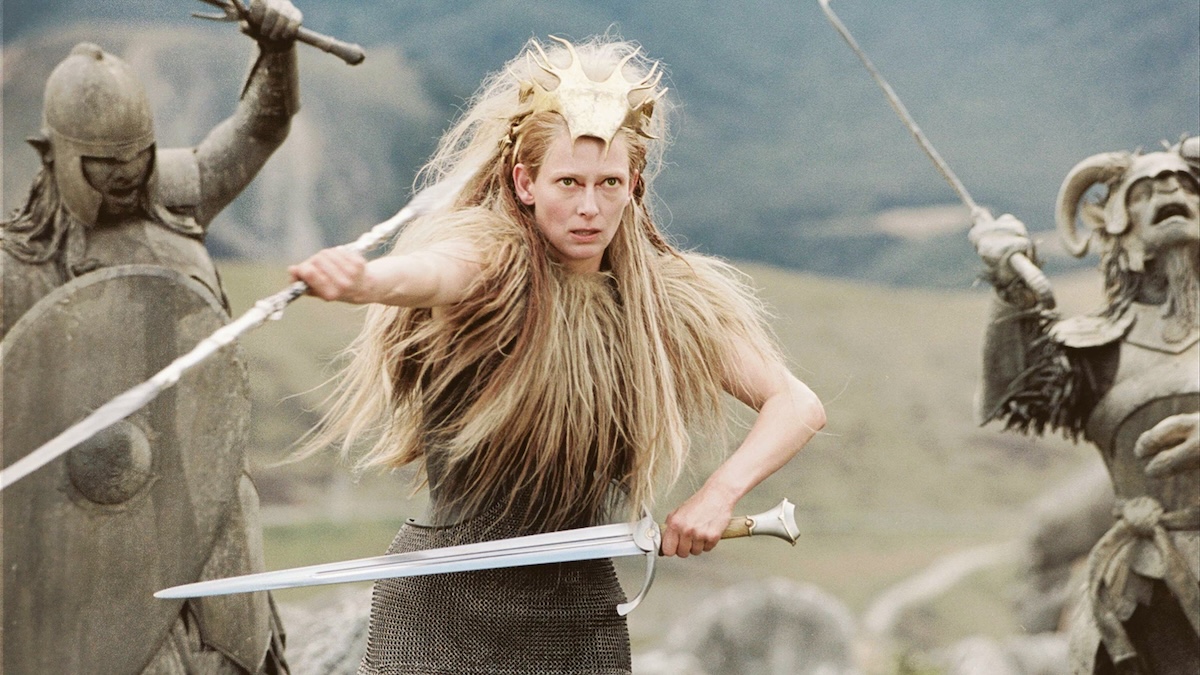
Though we have some actors who do take the story seriously and ground it in reality (i.e. McAvoy and Swinton), the direction given the children, we can tell, is often focused on play rather than performance. It’s a common theme in family entertainment, especially in works based on existing young adult IPs.
These incorrect assumptions are rife within the entertainment industry and are certainly not exclusive to Disney or Walden. In many ways, Warner Bros. made the same incorrect assumptions with the majority of the Harry Potter films (the later films being slight exceptions). Nickelodeon Pictures certainly made these assumptions about A Series of Unfortunate Events (2004) and Percy Jackson and the Lightning Thief (2010), and ultimately paid the price for their poor judgement.
Unfortunately, in the next two instalments of the Narnia series, these assumptions didn’t disappear but deepened. By the time The Voyage of the Dawn Treader (2010) premiered, it felt less like we were watching an epic struggle between good and evil and more like a high-budget Disney Channel movie-of-the-week.
These assumptions come about when studios make films thinking only about the bottom line and not the story. That’s why the creators of these stories almost uniformly disliked the filmed adaptations. Even Douglas Gresham, Lewis’s stepson, wasn’t entirely pleased with the results of the Narnia movies.
It’s no secret that creators of Young Adult fantasy IPs have taken to streaming platforms in order to do their works cinematic and visual justice. Daniel Handler, the author of A Series of Unfortunate Events, produced a successful Netflix adaptation of his series after the Jim Carrey-starring box office bomb from Paramount Pictures. Likewise, Rick Riordan’s Percy Jackson is heading into its second season on Disney+. Both adaptations were much better in terms of artistic merit and much more successful than the earlier films. Soon, even the beloved Harry Potter series will take to the small screen with HBO promising a much more faithful and well-rounded adaptation of the books.
All of this is to say: if audiences and authors who love YA fantasy want truly worthwhile adaptations, we can’t rely on the big film studios to make them. With streaming, there’s now no reason for fantasy authors or fans to allow their beloved stories to be treated with kid gloves.
Ultimately, the cautionary tale of The Chronicles of Narnia offers us one lesson: if a studio doesn’t believe in and love an IP, they shouldn’t produce a film based on it. Even if it’s popular initially, audiences will eventually see through the facade and the sequels will flounder.
Sure, 2005’s The Lion, The Witch, and the Wardrobe, is a lovely, entertaining family film. But it’s not what it should have been. Luckily, Lewis’s estate has now given the rights to Netflix, who intend to adapt all seven novels, beginning with Greta Gerwig’s version The Magician’s Nephew. Hopefully, those involved truly love C.S. Lewis’s work. If they don’t, the same fizzle is likely to occur.
UK • USA | 2005 | 143 MINUTES | 2.39:1 | COLOUR | ENGLISH • GERMAN • BRAZILIAN SIGN LANGUAGE

director: Andrew Adamson.
writers: Ann Peacock, Andrew Adamson, Christopher Markus & Stephen McFeely (based on the novel by C.S Lewis).
starring: Georgie Henley, Skandar Keynes, William Moseley, Anna Popplewell, Tilda Swinton, James McAvoy, Jim Broadbent & Liam Neeson (voice).