ETERNITY (2025)
In the afterlife, a woman's faced with the choice between the man she spent her life with and her first love, who died young...

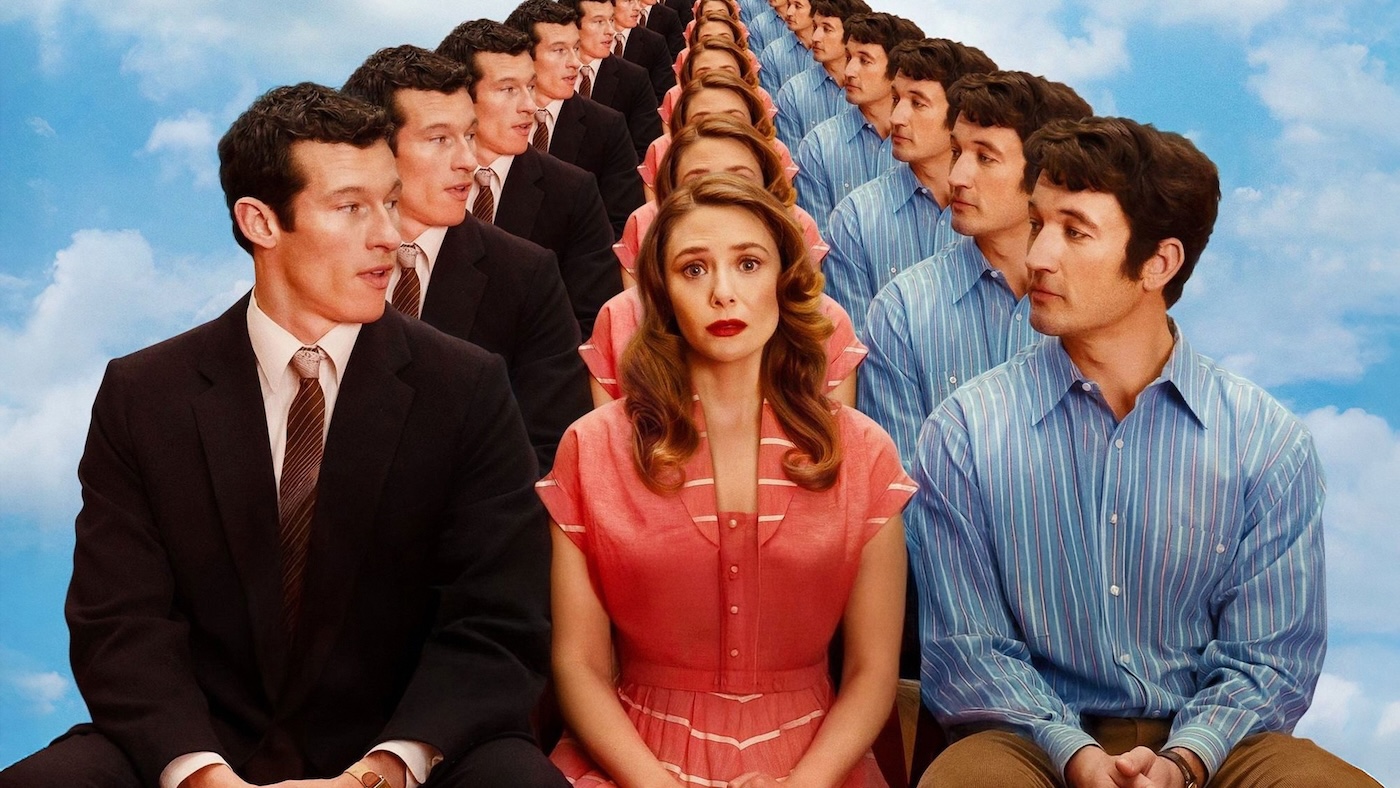

In the afterlife, a woman's faced with the choice between the man she spent her life with and her first love, who died young...
It wouldn’t be absurd to claim that the best part of David Freyne’s Eternity is the idea itself. It’s the kind of concept that feels like it came from a late-night conversation, perhaps after a drink or two, when the topic turns to the afterlife. The film takes that casual “what if” question and turns it into something much heavier. If our minds, bodies, and time all remain the same in heaven, then who would you spend eternity with if you have had more than one ‘forever mate’? The film adds even more strict rules to the concept: you have one week to choose which person to spend eternity with, as well as where that eternity will be. Once the choice is made, that is it. No do-overs. If you choose wrongly, you are sent to an endless void to spend the rest of eternity. It sounds like a stressful place.
It’s a bold concept, but Eternity doesn’t play the story with the severity its concept suggests. Instead, the movie uses a light comedic tone, almost like a sitcom at times. Sometimes it works, but it often clashes with the emotional weight of the story. It’s easy to become torn between liking the pleasant, comedic energy and wishing the film would settle into the heavy feelings that come with a story about losing someone, gaining them back, and then being asked to choose between two different versions of your own past. That contrast becomes even clearer once the story actually begins.
The story begins with the elderly versions of Larry (Barry Primus) and Joan (Betty Buckley) on their way to a gender-reveal party. They’ve been married for over 60 years and argue as one might expect an older couple to. The party does not go well for Larry after he blacks out and wakes up in a strange afterlife space that looks like a train station crossed with a hotel lobby. This version is young Larry (Miles Teller), full of energy but confused about what happened. Teller’s performance, especially in these early moments as he’s learning what’s happened, is one of the film’s most interesting elements. He carries himself like someone with many years behind him. His voice, posture, and movements belong to an older man, even though the character now looks like someone in his thirties. It’s a smart choice, and Teller never breaks the illusion.
Just as Larry starts to grasp what is going on, he’s introduced to Anna (Da’Vine Joy Randolph), his assigned Afterlife Coordinator, or AC. Most of the comedy in the film runs through Anna. She has solid timing, and she makes even the weaker jokes play better than they should. She’s just naturally fun to watch.
Anna explains the rules. There are thousands of eternities to choose from. Some are serious, and others playful. Some seem designed for very specific interests. The idea is that everyone should be able to find a place where they can be content forever. However, there’s a deadline. Each person has one week to choose. If they cannot make up their mind, they are allowed to stay in the hotel, but only in a small basement room. It’s not a punishment, but it’s not an ideal outcome either. This reflects a simple idea: failing to make choices can trap you in place.
Larry wanders through the afterlife trying to understand how everything works. He considers a few eternities and eventually decides he wants a beach eternity. It seems peaceful and easy. He’s preparing to board the train to his new home when everything changes again. The film turns again once Joan arrives. Her illness moved fast after Larry died, and this version of Joan (Elizabeth Olsen) now stands before him young, healthy, and confused. Olsen’s performance is the emotional centre of the film. She spends most of the movie in a state of shock, a natural reaction to everything happening around her. Her wide eyes and dazed expressions communicate the stress she’s under. She also has a few moments of humour, and she handles those surprisingly well.
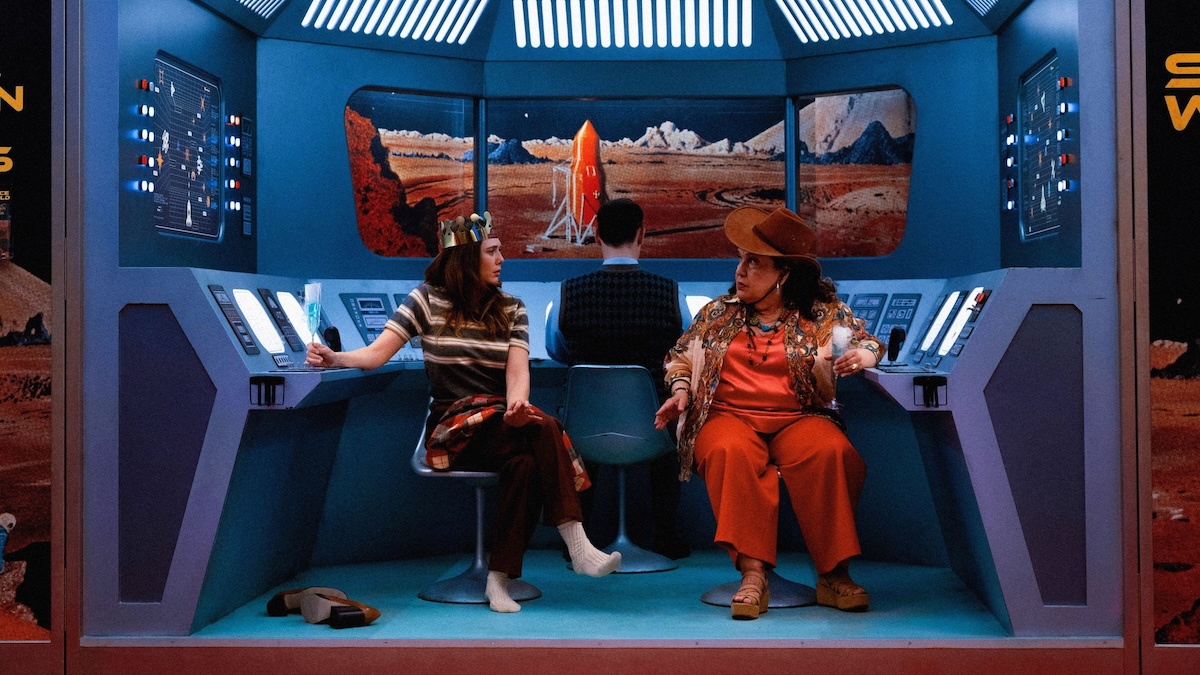
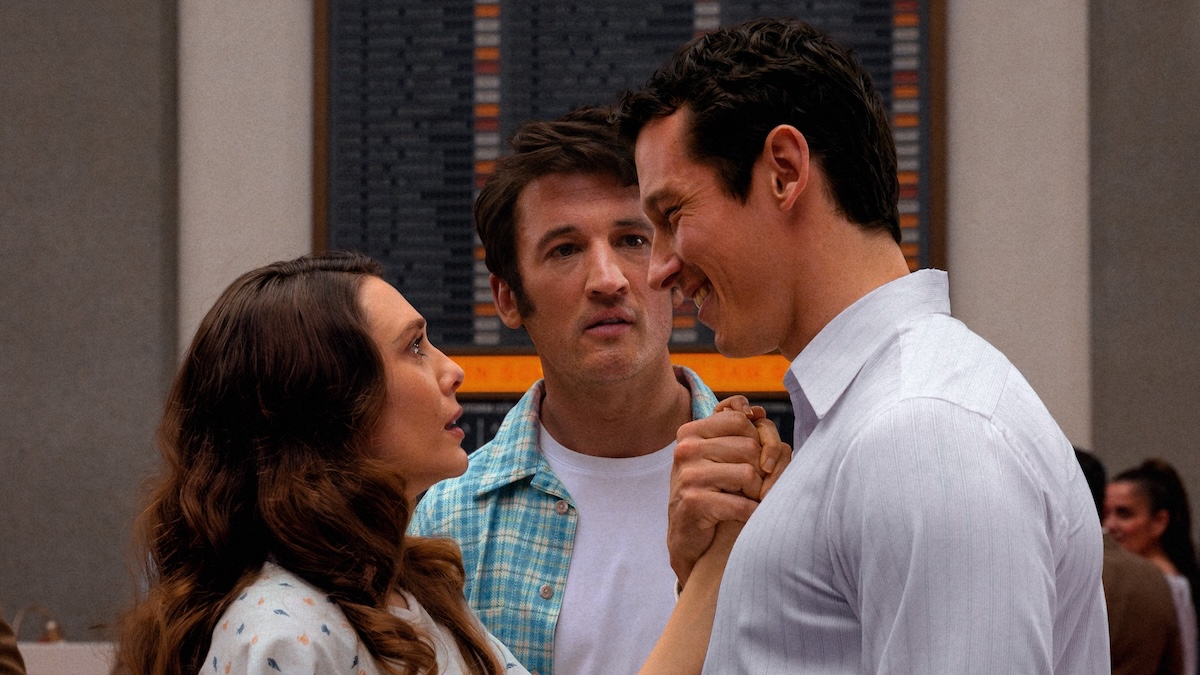
But Joan’s arrival adds another layer of complexity as Larry realises he’s not the only person waiting for her. Her first husband, Luke (Callum Turner), died in the Korean War and has been waiting here for more than six decades. Luke and Joan had longed for one another and, while spending only a short time together, their bond is rooted more in possibility rather than history. In contrast, Joan and Larry have an entire lifetime behind them. The movie uses this difference to create a love triangle where both sides pose reasonable arguments, and neither option is simple.
This predicament is the heart of the film but also where the tone becomes the most uneven. The question of who Joan will choose is a heavy one. Choosing Luke means leaving behind the man she spent most of her life with. ChoosingLarry means giving up the chance to explore the relationship she lost when Luke died young. The consequences would last literally forever, and while the film does not disguise that, it also does not settle into the gravity of it. Instead, it keeps up its cheerful pace. There are comedic distractions, side jokes, and moments where the characters behave as if the choices are not terrifying. Some may find this frustrating, but others will appreciate the lighter touch. The film seems to trust that the audience will accept the tone and not overthink the logic.

The afterlife itself is one of the more interesting parts of the film. It has a visual design that looks both comforting and artificial. The sunrises and sunsets are clearly fake, painted onto a backdrop like a stage production. The lighting shifts at set times to mark the passing of hours. It’s not meant to feel realistic. Instead, it feels like a temporary holding area where people think about their future. The production design supports this idea well. While some may expect a more mystical or spiritual afterlife, this version fits the film’s rules and keeps the focus on the characters rather than the mythology.
As the film moves toward its conclusion, the story adds a bit of silliness between the men as they compete for Joan’s attention. Larry tries to fight for Joan but must also face the possibility that she might choose Luke. Luke tries to be patient and steady, even though he has waited far longer than any person should have to wait. Joan struggles with the weight of both options. The pacing in the final act slows down a bit, but in a way that feels natural. The film takes the time it needs to bring the story to a satisfying end, and nothing feels rushed or forced.
Eternity aims to tackle a number of big themes. In parts, it focuses on the necessity of letting go—letting go of what you have always loved as well as letting go of parts of yourself. It also reinforces the idea that a perfect life is not one without flaws. Instead, the perfect life is the one you build through experiences, even when they are messy or difficult.
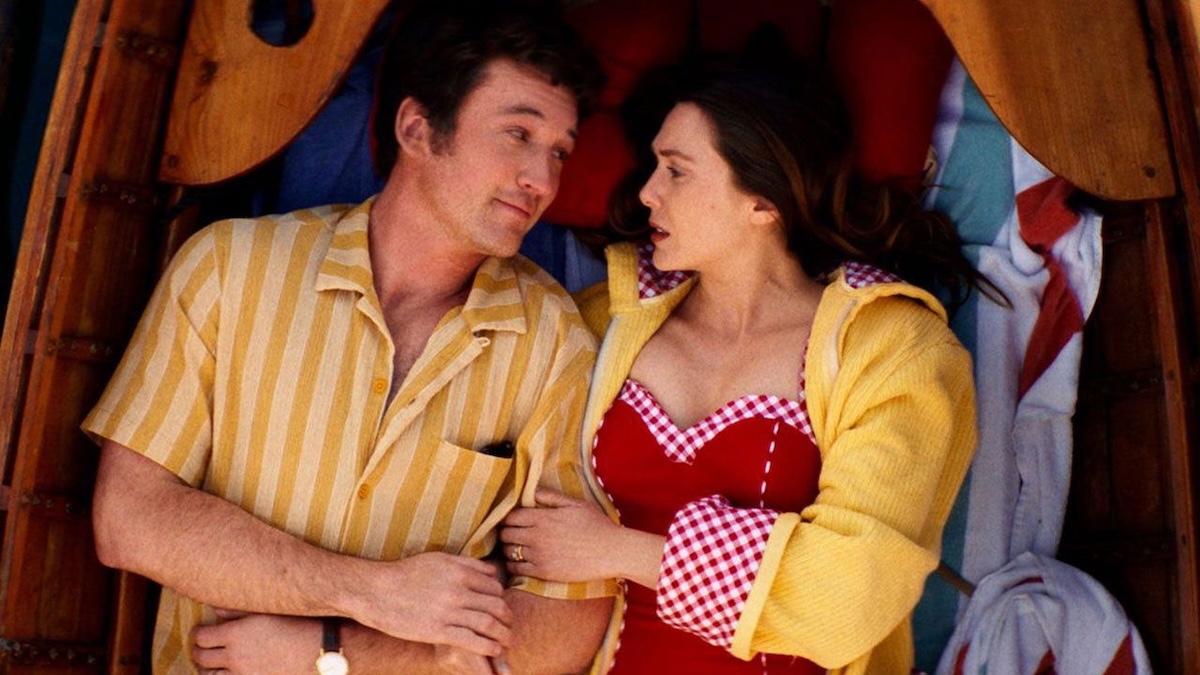
Looking at the performances, Olsen carries the emotional weight of the film, and her work helps unify the tone. Teller is effective in a very specific way, playing an old soul inside a young body. Turner relies more on his natural charm and is less commanding, but this fits his character. Their chemistry forms the core of the story, and even though the triangle is not perfectly balanced, it works well enough to support the narrative. Randolph provides strong comedic support, while Ryan (John Early) and Karen (Olga Merediz) are characters with similar roles that serve to round out the world.
The humour in the film will likely determine how people feel about Eternity as a whole. Some bits feel like they belong in a different movie. Some scenes rely too much on light banter, and too often the comedy tries to undermine the stakes. But if you can relax and accept that Eternity is not trying to be a heavy drama, the humour becomes easier to appreciate.
In the end, Eternity is a warm and pleasant film with a compelling idea at its centre. It does not explore that idea as deeply as it could, but it delivers a sweet and enjoyable story about love, regret, and the choices we make. It may be imperfect, but that fits the message it wants to share. The film asks its characters—and its audience—to accept imperfection and choose the path that feels most true.
USA | 2025 | 114 MINUTES | 2.39:1 | COLOUR | ENGLISH


director: David Freyne.
writers: Patrick Cunnane & David Freyne.
starring: Miles Teller, Elizabeth Olsen, Callum Turner, Da’Vine Joy Randolph, John Early, Danny Mac & Olga Merediz.