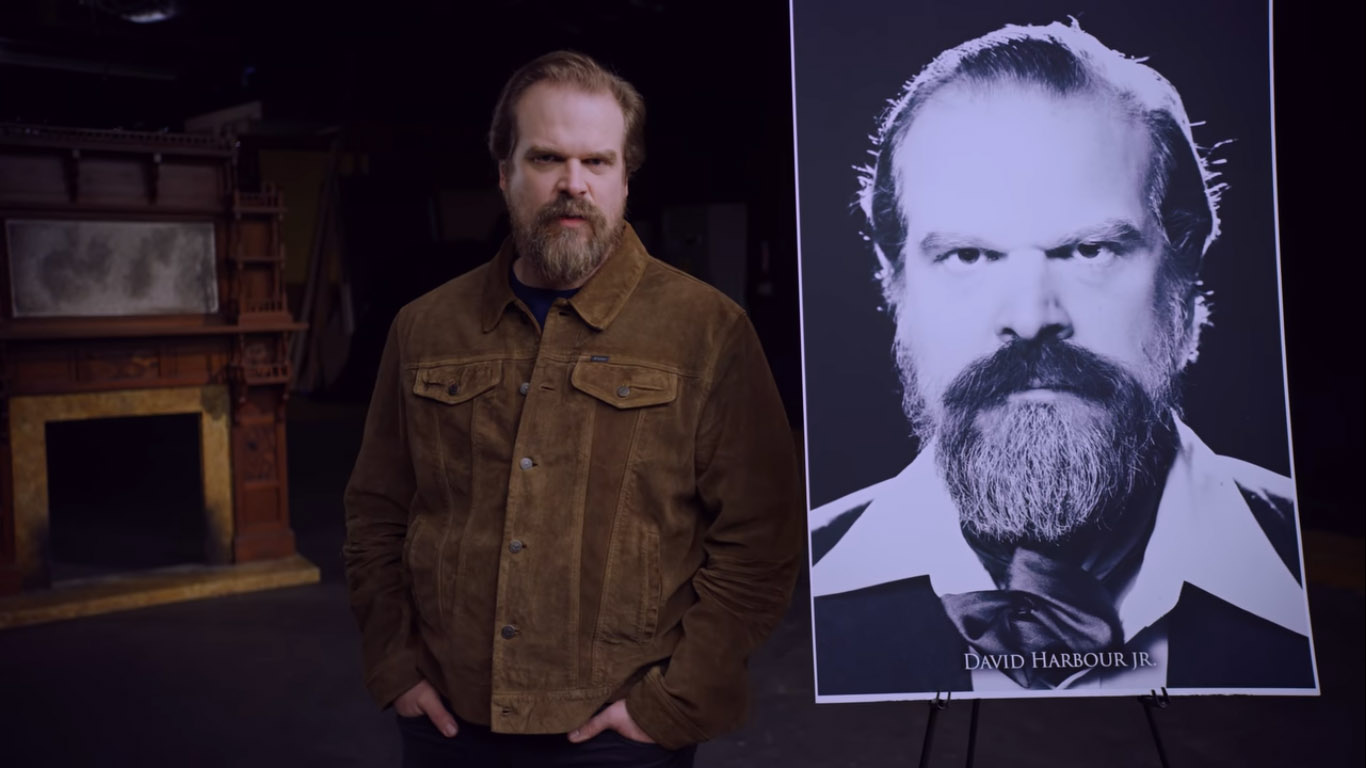
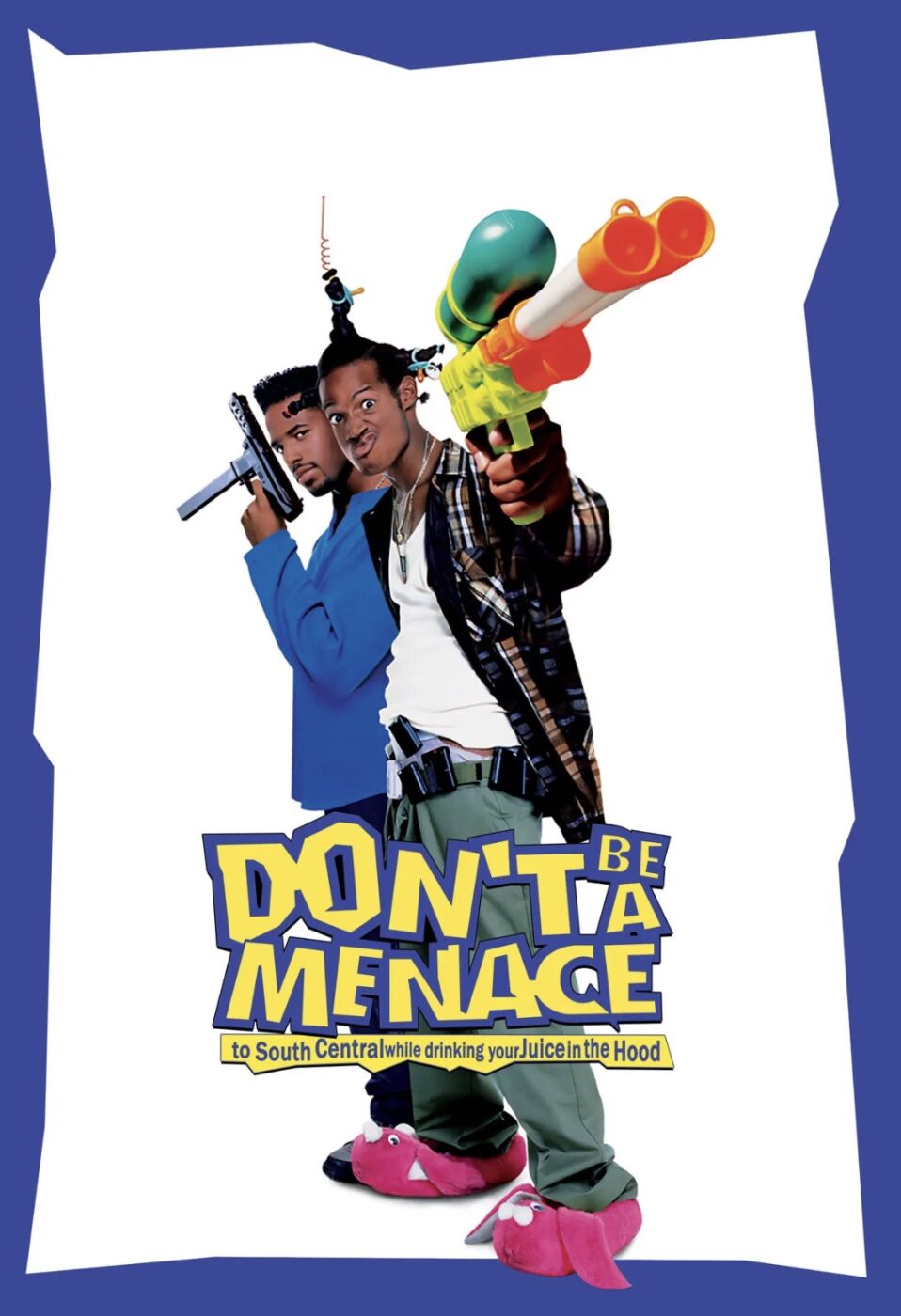
DON’T BE A MENACE TO SOUTH CENTRAL WHILE DRINKING YOUR JUICE IN THE HOOD (1996)
A parody of several US films about being in the "'hood", including Boyz n the Hood, South Central, Menace II Society, Higher Learning, and Juice.

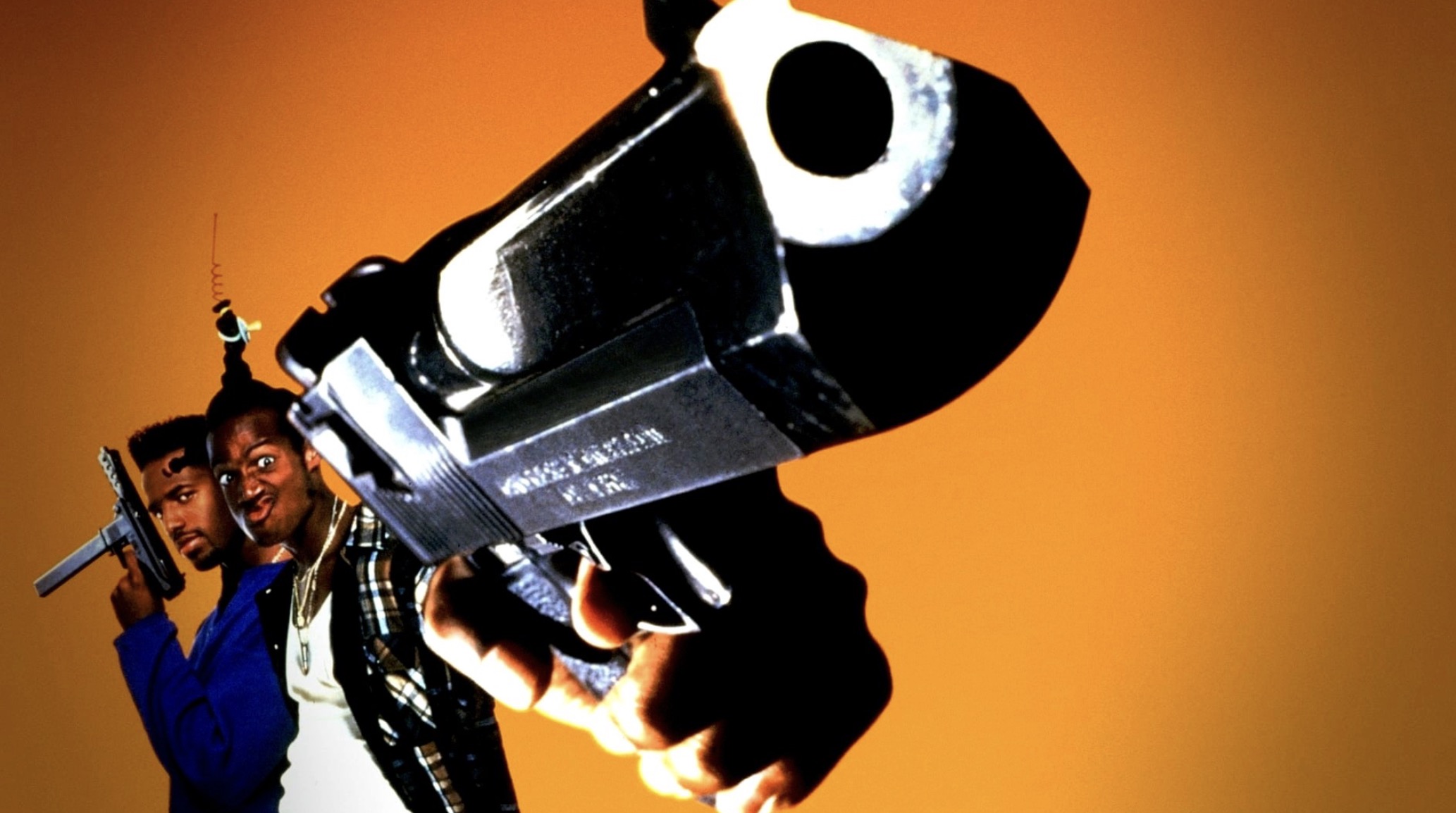

A parody of several US films about being in the "'hood", including Boyz n the Hood, South Central, Menace II Society, Higher Learning, and Juice.
Don’t Be a Menace to South Central While Drinking Your Juice in the Hood marked Paris Barclay’s feature directorial debut—and his only film directing credit to date. More significantly, it signalled the emergence of Shawn and Marlon Wayans as cinematic screenwriters. Years before their long-running Scary Movie franchise and the 2000s comedy classic White Chicks (which also has a sequel underway), the pair mined “hood classics” for their unique brand of chaotic social satire. Boyz N the Hood (1991) and Menace II Society (1993) were the primary targets of their parody, with numerous sequences directly lampooning scenes from these two templates of 1990s African American cinema.
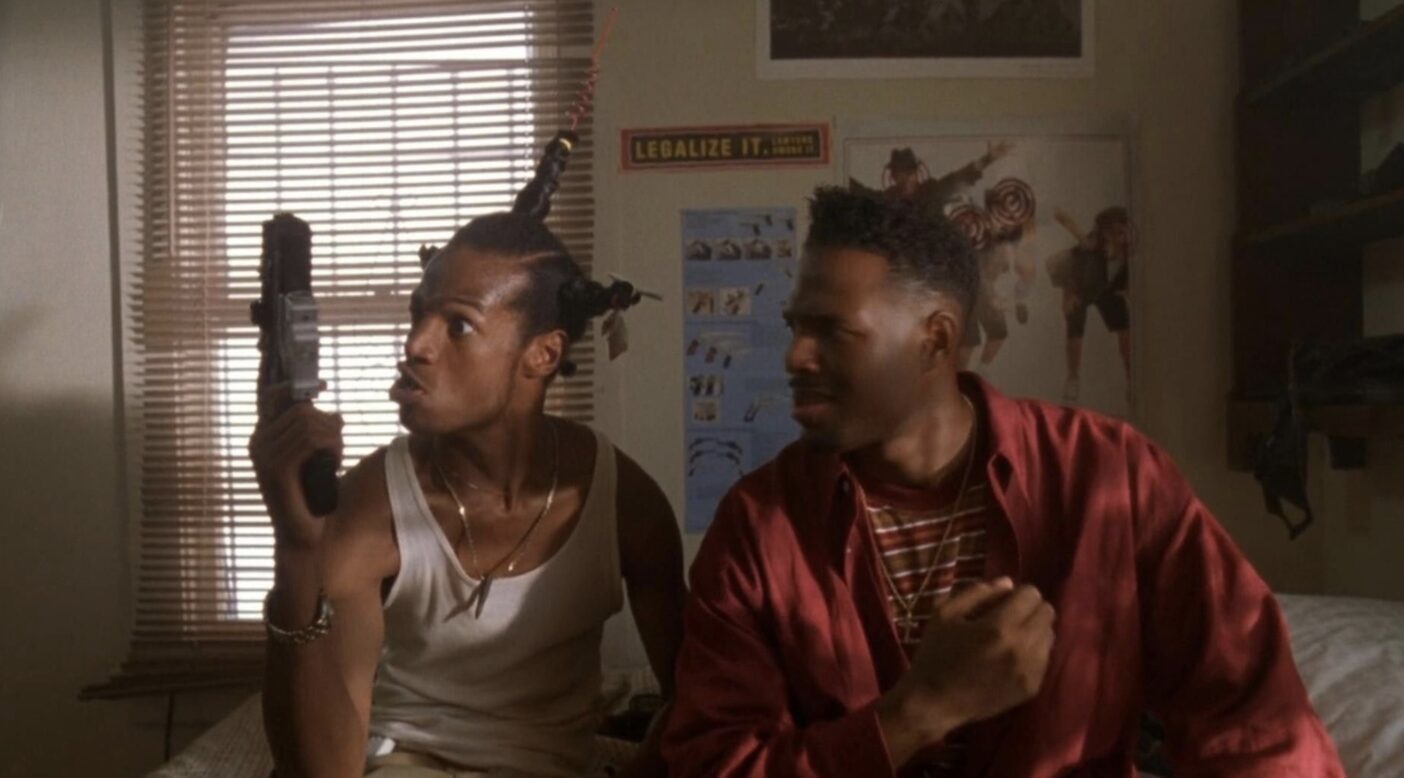
The most incendiary of these moments occurs when the protagonist, Ashtray (Shawn Wayans)—an everyman sent by his mother to live with his father in the ghetto—wanders into an Asian-owned convenience store. As he and his outlandish friend Loc Dog (Marlon Wayans) peruse the aisles, the anxious owners pop out from every conceivable corner, even somersaulting down the gangways. While these characters are locked in a state of heightened racial tension (which soon escalates to absurd proportions à la Menace II Society), a white customer robs the shop and even manages to pin a murder on these innocent Black men. Once again, “The Man” has callously trampled on Ashtray and Loc Dog’s safety, preventing them from achieving success.
Don’t Be a Menace is frequently amusing, but its greatest quality is its ability to remain charming even when it isn’t raucously funny. As the scenes grow increasingly ridiculous, the joke-per-minute ratio remains impressively high. The Wayans brothers possess a keen comedic sensibility, upping the ante without letting sequences feel entirely inane. Despite this, several scenes leave one questioning whether a parody revolving around an ordinary man and his wayward friend can truly sustain a feature-length film.
It’s no wonder Don’t Be a Menace hasn’t retained the cultural legacy of the brothers’ subsequent films. It mines its subject matter almost constantly, yet that isn’t always enough to ensure the plot beats feel earned or laugh-out-loud funny. Besides, even if every line of dialogue were a riot, there simply isn’t that much within this sub-genre to satirise. A key factor is the scant number of classics that populate this category, which saw a significant decline from the 2000s onwards. Even at a lean 89 minutes, the film meanders, leading to just as many questions as laughs.
For instance: does Loc Dog even qualify as a character? His most defining trait is Marlon Wayans’ ability to contort his mouth into odd shapes, but there’s hardly anything else to mark him out for easy stereotyping. In the film’s no-holds-barred style, there’s no such thing as an easy target; all is fair game in the satirical battleground of love and war. The constant shedding of blood and tears found in 1990s urban dramas is well-satirised here, but the film is as silly as it is insightful. The longer it persists, the more it dips into the former.
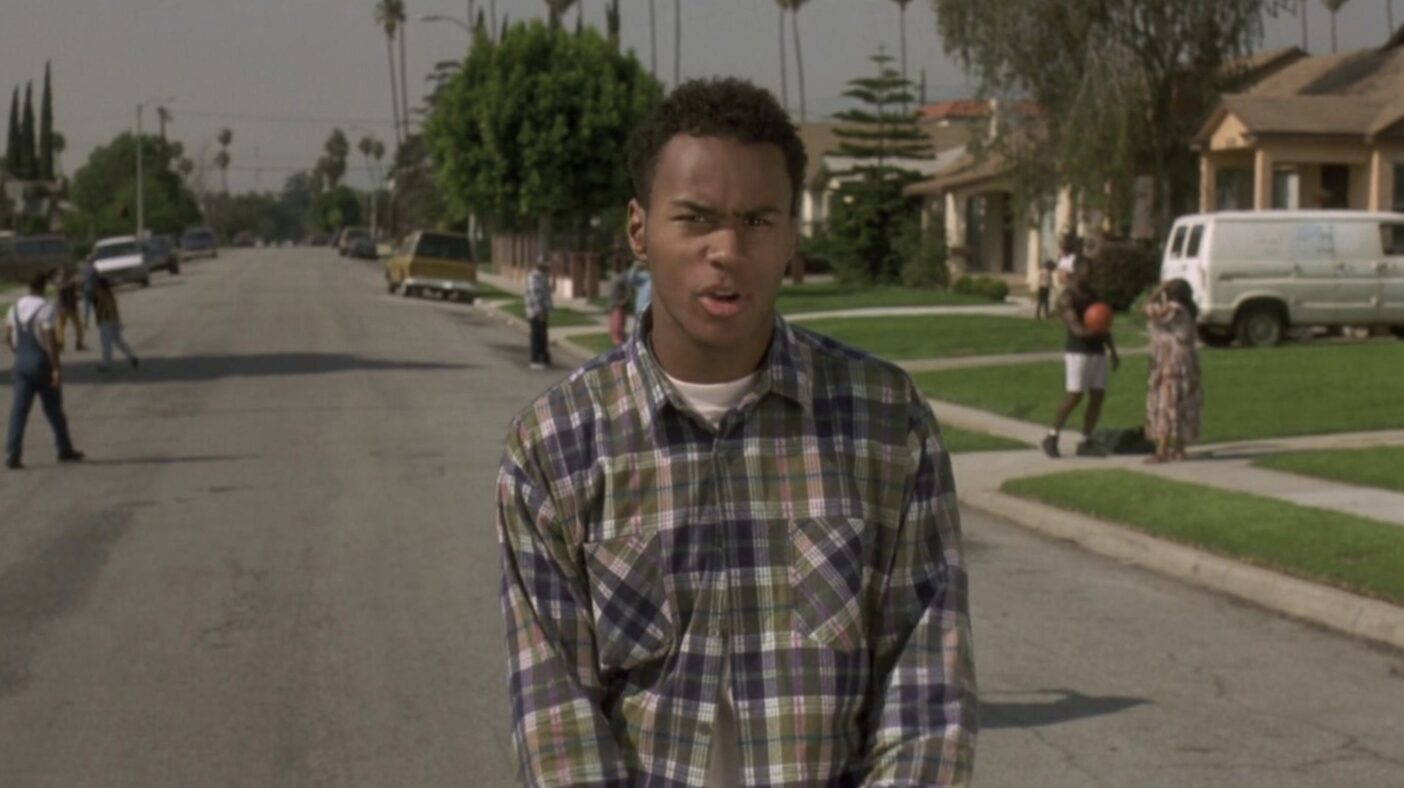
This shift occurs almost exactly halfway through, at which point the viewer’s attention may start to wane. Ashtray—whose presence is distractingly similar to Shawn Wayans’ role as Ray in Scary Movie (a far more memorable character)—has little to do as the “everyman”. He can’t be the voice of reason, as he’s meant to be the young, impressionable kid. However, because there’s nothing truly daunting about his madcap environment, he isn’t actually influenced by the wayward individuals around him. Instead, he’s just a standard character in a movie brimming with caricatures.
Of these, Preach (Chris Spencer) is by far the most entertaining. A socially conscious figure, he’s at a total loss as to how to justify the way his political messaging clashes with his predilection for white women. He’s used sparingly enough to avoid becoming tiresome, and his role as a dispenser of wisdom offers amusing jabs at the heavy-handedness of “socially conscious” characters in films of this ilk.
Ultimately, there’s a limit to how much comedy can be dredged up from these movies—especially when Barclay and the Wayans brothers refuse to offer a clear perspective beyond a few jabs at the sub-genre’s sentimentality. If Spike Lee had directed a film like this, one could imagine an incendiary satire similar to his gem Bamboozled (2000)—a furious comedy rankled with bitterness. The Wayans brothers could have made this screenplay reverberate with rage or brim with tenderness, but alas, neither approach is taken.
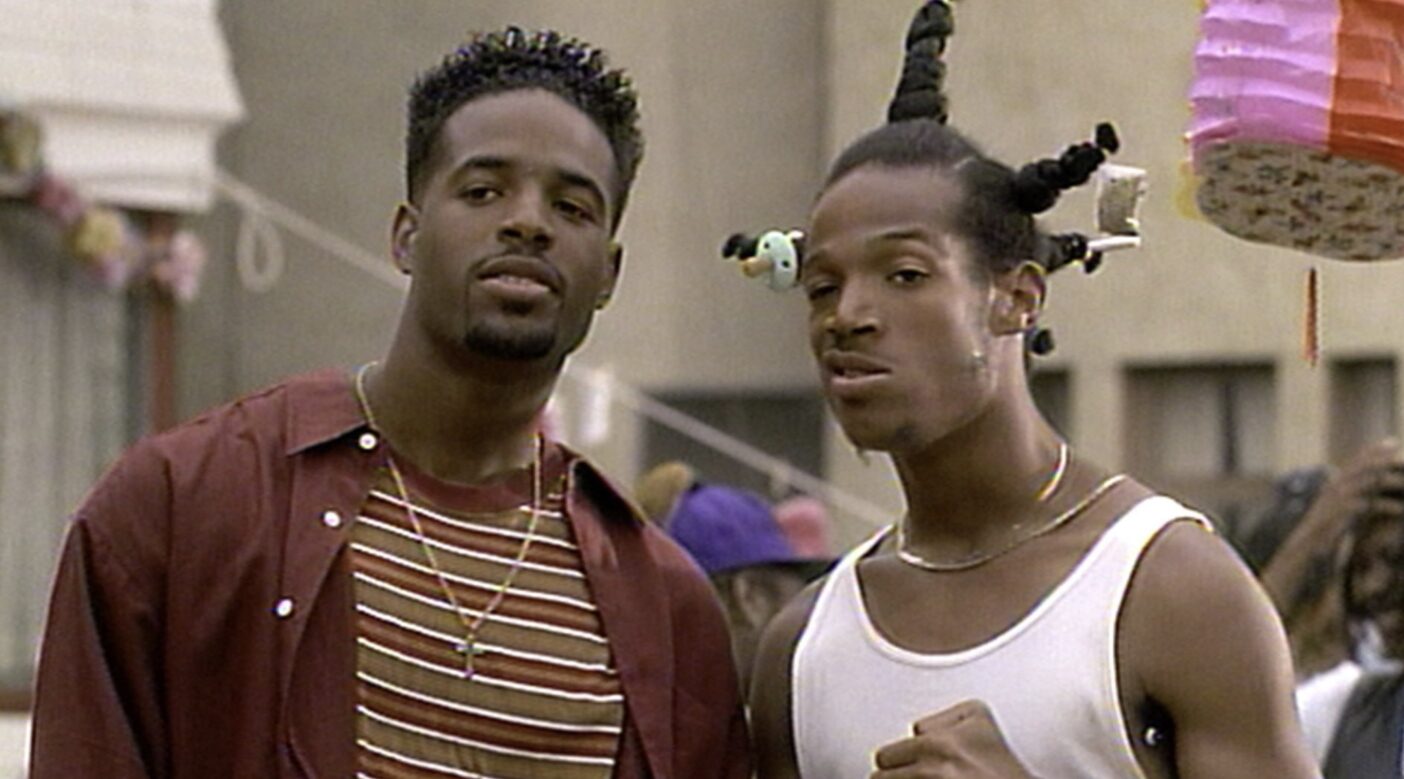
The film’s premise remains outstanding, particularly during Vivica A. Fox’s brief role as Ashtray’s mother. She is immediately sidelined by her own cutting declaration: “Sorry, baby: you know there ain’t no positive Black females in these movies.” If the film were comprised of these sharp moments instead of meandering digressions, it could have been a masterwork. Had it been more joyous, it might have replicated the highs of Ice Cube and F. Gary Gray’s Friday (1995).
Friday is less a satire and more a loving tribute to these environments, where tropes are utilised for comedic effect. Its community is laced with violence and a sense of “loving knowingness” in equal measure. In that chaotic backdrop, the unpredictable becomes predictable, and there’s a tacit acceptance among the characters regarding who their neighbours are. They are more than neighbours; they’re akin to family in their constant bickering. None of them will admit this, nor will they acknowledge that almost none of them will ever leave the neighbourhood that defines them.
It’s a sweet representation of a bittersweet idea. Unlike Don’t Be a Menace, Friday isn’t afraid to take a side between outlandish comedy and biting satire, or tenderness and criticism. Released just a year earlier, it’s no surprise that Friday has eclipsed its successor as the defining comedy of the sub-genre, cementing a legacy that this later entry hasn’t—and likely won’t—attain.
USA | 1996 | 89 MINUTES | 1.85:1 | COLOUR | ENGLISH • SPANISH

director: Paris Barclay.
writers: Shawn Wayans, Marlon Wayans & Phil Beauman.
starring: Shawn Wayans, Marlon Wayans, Lahmard Tate, Vivica A. Fox, Helen Martin, Chris Spencer, Tracey Cherelle Jones, Suli McCullough & Isaiah Barnes.