DELICATESSEN (1991)
In a post-apocalypse, the landlord of an apartment building occasionally prepares a delicacy for his odd tenants.


In a post-apocalypse, the landlord of an apartment building occasionally prepares a delicacy for his odd tenants.
Whatever one feels about their stories and the offbeat tone they embody, no fault can be levelled at Jean-Pierre Jeunet and Marc Caro’s production design. The attention to detail in their two feature films as co-collaborators is second to none, from their debut, Delicatessen, to their follow-up, The City of Lost Children (1995). In the former, the lives of a dozen or so residents of an apartment building—all struggling to survive in a hunger-stricken, fog-enshrouded environment—are conveyed more strongly through small physical details than the overall plot. Each apartment is so lived-in that it’s tempting to look beyond the film’s focus and observe what lingers in the peripheries. From creaking beds and floorboards to cupboards teeming with knick-knacks and trinkets, the film shines in the seemingly imperceptible details of the characters’ lives.
Of the two directors’ filmographies, the most famous project is Amélie (2001), directed by Jeunet after the duo decided to part ways. There’s a lightness, a sentimental touch, and a sense of unbridled joy in Amélie—emotions resisted in the pair’s two feature-length collaborations. Marc Caro’s influence on their joint work foregrounds their weird humour and penchant for darkness, with some truly bitter, madcap storylines that feel like the nightmarish inversion of children’s fairy tales.
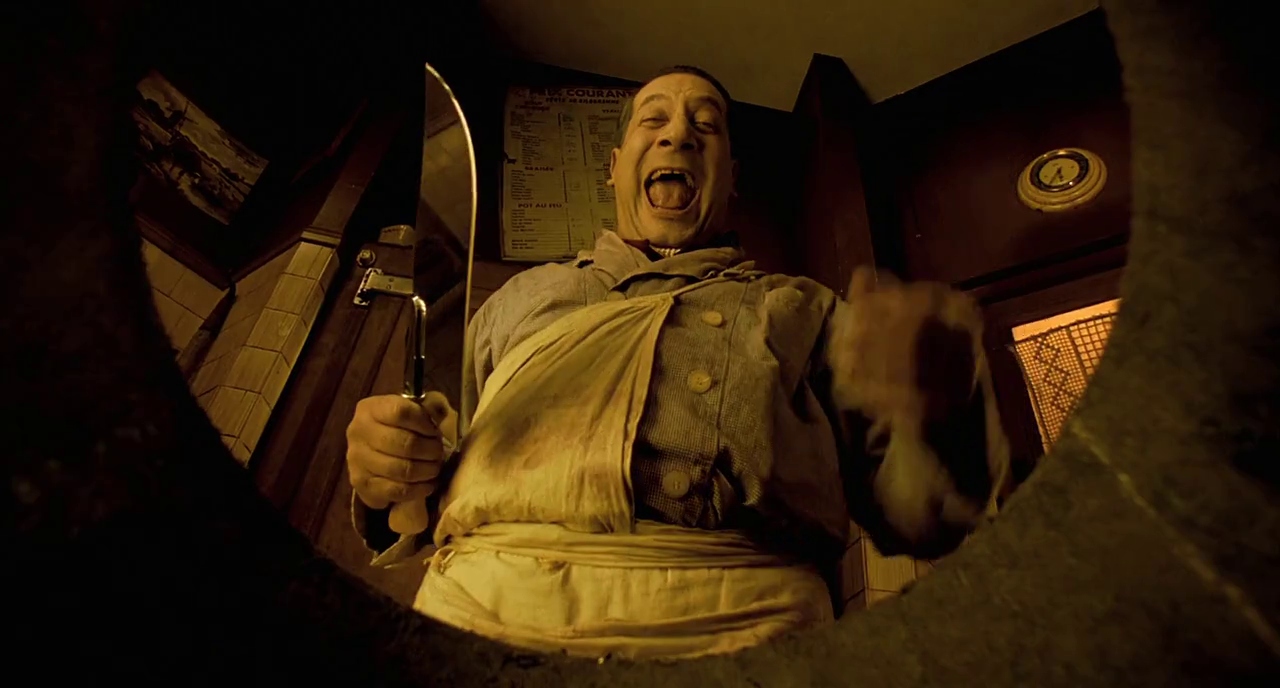
This is never so apparent as in Delicatessen, which merges its residents’ woes into a unified tale, yet still possesses enough looseness to feel like an interlinked collection of short stories. Jeunet and Caro might be kitsch absurdists, but they don’t let their unique sense of humour completely derail their narratives. The film’s plot is easy to digest, with clear motivations and developments for each of these downtrodden characters, most of whom have resorted to cannibalism to survive their dire economic circumstances.
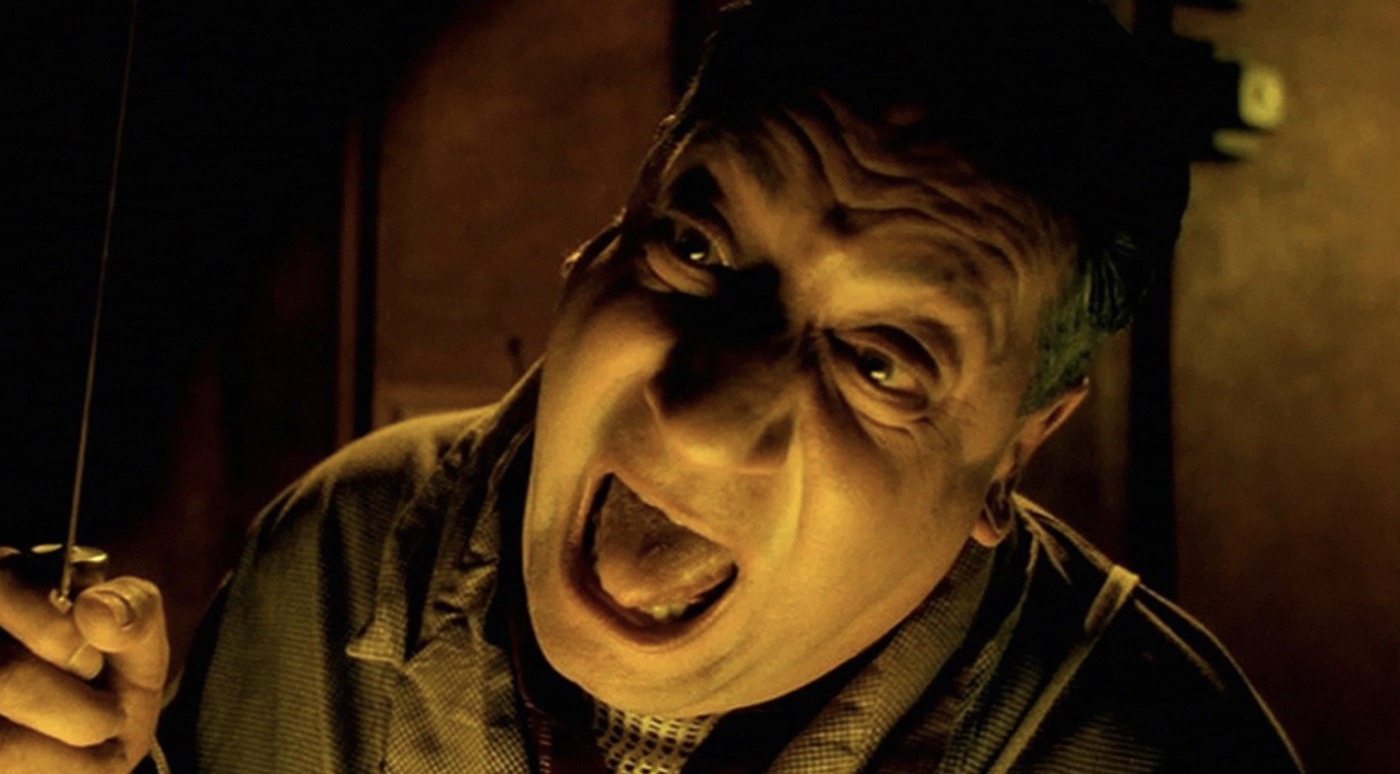
The landlord and butcher, Clapet (Jean-Claude Dreyfus), has crafted an ingenious plan to ensure the building’s residents don’t go hungry: he places an advertisement in the aptly named The Hard Times newspaper for a worker to do odd jobs, then kills them and sells their flesh to the tenants. Despite these bleak circumstances and the general weirdness, there’s surprisingly little gore or violence in Delicatessen. Cannibalism, still a taboo subject, is approached discreetly; ghastly screams are heard and ignored late at night, hidden under the cover of darkness and the tacit approval of the other residents.
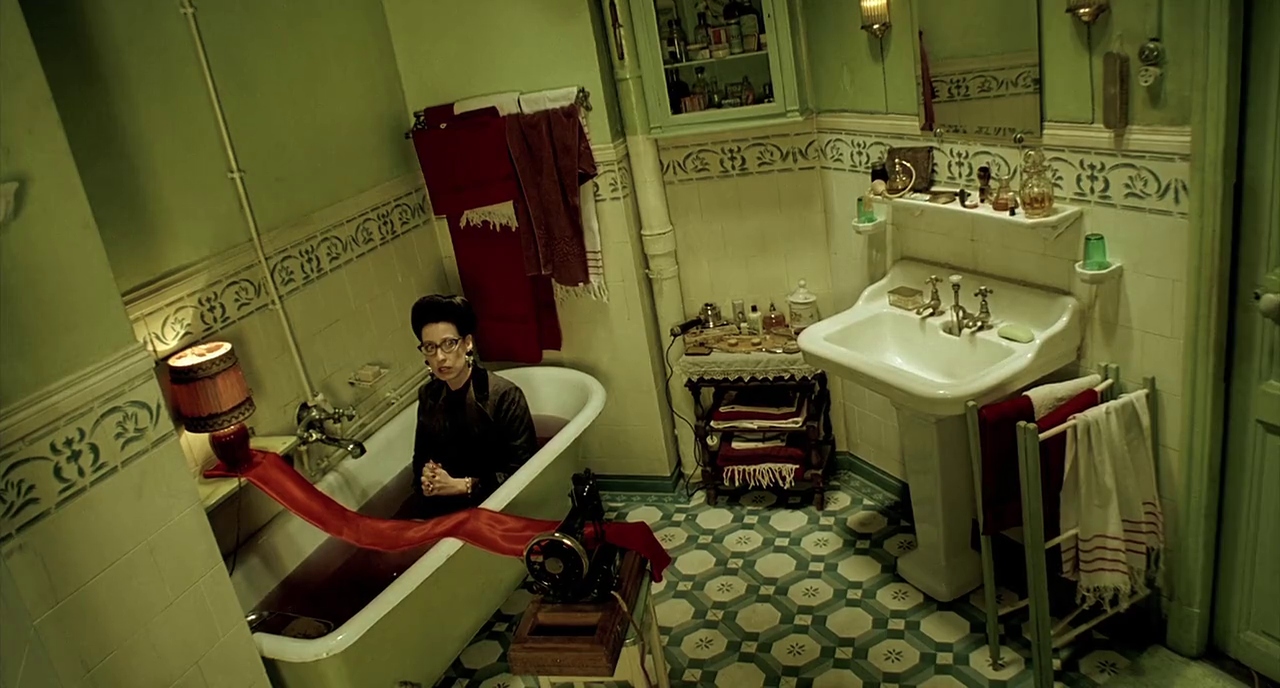
Each of them is bound together by this grisly secret, yet there’s no sense of closeness between them. In the comfort of their apartments, they’re secluded from one another, free to indulge in their neuroses and idiosyncrasies. Some are more extreme than others, like Aurore Interligator (Silvie Laguna), whose frequent suicide attempts—no matter how foolproof and extensive—keep being thwarted. Her suffering is a punchline, with neither writer-director affording a smidgen of sympathy for her woes.
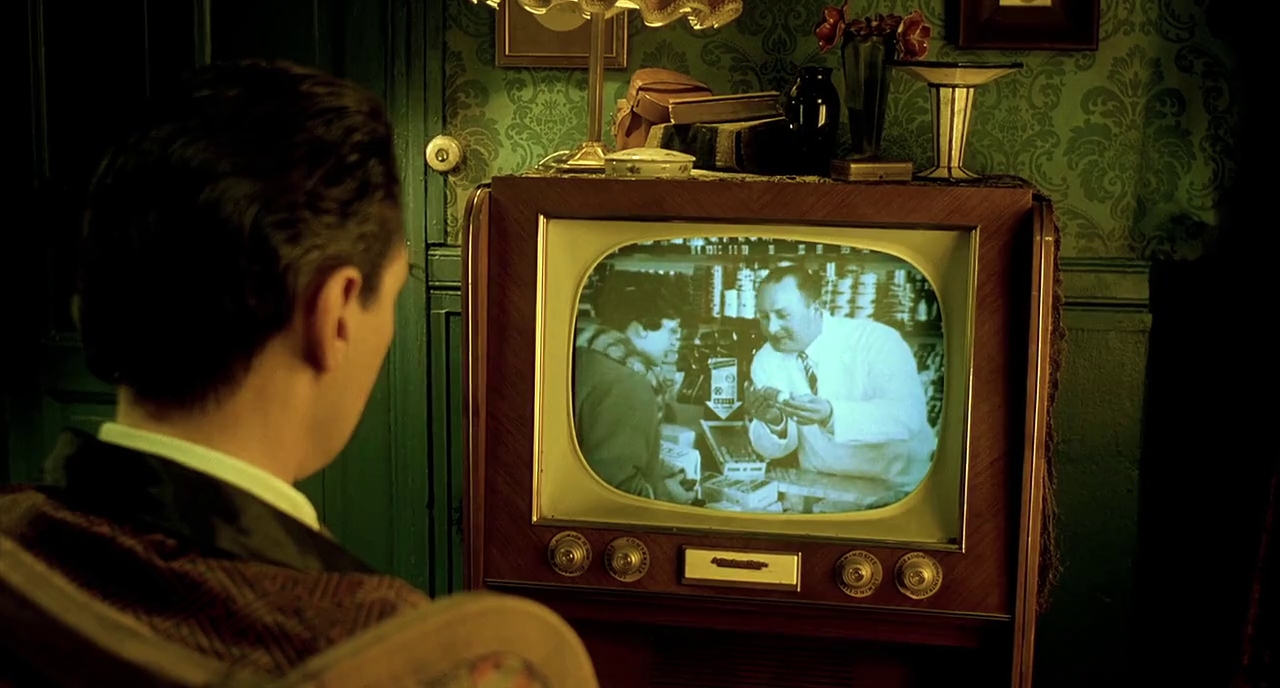
It’s curious that such unsparing bleakness is present in Delicatessen when it refuses to give way to gore, but that’s likely because Jeunet and Caro recognise that the film’s set-ups will always be more interesting than its payoffs. By making these side characters the butt of the joke, the co-directors avoid letting viewers down with lacklustre character arcs. It’s an unnecessarily cruel brand of humour that’s never quite funny enough to justify its cynicism.
While there was a confluence of factors behind the dissolution of Jeunet and Caro’s partnership, a primary reason was their diverging interests. Jeunet reflected that his former collaborator would likely have shown no interest in the open-hearted sentimentality of Amélie, with Caro preferring darker, dingier storytelling. The environments of Delicatessen and The City of Lost Children are grimy and desolate, mapping onto their emotional palette snugly.
One knows very little about the world outside the apartment building in Delicatessen, but isolated shots depicting half-destroyed buildings tell their own story of a country in decay. In fact, when watching the film, you hardly get a sense that there’s enough of an intact society for it to qualify as a nation. These characters are helplessly distant from one another; seemingly nothing can cut through the figurative smog separating them. That smog is given physical form through yellowish hues, evoking a post-apocalyptic atmosphere.

It is visual world-building predicated on an absence of expository dialogue, where shot selections and production design offer more insight than direct narration ever could. Delicatessen regularly features skewed camera angles which make you feel as if you’re watching something you shouldn’t—like CCTV footage of a brutal dismembering waiting to happen. The film’s technical elements will surely strike some viewers as ugly and abrasive, but they warrant appreciation all the same. The trouble is that Delicatessen’s visual style matches the film’s ugly, abrasive heart, which ticks away as mechanically as a work of expert engineering devoid of human emotion. Or perhaps, like many of the interiors and exteriors of this decayed world, it’s simply been left to rust.
On a first viewing, I was absorbed in this story and incensed by the film’s cruel, punishing attitude towards depression and Aurore as its personification. Now that I’ve put some considerable distance between those first impressions and my recent rewatch, the film has done the same regarding my investment in it. Why should one take Aurore’s pain seriously? No one—certainly not Jeunet or Caro—ever asked us to. These side characters are sketches, and while there is rich thematic material hinted at in the way they’re so distant while being crammed into one building, none of it actually leads anywhere.
The only way to identify the film’s heart is through its protagonist, Louison (Dominique Pinon), who falls in love with Clapet’s daughter, Julie (Marie-Laure Dougnac). Louison is the new weary soul in the building—unbeknownst to him, of course—hired from a newspaper ad to do odd jobs. In other words, his time is running out, and his flesh could be served up to the residents in a matter of days. After all, if these characters would go so far as to consider sacrificing their own mothers-in-law to Clapet, what do they care if a near-stranger gets butchered before they clamp their teeth down on his cooked carcass?
Only Julie, caught in her own web of isolation and loneliness, wants or dares to understand him. It’s the cutesy kind of love that Jeunet and Caro made a staple of their work, exploring it in a platonic sense through a father-daughter dynamic in The City of Lost Children. Neither relationship is as moving, nor as earnest, as the love that flows so freely from Amélie, when Jeunet was free from the shackles of dark, dingy weirdness. The blossoming romance between Louison and Julie is too focused on being “cute” to authentically charm. It operates similarly to the rest of the film’s oddball aesthetics, where pursuing a unique, uniform tone comes at the cost of crafting intriguing characters and heartfelt relationships.
As Delicatessen’s third act devolves into rampant, violent chaos, it all feels like a sloppy excuse to destroy its own sets. Amidst enjoyable stylistic flourishes, any notion of emotional resonance is washed away, crumbling as easily as the apartment building itself.
FRANCE | 1991 | 99 MINUTES | 1.85:1 | COLOUR | FRENCH


directors: Jean-Pierre Jeunet & Marc Caro.
writers: Gilles Adrien, Marc Caro & Jean-Pierre Jeunet
starring: Pascal Benezech, Dominique Pinon, Marie-Laure Dougnac, Jean-Claude Dreyfus, Karin Viard, Ticky Holgado, Anne-Marie Pisani & Edith Ker.