DAS EXPERIMENT (2001)
For two weeks, 20 male participants are hired to play prisoners and guards in a prison.

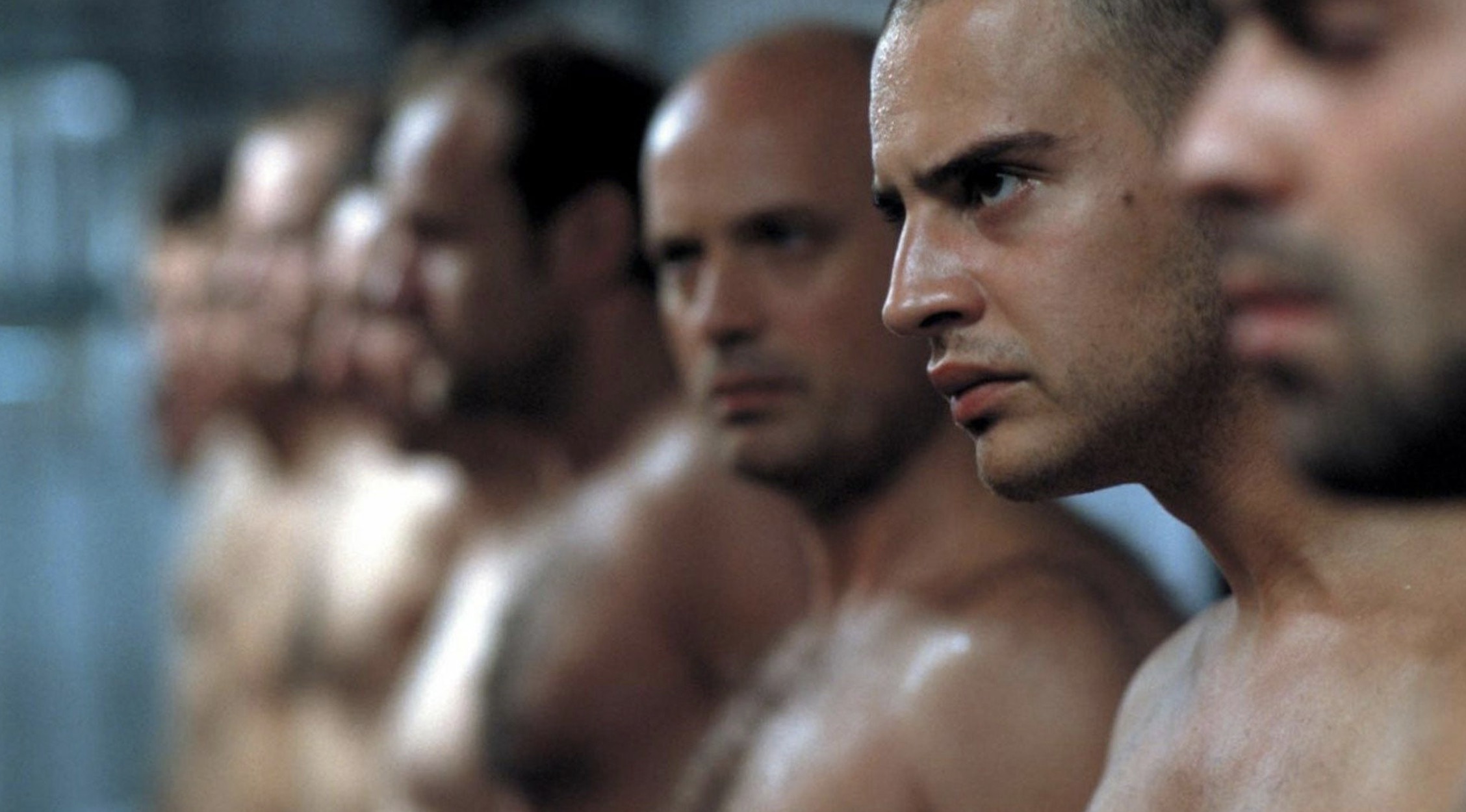

For two weeks, 20 male participants are hired to play prisoners and guards in a prison.
In one sense, it’s hard to believe that a film with as much stylistic flair and such a keen understanding of tension as Das Experiment was a directorial debut. Oliver Hirschbiegel’s film (written by Mario Giordano, Don Bohlinger, and Christoph Darnstädt) is brimming with fury yet remarkably patient; it’s not often you see such a nuanced approach from a young director. At the same time, the propulsive energy and abrasive attitude in the action-packed scenes feel as if they could only have come from a filmmaker’s youth.
There’s a “devil may care” attitude present in Das Experiment, even if it doesn’t always benefit the experience. The first 15 minutes are weak, exploring the daily life of taxi driver Tarek Fahd (Moritz Bleibtreu) with so much style and sleekness that you’re left wondering why any of it matters. Who cares if a random taxi driver is brimming with self-confidence? Why are the pulsating score and stylised shots doing all the heavy lifting? It’s style over substance, yet it serves a purpose later. Though I suspect Hirschbiegel used these touches to freshen up a standard introduction, the juvenile thrills create a gut-wrenching contrast with the rest of the film.
After Tarek spots a newspaper advert for a mock prison experiment, he signs up and ends up as a prisoner. For 14 days, he and his fellow inmates must accept a routine dictated by the guards—everyday citizens eager to earn some money. Interview footage shows there’s nothing “off” about them, at least on the surface. That’s because the real-life study upon which the film (and Mario Giordano’s novel Black Box) is based—the Stanford prison experiment—sought to determine whether ordinary people could become tyrants in a short period.
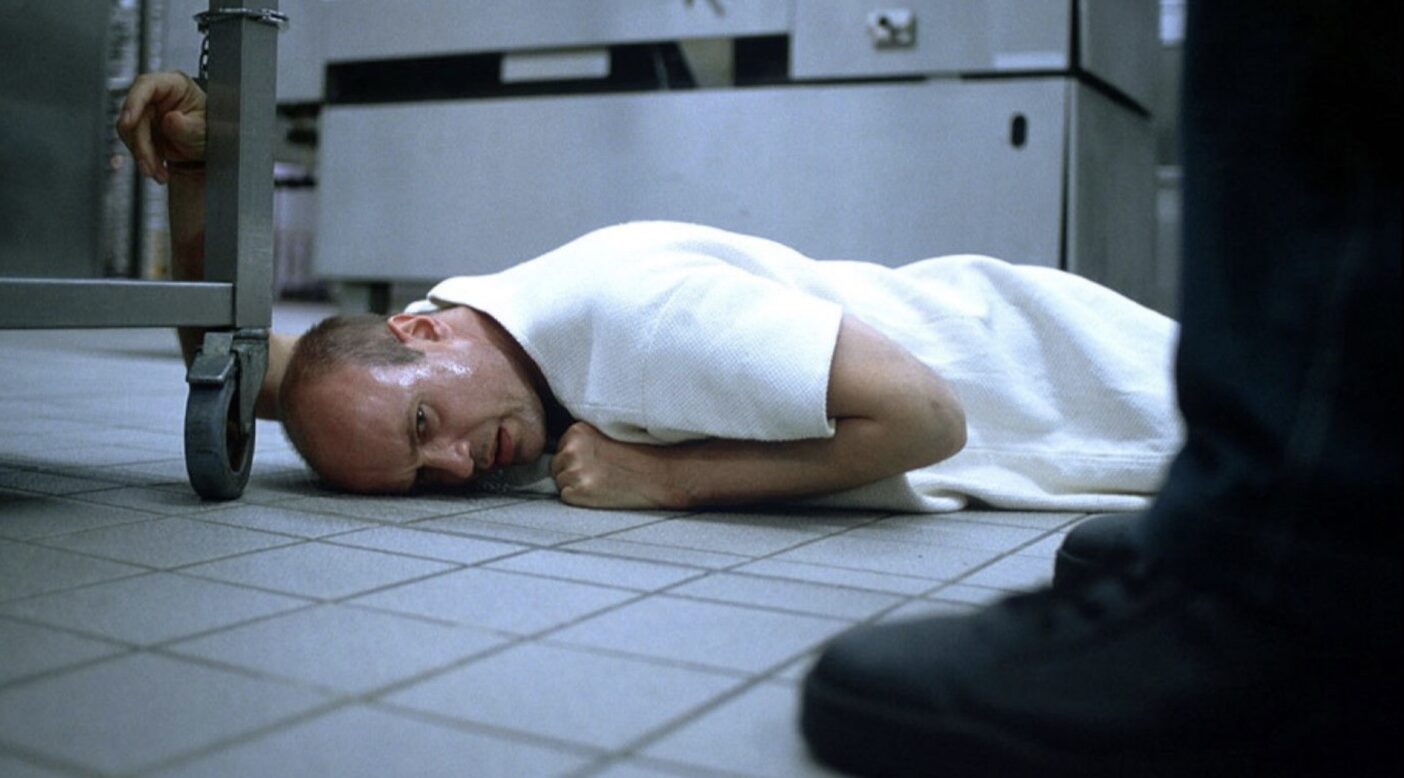
The real experiment’s results are often disputed; it’s unclear how much was authentic or encouraged, whether tacitly or explicitly. What remains undisputed is that its orchestrator, psychology professor Philip Zimbardo, called it off on only the sixth day. This might seem unfathomable, unless you’ve already watched the fictional descent into depravity in Das Experiment. It takes time to notice how deftly the early stylistic swings are excised once the experiment begins. From then on, the film is a desperate, tragic crawl to a finish line that’s only days away yet feels infinite. In a story one could imagine Lars von Trier salivating to portray, each day passes at an agonisingly slow pace. And yet, somehow, the film doesn’t feel exploitative.
It doesn’t rub the humiliation rituals in our faces with protracted sequences that lack emotional or artistic purpose. Tarek is too bold a protagonist for that, possessing an indomitable will and a penchant for defiance. Again, the “teenage-boy” coolness of Tarek’s disobedience feels as cheap as the early heavy stylisation. But whether intended or not, it sets up a brilliant payoff once the guards and prisoners settle into their roles. There’s little remarkable about the early scenes where they introduce themselves in ordinary clothes, unaware if they’ve even been accepted. In retrospect, these moments are fascinating as you reflect on where these characters end up.
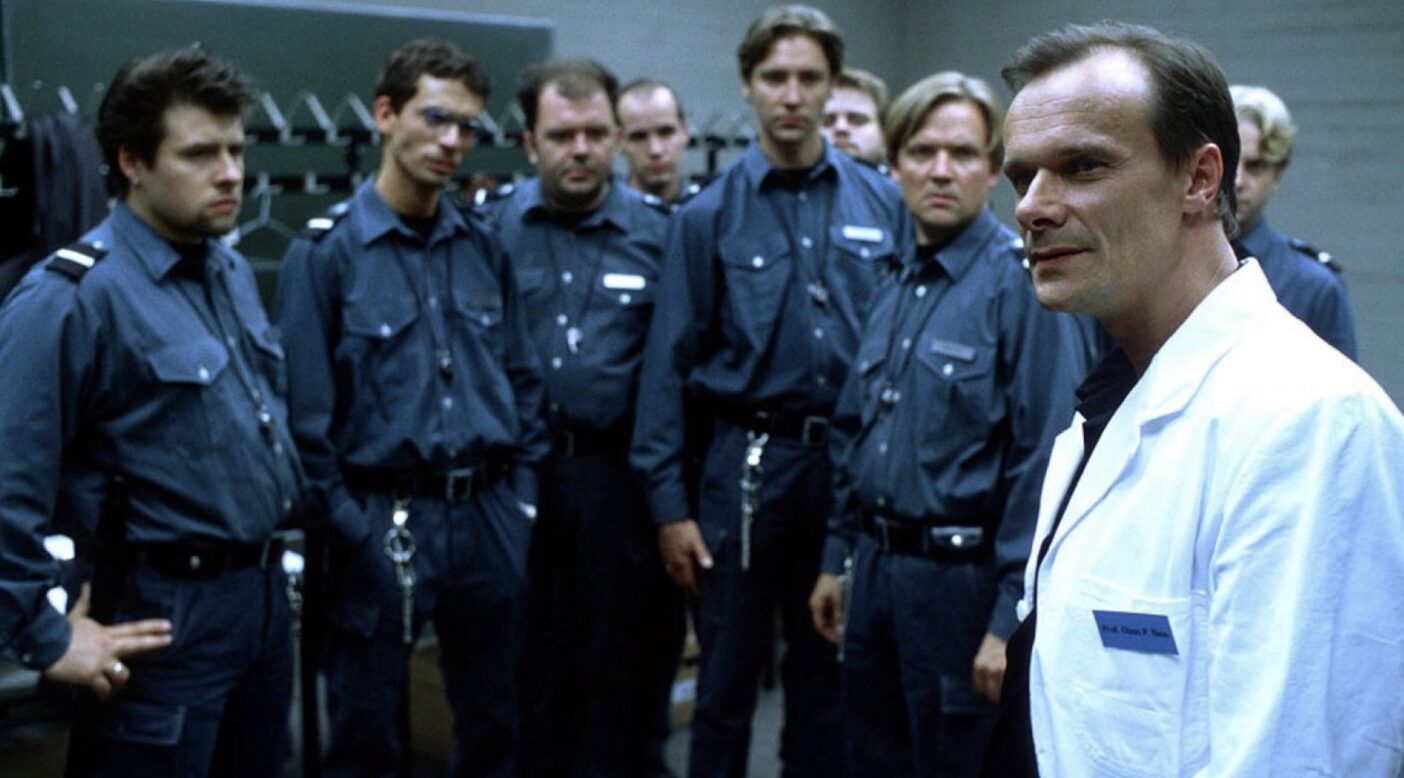
There’s a curious duality between power and powerlessness regarding the guards. They’re in control, dictating regimes and punishments. If they choose to turn these into humiliation rituals on a whim, that’s their prerogative. The prisoners can taunt them, but they’re no match for the rampant mistreatment the guards can get away with. Despite this, the guards speak as if they’ve no choice but to exercise their power. They are, in other words, powerless not to abuse.
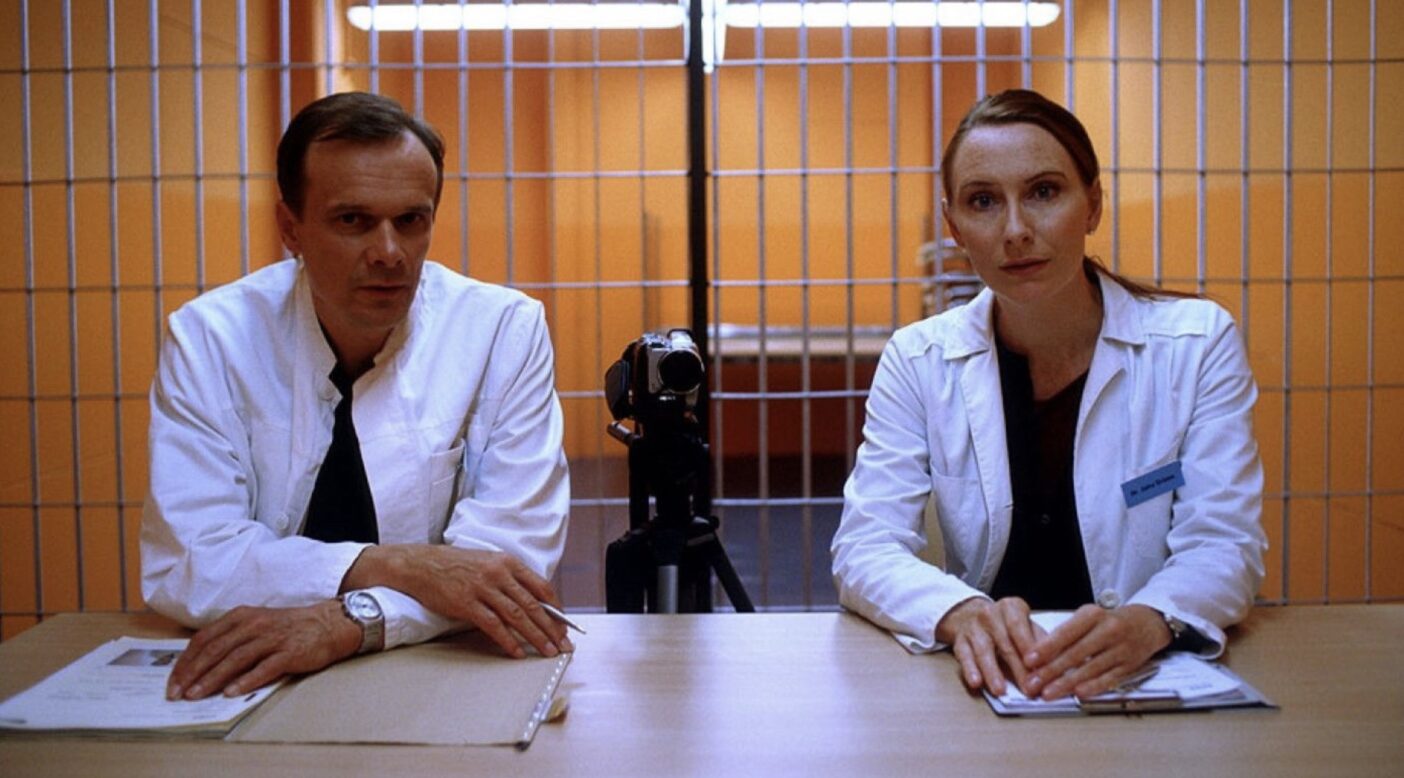
They are also guinea pigs, overseen via CCTV by lab workers in white coats. Some of these scientists are unconvincingly gleeful tropes, remarking on developments with grins so wide you half expect them to fetch a box of popcorn as they watch the abuse. They are voyeurs; in this realm, the guards are as much mice as the prisoners. They’ve even been marked like animals, with one member of each group identified by the scientists as “dominant”.
For the prisoners, this is undoubtedly Tarek. However, it’s more interesting to go in blind as to which guard occupies that role. Almost all are tyrannical to varying degrees. Watching their remaining scraps of morality brush against one another’s wanton abuse makes for fascinating viewing. As for Tarek, he’s a bit cheesy, as are several moments in the film. One must brush aside goofy theatrics and incredulous plot devices—including a pair of glasses Tarek wears to record everything. Why has no one noticed he only puts them on for seconds at a time and always presses a specific part of the frame?
The plot explains that Tarek was once a journalist who left to become a taxi driver. Rather than returning to his old office with his tail between his legs, he strides in demanding his boss re-hire him to cover this unique story. Unlike the others, his financial incentive to stay the full 14 days is pronounced, as the experiment affords him two revenue streams. But really, the glasses and the unexplained backstory are just excuses for shaky, realistic, up-close camerawork.
Tarek’s journalistic background matters little. Like the opening scenes or the flashbacks to his relationship with Dora (Maren Eggert), these are merely necessary setups. It’s only when these characters have the verve ripped from their souls that these sunnier moments sting like a tangible wound. Hope is the most volatile thing in such a torturous environment, and Das Experiment wields that notion with fury.
Despite the thin interpersonal dynamics between Tarek and Dora, her visits work as both a lifeline and a crushing reminder of the outside world. The most believable aspect of the film is, ironically, what’s hardest to credit about the real experiment: that ordinary men can become monsters in mere days. There are agonising moments—cleverly eschewing gore for the most part—but none of the abuse is as punishing as the visual reminders of how little time has actually passed.
I found myself crushed by these reminders on at least two occasions. You feel the characters’ desperation as their psyches are dwarfed by their surroundings, yet the film never cheapens itself or loses its impeccable pacing. Even the heavy stylisation works wonders later, culminating in a heart-racing third act. Hirschbiegel again shows off his genre theatrics, but this time the stakes are so high it’s impossible not to be drawn in. It’s fiery, energetic filmmaking—a worthy reward for the taut, patient sequences that linger long after the credits roll.
GERMANY | 2001 | 120 MINUTES | 1.85:1 | COLOUR | GERMAN ENGLISH

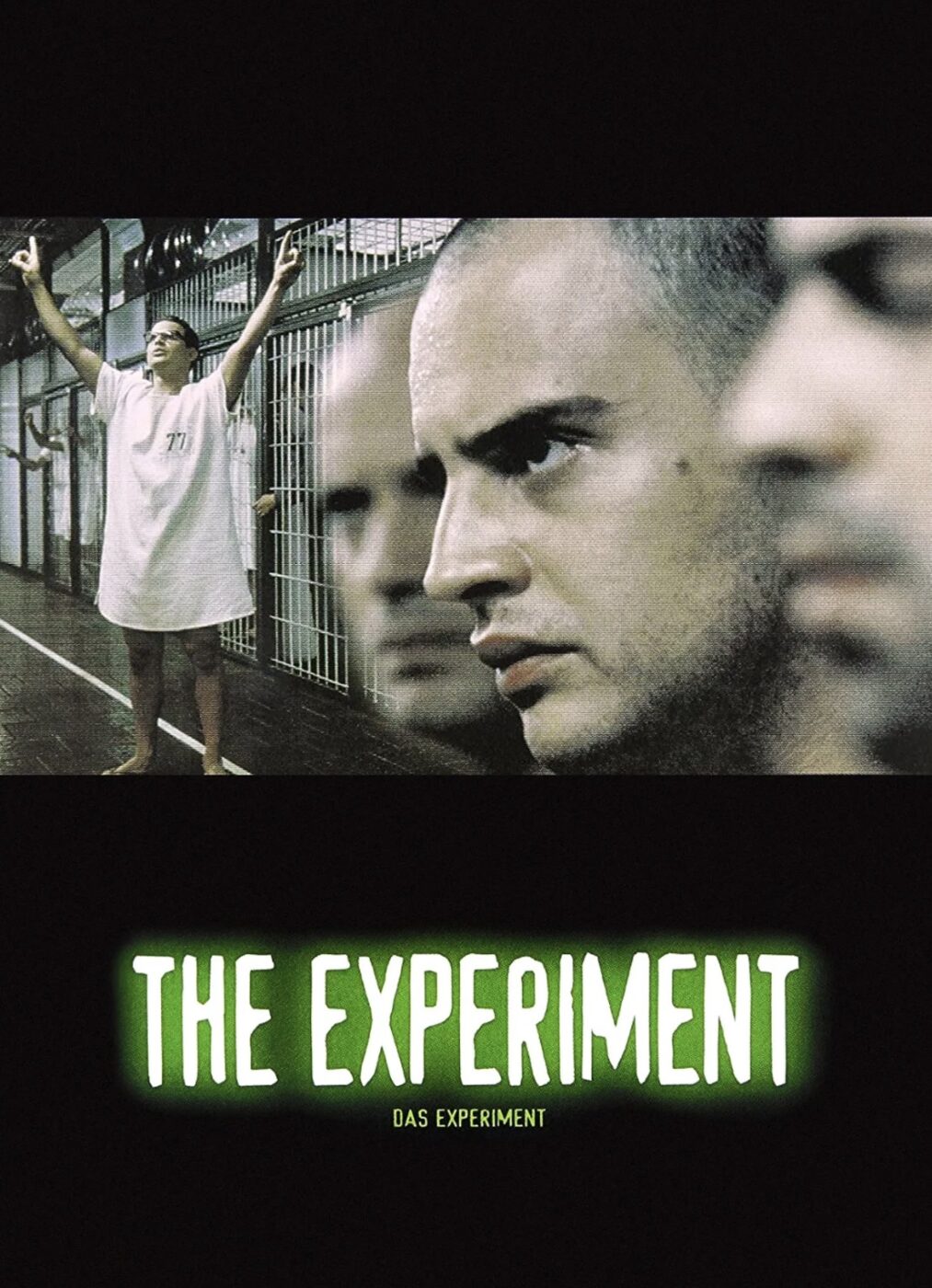
director: Oliver Hirschbiegel.
writers: Mario Giordano, Don Bohlinger & Christoper Darnstädt (based on the book ‘Black Box’ by Mario Giordano).
starring: Moritz Bleibtreu, Justus von Dohnányi, Christian Berkel, Oliver Stokowski, Andrea Sawatzki, Wotan Wilke Möhring, Edgar Selge, Maren Eggert, Timo Dierkes & Antoine Monot, Jr.