PRESSURE (2026)
In the tense 72 hours before D-Day, General Dwight D. Eisenhower and Captain James Stagg face an impossible choice--launch the most dangerous seaborne invasion in history or risk losing the war altogether.

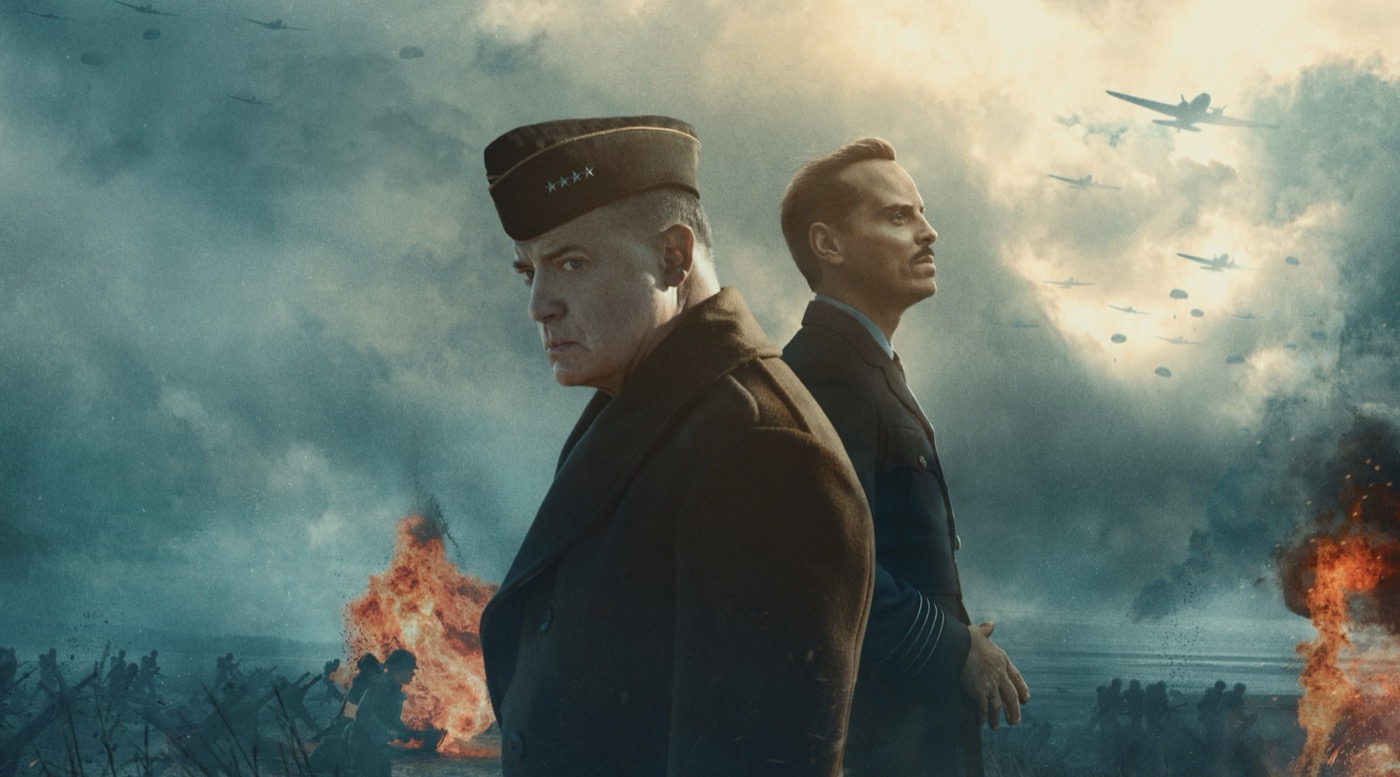

In the tense 72 hours before D-Day, General Dwight D. Eisenhower and Captain James Stagg face an impossible choice--launch the most dangerous seaborne invasion in history or risk losing the war altogether.
Who’d have thought that a film largely made up of people standing around talking about the weather would prove such a compelling and, at times, powerful viewing experience? I was certainly surprised, given this modest (£30Mm budget) World War II drama barely made a ripple at the American box office over the summer. However, thanks to superb performances and a sharp script, Pressure manages to pull off that most difficult of tasks: delivering a war story that feels entirely fresh and vital.
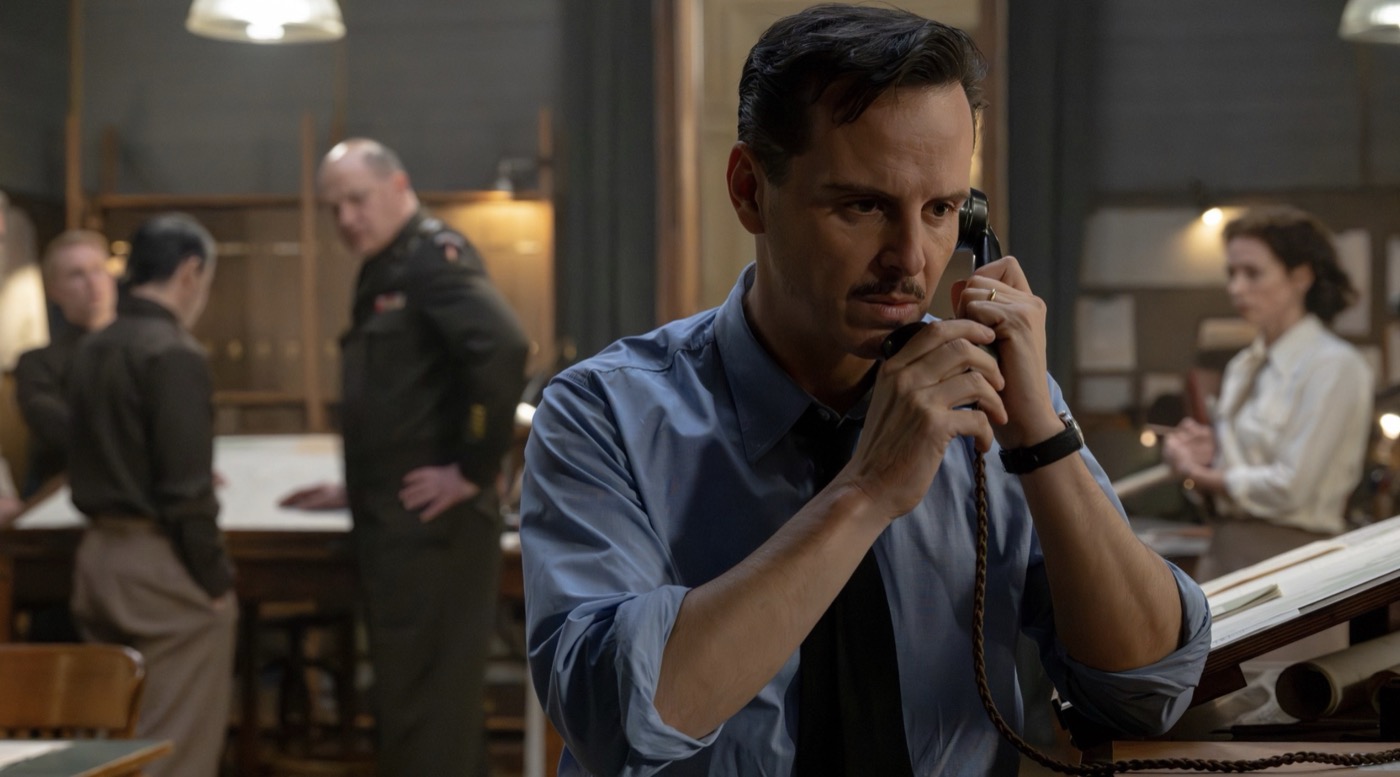
Adapted from David Haig’s 2014 hit West End play, Pressure unfolds over the 72 hours leading up to D-Day. Group Captain James Stagg (Andrew Scott) is the RAF’s chief meteorological officer, summoned by General Eisenhower (Brendan Fraser) to deliver a favourable forecast for the Allied forces. The provisional date for the invasion is set for 5 June, and as far as the top brass are concerned there is no reason to change it.
Unfortunately, Stagg’s scientific data predicts a far stormier picture, leading him to advise that the invasion be delayed. Naturally, he meets fierce scepticism—most notably from Eisenhower’s regular meteorologist, Colonel Irving Krick (Chris Messina). Unlike Stagg, Krick relies on historical charts for his projections, insisting that clear skies and sunshine will dominate.
With the clock ticking and thousands of soldiers’ lives in the balance, Eisenhower is desperate to launch ‘Operation Overlord’, yet is haunted by the recent, tragic dress rehearsal, Exercise Tiger, in which over 700 men lost their lives. History already tells us how events unfolded, but that does not prevent the film from maintaining a tight, nail-biting level of tension.
Aside from top-tier acting, the main reason this chamber piece succeeds so brilliantly is that Australian director Anthony Maras (Hotel Mumbai) co-wrote the screenplay alongside original playwright David Haig. Consequently, the narrative flows with impressive precision and confidence, ensuring its lean 100-minute runtime leaves you barely a moment to catch your breath.
Despite being dialogue-heavy, several sequences effectively convey the horrors of war. The dramatic opening reveals the grim aftermath of Exercise Tiger: a close-up of a bloodied, lifeless young soldier sprawling across the beach as the ebbing tide threatens to pull him under. A comrade drags his body further up the shore before the camera pulls back to reveal a beach strewn with corpses.
The camera cuts to a visibly shaken Eisenhower taking in the tragic scene. In reality, the American general was not present to witness this carnage, but one can forgive the historical license: it serves as a powerful opening device that fleshes out Fraser’s portrayal of Eisenhower and provides vital context for his later decisions.
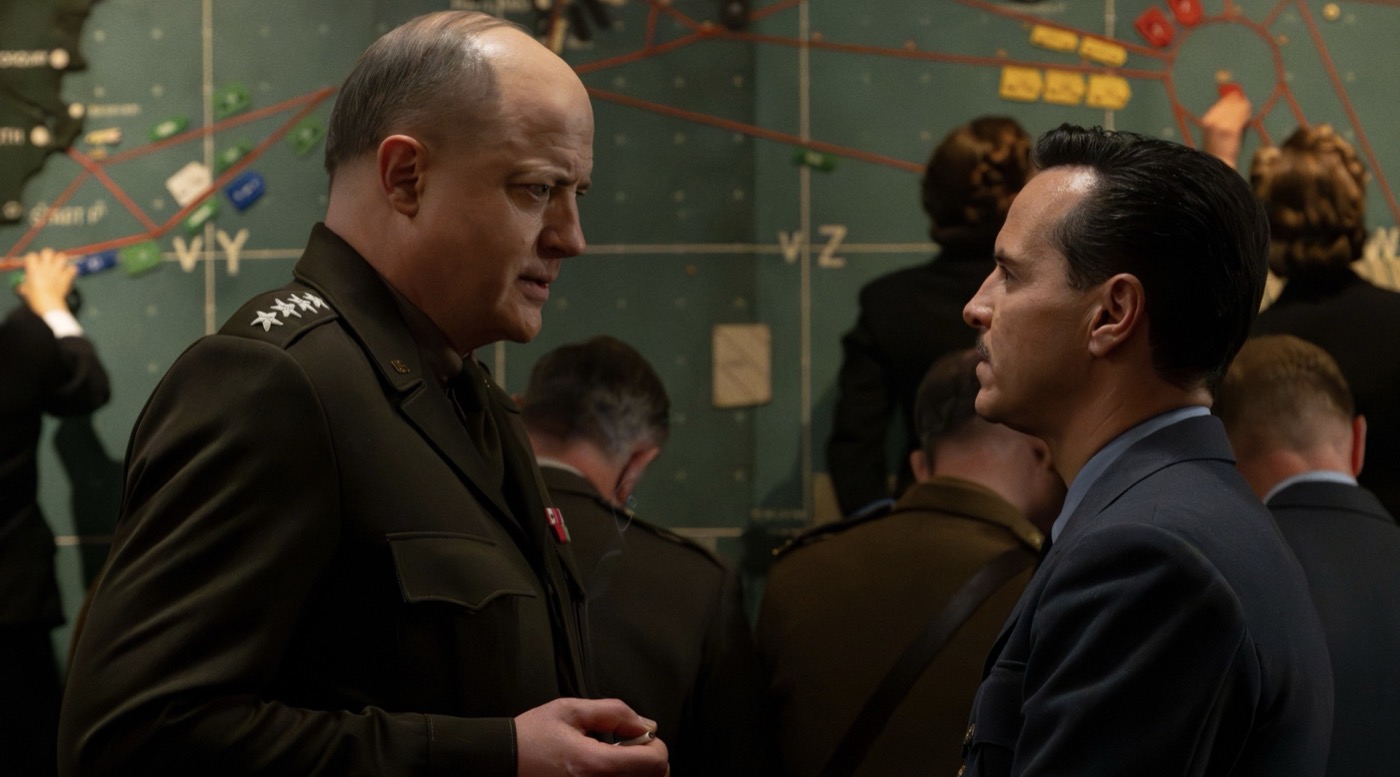
We already know Fraser’s caliber (The Whale), but his performance here is wonderfully measured. He lets his eyes do the heavy lifting, conveying immense strain beneath a calm, authoritative exterior. At one point, he angrily confronts Stagg over his treatment of Col. Krick; because his demeanour has been so composed up to that moment, the outburst hits with double the emotional force.
As good as Fraser is, the film’s standout performance comes from Andrew Scott (All of Us Strangers). Scott pulls the audience in effortlessly as a man burdened with the monumental responsibility of timing the largest amphibious invasion in history. On the surface, Stagg is polite and reserved, yet he quickly proves that duty overrides diplomacy—illustrated brilliantly by a well-timed slam of a piano lid that soon gets his colleagues’ attention. His sharp exchanges with Krick also provide welcome moments of levity throughout the film.
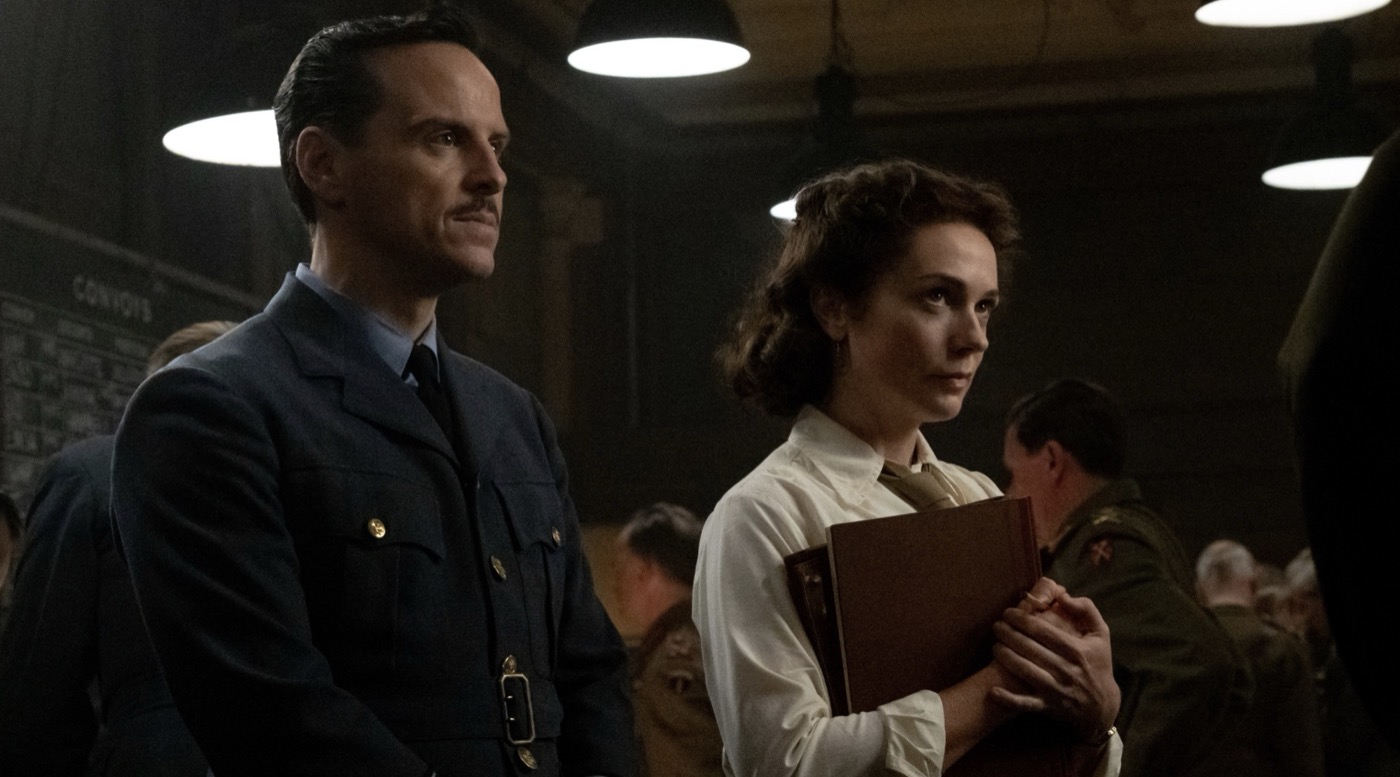
The supporting cast is equally strong. Damian Lewis (Homeland) pops up as General Sir Bernard Montgomery, bringing a brash, energetic swagger to the screen. Yet Kerry Condon (F1 the Movie) steals scenes as First Lieutenant Kay Summersby, Eisenhower’s private secretary. Grounded and natural, Condon commands the room with subtle authority whenever she appears.
Technically, Pressure is just as impressive. Jamie D. Ramsay’s cinematography uses a soft sepia tone to evoke period authenticity, capturing the claustrophobia of smoke-filled war rooms while contrasting them with beautifully lit outdoor sequences. The recreated D-Day battle scenes, though brief, are strikingly mounted, as is a sequence depicting a sudden shift from serene sunshine to a violent storm.
Pressure’s dialogue-led approach and lack of blockbuster spectacle might deter viewers seeking pure action. Yet when a story is this compelling and driven by such exceptional acting, those traditional thrills hardly matter. It may be old-fashioned in its matter-of-fact delivery, but it remains a deeply moving, punchy piece of cinema.
UK • FRANCE • USA | 2026 | 100 MINUTES | 1.85:1 | COLOUR | ENGLISH

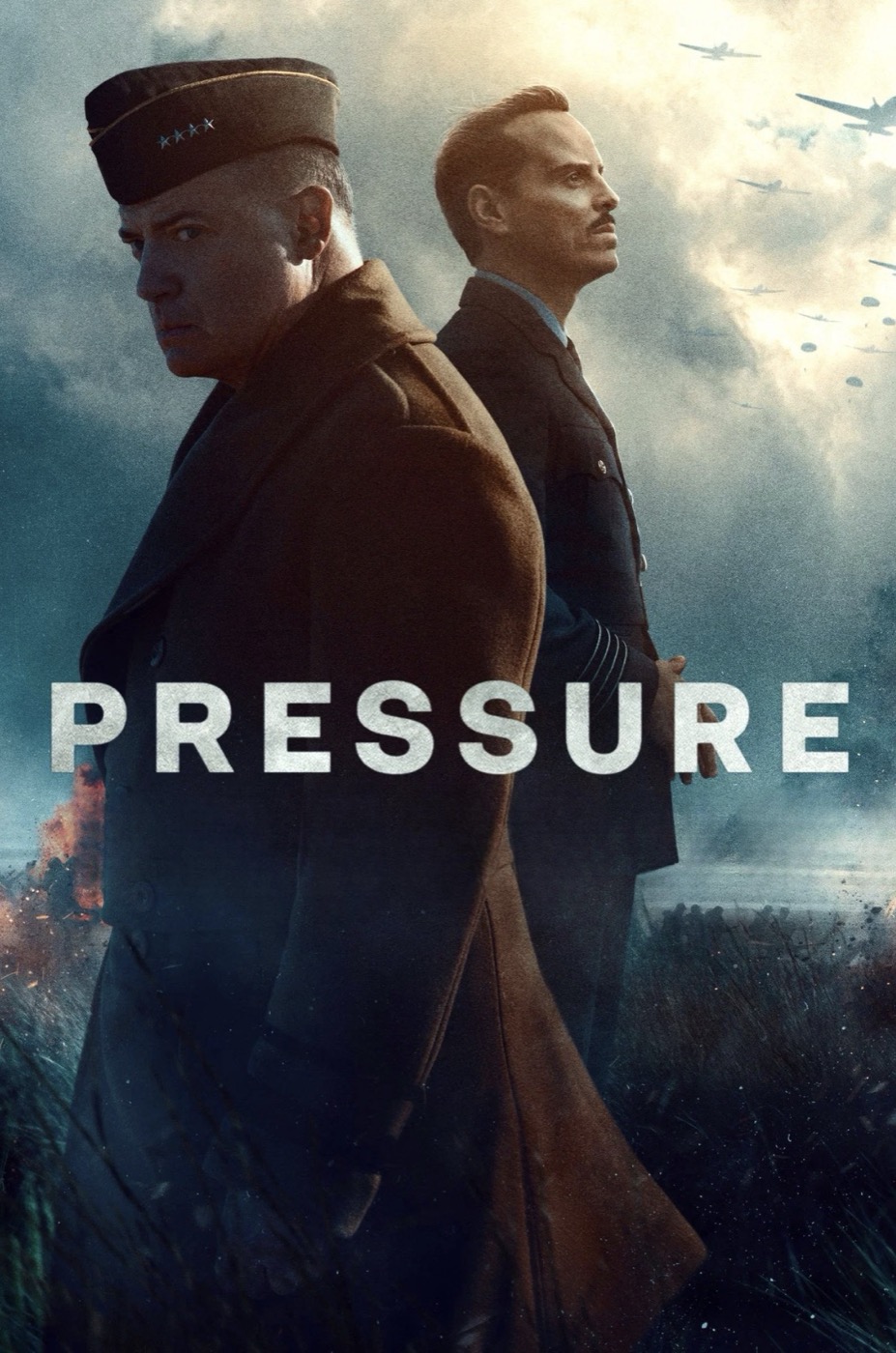
director: Anthony Maras.
writers: David Haig & Anthony Maras (based on the 2014 play by David Haig).
starring: Andrew Scott, Brendan Fraser, Kerry Condon, Chris Messina & Damian Lewis.