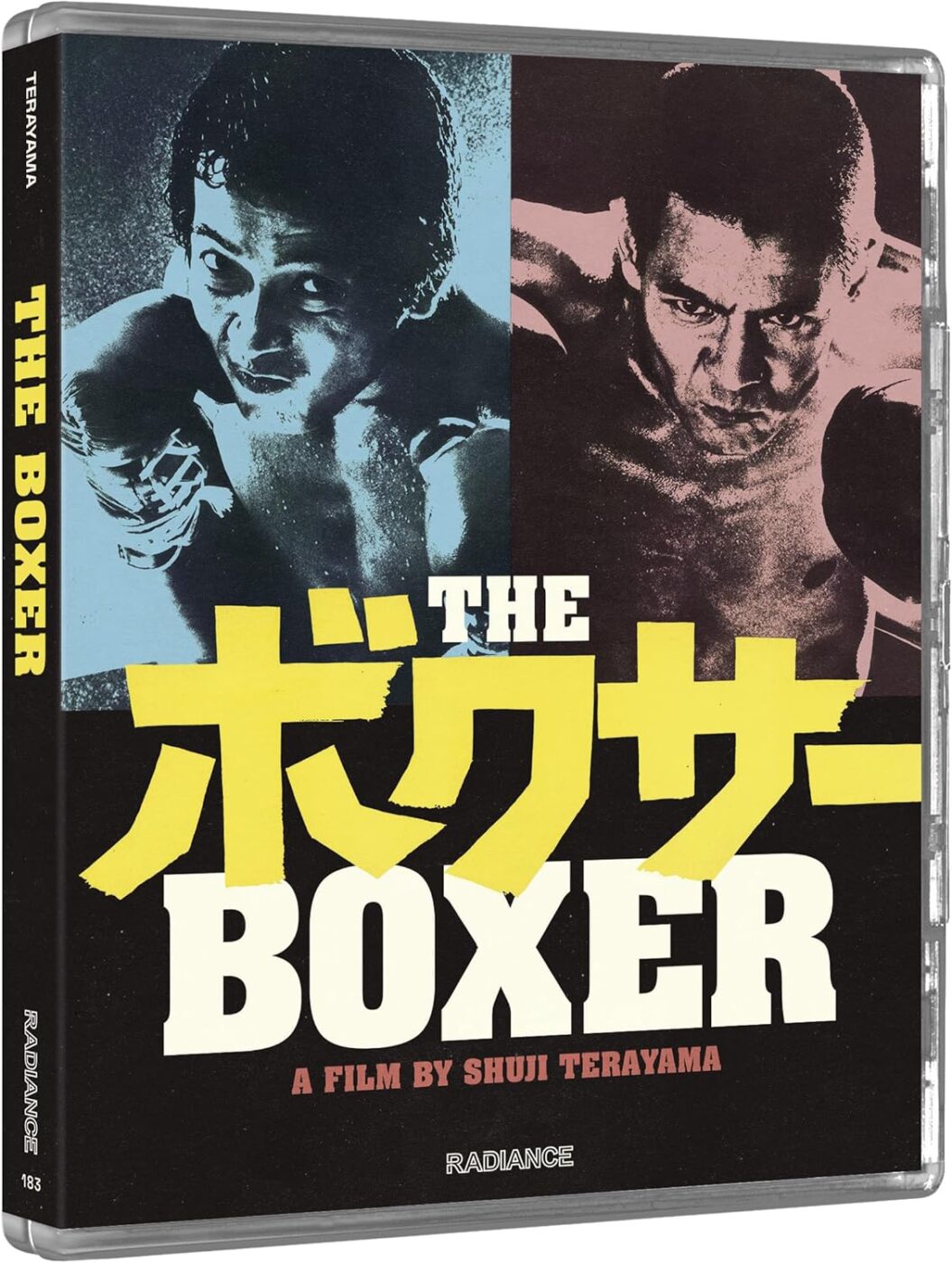
THE BOXER (1977)
A young boxer accidentally kills an ex-boxing champion's brother, but then approaches the ex-champ to train him to become the next champion.

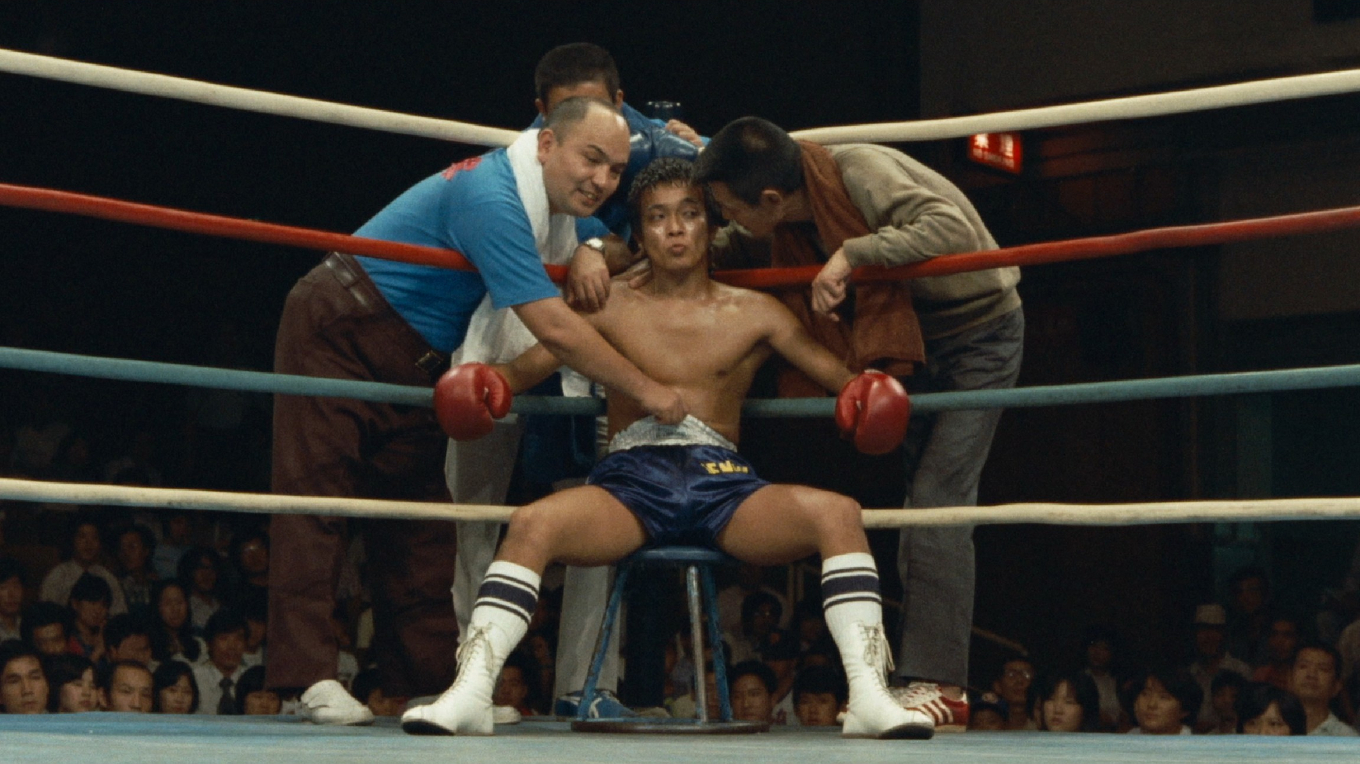

A young boxer accidentally kills an ex-boxing champion's brother, but then approaches the ex-champ to train him to become the next champion.
Director and dramatist Shūji Terayama remains largely overlooked beyond the shores of Japan, despite being recognised as one of the most provocative voices of the nation’s post-war counterculture. It’s high time a fresh audience rediscovered his films, and this new HD transfer of The Boxer, making its world Blu-ray premiere via Radiance, presents the ideal opportunity. While it might not be entirely representative of his audacious avant-garde style, it is perhaps the perfect place to start because it is the only film he made for a major studio. Working with Toei’s budget and resources afforded him new creative avenues to explore, while ensuring he did not stray too far from cinematic conventions. Yet, it remains stylistically bold and satisfyingly experimental.
By the late-1970s, all of Japan’s studios were struggling with a volatile market. The proliferation of colour television posed a significant challenge, and big-budget Hollywood imports dominated the box office. It seemed audiences had tired of the jidaigeki (period costume dramas) that had been Toei’s mainstay; following a string of misfires and flops, 1977 became the studio’s annus horribilis. Innovation was desperately needed, so executives looked to new talent while simultaneously playing it safe by churning out movies that pastiched foreign blockbusters at a fraction of the cost.
Rocky (1976) had been a massive hit during the spring of 1977, prompting Toei to commission the versatile screenwriter Fumio Ishimori to quickly rattle off a distinctly Japanese take on the story. Ishimori was known for his work on the popular television series Kamen Rider (1972) and Ultraman Ace (1972–73), alongside The Legend of Love & Sincerity trilogy (1974–76)—a series of highly melodramatic youth movies.
Shūji Terayama and his frequent collaborator Rio Kishida co-wrote the final screenplay. Terayama tailored it to his own uncompromising vision by reducing the reliance on dialogue, while Kishida injected a feminist subtext to counter the central machismo. When considered alongside the director’s own life, certain elements of the story take on a poignant,autobiographical resonance.
The enigma at the core of The Boxer’s relatively simple narrative is why champion boxer Hayato (Bunta Sugawara) stopped fighting mid-match. He was clearly winning when he suddenly quit, lowered his guard, and allowed his opponent to pummel him into submission. Did he see his younger self in his adversary and think the kid deserved a chance? Did he intentionally throw the fight due to gangland pressure? Did he realise how much victory meant to his opponent and choose to render it meaningless? Or had he simply had enough of everything?
This dilemma recalls the philosophical heart of Henry Miller’s 1956 novella The Smile at the Foot of the Ladder,though that featured a circus clown with no physical adversary and offered a more subtle fable of the self against “the other”. Of course, boxing has long lent itself to powerful literary metaphors. Ernest Hemingway and Charles Bukowski come readily to mind, but the tradition spans a broad variety of media—from Simon & Garfunkel’s 1970 song “The Boxer” to Harry Crews’s 1988 novel The Knockout Artist, and even the “Domino the Destitute” story arc from Coheed and Cambria’s multimedia Amory Wars albums and graphic novels.
Before Rocky, several seminal films noirs dealt with boxing and its murky surrounding world, notably Champion (1949)—starring Kirk Douglas and adapted from the 1924 short story by the appropriately named Ring Lardner.Probably the most famous precursor is Elia Kazan’s On the Waterfront (1954), starring Marlon Brando and immortalised by the legendary line, “I coulda been a contender. I coulda been somebody…” John Huston’s Fat City (1972), based on the 1969 novel by Leonard Gardner, also shares significant thematic overlaps. Terayama’s film is a worthy addition to this lineage, and far more than a mere historical footnote.
Aged 10, Terayama was displaced by war when his family home burned to the ground during the intense bombing of Aomori. This trauma deeply marked him, leaving him with a fatalistic appreciation of the fragility of established social structures and the precariousness of the lives sustained within them.
Aged 18, while studying at the Department of Japanese Language and Literature at Waseda University, he won the second Tanka Research Newcomer Award for poetry, but dropped out before completing his degree. He, too, quit while he was winning—though his departure was forced by nephritis, a serious kidney condition that required prolonged hospitalisation, rather than an attempt to make a philosophical statement.
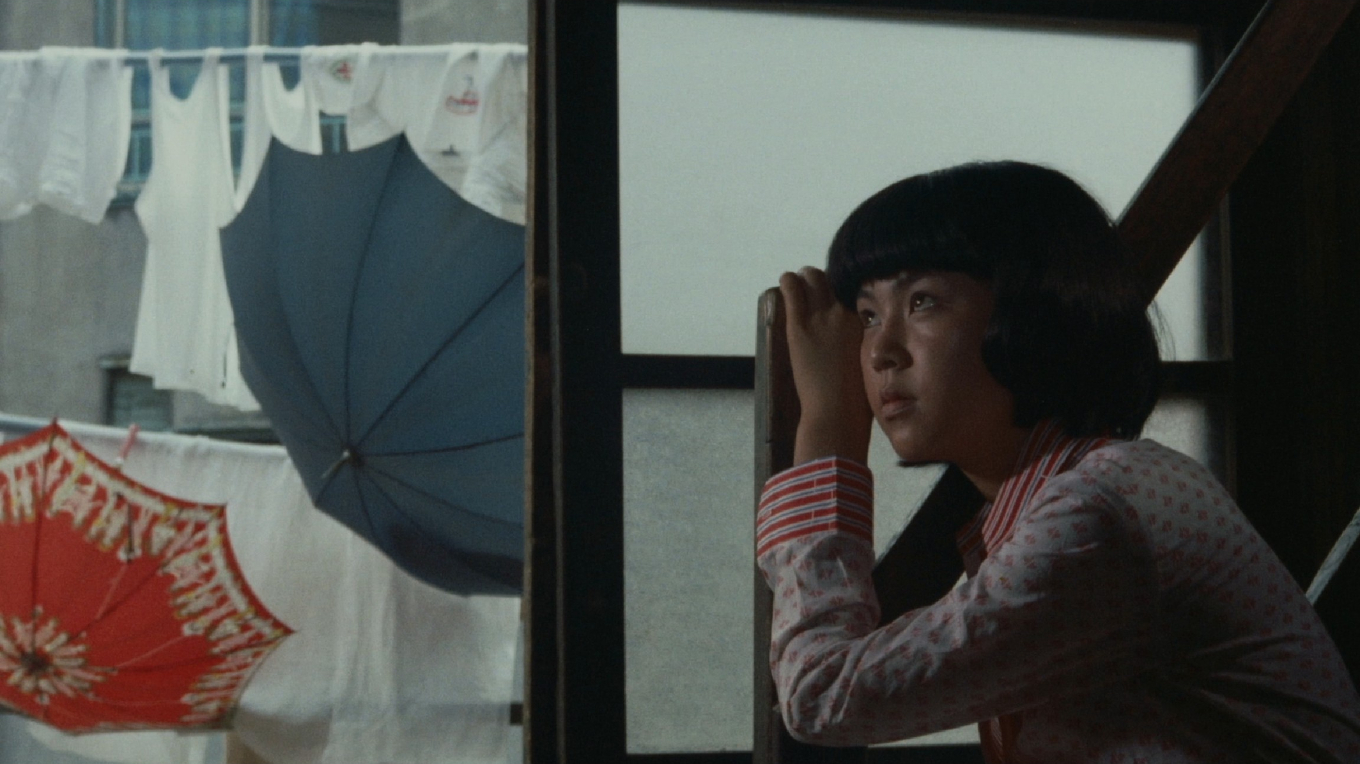
Since his inexplicable surrender in the ring, Hayato has been on a downward spiral. His marriage has failed, and he now lives with his dog in a shabby boarding house, drinking away the days. His ex-wife, Harumi (Masumi Harukawa),works in a hostess bar but wants to reconcile. His daughter, Mizue (Yōko Natsuki), is a lost soul clinging to the last vestiges of youthful innocence while dreaming of escaping the poverty trap that ensnared her parents. Hayato’s brother (Takeshi Wakamatsu) works at the same scrapyard as Tenma (Kentarô Shimizu). Both men rival for the affections of Kazuyo (Hiroko Isayama), who has just announced her engagement to Hayato’s brother when Tenma, operating a crane, drops part of a wrecked truck on him. We see that the crane controls are old and rickety, and that Tenma was looking elsewhere at the time, but ambiguity surrounds the tragedy. When Tenma repeatedly asserts it was an accident,it sounds very much as though he is trying to convince himself.
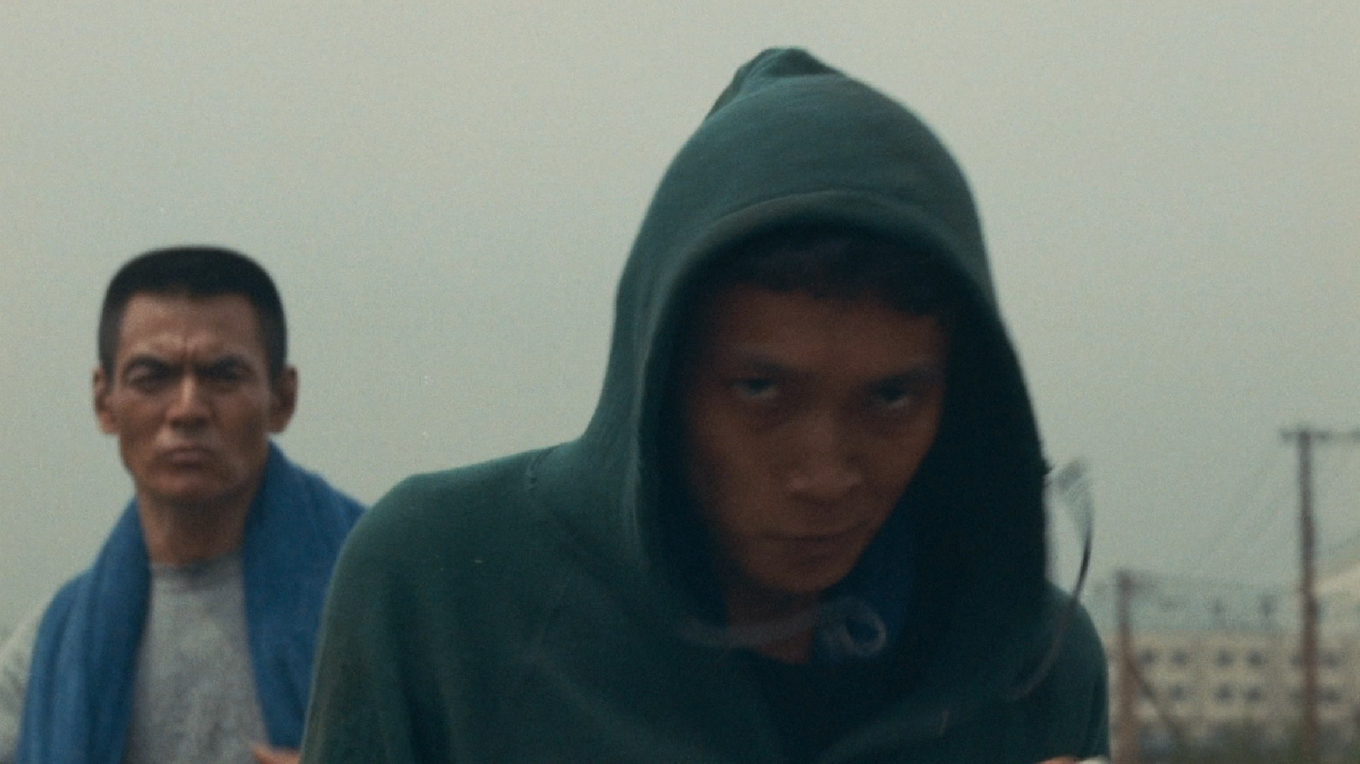
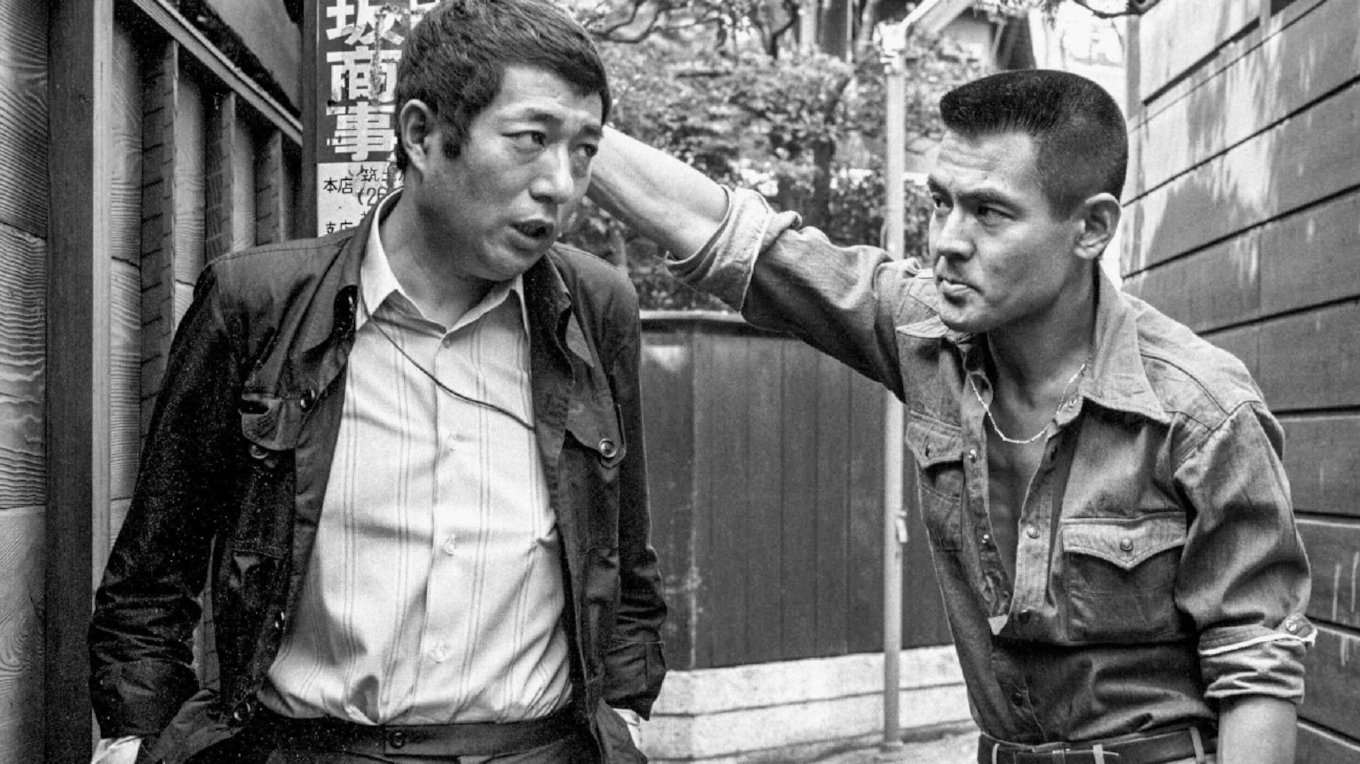
Naturally, when Tenma shows up at Hayato’s place offering incense for his deceased brother, he is entirely unwelcome.Yet Tenma, a rookie boxer himself, deeply admires Hayato. When his own trainer rejects him because of a minor disability, he pesters the ex-champion to teach him how to compensate for his weak ankle. After a rocky start, a genuine friendship develops as Tenma weaves himself into a position akin to a substitute, if antagonistic, sibling.
There is no denying that The Boxer retains similar narrative beats to Rocky, including the mandatory extended training montage. However, the relationship between the washed-up Hayato and his angry young protégé never edges into the mawkish sentimentality seen between Mickey (Burgess Meredith) and Rocky (Sylvester Stallone).
In 1967, alongside his partner Eiko Kujo and other creative collaborators, Terayama formed the radical collective Tenjo Sajiki. Their interdisciplinary practice centred on ambitious street theatre, with performances spreading over several days and across multiple locations. The narratives of these “city-plays” were mostly abstract and non-linear, drawing comparisons with the art of Salvador Dalí and Andy Warhol rather than traditional Japanese theatrical forms. Terayama quickly earned notoriety as a fiercely avant-garde poet, dramatist, photographer, and experimental filmmaker. In Japan, he’s revered for forging a new visual lexicon for the expressive arts, exploring these groundbreaking theories alongside co-editor Masahiko Akuta in the influential journal Underground Drama / 地下演劇.
As a theatrical dramatist, Terayama elicits powerful performances across the board. He constructs character not solely through dialogue and action, but through subtext and reaction. He strictly adheres to the “show, don’t tell” ethos, deploying words primarily to establish an atmosphere from which character naturally manifests. Despite a fairly rigid narrative structure, the film’s subtler threads grow from character interaction—or purposeful avoidance. He also successfully weaves in beautifully incongruous scenes, using unconventional camera movements, heavy colour casts, and varied lighting textures to paint a patchwork of emotional environments.
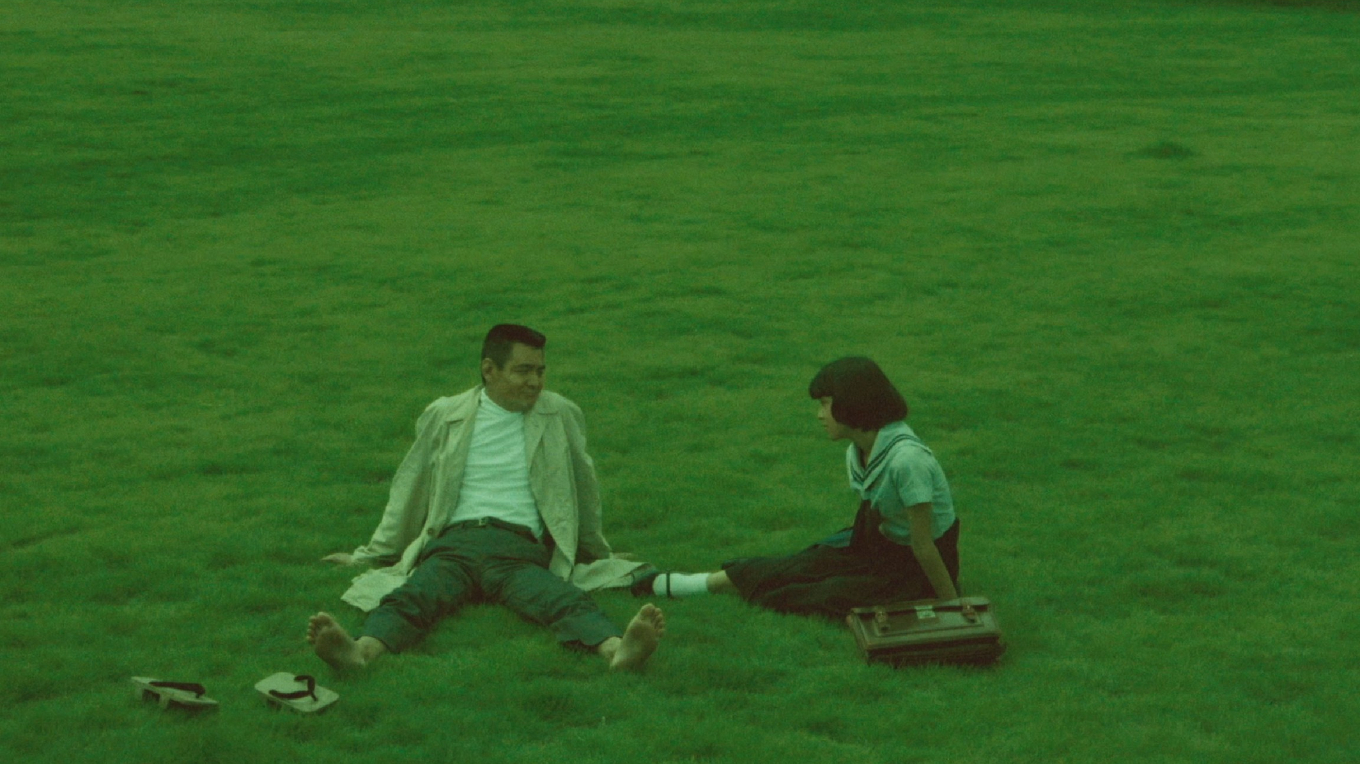
Cinematographer Tatsuo Suzuki deserves equal credit for this distinctive use of colour, which is occasionally so saturated that the image becomes virtually monochrome. One scene is bathed entirely in green, another in mauve, while the early morning exercise routines are conducted in deep blue. Place becomes character, and mise-en-scène replaces dialogue.
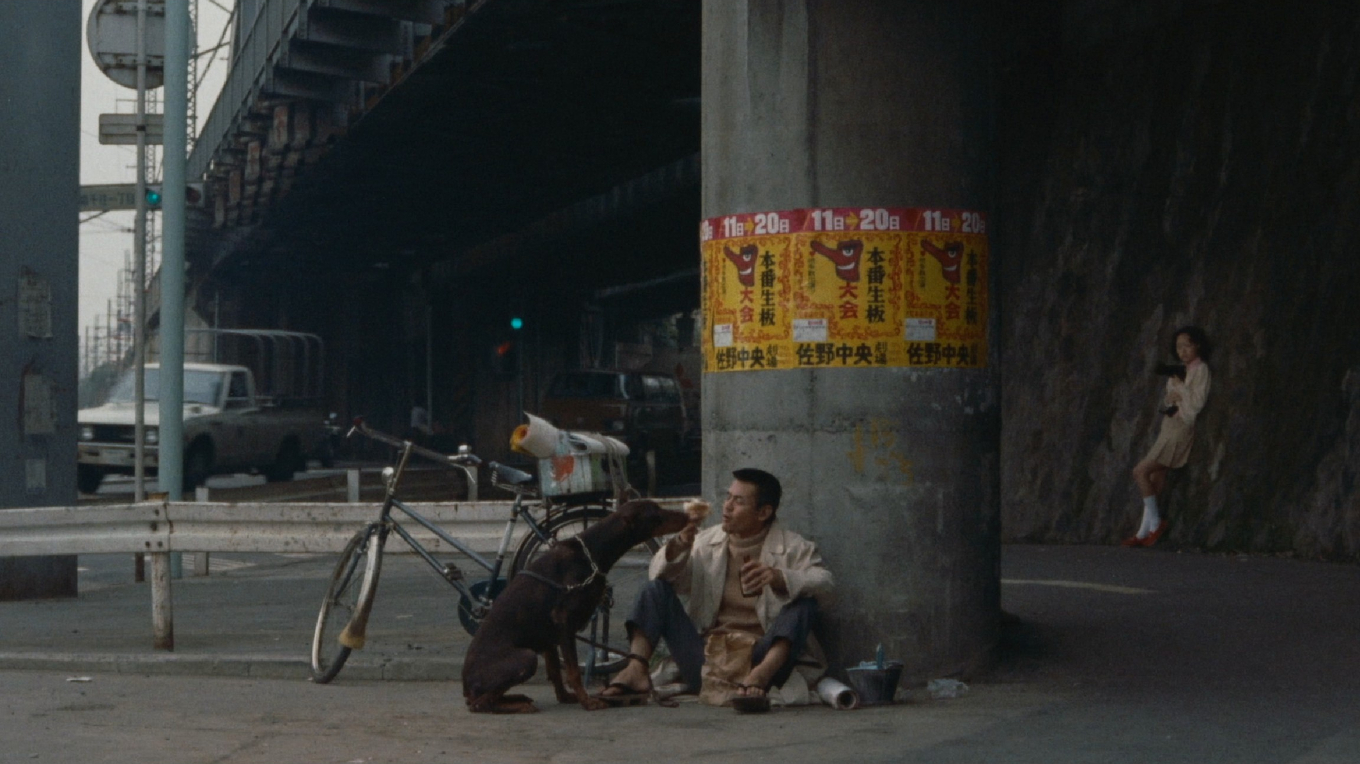
This role must rank among Bunta Sugawara’s most nuanced and vulnerable performances. He is perhaps better remembered for starring in Kinji Fukasaku’s brutal yakuza franchise, Battles Without Honor and Humanity (1973–76), and for his earlier, more chivalrous anti-heroes in the Red Peony Gambler series (1968–72).
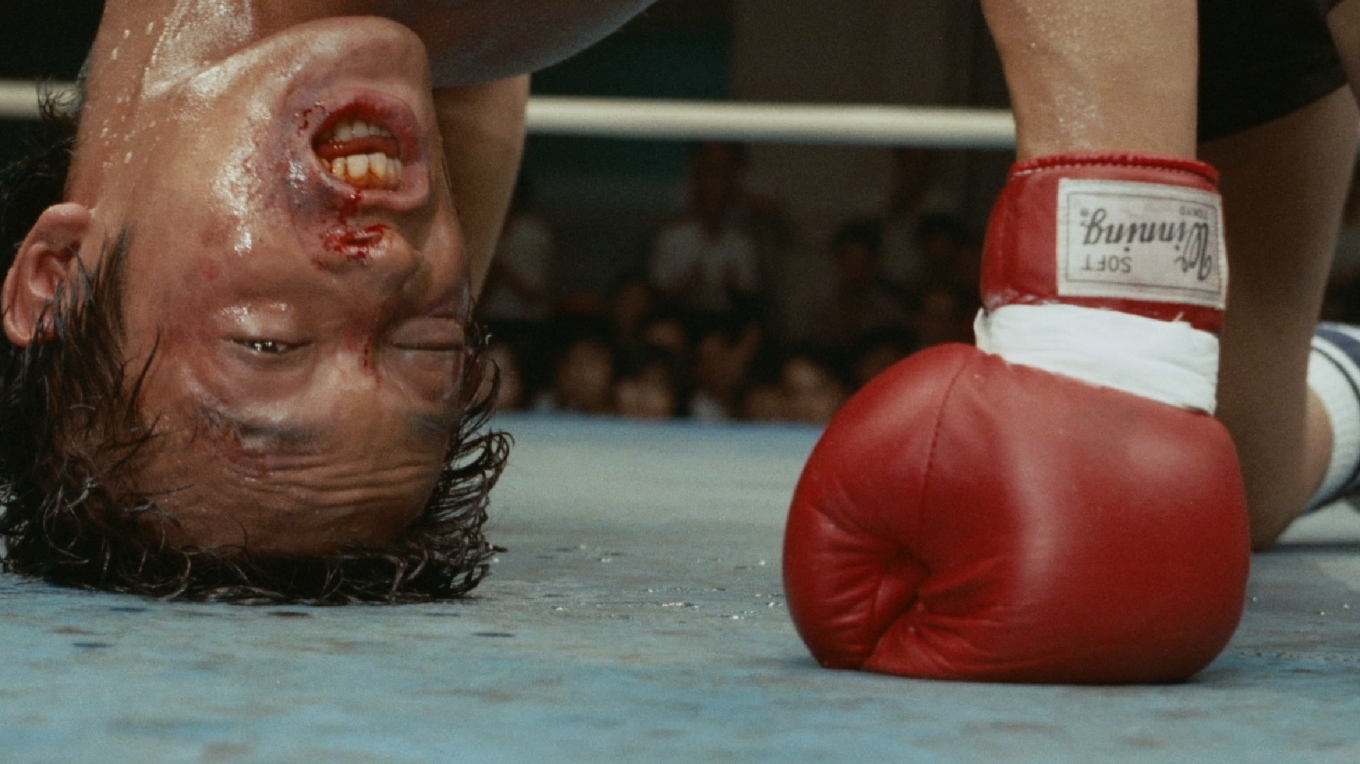
Relative newcomer Kentarô Shimizu impressively conveys a complex, ambiguous character who is by no means an honourable or compassionate person. He is genuinely unlikable at times, and we only root for him because we know his background, understand his physical limitation, and have witnessed his vulnerable side. But then, do we not always root for the underdog? The fight scenes themselves are unglamourised, visceral, and painful to watch.
Boxing serves as a recurring metaphor to explore the struggle against systemic adversity, including class divisions,racial prejudice, and social conflict. It is also the only major sport where both enduring pain and intentionally inflicting injury are fundamental to success. Because it’s a one-on-one sport, the fighters become pared-back symbols of the self and “the other”, each trying to define themselves through opposition. Hayato encourages Tenma to channel his anger into a focused hatred that he can vent in the ring. This dynamic explores the hatred of the opponent as an expression of self-loathing—especially since the fighters closely mirror one another, are bound by the same rules, and often share identical socio-economic circumstances. This exploration carries just as much, if not more, social resonance today, as modern media outlets routinely promote false dichotomies and stoke hatred of “the other” for political leverage.
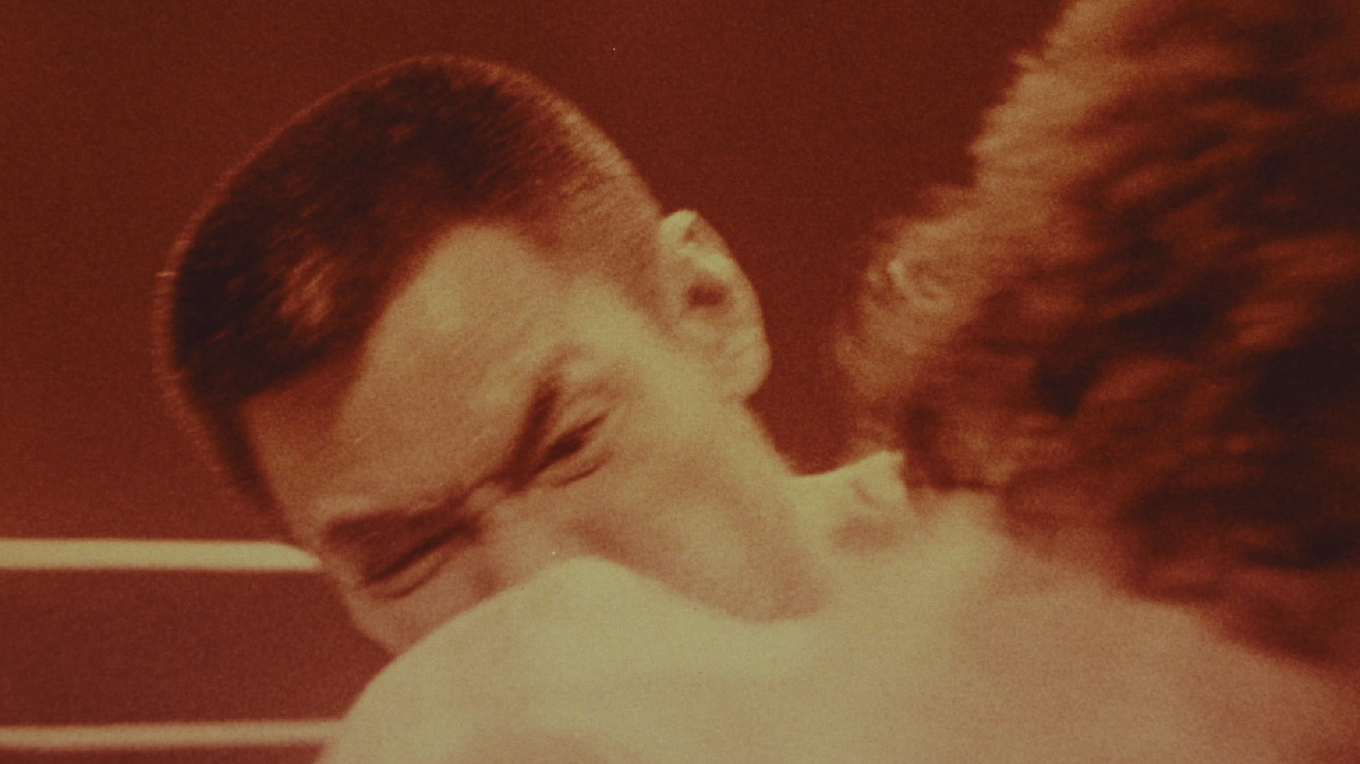
In his native Japan, Shūji Terayama’s career was adorned with accolades and critical respect, yet he remained comparatively obscure overseas. His plays were complex and ephemeral, and few of his highly contentious,controversial films ever secured international distribution—some failing to clear local censorship laws even when submitted for festival screenings.
There were notable exceptions. Pastoral: To Die in the Country (1974) was nominated for the Palme d’Or at Cannes and for Best Feature at the Chicago International Film Festival. Subsequently, Terayama was appointed to the official jury for the 26th Berlin International Film Festival in 1976. A decade later, his global relevance was cemented by Farewell to the Ark (1984), which brought another Palme d’Or nomination and won both the Caixa de Catalunya for Best Director and the International Critics’ Jury Prize at the Sitges Film Festival. Regrettably, these final honours were awarded posthumously.
In 1983, aged just 47, Terayama died of cirrhosis—possibly exacerbated by his chronic nephritis, but more likely linked to the habitual heavy drinking of his youth. The purpose-built Shūji Terayama Memorial Hall and Museum in Misawa, Aomori Prefecture, opened in 1997 and houses an extensive collection of personal effects and theatrical props celebrating his remarkable life and works.
JAPAN | 1977 | 94 MINUTES | 1.85:1 | COLOUR | JAPANESE

director: Shūji Terayama.
writers: Fumio Ishimori, Rio Kishida & Shūji Terayama.
starring: Bunta Sugawara, Kentarō Shimizu, Masumi Harukawa, Hiroko Isayama, Yōko Natsuki Juro Kara, Shoichi Ozawa, Keiko Niitaka.