BEAUTIFUL GIRLS (1996)
A piano player at a crossroads in his life returns home to his friends and their own problems with life and love.


A piano player at a crossroads in his life returns home to his friends and their own problems with life and love.
Oh, Beautiful Girls. Like the eponymous women with whom your knuckle-dragging male protagonists are so enamoured, you had so much potential. When it comes to gorgeous women, our hopeless romantics and terrible boyfriends or husbands are never quite able to find these embodiments of physical perfection. As for the film itself–written by Scott Rosenberg and directed by Ted Demme—it never capitalises on the promise of its premise. Set over a few weeks in the working-class town of Knight’s Ridge, Massachusetts, it promises to be a bittersweet, mournful reflection on the lives these characters could’ve made for themselves.
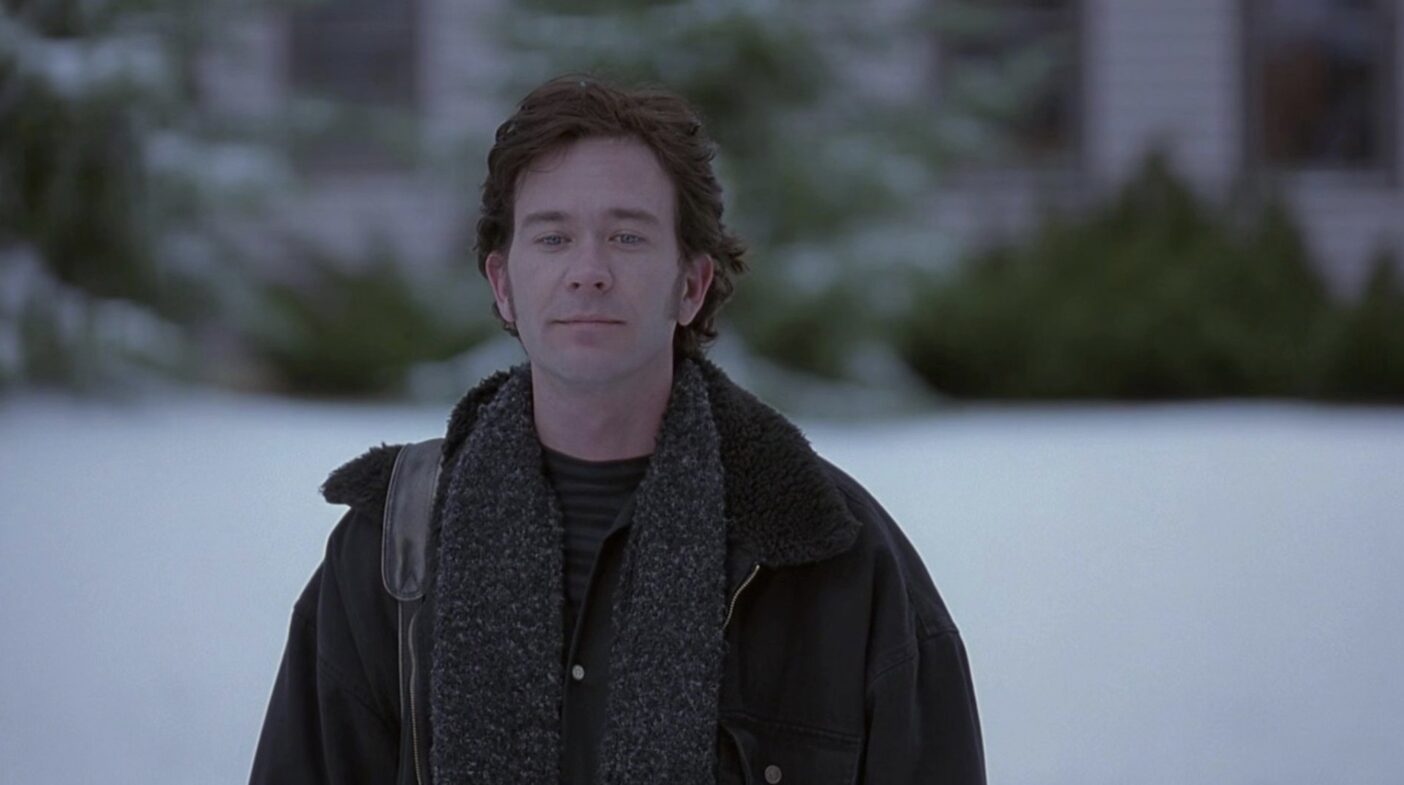
Willie Conway (Timothy Hutton), a New York City piano player, returns to his hometown in anticipation of his 10-year high school reunion. Naturally, it is a reflective time. Though he still has many years ahead of him, coming home after a long absence has made him wistful. He is no longer the starry-eyed kid who must’ve dreamt so fiercely of being a musician. Now he’s living that dream, and of course, it isn’t nearly as romantic as it seemed in those youthful fantasies.
His friend Mo (Noah Emmerich) is a family man with a secure job as a textile plant manager, and Willie can’t seem to figure out whether or not to be jealous of his old chum. It must be nice to have life sorted out—to know the exact path you’re winding down for the rest of your life. It can’t be like that in New York City, which is too chaotic and impersonal for every day to be the same. Besides, if Willie were to settle down, he would have to commit to the same woman day in and day out—a fate that neither this protagonist nor his friends, Tommy (Matt Dillon) and Paul (Michael Rapaport), are keen on. They are driven by lust and childish fantasies of modest supermodels beamed down from heaven into their tiny orbit, transforming them forever.

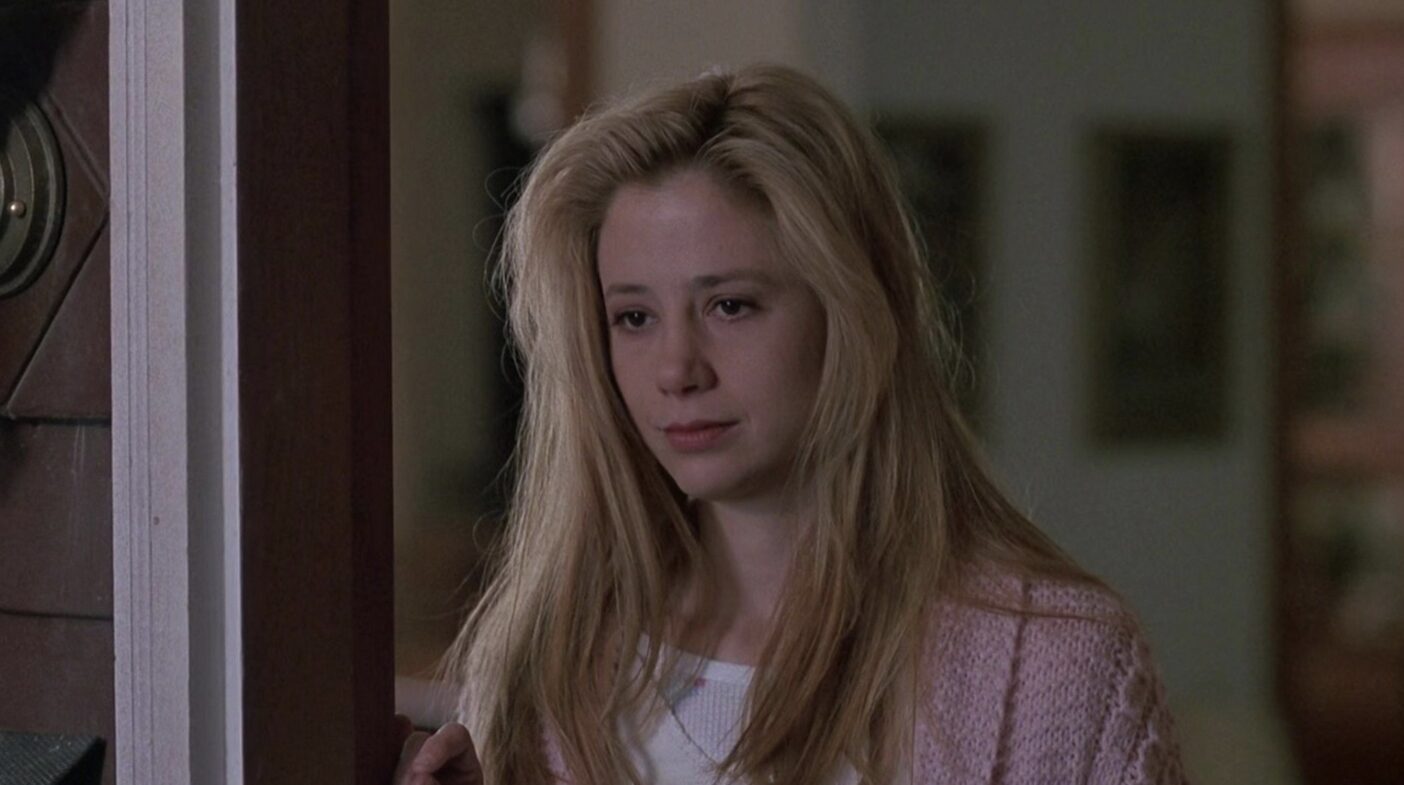
If only it were that easy. Despite one glowing review suggesting this is an ideal “date movie”—a quote emblazoned on the Beautiful Girls cover—the film is anything but. In one telling scene, the outspoken feminist Gina Barrisano (Rosie O’Donnell) consoles her friend, Sharon Cassidy (Mira Sorvino), the long-suffering girlfriend of the adulterous Tommy. Tommy, the former high school jock who has failed to match the glory days of yesteryear, will never leave this small town. No matter who he dates or sleeps with, he will always find himself working the same kinds of jobs, seeing the same surroundings, and returning to familiar haunts to drink with the same buddies until he keels over. His life, along with Mo’s and Paul’s, is sealed. You’ll know it within minutes of the film’s introduction.
But what about Sharon? Is she content? Is she satisfied with always seeing the same neighbours and friends in a small town where you run into your exes constantly? This is where Beautiful Girls has no answers. Its name is deceptive. It is not about the “fantasy women” these childish men lust after, nor the real ones they mistreat. The film is squarely focused on these men’s hopeless quest to remind themselves that they are divine, that they matter, and that their lives aren’t depressingly small. Of course, self-growth is an unreasonable expectation to hoist onto these immature figures, since even open self-pity would reveal too much inner turmoil. Instead, they are constantly projecting.
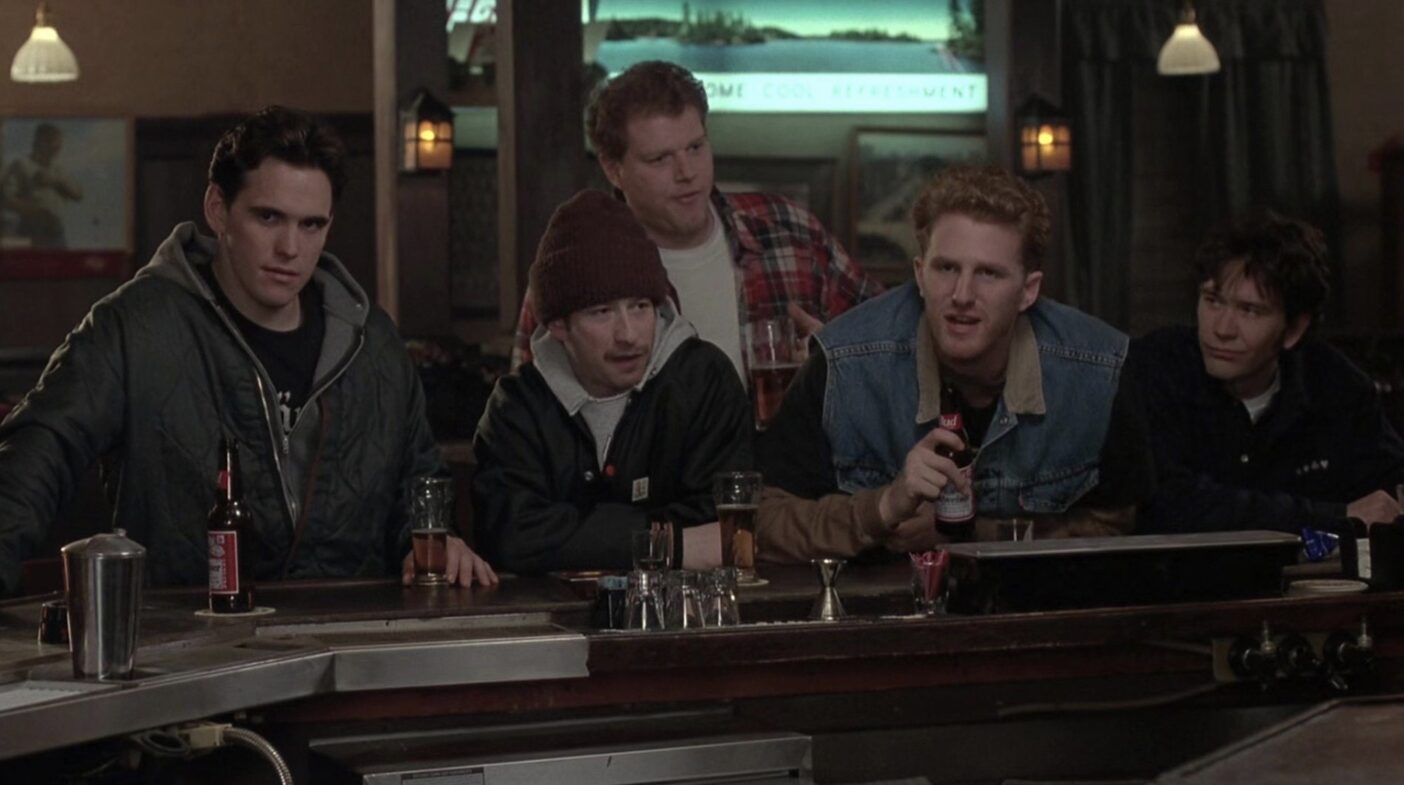
For this reason alone, Beautiful Girls is no date movie; it simply doesn’t care about these women as characters, even if a few are given memorable roles defying their male admirers. Their hopes and dreams remain indefinable. The film is also a damning portrait of masculinity, even if its critique comes from a place of love. As Gina tries to make Sharon see sense and recognise that she needs to end her relationship with Tommy, Sharon wonders if the fault lies solely with men and their inability to commit. Gina shuts down the notion instantly. It’s a moment of cold, hard truth: the women are depicted as faultless, while the men are heaps of faults stacked into bodies, kept upright by a lack of accountability.
Nothing Gina says is incorrect, and with such a bleak message, any man who had the misfortune of bringing a date to this film must’ve suffered some devastating “side-eyes” throughout. That doesn’t mean the female characters aren’t worth watching. O’Donnell is well-cast as the voice of reason amidst these ignorant men and their clueless girlfriends. Yet, for as much as she is exasperated by these knuckleheads, she accepts them as they are. She doesn’t want to crucify them; she’s just an honest woman with enough sense to understand pattern recognition.
There are rare moments when Beautiful Girls transcends its small ideas and taps into a genuine sense of community, where the town feels like its own character. It is a motif rarely done justice. Just two years before this film’s release, Robert Benton’s Nobody’s Fool (1994) did exactly that, melding bittersweet reflections with a gentle plot line snaking through the lives of various residents.
It was the pursuit of this goal that inspired Rosenberg to write Beautiful Girls. The Hollywood screenwriter had been waiting to see if his script for Con Air (1997) would be picked up when he realised he was more interested in his friends back home than high-speed chases. In Beautiful Girls, there is no race against time because time is already winning. Instead of confronting this, the men focus on the women in their lives (and those not yet in them), viewing this starry-eyed escapism as a break from life’s drudgery.
It’s not a convincing escape. One can easily buy into Dillon’s role as a former football hero or Rapaport as an entitled man-child, but the film is desperately one-note. Relationship dynamics hinge on the same futile conflicts, while little time is devoted to how these characters process the passing years. Rosenberg isn’t just reluctant to explore these topics; he resists them entirely.
The goal is to demonstrate how terrible men are at communicating, but it explores that void through an absence of interaction. It is the Hollywood equivalent of Kelly Reichardt’s Old Joy (2006), a painful ode to a friendship past its sell-by date. Unlike Reichardt’s film, which commits to realism by showing a trip doomed from the outset, Beautiful Girls takes that formula and gives it a bigger heart and less of an edge. These men still care about one another and know how to banter.
However, they can’t genuinely connect. The most melancholic aspects of Beautiful Girls exist only in what one wishes the film could be. There is a much better movie lurking somewhere within, which easily draws us into the camaraderie of these male characters, but any deeper emotions are repelled. Sometimes the themes are stated so directly that one wonders why they weren’t explored more meaningfully. Paul remarks to Willie that they will be stuck in Knight’s Ridge their entire lives—a statement lacking tragedy or bittersweetness. Rosenberg and Demme obviously don’t think highly of their characters’ intelligence, but Paul can’t possibly be that dim.
Willie is the exception to the rule. He is worldly and understands life, yet he is more lost than any of them. He has a normal relationship with attorney Tracy Stover (Annabeth Gish), but he is unsure if that, or music, or New York, is the right path. “Maybe, maybe, maybe.” If the film spent time with Willie’s father (Richard Bright) or his brother (David Arquette), we might understand his wistfulness, but they are practically non-existent.

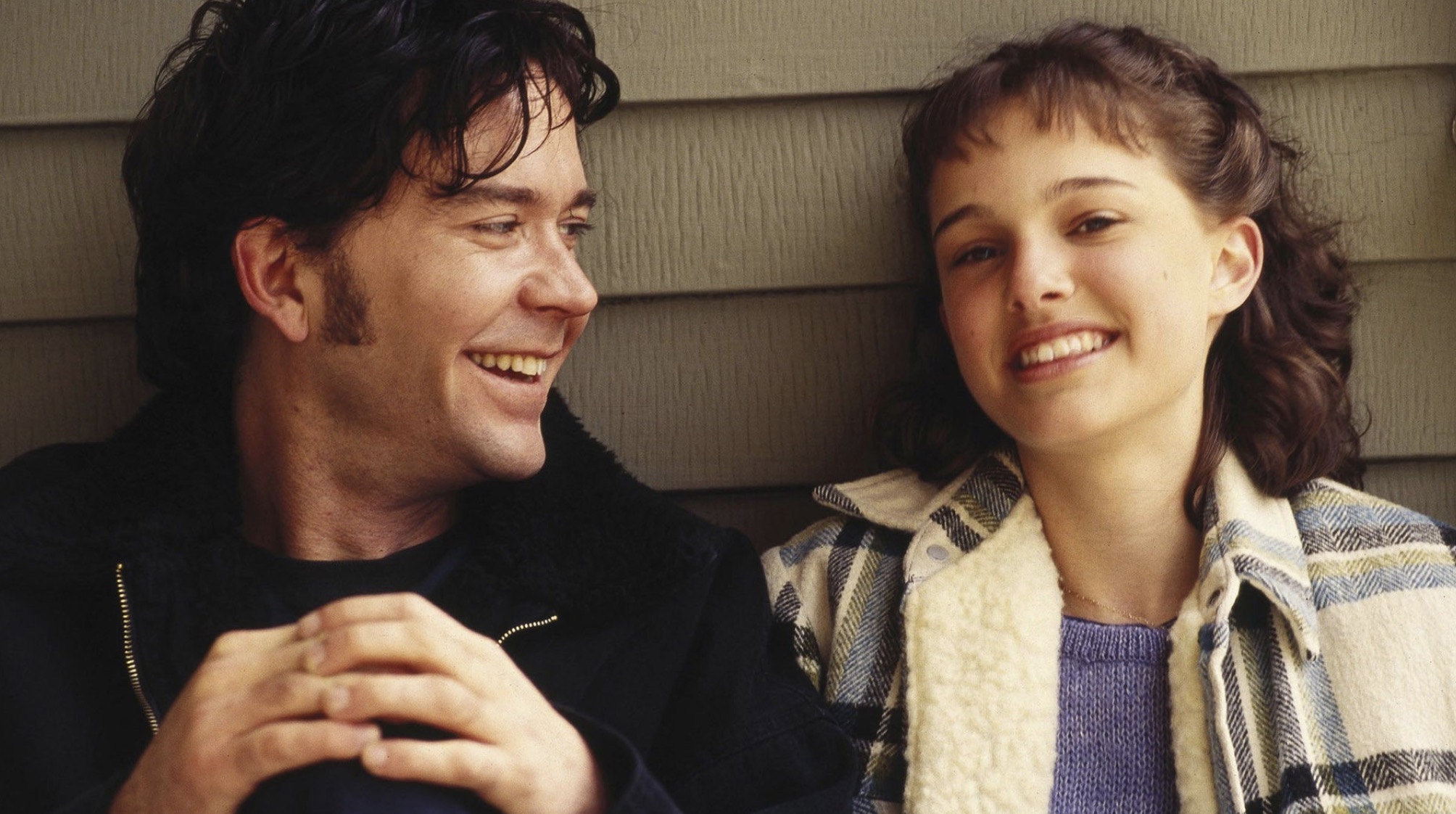
Instead, Willie is preoccupied with a deeply uncomfortable burgeoning attraction to his 13-year-old neighbour, Marty (Natalie Portman). This subplot is so bizarre it makes the ’90s seem to have the cultural attitudes of Ancient Greece. Fans often downplay this connection as “deeper” than romance, but the protagonist’s thoughts are firmly on the latter. He refers to Marty as “hot,” joylessly “rates” his actual girlfriend against her, and is flustered when Marty approaches him in public. Willie even follows the girl’s lead on their “future”: they will wait five years until she is 18 to be together. It is an infatuation that wells up in every scene they share.
Marty is a precocious youngster, and Portman shines despite the “cringe-worthy” dialogue. Having already appeared in Léon (1994) and Heat (1995), she is the highlight of the acting department. Uma Thurman is also well-utilised as a dose of reality amidst the empty-headed lust.
There is something tantalising about the questions the film raises, even if it cannot grasp what makes them tragic. Rosenberg was inspired by a snowstorm in his hometown, and Demme made the snow and the town characters in their own right. Beautiful Girls is gorgeous to look at; you can feel the cold of the environment and the warmth of the social circle. There is beauty to be found here, though it is often hidden beneath layers of obfuscation and discomfort.
USA | 1996 | 112 MINUTES | 1.85:1 | COLOUR | ENGLISH

director: Ted Demme.
writer: Scott Rosenberg.
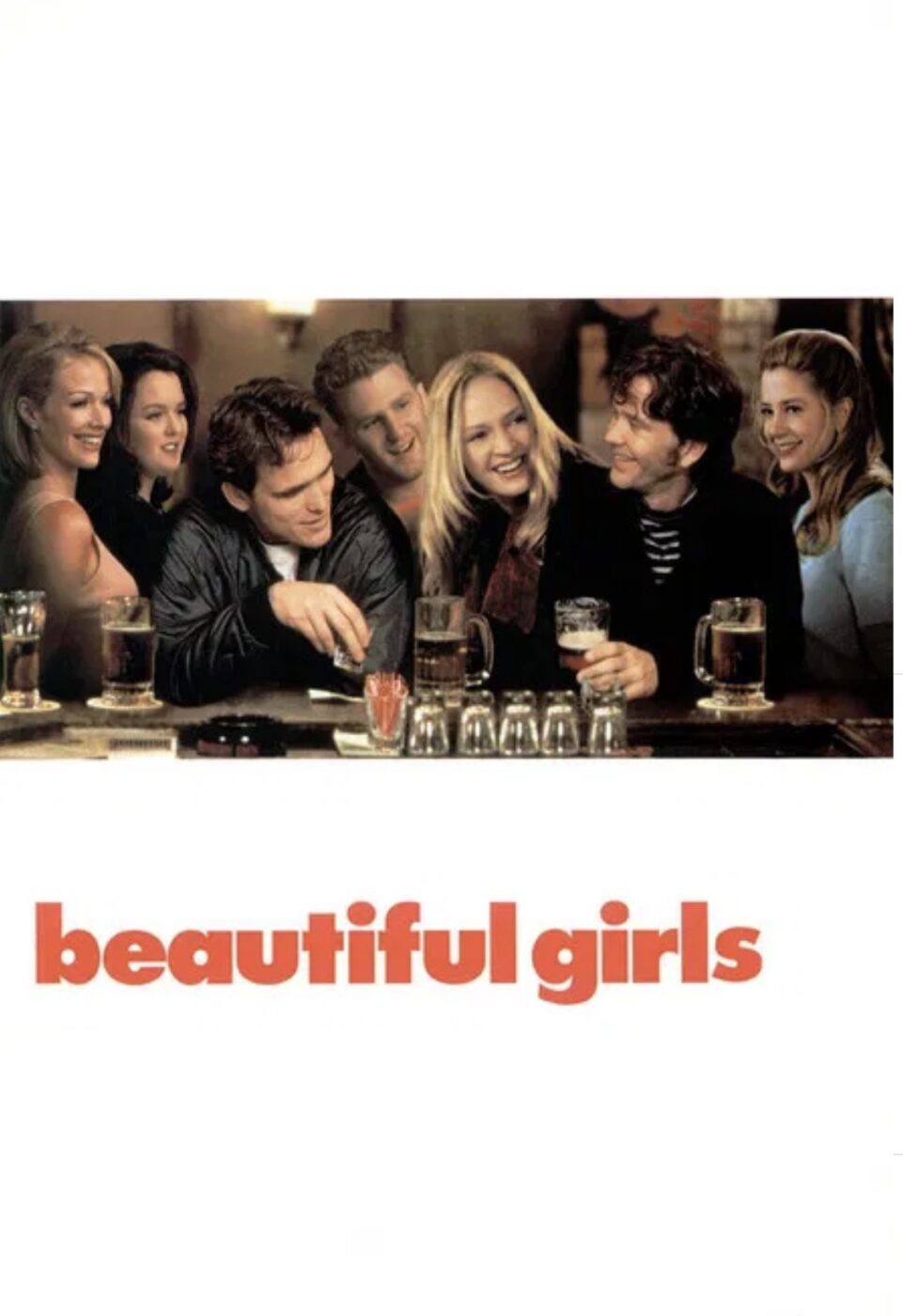
starring: Timothy Hutton, Matt Dillon, Michael Rapaport, Mira Sorvino, Natalie Portman, Noah Emmerich, Annabeth Gish, Uma Thurman, Lauren Holly & Rosie O’Donnell.