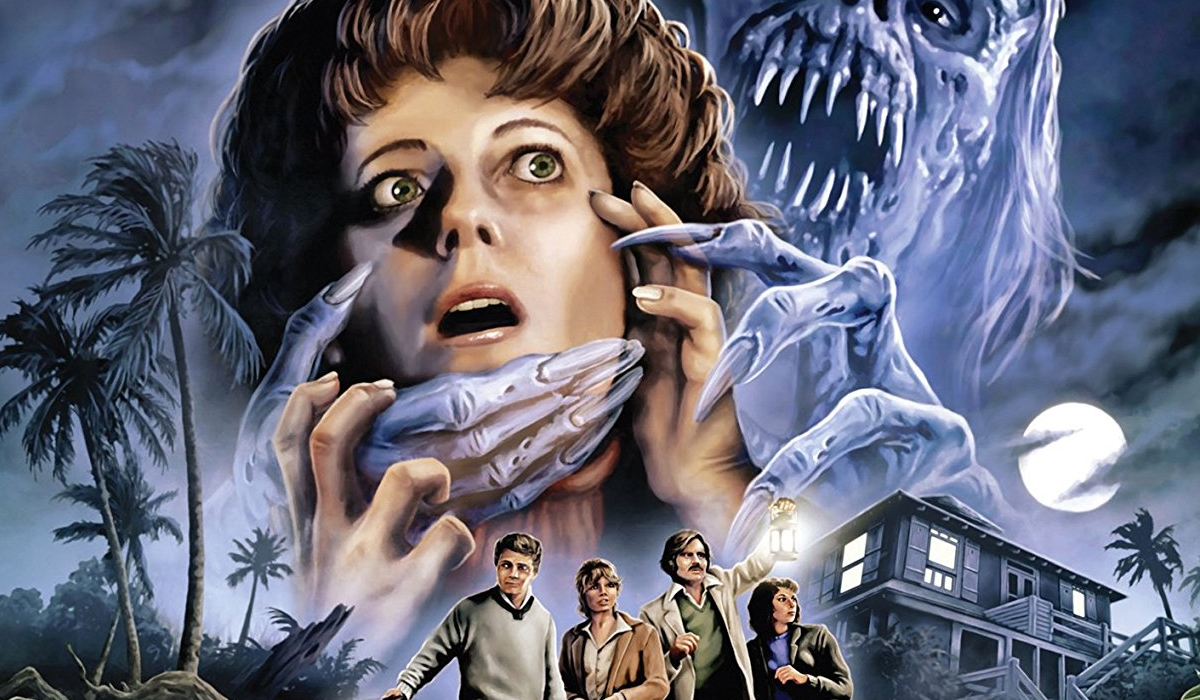
WHISTLE (2025)
A misfit group of unwitting high school students stumble upon a cursed object, an ancient Aztec Death Whistle.

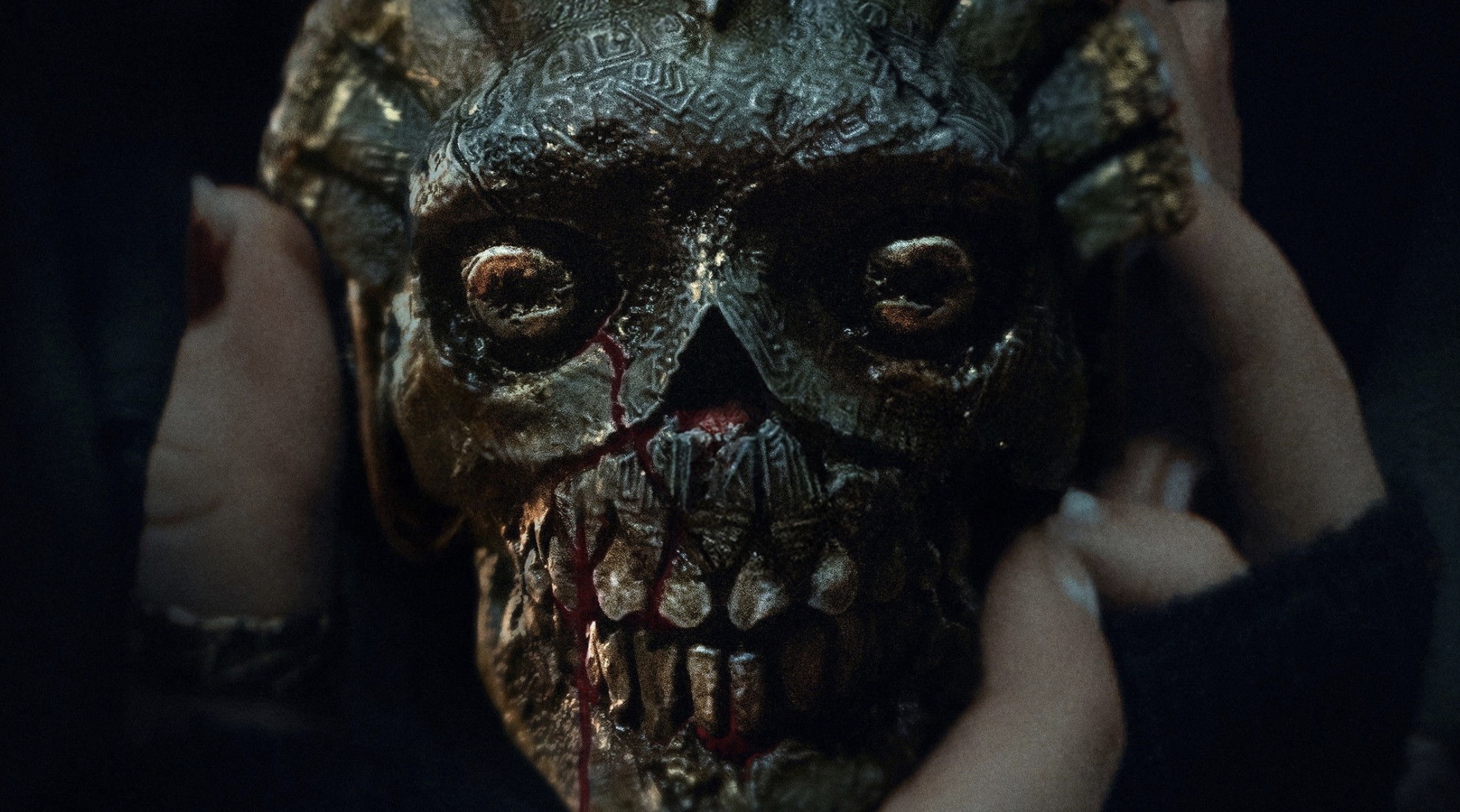

A misfit group of unwitting high school students stumble upon a cursed object, an ancient Aztec Death Whistle.
Directed by Corin Hardy and written by Owen Egerton, Whistle is a fairly average supernatural horror film. It’s what Roger Ebert famously termed a “Dead Teenager Movie” at heart—or “spam-in-a-cabin”—meaning the characters are essentially just meat to be pulled apart. I think of these as “kill count” films; one could get the same experience watching a five-minute edit of just the death scenes on YouTube.
Whistle isn’t quite at that level. I like that it features a queer protagonist and a couple of the deaths are neat—particularly one in a teenager’s bedroom that recalls the A Nightmare on Elm Street (1984-1994) series. There’s also just enough plot and character development for the story to actually feel like a story and hold your gaze.
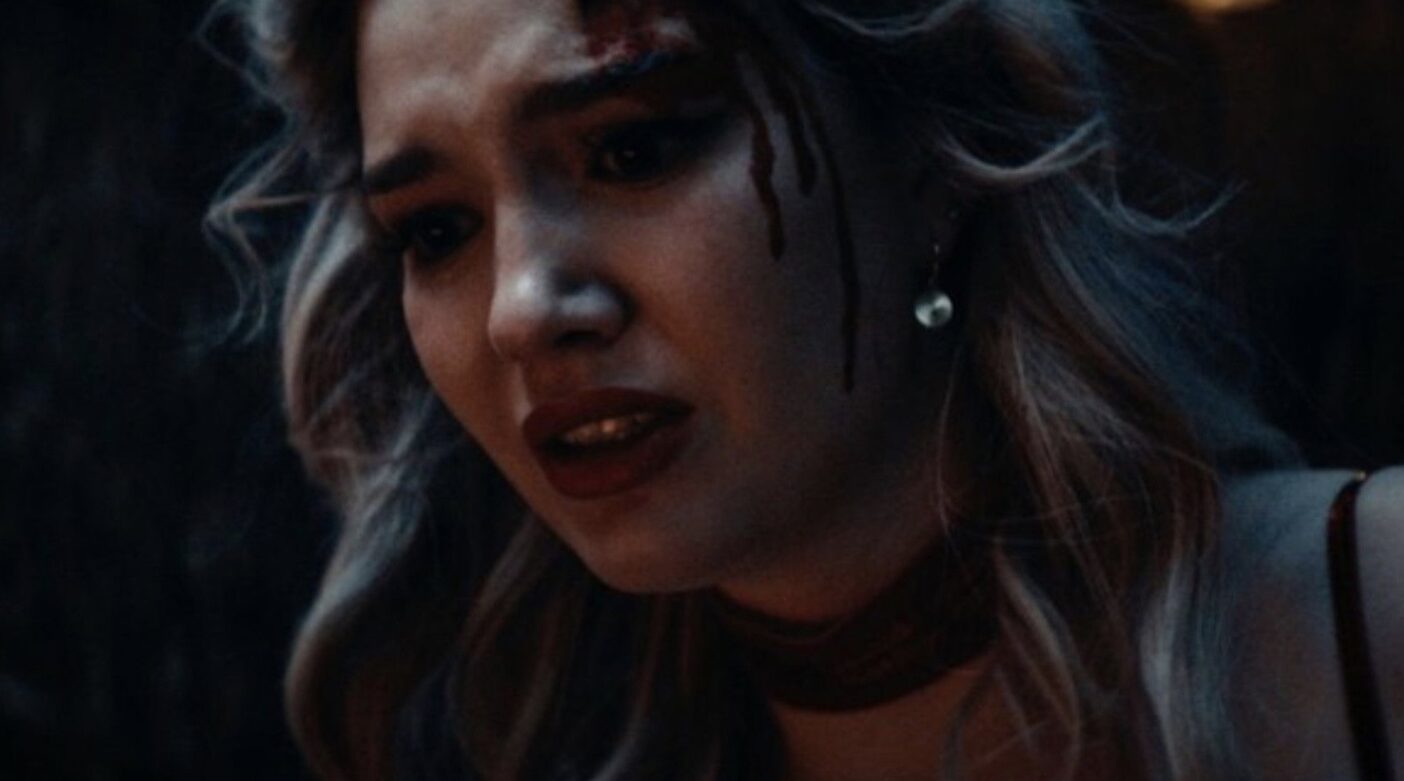
The plot centres on an Aztec death whistle that infiltrates the lives of a group of high-schoolers. When blown, it hastens the death that anyone in earshot was fated to receive (for instance, a house fire or lung cancer). Lesbian teenager Chrys (Dafne Keen) is trying to rebuild her life following a personal tragedy and, while living with her cousin Rel (Sky Yang), befriends classmates Grace (Ali Skovbye), Dean (Jhaleil Swaby), and Ellie (Sophie Nélisse).
Lurking in the background is a teacher, Mr Craven (Nick Frost, for some reason… the director is English, so perhaps that explains it). There are no prizes for guessing which horror stalwart that supporting player is named after. We also have Noah (Percy Hynes White), a youth pastor with a sideline in drug dealing.
Once upon a time (the 1980s), these characters would all have fit specific types, but here only the jock (Dean) and the “druggie” (Noah) remain—the latter evolved from an affable stoner into a violent sociopath. You could argue that Ellie is the “good girl”; she works shifts at a hospital (how that tallies with school, I don’t know) and probably eats her vegetables—while Grace is a post-PC apologia for the “slut”. She isn’t actually promiscuous, though she gets the most sexual framing, appearing in a bikini and then a vaguely risqué Halloween costume.
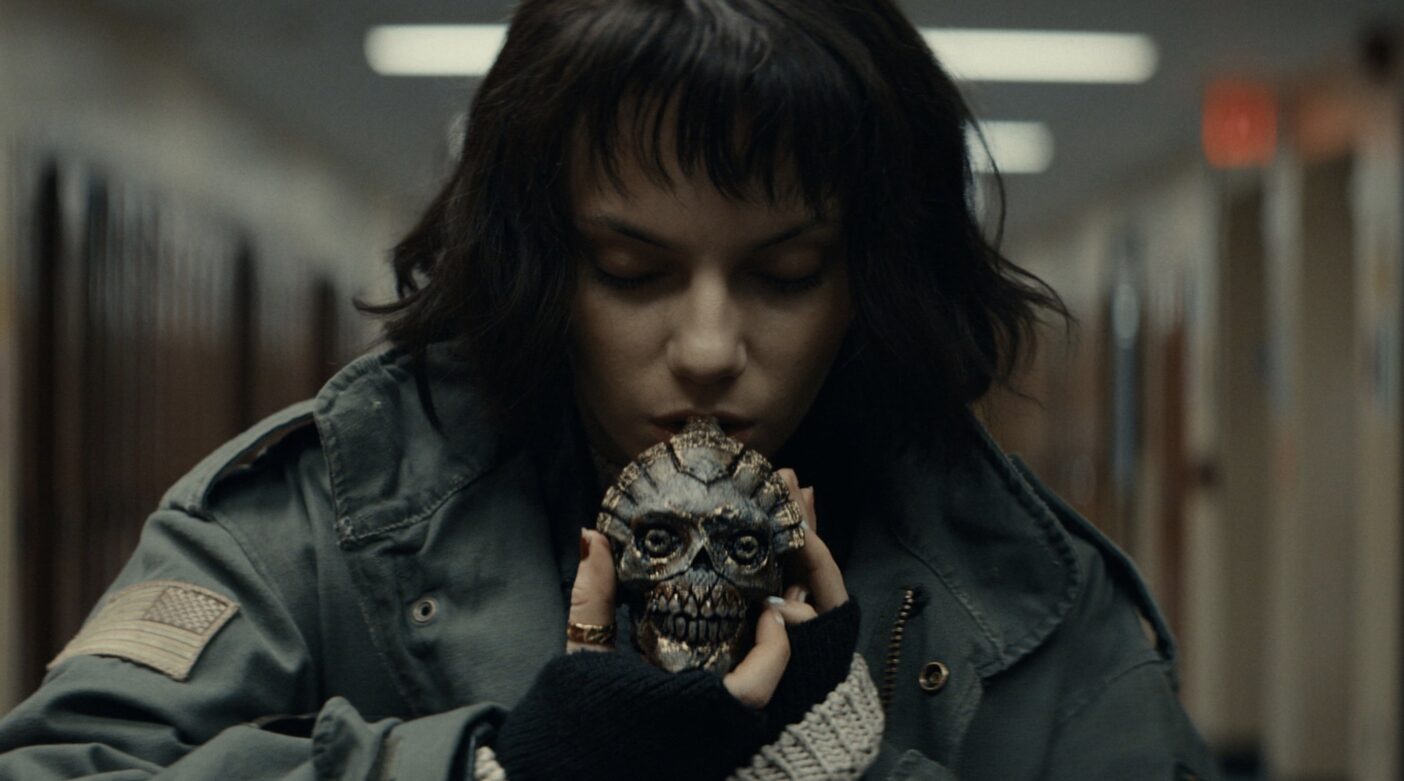
Chrys, the “cool girl”, is a type that was popular in the 2010s and remains so today. It likely existed before then, too (the daughter in 1989’s Uncle Buck comes to mind), although the trope seems to have peaked when “Gen Z Scream Queen” Jenna Ortega came of age in projects such as Wednesday and Beetlejuice Beetlejuice (2024)—in the latter case taking the mantle from another 1980s cool girl, Winona Ryder. You know the type: dark hair, heavy eyeshadow, cynical, anti-popular, and a fan of old music because she belongs to “le wrong generation“. I tend to find Ortega almost painfully annoying in this role, but Keen is serviceable and shares a sweet friendship with Ellie. We don’t see many lesbian characters in films, and the thriller genre hasn’t always been kind to them, with “butch” and “lipstick” stereotypes abounding in titles like Basic Instinct (1992).
Two classic horror stories came to mind while watching Whistle: “The Monkey’s Paw” by W.W Jacobs and, of course, “Oh, Whistle, and I’ll Come to You, My Lad” by M.R James. Jacobs—a writer whose work mostly consisted of dockside comedies about sailors—has had an outsized influence on the horror genre with this single tale. Its basic template has been aped in everything from Hammer films and the Hellraiser franchise to a Simpsons Halloween special. The original story concerned a dismembered paw granting wishes, its digits curling inwards with each request and bringing about ironic punishment. (For example, a man wishes for £200 to pay off his mortgage—before you sniff, this is 1902 money, equating to almost £34,000 today—and receives it as compensation for his son’s accidental death).
A problem with Whistle is that it doesn’t provide an adequate reason for anyone to blow the whistle; the film merely suggests it possesses a mystical magnetism. That’s a lazy way to write horror. The prologue led me to believe the whistle might grant favours, such as improved athletic performance, as part of a Mephistophelean deal. That would be an interesting angle for a story about teenagers, who haven’t yet developed a full sense of permanence and might gamble their lives for short-term social gains. It’s a shame Whistle ignores this.
M.R James’s “Whistle” story followed a few years later, in 1904, and involved a sceptical professor blowing a whistle found in a ruined preceptory of the Knights Templar. The point was to illustrate the power of superstition—the classic ghost story theme summarised by Hamlet: “There are more things in heaven and earth… than are dreamt of in your philosophy.” Whistle lacks that same spiritual conviction. The death whistle is well-designed, but it lacks presence as a villain, which is likely why the script introduces Noah to provide a sense of “hateability”.
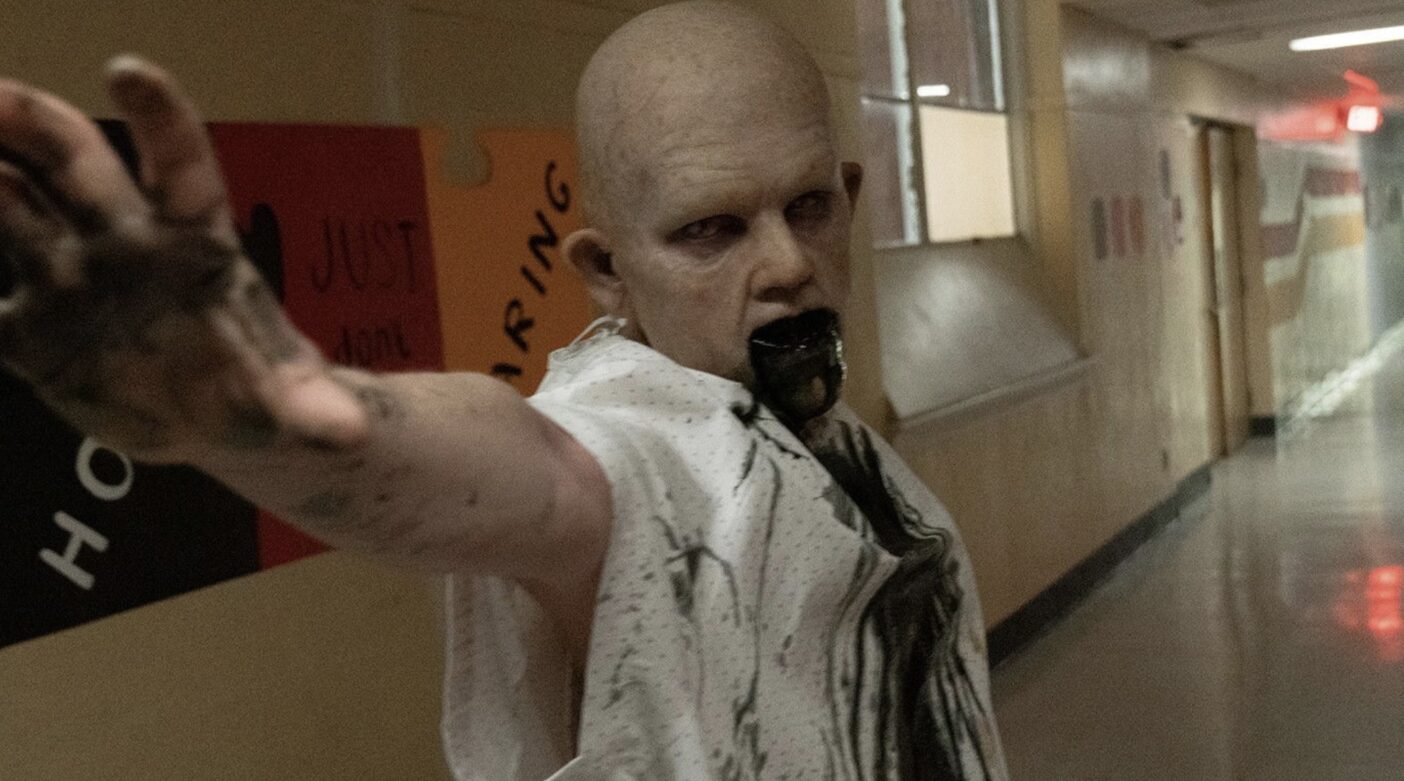
This is, of course, just a slasher film. Supernatural slashers aren’t my favourite sub-genre because the central conceit tends to dominate the story without being particularly interesting; here, it’s essentially a MacGuffin. (The big exception is A Nightmare on Elm Street, though that featured a killer who just happened to have supernatural powers; if the entity is a person rather than an object, it usually works better.)
Still, Whistle has its charms. I was amused by the total absence of adult authority, a staple of the genre. We only meet one set of parents, brought in solely to witness a death. Elsewhere, Chrys and Rel seem so unsupervised they might as well live alone. Heaven knows where Ellie’s parents are while she’s juggling schoolwork, hospital shifts, and fleeing a death curse.
Even Noah seems to suffer no oversight while running a Sunday school for the same kids he sells drugs to. In cases like this, I wonder what the adults make of these impossible events. We don’t even see police knocking about, taking notes on the blood or interviewing witnesses. After two strikingly similar deaths, real schools would likely launch media campaigns: ‘Stop the Bullying’; ‘Just Say No’; or ‘Stop Putting Your Faces Near Hedge Trimmers, Guys’. In Whistle, Mesoamerican mysticism is tearing the Class of 2026 to shreds, yet there isn’t so much as an assembly to offer grief counselling. Where’s Nancy Reagan when you need her?
CANADA • IRELAND | 2025 | 100 MINUTES | 2.39:1 | COLOUR | ENGLISH

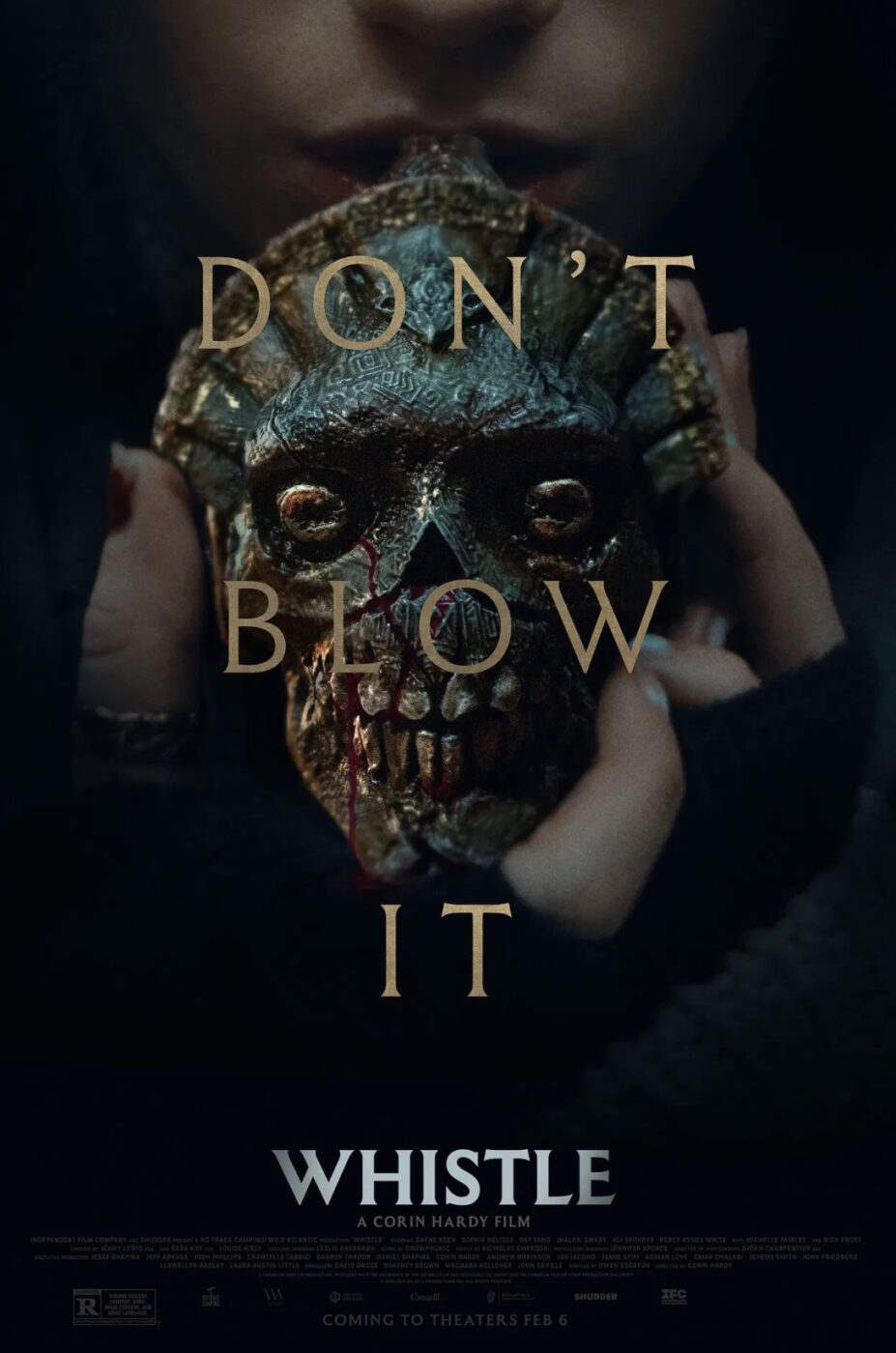
director: Corin Hardy.
writer: Owen Egerton
starring: Dafne Keen, Sophie Nélisse, Sky Yang, Jhaleil Swaby, Ali Skovbye, Percy Hynes White, Michelle Fairley & Nick Frost.