SAVE THE GREEN PLANET! (2003)
A man believes that the world is on the verge of an alien invasion, and sets out to save it.


A man believes that the world is on the verge of an alien invasion, and sets out to save it.
Odds are a recurring element in Save the Green Planet! / 지구를 지켜라!, a wildly unpredictable, genre-jumping piece of South Korean cinema concerning alien conspiracies, kidnapping, torture, and bumblebees. As unexpected as the film’s narrative and tonal swerves are, there is a mad logic to it all, rooted firmly in the concept of chance. The most impossible things might actually be true, and the likelihood is 50/50. There are no sliding scales and the odds never change: something either is, or it isn’t. Detective Choo (Lee Jae-yong), a chain-smoking, hard-bitten veteran, possesses a certain wisdom on the subject.
He eschews far-fetched conspiracy in favour of practical, tangible answers, even in the face of madness. He holds a half-completed scratch card up to his starstruck subordinate and explains that his odds of winning are 50/50—just like the coin he tosses moments later, assigning innocence to one side and guilt to the other.
His lack of concern over percentages allows him to take whatever comes in his stride, whichever side of Occam’s razor it may fall. “Think simple,” he instructs, even when dealing with the kidnapping of a pharmaceutical executive by a conspiracy theorist who believes he’s captured an invading extra-terrestrial from the Andromeda galaxy.
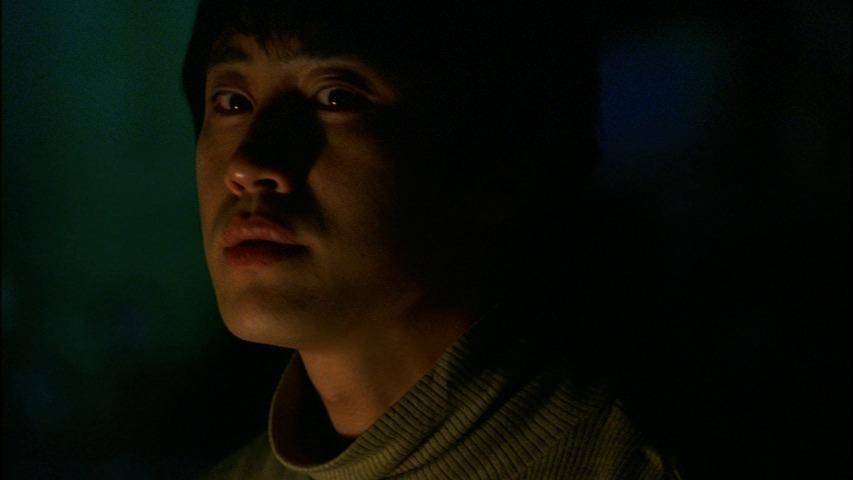
The kidnapper is Lee Byeong-gu (Shin Ha-kyun), a twitchy, occasionally hysterical young man who wears a homemade metal helmet that flashes LED numbers and buzzes with the hum of soldered circuit boards. Beneath the helmet is a sweet, boyish face and a mop of tousled hair. His girlfriend, a naive acrobat named Su-ni (Hwang Jeong-min), wears a helmet too. She does whatever Byeong-gu says, her insouciance providing an unrestricted pathway for his ideas.
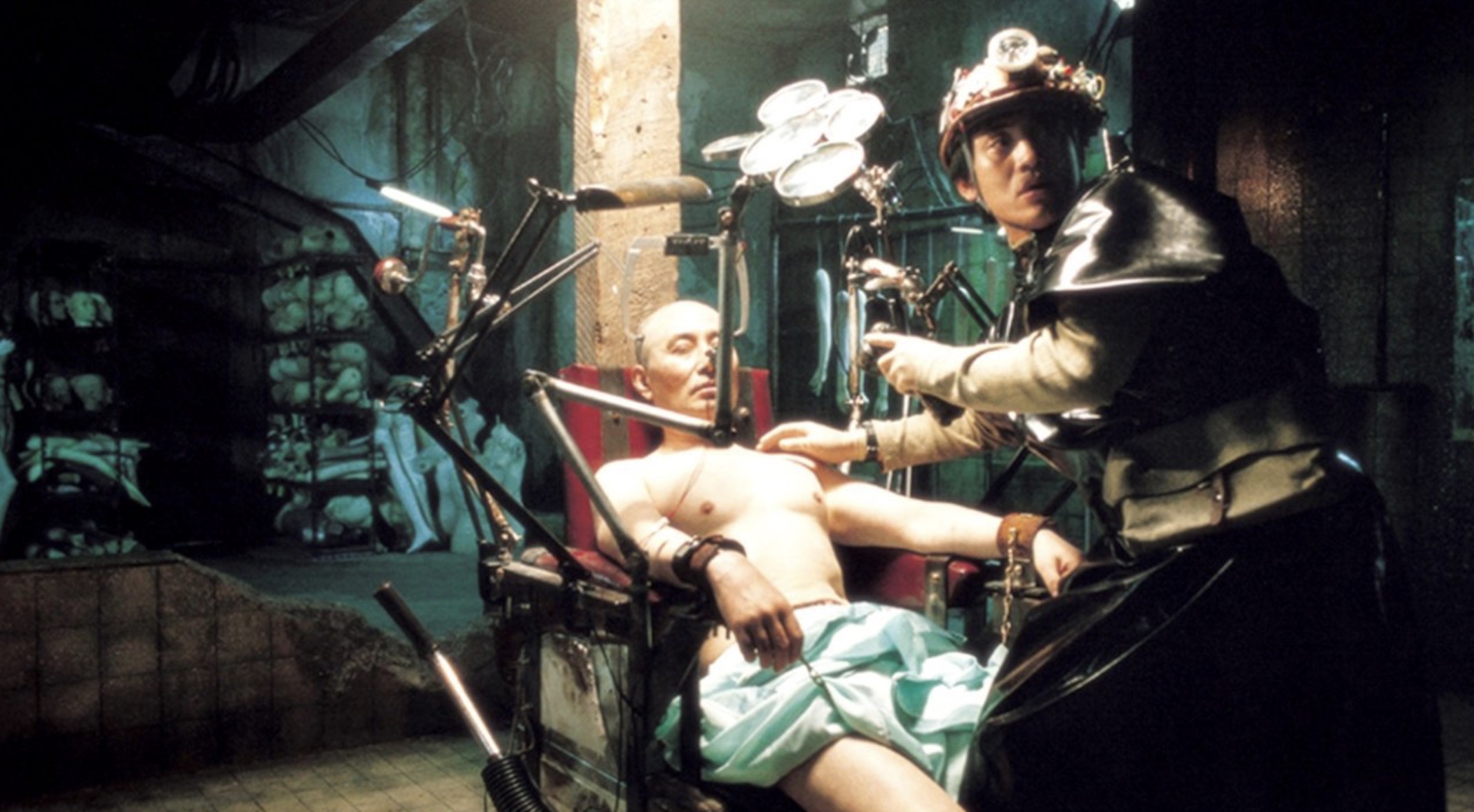
Chief among these is the belief that Kang Man-shik (Baek Yoon-sik) is an alien commander posing as a businessman. Byeong-gu is convinced he must stop Kang from telepathically contacting an alien prince during the upcoming lunar eclipse—a communication he believes could spell the end of the world. And so, in a dingy storm cellar flanked by misty forests, they’ve tied Kang to a chair and stripped him to his boxer shorts.
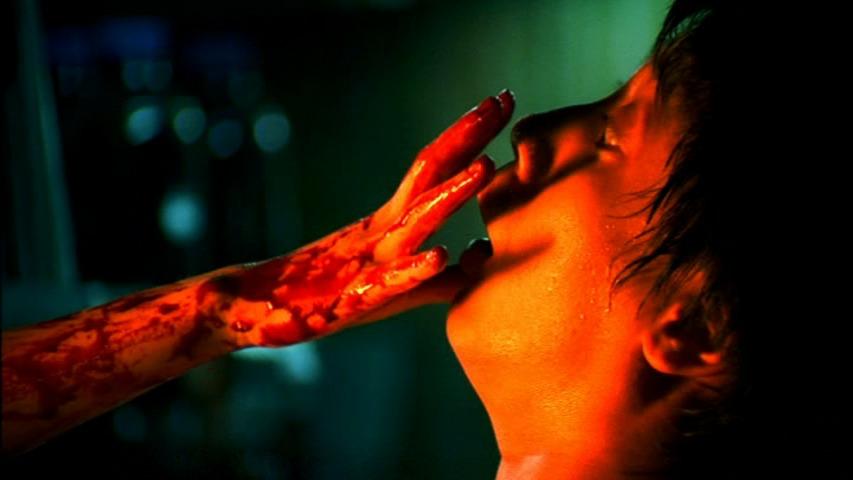
Writer-director Jang Joon-hwan provides unfettered access to Byeong-gu’s rambling theories, his film zipping back and forth as it attempts to keep up with every new detail. Shin Ha-kyun’s unbridled, manic energy is matched by a filmmaking style that filters MTV freneticism through a sickly neon grime akin to David Fincher or Park Chan-wook.
There’s a sense of aliveness and constant movement, as if delusion were the most thrilling thing a person could experience. Byeong-gu’s warped reality casts him as the hero, and through his perspective, the cartoonish exaggeration becomes honourable rather than laughable. At points, the speed-ramping, digital crash zooms, eccentric costumes, and frivolous spy music make us wonder if we’re in for a quirky, Mystery Men (1999)-esque adventure—and perhaps that’s exactly how it seems to Byeong-gu.
In one memorable sequence, Jang channels the Shaw Brothers, with Byeong-gu kicking a criminal through a plate-glass window before engaging in a high-octane kung-fu battle. Byeong-gu defies gravity, spiralling through the air in a black rain mac that looks equal parts superhero cape and bin bag. “You’re the reason Earth is in danger!” he screams at his defeated foe, as a crowd applauds our vindicated hero.
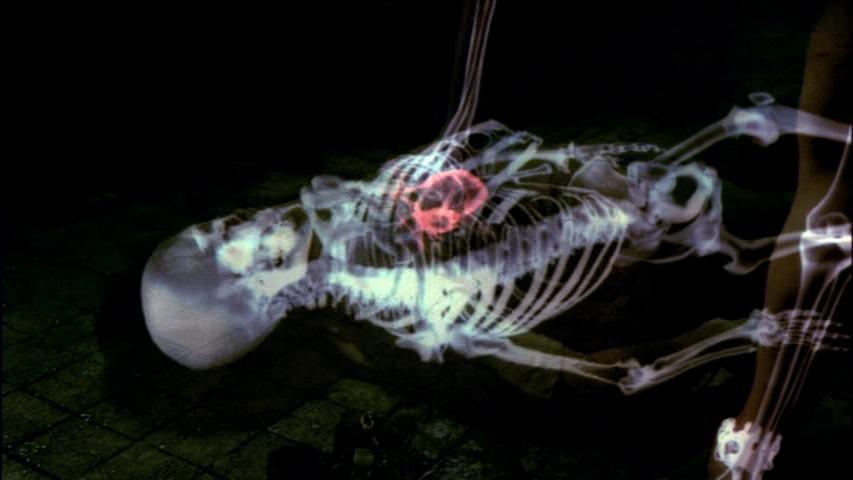
The self-appointed vigilante may have delusions of grandeur, but they’re necessary for him to continue his mission in the cellar. “I thought these things only happened in the movies,” Byeong-gu says, acknowledging the preposterousness of the situation. “They’re the ones who made the movies,” he continues, passing the buck, “but now they don’t believe me.” Despite the film’s maximalist detours, it possesses a quietly devastating core that hints at something more tragic.
Byeong-gu’s shelves are crammed with dog-eared books on UFOs and jars of tissue samples, alongside endless homemade gadgets that look like kitchen appliances glued together. It’s an experimental lab that doubles as a workshop and a prison cell.
Jang’s extreme close-up of Kang’s head being shaved—the follicles like tiny open wounds—is enough to make any viewer wince. The bodily mutilations are intimate and intensify rapidly. Shaving the head was merely the first step: “Those bastards use hair to exchange telepathic signals,” Byeong-gu tells Su-ni, as Kang sobs and protests his innocence.
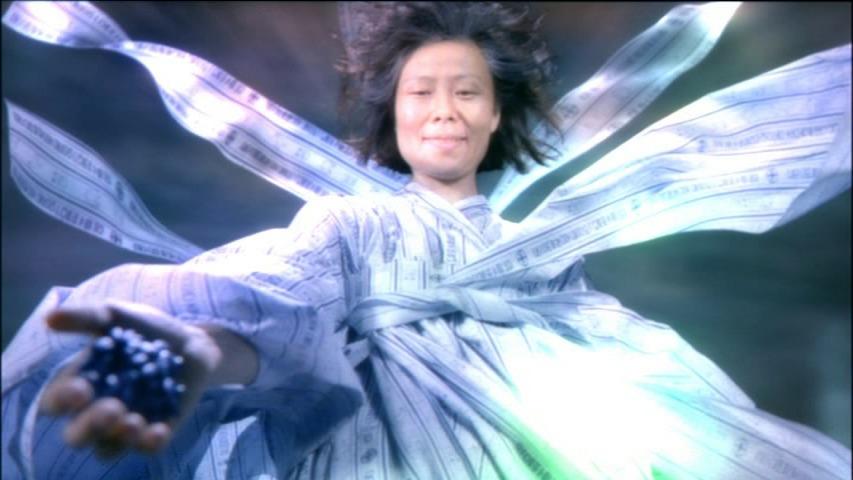
They scrape skin from his feet in an eye-watering “test” of his biology, later resorting to a method of restraint just short of crucifixion. Here, Jang jettisons the whimsy, replaced by a grim “torture-porn” extremity. The whirlwind of genres Save the Green Planet! pulls from would be exhausting if the director weren’t so in control and so unironic in his approach. For all the film’s oscillation, it’s held together by a thread of genuineness and a lack of cynicism. Despite the intensity, there is even something sweet and real between Su-ni and Byeong-gu.
Jang’s intention isn’t for Byeong-gu to be a laughing stock or a hero. When Detective Choo flips his coin, he overlooks nuance in pursuit of fated fact. Byeong-gu, whether he realises it or not, does the same to Kang. Both men are simply looking for a “yes” or a “no”, and they’d likely made up their minds before they even got out of bed.
From one angle, Save the Green Planet! is a mystery about whether Kang is telling the truth; but what sneaks up on the viewer is a film where we end up longing to interrogate the interrogator. Shin Ha-kyun’s innate likability acts as a crumbling cover for the troubling questions that come to light. This isn’t Byeong-gu’s first time; jars containing severed hands hint at a dark history.
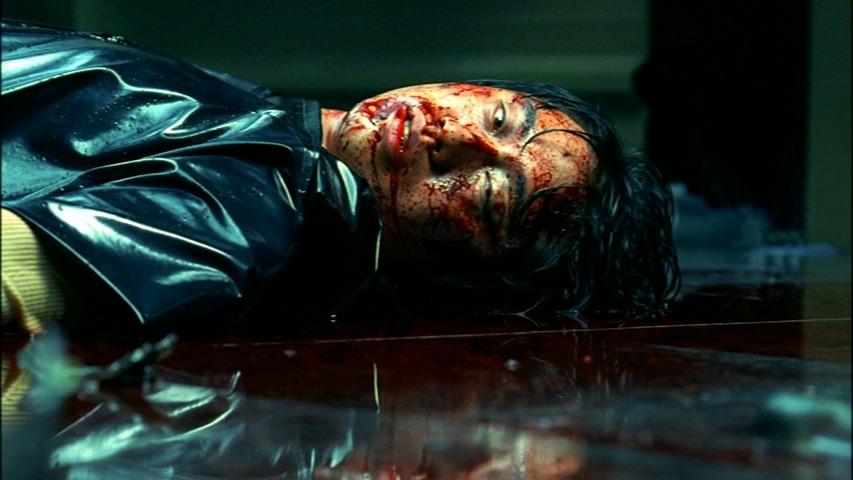
His mother is at the centre of this medical anxiety: she’s been comatose for five years following a secretive drug trial involving Kang, and Byeong-gu is paying out of pocket to keep her life support switched on. His father lost an arm in a coal-mining accident and lost his mind; Byeong-gu himself fell into petty crime. Piece by piece, the family’s life has been decimated by mercenary health industries and faceless corporations that send people to toil and die in unthinkable conditions. Somewhere along the line, Byeong-gu spiralled into drug-induced mania, turning his deepest fears into bedfellows—his lack of agency in a harsh world now clawed back by horrifying means.
The last decade of cinema has provided no shortage of “eat-the-rich” thrillers. These are films where class commentary is reduced to a trite bumper-sticker slogan, with filmmakers letting themselves off the hook in the process. These movies hope to get by on the agreeable stance that the rich are awful, without expanding further or inviting self-reflection. It is how we end up with condescending genre films like The Menu (2022) and The Running Man (2025)—films that wield the language of revolution while offering images designed only to stroke the ego. Blink Twice (2024), Glass Onion (2022), and The White Lotus are tailor-made for flattery; if you get the jokes, you can rest in the cosy comfort that you aren’t the punchline.
Save the Green Planet! and Yorgos Lanthimos’s excellent English-language remake, Bugonia (2025), succeed where other satires fail. There is no preaching to the choir, but rather an ugly deconstruction of power and desperation, asking what we truly seek to gain from our fantasies.
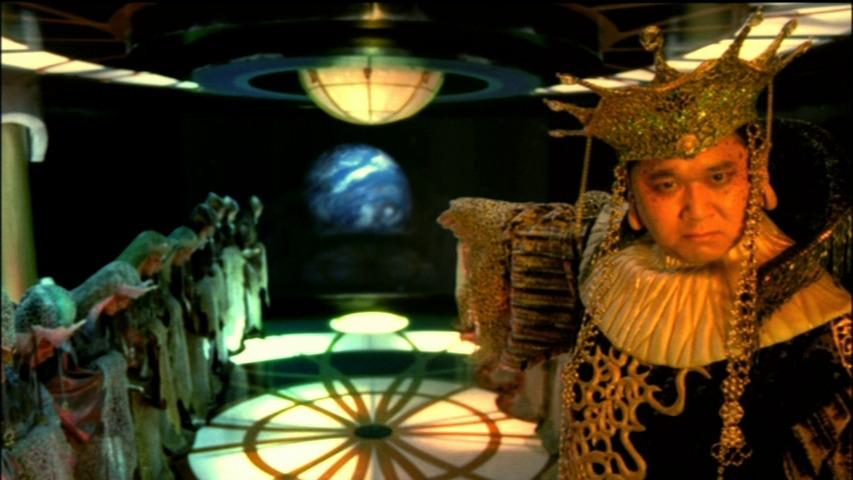
Byeong-gu doesn’t just want his alien theories to be true; he needs them to be. Conspiracies are what people turn to when the truth is too pathetic to accept. They are the misplaced tools of the voiceless who have witnessed the cruelties of systems built to protect them. The idea that aliens exist or the Earth is flat is almost preferable to a reality that is simply depressing and devoid of colour. It’s not a secret; it’s just cruel.
Global healthcare cedes ground to business interests; the sick are punished, and the rich get away with murder. We see the crimes of the elite on the news every morning, only to be reminded that nothing can be done. As I write this, news has broken that pollution restrictions for billion-dollar companies have been repealed by the US president. Detective Choo sums it up well: “Life’s a fucking drag.”
In another life, Byeong-gu might have been an eco-warrior; in this one, he keeps bees and captures the occasional “lizard person.” Perhaps he realised the former isn’t exciting enough to satisfy his need for revenge.
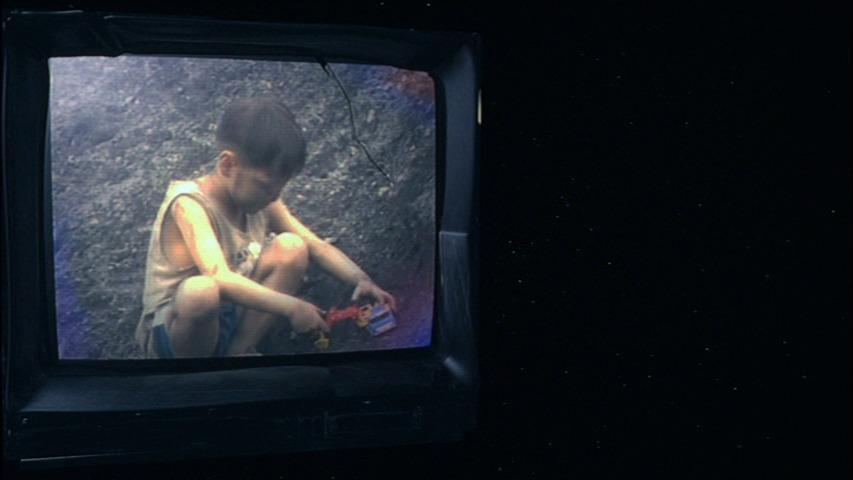
Jang’s approach echoes Luis Buñuel’s The Exterminating Angel (1962), where bourgeois guests are inexplicably unable to leave a dinner party. Like Buñuel’s work, Save the Green Planet! approaches satire through absurdity and refuses to be over-explained. Even when given an authoritative perspective, we resist it. Whichever side of the coin we’re offered, we want the other.
Like Su-ni, for whom the torture proves too much, we want what we want until we get it. She returns to the circus as a tightrope walker. To her left and right is darkness and a long fall; she must focus all her energy on the next tiny step. Whatever lies in the dark must be faced without falling into despair.
Our pain and disappointments can easily mingle with our passions. The world’s mysteries—aliens, storms, electricity, love—can become weapons of self-harm. We may not even recognise the blood pouring from our own wounds. To quote a guest in The Exterminating Angel: “What was used for pleasure can now be used to relieve pain.” Save the Green Planet! is an exceptional tightrope walk of a film—whether it ends in pain or pleasure, the walk itself is enough to make your head spin.
SOUTH KOREA | 2003 | 117 MINUTES | 1.78:1 | COLOUR | KOREAN

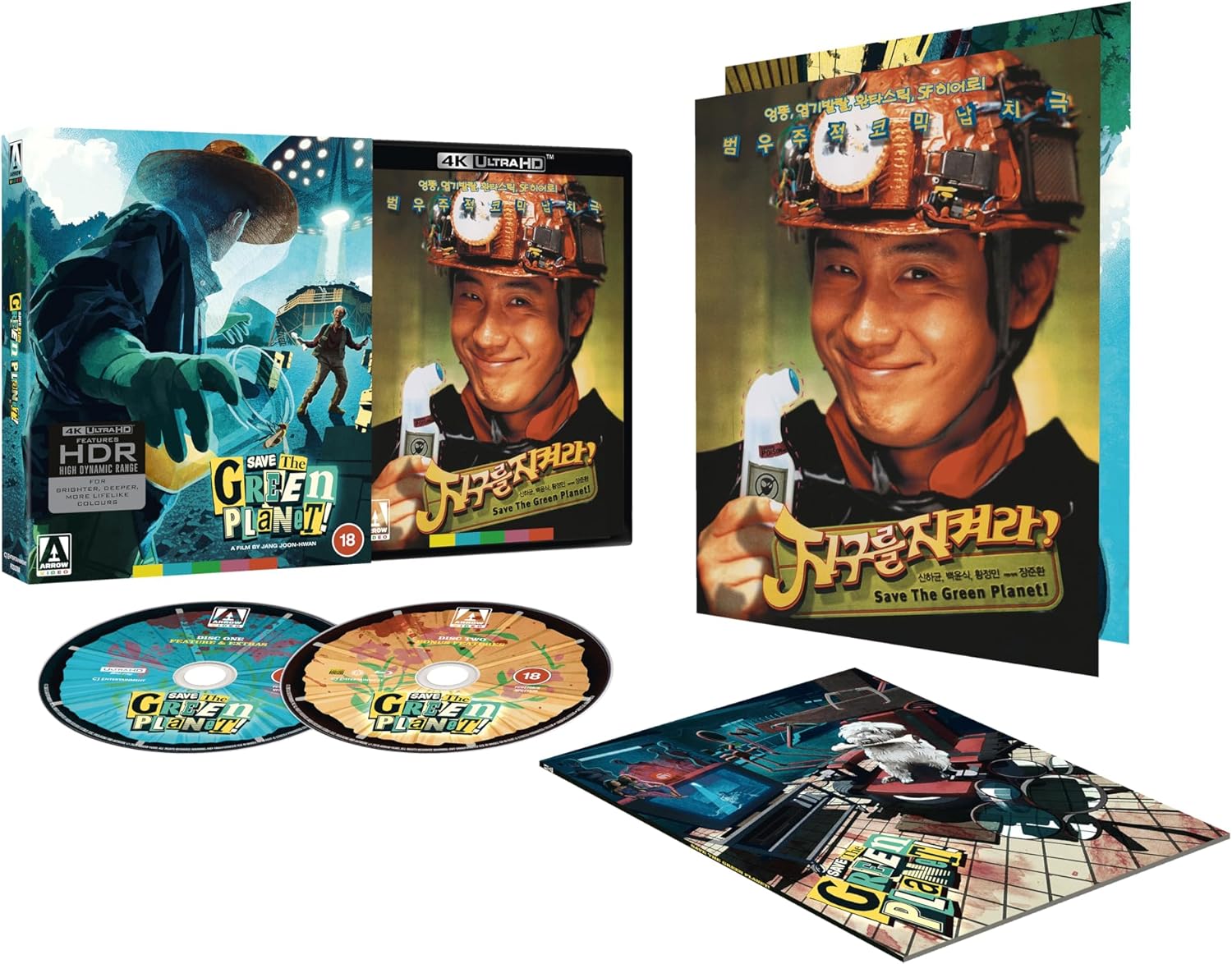
This release of Save the Green Planet! boasts a new 4K restoration approved by director Jang Joon-hwan. It’s an exceptionally vibrant transfer, with the disc’s Dolby Vision bringing the image fully to life. The film’s rich blues and greens are lush, and the blacks are deep and true—especially in the darker corners of the basements and during night-time scenes.
The film sounds fantastic, featuring a lively, propulsive score and some truly ingenious sound design, particularly when Byeong-gu begins his interrogations. The original DTS-HD MA 5.1 surround audio is powerful and clear, ensuring every spat-out tooth and squeal of a cicada comes through perfectly. It’s an excellent audio-visual experience.
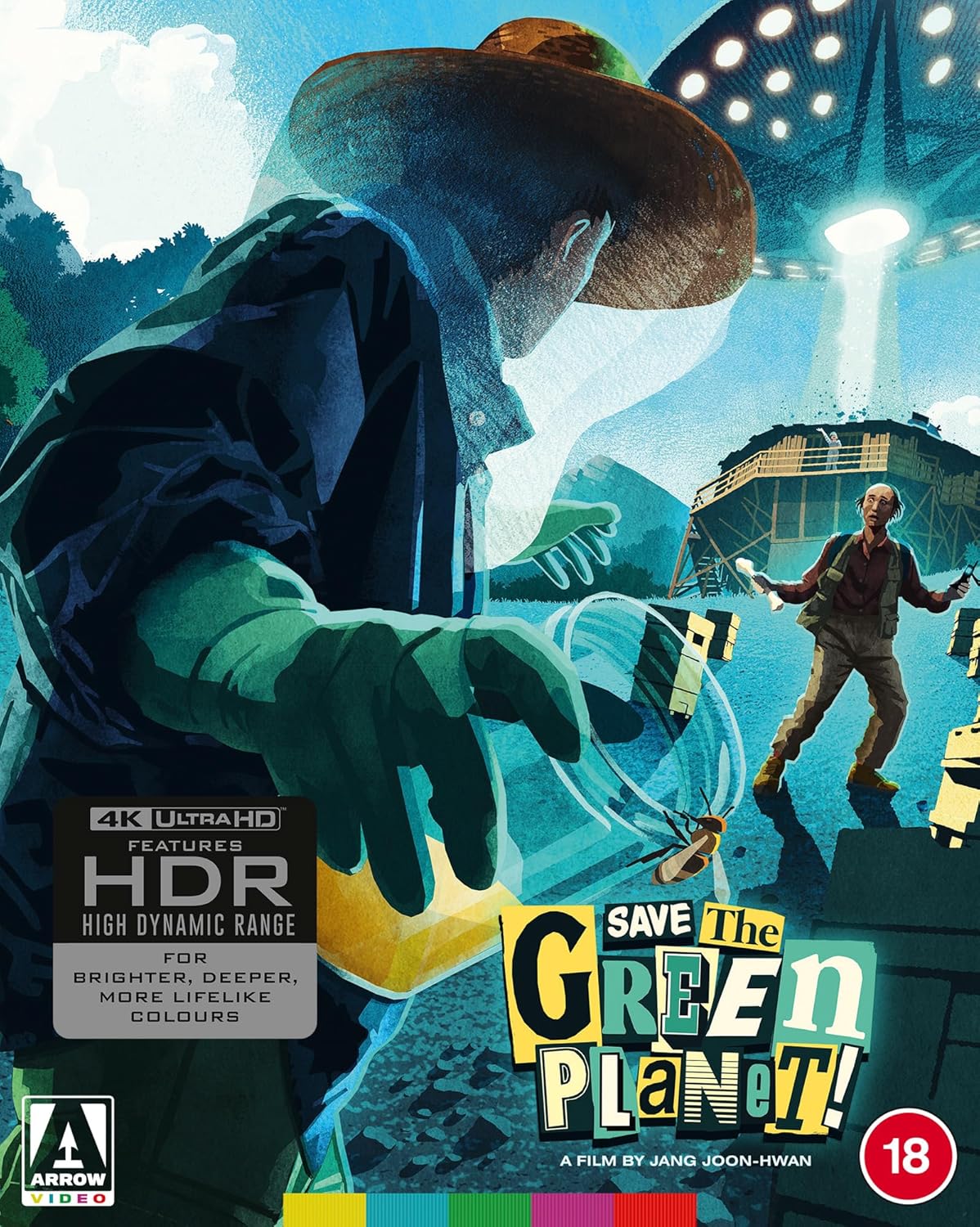
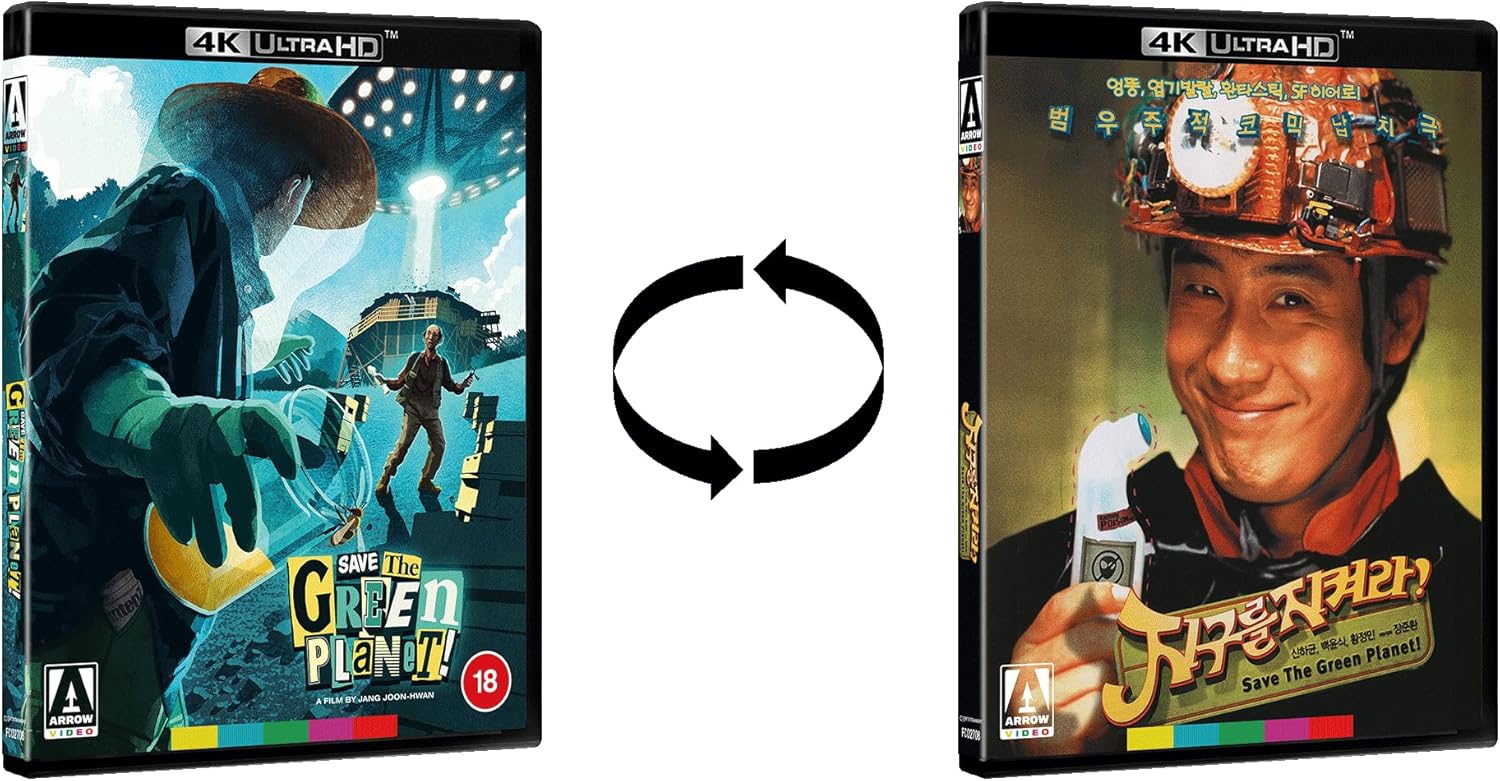

writer & director: Jang Joon-hwan.
starring: Shin Ha-kyun, Baek Yoon-sik, Hwang Jeong-min, Lee Jae-yong, Le Ju-hyeon, Gi Ju-bong & Ye Soo-jung.