THE RUNNING MAN (2025)
A man joins a game show in which contestants, allowed to go anywhere in the world, are pursued by "hunters" hired to kill them.

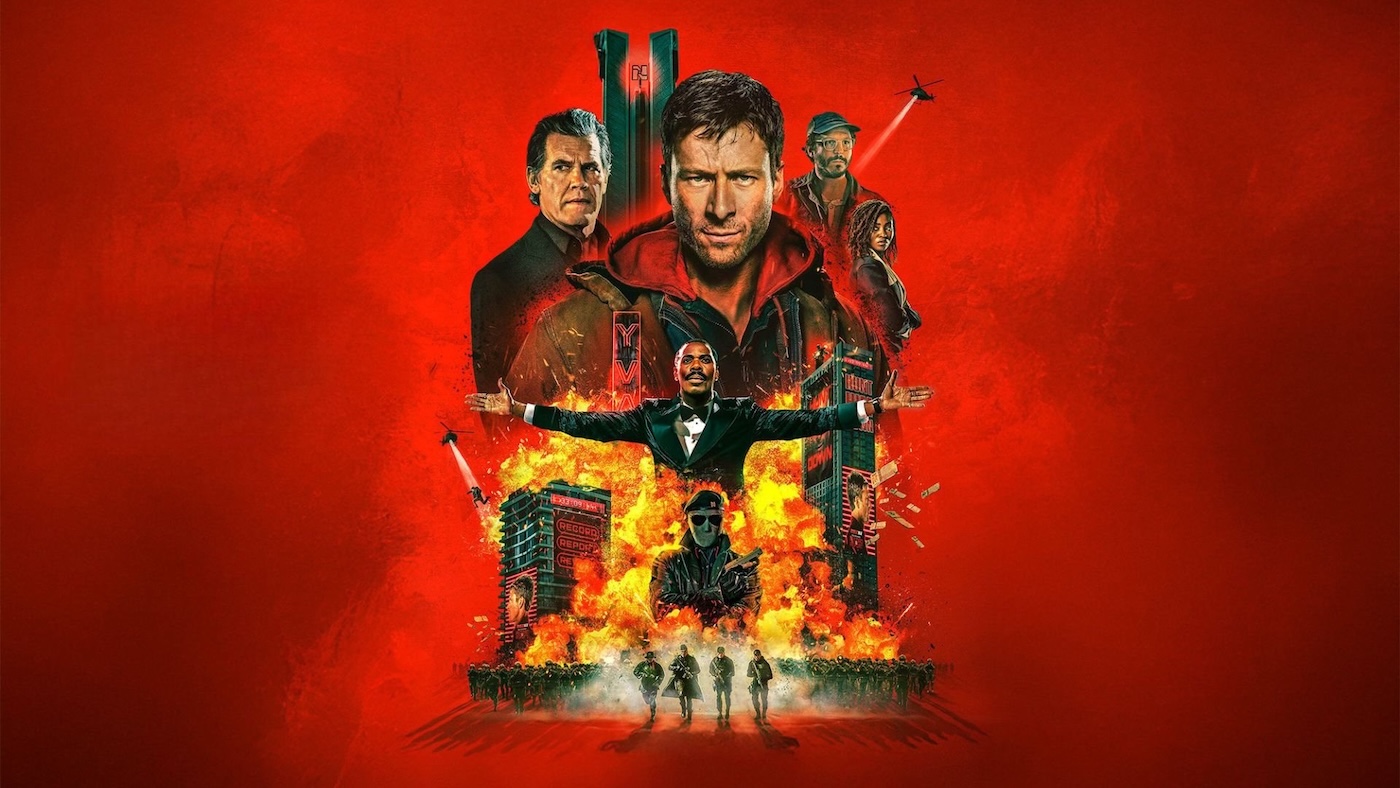

A man joins a game show in which contestants, allowed to go anywhere in the world, are pursued by "hunters" hired to kill them.
The Running Man, by Richard Bachman (Stephen King’s pseudonym), was published in 1982. It was a gritty, dystopian survivalist story about a man so desperate to save his sick daughter that he agrees to go on a reality TV show to be hunted by ruthless mercenaries for 30 days, with the chance of winning a billion dollars if he survives. The classic 1987 film version, starring Arnold Schwarzenegger, is a campy game show satire that, aside from the basic premise, bears no resemblance to King’s original tale.
While this iteration is enjoyable in its own way, readers have long been clamouring for a truly faithful adaptation. In Edgar Wright’s 2025 movie, book fans get just that. And lovers of the cheesy ’87 film also got a fun, throwback action romp. The marriage of these two styles, grit and camp, creates a wonderfully weird experience that would have failed spectacularly in the hands of a lesser director.
Wright’s film does its best to follow the main plot points of King’s novel. Rather than the framed former cop of 1987, Ben Richards (Glen Powell) is now a blue-collar worker who’s been blacklisted by the all-powerful “network”, that owns every part of the US economy, for insubordination. Desperate for cash when his one-year-old daughter becomes ill, but against his wife Sheila’s (Jayme Lawson) wishes, Ben auditions for deadly game show The Running Man, in which three contestants must evade trained killers for a month to win one billion dollars.
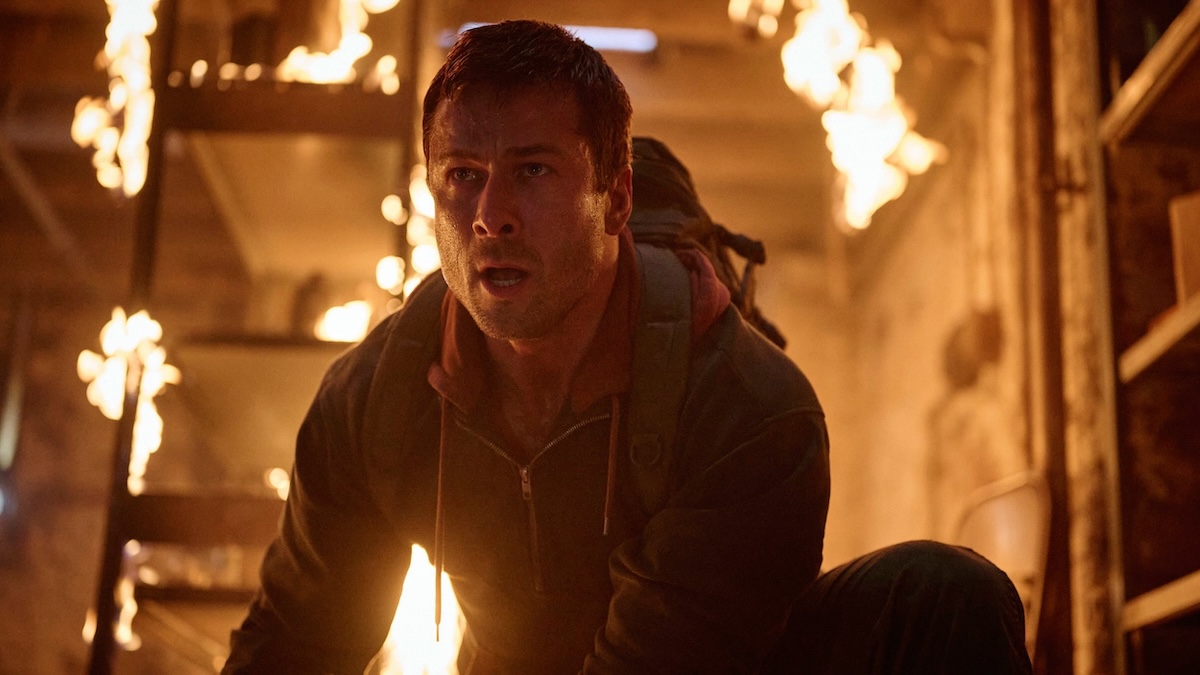
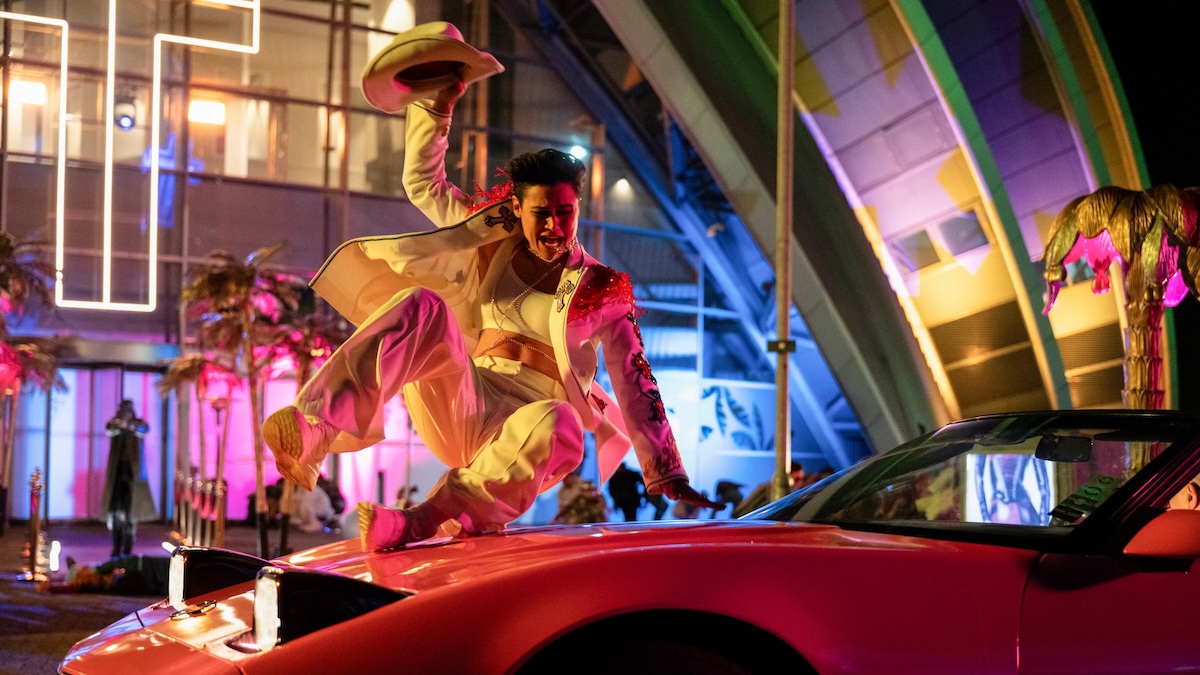
Fans of the Schwarzenegger movie will quickly recognise the slick but farcical game show style. The dancers are still in the hottest neon fashions of the ’80s, while the host, Bobby T (Coleman Domingo), is equal parts charm and smarm. For the most part, however, that’s where any similarities to the Schwarzenegger classic ends. The blending of these ’80s callbacks to a much darker, grittier tone, exemplified by the fact the first shot takes place in a dark and dingy warehouse rather than a polished TV set, is surprising.
Given much of the disdain the ’80s film received from critics at the time, I expected a more serious adaptation to ask the audience to forget that the original film happened at all. But knowing Edgar Wright behind this version, I should have known that wouldn’t be the case.
Wright is best-known for action comedy films like Hot Fuzz (2007), and the love he has for old action films has been evident throughout his career, as is his gift for self-aware humour and wit. All those combine to make this new Running Man, though darker in tone than Wright’s usual fare, an extremely enjoyable two-hour ride.

The best modern update comes from one of Ben Richards’ allies, Bradley (Daniel Ezra), who shows Ben his YouTube-style channel in which he analyses and attempts to sabotage Network shows, including The Running Man. Having watched many such channels online, this felt more than authentic to me. The likes of YouTube, TikTok, and X have, for good or for ill, given voice to perspectives outside the typical narratives seen on network channels or streaming platforms. Now that more and more people seek out these voices on platforms that rely solely on user-generated content, it’s very easy to imagine these types of social networks being the hub of underground activity if and when the West is taken over by a totalitarian regime.
But while the YouTuber-’80s poet mash-up is done beautifully, other attempts to meld genres in Wright’s offering end up being slight missteps. Surprisingly, one of the biggest missteps comes in a scene that was supposed to add emotional weight and gravity early on. When he starts out on the run, Richards goes to his neighbourhood friend Molie (William H. Macy) for new ID cards and disguises. Here, Molie reveals that, before Ben was accepted on The Running Man, he’d planned to offer him a job…
Sadly, what was intended to heighten emotional tension in an ironic fashion only serves to undercut Ben’s motivation. From the first second of the movie, we understood that Ben felt as though becoming a contestant on a TV show was the only way to help his daughter. The idea of Richards doing everything for his family was a strong motivation and the underpinning of every step he took.
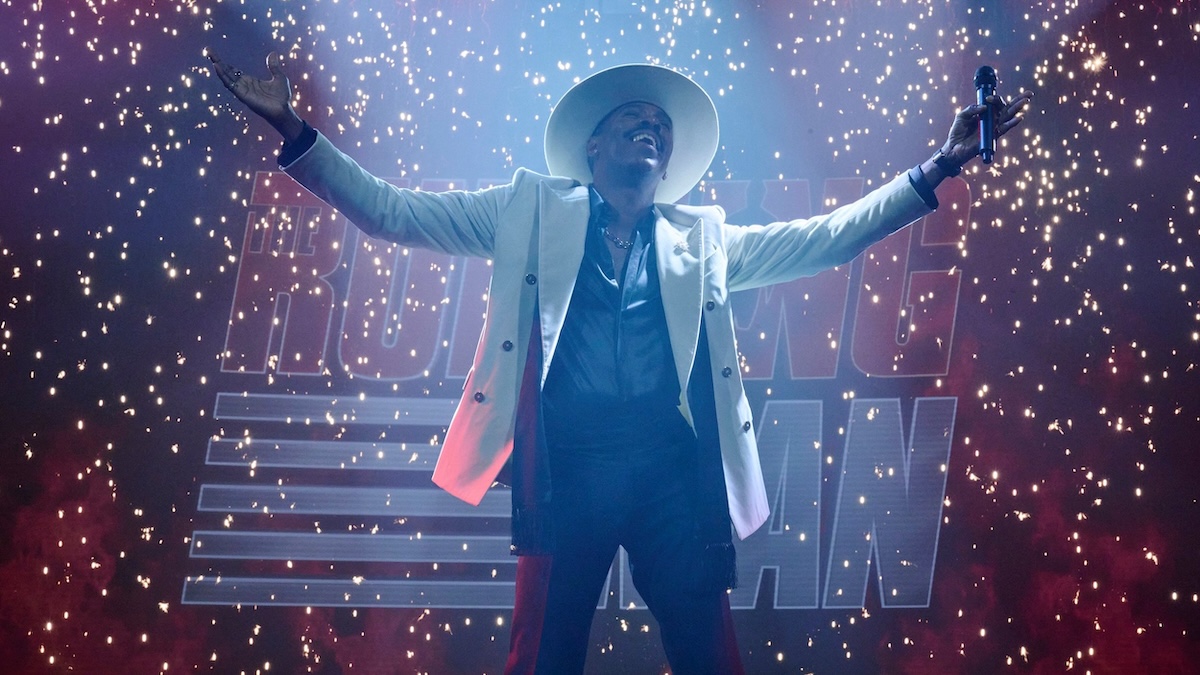
But tow, when we learn he didn’t necessarily have to become a TV contestant and that his friend wanted to hire him but, for unclear reasons, held back such news until Ben’s daughter was on the brink of death, the revelation lands with a thud and a question mark rather than an emotional tug.
Likewise, while I can certainly see why Glen Powell (Twisters) was chosen for the role, he has neither the charm nor the star quality of the best action heroes. While he sounds and looks like the everyman protagonists of the Die Hard (1988) era, and there’s a certain likability to his cocky sarcasm, I can’t help but feel there’s a charm missing from his performance here. While he’s serviceable as Ben Richards, he’s the type of actor that likely wouldn’t have made it during the heyday of movie action heroes.
These small details, along with another Hollywood misunderstanding of how guns work (there’s not and will never be a completely plastic gun, it doesn’t make sense), these don’t deter from one’s enjoyment of the film or its core message, which is more relevant today than it was when the book came out.
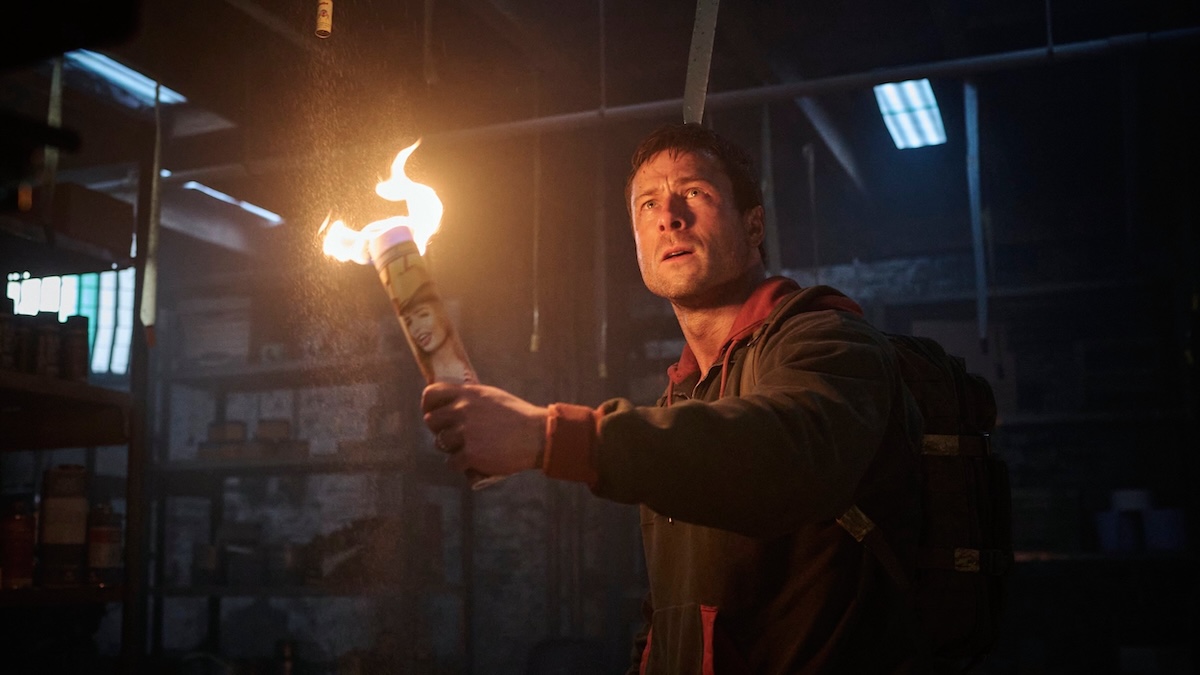
The introduction of Amelia Williams (Emelia Jones) is another near-perfect moment in the film that’ll feel, to modern audiences, more than plausible and sickeningly familiar. Unlike the ’87 movie (where Amelia’s a clueless network-backed singer-songwriter), and the book (where she’s an equally clueless young housewife), Wright’s version of Amelia is portrayed as a successful, modern woman.
And today, such a woman isn’t married (as she likely would have been in the early-’80s), and nor is she an artistic sellout, which was once a common stock character type. Instead, Amelia’s been written as a successful single woman with a good but non-threatening office job who watches mindless reality TV and gossips with her friends about which shows are “fake”. In other words, Amelia Williams stands in for most of us now; middle-class, white-collar workers who go about our days isolated from one another and only tangentially connected through phones, social media, and TV.
We meet Amelia just as her favourite Kardashian-style reality show’s been pre-empted for an update of The Running Man, and she laments to her friend how clearly “fake” The Running Man is. Of course, seconds later, she gets an ironic comeuppance when Ben Richards comes smashing through her car window.
Though a small statement in the grand scheme of the film, the question of truth vs. television and reality vs. narrative is at the heart of the story, as it was at the heart of King’s writing. But, given the prevalence of deep fakes, altered photos and footage, and “fake news” in the world around us, here it ‘s less laughably unlikely and more chill-inducing than it was back in 1982.
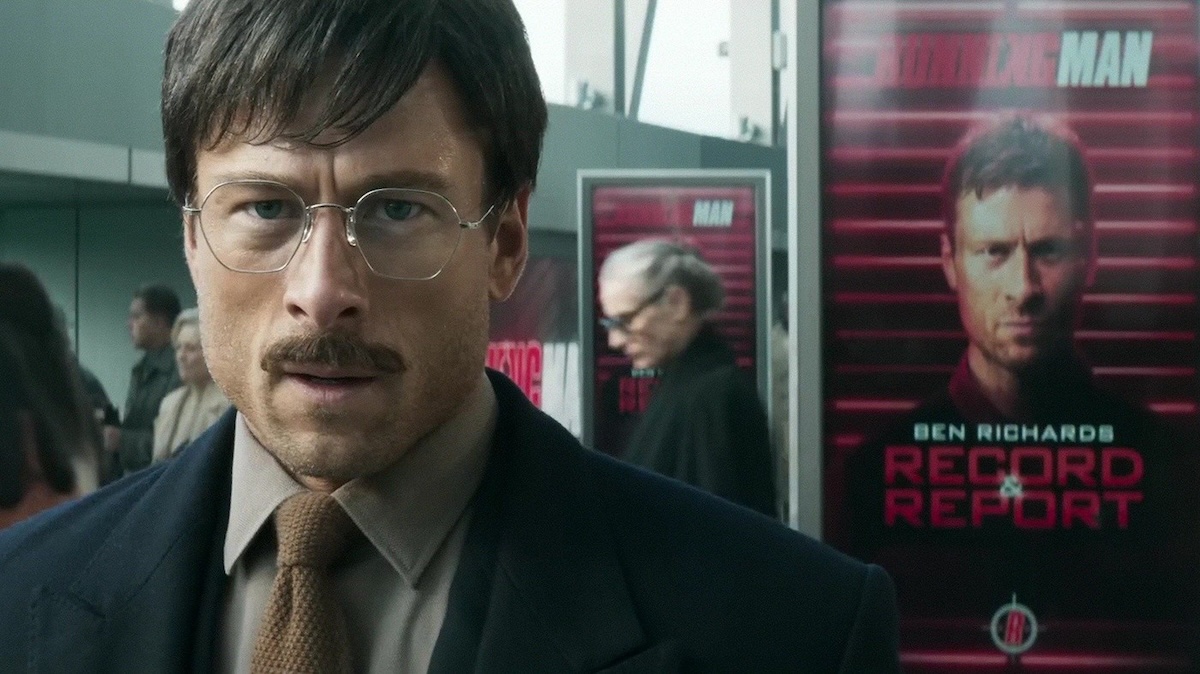
Now, when we watch words being added into characters’ mouths “live” on air, or photos being changed and doctored so they’re no longer recognisable, it feels less like movie magic and more mundane. That isn’t, however, a criticism of the film or the decisions to leave the deep-fake plot points in. The question of the blurring lines between reality and fiction in our world is becoming more relevant by the day.
That’s why I’m more than surprised when I see film critics saying this type of theme is “tired”, “old”, or that “we don’t need to see it anymore.” I’m left feeling more than a bit disturbed!
Despite how often we’ve been told by artists, historians, philosophers, and other thinkers that our need for mindless entertainment and our drive to outsource human creativity to mindless machines will be our undoing, we clearly haven’t learned these lessons. Even when we’re offered this warning in a slick, dressed-up package, like Wright’s Running Man, something that looks and feels acceptable to our violent, entertainment-hungry eyes, we still toss it aside. Though the main character tells us to “turn off” the TV, the messaging, the mindless mind control being pumped into our systems, how many of us will actually do it?
How many of us will have fun at The Running Man and then go home to watch reruns of The Bachelor or engage in mindless rage-baiting comments on People magazine’s website?
The message can’t be “tired” or “overdone” if it’s never really been heeded. Critics who say we no longer need this type of messaging are tossing aside an unopened gift because they think the wrapping is unimaginative.
I know that, in the end, Hollywood telling a film audience to “turn it off” is a bit of a joke. They certainly don’t want us to turn off the TV and cancelling our streaming subscriptions. That would hurt their bottom line. But it’s a message that doesn’t deserve the casual dismissal some critics of the film are giving it.
It might be time to ask, what would happen if we did turn off? What would happen if we stopped streaming shows about “real people”? Or, for that matter, mindlessly fun movies? These are questions that The Running Man asks, but ultimately, they’re questions it doesn’t want answered. So it wraps itself in unassuming paper, hoping it’ll not be taken seriously.
But maybe it’s time we start taking it seriously. Maybe it’s time we follow the advice that filmmakers, to the chagrin of studio heads, have been telling us for years. Maybe it’s time we stop buying into the lifestyles, political ideas, and products that those in power are selling us. Maybe it’s time to turn all the messages off. And if we do that, we may never need another remake of The Running Man.
UK • USA | 2025 | 133 MINUTES | 2.39:1 | COLOUR | ENGLISH

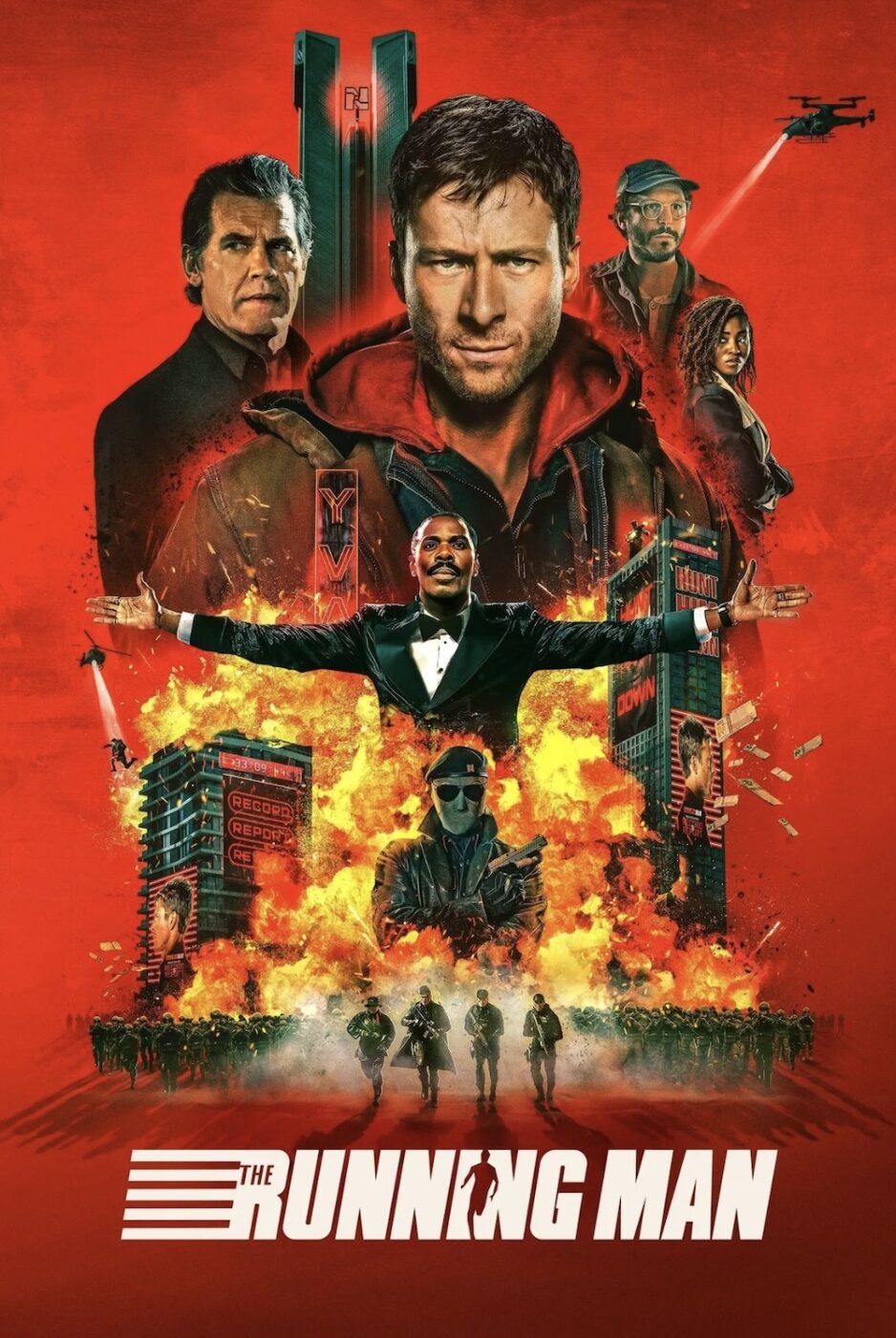
director: Edgar Wright.
writers: Michael Bacall & Edgar Wright (based on the novel by Stephen King).
starring: Glen Powell, William H. Macy, Lee Pace, Michael Cera, Emilia Jones, Daniel Ezra, Jayme Lawson, Sean Hayes, Colman Domingo & Josh Brolin.