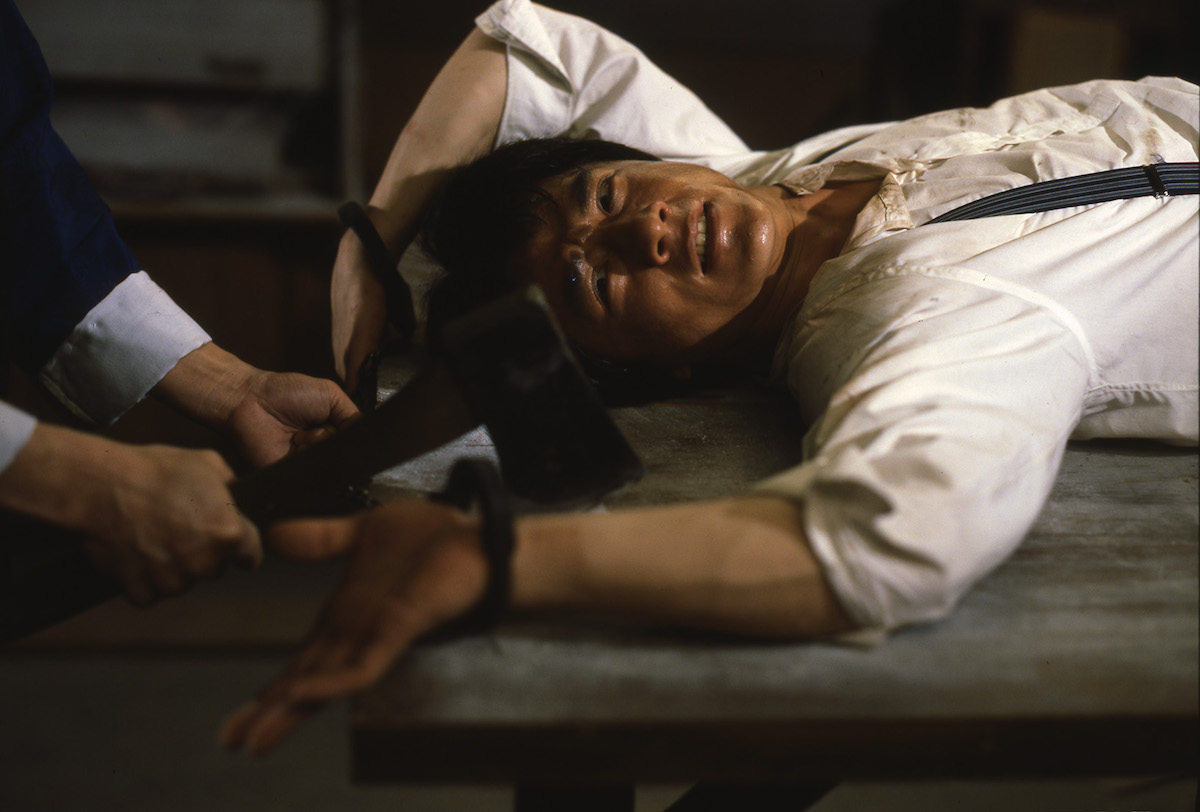
RITUAL (2000)
A disillusioned filmmaker has an encounter with a young woman who has a ritual of repeating "Tomorrow is my birthday" everyday...

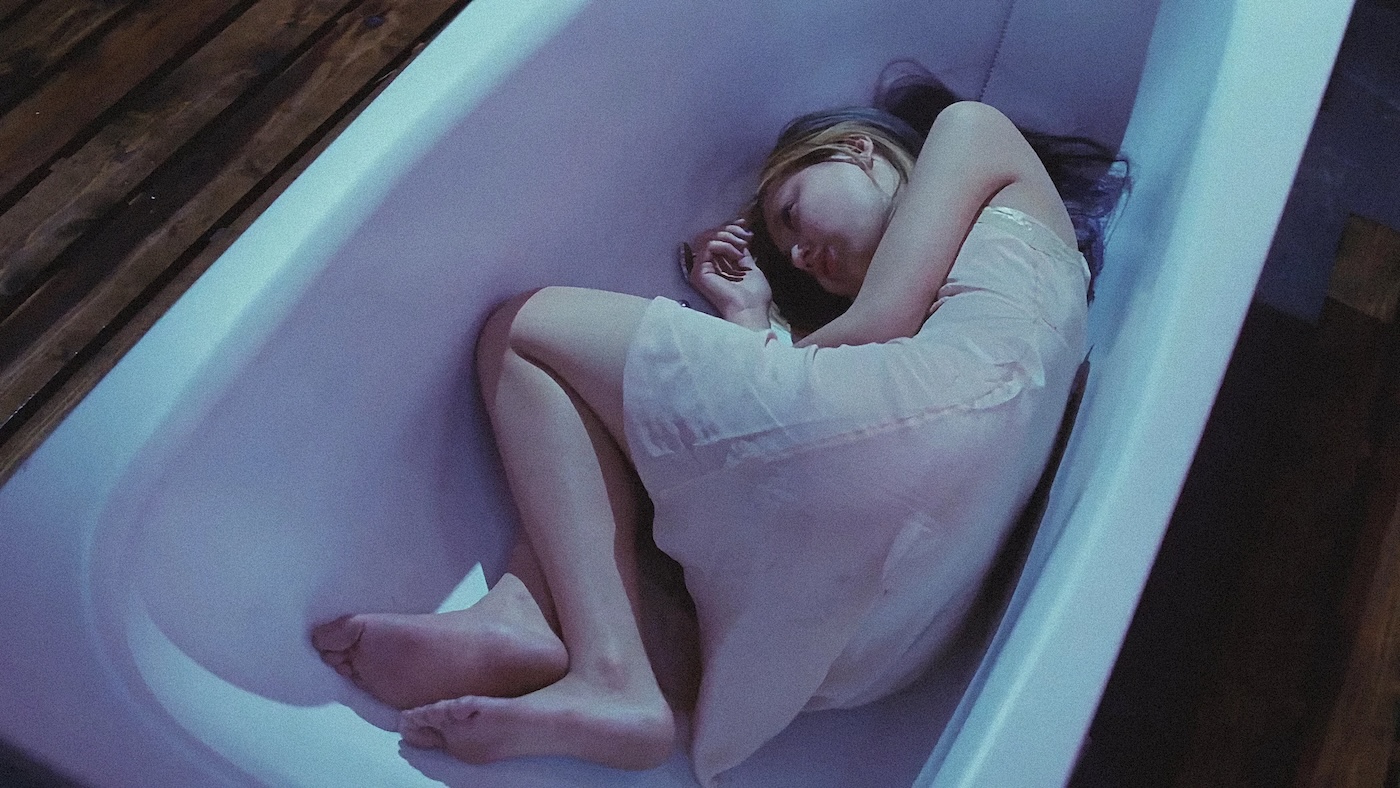

A disillusioned filmmaker has an encounter with a young woman who has a ritual of repeating "Tomorrow is my birthday" everyday...
Known for his indelible impact on the world of animation, Hideaki Anno’s forays into live-action works are far less renowned, though still revered. His film Ritual / Shiki-Jitsu / 式日 has hardly left much of a cultural footprint, though it is beloved by art film lovers and fans of the director, earning Ritual a spot on Letterboxd’s list of its 250 highest-rated narrative films. The live-action film is a moody tone piece haunted by suicidal ideation and a desire to seek reprieve from life itself.
These motifs are explored through a blossoming friendship between a former anime director (Shunji Iwai) looking to make a ‘real film’, and a young woman (Ayako Fujitani) living in an escapist fantasy world who constantly proclaims that tomorrow is her birthday. By repeating this statement, she can deny herself the opportunities lying unseen beneath an unexplored life, telling herself that this eternal promise of tomorrow’s good fortune represents the moment she will finally re-immerse herself in reality.
The dynamic between the pair is spiritually cleansing yet totally unfeasible. The director is constantly filming his environment, to such a degree that he misses out on the beauty right before his eyes (Anno regularly contrasts the film’s gorgeous cinematography with this character’s grainy video camera footage). The unnamed director is an eternal observer, embodying this role by refusing to value his own perspective, deferring instead to the camera’s POV each time. Meanwhile, his new friend never feels like a fully realised character, a flaw that takes time to reveal itself, since at first she can be easily mistaken for someone whose emotional hang-ups have stopped her from realising her potential.
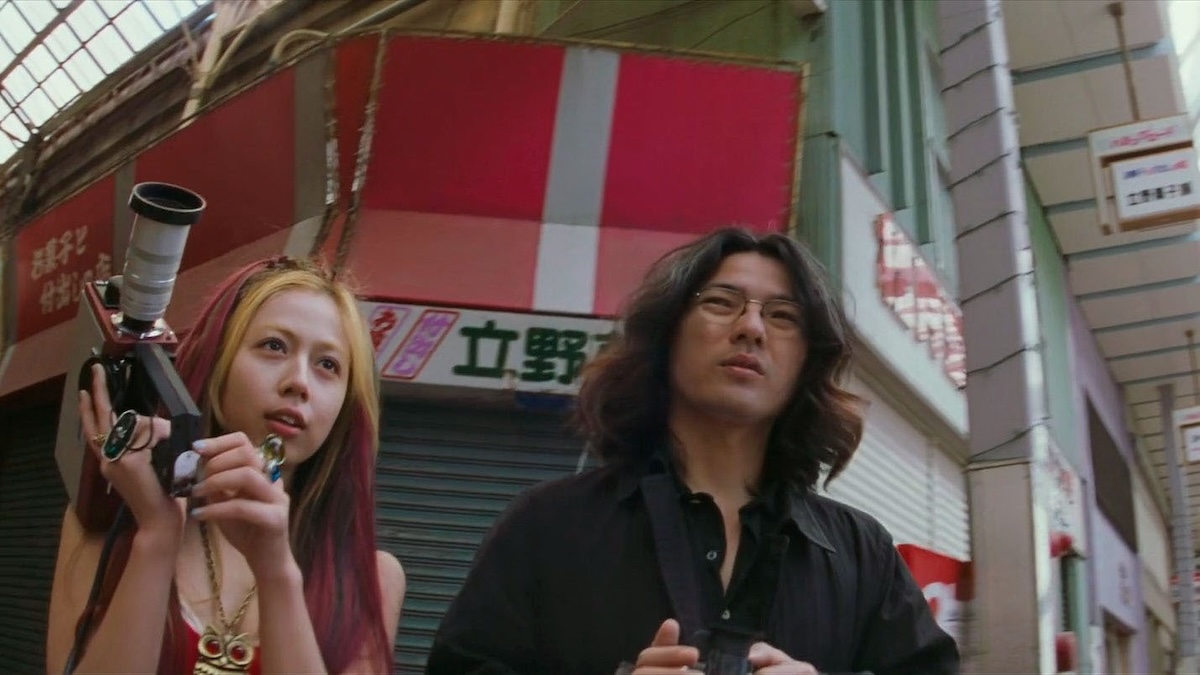
She lives in a large apartment that is one giant room, replete with aesthetically pleasing yet useless trinkets that are more likely to make one think of a photo-shoot than the adornments of a home. Surrounding the pair and framing this narrative are frequent shots of the rampant industrialisation encircling them, with Ritual often coming across as a spiritual successor to Antonioni’s Red Desert (1964) in this regard. Both films are highly successful at conveying the cold, stark beauty of industrialisation, and for recognising how important this is in relation to the hollowness infecting these characters’ souls. They also centre on an evolving dynamic between a man and woman, where the man is more muted while the woman is expressive to the point of absurdity. The female protagonists in both films are half-real, flickering images of a human beings that occasionally come to life through being defined by a desperate desire to escape reality. Unfortunately, that often means their foundations rest on half-baked ideas instead of a fully realised personality.
Ritual is an aimless film tracking aimless characters, where the only consistent quality is the strength of its compositions and Anno’s sweeping camera movements. The camera often pans with slow glides that accumulate despair in largely empty environments, reflecting the unnamed pair’s inner turmoil. They can keep wandering through a life that gives them barely any reason to keep living. Little effort is made to convey a journey across the film’s runtime, since these characters are trapped in a co-dependent form of stasis. It’s as if they are daring the other to either submerge themselves within this murky, ethereal underworld or abandon this mental funk for good and swim to the surface, where reality will meet them once again.
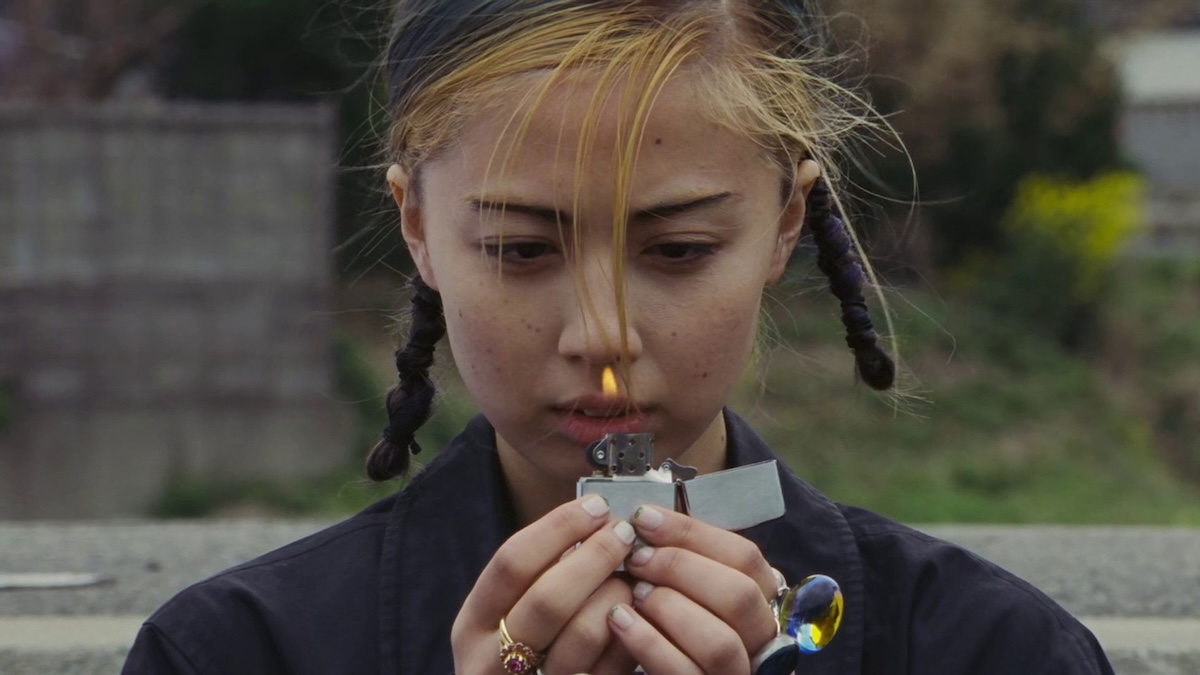
It is surprisingly enjoyable to watch these characters in crisis, partly because Anno resists the urge for them to weep forlornly to each other or sadly reflect on where their lives have ended up. They often understand one another without needing to articulate their thoughts, negating the need for histrionics. Despite living their lives in this stasis, Ritual is often restless, with fast-paced editing and a welcome blend of gorgeous cinematography, digital video footage, voice-over narration, and title cards marking the 33 days in these characters’ lives that comprise the course of the film.
But over time, the young woman feels less like a character and more akin to the product of a story within a story for this director to remark on. A former anime director trying to construct a ‘real’ (a.k.a. live action) movie is an obvious stand-in for Anno, while the young woman operates as a construction of his stand-in’s mental state that he must discuss at length. He dissects her through narration and the film dissects her as a whole, yet there’s nothing to centre this endless source of curiosity. She might not be a manic pixie dream girl, but the more time spent in this unique world, the clearer it is that she is someone who cannot govern her fate. She is the only part of this film that feels genuinely metafictional, an attempt on this director’s part to save someone instead of focusing on his life’s deficiencies. Fujitani wrote the novel (entitled Tōhimu) that Ritual is based on, which makes it all the more surprising that her character never feels like a real person rather than an abstraction.
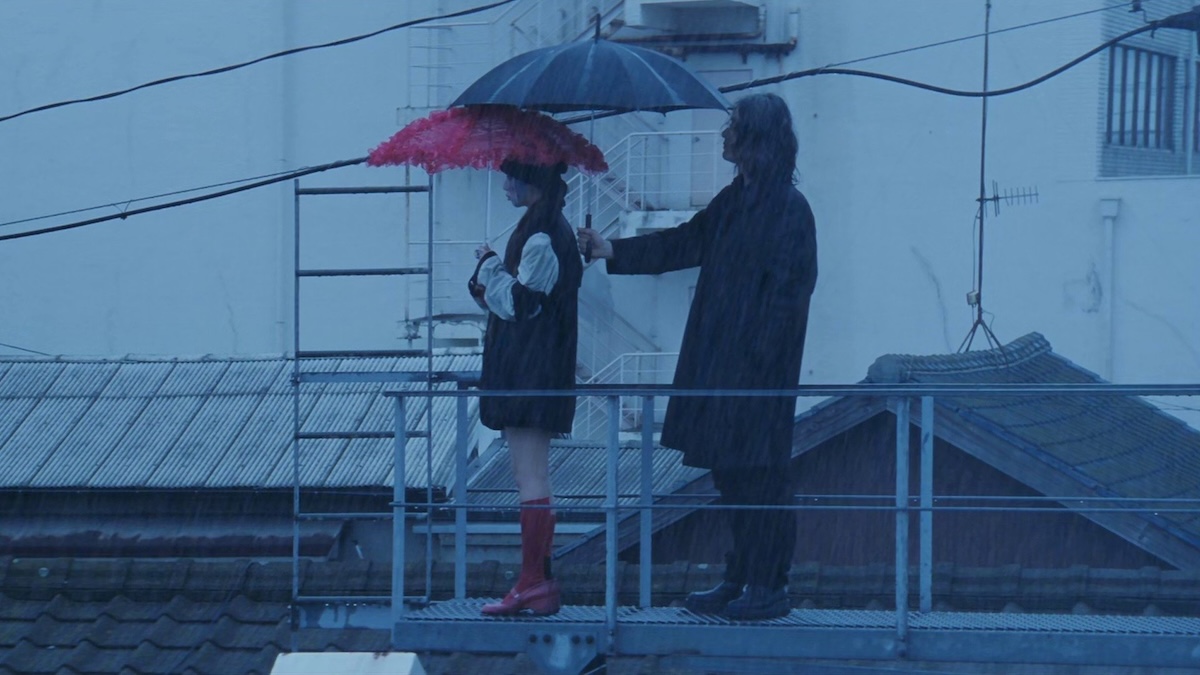
It’s always an attractive young woman in these cases, isn’t it? And, of course, her mental strife isn’t the ultimate problem in her life, but something far more direct and tangible, which the director must attempt to remedy. If this director character had some semblance of personality, the patronising aspects of this story might have been less grating. It is certainly interesting to watch two people desperate to escape a world that they have already done away with, lost within a universe only they can understand. But even the film’s visuals lose their appeal when the story can’t figure out how to illuminate these struggles. The editing style and diversity of images become empty art film clichés, while the central characters inadvertently reveal themselves as bores or half-formed attempts at salvation for their creator.
Capturing characters in a state of malaise seems to be one of the hardest tasks in cinematic storytelling. Whether it’s another Japanese film from the year Ritual was released, Eureka, to Antonioni’s various attempts to convey the hollowness of a life in standstill, there is a constant risk of falling into the twin pitfalls of meandering or pretentious filmmaking. Despite a strong opening, Ritual is guilty of both of these cardinal sins in Anno’s unique tone poem of a film.
JAPAN | 2000 | 128 MINUTES | 2.35:1 • 1.78:1 • 1.33:1 | COLOUR | JAPANESE

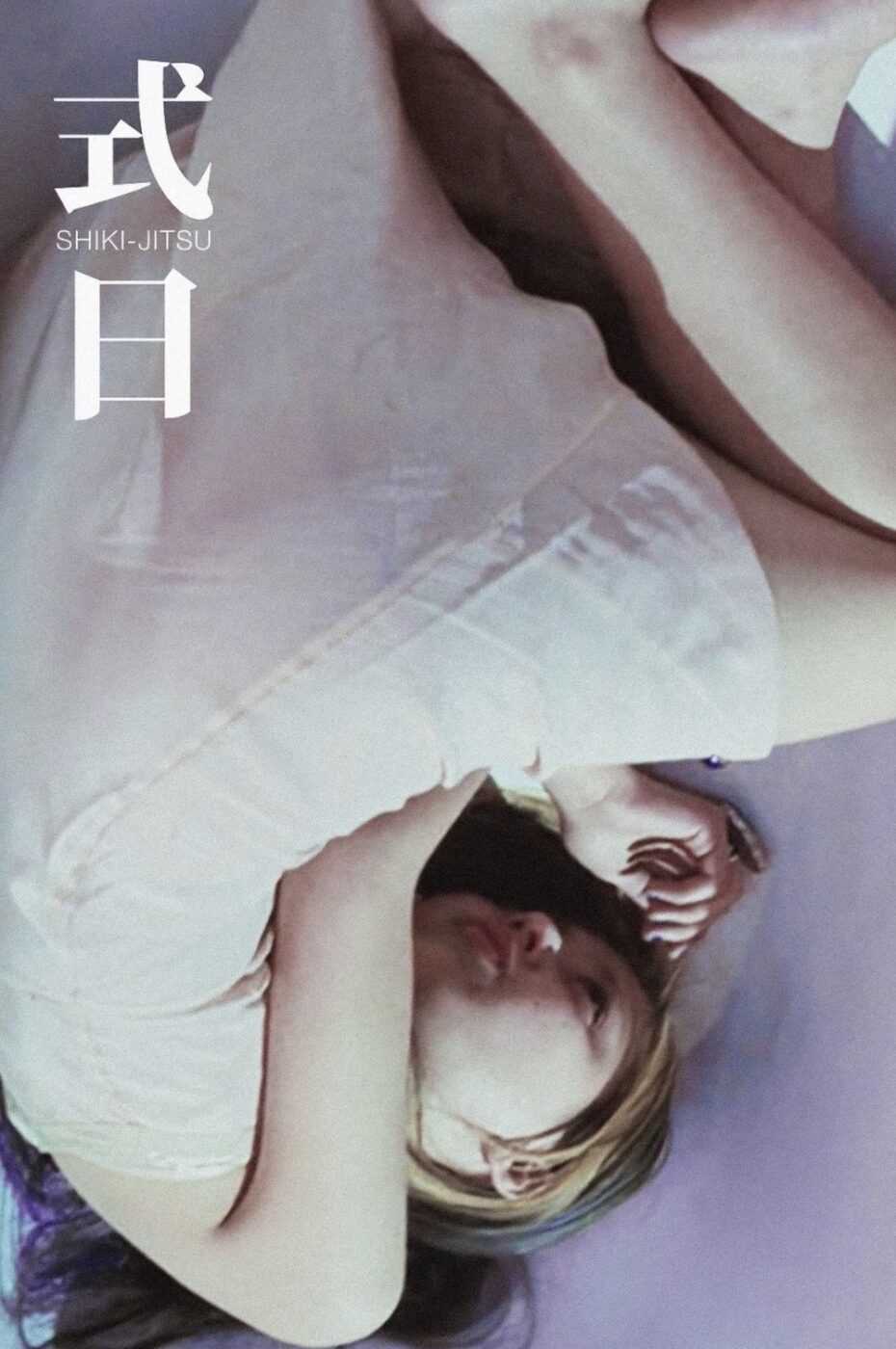
director: Hideaki Anno.
writer: Hideak Anno (based on the novella ‘Tōhimu’ by Ayako Fujitani).
starring: Shunji Iwai, Ayako Fujitani, Jun Murakami & Shinobu Otake.