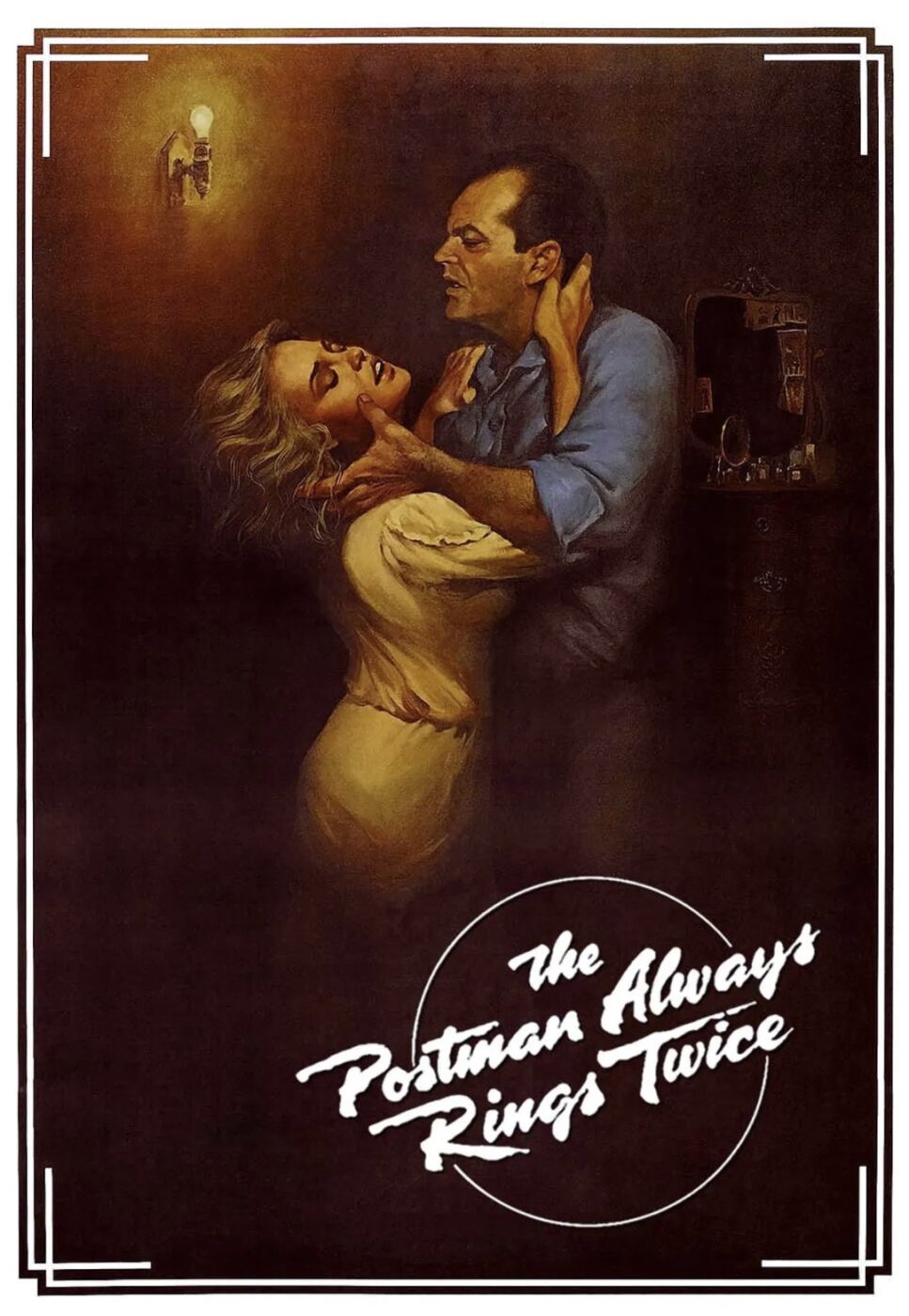
THE POSTMAN ALWAYS RINGS TWICE (1981)
The sensuous wife of a roadside diner proprietor and a rootless drifter begin a sordid, steamy affair and conspire to murder her Greek husband.

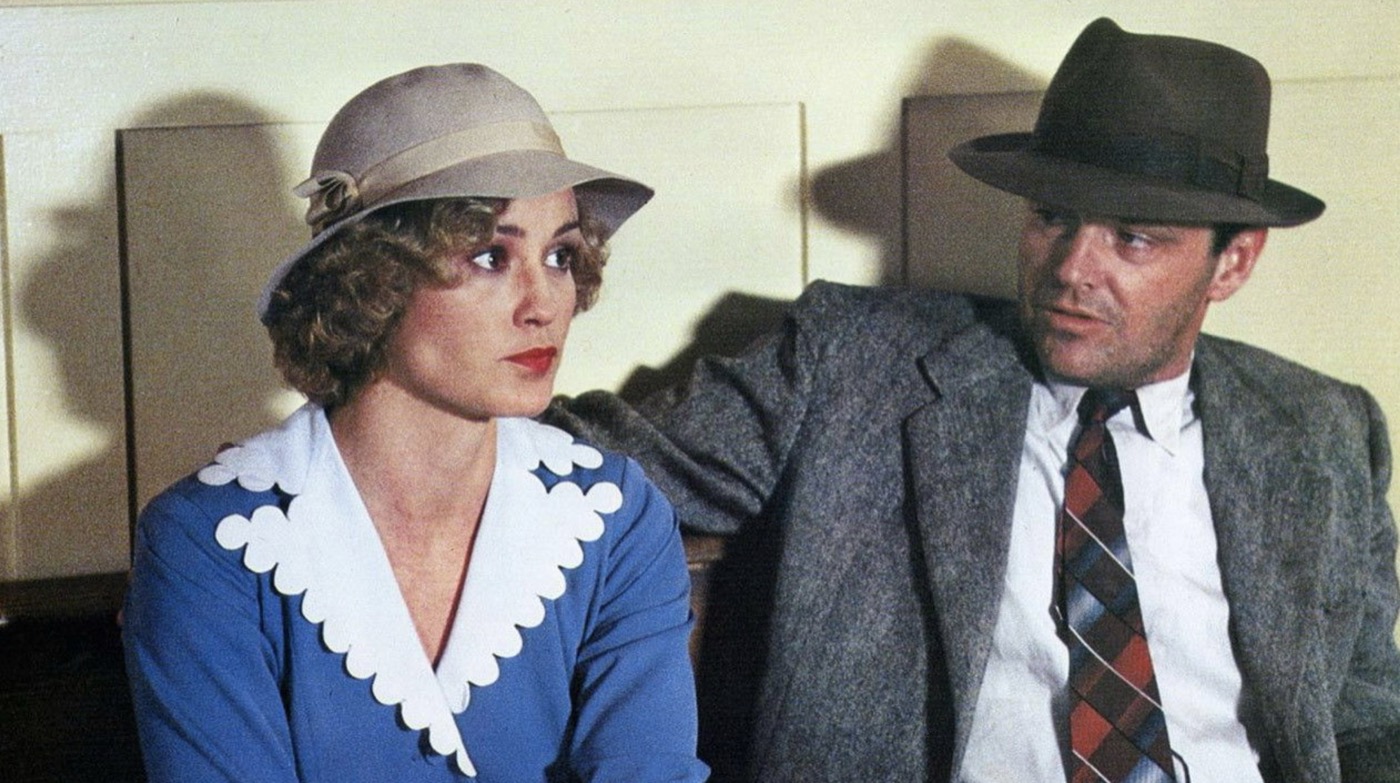

The sensuous wife of a roadside diner proprietor and a rootless drifter begin a sordid, steamy affair and conspire to murder her Greek husband.
I confess: I could revisit this film every month for Jessica Lange alone. Her beauty is staggering, her talent even more so. The inner Kong in me is instantly smitten by this screen goddess; he may dream of carrying her away, but she’s the one who has already stolen my heart.
That, however, would be too easy. While Bob Rafelson’s The Postman Always Rings Twice remains one of the most sensual and visually arresting neo-noirs of its era, it isn’t simply a film to admire for Lange’s presence—overwhelming as that may be. It is also a film about something harsher: the inability to control impulse before it hardens into action.
That is the real key. Not adultery in the abstract, nor even “fatal attraction” in the melodramatic sense. Rafelson presents two people who don’t know how to stop. They cannot cool desire before it combusts into risk and damage. Every feeling demands an act, and every act opens the door to the next.
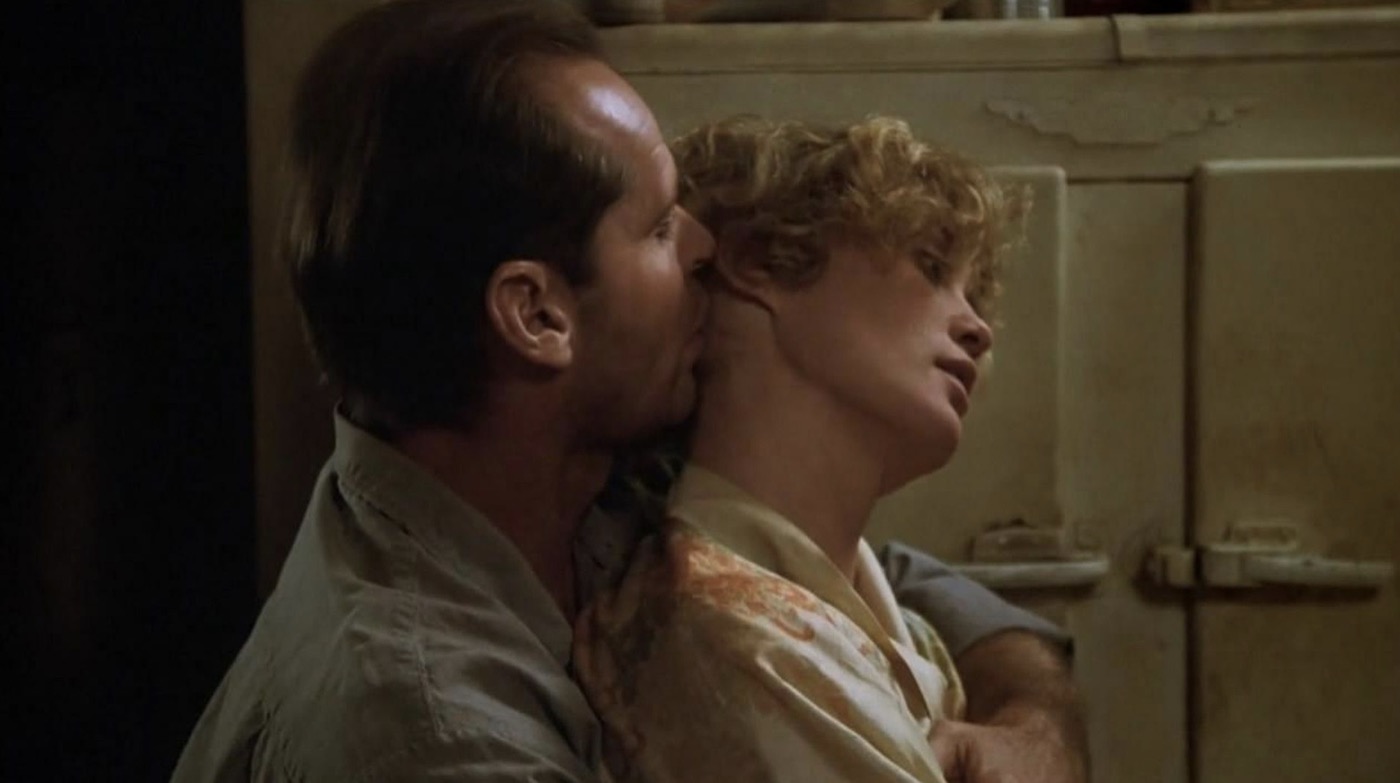
This is why the film feels so unusually physical. Desire here isn’t lyrical or soul-deep; it’s earthy, tactile, and granular. It arrives through sweat, fabric, heat, and the charged arrangement of space. The score deserves mention, too: it supports the film superbly, adding emotional shading without ever becoming invasive. In a story this heated, that restraint matters.
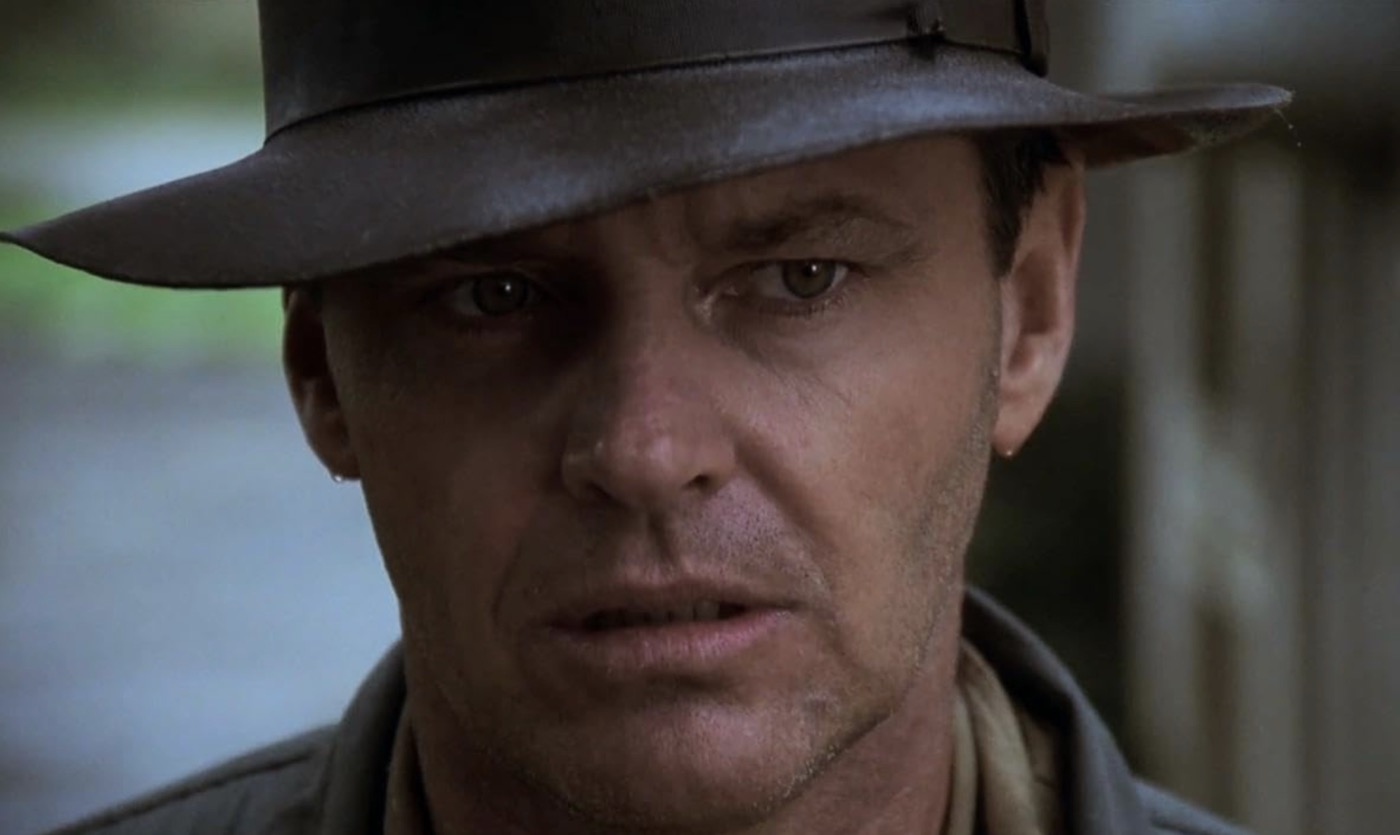
Frank Chambers (Jack Nicholson, with the perfect mix of swagger and instability), doesn’t enter the story like a grand romantic destiny. He arrives as a disruption—appetite in motion. You feel at once that he isn’t the sort of man to bring order to a room; he unsettles it. Nicholson is excellent because he never softens Frank into a dreamy anti-hero. He’s magnetic, certainly, but also sly, opportunistic, and dangerous in a way that feels baked into his features. Frank isn’t simply sexy; he’s unstable.
Then there is Cora.
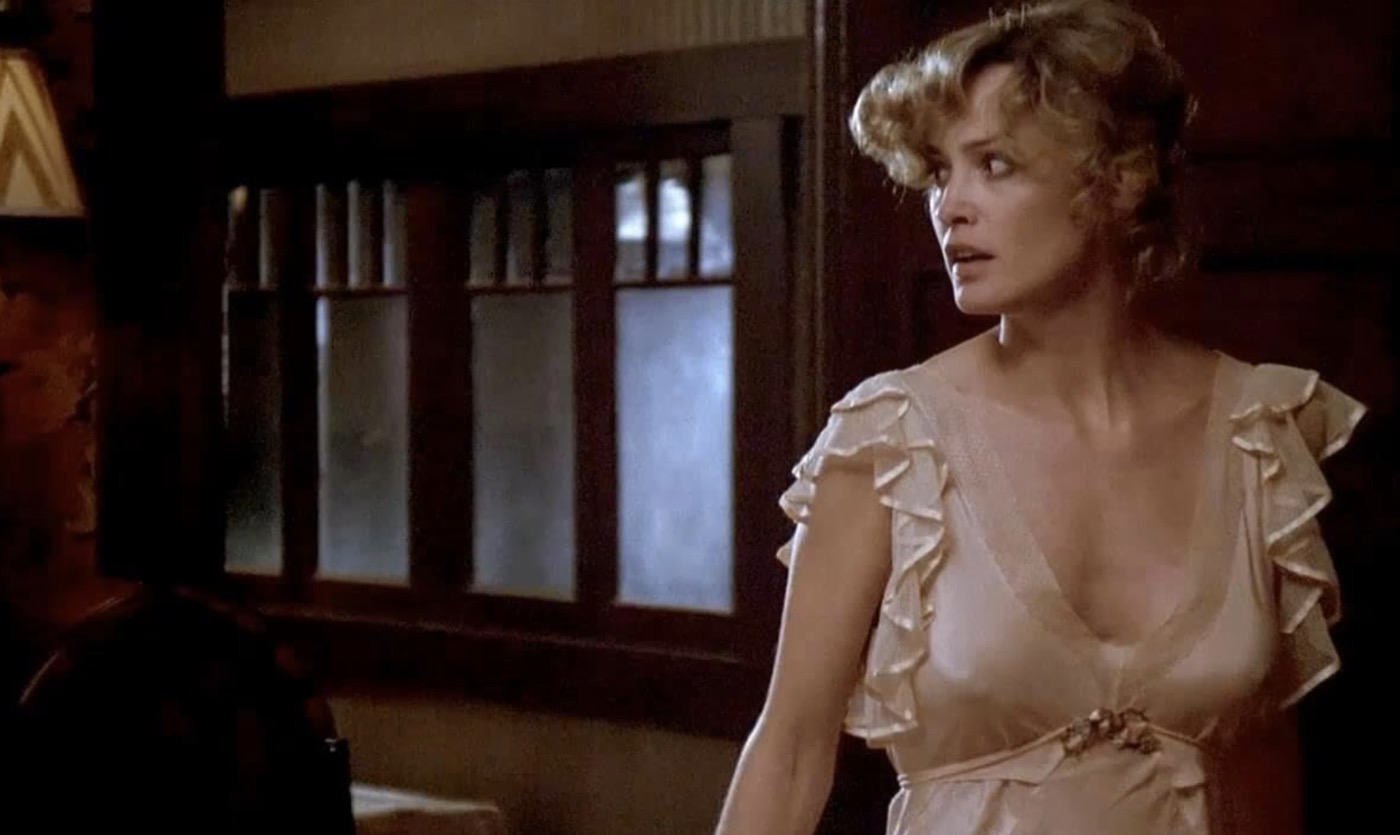
Lange’s first scenes are masterclasses in constructing a character through appearance without reducing her to mere surface. Cora isn’t introduced via neat psychology or explanatory dialogue; she arrives as a presence. The film understands she’s not only beautiful, but strategically visible. A strand of hair veils her face before being pushed away. Her looks are often indirect or withheld. She appears both exposed and hidden, inviting yet controlled. Even the details of her aesthetic matter: the pale blonde hair, the darker brows, the sense that this isn’t natural innocence but something composed—almost manufactured. She isn’t simply a woman in a room; she’s an event in the frame.
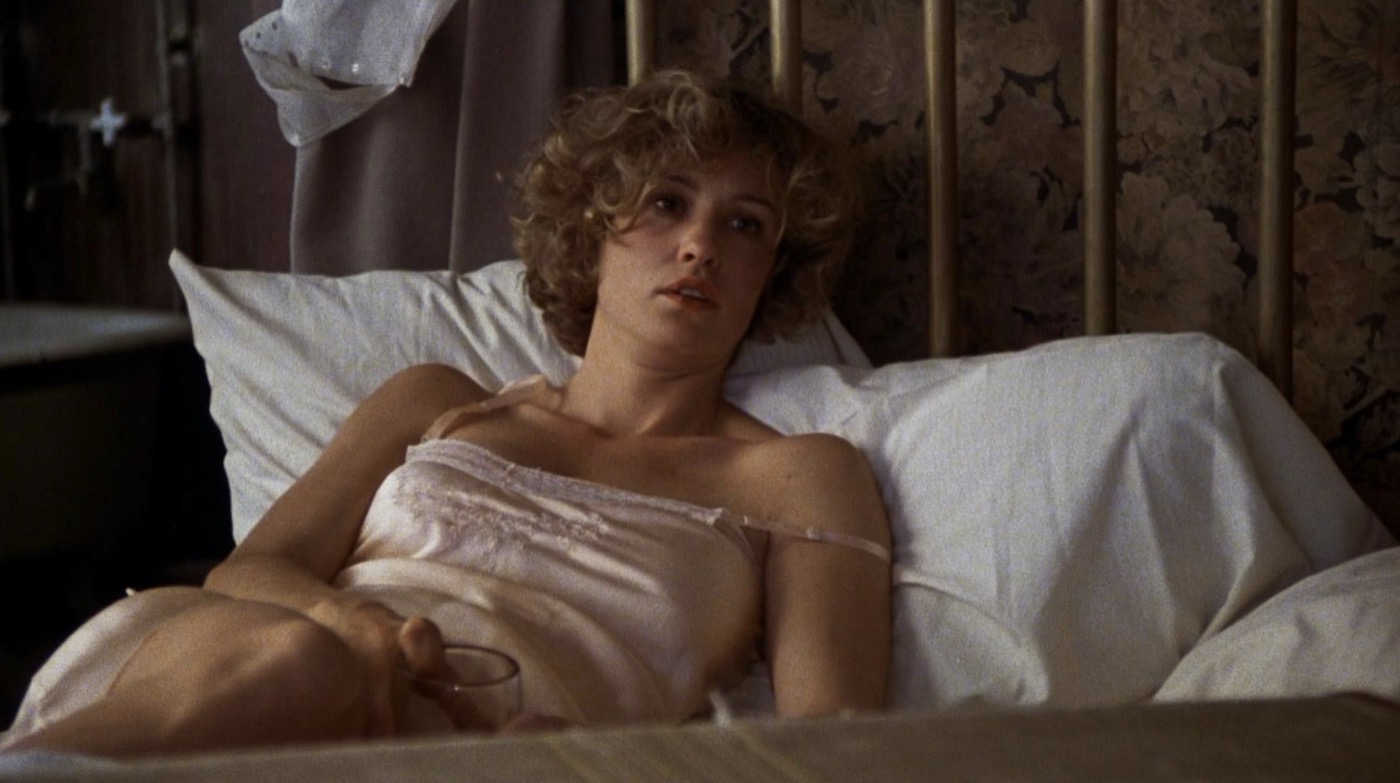
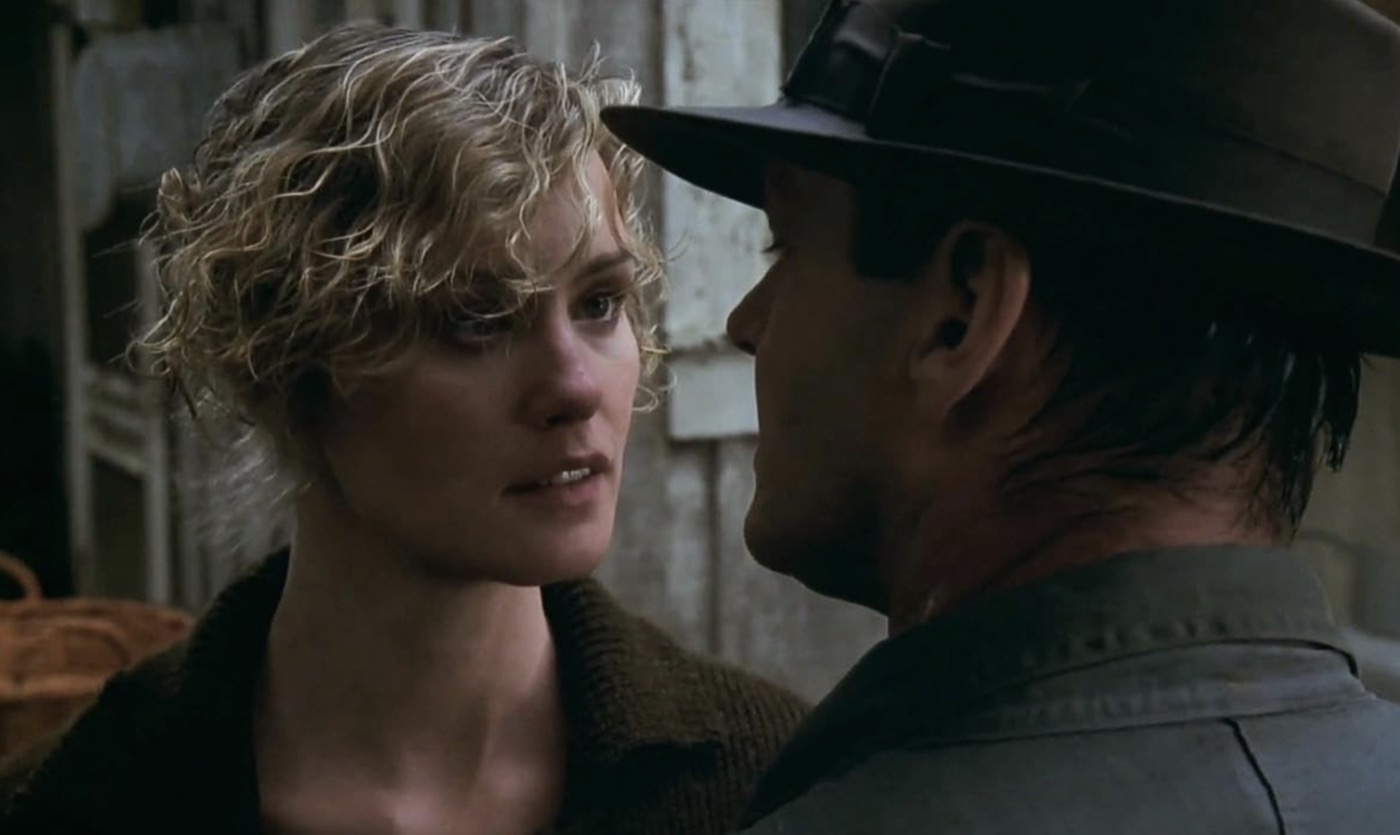
That visual intelligence permeates the film. I love the way it refuses easy frontality. Faces are often shown in profile; eyes are slightly displaced rather than centred. No one here is entirely readable. Sven Nykvist’s cinematography is vital to this mood. The photography is extraordinary, but not in a “prestige” way. It has weight and texture. This isn’t clean beauty; it’s beauty with grain. Wood, skin, cloth, and dust all belong to the same tactile world. Even the blur in the image feels material; an out-of-focus body in the background can still dominate a shot because it retains mass. Cora can be in the background and still govern the image, reorganising the visual field.
This is why the erotic charge works. The film doesn’t begin with “falling in love.” It begins with proximity and boundaries that are spoken but not enforced. The dialogue might establish a limit, but the scene is already allowing that threshold to weaken. The word says “no,” but the situation opens anyway.
The sex scenes are central to this logic. They aren’t there for mere scandal; they define the relationship. They are rough, prolonged, and far more interesting than standard “forbidden passion” clichés. Their power comes from collision. Pressure shifts; gestures are resisted then reintroduced; control changes hands. There is something almost combative in the way Frank and Cora come together. This isn’t tender compatibility; it’s mutual intensity. The film understands that two people can desire one another fiercely while being terrible for each other.
This makes the husband more interesting than he first appears. He isn’t a monster, and the film is better for it. He may be self-absorbed and routine-bound, but he isn’t a cartoon brute. Cora isn’t fleeing pure evil; she’s fleeing a life that feels dead—one that doesn’t meet her where she actually lives. This distinction keeps the film from collapsing into a cheap fantasy of liberation.
Frank isn’t the “good man” sent to rescue her. He is simply the opposite of what she has. He offers movement where the marriage offers routine; danger where it offers dullness. But he doesn’t offer structure. He offers rupture. That is where the film becomes more tragic than romantic.
Cora’s deepest mistake isn’t desiring Frank, but investing in him as if he could provide the shape her life lacks. She doesn’t imagine an autonomous way out; she imagines this intensity can become a future. But Frank isn’t a future. He’s a wager.
This is why the gambling metaphor fits so well. Frank behaves like a man for whom every solution contains a higher stake. Cora gets pulled into that logic, too. They don’t solve problems; they raise the stakes. That is the rhythm of the film: risk, improvisation, and escalation.
The screenplay feels sharply “Mametian.” David Mamet has often argued that drama should rely on action—on what characters do—rather than psychological explanation. That principle is alive here. Frank and Cora reveal themselves through behaviour. Yet the film contains a dark irony: these characters are destroyed because they cannot stop turning feeling into deed.
This is what makes the film more than a sultry period curio. It’s an anatomy of people with no internal brake. They don’t know how to remain at the level of fantasy or let desire cool. Every threshold crossed demands another, and every private impulse insists on becoming a real-world act. The chain never closes.
Despite its reputation for heat, the film isn’t indulgent; it’s diagnostic. It sees clearly that intense attraction isn’t the same as wisdom, and that rebellion isn’t automatically freedom. Sometimes what feels like liberation is merely acceleration.
By 1981, the sexual frankness of “New Hollywood” had begun to curdle into something more ambivalent. Rafelson’s film catches that contradiction perfectly. It’s explicit, but not celebratory. It shows bodies under pressure but refuses to romanticise the result. The heat is real, but so is the damage.
The 1946 version, directed by Tay Garnett, remains the more classical “noir machine”—tighter and perhaps more inevitable. Garnett’s film moves with the ruthless efficiency of a mousetrap. Rafelson’s version is looser, hotter, and more unstable. Where Garnett gives us shadows and doom, Rafelson gives us sweat and sunlight. If the 1946 film is a lesson, the 1981 version is an autopsy.
Lange gives the film its mystery; Nicholson gives it insolence; Nykvist gives it one of the richest visual textures in cinema. Rafelson knows exactly how to let these elements rub against one another until the screen feels too small for the heat it contains. I’d revisit it for Lange, certainly, but I stay for the unsettling intelligence of a film that understands how quickly fantasy becomes behaviour—and how, once that happens, some people never learn how to stop.
WEST GERMANY • USA | 1981 | 122 MINUTES | 1.85:1 | COLOUR | ENGLISH

director: Bob Rafelson.
writer: David Mamet (based on the novel by James M. Cain).
starring: Jack Nicholson, Jessica Lange, John Colicos, Michael Lerner & Anjelica Huston.