PILLION (2025)
A directionless man is swept off his feet when an enigmatic, impossibly handsome biker takes him on as his submissive.

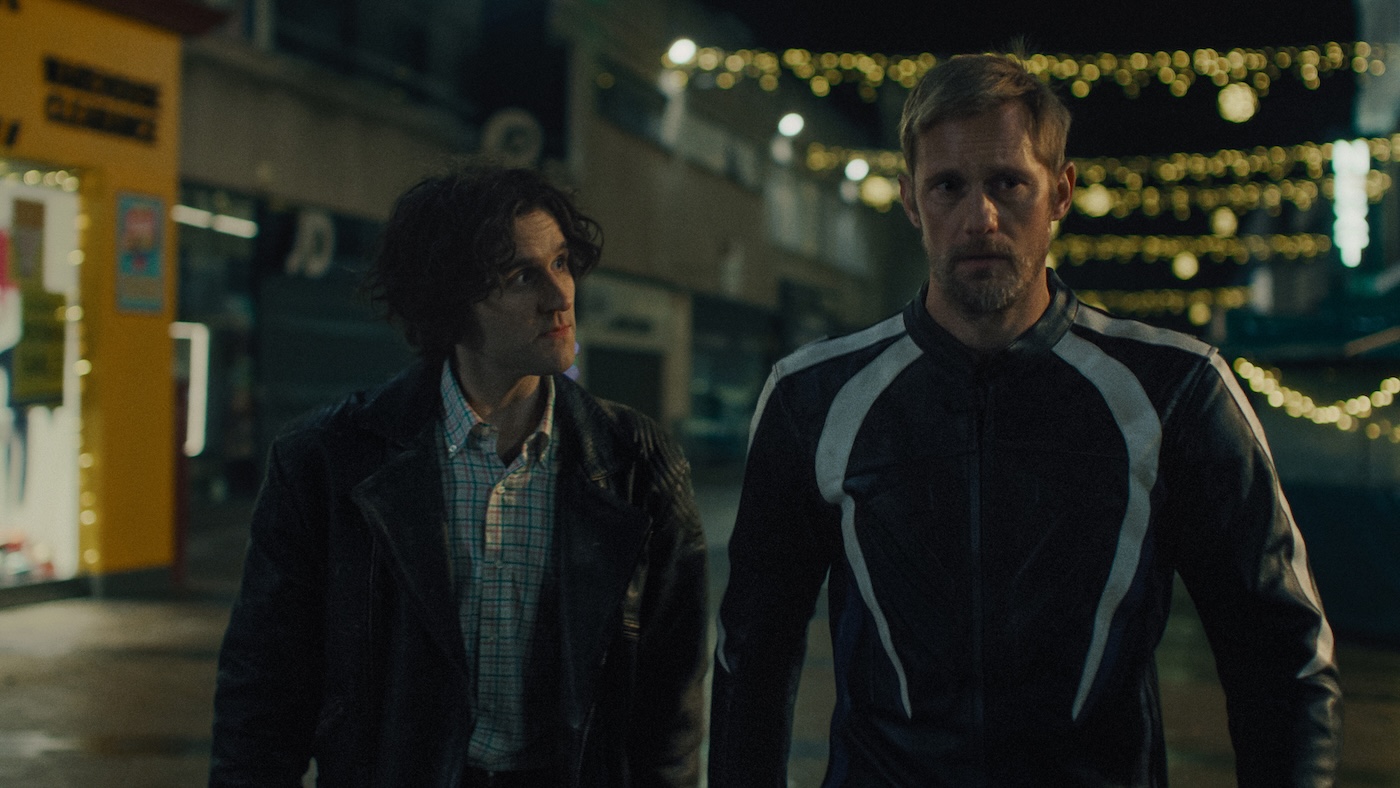

A directionless man is swept off his feet when an enigmatic, impossibly handsome biker takes him on as his submissive.
Anyone who’s worked in film for any amount of time will tell you that a feature-length film debut is no small undertaking whatsoever—physically, financially, or spiritually. In high-stakes environments, it’s the kind of creative endeavour that carries an unparalleled amount of risk; one can sink, and damage their chances at a career for a very long time. They can strive for greatness, and in doing so, risk making something that lies completely beyond their skill and reach. Or, they can play it completely safe, and thus risk playing into mediocrity.
The string of recent feature debuts that have made waves in film—Ari Aster’s Hereditary (2018), Celine Song’s Past Lives (2023), and Eva Victor’s Sorry, Baby (2025), to name a few—are potent demonstrations of that risk in play. They are true, bold-hearted proclamations of talent from new and exciting cinematic voices, all of which only came about because the artists behind them had the courage to face what could have happened if they trusted the wrong instincts, and defied those uncertainties anyway.
Harry Lighton’s Pillion, adapted from Adam Mars-Jones’s Box Hill, is probably the most audacious of this particular cinematic-debut crowd by a surprisingly wide margin. A not-insignificant reason for that is primarily because it whole-heartedly embraces the gay BDSM community, long stigmatised and denigrated by puritan standards of sexuality and heteronormativity, and provides an unapologetically earnest romance shaped by that community’s definition of love, attraction, and relationships. It’s the kind of deeply admirable film that, in one fell swoop, opens up more traditional audiences’ horizons for understanding BDSM as legitimate means of queer existence, and tears down its stigmas by providing a romance that digs at the same themes we have expected and received of other, more straight-edged films.
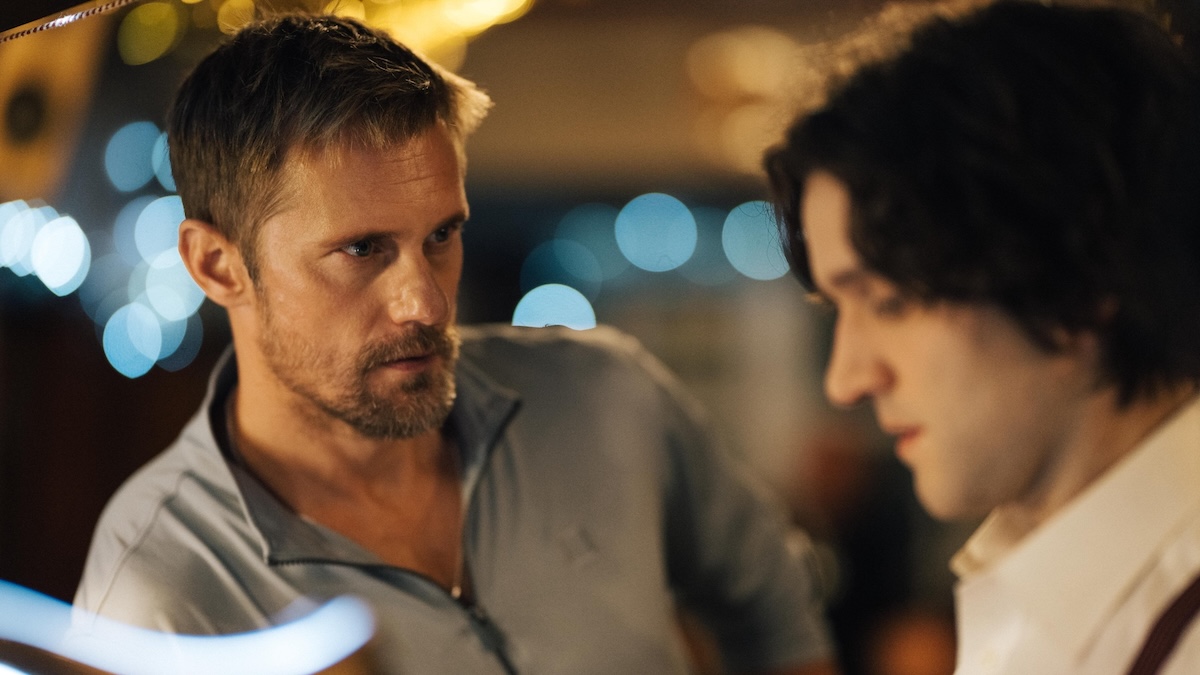
Perhaps worth noting from the jump is that Lighton’s most exceptional creative choice is in the casting of Harry Melling and Alexander Skarsgård as the two central figures in Pillion‘s dom-sub relationship. Melling, the film’s proverbially titular pillion here, is most known by the mainstream for his role as the petulantly pudgy Dudley Dursley in the Harry Potter film series. And yet, he has begun steadily stepping into his own as a character actor in his own right—including a psychotic evangelical in The Devil All the Time (2020), a recitative amputee in The Ballad of Buster Scruggs (2018), and even Malcolm in The Tragedy of Macbeth (2021)—bringing a more innocent appearance and ostensibly reserved persona to newer, complex dimensions. Skarsgård, on the other hand, has exercised a kind of creative dominance over roles of masculine machismo, using his unbelievable physicality for portrayals of Vikings and Tarzan, and often wielding it to menacing effect in more antagonistic roles for films like Passing (2021) and Big Little Lies (2017-19).
With that in mind, it’s frankly not that much of a stretch to guess who plays the dom and the sub in Pillion‘s central relationship. Lighton’s film opens on the sight of Colin (Melling) working quiet, menial jobs—he works as a parking attendant assigning tickets to cars in lots, and on the side, he occasionally sings as part of a barbershop quartet. The first time we see him, he’s singing with them in a modest pub on the week of Christmas, to a small crowd only halfway paying any sort of attention. Not long after, Colin soon briefly courts the romantic attention of a man who is not really gelling with him in any capacity.
Soon enough, however, Colin is approached by Ray (Skarsgård)—an enigmatic, incredibly well-built man who is part of a biker gang, and covertly invites Colin to see him in an alleyway nearby on Christmas Day. There, the two of them hook up for the first time, shown in considerably graphic detail, with Ray immediately taking control of the dynamic and giving almost silent commands for how he wants Colin to please him. Awkwardly and hilariously, Colin obliges—one can see in this moment just how gauche it is for Colin to be doing something he’s clearly inexperienced at, but also how visibly fascinated he’s at the prospect of knowing more. He wants to see Ray again; Ray nonchalantly rebuffs the idea, as he’s not around town all that often.

Colin is a man navigating a fair amount of different personal tightropes, most prominent among them being the fact that his mother, Peggy (Lesley Sharp) is currently terminally ill—a thread that leaves an impression for a moment, yet is not quite as thoroughly woven into the story. While his parents are rather unabashedly accepting of Colin’s sexuality, encouraging him on whatever romantic escapades he chooses to pursue, there’s a degree to which Peggy wants to see Colin in a relationship she knows he will thrive in and enjoy before she soon passes.
So when Ray eventually does reach back out to Colin with interest in a relationship, the intense and rigorous regime of routine, kink, and boundary-setting that Ray puts Colin through provides an interesting source of tension. It’s clear that Colin does, in fact, enjoy the connection with Ray that their relationship offers, and is perfectly willing to steadily adjust to the routine of it all. But it’s also apparent to Colin that, even with all this in mind, Ray is still rather demanding of what the terms of their dom-sub dynamic are, in terms of who is permitted to cook, where Colin is allowed to sleep, and how affection is often defined to Ray by obligation.
Any sort of romantic premise charged with this level of physicality is bound to be a deeply hilarious affair. Even as the film is frequently charged with a degree of tense fascination as to how Colin and Ray’s relationship will unfold, the extremity of disparity between Colin and Ray’s inherent personalities provides a wildly comedic contrast and levity. In contrast to Skarsgård’s previously abusive roles, Ray’s methods of kink and domination are not really coercive, so much as they are evidently among his specific ways of expressing some kind of care and sexual interest, even as his steely exterior never quite permits him to acknowledge that or soften up. Even still, the countless means through which Colin is literally rendered physically helpless at Ray’s whims is bound to elicit laughter from audiences of various kinds—from those who are rather new to witnessing this realm of queer sexual expression, to audiences who find amusing just how well these two contrasting personalities clash and meld.

Echoes of previous films dealing with similar approaches to sex and sexuality abound in Pillion. One of them is Halina Rejin’s Babygirl (2024)—a film that initially takes on the appearance of having something productive to say about dom-sub dynamics in more traditional relationship frameworks. That said, as Babygirl goes on, both its edge and nuance steadily flatten out before it gets to meaningfully push back against or address specific taboos, never really addressing or deconstructing the thorniness behind the elements of its story that specific audiences might consider problematic. Another is Peter Strickland’s The Duke of Burgundy (2014), which takes a more subversive route towards depicting a lesbian BDSM dynamic, instead. That film meticulously picks at how power works in these sorts of kink-based relationships, eventually having more to say about the compromises we expect from and give to our romantic partners than most other romance films with accessibly heteronormative presentations.
But Pillion‘s approach feels ultimately a little more communal, and much more emotionally orientated around self-discovery, than either of those films—and certainly more earnest than Babygirl, too. Formally, it’s a relatively straightforward affair, with only a handful of editing and cinematography gestures (such as a few Wong Kar-wai-esque motorbike sequences) that really permit the film to stand out, especially after a midpoint shift allows Colin and Ray to dive into vastly more vulnerable territory. There’s also something to be said about how willing and earnest the film is in its momentary presentation of the leather-clad gay S&M biker gang that Ray is a part of, with revelations they all provide to Colin in one scene about how their relationships exist on mutually agreed terms. For a time, Pillion understands how a living, breathing culture builds up an identity as particular and frequently misunderstood as Colin’s—and there’s some wonder here in how sensitively and even easily it depicts that process.
Granted, Pillion feels like it eventually sands down the more subcultural aspects of its narrative tapestry in service of something that feels more traditionally orientated. It’s partially a result of how focused its story still remains on Colin and Ray, and also a result of a specific shift between Colin and Ray that occurs, focusing on Colin’s growing awareness of his autonomy. While much of that leads into an astonishingly sincere and devastating moment from Skarsgård towards the end, triggered by Colin’s gradual resistance against Ray’s more non-negotiable regime, it becomes worth thinking about how just how much further the bar can be pushed from here in terms of both content and representation, and if the film is still trying to speak to a more generalised audience even with a considerably explicit first half.
That said, however, the cultural stride that Pillion surely represents in terms of highlighting gay S&M, queer biker clubs, and the nuances of power and compromise in dom-sub relationships, is certainly nothing to scoff at, especially in a mainstream culture growing increasingly averse to queer self-expression. How it then uses these deeply specific sexual and kink-based dynamics to trace a moving tale of self-acceptance, romantic boundaries, and how love and mutual concession can coexist, is a deeply impressive achievement for Lighton’s debut feature. If nothing else, it’s very much a true, bold-hearted proclamation of talent from a new and exciting cinematic voice.
UK • IRELAND | 2025 | 107 MINUTES | 1.85:1 | COLOUR | ENGLISH

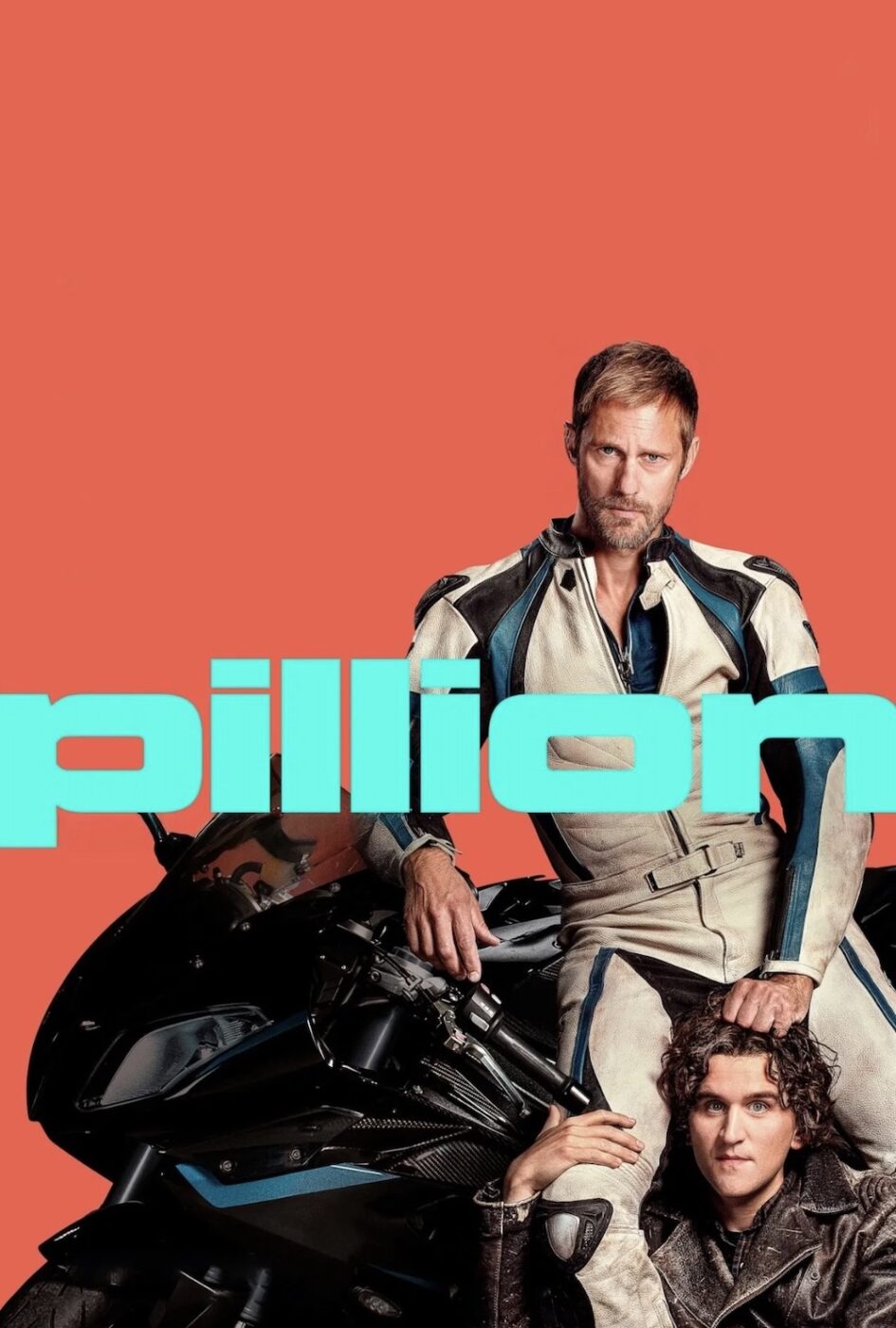
director: Harry Lighton.
writer: Harry Lighton (based on the novel ‘Box Hill’ by Adam Mars-Jones).
starring: Alexander Skarsgård, Harry Melling, Douglas Hodge & Lesley Sharp.