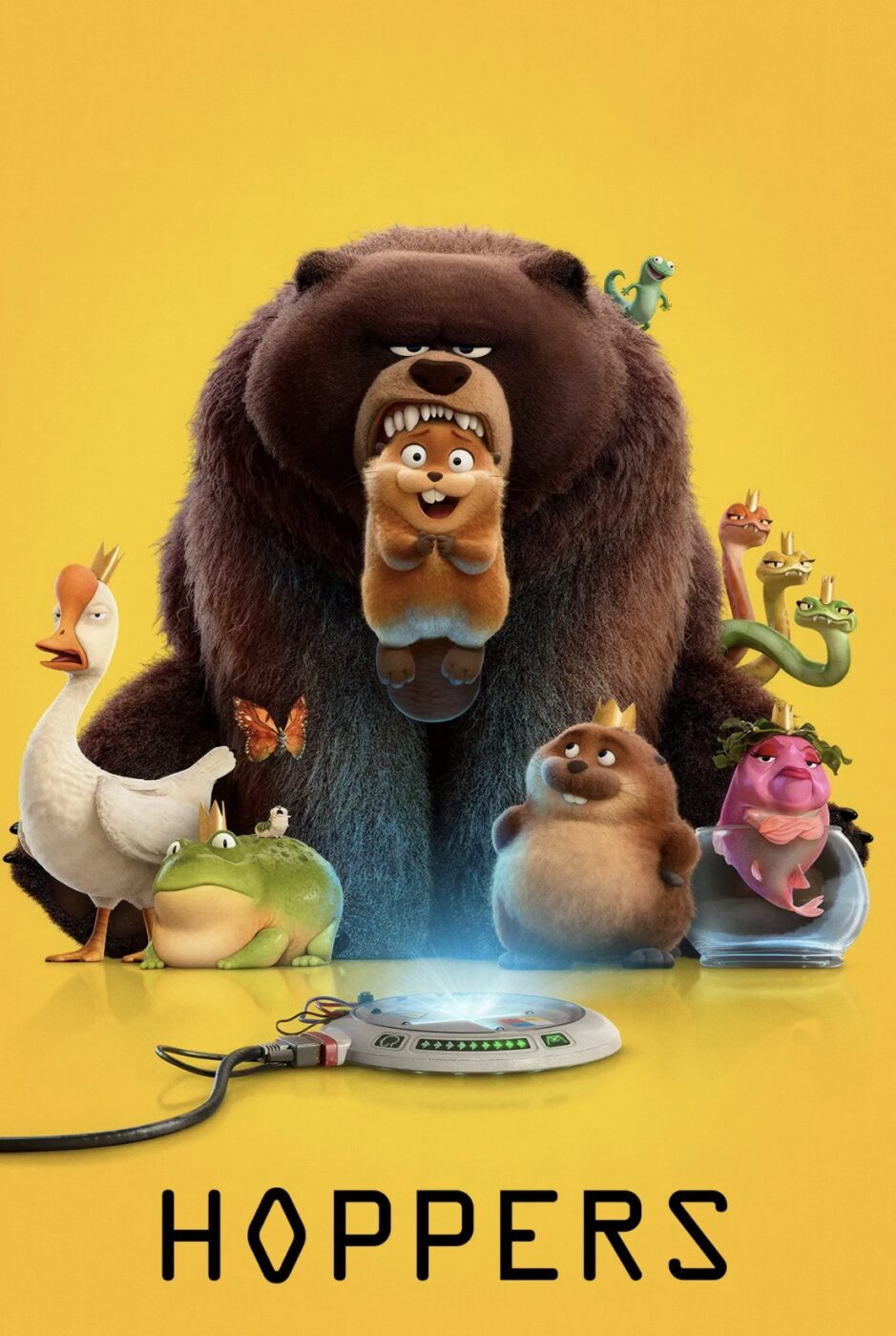
HOPPERS (2026)
A 19-year-old animal lover uses technology that places her consciousness into a robotic beaver to uncover mysteries within the animal world beyond her imagination.

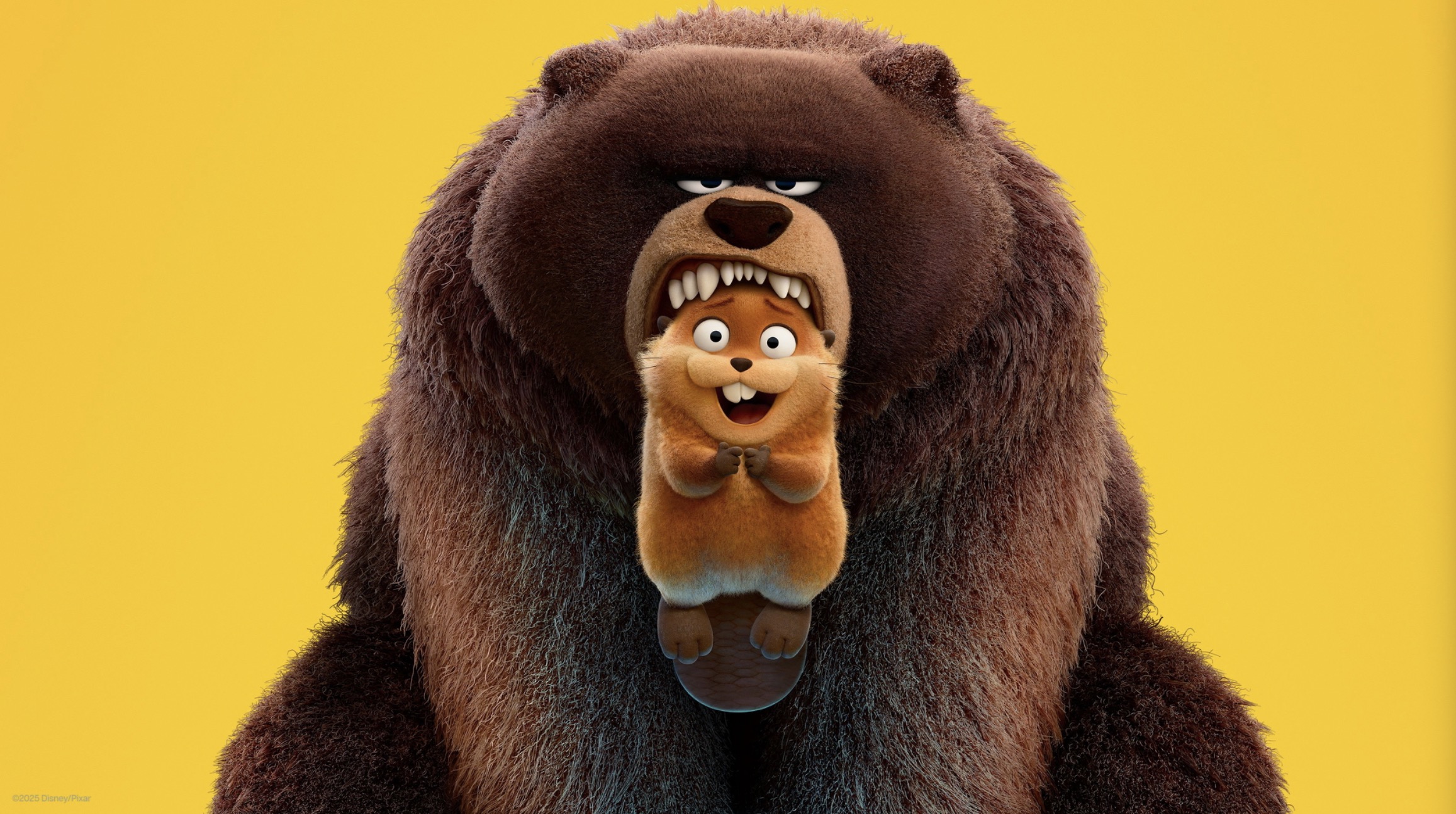

A 19-year-old animal lover uses technology that places her consciousness into a robotic beaver to uncover mysteries within the animal world beyond her imagination.
There’s a distinct, quiet power in the act of sitting still. It is a discipline that feels increasingly archaic in our era of high-velocity activism and digital noise—the ability to occupy a space without needing to dominate it. Early in Pixar’s Hoppers, we see a young Mabel Tanaka (Lila Liu) sitting on a stone in a sun-dappled glade, guided by her grandmother. The lesson is simple: don’t force the world to reveal itself; wait for it. As the silence settles, the pond populates. Ducks arrive. Insects hum. It is an “active waiting”, a form of engagement that requires no invasion.
But Hoppers is a film about what happens when that stone is vacated. Directed by Daniel Chong (We Bare Bears), the film is a strikingly mature addition to the Pixar canon, operating less as a standard “body-swap” comedy and more as a geopolitical treatise on the ethics of intervention—and the psychological toll of never letting go. It suggests something harder than Inside Out (2015) dared to propose: that while understanding oneself is a journey of the heart, understanding the “other” is a journey of the skin. And some of us never survive the crossing.
The plot is set in motion by a familiar friction. Mabel (Piper Curda), now 19-years-old and fuelled by a jagged, reactive militancy following her grandmother’s death, is locked in a stalemate with Mayor Jerry Generazzo (Jon Hamm). Jerry is not a conventional eco-villain; he’s an administrator addicted to control, a bureaucrat of high-functioning narcissism and questionable aesthetic taste who views the glade as a mere inefficiency. Mabel’s response is confrontational—petitions, shouting, a defiant refusal to soften herself for political convenience.
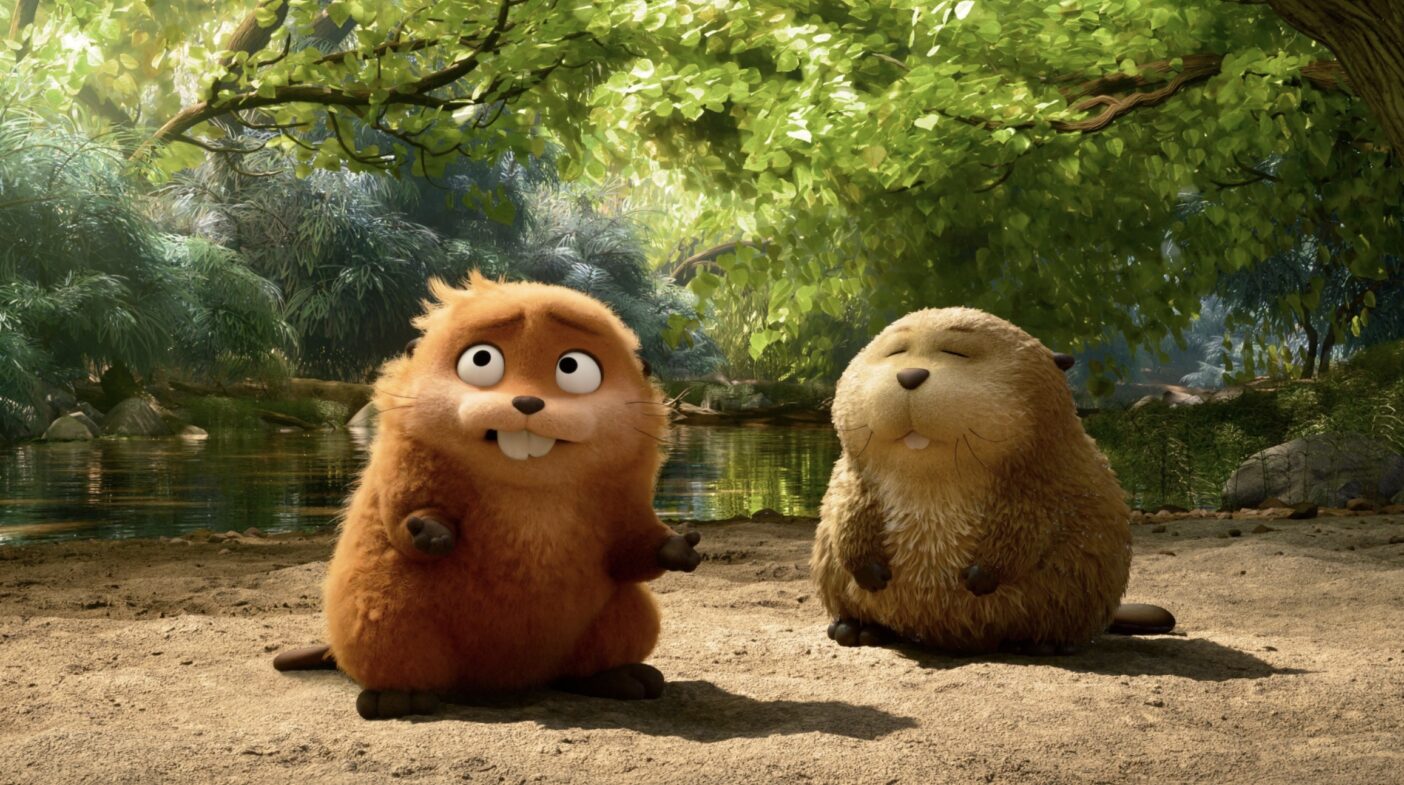
The film, however, is brave enough to suggest that Mabel’s anger, though morally justified, is its own kind of noise. It’s a collision of human wills that ignores the very nature it claims to protect. Mabel hasn’t yet learned her grandmother’s most difficult lesson: that resistance can itself be a form of domination. Her cause is righteous; her method is not. And yet, it’s only her initial fury—misdirected as it may be—that sets in motion the very salvation she seeks. The film’s paradox: she is both the catalyst for disaster and, ultimately, the only force capable of preventing it.
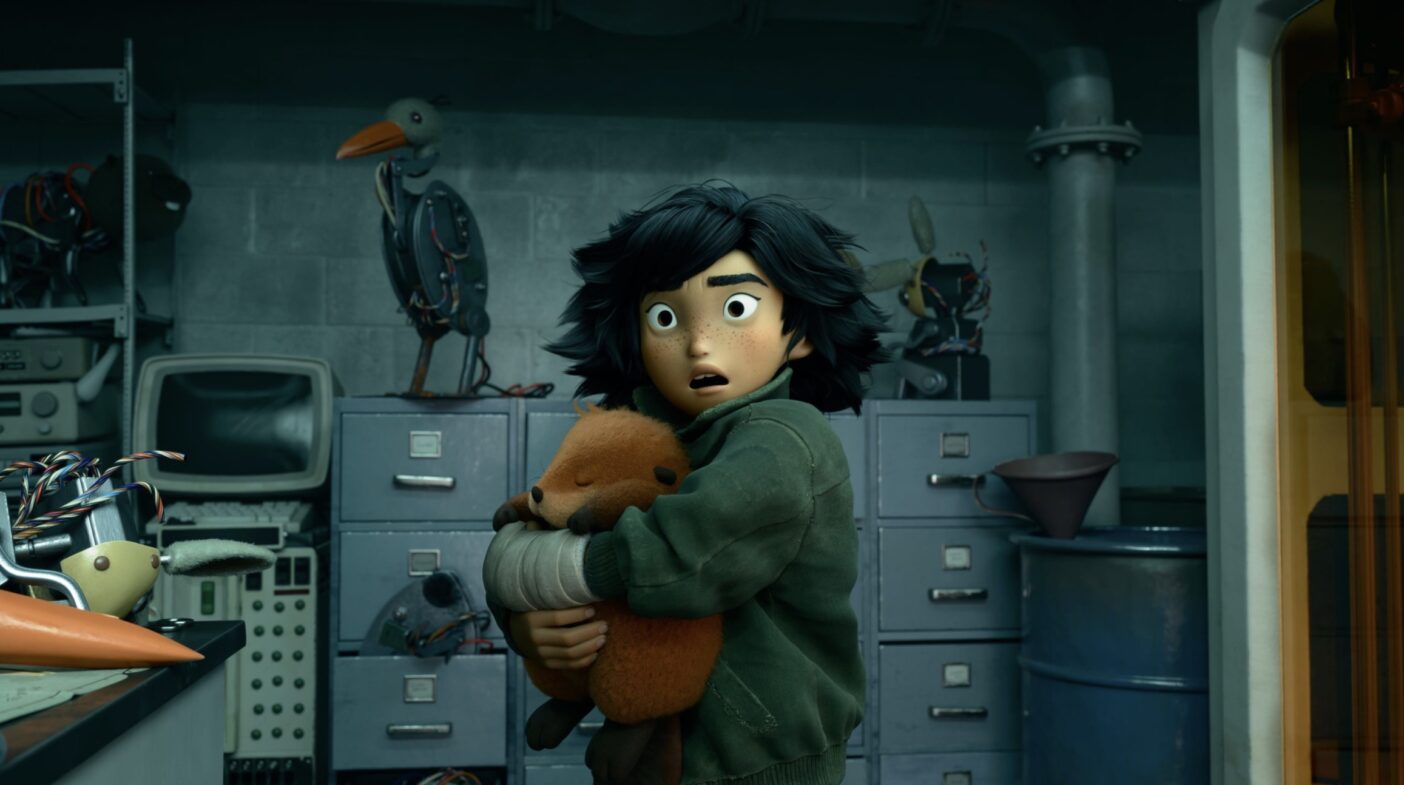
The “Hopper” technology provides the bridge. Developed by Dr Samantha “Sam” Fairfax (Kathy Najimy), the device allows a human consciousness to “hop” into a robotic animal. When Mabel, in a fit of desperation, hijacks a robotic beaver and plunges into the wild, the film shifts gears. The transition is seamless, lacking the typical slapstick trauma of the genre. Instead, it feels like a dislocating expansion of the self.
However, Chong still understands the Pixar rhythm, wisely puncturing the existential dread with moments of animal absurdity and perfectly timed physical comedy that act as a necessary pressure valve. (And let’s be honest: any film that pays such a brazen, kinetic homage to 2013’s Sharknado is bound to win over even a radical-chic critic like myself). Mabel is a brilliantly coded character: a tomboy whose defiant clothing choices and asymmetrical relationship to authority—dismissive of patriarchal power, protective of the vulnerable—read as authentically modern. She moves through the world like someone who’s never been taught to make herself small. Her grandmother’s death has left her without an anchor; now she swings between rage and search.
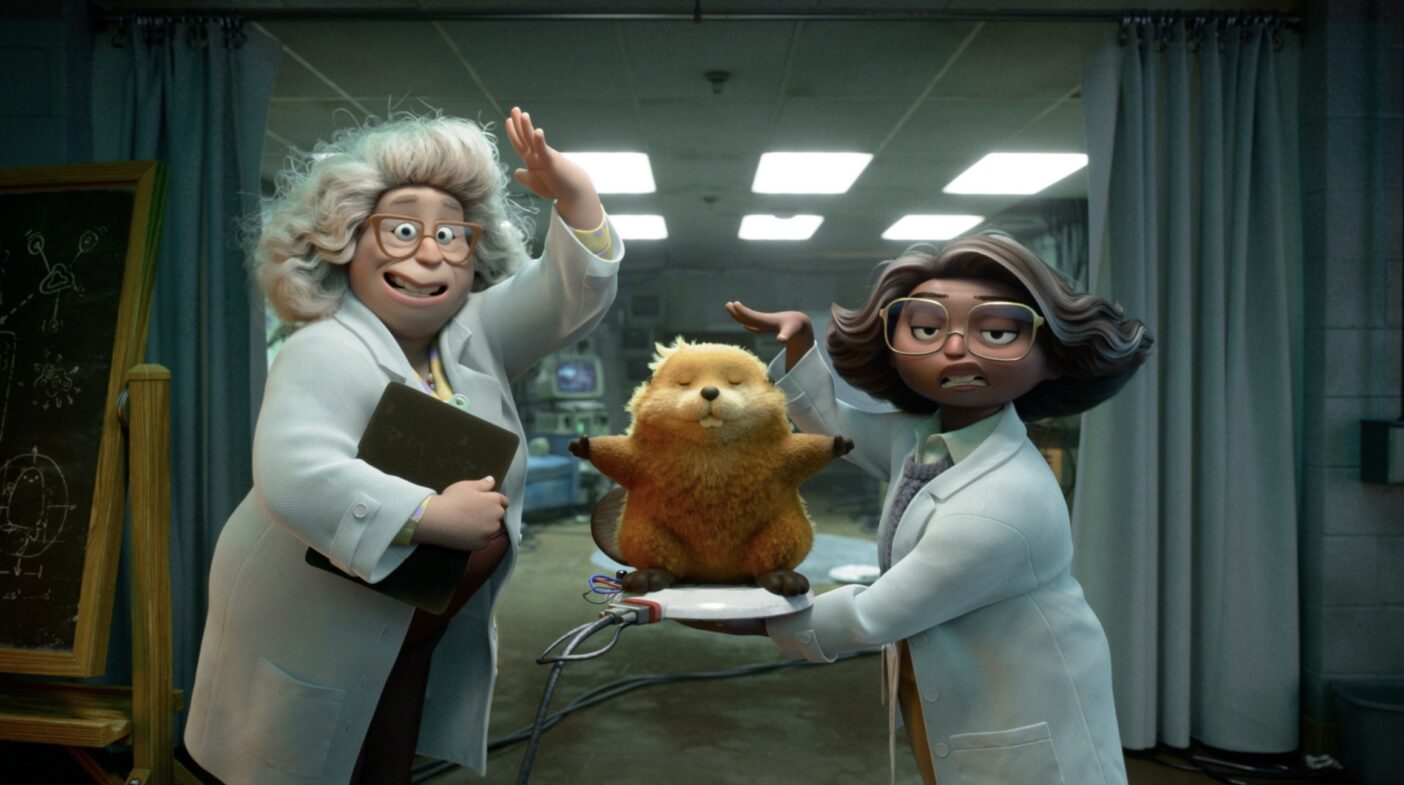
Visually, Chong employs a brilliant dualism. When viewed through the lens of the human scientists, the animals are realistic, twitchy, and inscrutable. But when we enter the glade through Mabel’s robotic eyes, the world softens into an expressive, almost “cartoony” vibrancy. This isn’t just an aesthetic whim; it’s a narrative statement on perspective. To know the “other”, the film implies, we must first change how we see them. We must risk looking foolish. We must risk being changed by what we see.
Mabel’s entry into the “Superlodge”—the communal home of the beaver colony—introduces us to King George (Bobby Moynihan). The choice of a monarchy is a masterstroke of storytelling economy. Rather than miring the plot in the procedural doldrums of an animal democracy, the film uses the crown to explore archetypes of authority, counsel, and sacrifice. George is a king of melancholy depth, a leader who understands that power is often a burden of silence. He’s wise in the way that only those who’ve lived through loss can be. He becomes, over the film’s running time, more reflective and profound than Mabel herself.
As Mabel is accepted into George’s inner circle, Hoppers begins to interrogate the “saviour” trope through a cross-species lens. Her human impulsivity, when injected into an animal hierarchy, becomes a catalyst for unforeseen consequences. From the shadows emerges an antagonist whose origins suggest something far more tragic than simple villainy. This figure is not a villain forged in ideology, but rather someone whose motivations reveal a profound psychological wound—a person caught in cycles of inherited trauma, unable to evolve or choose freedom while certain forces remain in place. The threat he poses is existential, but also profoundly sad—the tragedy of arrested development.
The second half descends into genuinely dark territory. Humans and beavers alike find themselves caught between competing visions of power and control. The film refuses to position its conflicts as simply “us versus them”, instead suggesting that all forms of domination, whether bureaucratic or otherwise, carry the weight of human desperation.
Yet Hoppers finds its deepest meaning not in external victory, but in the necessity of genuine sacrifice. The climax forces every character to confront the consequences of their choices, and the film does not offer the comfort of easy solutions. Some figures transform through confrontation with loss; others face destinies that suggest the tragedy of arriving at understanding too late.
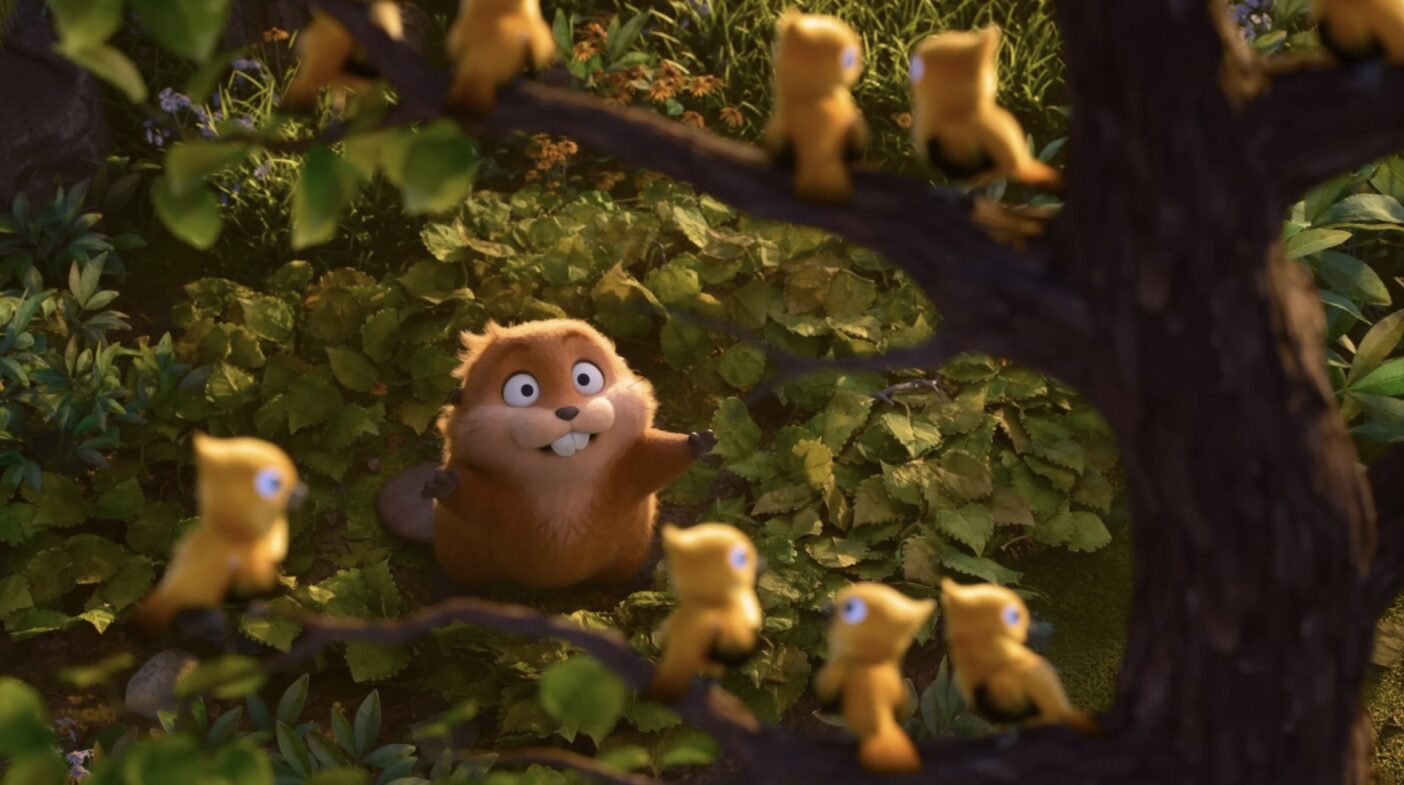
The resolution refuses easy catharsis. Even those positioned as antagonists are allowed complexity and the possibility—however limited—of incremental evolution. The final scenes—spare and restrained in their emotion—offer a vision of connection that persists despite biological and social barriers. It is not triumphant. It is simply real: the bridge holds, however fragile.
Chong and his writers suggest that coexistence does not require us to become the same. It does not even require us to like one another. It requires us to acknowledge something harder: that we share an atmosphere, and that sometimes the only way to grow is to let go of the figures who made us. It requires us to sit on the stone and listen to what the world is trying to tell us, even when the world doesn’t speak our language.
Hoppers is a film that refuses to offer easy catharsis. It suggests that while we can “hop” into another’s life, we can never truly own their experience. It’s a call to return to the stone—to the discipline of listening—in a world that’s forgotten how to be still. It’s Pixar at its most intellectually rigorous, reminding us that under the same sky, the only way to become ourselves is to stop pretending we are the only sun in the heavens.
USA | 2026 | 105 MINUTES | 1.85:1 | COLOUR | ENGLISH

director: Daniel Chong.
writer: Jesse Andrews (story by Daniel Chong & Jesse Andrews)
voices: Piper Curda, Bobby Moynihan, Jon Hamm, Adam Driver, Tilda Swinton, Kathy Najimy & Dave Franco.