DTF ST. LOUIS – Limited Series (2026)
A darkly comedic tale of three middle-aged individuals entangled in a love triangle, leading to one's untimely demise.


A darkly comedic tale of three middle-aged individuals entangled in a love triangle, leading to one's untimely demise.
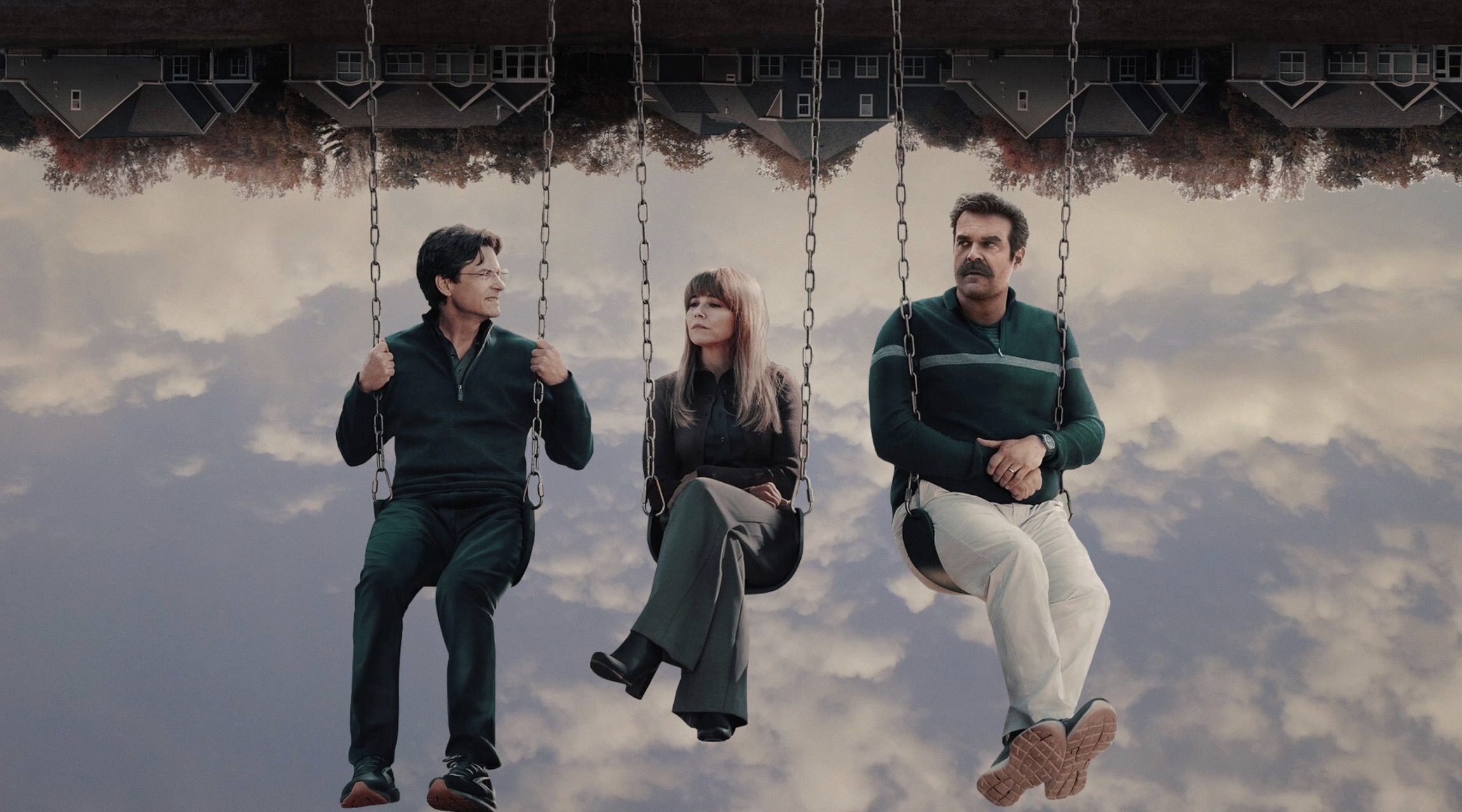
In DTF St. Louis, creator Steve Conrad (Wonder) explores the loneliness and hidden desires of three middle-aged people in the American Midwest. This seven-episode dark comedy follows mild-mannered weatherman Clark (Jason Bateman), his on-air sign language interpreter Floyd (David Harbour), and Floyd’s wife Carol (Linda Cardellini).
The show starts as if it’s going to be a zany, Sideways-esque odyssey into middle-aged people trying to rediscover themselves through swinging. Floyd joins ‘DTF St. Louis’, a meetup page for casual hook-ups, while Clark begins a relationship with Carol. The series intriguingly follows the trio’s hidden desires as they try to understand where they fit into each other’s lives and what they want from their own.
By the end of the first episode, however, one of them ends up dead, and DTF St. Louis reveals itself to be a very different show. The series subsequently splits into different timelines, depicting both the central love triangle and the ensuing murder case. Enter Donoghue Homer (Richard Jenkins) and Jodie Plumb (Joy Sunday) to try and untangle the mess and uncover the killer.

The exploration of middle-aged malaise is a compelling topic with plenty of material to mine. Yet, like so many contemporary shows, the producers seemingly felt that exploring human behaviour wasn’t enough, opting to bolt on an unnecessary murder subplot. The investigation into the character’s death is the least interesting part of the series, mostly serving as a device to reveal what happened behind those pristine picket fences.
As the episodes progress, the detectives interview various members of the group, most notably a man with the username Modern Love (Peter Sarsgaard) who becomes entangled in the romantic liaisons. The show bounces confusingly between timelines, with too little time having passed to easily distinguish when events are taking place. The choice of chronology isn’t particularly inspired either, often revisiting scenes that didn’t require a second look just to nudge the investigation along. Occasionally, episodes repeat the same scene multiple times to remind audiences of a key piece of evidence. They don’t even provide a new POV or angle; they simply replay the exact same dialogue, just in case you were looking at your phone the first time.

It’s obvious that the writers are using this non-linear narrative to manipulate the audience, withholding the most interesting scenes for the back end of the series. The constant jumping between periods slows the pacing, making it feel as though the show is dragging out the mystery for longer than necessary.
DTF St. Louis works best when it embraces its eccentric comedy about adults who don’t really want to grow up. The best moments come when Floyd and Clark mess around like teenagers, bonding over the silliest things. The show would’ve felt much fresher had it focused on their relationship rather than a murder trial. There are enough shows about crime on TV, but far too few that explore the nuances of adult friendships.
The writing struggles to balance drama and comedy, leaving fans of either genre wanting more. The humour often falls flat, feeling strange and misjudged rather than eccentric. Conrad can’t seem to decide on a tone: is this a sex comedy, a black comedy about ageing, or a crime drama with a few laughs dabbled throughout? The blend of styles doesn’t quite work, occasionally reaching “cringe” territory.

Regarding the “DTF” element, the series features plenty of sex scenes to which the actors are fully committed. Its healthy discussion of sex, polyamory, swinging, and affairs is refreshingly honest. The sex lives of middle-aged people who are comfortable enough to know what they want is a fascinating, under-explored topic. The trio plays out their eccentric fantasies—including Bateman’s Clark playing a “sex robot”—but the show also understands that sex is often awkward and funny, regardless of one’s experience.
David Harbour’s charisma does much of the heavy lifting, bringing every scene he’s in to life. He’s not afraid to look foolish or get messy, and his physical comedy is a joy to watch. As an interpreter, Harbour is clearly having a whale of a time, most notably in a scene where he signs along to rap music.
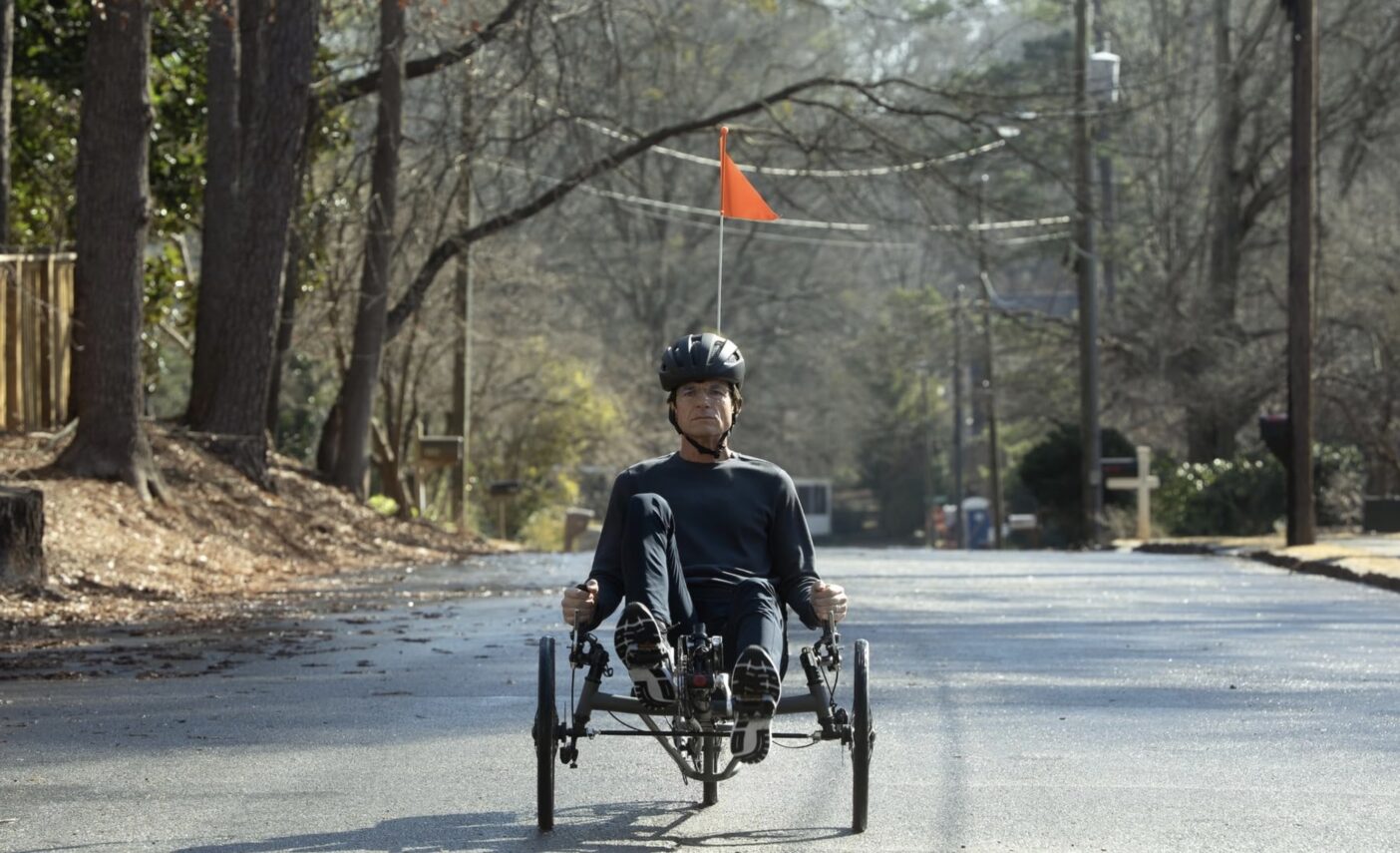
Jason Bateman feels slightly miscast; his portrayal of a weatherman with a sleazy side never fully convinces, and his trademark dry humour doesn’t quite land. Meanwhile, Linda Cardellini is sidelined as a demanding wife, once again wasting a talented actor in a thankless role. The trio is at their best when exploring the love triangle, where the dark comedic elements are better suited to their talents.
Richard Jenkins and Joy Sunday are given very little to do. Their crime-solving duo usually arrives too late to the proceedings, with the flashbacks revealing evidence before they do. Jenkins does what he can, but the material is underwhelmingly dry. The writers could have at least played with the “old guard vs. keen young detective” dynamic to inject some life into the investigation.
With the press only given the first four episodes, it’s hard to say if the show nails the landing or if the killer’s identity is worth the journey. Given that the murder is the least interesting aspect of the series, it’s difficult to imagine the writing finding a way to make those elements more captivating.
DTF St. Louis is an interesting concept that loses its way by trying to be too many things at once. As a study of middle-aged malaise and sexual liberation, it’s a goldmine; as a murder mystery, it’s a generic addition to an over-crowded genre. It’s a shame the show becomes a run-of-the-mill procedural, because its portrayal of middle-aged romance is genuinely touching. Ultimately, it joins the list of forgettable crime dramas, even though it could have been so much more.
USA | 2026 | 7 EPISODES | 16:9 HD | COLOUR | ENGLISH


writer & director: Steve Conrad.
starring: David Harbour, Jason Bateman, Linda Cardellini, Joy Sunday, Richard Jenkins & Peter Sarsgaard.