DONKEY SKIN (1970)
A fairy godmother helps a princess disguise and flee the kingdom so she won't have to marry the king who happens to be her father.

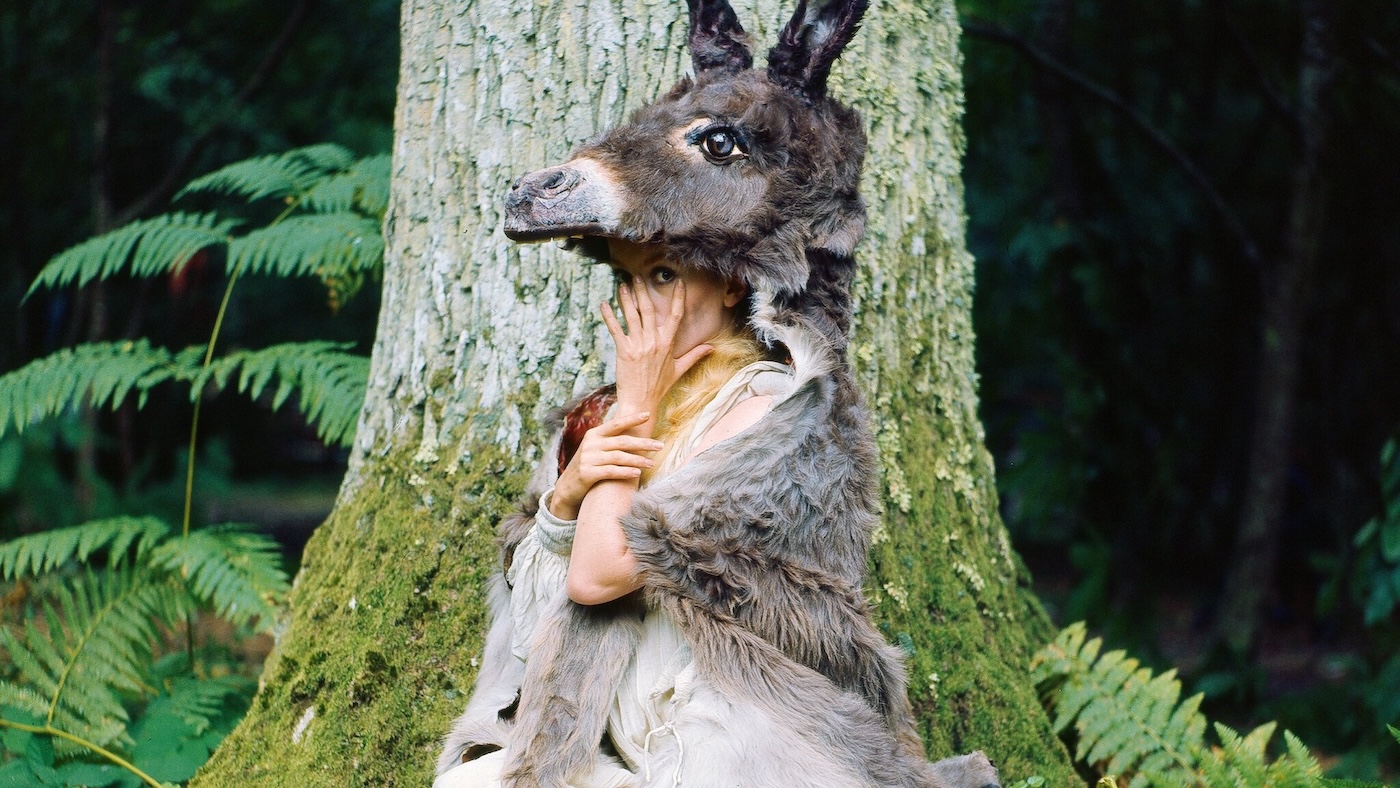

A fairy godmother helps a princess disguise and flee the kingdom so she won't have to marry the king who happens to be her father.
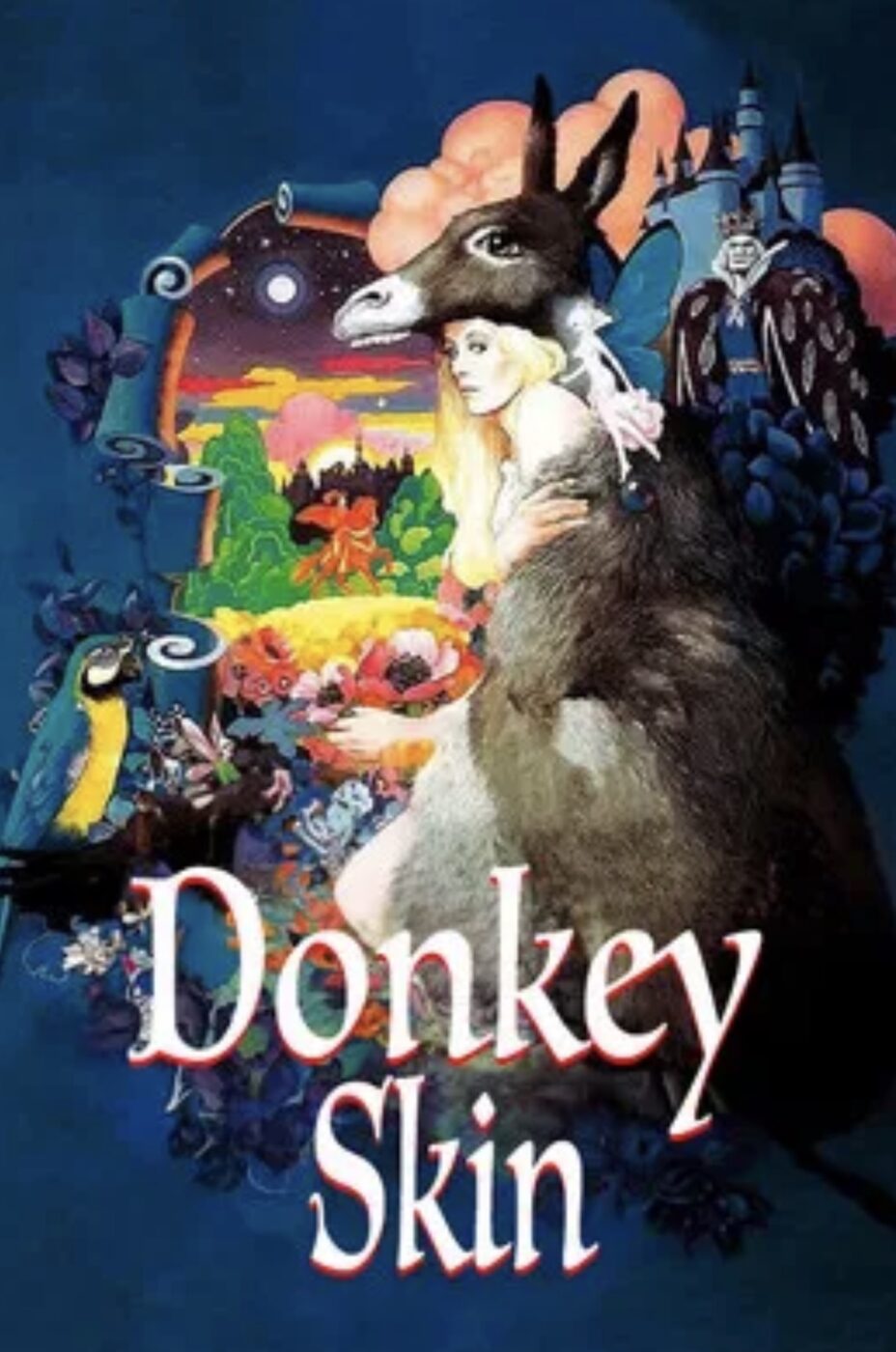
Gorgeous castles. Sweeping camera movements. Long, elegant dresses. Servants and horses painted blue. A donkey that shits out valuable coins. The most ridiculous shoulder pads you’ve ever seen. These are just some of the absurd and exotic dreamscapes that comprise Donkey Skin / Peau d’âne, Jacques Demy’s 1970 musical fantasy. It’s a unique film so committed to its one-of-a-kind tone that you cannot help but marvel at the gall it has to play its story straight.
Each of these stiff characters appear almost static. It’s their lush environment that moves and breathes, whether through the majesty of the film’s production design, locations, and cinematography, or the zoom-ins and zoom-outs that isolate its characters within these locales. The servants lurk in the background of scenes, painted like furniture and bearing no signs of personality (or humanity). Aside from love, which is sacred, everything in a king’s life is window dressing.
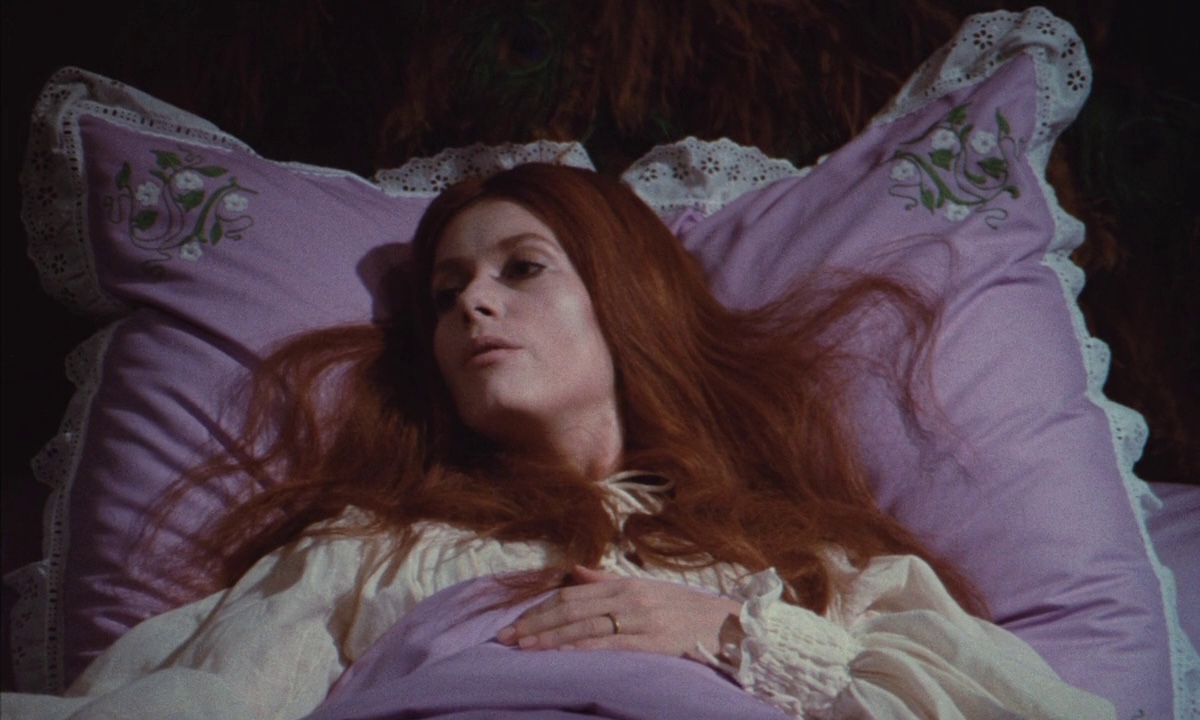
After the king’s (Jean Marais) beloved wife passes away, he’s haunted by the promise she demanded of him: that he must marry someone even more beautiful than her. This is no easy task given that the role was portrayed by Catherine Deneuve, but an opportunity emerges when he considers their daughter (also played by Deneuve) as a potential bride. After much deliberation over potential matches, all of whom pale in comparison to his wife’s beauty, he begins to see the princess in a romantic light.
The story’s horror binds its comedy in place. The stunning degree of intransigence in each character’s outlook and behaviour makes them consistently humourous. Demy has transformed a storybook romance into a twisted tale dripping with irony. It’s like a slightly milder version of Todd Solondz’s searing, effortlessly cruel comedy-dramas, yet somehow even more irony-laden in its approach. The king’s word is final, his logic is as simple as could be, and the values in this twisted fairy tale are inverted just enough for you to feel for and chuckle at its protagonist’s fate.
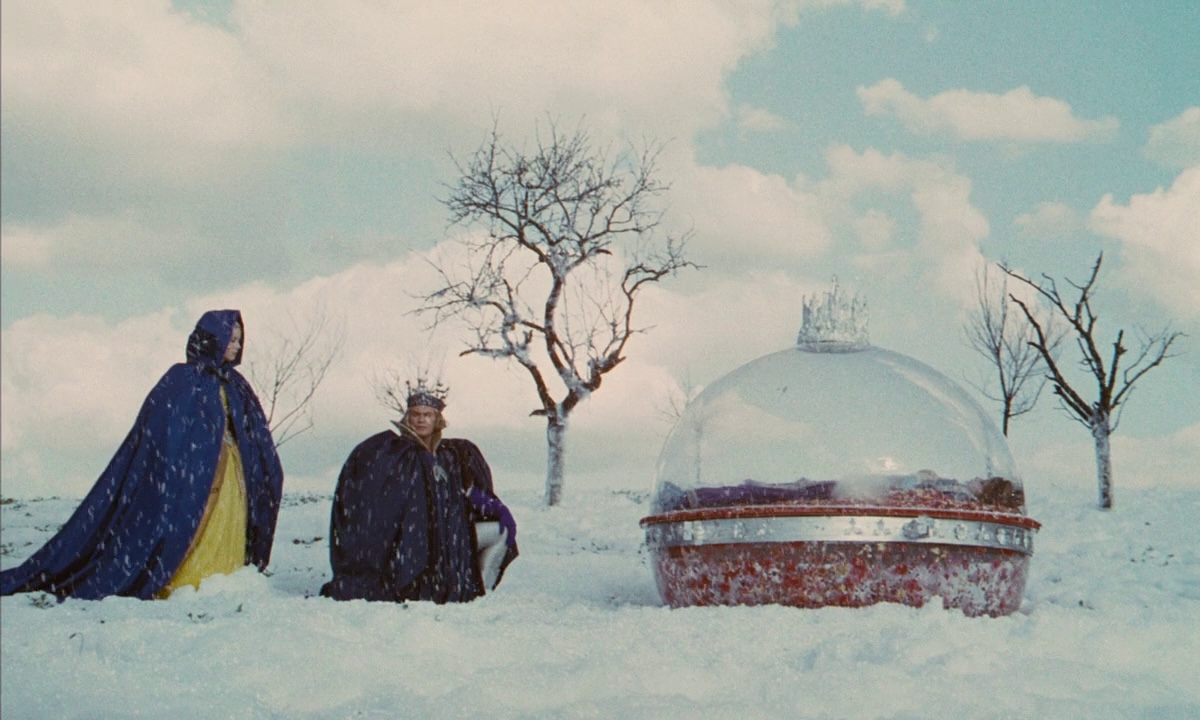
In Donkey Skin, attraction is a terrible, terrifying force, breaking apart social conventions and familial ties. By emphasising the ridiculousness of these prestigious, rigid characters, their dynamics feel flimsy, allowing lust disguised as love to overcome the typical boundaries of a father-daughter relationship. Naturally, the princess is aggrieved by her father’s advances yet powerless to stop them, demanding elaborate dresses in exchange for her hand in marriage so she can buy herself more time. For what, exactly? Neither this film nor its Lilac Fairy (Delphine Seyrig), the Fairy Godmother figure in this tale who attempts to help the princess, seems to know. This leads to a steady supply of dress-making in the castle, with each gown looking more luxurious than the last. But with no plan in sight for how to escape her father’s clutches, this protagonist’s fate looms ever closer.
It’s terrifying and strange and replete with beautiful imagery, an ideal mash-up of fantasy and horror. The film’s elegant and evocative imagery underscores the moral rot at Donkey Skin’s core. Each character conforms to a pre-assigned role in life, and it’s within these cardboard cut-outs in lieu of characterisation that they helplessly squirm or command complete control over their subjects. Exactly as cruel as it needs to be, the film flounders when hope starts to emerge in this story. From there, it loses its purpose, forgetting all about black comedy as it transforms an ironic tale into a whimsical one. Donkey Skin’s imagery never loses its lustre, but the undercurrents of this ethically horrifying world vanish overnight once the princess makes her escape.
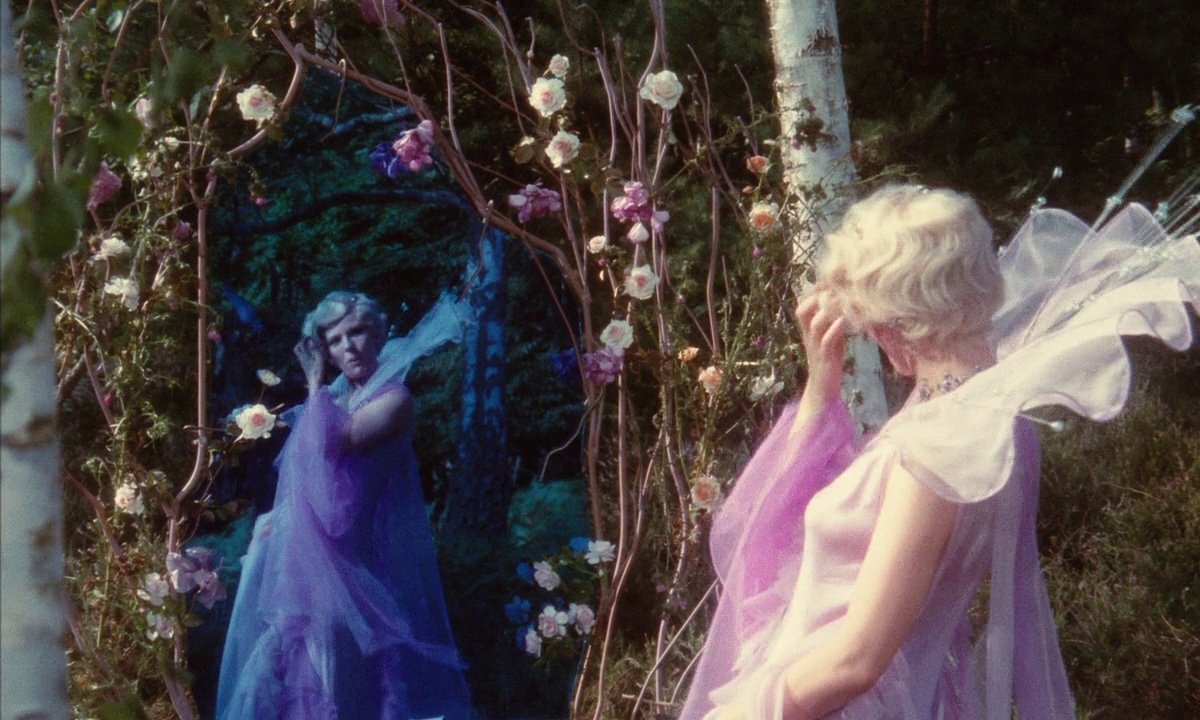
There, the musical portions of the film become trite, a succession of clichés without the necessary bitterness to make them enjoyable. The same is true of the wider story, as the princess goes from being a disgraced member of a local village to the only person who wins the affection of a local prince (Jacques Perrin). Naturally, the prince grows despondent after encountering her ravishing good looks, unable to find out who this enchantress is. He has almost everything he could ever want, but true love, that awe-inspiring force, eludes him. A procession of tropes play out, none of which are illuminated by the film’s tone, which has thoroughly abandoned any semblance of dread by this point.
Without a note of tension in sight—while this review refrains from spoiling the ending, Donkey Skin is too thoroughly predictable to be spoiled—the only aspect of the film worth holding out on is this love affair. It’s communicated through unrequited looks, talking flowers, and various other magical devices that are somehow less visually interesting, humourous, or memorable than the fact that the king demanded all of his servants and horses be painted blue. None of these later images stick out in one’s mind, since they are now in service of a traditionally elegant fairy tale.
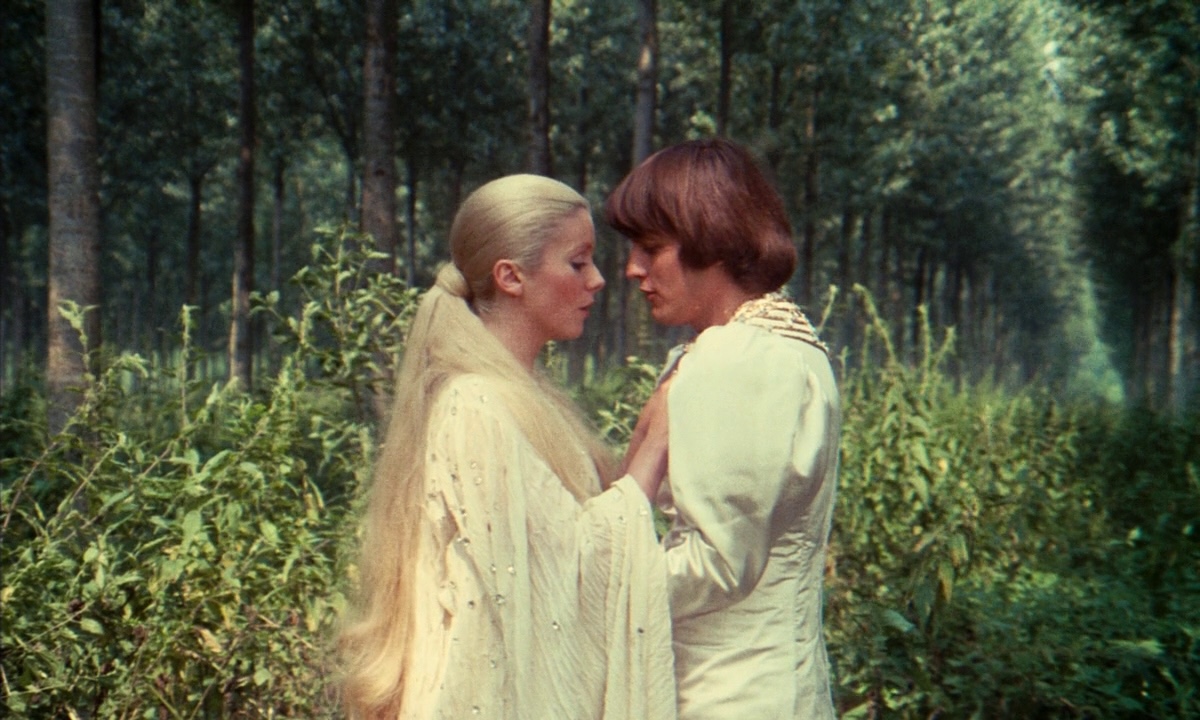
The love affair between the prince and princess is also bereft of anticipation. Not only do you already know exactly what will happen long before it does, one should be swayed somewhat by its tone and atmosphere. These characters may be walking, talking tropes, but there enough authentic feeling could make one hope that the pair will form a union, even with an obvious ending around the horizon. Better yet, one should be left to believe, even for just a moment, that this might not be possible.
But there’s no scheming, duplicity, or venom in sight, so bitterness can’t flourish behind the film’s pleasant faces or gorgeous set designs. Donkey Skin gallops merrily forward with sentimental nothingness in the way of content. As for the singing portions of the film, Demy’s characters plainly enunciate their words in song, a technique that could only have meant something if the emotional content was rich and evocative. Instead, whimsy is tacked onto Donkey Skin at every turn in a fairy tale that is one-third acidic and two-thirds sugary-sweet. Solondz used kitschy, sitcom-like scores as bitterly ironic reminders that his movies are not for the faint-hearted, and that he knows he’s playing with fire. Not only does Demy shy away from anything resembling shock value once Donkey Skin’s plot progresses, he cannot rustle up magic or wonder in a love story that fails to make one swoon.
FRANCE | 1970 | 91 MINUTES | 1.66:1 | COLOUR | FRENCH

director: Jacques Demy.
writer: Jacques Demy (based on the 1695 fairy tale by Charles Perrault).
starring: Catherine Deneuve, Jean Marais, Jacques Perrin, Micheline Presle, Delphine Seyrig, Fernand Ledoux, Henri Crémieux, Sacha Pitoëff, Pierre Rep & Jean Servais.