AVATAR: FIRE AND ASH (2025)
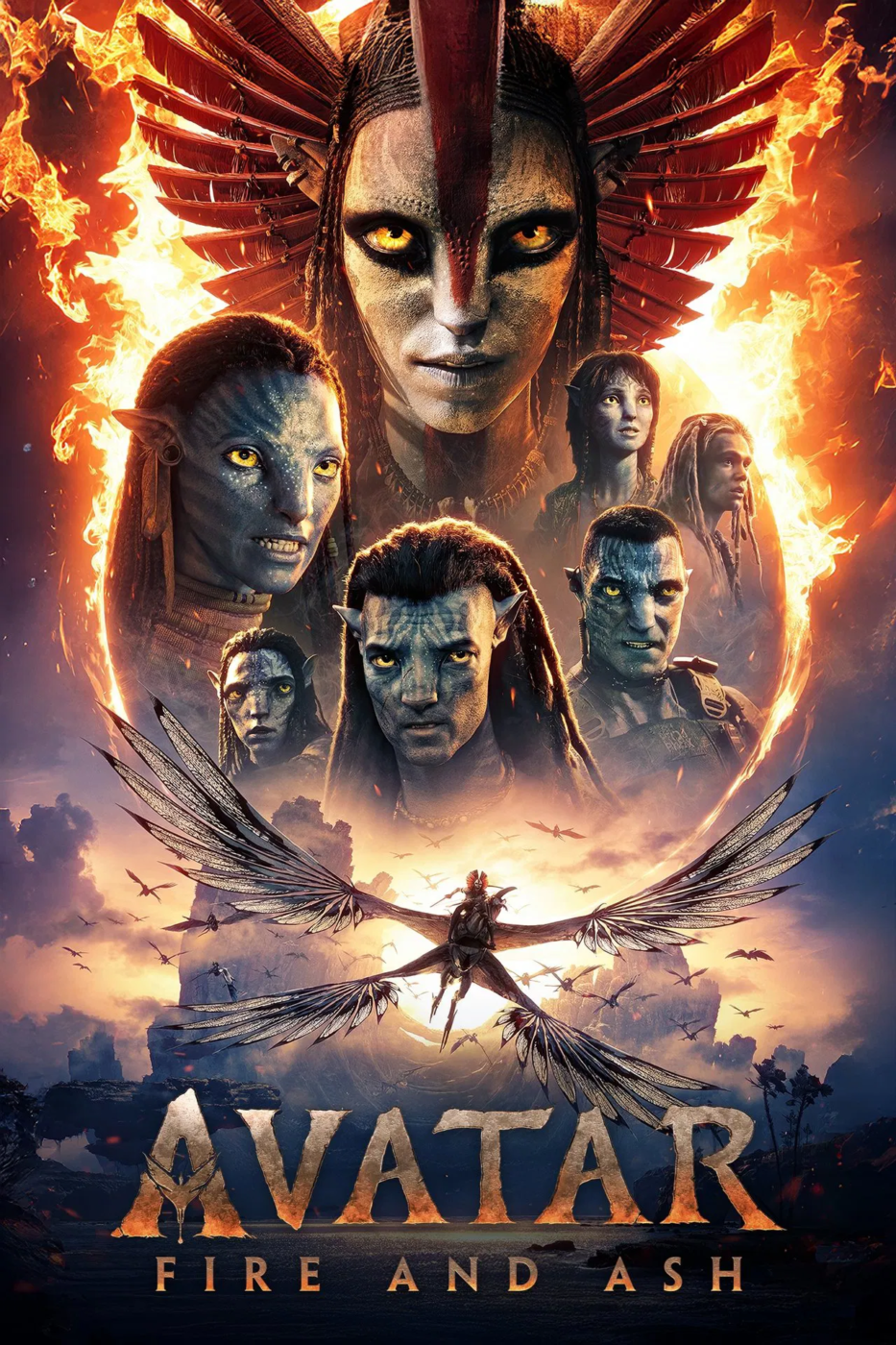
In the wake of the war against the humans and the loss of their eldest son, Jake and Neytiri face a new threat: the Ash People, a violent and power-hungry tribe led by the ruthless Varang.

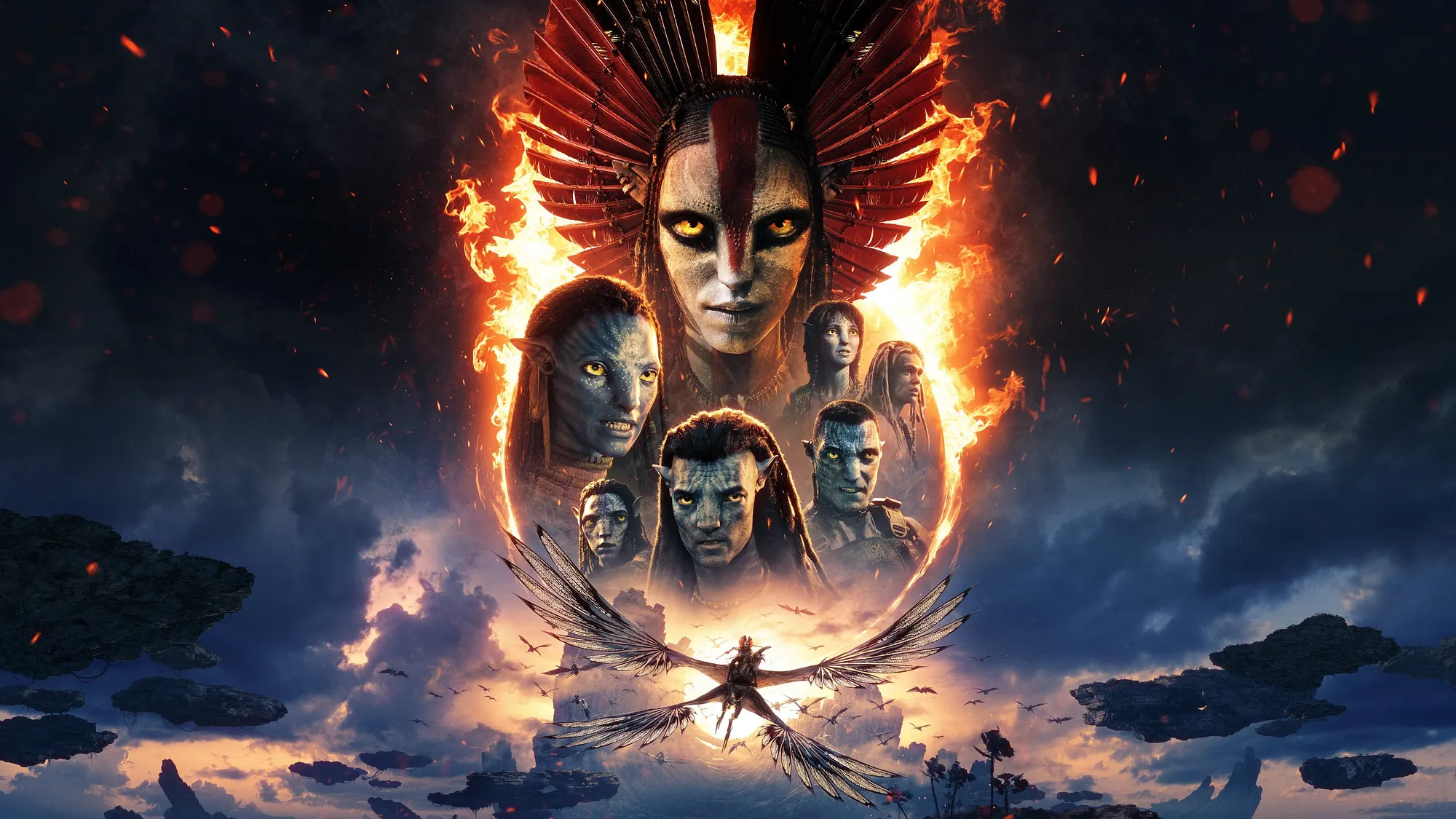

In the wake of the war against the humans and the loss of their eldest son, Jake and Neytiri face a new threat: the Ash People, a violent and power-hungry tribe led by the ruthless Varang.
The prevailing wisdom is that audiences flock to the Avatar films primarily for the visual spectacle — the thrill of 3D and the exemplary use of VFX. However, between these cinematic “events” brilliantly timed for Christmas, few return to them; the experience is noticeably less enthralling in standard 2D at home. This means that, unlike the Harry Potter (2001–2011) saga, many viewers lose the narrative thread by the time a new instalment arrives. This perhaps explains why Avatar: Fire and Ash often feels like a retread of Avatar: The Way of Water (2022), mirroring story beats and entire action sequences for its climax.
These films are undisputed box office phenomena, and there’s something heartening about original IP being produced at this scale, with genuine care poured into every pixel. However, as Fire and Ash began, I realised I’d completely forgotten that Neteyam (Jamie Flatters), the older brother of Lo’ak (Britain Dalton), had been killed in the previous film. Such a pivotal event from only a few years ago should be seared into my memory. But perhaps there’s simply too much content today for audiences to keep apprised of the relevant details in all of them. A re-watch of The Way of Wateris recommended beforehand, even in 2D. Or at least read the Wikipedia plot summary. Still, a “last time on Pandora…” prologue would have been welcome.
While it takes time to settle back into Pandora, the mixed blessing is that James Cameron (True Lies) seems to have reached the limits of the franchise’s broad promise. The Way of Water, love it or hate it, offered a noticeable advancement in performance capture after 13 years, superior VFX (particularly the photorealistic water), and introduced an intriguing marine tribe of Na’vi that had evolved to swim better. This gave the sequel a fresh environment to explore after the forests and jungles of the 2009 original.
One might imagine Fire and Ash would follow suit by transporting us to a volcanic landscape featuring a tribe with an affinity with fire and tolerance for high temperatures. The eerie Mangkwan clan, led by Varang (Oona Chaplin), who’ve renounced the Pandoran god, Eywa, sound compelling, but the screenplay (penned by Cameron, Rick Jaffa, and Amanda Silver) does almost nothing with them. The new tribe lacks prominence compared to the returning seafaring Metkayina clan. Despite an excellent, sexy, unhinged performance by Chaplin, the story unforgivably pushes her into the background during the third act. Her arc’s so neglected that I couldn’t even tell you what ultimately became of her!
Part of the problem is that Cameron’s fallen into the “Agent Smith trap” of The Matrix (1999) by repeatedly resurrecting Colonel Quaritch (Stephen Lang). While the core technology for transferring consciousness justified this once, doing it repetitively renders every victory over him hollow. Although Quaritch receives better material here — and his twisted partnership with Varang is enjoyable as both her arms dealer and lover— the plot inevitably reverts to the Jake Sully (Sam Worthington) rivalry we’ve exhausted across two movies already. Consequently, his potentially fascinating alliance with Varang feels surplus to requirements by the credits.
Furthermore, the Avatar films remain tethered to a somewhat lazy “white saviour” narrative, heavily inspired by Dances with Wolves (1990). It follows the well-worn trope of a western man joining an indigenous tribe and eventually becoming their spiritual and/or military salvation. While Cameron’s own perspective as a filmmaker leads him toward this style of storytelling, Fire and Ash doubles down on this “white male gaze”. The Tarzan-like Spider (Jack Champion), the biological son of Quaritch and adopted son of Jake, remains a teenage boy of vital importance. Similarly, Kiri (Sigourney Weaver), the messianic Na’vi girl with a direct connection to Eywa, is effectively the miracle daughter of a white woman.
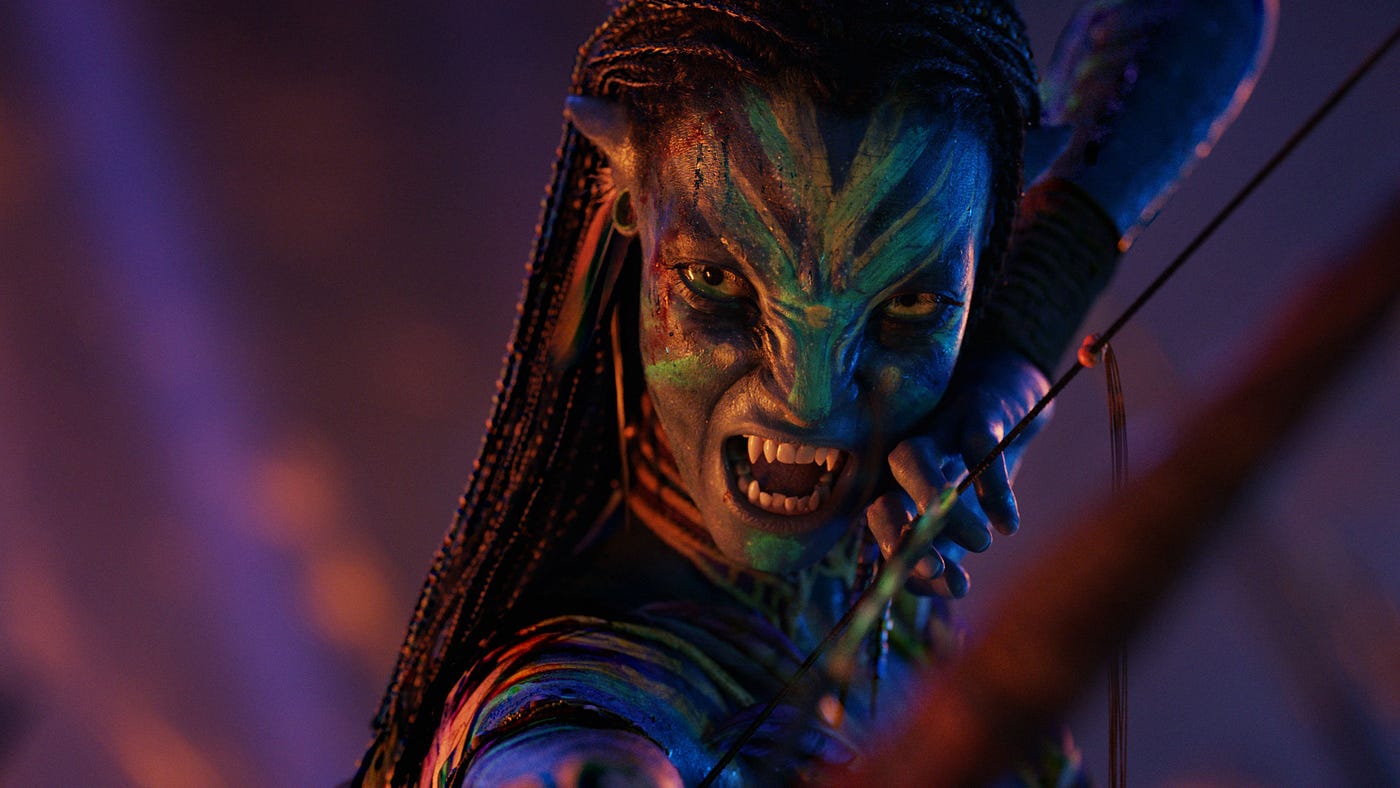
While the films champion the Na’vi as noble beings to be respected rather than conquered, it’s disappointing that they’re rarely granted as much agency as the characters of human descent. The slight exception is Neytiri (Zoe Saldaña), who still finds moments to kick ass. However, for the literal poster girl of the original film, it’s strange how redundant she’s become after three adventures. Cameron is rightly praised for showcasing tough female leads like Sarah Connor (The Terminator) and Ellen Ripley (Aliens), but here, Neytiri is often relegated to the periphery as “the mother” or a sounding board for her beleaguered husband — until she’s inevitably deployed for a rescue mission in the final act. She doesn’t even get a thrilling duel against Varang, who’s essentially the amoral “evil twin” of Neytiri, especially after hooking up with her husband’s arch-enemy.
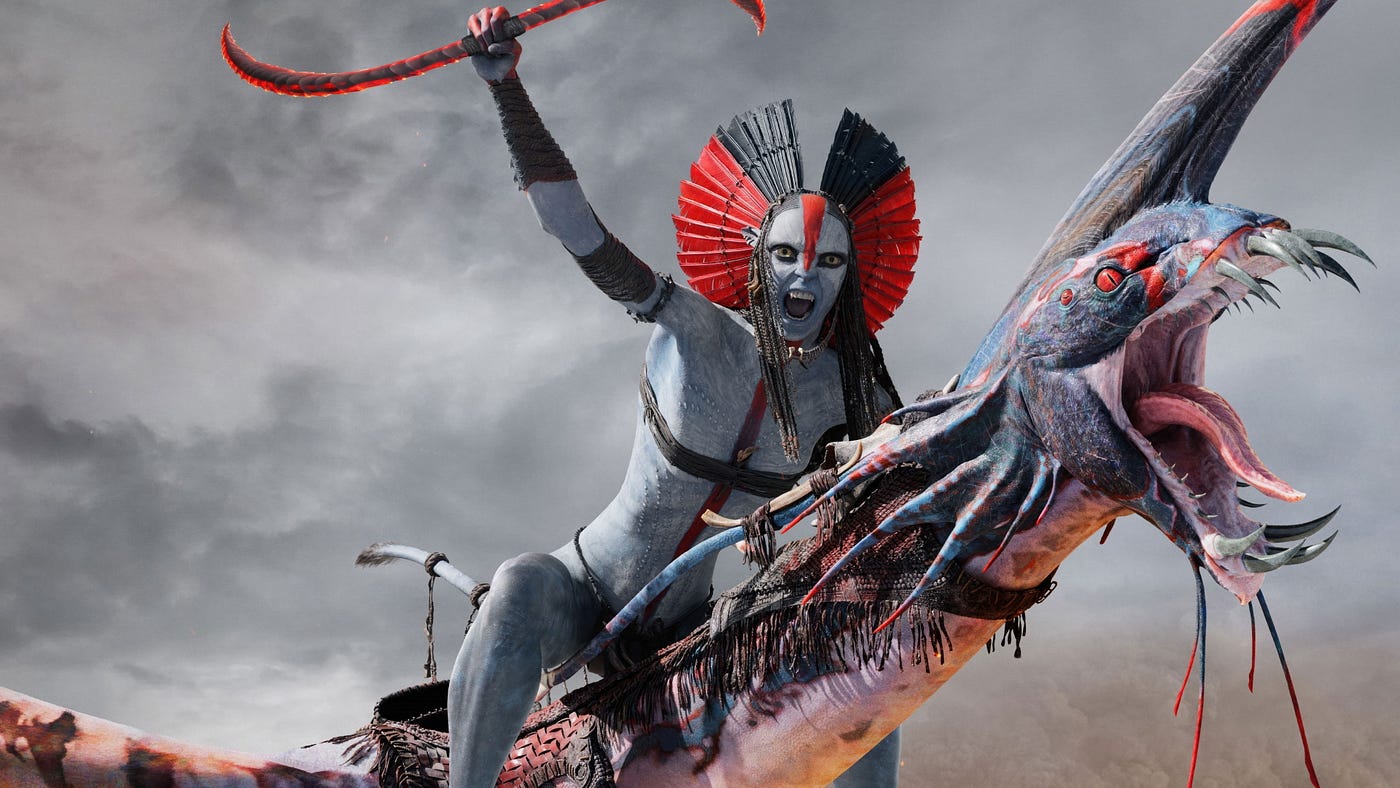
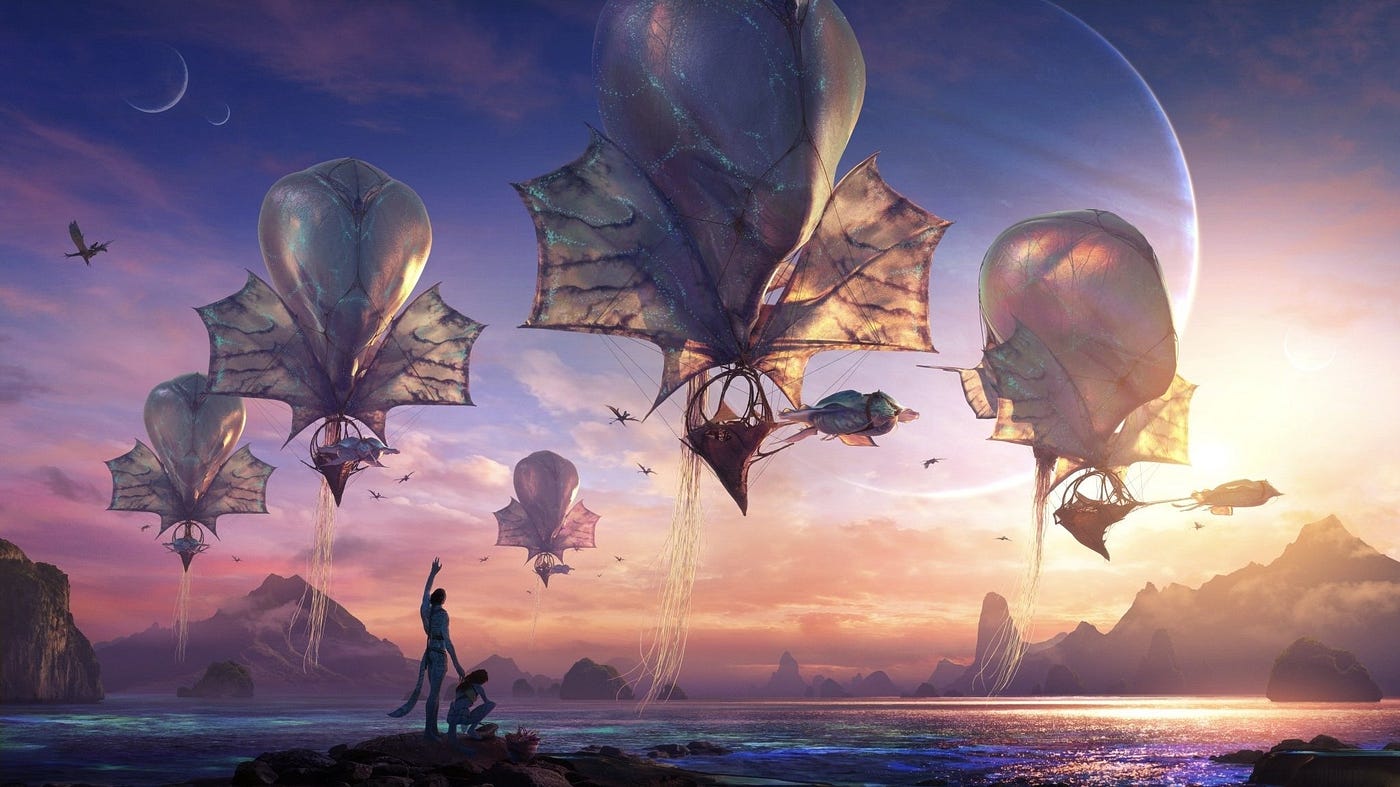
There are, however, flashes of inspiration. An early action sequence involving the nomadic Tlalim clan — ‘Wind Traders’ who navigate the globe in giant blimps — is a thrilling addition to the franchise’s aerial combat. I also appreciated the concept of Spider becoming capable of breathing Pandora’s air naturally, an unseen development the human scientists intend to exploit. Unfortunately, these ideas aren’t given the weight they deserve. Reportedly, The Way of Water and Fire and Ash were originally written as one enormous screenplay, and the seams are visible in both. The former appears to have used the intended grand climax prematurely, so Fire and Ash simply repeats it.
Indeed, the greatest frustration is that the final hour is almost a complete rehash of the previous film’s conclusion. Despite the expectation of a showdown amidst erupting volcanoes and spewing lava, we get another land-sea battle involving Na’vi, Tulkun whales (now with added bling), and human submersibles. It’s a technically impressive spectacle, but we’ve seen it before. Certain shots feel lifted directly from its predecessor, and even the despicable whaler Scoresby (Brendan Cowell) returns with a robotic arm to shoot more harpoons. It’s the equivalent of The Lord of the Rings: The Return of the King (2003) staging its epic climax at Helm’s Deep again, like its predecessor; a retreat rather than a progression.
Perhaps this is a sign James Cameron’s fulfilled his creative journey with Avatar. He scratched his itch for a big sci-fi concept and oceanic exploration in the first two films. While completing a trilogy made creative sense, there’s insufficient new material here to make the return to Pandora feel essential. Avatar films generate billions in revenue to ensure more will follow, but perhaps it’s time for Cameron to step back as director and “godfather” the sequels into existence, leaving the storytelling to fresh eyes.
USA • CANADA | 2025 | 197 MINUTES | 1.85:1 (3D) • 2.39:1 (2D) | COLOUR | ENGLISH

director: James Cameron.
writers: James Cameron, Rick Jaffa & Amanda Silver.
starring: Sam Worthington, Zoe Saldaña, Sigourney Weaver, Stephen Lang, Oona Chaplin, Kate Winslet, Cliff Curtis, Brendan Cowell, Jemaine Clement, David Thewlis, Jack Champion, Britain Dalton, Bailey Bass, Giovanni Ribisi, Edie Falco, Joel David Moore, CCH Pounder & Trinity Jo-Li Bliss.