DRAGONWYCK (1946)
A simple Connecticut farm girl is recruited by a distant relative, an aristocratic patroon, to be governess to his young daughter in his Hudson Valley mansion.


A simple Connecticut farm girl is recruited by a distant relative, an aristocratic patroon, to be governess to his young daughter in his Hudson Valley mansion.
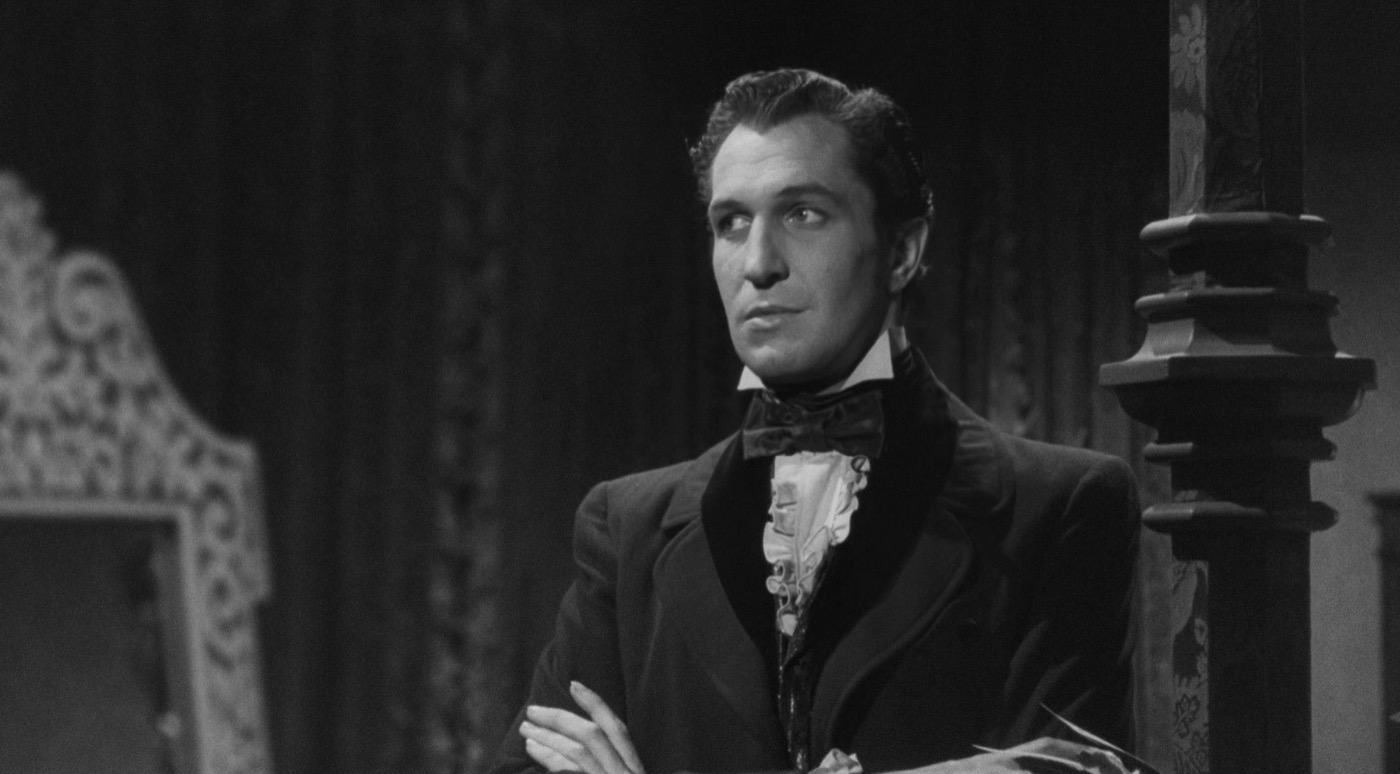
There’s a very simple reason to revisit Dragonwyck today: Vincent Price. Even before he became the fully formed icon of Gothic horror, he already possessed the poise, hauteur, and faintly sepulchral magnetism capable of bending a film around himself. Joseph L. Mankiewicz’s directorial debut remains worth seeing for more than that, but Price is the element that still gives it its afterglow. Without him, Dragonwyck would be an elegant period melodrama with Gothic leanings. With him, it becomes something more unsettling: a film whose moral design can’t quite contain the fascination of its own monster.
The premise is straightforward. Miranda Wells (Gene Tierney), a farmer’s daughter from Connecticut, is invited to the grand Hudson Valley estate of Nicholas Van Ryn (Price), a distant relation whose wealth and lineage seem to promise entry into an altogether larger world. Mankiewicz understands that the story only works if Dragonwyck first feels like a dream. Miranda mustn’t seem to be chasing money in any crude sense. What attracts her is the exception: the house, the river, the old name, the sense of stepping into a life heightened by elegance and ritual. The film begins not as horror, but as seduction.
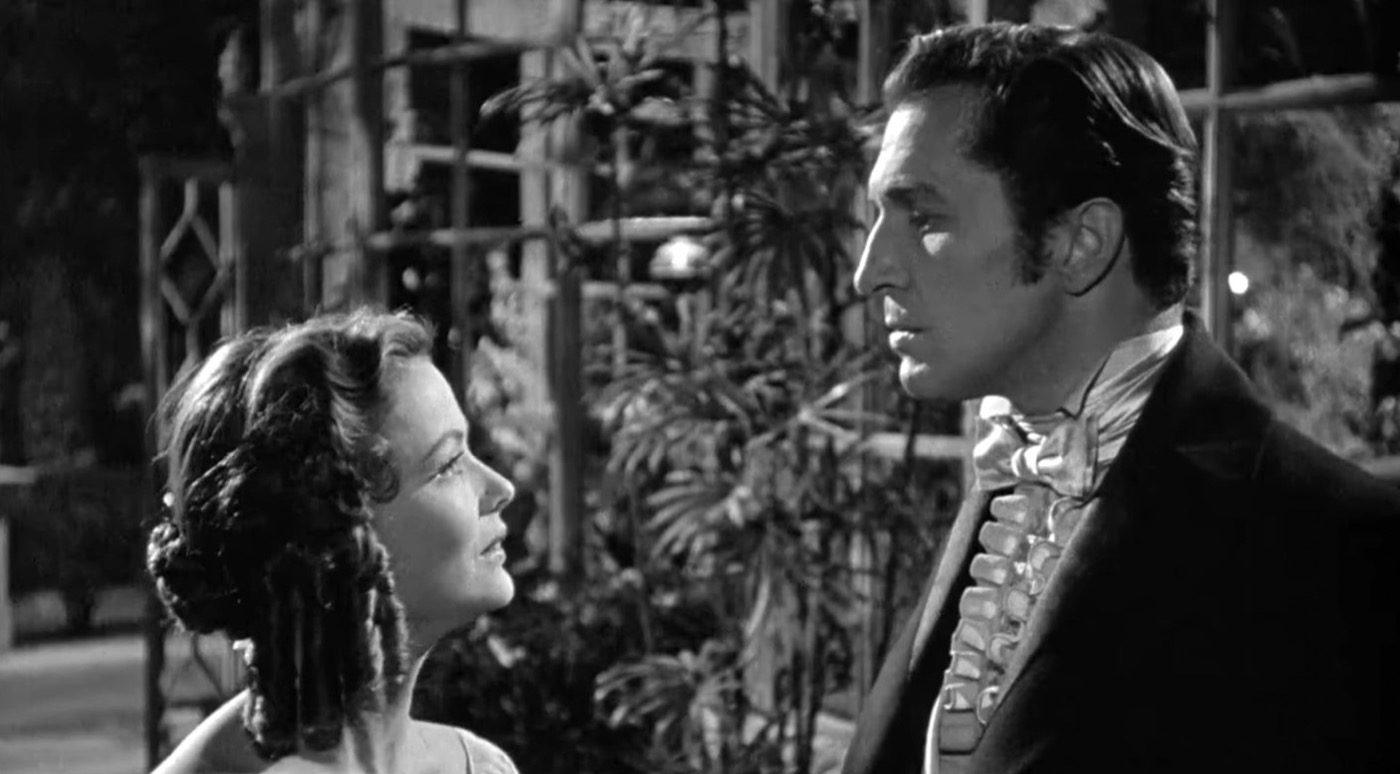
That promise matters. Dragonwyck understands something essential about Gothic storytelling: the world that destroys you must first be desirable. The estate isn’t presented as merely rotten from the outset; it’s rich, enclosed, cultivated, and faintly unreal. The attraction isn’t only Miranda’s; it’s ours too. For an American film, that’s especially telling. The US may imagine itself resistant to aristocracy in political terms, yet remains deeply susceptible to aristocratic fantasy in aesthetic ones. Miranda becomes the perfect vessel for that contradiction: not democracy arriving to expose the castle, but democracy dreaming of it.
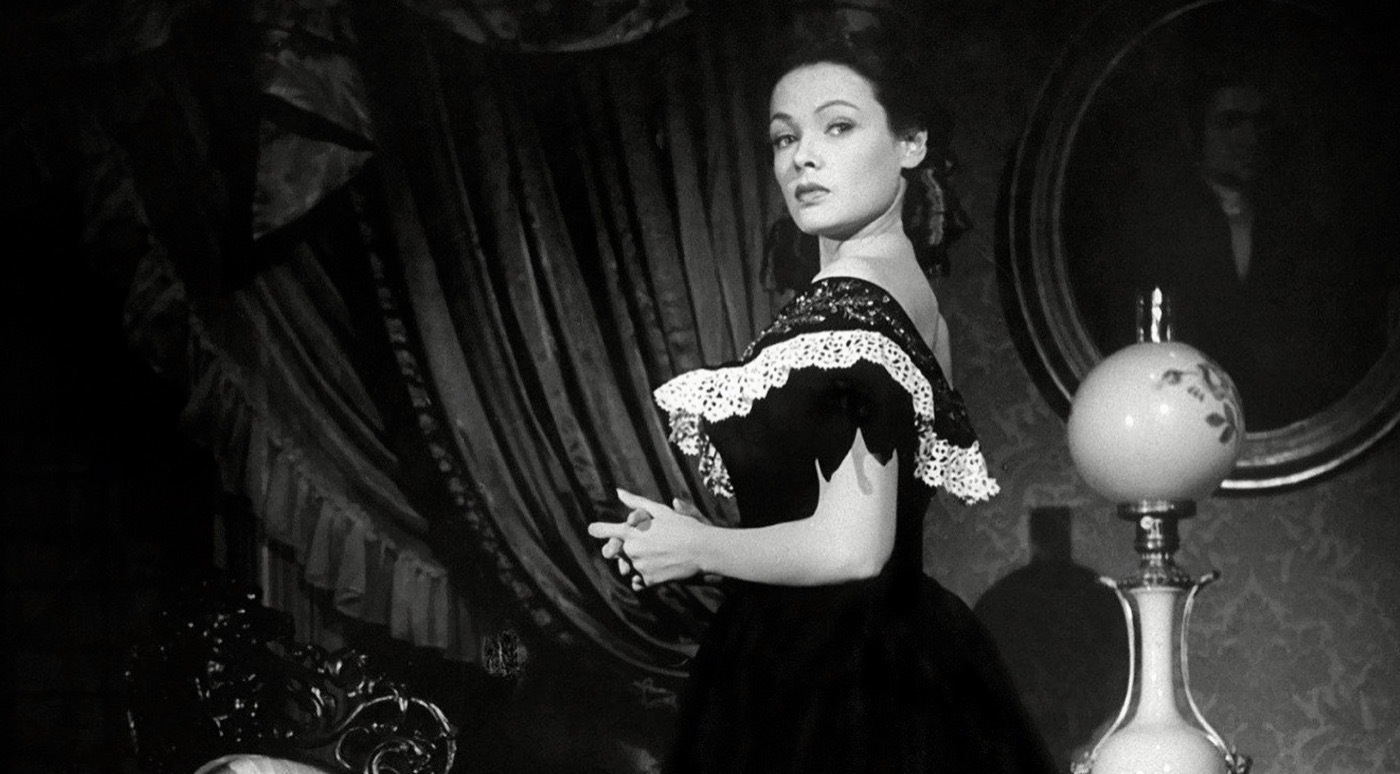
Gene Tierney is crucial to that effect. Miranda is beautiful, but not in the manner of a seductress. She doesn’t wield allure as a strategy, and the film is all the better for it. Her beauty is luminous rather than aggressive—almost involuntary. She doesn’t promise erotic danger so much as fairy-tale possibility. That distinction keeps Miranda from becoming either a schemer or a fool. Tierney gives the film a heroine who’s impressionable without seeming empty, and morally serious without becoming priggish.
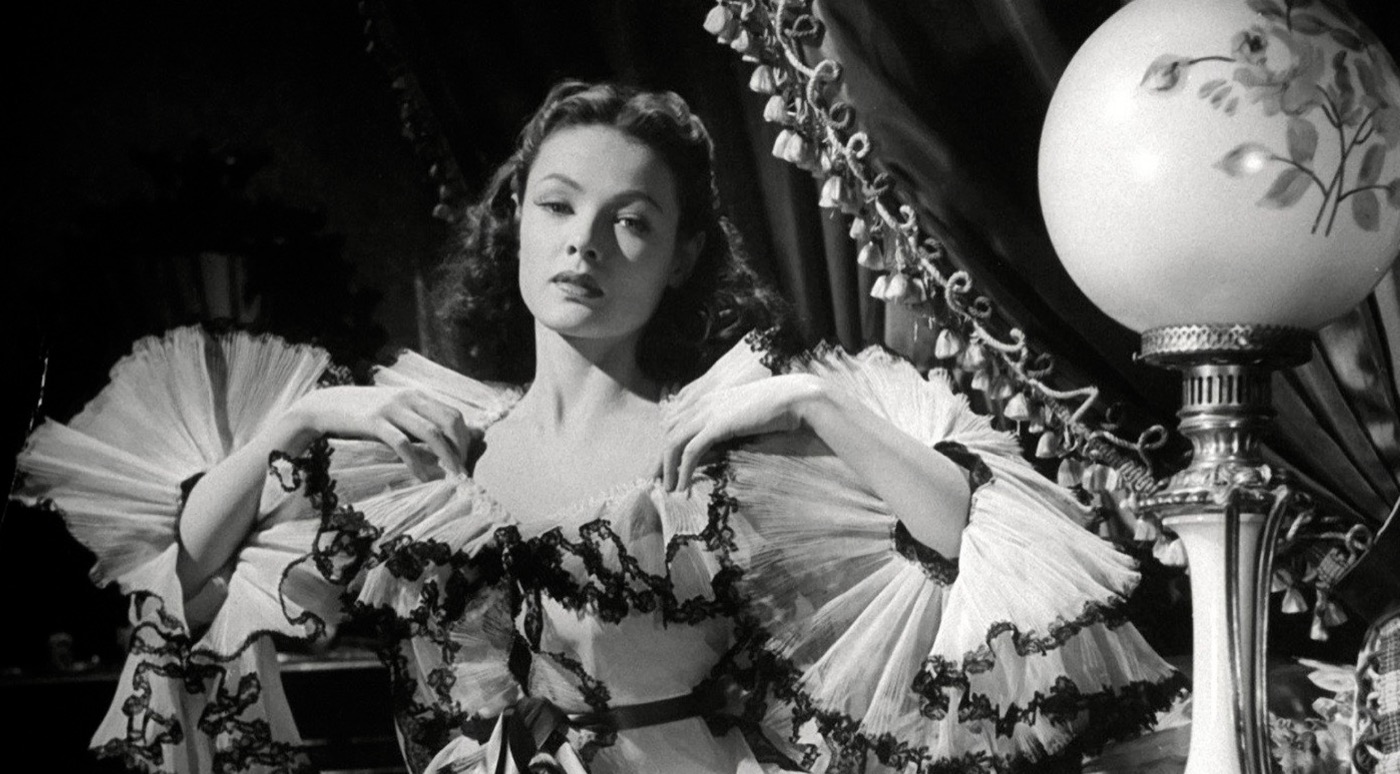
The ball sequence sharpens this beautifully. Miranda isn’t crudely humiliated—nobody needs to strike her down outright. The discomfort is subtler. She becomes aware that she doesn’t naturally belong to this world; that beauty alone isn’t the same thing as fluency in its codes. The issue isn’t simple class embarrassment, but a deeper feeling of non-coincidence. She can appear within the image of this society, but can’t yet inhabit its grammar. Her quiet remark about coming from the “wrong river” says everything. Mankiewicz handles the scene well because he understands that exclusion is often felt before it’s declared.
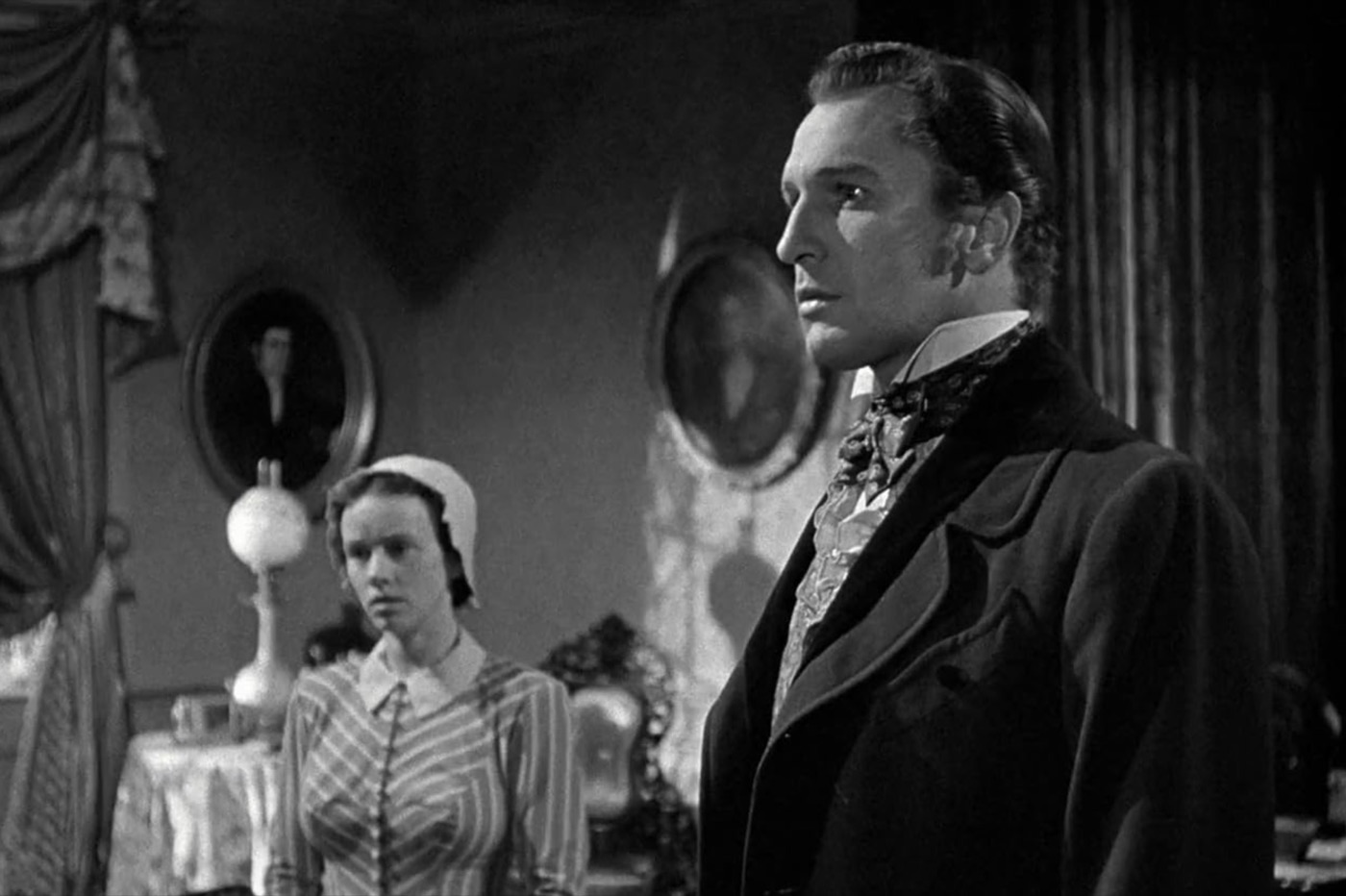
That Miranda has a real moral centre also matters. She comes from a religious world, but not in quite the same spirit as her stern father. His faith is narrower, harsher, and more suspicious of desire. Miranda retains something gentler: an inward conscience, a sense of care, and an ability to recognise the person before the category. Her kindness toward Peggy, the housekeeper’s daughter, makes this clear. Where Van Ryn sees only deformity and diminished status, Miranda sees a child. In a house shaped by hierarchy and inherited entitlement, that gives her a different kind of authority—one the film quietly privileges over bloodline.
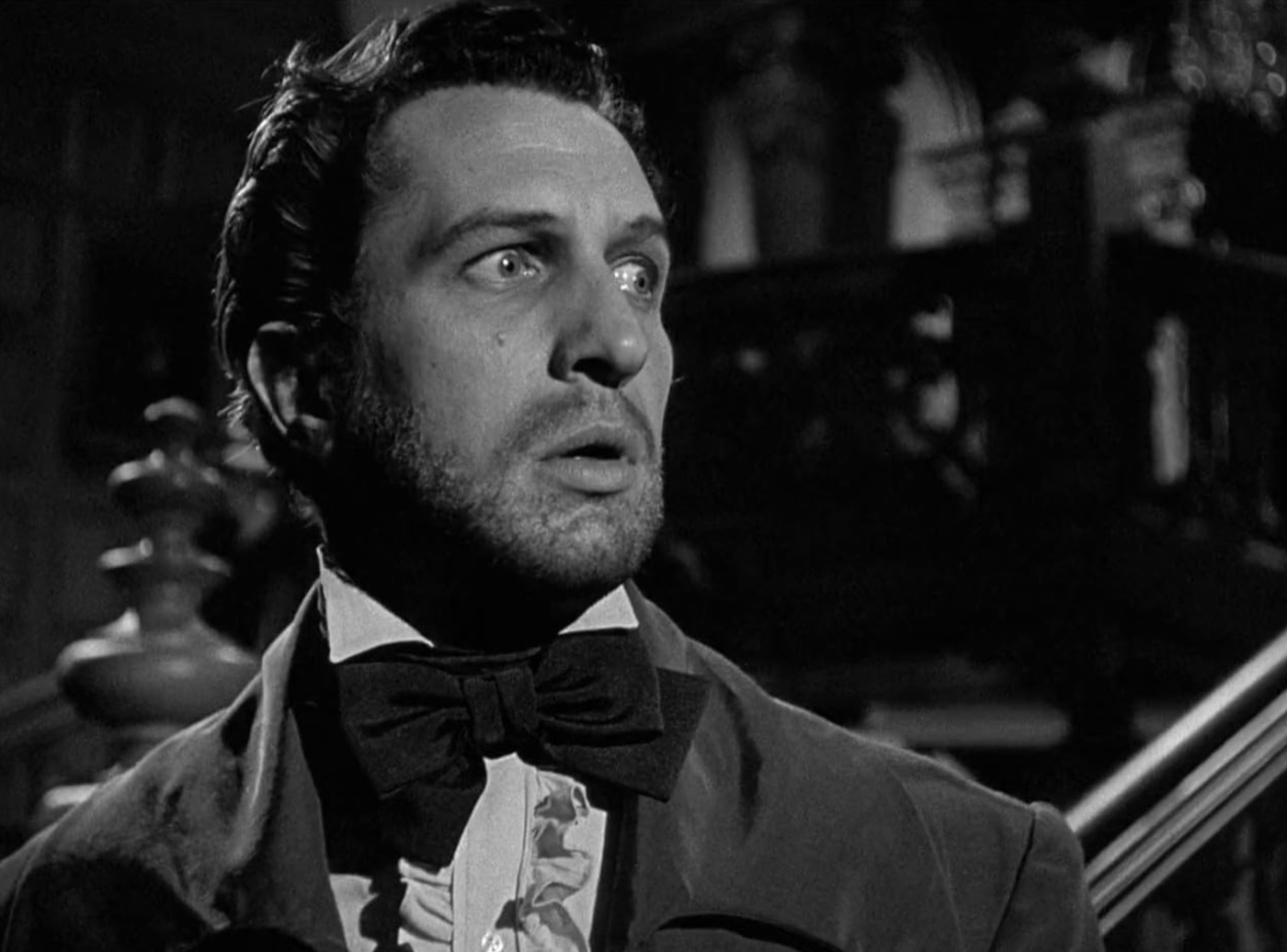
Price, however, is the reason the film lingers. Nicholas Van Ryn is morally indefensible: arrogant, predatory, and incapable of recognising a limit higher than his own will. Yet Price gives him such superior presence that straightforward condemnation becomes impossible. He doesn’t absolve Van Ryn, but he does lift him out of the category of a mere villain. He gives him shape, stature, and density. The result is that evil doesn’t merely seem blameworthy; it seems vivid, composed, and strangely complete.
Why does this nearly make us side with him? Not because Van Ryn is right, nor because the film excuses him, but because Price makes him the most intensely realised figure on screen. He’s more articulate, more symbolically charged, and more fully inhabited than anything set against him. The film wants him to embody a corrupt and declining order, and he does. But Price also makes him the most alive person in the story.
This is where Glenn Langan’s Dr Turner becomes revealing by contrast. Langan is perfectly competent: credible, steady, and sensible. But he’s playing in a different register. Turner represents practicality, health, and modern reason—worthy qualities, but dramatically thinner ones. Van Ryn is given the richer dramatic territory: the old order, the great house, the dangerous charm, and the air of a world trying to outlive itself. Langan convinces; Price commands.
Part of that is physical. Price’s face always seemed to imply more than it strictly said: intelligence, disdain, melancholy, menace, and a dying elegance all at once. In Dragonwyck, that quality is invaluable. Van Ryn must seem not just wealthy, but fundamentally different—a man formed by hierarchy so deeply that he carries it in his body. Price does exactly that. He doesn’t simply occupy the frame; he presides over it. At the ball and elsewhere, he seems taller than other men not merely because he is, but because he moves through space as though entitled to dominate it.
The film’s politics deepen that effect. Van Ryn isn’t merely a sinister husband, but a patroon: a relic of a quasi-feudal system of inherited land and power. This matters, because the Gothic atmosphere doesn’t float free of social reality; it grows from a structure of ownership, rank, and dependency. Dragonwyck itself isn’t simply a spooky house—it’s hierarchy made architectural. Mankiewicz deserves credit for understanding that the glamour of aristocracy and its injustices are inseparable. The fantasy and the rot are one system.
The religious dimension runs parallel. Miranda arrives from a world where God still functions as a serious moral reference point. Van Ryn’s world is different. He isn’t casually irreligious; he behaves as though no authority beyond his own will need exist. The house, the bloodline, and the name begin to take on the force of a private religion. In that sense, Dragonwyck doesn’t simply depict fading faith, but replacement—one sacred order giving way to another, darker one.
None of this makes Dragonwyck a flawless film. The dramatic balance is imperfect. Once Price fully takes hold, other elements inevitably struggle to match him. Some of the material works better as atmosphere and symbolic design than as fully developed emotional drama. The film tilts under the weight of its own most compelling element. That’s why the rating lands at a strong three-and-a-half stars rather than four.
Still, that may be part of its fascination. Dragonwyck survives because it’s wounded by its own attraction to what it criticises. It wants to expose the rot inside aristocratic fantasy, yet keeps granting that fantasy grace, poise, and visual authority. It wants to unmask Van Ryn as monstrous, yet allows him to remain the figure one most wants to watch. Price is the reason that contradiction feels productive rather than fatal.
So yes, Dragonwyck is worth seeing for Vincent Price alone. But it lingers for a better reason than simple star appeal. It understands that the Gothic villain shouldn’t be merely hateful; he should be magnetic enough to make our judgement hesitate. Price achieves exactly that here, years before his screen persona fully hardened into legend. The result may not be a great Gothic classic, but it remains a fascinating one: a film half in love with the danger it means to condemn.
USA | 1946 | 103 MINUTES | 1.37:1 | BLACK & WHITE | ENGLISH • FRENCH • DUTCH

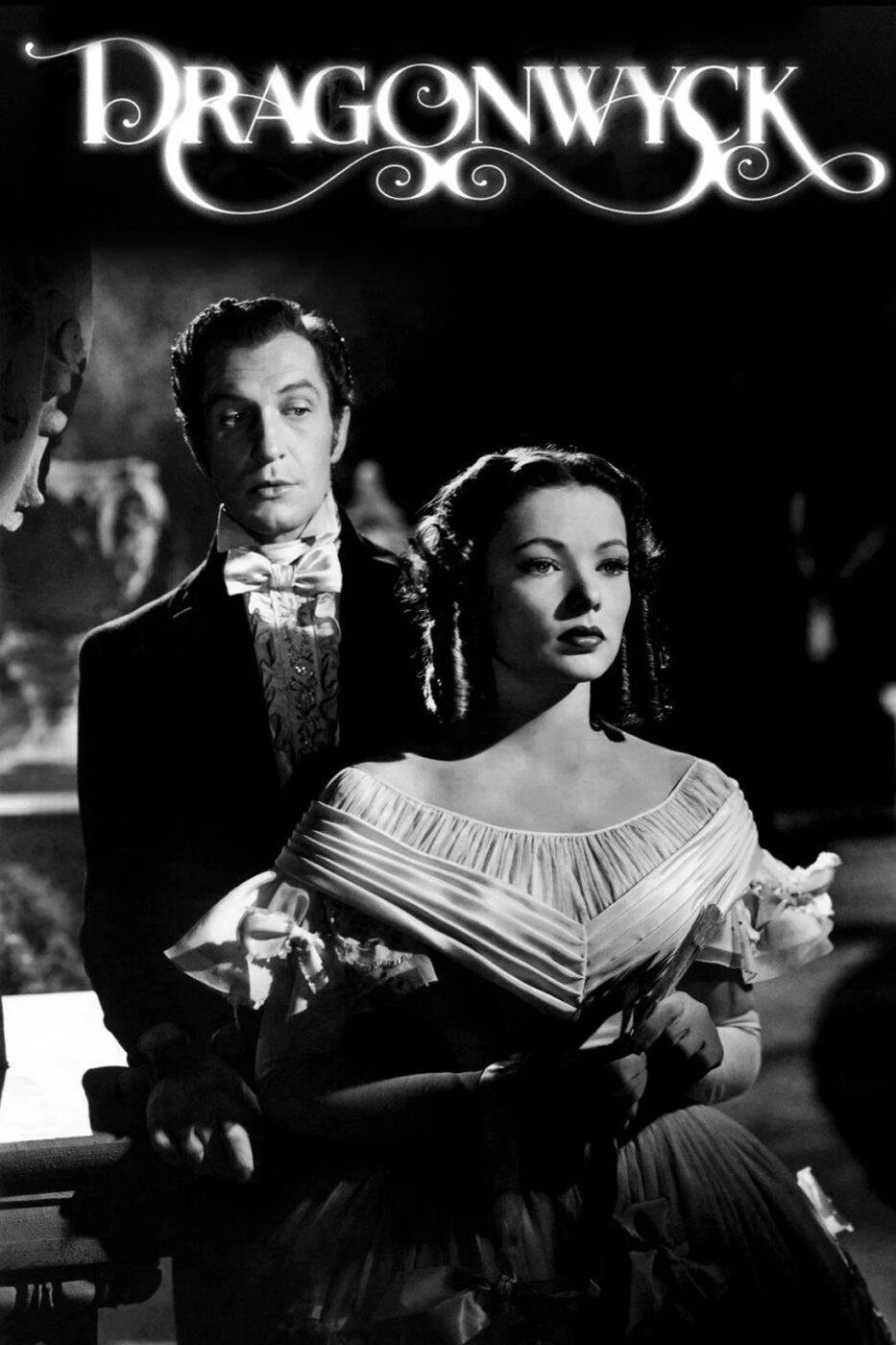
director: Joseph L. Mankiewicz
writer: Joseph L. Mankiewicz (based on the novel by Anya Seton).
starring: Vincent Price, Gene Tierney, Glenn Langan, Walter Huston, Spring Byington & Connie Marshall.