COSMIC PRINCESS KAGUYA! (2026)
Iroha's life gets knocked off its orbit when Kaguya, a carefree runaway from the Moon, moves in and convinces her to perform in a virtual world together.


Iroha's life gets knocked off its orbit when Kaguya, a carefree runaway from the Moon, moves in and convinces her to perform in a virtual world together.
If you intend to watch Cosmic Princess Kaguya! / 超かぐや姫, the new feature-length Netflix anime, I suggest you do so now. It captures a zeitgeist so perfectly that it will rapidly seem dated; by this time next year, it will be, well… so last year. However, beyond that, it’ll accrue its own nostalgia and become an essential cultural artefact, stuffed as it is with impeccably curated references, memes, and ‘Easter eggs’ gleaned from the first quarter of the 21st-century. This is both a primary strength and a major flaw: it’ll delight aficionados of J-pop culture but baffle those with only a passing interest. Which demographic are you?
First test question: Do you know and love Hatsune Miku and Kizuna Ai?
Cosmic Princess Kaguya! is the fifth feature from relative newcomers Studio Colorido—a portmanteau that translates roughly as “vivid colour”. The world of Kaguya! is certainly vivid (with an exclamation mark!). The studio’s debut was the beautiful, thought-provoking Penguin Highway (2018), a story about a strange liquid orb discovered in a forest clearing that’s linked to a local dental clinician’s ability to create penguins from inanimate matter. This was followed by A Whisker Away (2020), an engaging, Ghibli-esque anime boasting beautifully rendered backgrounds and immersive world-building.
Netflix were impressed enough with those two to sign a three-film deal, which resulted in Drifting Home (2022), an emotionally resonant coming-of-age story exploring friendship, grief, and nostalgia. Then came My Oni Girl (2024), an exploration of loneliness and the longing for connection—themes that resurface in Cosmic Princess Kaguya!
In 2022, Shingo Yamashita began work on storyboards for what would become Colorido’s third Netflix co-production. Having previously animated opening sequences for Naruto: Shippuden, Pokémon: Twilight Wings, and Chainsaw Man, Cosmic Princess Kaguya! marks his first feature as writer-director, with Saeri Natsuo also contributing to the screenplay. The story is inspired by Japan’s beloved Tale of the Bamboo Cutter, the oldest surviving folktale in the monogatari literary tradition, dating back to the 9th century.
That tale was faithfully told in Studio Ghibli’s The Tale of the Princess Kaguya (2013). It followed an old bamboo cutter who finds a tiny, glowing girl inside a stalk and raises her as his own. She grows with supernatural speed, attracts suitors she rejects with impossible quests, and eventually reveals she is a celestial being exiled from the Moon. Cosmic Princess Kaguya! is neither a remake of the Ghibli movie nor a faithful retelling of the original folktale. It’s actually closer to Nic Roeg’s The Man Who Fell to Earth (1976); I’m not being facetious—there are undeniable parallels, including the writing of songs that, when broadcast, carry messages through the depths of space to reach extraterrestrial ears.
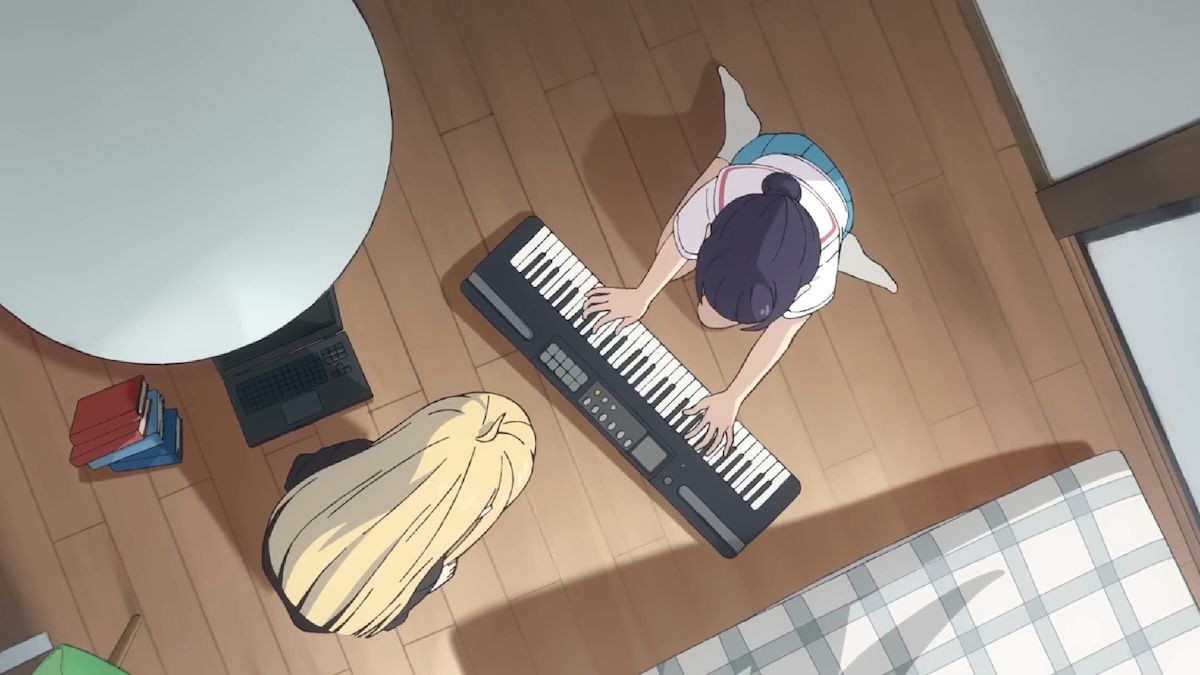
Iroha (Anna Nagase) lives alone in a rented flat, working part-time to support herself through high school in the hope of winning a university scholarship. Her father has died and her estranged mother resents her, forcing her to fend for herself. These themes are addressed sensitively; the narrative avoids faux sentimentality and never descends into pop-psychological melodrama. There are brief moments of reflection that feel surprisingly philosophical before the film abruptly switches tone, mirroring the mood swings of a troubled teenager.
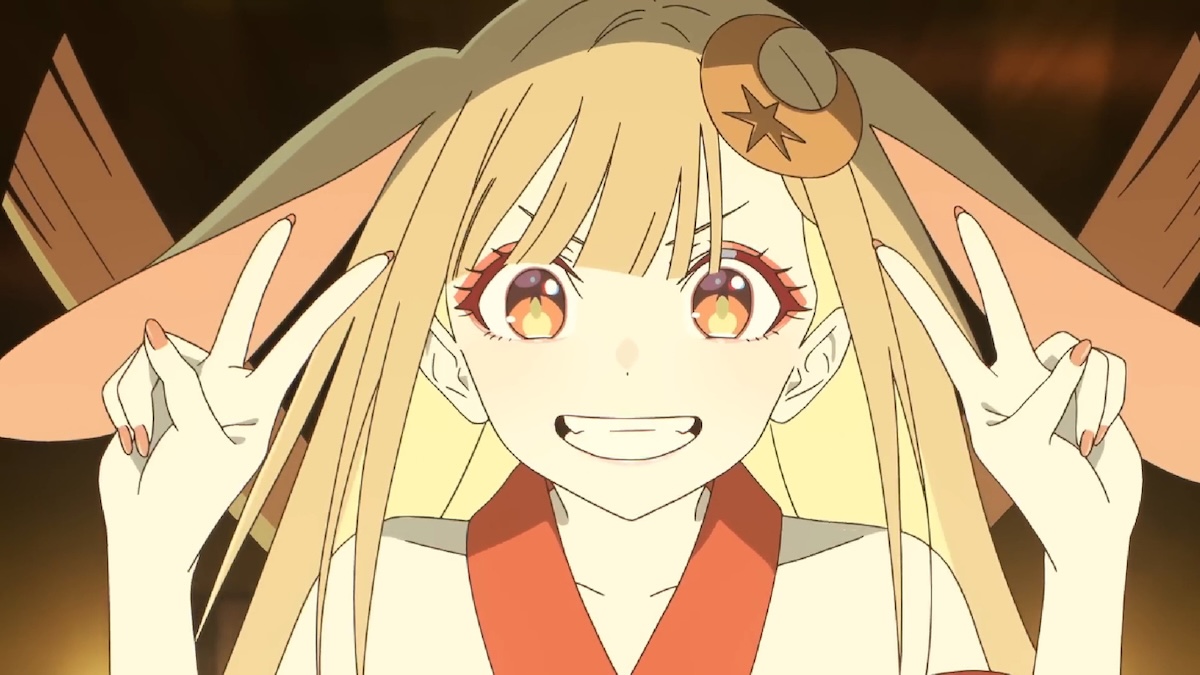
Life has become overwhelming for Iroha when she sees a shooting star and wishes for money. Her wish will be granted, but by the time the fortune hits her bank account, she’s far from happy because her values have changed. While walking home, she’s distracted by a glowing lamp post resembling a bamboo pole. Inside a small hatch, she discovers a baby. Unable to walk away, she takes the infant home. By morning, the baby has become a toddler, and she soon grows into a girl roughly Iroha’s age. This is the new Kaguya (Yuko Natsuyoshi), a girl who behaves quite differently from her namesake in the fairytale.
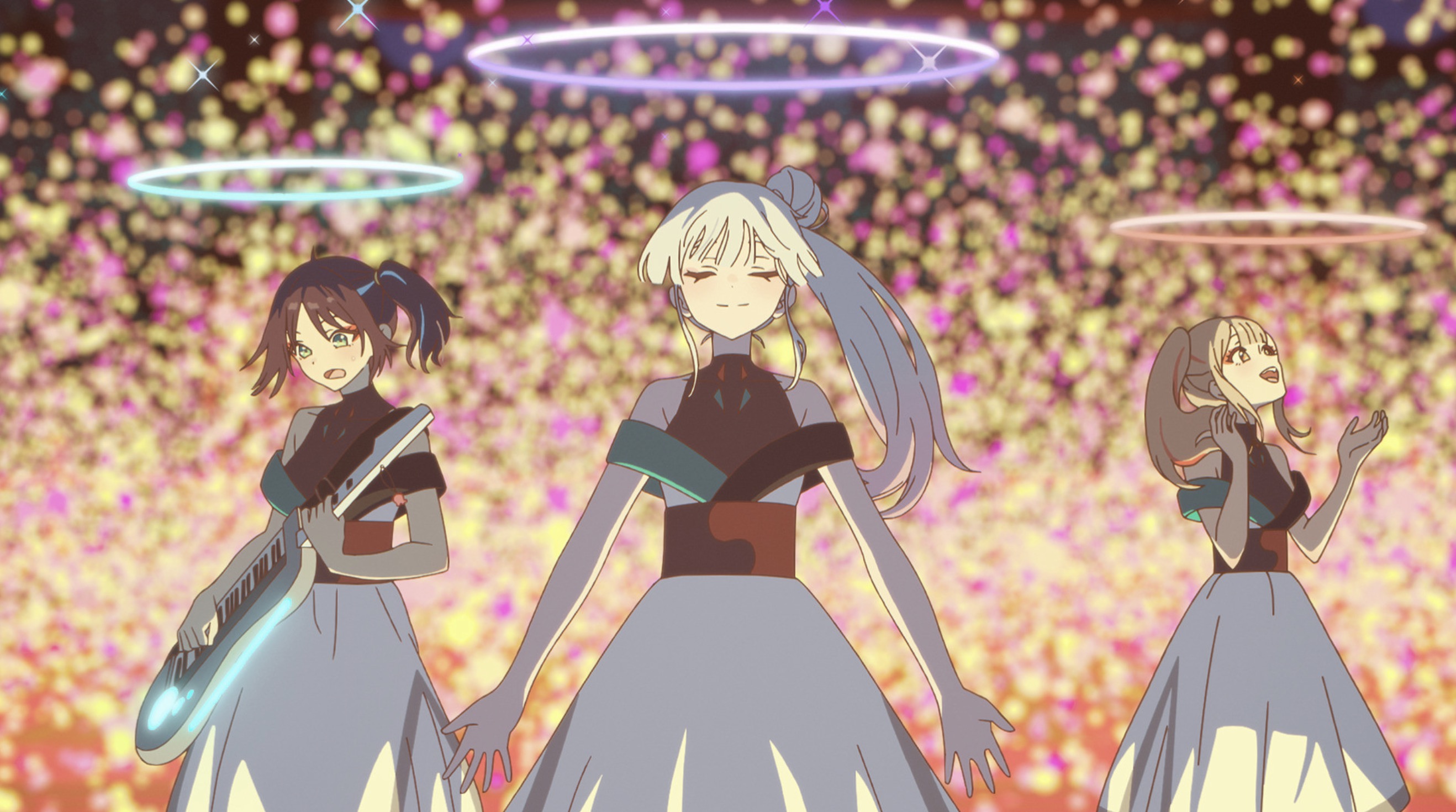
While a troublesome ‘little sister’ is another burden for Iroha, Kaguya’s lust for life begins to change her. After a satisfying segment of teen comedy, the narrative shifts from feel-good fare to a vastly more imaginative portal fantasy. Using smart-glass contact lenses and wireless earbuds, the girls enter a virtual hangout known as ‘Tsukuyomi’. Here, they meet their idol, Yachiyo Runami (Saori Hayami), a virtual pop star clearly based on a blend of the Hatsune Miku Vocaloid and the VTuber Kizuna Ai.
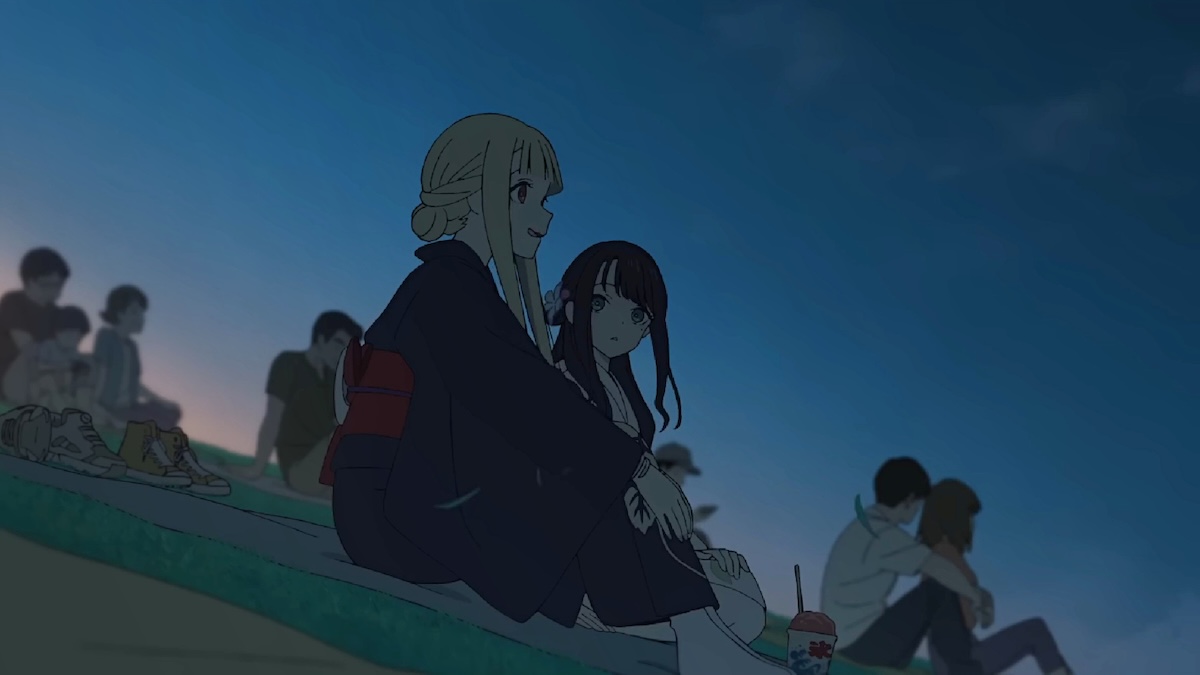
Second test question: Do you remember the real-life online romance of Medley and Husky, and was “Sweetie x 2” by Dixie Flatline among the first Vocaloid tracks you connected with?
Although director Shingo Yamashita provides the creative impetus, this is a massive collaborative effort. Akihiro Nagae oversaw the real-world character designs, while the illustrator Hechima designed the avatars for Tsukuyomi. The main musical performances, which demonstrate a comfortable familiarity with virtual concert staging, were directed by Naoya Nakayama.
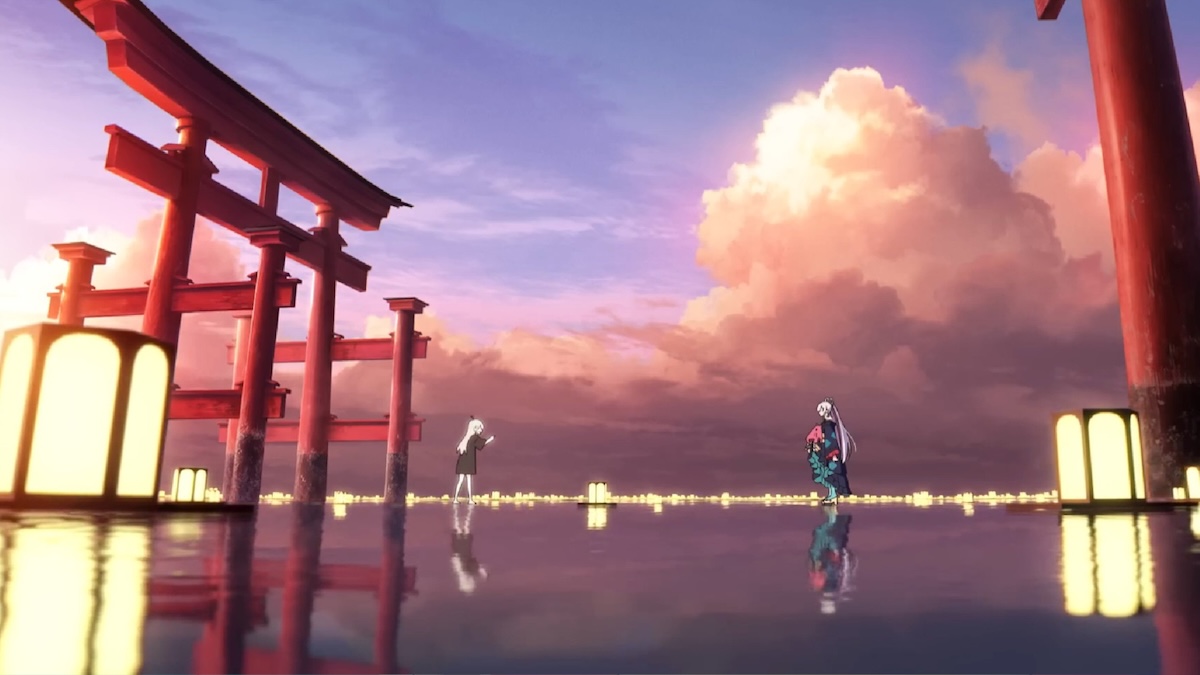
Every detail in the mise-en-scène serves a purpose. Whether it’s an all-too-clever reference or a vital plot point, nothing is merely decorative. For example, the fact that Tsukuyomi is a partially submerged world where aquatic lifeforms proliferate is more than just an aesthetic choice—it’s a detail that only truly makes sense during the third act.
Third test question: Will you be delighted by the cameo from Sacabambaspis, the famous fossil that achieved memetic megastar status in 2023?
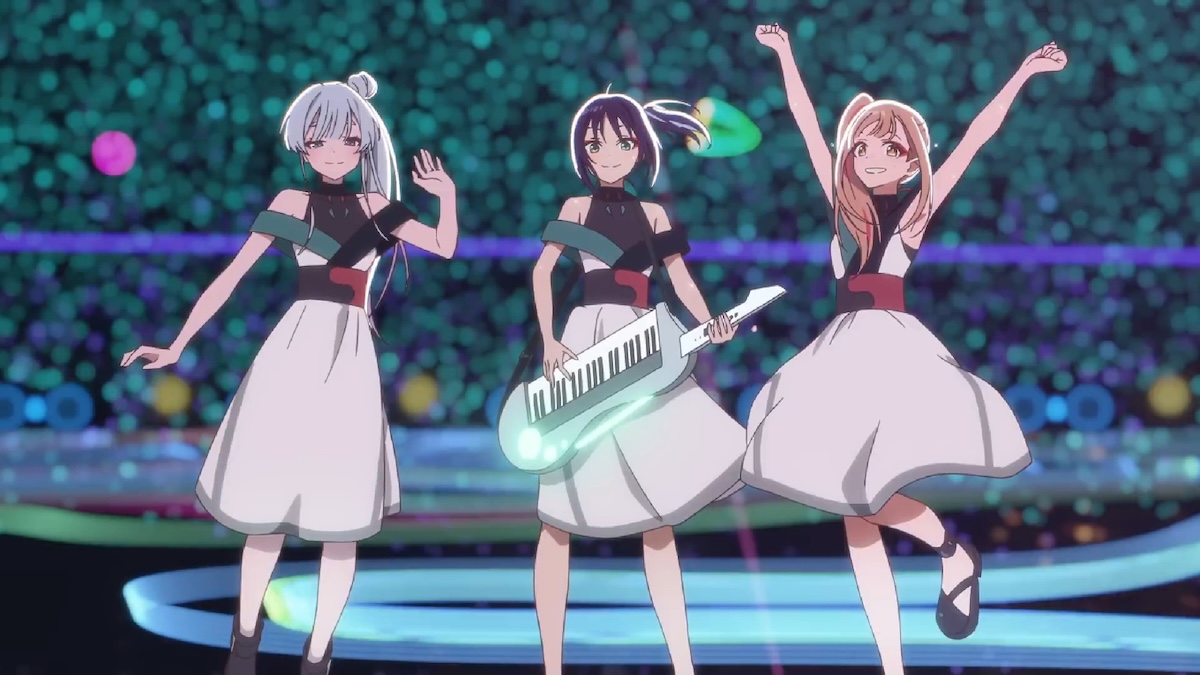
The second half fragments into an inventive patchwork. It’s a cultural collage of imagery that feels both derivative and fresh. It resembles a top-quality museum collection, but instead of ancient artefacts, it’s an exhibition of 21st-century J-pop, gaming, and dance. The result is a dizzying collision of styles. It feels as though a top-quality mainstream anime has been ruptured by intrusions from cult hits like Pretty Cure and Sailor Moon, revelling in a hyper-energetic ‘magical girl’ (mahō shōjo) aesthetic.
The film also features a timeslip arc and plenty of elements to delight science fiction fans. Readers of William Gibson’s cyberpunk novels will appreciate the realisation of XR (Extended Reality), as will fans of J-pop giants Perfume, who are known for introducing similar virtual effects to their live shows.
Fourth test question: Have you ever had a plushie sea bunny or dumbo octopus attached to your bag?
Those who fall under the rainbow sugar-rush spell of Cosmic Princess Kaguya! will do so because they recognise the media and memes that provided the backdrop to their formative years. They will finally feel visible. The soundtrack even includes remixes of classics like the Ryo-produced “World is Mine” by Hatsune Miku and “Happy Synthesizer” by Megurine Luka—tracks that defined the emergent home-dance culture.
Final test question: Do you understand the difference between ‘choreo’ and choreography?
On paper, Netflix executives might have hoped for the next KPop Demon Hunters (2025), but what they’ve ended up with is a niche masterpiece that may struggle to cross over into the mainstream. However, given the recent box office success of Demon Slayer: Infinity Castle (2025) and Chainsaw Man: Reze Arc (2025), I may be proved wrong.
If you answered ‘yes’ to any of the test questions, you’ll love Cosmic Princess Kaguya! right up to its very clever endings (yes, plural). It’s bursting at the seams with cult imagery—no wonder there’s a forthcoming guidebook and novelisation. It may prove too much for many, but perhaps too much just isn’t enough.
JAPAN | 2026 | 142 MINUTES | 1.78:1 | COLOUR | JAPANESE • ENGLISH


director: Shingo Yamashita.
writers: Shingo Yamashita & Saeri Natsuo (based on ‘The Tale of the Bamboo Cutter’ by Unknown).
voices: Yuko Natsuyoshi, Anna Nagase, Saori Hayami & Rie Kugimiya (Japanese) • Jeannie Tirado, Dawn M. Bennett, Ryan Bartley & Cassandra Lee Morris (English).