THE HOUSEMAID (2025)
A struggling young woman gets a fresh start as a maid for a wealthy couple, but soon discovers that the family’s secrets are more dangerous than her own.


A struggling young woman gets a fresh start as a maid for a wealthy couple, but soon discovers that the family’s secrets are more dangerous than her own.
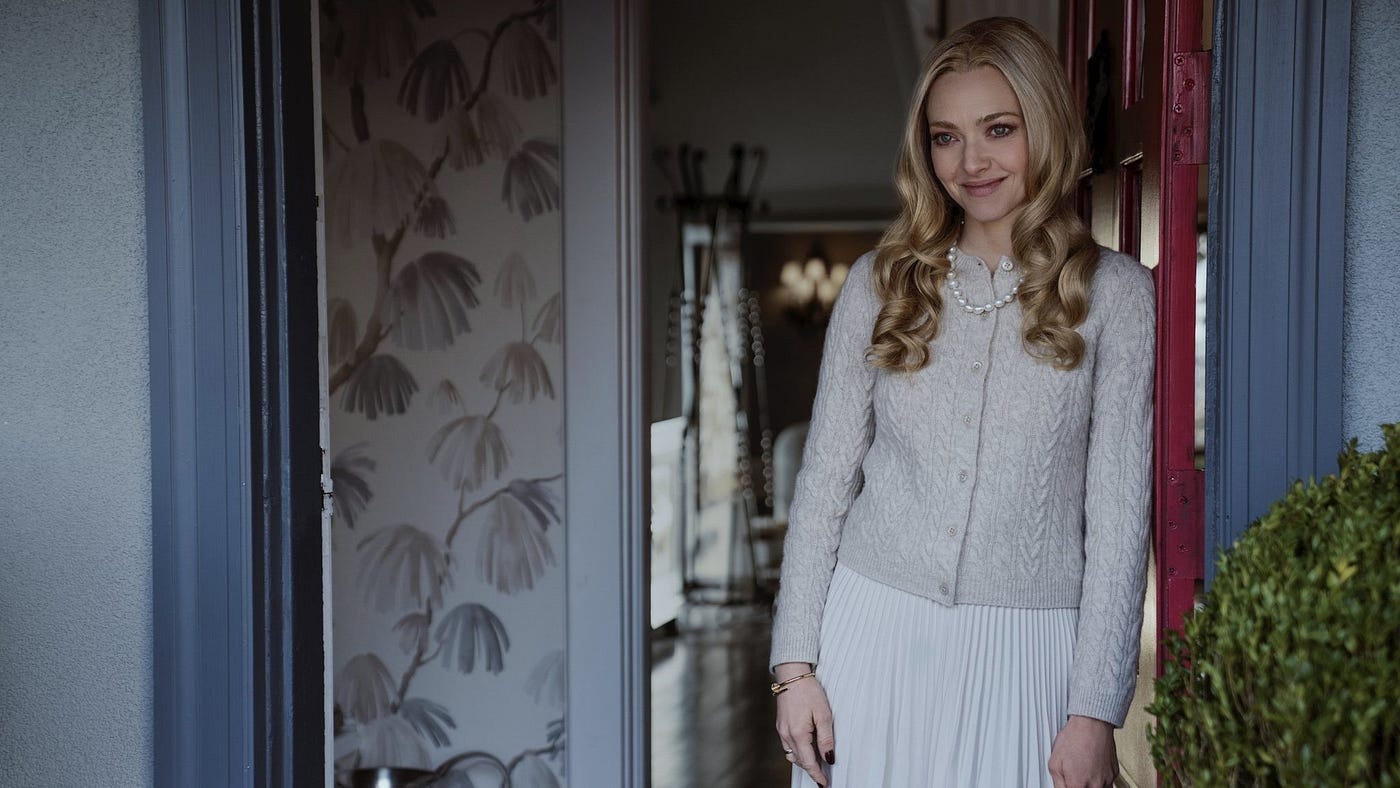
Millie (Sydney Sweeney) is a young woman in desperate need of a job. Donning glasses and a fabricated CV, she secures a position as a housemaid to the privileged New York Winchesters: Nina (Amanda Seyfried), Andrew (Brandon Sklenar), and their daughter Cece (Indiana Elle). While Nina initially presents a facade of socialite kindness, she reveals herself to be a neurotic, cruel, and potentially violent mess the moment Millie is installed in the attic bedroom. While most would flee, Millie has her own reasons for staying.
The Housemaid is an entertaining potboiler, a genre common to Gothic and women’s fiction stretching back to Mary Higgins Clark, Daphne du Maurier’s Rebecca, and 19th-century classics like Charlotte Brontë’s Jane Eyre. The story structure is even the subject of the 1979 scholarly work The Madwoman in the Attic. While the plotting becomes absurd towards the finale — it is highly improbable that a single policewoman could exonerate certain characters as she does — the film remains immense fun, particularly when experienced with a cinema audience.

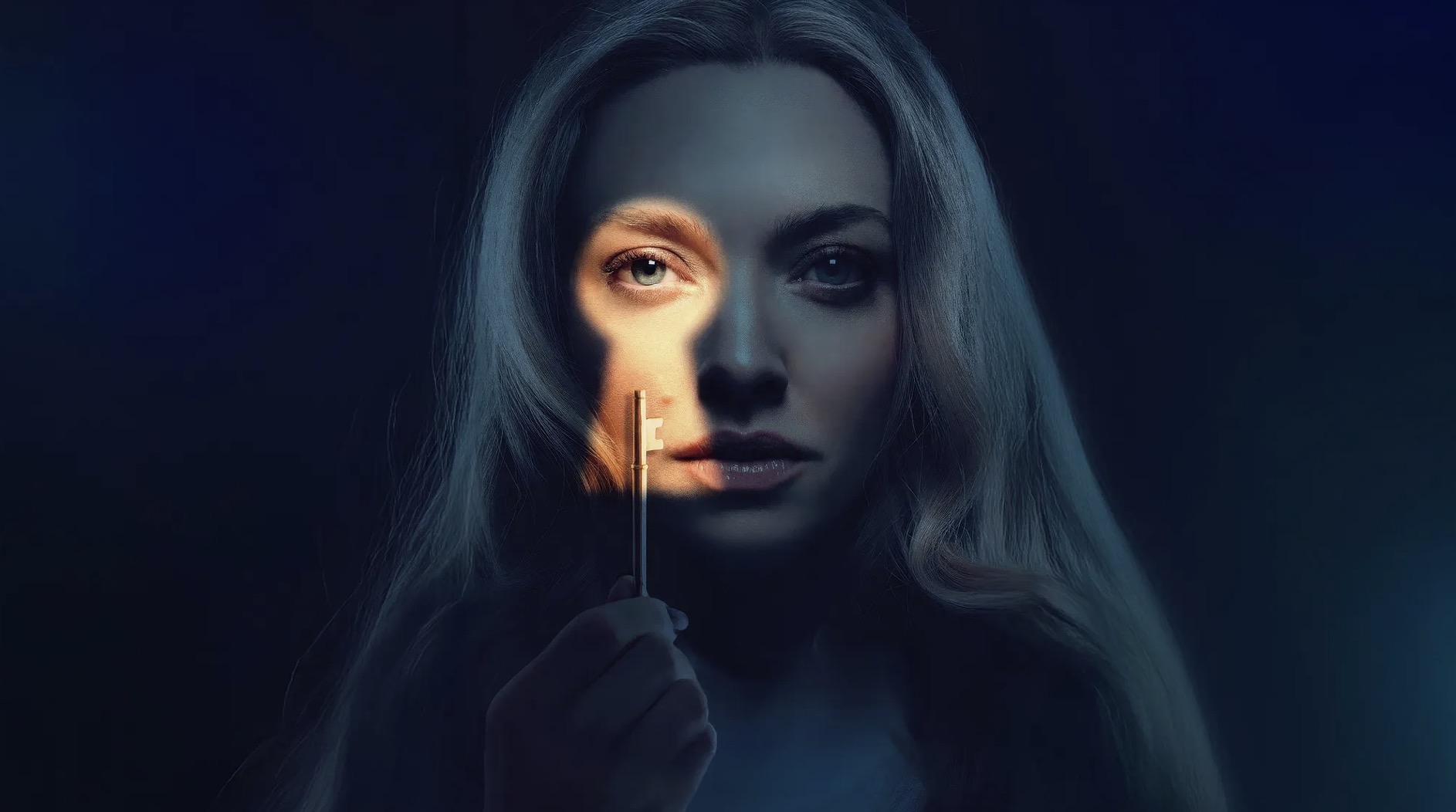
I have not read Freida McFadden’s 2022 novel of the same name, though I was culturally aware of its existence. It appeared to dominate supermarket shelves and high-street bookshops during its initial print run, as did its various sequels. I recall it having a nostalgic die-cut or “stepback” cover, where a keyhole is cut out of the front to reveal a larger design behind it. Although a cursory search suggests I might have imagined this, the premise and marketing certainly evoke the work of V.C. Andrews. The late Gothic novelist, who died in the 1980s, still haunts publishers’ shelves today via ghostwriter Andrew Neiderman. Her most famous work, Flowers in the Attic(1979), was the quintessential soapy domestic thriller of its day, featuring a cover die-cut to show a young woman peering through an attic window.
The appeal of such books relies on the exploitation of female fears and fantasies. Du Maurier’s 1938 novel Rebecca remains a literary peak of the genre, following a woman known only as the second Mrs de Winter, who lives in the shadow of her predecessor and the menacing housekeeper, Mrs Danvers. McFadden’s The Housemaid modernises, prunes, and reorders these elements for a pulpier marketplace.
The French newspaper Libération once noted a bookseller’s remark that McFadden’s novel is for “non-readers” — a criticism often levelled at populist fiction written by women. One rarely sees such remarks dogging male authors, even those whose work is significantly “trashier” than this. In the film adaptation, director Paul Feig — of the bizarrely controversial all-female Ghostbusters (2016) — brings a self-aware playfulness to the material. He acknowledges the genre trappings without quite tipping over into outright comedy.
If a man had to be behind the camera, Feig was perhaps the best choice. He successfully avoids the “male gaze” that plagued the latter two Fifty Shades of Grey films, where the camera seemed more preoccupied with female nudity than the male “lust object” the fanbase had come to see.
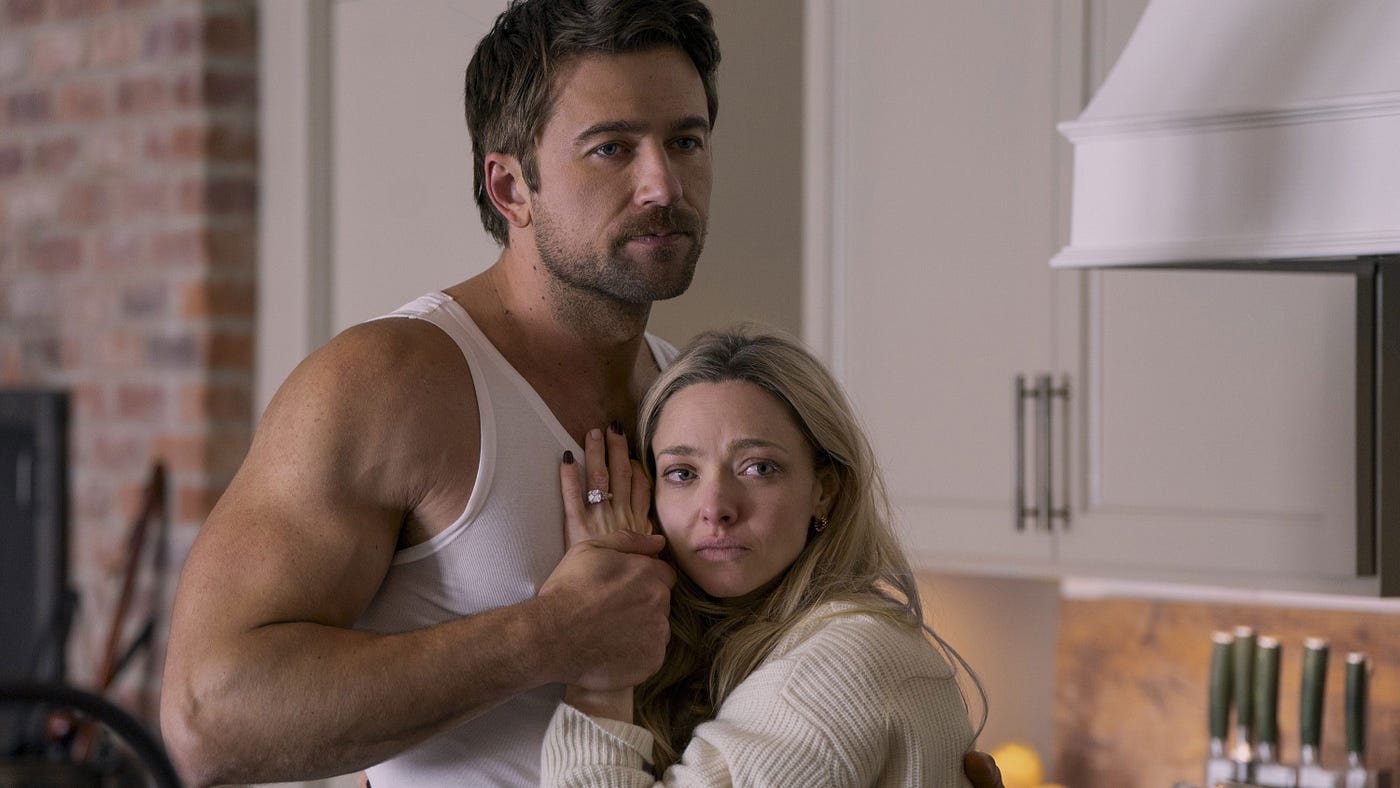
Admittedly, some of Feig’s framing is curious. One scene of sexual violence focuses on a young man’s buttocks, reminiscent of how 1980s films arbitrarily inserted shots of bare chests. While the scene is arguably problematic, it could also be described as progressive in the way it objectifies the victimiser rather than the victim. Elsewhere, the “gaze” makes more sense; while Sweeney is briefly glimpsed, the true “money shot” is a long, lustful look at Sklenar’s physique. The erotic content is relatively sparse, which is to be expected in a post-#MeToo landscape where audiences seem less enamoured with the genre. (One wonders if Gen Z has “killed” film erotica, as they are blamed for killing so much else in our culture.)
The script, written by Rebecca Sonnenshine — whose credits include the TV series The Boys — understands the assignment perfectly. There’s a surprisingly sophisticated reference to Barry Lyndon (1975), Stanley Kubrick’s film about a social climber infiltrating a wealthy family, which does not appear to be in the novel.
While Jane Eyre is a basic reference, Sonnenshine’s screenplay takes the material to the next level. She and Feig enjoy leaning into the story’s melodrama. In one wonderfully cheesy scene at a hotel, an actual “dark and stormy night” flashes outside. Sweeney, dressed in a postmodern take on the virginal white gowns of Gothic heroines, finds herself tempted into an adulterous passion with her employer. To quote George Takei: “Oh my!”
While a “naughty” 1990s version might have included more overt titillation, there’s little to complain about here. The acting is serviceable and, at times, impressive. Sweeney is a capable heroine and Sklenar a charismatic lead, but Seyfried is the standout. In the first half, she delivers a “bitch-on-wheels” performance, portraying her character’s mood swings with eerie precision while hinting at the sympathetic layers to be revealed later.
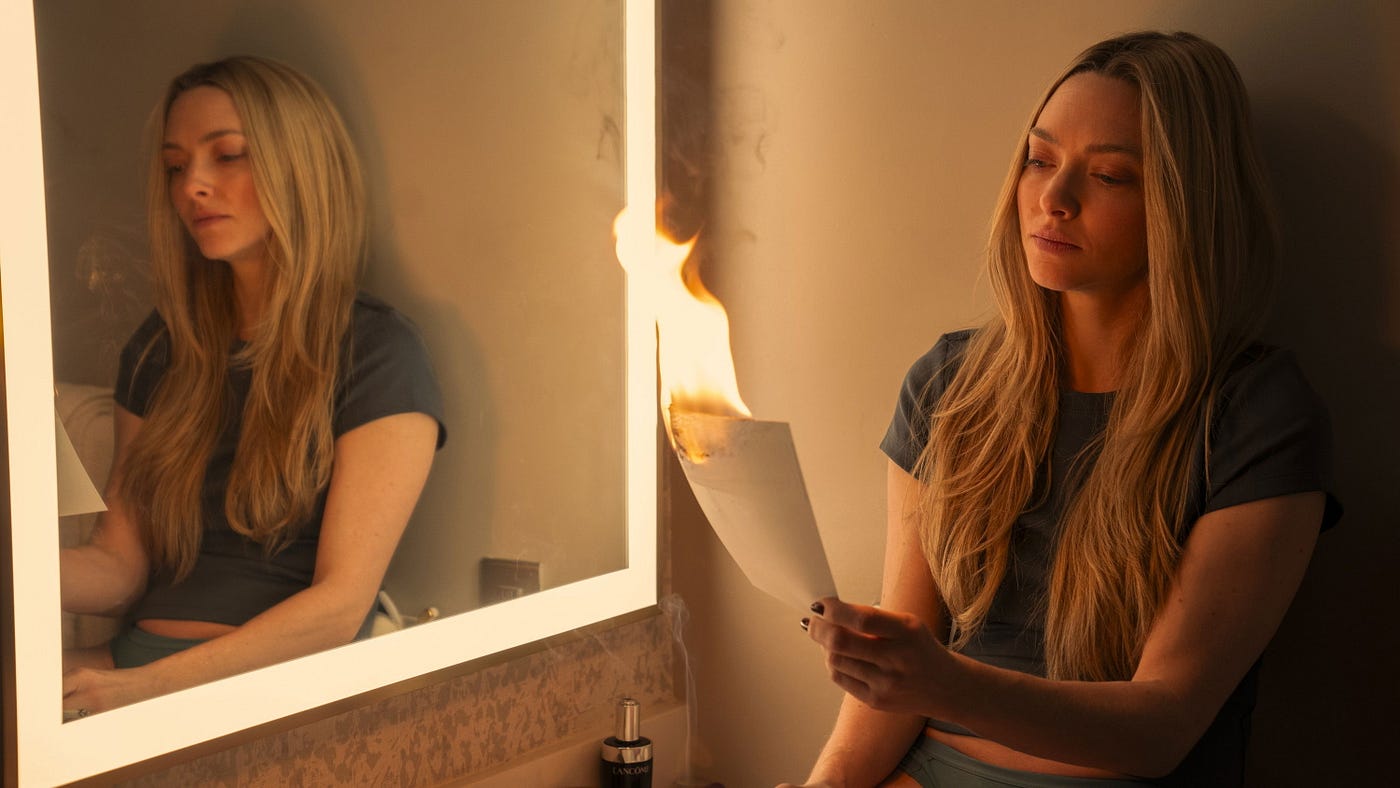
The film is best enjoyed in a packed theatre. At my peak Friday screening, the diverse audience — largely female and couples on dates — squealed at the violence and laughed at the more ludicrous plot points. The story does become increasingly daft, and a moment involving a lost tooth staged as an accidental fall earned a significant laugh.
Ultimately, this is a very “literary” film, in the sense that its origins as a novel are always apparent through heavy exposition and narration. Feig’s style, much like Judd Apatow’s, is functional — focused more on capturing dialogue than aesthetic innovation. However, he aptly leans into the trashiness, notably in a scene of suburban women taking tea that is shot like an episode of The Real Housewives.
The Housemaid is a solid erotic thriller. It recognises its essential pulpiness and executes its tropes with just enough flair to satisfy fans of the genre.
USA | 2025 | 131 MINUTES | 2.39:1 | COLOUR | ENGLISH

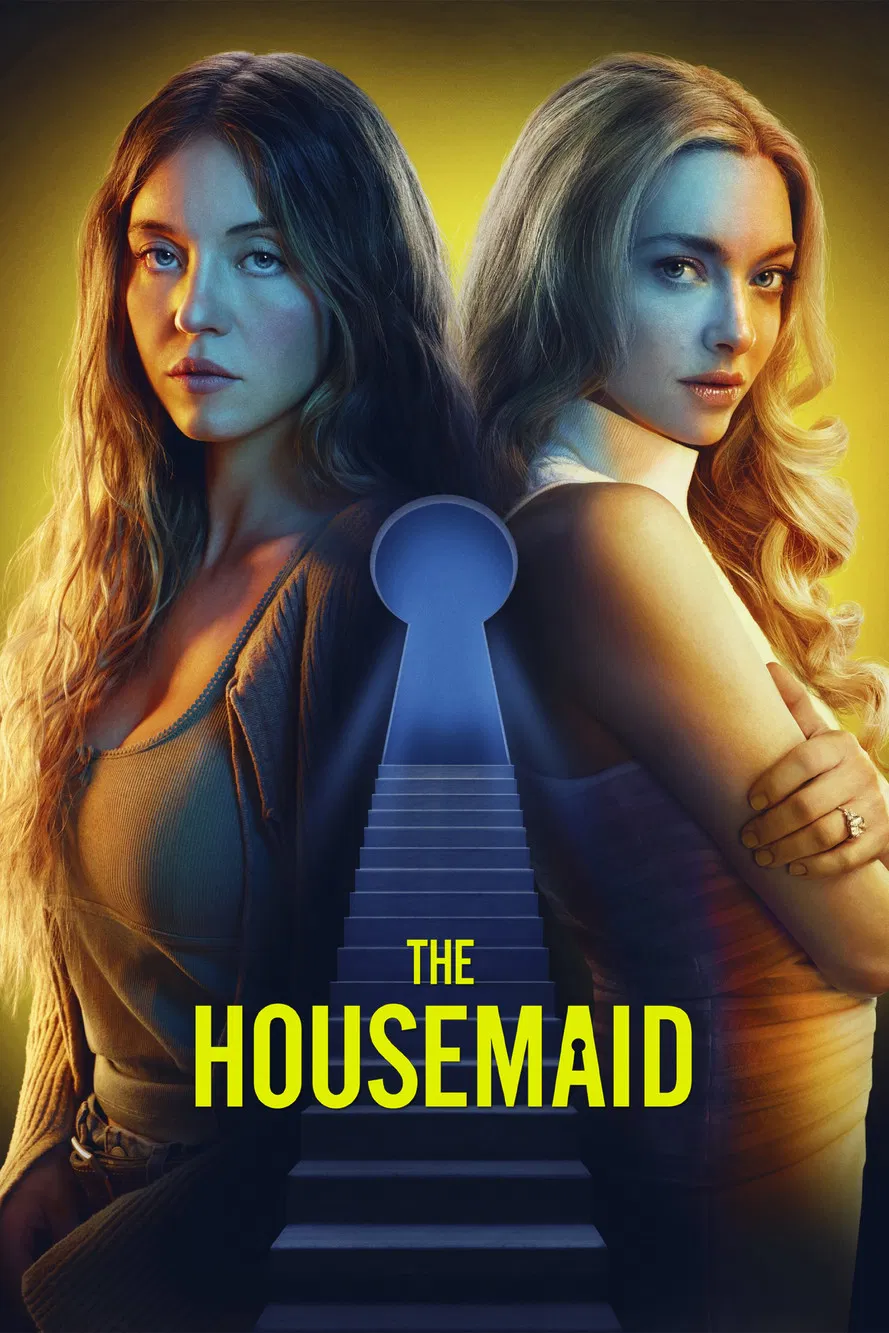
director: Paul Feig.
writer: Rebecca Sonnenshine (based on the novel by Freida McFadden).
starring: Sydney Sweeney, Amanda Seyfried, Brandon Sklenar, Michele Morrone & Elizabeth Perkins.
![[rec] (2007)](https://www.framerated.co.uk/wp-content/uploads/2021/01/rec07.jpg)