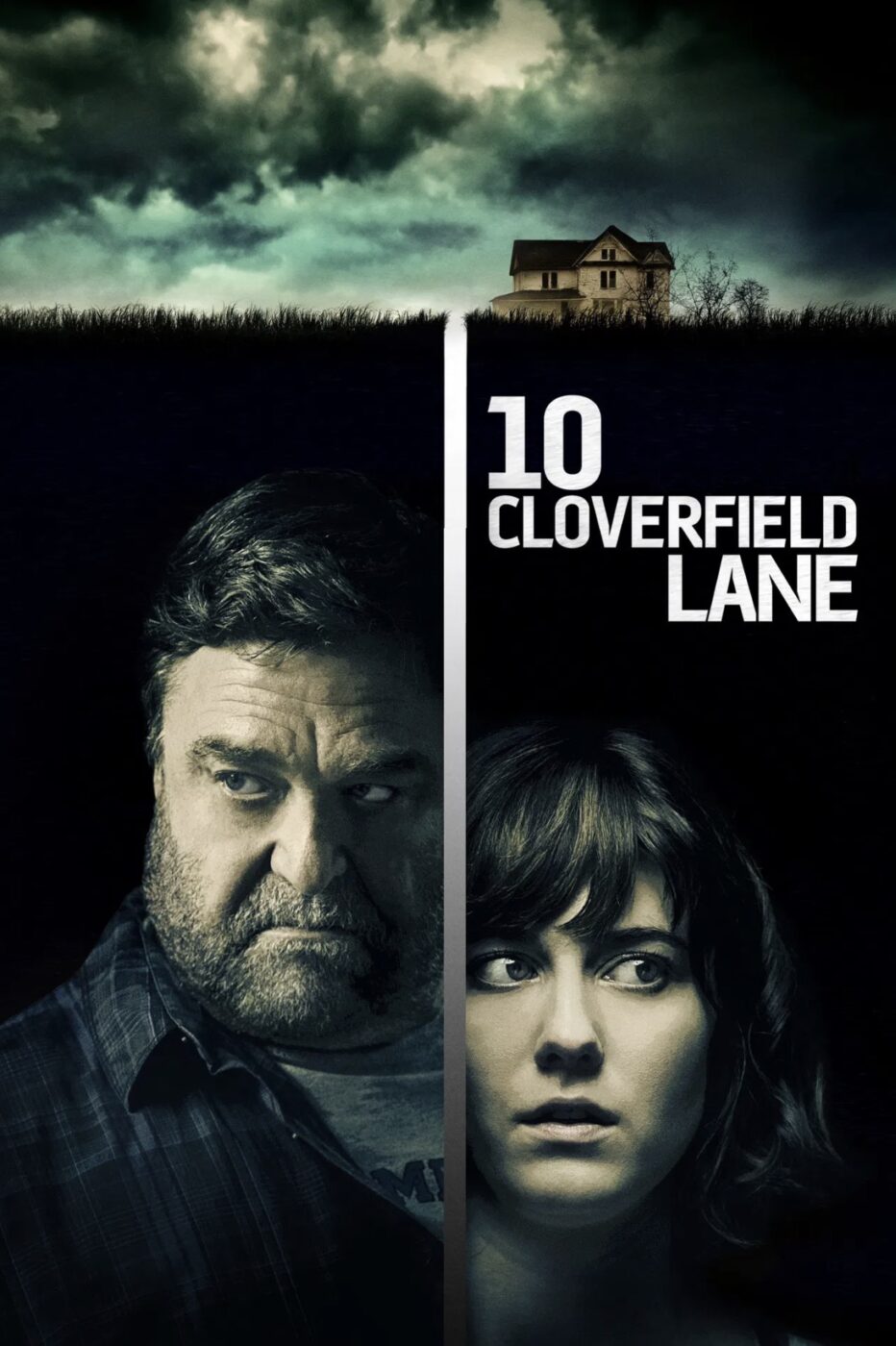
10 CLOVERFIELD LANE (2016)
A young woman is held in an underground bunker by a man who insists that a hostile event has left the surface of the Earth uninhabitable.

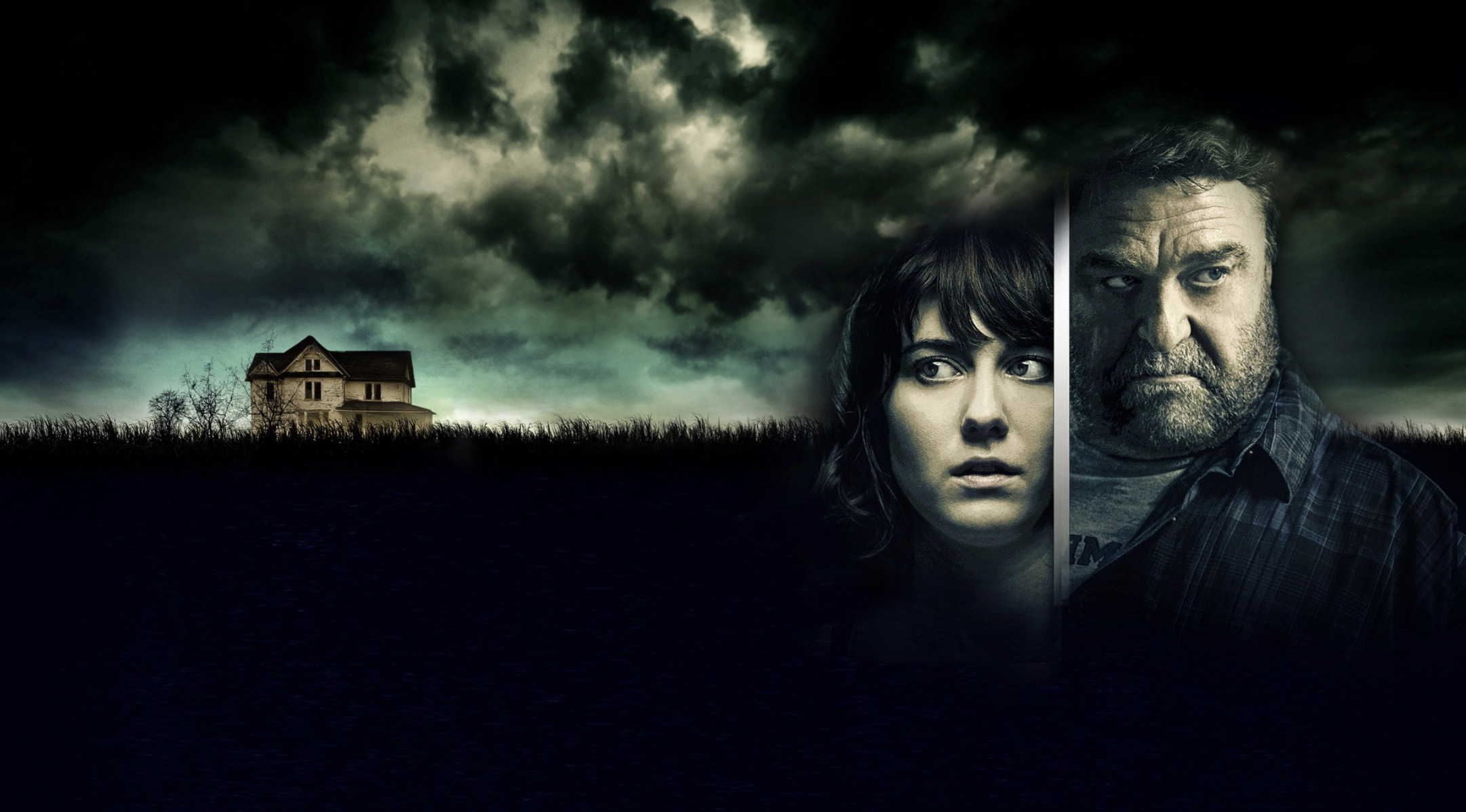

A young woman is held in an underground bunker by a man who insists that a hostile event has left the surface of the Earth uninhabitable.
It’s hard to believe that, just 10 years ago, director Dan Trachtenberg was an unknown name in the industry. Now, of course, things are different, with his moniker attached to three well-received features within the Predator franchise. However, in 2016, he was virtually a “nobody”. This was rather apt because when the first trailer for 10 Cloverfield Lane dropped online in early January—just two months ahead of its release—no one knew anything about the film either.
The project had gone completely under the radar. There had been no prior publicity; in fact, it was a complete surprise. From the teaser footage, however—expertly edited to the Tommy James & The Shondells track “I Think We’re Alone Now”—it was clear the film resided firmly within the thriller genre.
But why was “Cloverfield” in the title? Was this a sequel to the 2008 creature feature? It was all very mysterious. It’s no wonder J.J Abrams produced it, as he had helped shepherd that original “Kaiju-takes-Manhattan” movie and enveloped it in a similar veil of secrecy.
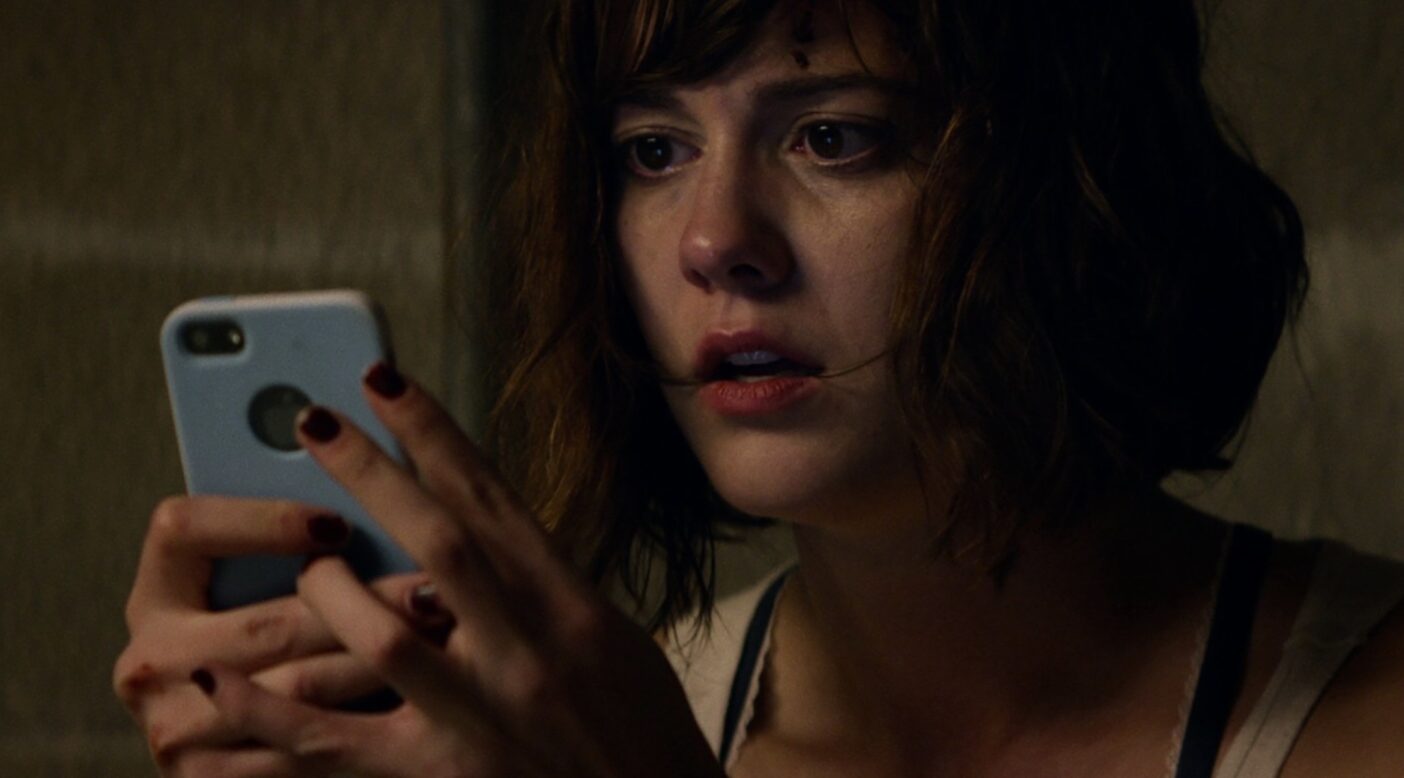
The movie kicks off in a superb style reminiscent of Alfred Hitchcock, with the camera zooming through a window and casting its keen lens onto Michelle (Mary Elizabeth Winstead) as she prepares to leave an apartment. Aside from the geographic location, everything else is a mystery.
In a fantastic example of “show, don’t tell”, we learn in a few short minutes of dramatic music and zero dialogue that Michelle’s leaving her fiancé. She places an engagement ring on the worktop, packs a suitcase, and drives out of the city. Where is she going? And why is the radio reporting a large power blackout across several cities? Then, boom! Something hits her car violently and the vehicle careers off the road, leaving Michelle bruised, battered, and unconscious.
Rewatching this after a five-year gap, I still believe the opening is a textbook example of economic storytelling. Plot reveal is kept to a minimum to keep the audience guessing, all executed with precision through a combination of skilled screenwriting and editing.
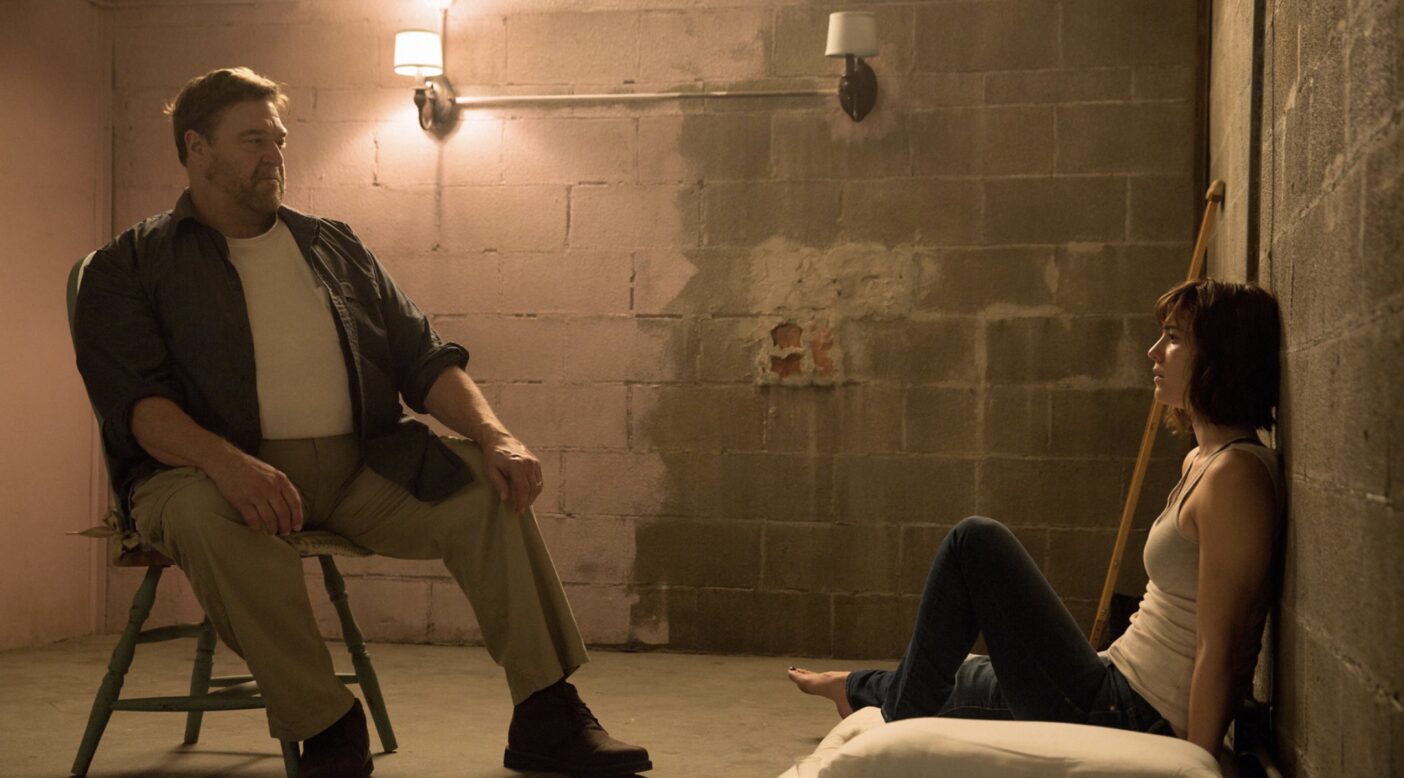
So far, so good. We next find Michelle waking up chained to a mattress in a creepy room resembling a prison cell. There is an industrial feel to the space and, to make things worse, one of her legs is badly injured and hooked up to a saline drip. Naturally, Michelle is perturbed. Then Howard (John Goodman) enters with food. He explains she is in his underground bunker because he rescued her from the wreckage, saving her from an attack—possibly involving Russians or aliens—that has rendered the air unbreathable. Like her, you’d be right in thinking this man is clearly crazy… or is he?
Goodman’s character soon reveals himself as someone who, while claiming good intentions, is certainly frightening. Despite his size, he has the air of a coiled snake; you can’t predict what he’ll do or say, and this unpredictability drives the suspense. There is one more character in the bunker: Emmett (John Gallagher Jr.), a contractor who helped Howard construct the shelter just in time.
Immediately, you can tell Howard views Emmett as a lackey. He talks to him like an idiot and refuses to let him be around Michelle unsupervised. By the 20-minute mark, Trachtenberg has set the stage perfectly: three characters in an enclosed space, prohibited from going outside by a bizarre tale of global catastrophe.
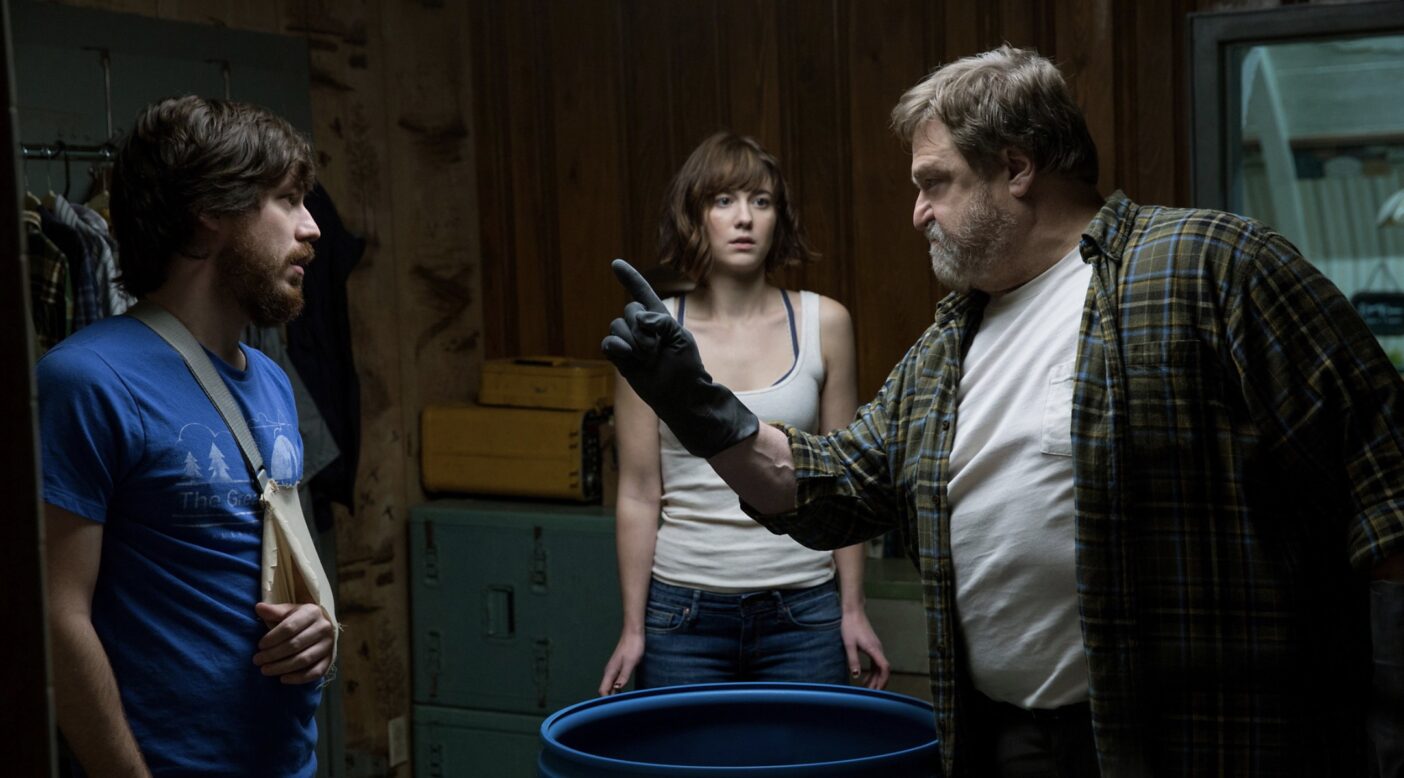
Exposition and misdirection are key elements that run throughout the story. At no point do you have a clear idea of what is happening. The taut, clever screenplay drip-feeds nuggets of information to keep you questioning Howard’s sanity. For instance, Michelle is shown the decaying carcass of a pig through a small window as “proof” of the toxic air. While distressing, it leaves room for doubt; the pig could have died of natural causes.
However, a later sequence is less ambiguous. When Michelle attempts to escape, she reaches the exit door only for two distressed people to appear at the window, shouting to be let in. Their faces are scarred, perhaps by chemical burns. This suggests Howard may be telling the truth—but the feeling is fleeting, as more sinister revelations lurk further down the line.
As the twisty plot progresses, the question remains: why does this movie carry the Cloverfield name? There is no clear link to the 2008 found-footage film.
10 Cloverfield Lane didn’t actually begin life as a Cloverfield movie. The project originated as a spec script titled The Cellar, written by Josh Campbell and Matt Stuecken. Even then, the concept focused on the central dramatic question: is the captor a paranoid lunatic or a saviour?
The script made its way onto Hollywood’s ‘Black List’ before landing on the desk of J.J Abrams. He saw the potential for the thriller to be reworked into what he described as a “blood relative” to Cloverfield (2008). The idea wasn’t to make a direct sequel, but to create an anthology of loosely connected stories within the same universe. With Abrams’ backing, Damien Chazelle—the director behind Whiplash (2014) and La La Land (2016)—was brought in to polish the screenplay, sharpening the character dynamics and pacing.
The film then found its director in Dan Trachtenberg. At the time, he was best known for commercials and his short film, Portal: No Escape. For the studio, Trachtenberg represented a fresh voice who could bring energy to a contained thriller without the baggage of an established style.

Alongside the tight script, the three superb actors provide the “secret sauce”. Mary Elizabeth Winstead brings a grounded, credible presence to Michelle. She is convincing from the first frame, displaying a full gamut of emotions. The scene where she realises Howard has discovered her hidden hazmat suit is a masterclass in tension.
John Goodman, a household name thanks to Roseanne (1988-1997; 2018), had been a consistent character actor for 30 years. Known for playing affable types, he had shown a darker side in the Coen brothers’ films, but here his performance as the unstable Howard reaches new levels of menace. He walks a delicate tightrope: one minute paternal, the next chillingly volatile. It is the performance that keeps the audience on edge.
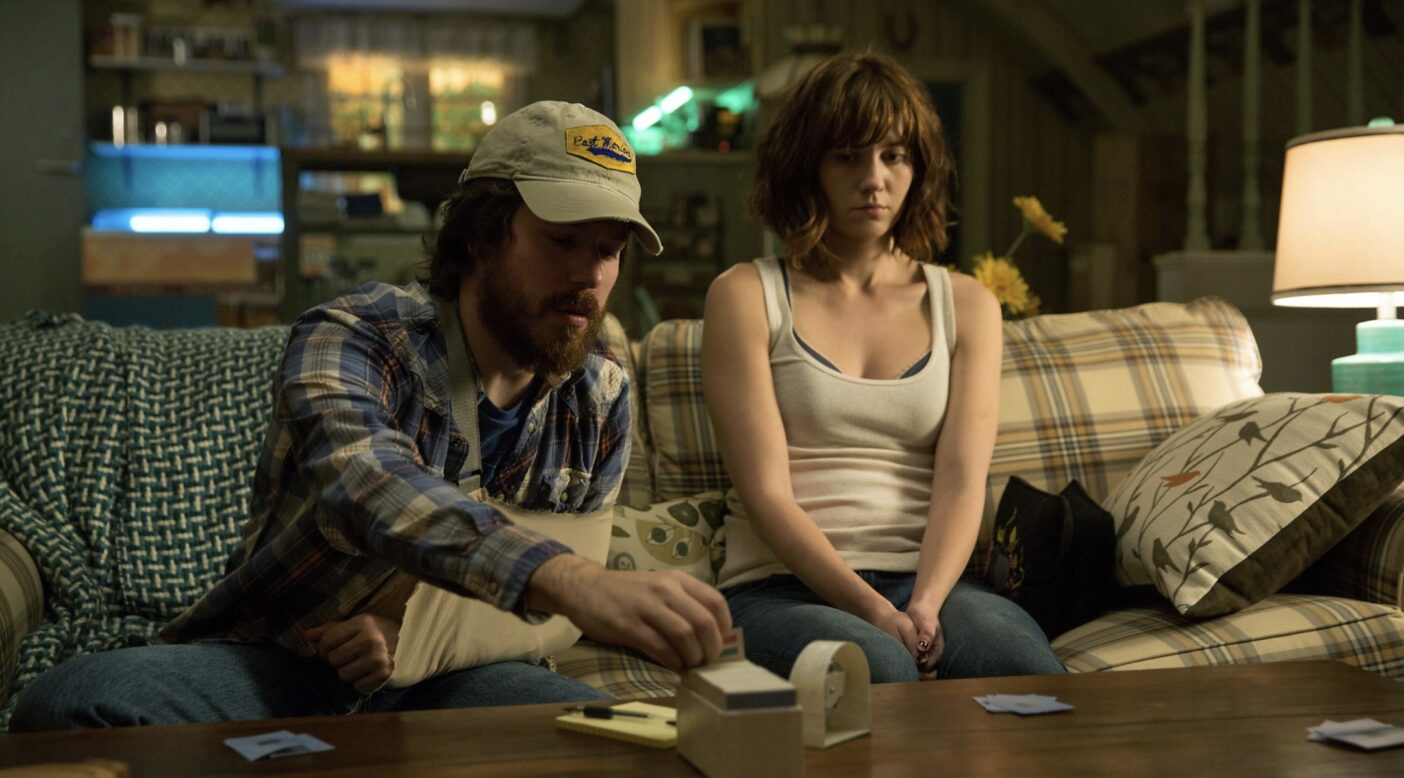
Finally, John Gallagher Jr. plays Emmett. Though his role is smaller, he is vital. His easygoing demeanour offsets the mounting friction, and his chemistry with Winstead is consistently convincing.
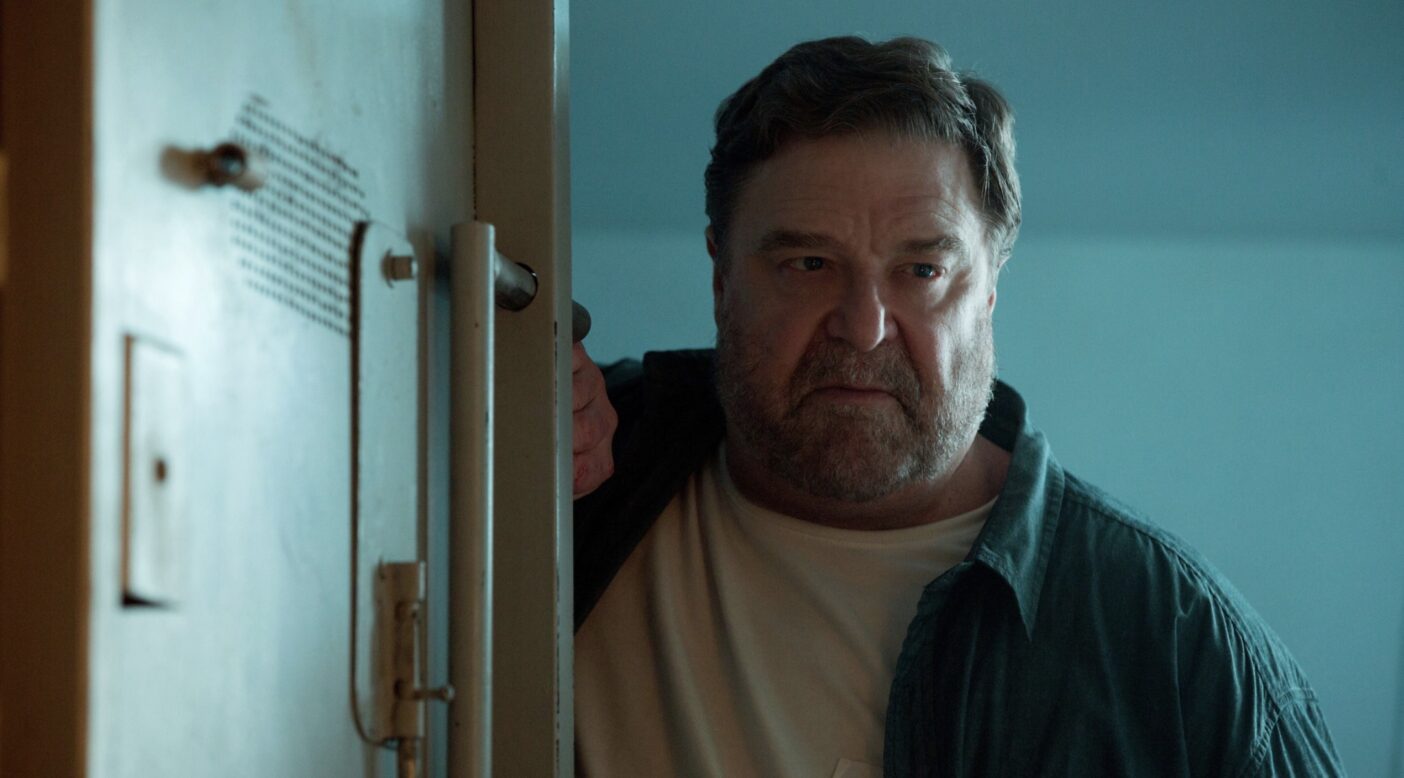
The technical elements also deserve mention. Cinematographer Jeff Cutter gives each section of the bunker a distinct personality through colour—cold blues and warmer tones enhance the emotional intensity. Meanwhile, Bear McCreary’s score blends orchestral elements with experimental instruments, such as the yayli tanbur, to create a unique soundscape.
When released in March 2016, the critical response was largely positive. Bill Zwecker of the Chicago Sun-Times called it “continually gripping”, while The New York Times described it as “smartly chilling”. On a modest budget of $15M, it earned approximately $110M worldwide—a significant success for a contained thriller.
A decade on, the movie holds up remarkably well. In a landscape littered with generic remakes, 10 Cloverfield Lane feels like a relic from a riskier time. It’s a well-constructed psychological thriller that makes brilliant use of its single location. The sharp script, centred around trust, manipulation and survival, keeps you constantly wondering what will happen next, and all the performances are first-rate. While the final sci-fi sequence may divide some, the film remains a minor miracle of creative filmmaking.
USA | 2016 | 104 MINUTES | 2.39:1 | COLOUR | ENGLISH

director: Dan Trachtenberg.
writers: Josh Campbell, Matt Stuecken & Damien Chazelle (story by Josh Campbell & Matt Stuecken).
starring: Mary Elizabeth Winstead, John Goodman & John Gallagher Jr.