PULSE (2001)
Two groups of people discover evidence that suggests spirits may be trying to invade the human world through the Internet.

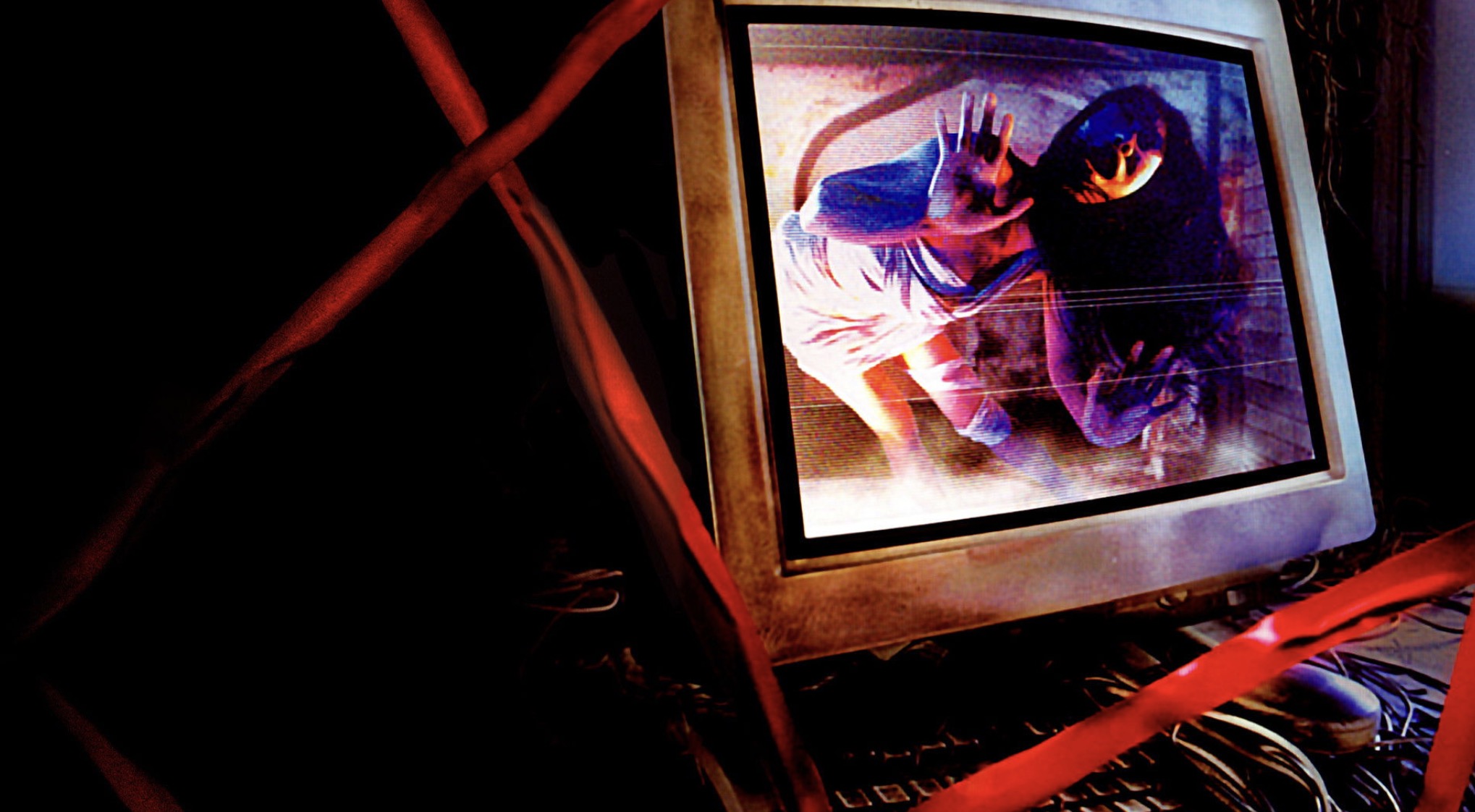

Two groups of people discover evidence that suggests spirits may be trying to invade the human world through the Internet.
Kiyoshi Kurosawa’s Pulse / 回路, though marketed as a horror film, is more of a tone poem—an ode to the depths of depression that can encircle or drown any of us. That experience of soul-deadening dread might not be universal, but it could be, much like the viral infection that grips the film’s protagonists. They’ve become trapped, lost within computer screens that display ghostly images from a disk. This innocuous device kickstarts a series of spectral invasions in which characters are subsumed, one by one, by disturbing imagery before succumbing to a terrifyingly unknowable force. This emotional incursion culminates in their disappearance, leaving behind nothing but a black stain on the wall: the ultimate confirmation of their darkest thoughts.
The infection’s end goal doesn’t seem to be the death of its subjects—that appears incidental—but rather a confirmation of the pitch-black thoughts depression engenders: that its sufferers are merely worthless stains on existence. Kurosawa, having earned a reputation as one of the 21st-century’s pre-eminent horror directors, specialises in psychological horror that eschews the traditional calling cards of the genre. Pulse contains very few jump scares, opting instead to explore its themes with a uniform sensation of dread that creeps forward and gets under your skin. By this point, almost any other director would have heightened the terror through a jump scare, featuring a villainous character lurching forward as the soundtrack reaches a sudden, screeching crescendo.
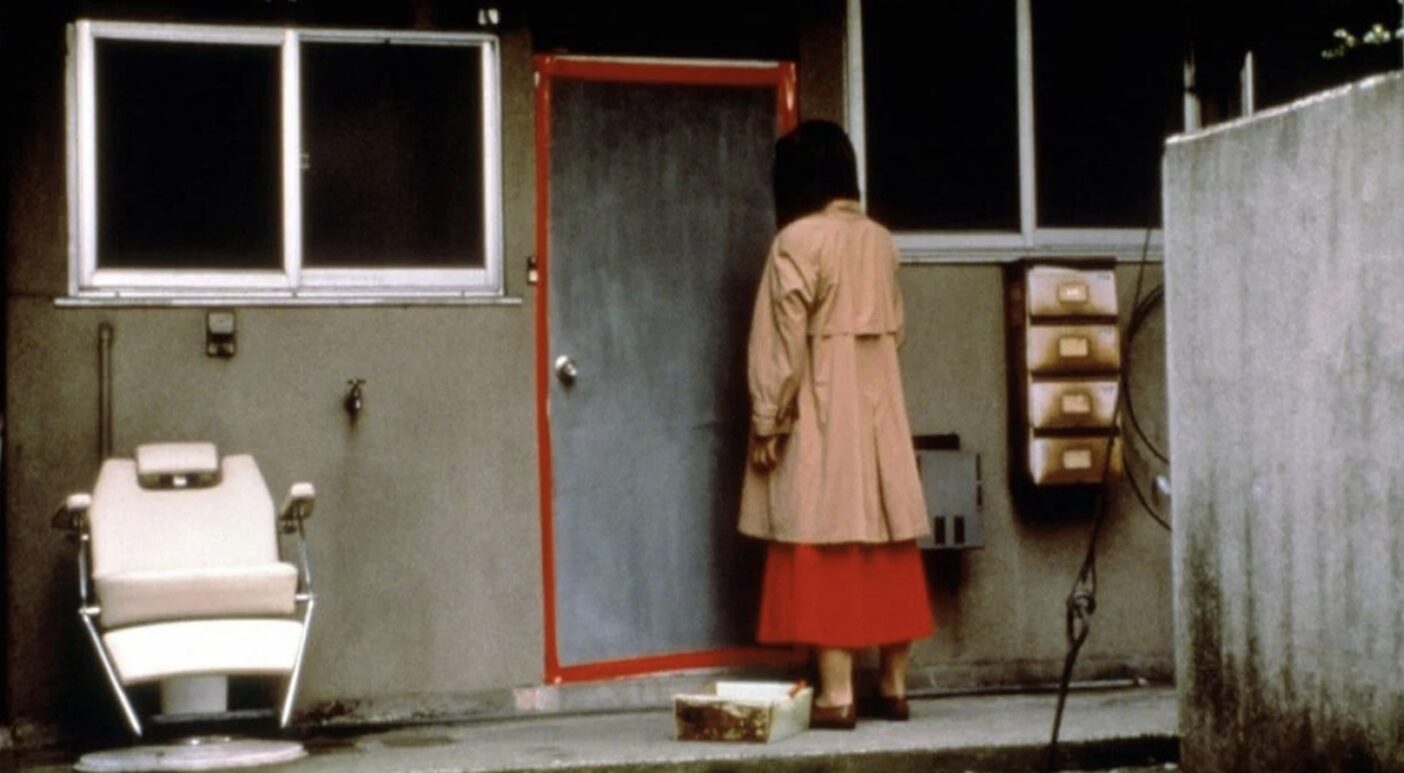
Though Pulse is never “scary” in the traditional sense, it’s far more effective for taking the road less travelled, always opting to elicit an unsettling feeling rather than provoking sudden stabs of fear. The characters are the furthest thing from united, even as they become aware of the horrors invading their lives. By day, they can confer and speculate, but each night they return to empty apartments and various screens, losing a little part of their soul while confirming to themselves that this is all they amount to. Pulse is an incredibly restrained film given its cruelty. Some sequences are genuinely unsettling, but it is mostly a sombre, sobering look at the throes of depression. The characters’ physical safety is always in peril, but the focus remains on the threat to their spiritual selves.
In most depressing films, a character’s actions—or their entire life—is a hopeless shout into the void. In Pulse, there is no shout, only a slow march towards oblivion. Yet, as haunting as this concept is, the film is a slow march in more ways than one; its torturously overlong runtime gradually strips the story of its emotional potency. Whether it’s pity for the characters or dread at the doom encircling them, investment is lost by the third act. It’s here that the film flounders, lacking even the anchor of a harrowing tone poem to keep it afloat.
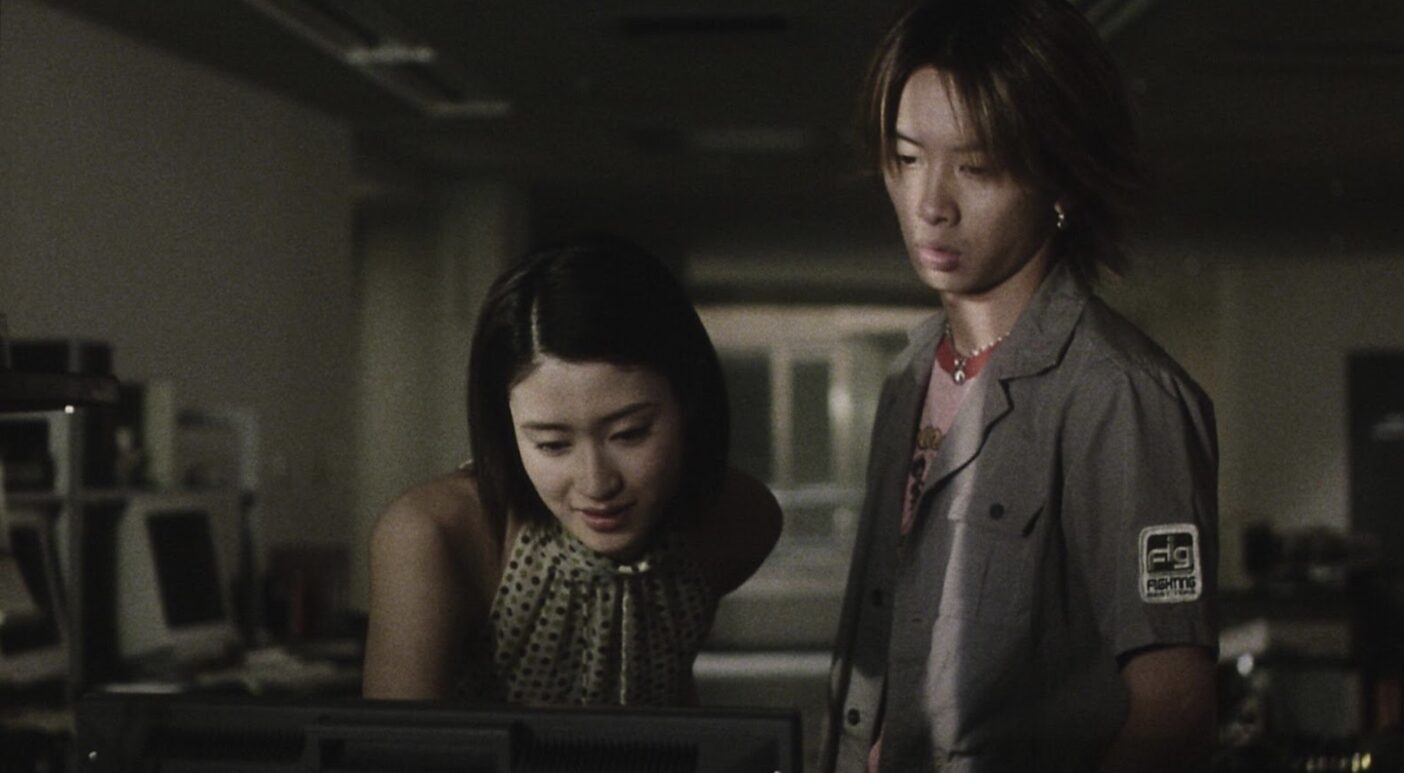
Pulse is not a film whose rules should be intellectualised. As a piece of psychological horror keen to unsettle, it’s better not to test the limits of its world-building or attempt to rationalise its plot machinations. The disease defies explanation, skewering closer to tone and theme than a clear-cut narrative. However, that quality becomes difficult to appreciate given the burdensome story. In a last-gasp effort to move away from the unique tone he’d built, Kurosawa asks viewers to reckon with these characters as something more than subjects of despair. None of them are particularly interesting, but that’s precisely what makes the exploration of their empty evenings so painfully realistic.
The film is infinitely more resonant when it communicates directly to the audience rather than between its characters, as these figures can’t hope to understand one another. At times, Pulse is powerful enough to warp one’s mind into thinking it’s better not to even try to connect. For as much as its narrative inventiveness has been praised—with some critics declaring it one of the best horror films ever made—it fails to commit to its set-ups.
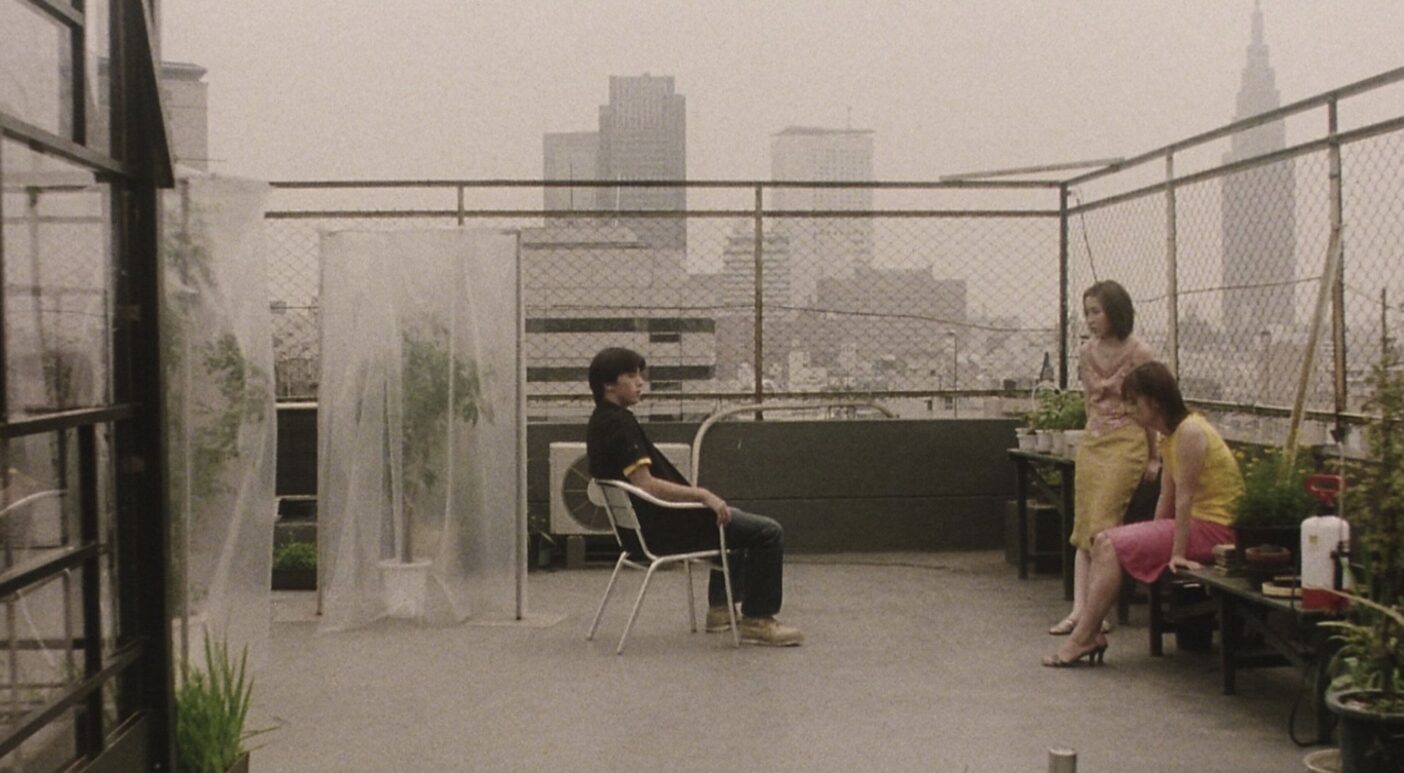
By attempting to explore a connection between these characters, the ghostly invasion suddenly feels overly literal. Pulse’s obvious subtext of depression defines its unique place in the horror genre, explored through inventive sequences that ignore the typical horror blueprint. Even when scenes appear tailor-made for convention—with ghostly figures standing ominously near our protagonists—Kurosawa consistently defies our honed intuition.
The story’s scope starts narrow, exploring the desperate smallness of the characters’ lives, from plant shop worker Michi Kudo (Kumiko Asō) to university student Ryosuke Kawashima (Haruhiko Kato). The openness of the internet is necessary for Pulse to exist, yet, ironically, it makes these people’s lives feel even smaller and more pathetic. The film is a prescient exploration of the ways in which the web connects us superficially while engendering deep loneliness.
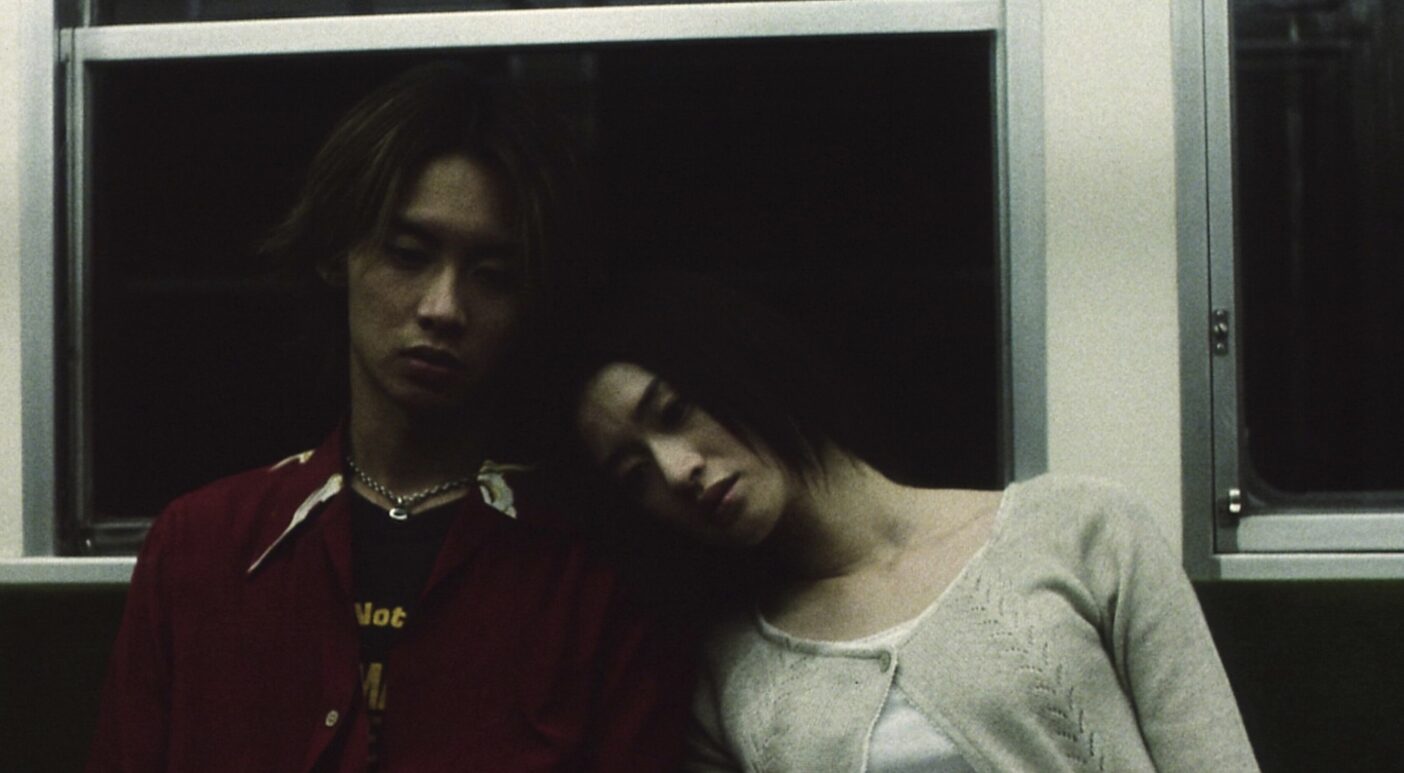
Without the internet, this infection wouldn’t have spread. But it’s when these figures are alone, staring at the empty screen, that Pulse‘s horrors abound. We are simultaneously more connected and more isolated than ever before. When the film widens its scope to explore the societal repercussions of the invasion, it loses its grip on its critique. It enters adventurous territory and insists on a late-stage connection between characters who attempt to defy their fate, even though the spirit of the film suggests they should be unable to do so.
Kurosawa respects the suffocating weight of depression—the feeling that being unable to commit to change is effectively the same as being physically unable to do so. But that stance is undercut by the characters’ attempts to subvert their fate. Once they break free, the trap is gone, and the film’s world-building proves as opaque on an emotional level as it is on a literal one.
Kurosawa’s cult film is at its best when there’s no possibility for love in this desolate hellscape. But with a runtime at least 30 minutes too long, Pulse doesn’t just lose steam before the credits roll; it abandons the very qualities that made it unnerving in the first place.
JAPAN | 2001 | 119 MINUTES | 1.85:1 | COLOUR | JAPANESE

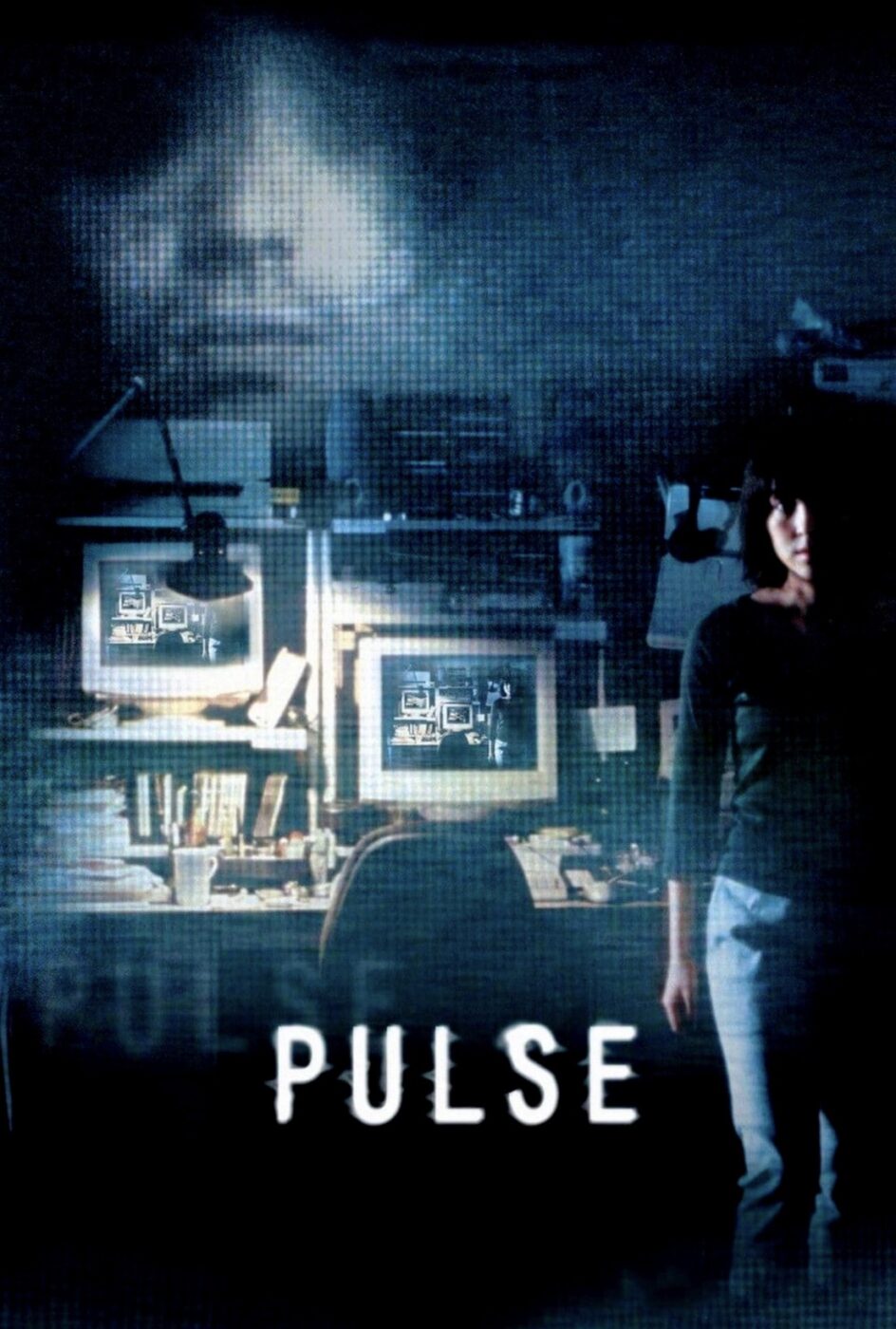
writer & director: Kiyoshi Kurosawa.
starring: Kumiko Asō, Haruhiko Kato, Koyuki, Kurume Arisaka, Masatoshi Matsuo, Shinji Takeda, Jun Fubuki, Shun Sugata & Kōji Yakusho.