HOSTEL (2006)
Three backpackers head to a Slovak city that promises to meet their hedonistic expectations, with no idea of the hell that awaits them.



Three backpackers head to a Slovak city that promises to meet their hedonistic expectations, with no idea of the hell that awaits them.
Of all the different film genres, horror boasts the most sub-genres. There’s slashers, haunted houses, body horror, zombie outbreaks, folk horror… the list goes on. However, in the early-21st-century, a new “torture porn” label seemed to appear from nowhere. It was used to describe a series of horror film that proved immensely popular between 2004-2010. Two released in the early-2000s immediately attracted this moniker: the first was James Wan’s hugely successful Saw (2004), the second, while not as profitable but still a hit, was Eli Roth’s Hostel.
Prior to Hostel, Roth had already found fame thanks to his debut, Cabin Fever(2002). Made on a modest budget of $1.5M, Roth’s take on the ‘cabin in the woods’ trope grossed a respectable $30.6M at the box office while garnering several positive reviews. Roth was clearly talented and gained industry attention, but Hostel, released only two years later, propelled the filmmaker into the big time.
The first act introduces the main characters: three young backpackers travelling across Europe — not so much to see the cultural sights, but to chase hedonistic pleasures in the form of easy sexual encounters. The group comprises two Americans, Paxton (Jay Hernandez) and Josh (Derek Richardson), and their Icelandic friend, Oli (Eyþór Guðjónsson).
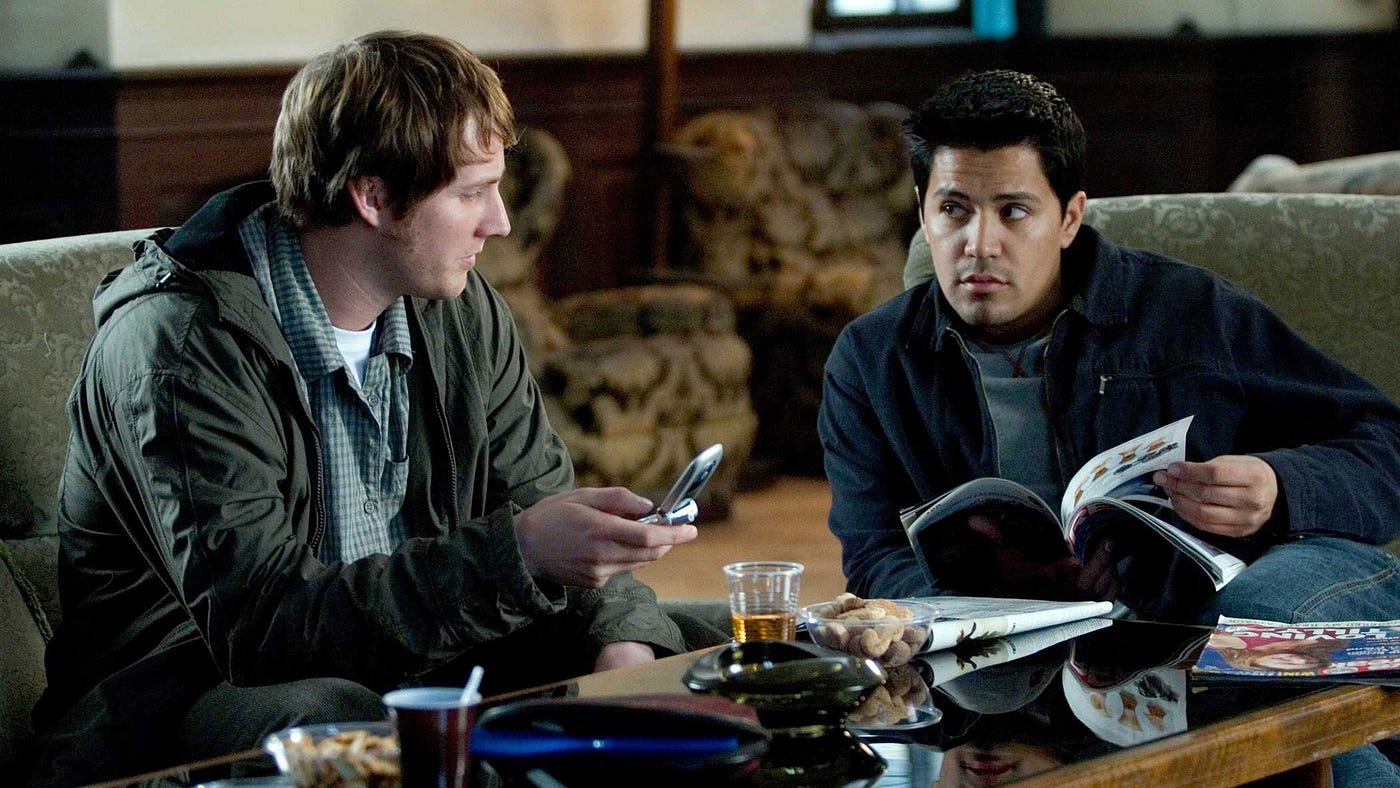
Everything begins in an attractive, fun-filled manner. Starting in a neon-hued Amsterdam, we see the testosterone-driven trio fare badly in a nightclub, being swiftly ejected following an unfortunate encounter with an angry local. Back on the streets, they are unable to enter their hostel after missing the establishment’s curfew. All’s not lost, however; they encounter a man named Alexei who tells them of a hostel near Bratislava, Slovakia, where beautiful women supposedly “go crazy” for young Americans.
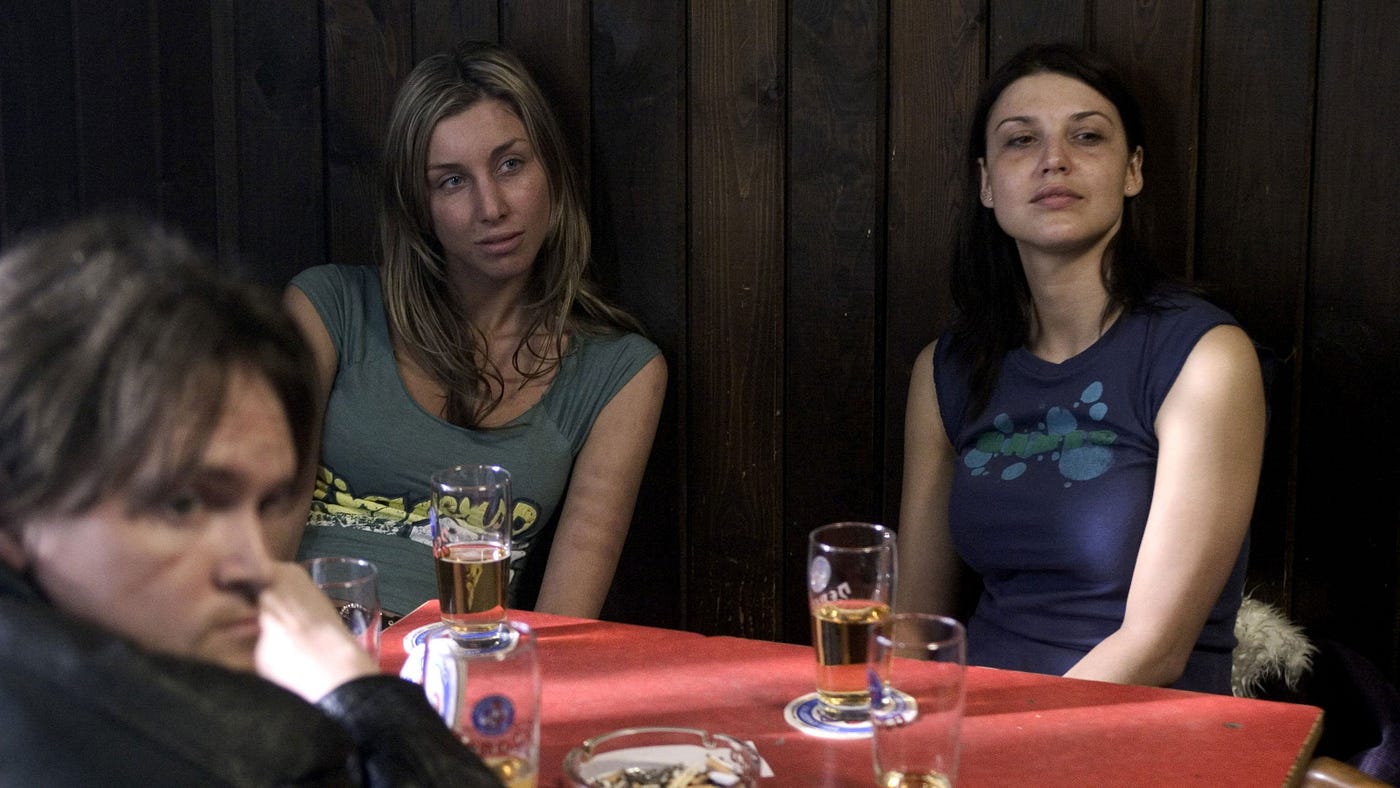
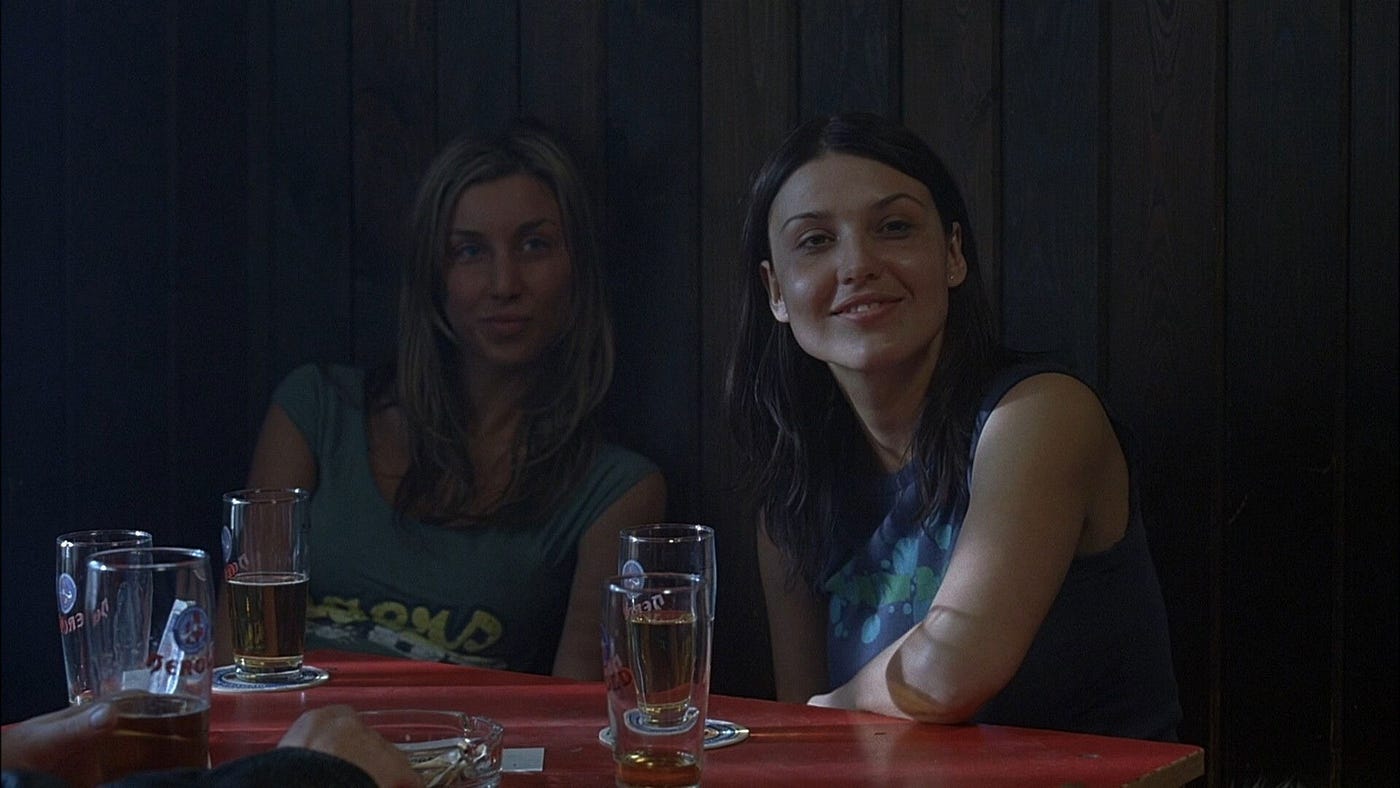
Unsurprisingly, the lads take Alexei’s advice and soon reach their destination. Initially, everything goes exactly as they hope: they meet attractive girls, go out, take drugs, and end the evening with sex. Job done. However, the next morning Oli is mysteriously missing. Over the following days, Paxton and Josh find themselves trapped in a macabre torture dungeon where wealthy clients pay vast sums to an organisation called The Elite Hunting Club to murder captured victims.
To say this film differs in tone from Cabin Fever is a significant understatement. Roth’s first movie had a much grungier, B-movie feel. One might label it folk horror, and a fair amount of dark humour ran throughout — leading some critics to claim it featured too much gore and too many jokes at the expense of genuine scares. Hostel, on the other hand, is far slicker and comparatively more sophisticated.

The film’s opening effectively sets the scene as the credits appear over a dark, dank industrial complex. We hear the sound of someone whistling while washing blood and grime off tiled walls, followed by a glimpse of bloodied surgical scissors being cleaned. Finally, more blood pours down a drain before the camera reveals a hideously gore-encrusted chair, just as the creaking, metallic sound of a door closing echoes. It’s not exactly a subtle start, but it must be applauded for its brevity; it informs the audience immediately that the movie will likely contain highly unpleasant scenes. One could argue this was unnecessary, but it’s skilfully executed and possesses a foreboding quality.
In the first 20 minutes, we watch the sex-obsessed men tread carelessly through the pleasures and pitfalls of the Dutch capital. Everything’s shot brightly; there’s loud pop music and friendly women. The entire sequence feels relaxed and upbeat, almost like a bawdy teen comedy. This playful tone is deceptive, as Roth wants audiences to settle into the same comfort zone as the characters. These somewhat obnoxious men navigate Europe as if it were their own exclusive playground. Not once do they consider where they are or with whom they are dealing. They simply don’t care; their only goal is sex. Consequently, when told of a Slovakian hostel full of horny women, they never think to question it. Why would they?
This seemingly simplistic first act smartly introduces one of the film’s central themes: tourism as consumption. Our carefree protagonists are seen to be exploiting a system and, in the process, taking advantage of the country they are visiting — yet they naively and wrongly assume they are the ones benefiting from the arrangement.
Like the movie itself, the story’s genesis is far from ordinary. After Cabin Fever, Roth suddenly found himself at the centre of much attention. Quentin Tarantino was one of his loudest supporters, placing the movie in his Top 10 of the year and reaching out to Roth about a future collaboration. Studios also came knocking, mostly offering horror remake of The Last House on the Left (1972), The Fog (1980), and even an entry in the Texas Chain Saw Massacrefranchise. Tarantino told him to skip the remakes and create something original instead.
While at Tarantino’s home, Roth began developing ideas for a low-budget horror film. A major inspiration came from a conversation with Harry Knowles, the now-controversial founder of the website Ain’t It Cool News, regarding the most disturbing content available online. Knowles told Roth about a Thai “murder vacation” website he had discovered on the dark web, where people could supposedly pay $10K to shoot someone. He called it the most disturbing thing he’d ever seen.
Around the same time, Roth met with producers Mike Fleiss and Chris Briggs to discuss future projects. Briggs casually remarked: “I want to make a movie called Hostel about backpackers, but I have no idea what it’s about.” Roth immediately connected with the title and began building a story around it. When he pitched the idea to Tarantino, the latter loved it and told him to start writing that very day. That draft became the foundation for Hostel.
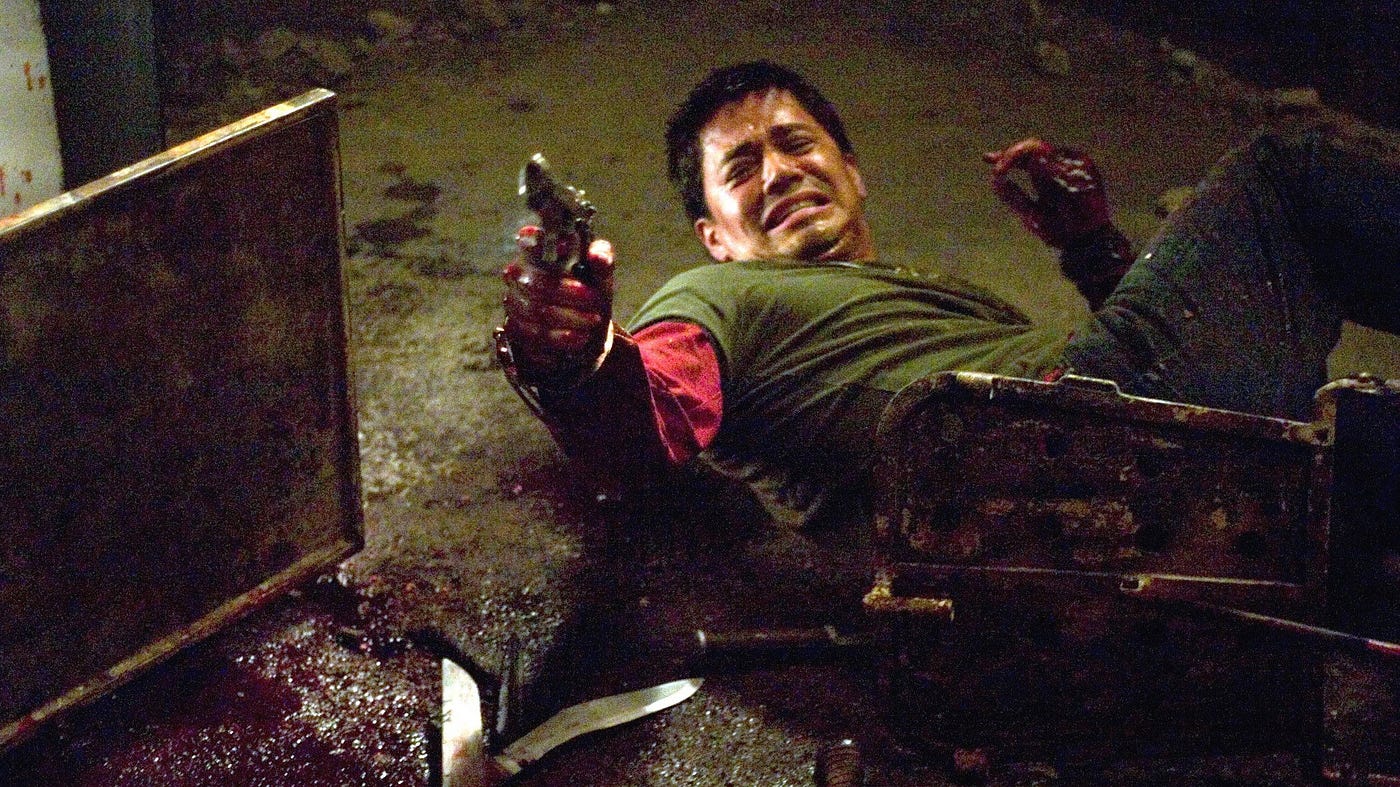
Despite the bleak subject matter, Roth deserves credit for the way in which the movie subtly switches gears from a bizarre tale about sex-obsessed men to something altogether more sinister. One character disappears, then another. Roth doesn’t thrust audiences into full-blown horror immediately, he allows the unease to build slowly, ensuring the impact is greater when it finally arrives.
A scene in the local police station serves as a prime example: Paxton is there to file a missing person’s report for Josh when the officer casually asks where he is from. When Paxton replies “California”, the policeman responds: “You are so far from home…” This simple sentence is loaded with threatening undertones, yet it could almost be dismissed as a mundane observation.
Once Paxton uncovers the hideous truth — that wealthy clients pay to torture and kill kidnapped tourists — everything clicks into place. The men who thought they were chasing pleasure have become the product. Another theme worth noting is the objectification of women. Roth’s screenplay, though, cleverly turns the tables: during the scene in which Paxton is captured, he screams at the girl he had slept with two days prior: “You fucking whore, bitch!” She immediately replies: “I got a lot of money for you. Now you’re my bitch.”

As we see the Elite Hunting Club in all its sordid glory, it is clear that it operates like a luxury business. There are menus, business cards, and price tiers: starting at €5K for Russians, €10K for Europeans, and €25K for Americans. The entire operation is highly organised and professional. The violence is not driven by emotion or impulse; it’s purely a financial transaction.
It would be dishonest to suggest the violence displayed is easy to watch. And yet, viewing it for only the second time for this retrospective, I was surprised by how little gore is actually shown on screen. That’s not to say there is none, but the filmmaker allows our mind to fill in the blanks, which often makes the experience more difficult. Roth knows when to hold back. Some of the most unsettling moments stem from anticipation — doors closing, tools being set down, and long silences before an atrocity occurs.
The torture and killing sequences remain brutal, especially given the camera placement at the same height as the victims in their chairs. This provides the viewer with the same perspective as the characters, making the sequences deeply disturbing. Because of these scenes, the “torture porn” label was immediately applied to Hostel upon its release. While understandable, this classification does the film a disservice. It features extreme violence, certainly, but it is not merely about shocking the viewer for cheap thrills. Unlike many mindless slasher films, Roth’s second outing has something on its mind, leaving the audience with valid ideas and questions.
As the film moves into its third act, suspense builds as Paxton and an Asian girl he rescues attempt to navigate their way out of the building. This is paced effectively, again proving Roth’s skill as a writer and director. For those who’ve not seen it, I’ll not spoil the ending, but the final message is decidedly bleak: the businessmen go unpunished, and with a seemingly endless supply of perverted clients, nothing will ever change.
Alongside the writing and direction, Czech cinematographer Milan Chadima (Thanksgiving) expertly uses light and shadow across the gloomy torture cells, contrasting perfectly with the brightly lit scenes in Amsterdam. The score by Nathan Barr — utilising sweeping traditional instruments from the Prague FILMharmonic Orchestra alongside unique acoustic elements like a human bone trumpet — creates an unnerving, atmospheric soundtrack.

Unfortunately, the acting from most of the cast sits at the weaker end of the spectrum; not terrible, but certainly average. In my view, the standout performer is Jay Hernandez. His portrayal of Paxton feels completely natural. His character arc from a confident, carefree tourist to a traumatised survivor is believable and earned, making the film far more compelling.
When Hostel was released in early-2006, it met with some negative criticism. The Guardian’s film critic Peter Bradshaw wrote that it was “silly, crass and queasy — and not in a good way”, while David Edelstein of New York Magazinewas equally unkind, crediting Roth with creating a subgenre that used excessive violence to excite audiences like a sexual act. But, there was some positive reviews too: Jean-François Rauger of Le Monde listed Hostel as the best American film of 2006, calling it an example of modern consumerism. Commercially, the movie was a triumph, earning $82M against a $4.8M budget.
In the wake of Hostel, other “torture porn” films soon followed, most notably Rob Zombie’s The Devil’s Rejects (2005) and the infamous A Serbian Film(2010). The Human Centipede trilogy (2009–2015) more or less marked the end of this era — though the Saw franchise continues with 10 films to its name, at time of writing.
Admittedly, I’ve only watched the first Saw movie which, like Hostel, was made with skill. I can’t comment on the rest. As much as I’m a fan of horror, these types of movies hold little appeal for me. I find it difficult to understand how one derives entertainment from watching extreme violence. For me, they’re not scary, merely disgusting. However, to each their own.
With Hostel, one can argue that Roth was trying to offer more than just sadism. On the surface, it’s a tale of sex and violence, but underneath, the director explores the darker side of global tourism and the way exploitative capitalism fuels the seedy underbelly of human commodification.
While the “cash-for-murder” concept may seem far-fetched, the film stands out because factual reports of sex trafficking lend the script a sense of legitimacy. Ultimately, transitioning from sex to violence within a transactional context is not a huge leap. This perspective on humanity’s twisted nature makes the film feel grounded in reality, leaving audiences with difficult societal issues to ponder.
USA • CZECH REPUBLIC | 2006 | 94 MINUTES | 2.39:1 | COLOUR | ENGLISH CZECH • GERMAN • DUTCH • SLOVAK • JAPANESE • ICELANDIC • RUSSIAN • SPANISH


writer & director: Eli Roth.
starring: Jay Hernandez, Derek Richardson, Eyþór Guðjónsson, Barbara Nedeljáková & Rick Hoffman.