HAMNET (2025)
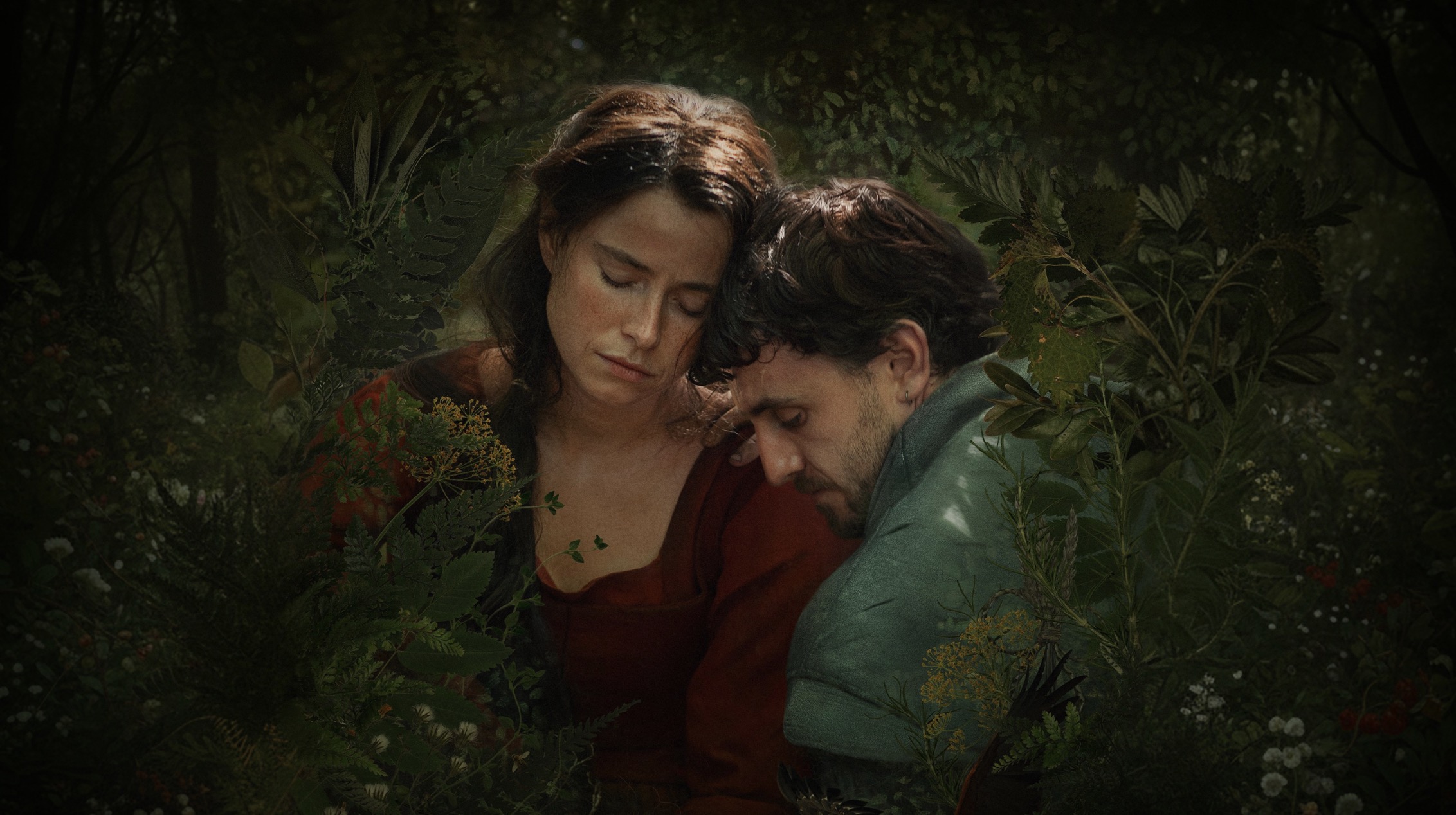
After losing their son Hamnet to plague, Agnes and William Shakespeare grapple with grief in 16th-century England.


After losing their son Hamnet to plague, Agnes and William Shakespeare grapple with grief in 16th-century England.
Even with the encyclopaedic knowledge that the literary and theatrical worlds possess regarding William Shakespeare—from the poetic rhythms of his dialogue to the thousands of ways his works have been reinterpreted over the centuries—little has been recorded about the details of his personal life. During a period later known as his “lost years”, we know that Shakespeare married Anne Hathaway in 1582; he was 18 and she was 26. Years later, they raised three children: Susanna, Hamnet, and Judith. Hamnet, Judith’s twin, died of unknown causes at the age of 11 in 1596. Around 1600, The Tragedy of Hamlet, Prince of Denmark was completed and premiered, eventually becoming one of the Bard’s most acclaimed and interpreted plays.
Maggie O’Farrell’s novel, Hamnet, is a noble attempt to forge a meaningful link between the boy’s death and the writing of Hamlet. The proximity between these two pivotal events is too tantalising and emotionally resonant to ignore. O’Farrell’s novel creates an intimately moving spectacle by filling the gaps in Shakespeare’s unrecorded years. Her writing is as much a textured fictionalisation of the grief the Bard must have felt as it’s an elevation of his family. Crucially, Anne Hathaway—referred to here as Agnes—is imagined as a woman in touch with the elements to an extent that William can only access through his writing; she’s a woman of fiercely driven spirit in perfect harmony with nature and its rhythms.
With this in mind, the painstakingly rendered death of Hamnet as a direct catalyst for Hamlet is not merely an act of imagination. It’s also a scholarly hypothesis on how to interpret the text. Much has been said about the play as a chronicle of madness, indecisiveness, and existentialism. O’Farrell invites us to envision a Hamlet driven mad by loss, where the aimless rhythms of grieving a loved one drive a man to the brink of annihilation in ways rarely captured by the English language. Shakespeare, she posits, managed to achieve this—and in doing so, brought himself and his family back from that brink.
It’s no coincidence that a novel subtitled “A Novel of the Plague”, which speculates that Hamnet was claimed by the Black Death, resonated with readers upon its publication in March 2020. Nor is it a coincidence that Chloé Zhao’s Nomadland (2020)—a film about a woman forced into a nomadic lifestyle after the 2008 recession and the loss of her husband—resonated during the economic catastrophes of the pandemic. Overlooking the somewhat misguided Eternals (2022), it’s clear Zhao seeks authentic tenderness and solace in nature, loss, and unexpected community, far from the grasp of a cold, industrialised world.
Is it any surprise, then, that Zhao was tasked with adapting Hamnet for the big screen? Zhao’s latest film, written in close collaboration with O’Farrell, is a tearjerker of devastating force. It’s so in tune with its characters’ emotional states that it seems willing to drown the viewer in their grief, only to provide the overwhelming relief of being pulled out from under it.
As an imagined chronicle of Shakespeare’s lost years and a portrayal of his family life, Zhao’s Hamnet is as potent a work of fictionalised scholarship as the novel. As a convincing emulator of overwhelming loss, it’s detailed and deliberate enough in its characterisation and spirituality to gracefully evade accusations of emotional manipulation.
One of the film’s first accomplishments is the tactile life it breathes into O’Farrell’s prose. The film’s priorities are clear from the opening: Agnes (Jessie Buckley) lies by a massive tree near a cave before waking to call a hawk to her falconry glove. Agnes is perhaps more central to this story than William (Paul Mescal) himself, and her connection to nature is the film’s most important symbolic element.
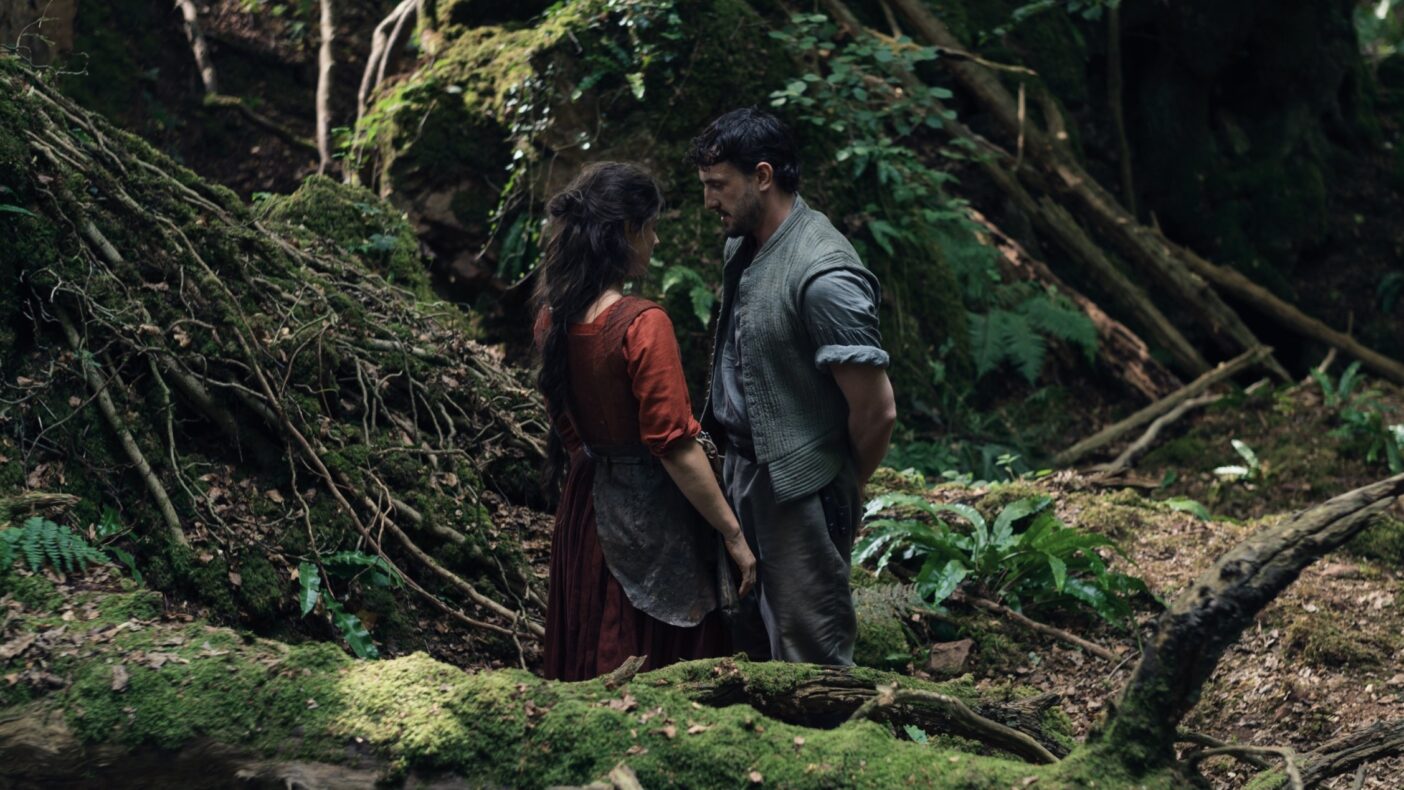
We don’t immediately understand what William brings to the table. We first see him unenthusiastically teaching Latin, only to be distracted and instantly smitten by the sight of Agnes outside his window. Both come from troubled families: William’s father, John (David Wilmot), holds an authoritarian grip on the household, while rumours swirl that Agnes is the daughter of a witch.
They steadily fall in love—the legend of Orpheus and Eurydice demonstrates William’s literacy to Agnes, while she shares a premonition that she’ll die with two children at her side. Despite family objections, they marry and consummate their bond. Susanna soon arrives, born at the very tree where we first saw Agnes. However, the family dynamic shifts when a frustrated William struggles with his writing; Agnes encourages him to depart for London’s thriving theatre scene.
While he’s away, Hamnet and Judith are born. Agnes is unable to give birth in the woods and is forced into the Shakespeare home, assisted by William’s mother, Mary (Emily Watson). The absence of nature becomes a source of dread; Agnes realises she’ll raise three children, but only two will remain. As a storm erupts and water creeps into the house like the hand of death, Agnes gives birth. Judith is initially not breathing but is revived at the last second. The “horrors of the night” haven’t claimed the children yet, but Agnes knows they will in time.
An idyllic period follows. Judith (Olivia Hynes) and Hamnet (Jacobi Jupe) grow close, often switching places to “deceive” those around them. Alongside Susanna (Bodhi Rae Breathnach), they enact scenes from William’s plays, leading Agnes to predict that Hamnet will thrive on stage. But when the plague arrives, the frail Judith is the first to fall ill. Yet it’s Hamnet who takes a stand, matching his father’s earlier calls to bravery by switching places with Judith to deceive the horror seeking her life.
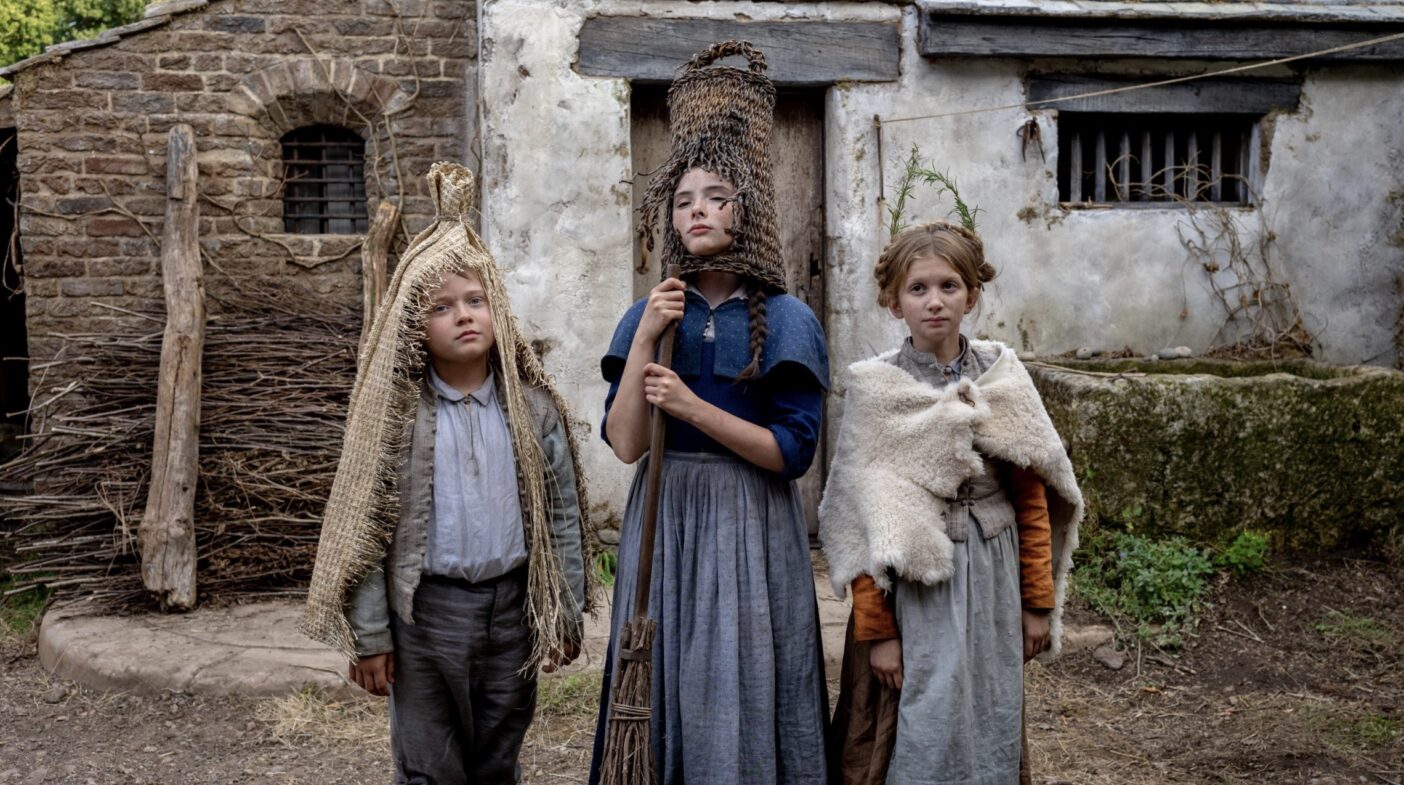
While Judith makes a miraculous recovery, Hamnet dies in agony in Agnes’s arms while William is away in London. The last we see of him is a figure roaming a realm between life and death against the backdrop of a painted tableau, staring into the void of the exit. He cries out for his mother, caught in stasis.
Nearly every cinematic element contributes to the weight of the ensuing grief. The consistency of character is remarkable, helped by two of the finest Irish actors working today. Jessie Buckley embraces Agnes’s instinctual emotionality, capturing the immediacy of joy and sorrow in a way that complements her connection to nature.
Zhao has often said the “loudness” of the grief in this film is a response to a culture that has largely neutered emotional expression. Through Agnes, Buckley and Zhao find a retort to modern emotional inhibitions without ever tipping into bathos or overacting.
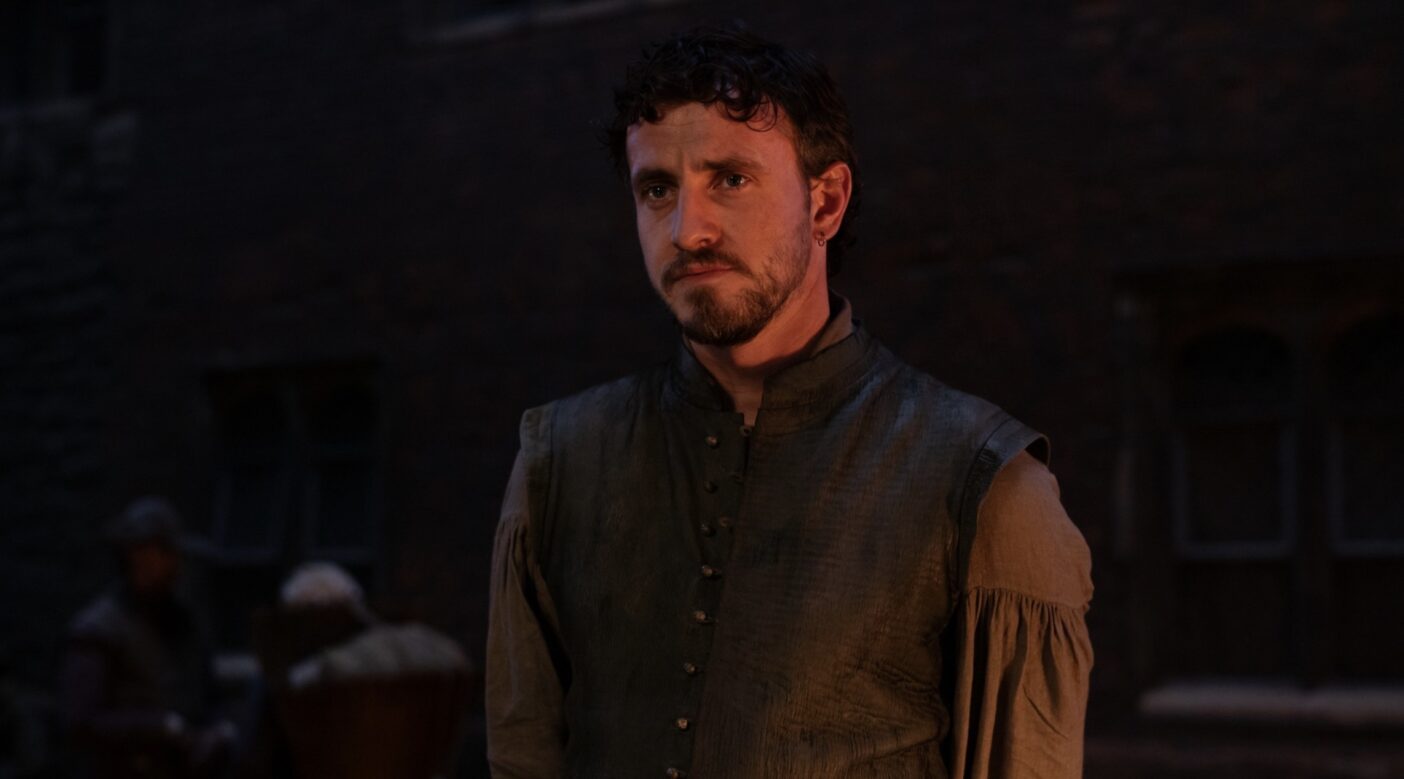
Buckley’s mirror image is Paul Mescal, the patron saint of desolate masculine roles. He uses the limited historical information available to bring Shakespeare to life as a distinct character rather than a mere literary figure. Where Agnes’s access to the “beyond” lies in visions and herbal lore, William’s lies in his writing—the ability to resurrect people through the generative art of theatre.
In one scene, Mescal’s frustrated William recites the “Get thee to a nunnery!” monologue to a performer he feels is merely reciting lines. It’s a barbed delivery, but one infused with an acerbic venom that suggests, like Hamlet, William is projecting his own guilt and self-hatred for not being there to save his son. Mescal has mastered these characters, expressing a bitterness that lies behind William’s more touching displays of sorrow.
For a film frequently accused of being a “weepie”, the craft on display keeps it from becoming overwrought. Cinematographer Łukasz Żal uses his trained eye to create a visual language that balances distance and intimacy. Complemented by Zhao and Affonso Gonçalves’s patient editing, the camera beautifully frames the settings of London and Stratford. Max Richter’s soundtrack—with the excusable exception of the now-ubiquitous “On the Nature of Daylight”—is contemporary yet classical, using instrumental restraint to let the story speak for itself.
“He can’t have just vanished,” William tells Agnes in their bedroom after the funeral. Agnes replies, “We may never stop looking for him.” Both speak from a place of denial, but they also refer to how they see beyond the veil: Agnes through her natural understanding of spirits, and William through the creation of immortal characters.
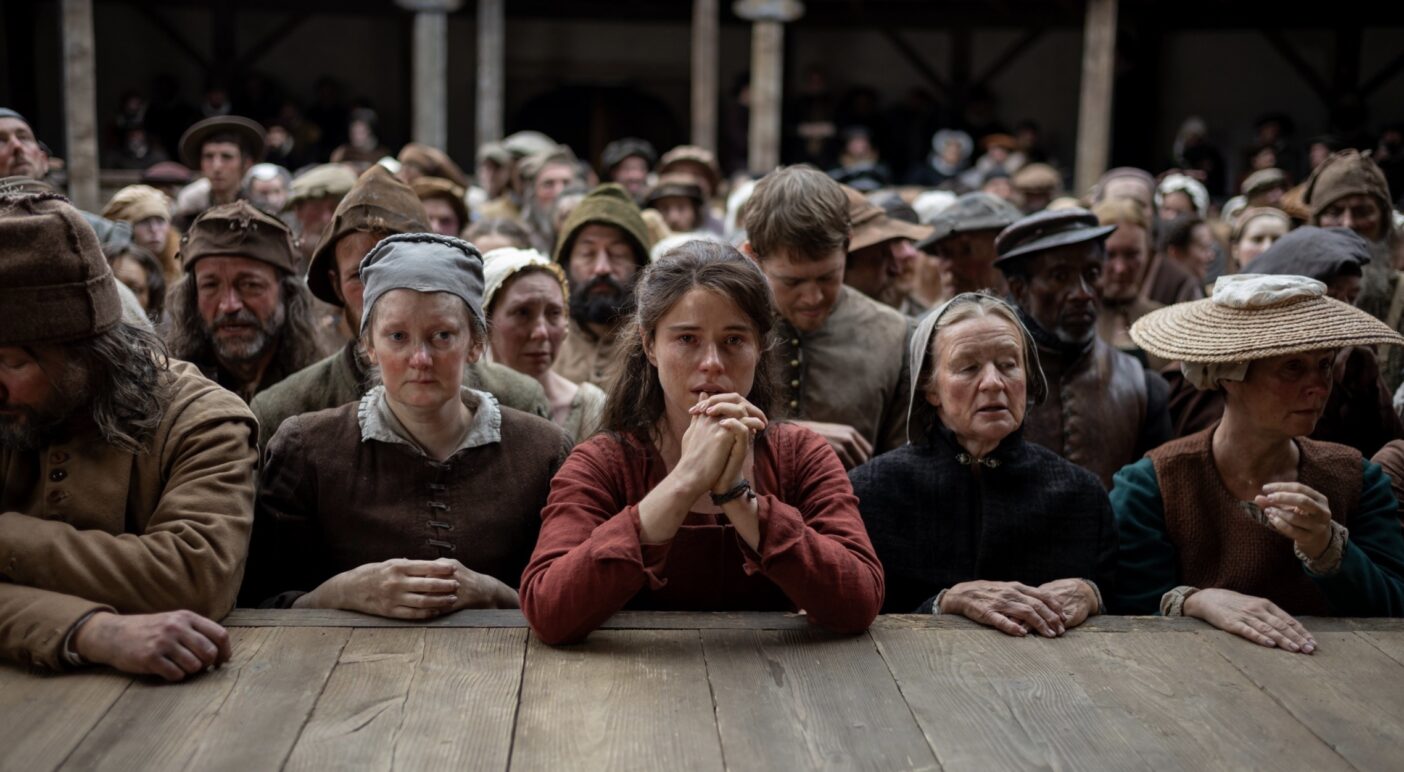
It’s no surprise that the film’s emotional climax is the premiere of Hamlet, but the resulting catharsis is unexpected. The closure is painful but genuine, providing a relief that surpasses many films dealing with similar themes.
Hamnet’s major achievement is how it reinforces the immortality of the Shakespeare name—not just William’s, but his entire family’s. More importantly, it’s a necessary work for a modern era often devoured by loss. Zhao has found her voice as a filmmaker willing to stare into the void, possessing the wisdom to show how art can be the beginning of the way out. Here, Hamlet becomes a path of insight, showing how an artist reckons with grief and how we might do the same. Hamnet is a sincere invitation to move forward in the comfort of true human connection. The rest is not merely silence, the film posits, but a space where new stories may form and where we may finally allow what was to pass on.
UK • USA | 2025 | 126 MINUTES | 16:9 | COLOUR | ENGLISH

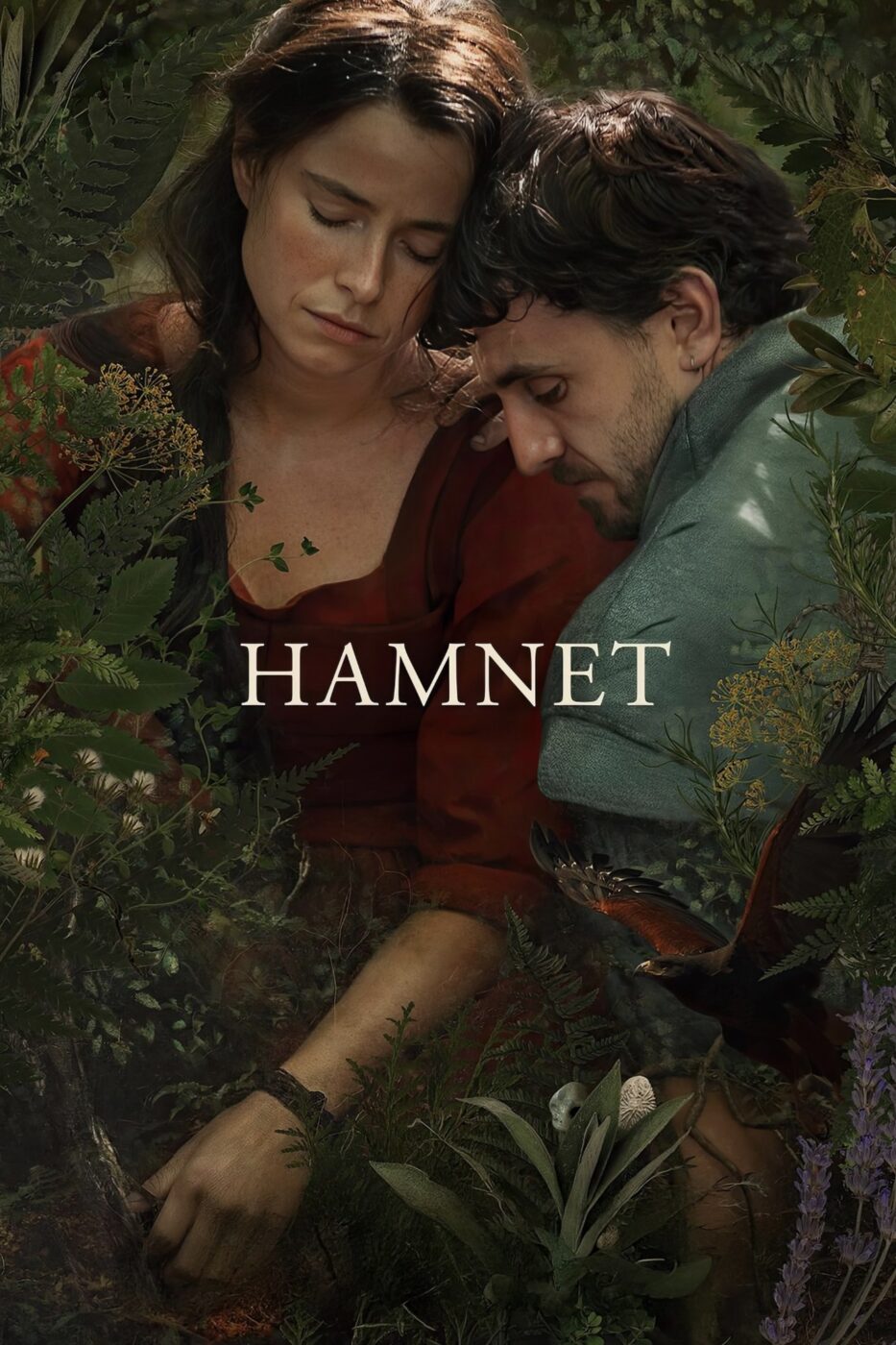
director: Chloé Zhao.
writers: Chloé Zhao & Maggie O’Farrell (based on the novel by Maggie O’Farrell).
starring: Jessie Buckley, Paul Mescal, Emily Watson, Jacobi Jupe, Joe Alwyn, David Wilmot, Bodhi Rae Breathnach, Olivia Lynes & Noah Jupe.