WUTHERING HEIGHTS (2026)
A passionate and tumultuous love story set against the backdrop of the Yorkshire moors, exploring an intense and destructive relationship.


A passionate and tumultuous love story set against the backdrop of the Yorkshire moors, exploring an intense and destructive relationship.
Wuthering Heights is a story beloved by many, so writer-director Emerald Fennell (Saltburn) was never going to please everyone. This adaptation of Emily Brontë’s gothic romance is specifically Fennell’s interpretation of her memories of the book, rather than a faithful translation of the source material. It gnaws away at side plots and characters to focus on a very specific sliver of the 1847 novel: the central romance between Cathy (Margot Robbie) and Heathcliff (Jacob Elordi).
We first meet a younger Cathy (Charlotte Mellington) and Heathcliff (Adolescence’s Owen Cooper) frolicking on the moor. The film skims over how Heathcliff arrived at the dilapidated mansion or where he originated; this isn’t a work concerned with narrative detail or context. The pair grow up in the shadow of Cathy’s alcoholic father (Martin Clunes) and their maid/surrogate mother Nelly (played by Hong Chau with a flawless English accent), with desire simmering between them from their first meeting. Young Cathy often refers to Heathcliff as her “pet”, a role he happily accepts. However, the film jumps too abruptly from the early teens to the adult actors; a “middle” teenage casting or better ageing of the child actors might have improved the first act’s flow.
Matters grow more complicated once Cathy and Heathcliff mature into a wide-eyed Robbie and a bearded Elordi. Her father remains a boorish alcoholic, but a new man enters the fray: their wealthy neighbour, Edgar Linton (Shazad Latif).Edgar and his childish sister, Isabella (Alison Oliver), soon catch Cathy’s eye. They live in luxury at Thrushcross Grange, a sumptuous, kitsch house filled with eerie dollhouses, flesh-coloured walls, and a garden that feels like a Monet painting come to life. After Cathy injures herself whilst spying on the Lintons, she remains at their mansion with a sprained ankle. It isn’t long before she’s betrothed to Linton, hoping to improve her fortune and provoke Heathcliff’s jealousy.
This is not an adaptation for purists. Fennell’s screenplay reframes the story by eliminating almost everything but the romance. It invents backstories, combines characters, removes Hindley entirely, and lops off both the introduction and the second half of the book. Loyalists may argue that Fennell’s reading of the text is remarkably broad and shallow.
Despite these changes, Cathy and Heathcliff remain recognisably Brontë’s ill-fated lovers—irresistibly drawn to one another, yet destined to cause mutual misery. Fennell focuses on surface-level jealousy and anger rather than the more nuanced repercussions of their actions.
There’s only a mere suggestion of racial and class undertones when Cathy exerts superiority over Nelly and Heathcliff.However, the writing largely whitewashes the toxicity of their relationship by casting Elordi as the lead—Heathcliff was originally described as a “dark-skinned gipsy”—and the British-Pakistani actor Shazad Latif as the villainous Linton. This adaptation simply isn’t interested in points beyond intense infatuation.
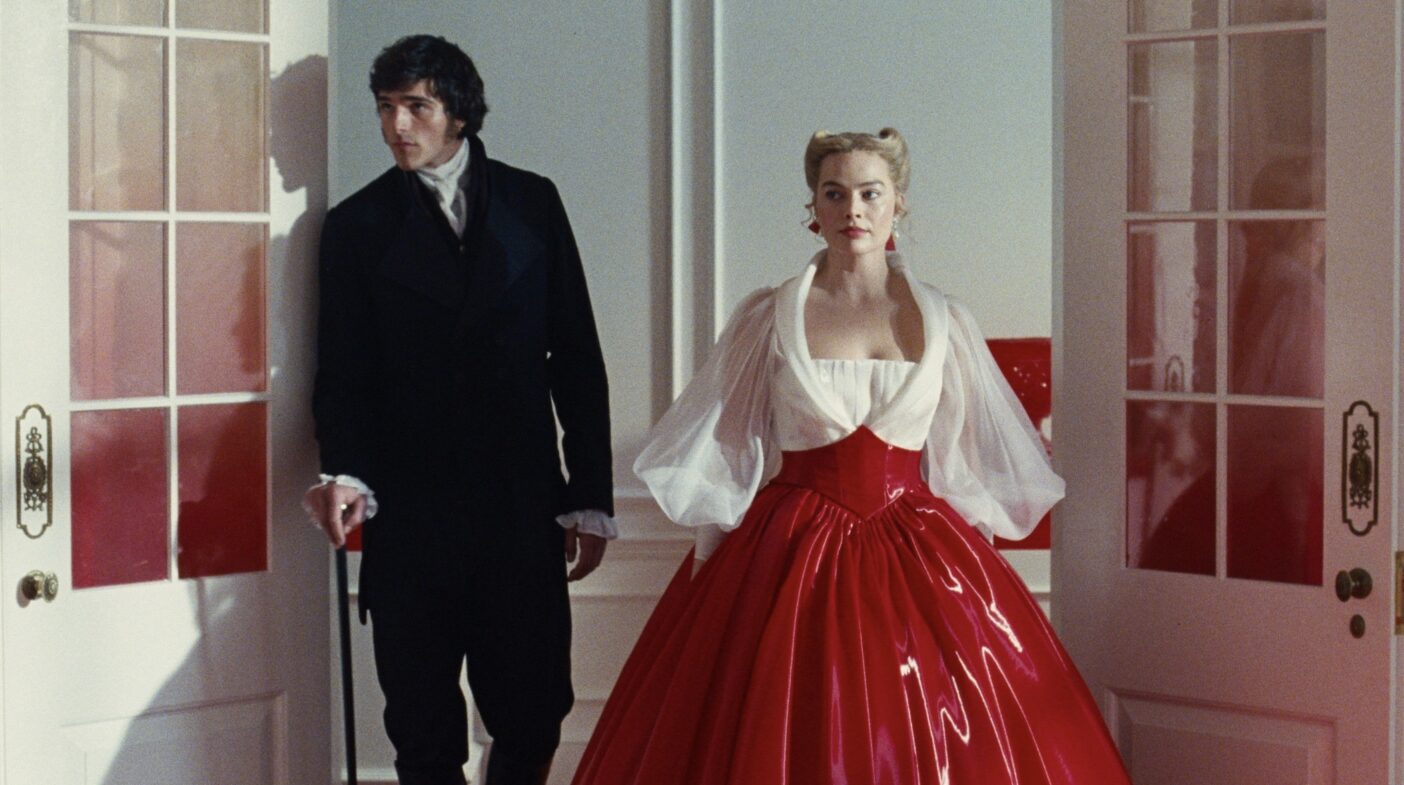
Jacob Elordi smoulders as Heathcliff in a performance that will likely linger in certain viewers’ memories. His version is perhaps the sexiest and broodiest ever seen on screen, largely because he’s been stripped of his worst characteristics.By reframing his relationships and removing the book’s second half, Heathcliff becomes a romantic hero rather than Brontë’s vengeful, violent anti-hero. Margot Robbie, talented as she is, feels miscast. Rather than being headstrong and mischievous, the Australian plays Cathy like a spoilt brat; it’s hard to root for her when she spends the first half of the film pouting and stomping her feet.
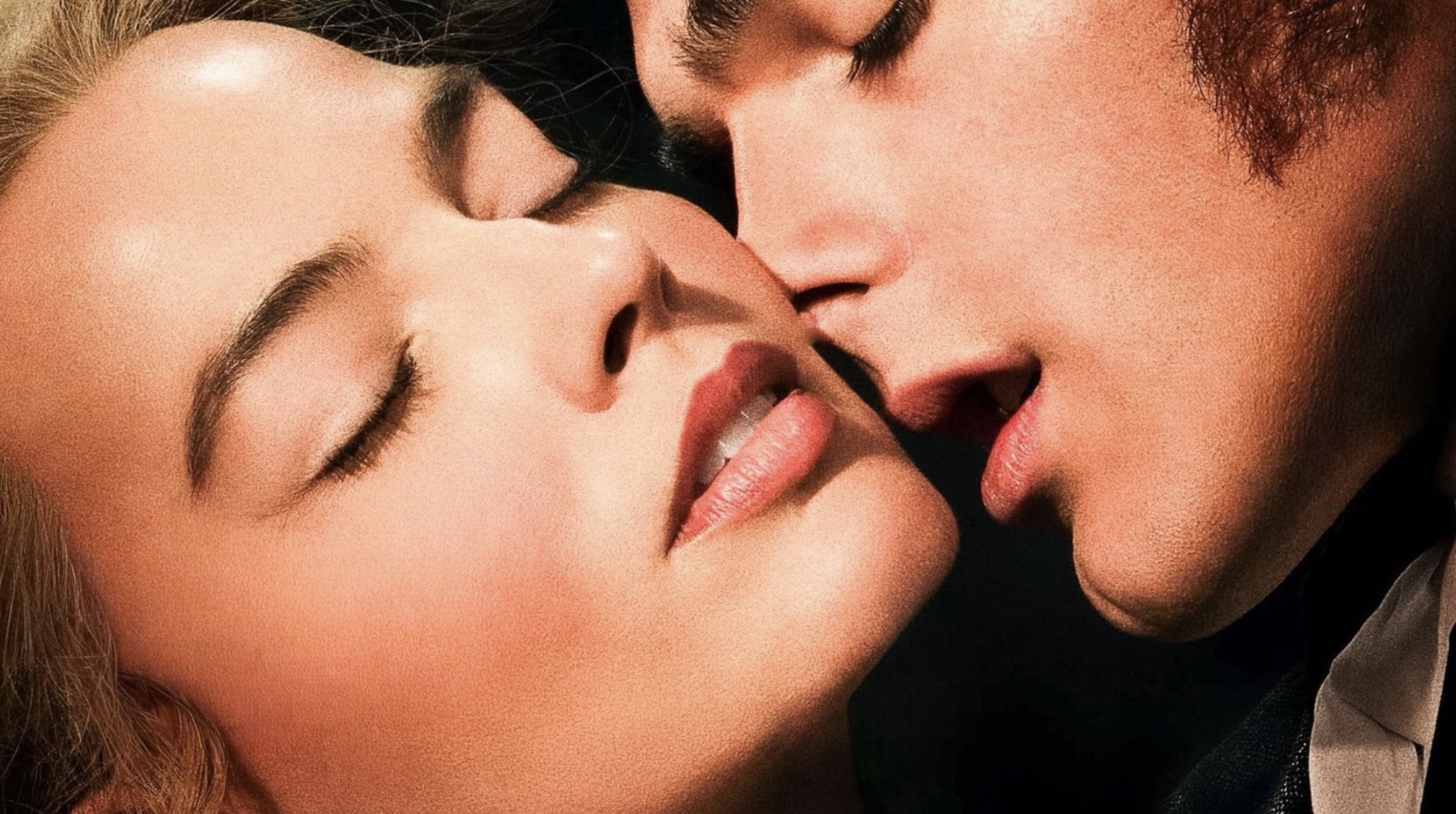
Crucially, the pair lacks the chemistry required for such legendary lovers. The film proves you can’t simply cast two attractive, talented actors and expect sparks to fly. You never quite believe in their obsessive romance, especially in the sex scenes, which are less raunchy than promised. The much-hyped “smut” is actually restrained—more akin to a Bridgerton fumble under the petticoats than Saltburn’s sordidness. Still, Elordi fills every interaction with Robbie with an eroticism that many will think about for years to come.
Shazad Latif is wasted as Linton, a man who exists in a “love quad” but lacks any personality beyond his wealth.Conversely, Alison Oliver gives the film’s best performance as Isabella, a woman with arrested emotional development who becomes enamoured with Heathcliff. Oliver perfectly balances Isabella’s demanding and manipulative behaviour; how Fennell reframes this character is one of the few things this adaptation gets right.
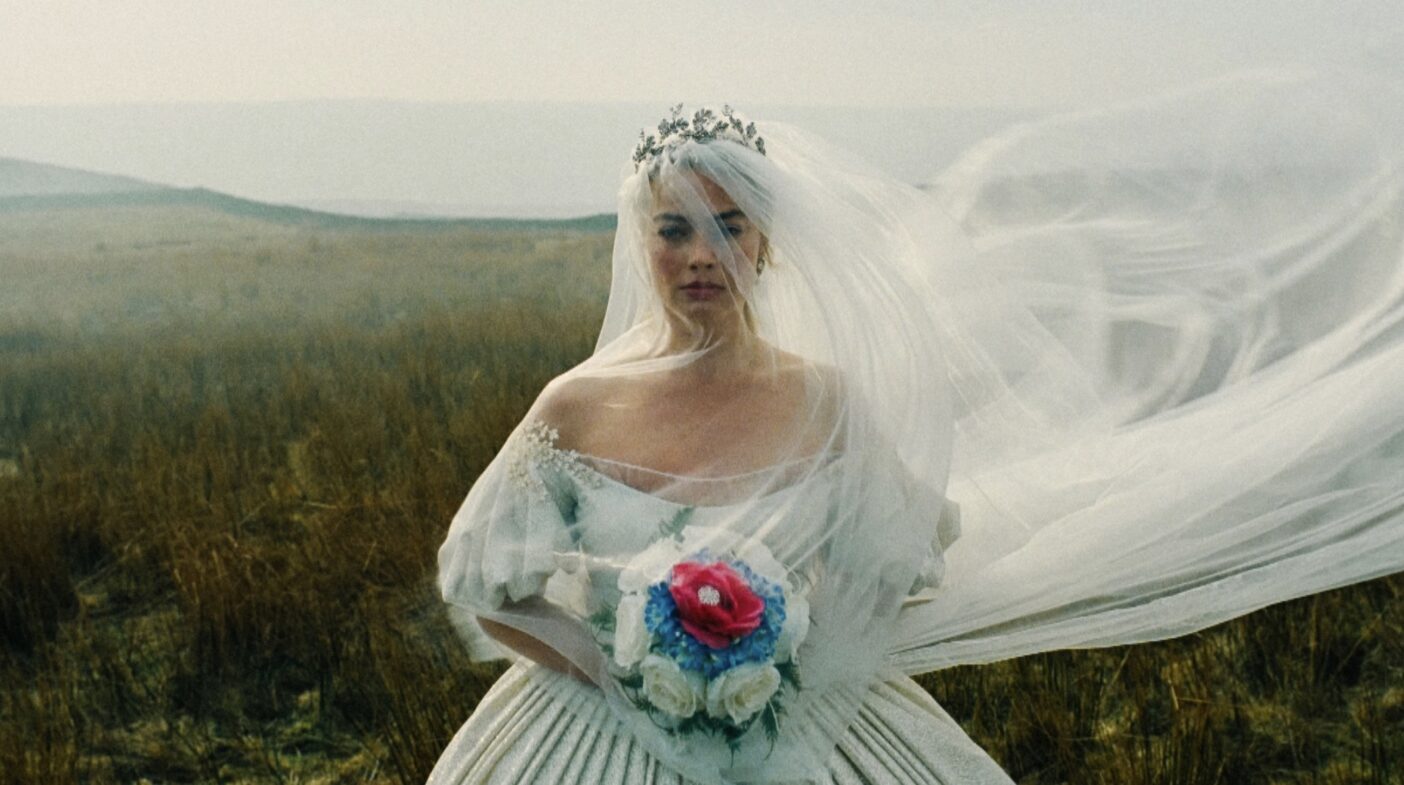
The biggest issue with Wuthering Heights is that it’s a beautiful, hollow film with nothing to say. It plays like a two-hour-long perfume advertisement. While the atmosphere is breathtakingly haunting, the content doesn’t match the craft.The middle act is almost entirely a montage of Robbie wandering around beautiful sets in beautiful gowns, and the finale feels significantly underwritten. Fennell continues her trend of delivering an uneasy ending that undoes the film’s previous hard work. Still, it’s difficult not to feel some emotion during those closing moments, even if they aren’t entirely earned.
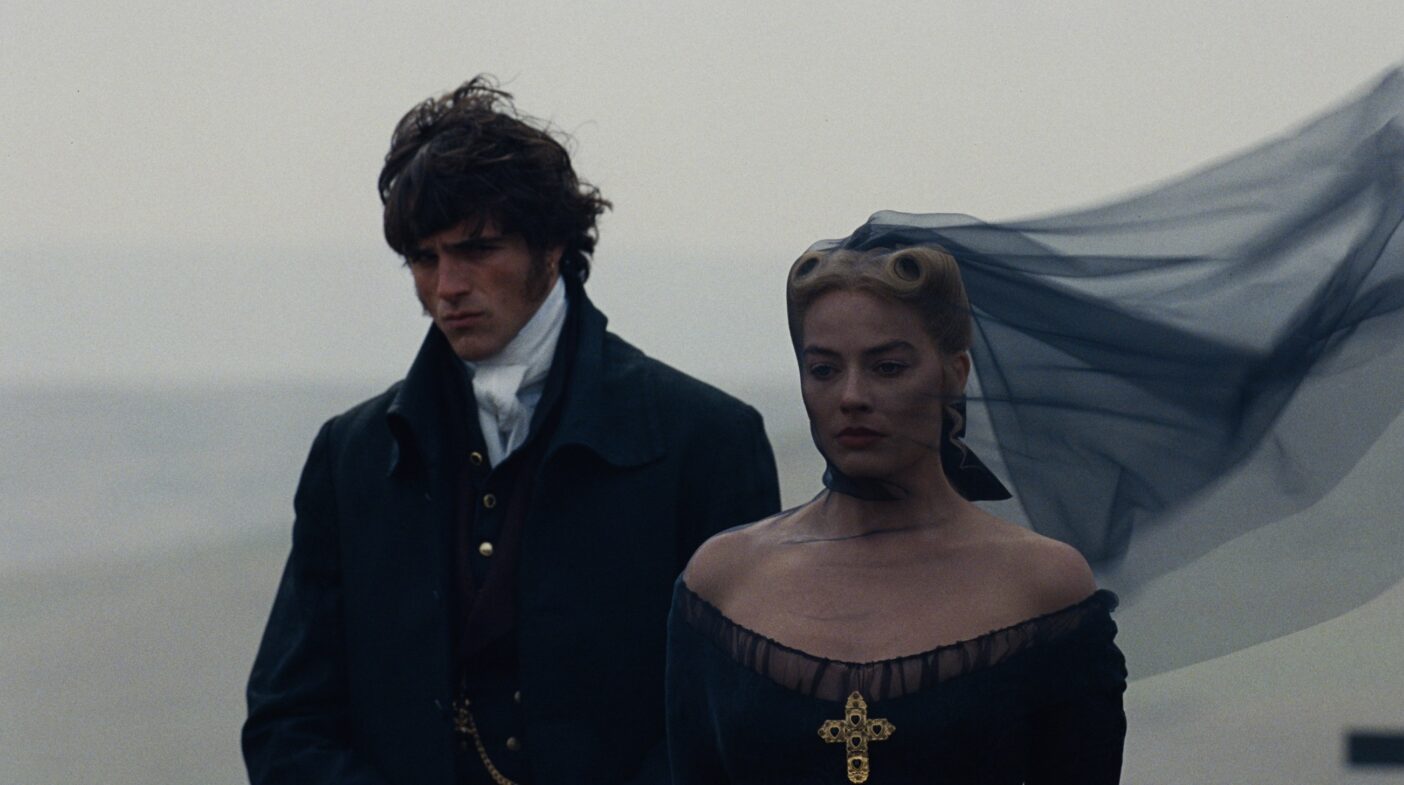
Visually, the film is a triumph. Linus Sandgren’s cinematography pays homage to the great romances of bygone cinema,and every second feels like a fashion editorial. Suzie Davis’s sumptuous production design and Jacqueline Durran’s over-the-top costumes are a feast for the eyes. The Lintons’ home is essentially a “Barbie Dreamhouse” version of Brontë’s world—a kitsch fantasy of 1800s Yorkshire that will appeal to a very specific demographic.
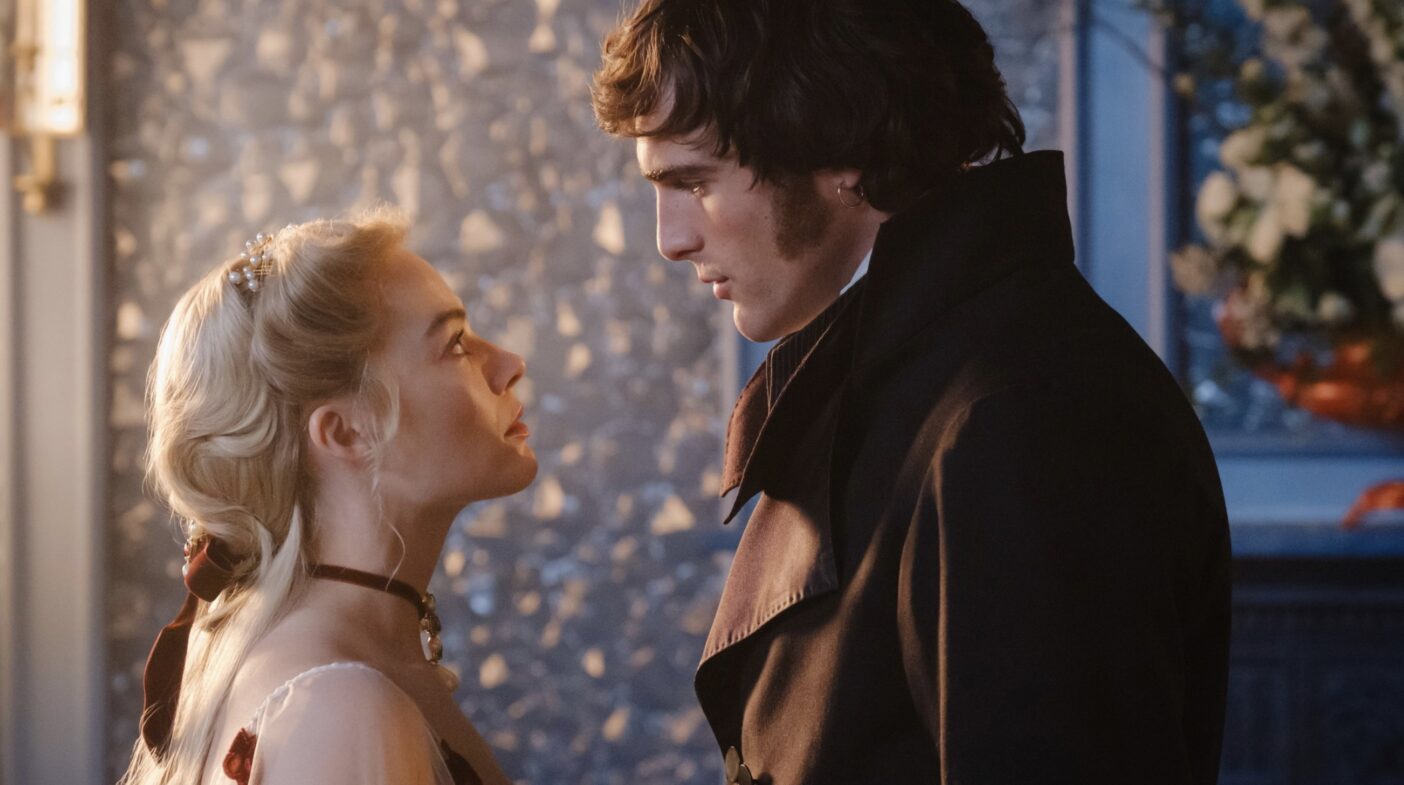
The atmosphere is further bolstered by Anthony Willis’s score and a soundtrack curated by Charli XCX. The opening song, “House” (featuring John Cale), sets a chilling tone, and Charli’s distinctive, flat, auto-tuned vocals add a surprisingly haunting layer to the narrative.
Ultimately, this movie prioritises aesthetics over accuracy. The poor writing hides behind stunning design choices,distracting the audience from the lack of plot. However, gorgeous visuals can’t sustain a lack of depth over an extended runtime. There are only so many scenes of beautiful people brooding on moors before one craves substance. The film either needed to bulk out its content (there was certainly enough material left in the book) or trim its length.
Fennell’s Wuthering Heights is a strange beast. Fans of the book will undoubtedly loathe the liberties taken, while newcomers may find the plot confusing. Fennell might have benefited from changing the title and severing the connection to Brontë entirely. Without the weight of the source material, there is much to like, but it is doomed to live in the shadow of a masterpiece. This is Wuthering Heights without the depth, social consciousness, or purpose. It will likely earn a cult following among younger viewers who crave the yearning of a period drama with the stylised aesthetics of a music video. It’s not an unenjoyable film—it’s just not Wuthering Heights.
UK • USA | 2026 | 136 MINUTES | 1.85:1 | COLOUR | ENGLISH

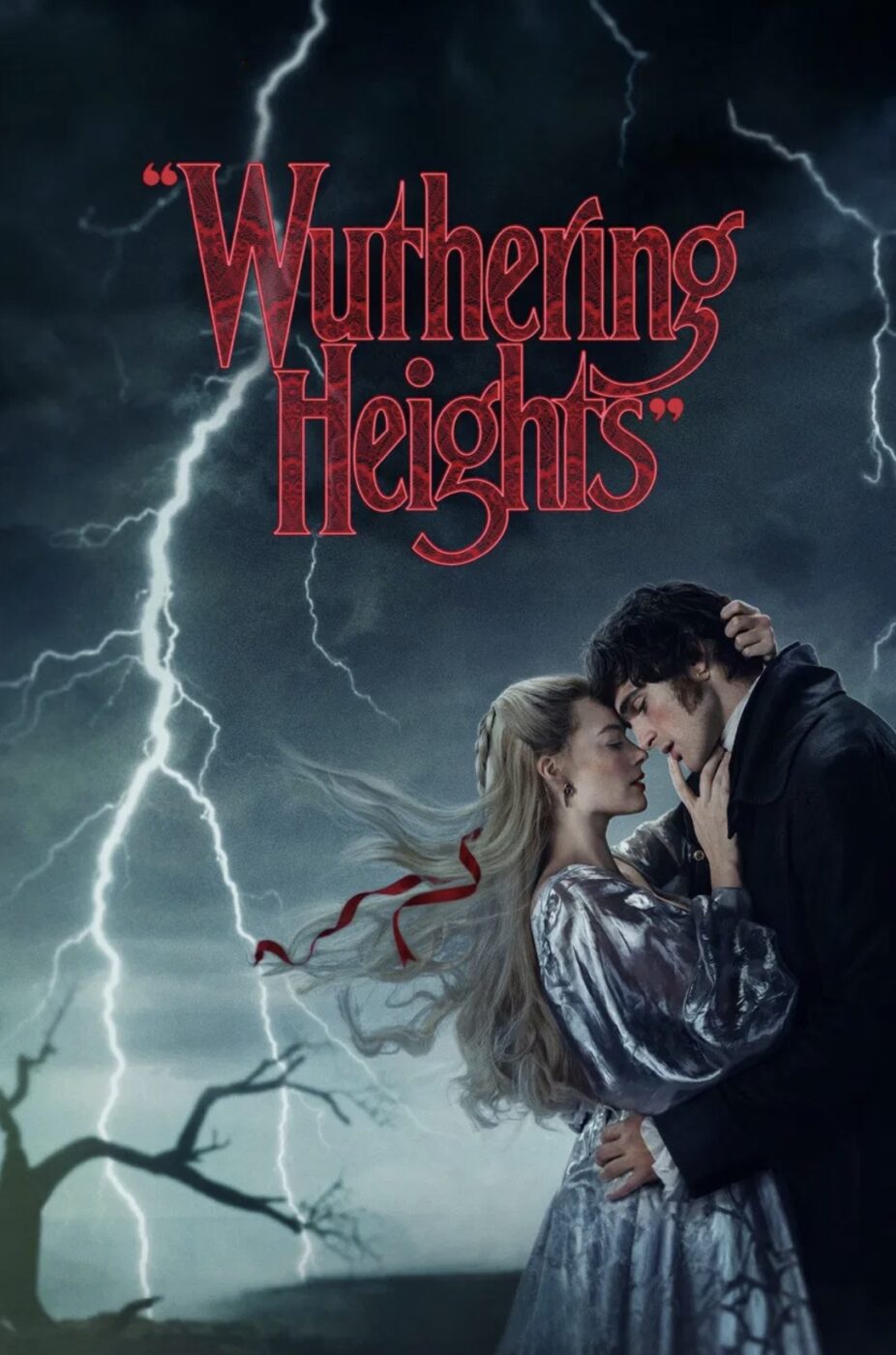
director: Emerald Fennell.
writer: Emerald Fennell (based on the book by Emily Brontë).
starring: Margot Robbie, Jacob Elordi, Hong Chau, Shazad Latif, Alison Oliver, Martin Clunes & Ewan Mitchell.