GOOD LUCK, HAVE FUN, DON’T DIE (2026)
A "Man From the Future" arrives at an L.A. diner, where he must recruit the precise combination of disgruntled patrons to join him on a quest to save the world...

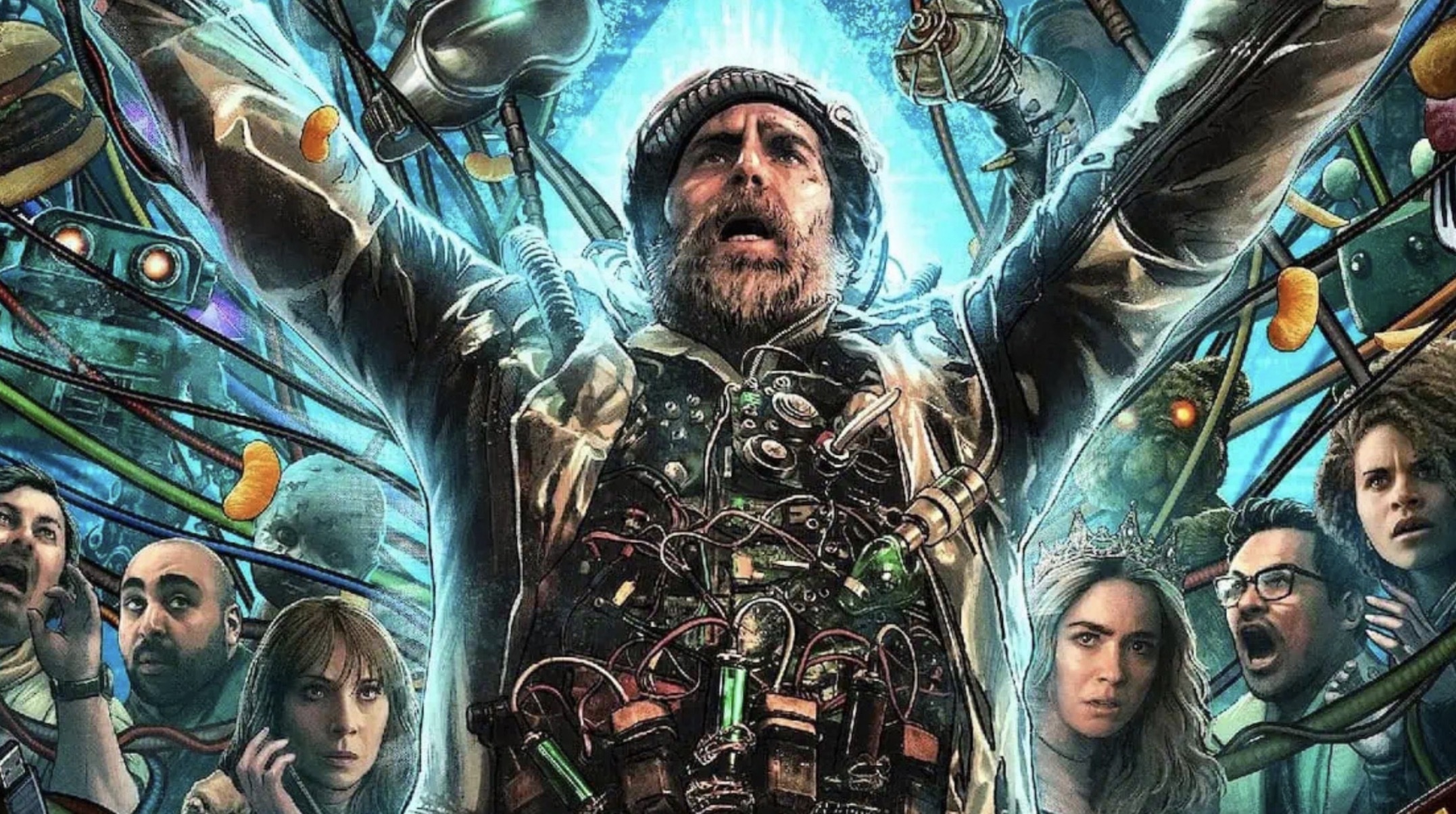

A "Man From the Future" arrives at an L.A. diner, where he must recruit the precise combination of disgruntled patrons to join him on a quest to save the world...
Pirates of the Caribbean director Gore Verbinski returns to cinema after an eight-year absence with the raucous sci-fi comedy Good Luck, Have Fun, Don’t Die. Over two hours, the film pessimistically assesses whether humanity deserves to be saved from the threat of A.I. overlords. But fear not: this isn’t a quiet morality tale, but a bombastic and totally goofy action flick.
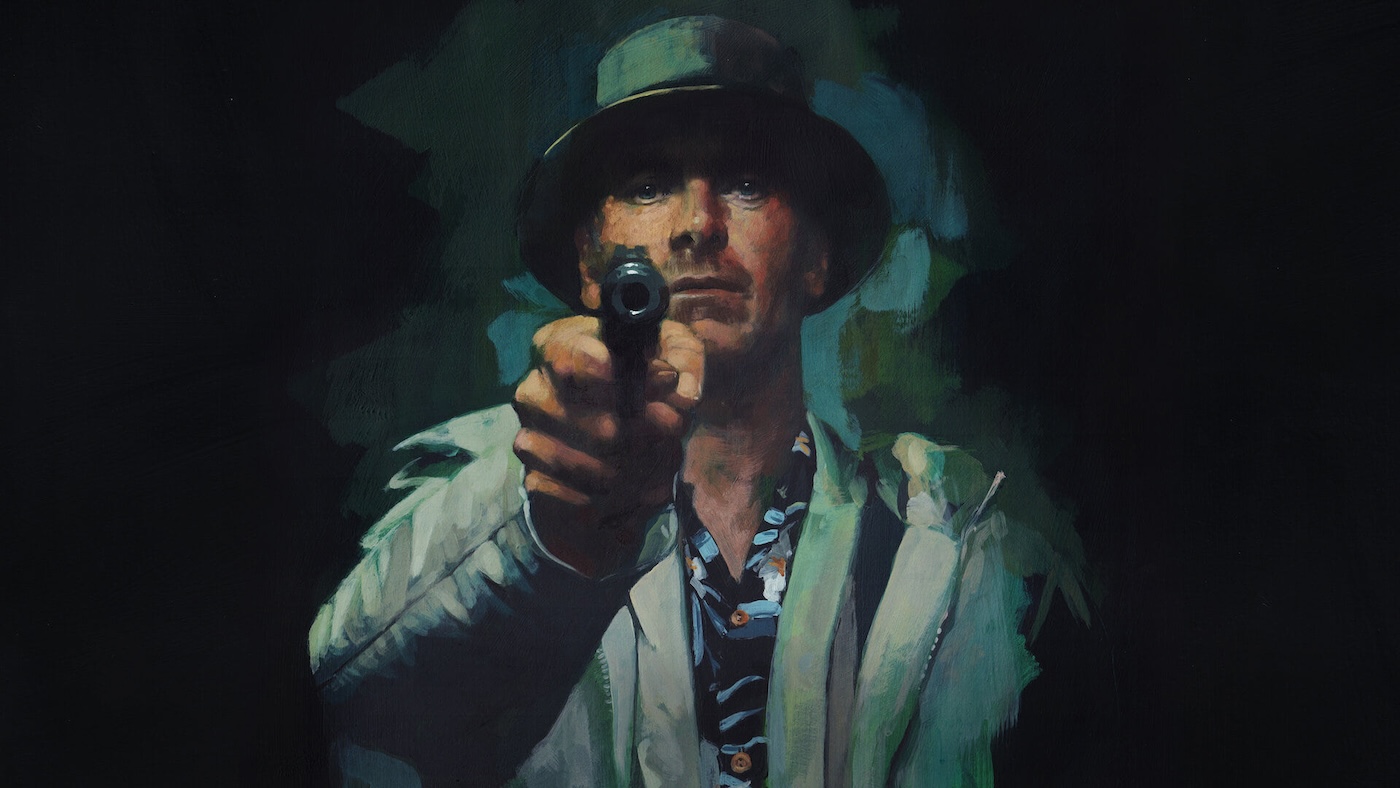
The film starts with a dishevelled man (Sam Rockwell) walking into an American diner wearing a clear plastic raincoat and a suicide vest. He looks like a homeless madman, but he’s actually a prophet from the future, sent to the modern day to assemble a team to help avert the apocalypse. This isn’t the man’s first attempt; this is his 117th try at putting together the perfect combination to stop the oncoming evil.
In a rousing speech that borders on a Reddit rant, the time-traveller reveals that the world is sleepwalking into oblivion. Looking around at a room of people buried headfirst in their phones, a few key diners believe he’s telling the truth. The threat is delivered via a long, rambling monologue that would have lost the audience if delivered by anyone other than Rockwell. The wonderfully terrifying part of Good Luck, Have Fun, Don’t Die is that while nothing he says is subtle, nothing he says is unbelievable.
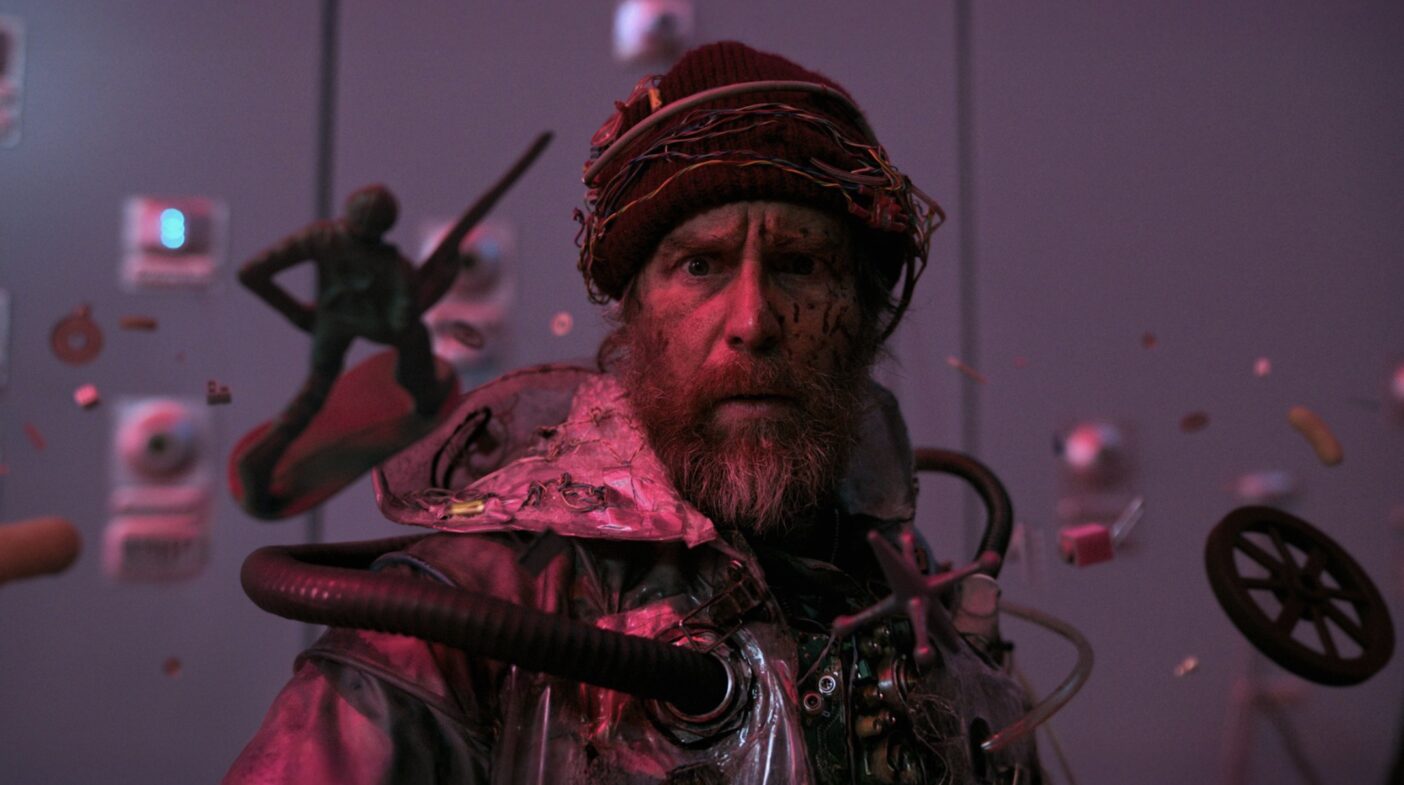
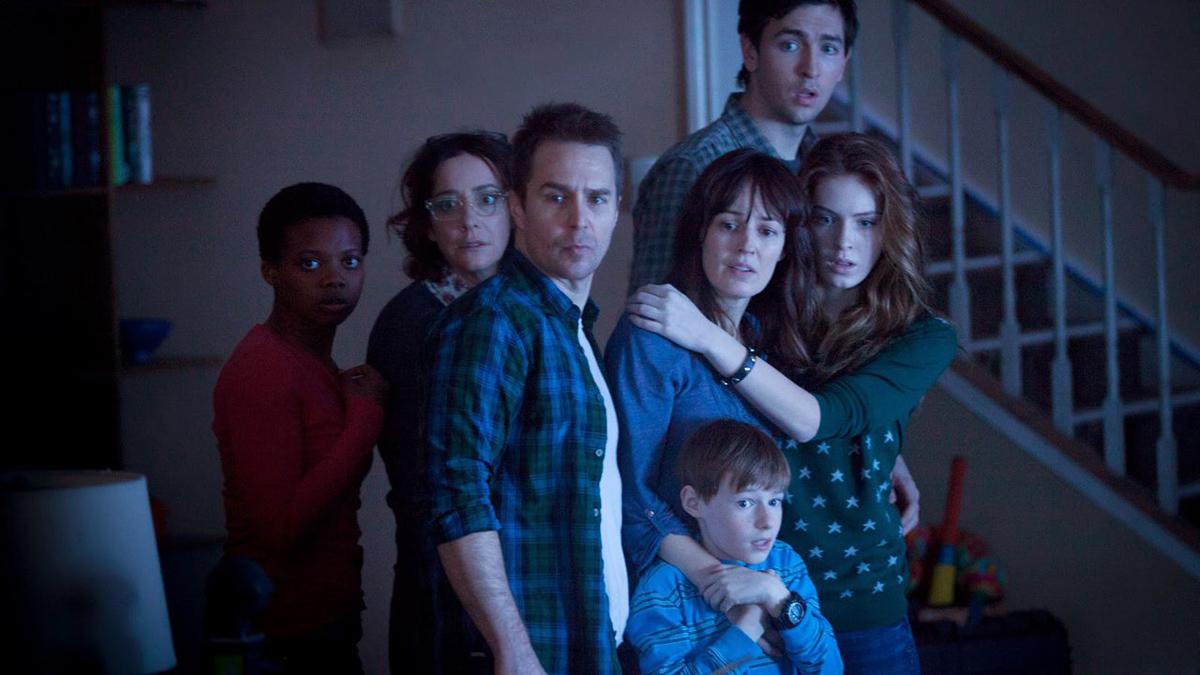
The group he enlists from the diner includes grieving mother Susan (Juno Temple), nihilistic millennial Ingrid (Haley Lu Richardson), schoolteachers Mark (Michael Peña) and Janet (Zazie Beetz), a Boy Scout leader (Daniel Barnett), and two random picks who don’t get enough backstory to explain their inclusion (Asim Chaudhry, Dominique Maher).
The group is initially sceptical, almost laughing at the man’s preaching. However, through every action sequence, every new encounter, and a final showdown with the architect of humanity’s downfall, they begin to realise that this threat was inevitable. It mirrors the way society sleepwalks into global crisis after global crisis, only recognising the problem when it’s too late and dismissing early warnings as nonsensical rants.
Much like Weapons (2025), the narrative flits back in time to show the characters’ histories and how technology has ruined their lives. First are Mark and Janet, who battle zombified teenagers who go feral when their phones come into contact with adults. In this version of America, children aren’t just addicted to their devices; they are symbolically connected to them. When Mark accidentally touches a device, a pack of “walking dead” young adults turns on them. It’s heightened satire and very silly, but if you’ve ever tried to take a phone off a teen, you’ll know it isn’t stretching the truth that far.

The second flashback follows Susan, a mother who loses her child in a school shooting. Here, the authorities treat the death of children as a regular yet minor annoyance rather than a life-altering event. She soon learns the reason: the government is cloning young victims of gun crimes, although the child now living in her house is nothing like her son. This is the darkest yet most entertaining narrative of the trio. It’s a shame this segment wasn’t a full-length film, as it’s teeming with creative, original ideas about the lack of shock in the aftermath of gun violence.
Lastly, we meet Ingrid, a slacker working as a princess for children’s birthday parties. She is “allergic” to electronics; even a single smartphone can trigger a massive nosebleed. Her segment highlights the dangers of technological dependency as she loses her partner to an all-consuming obsession with a VR headset. It’s the least memorable segment, but the one that ultimately offers the biggest pay-off. Asim Chaudhry and Dominique Maher sadly do not get backstories—not because they are meaningless, but because it feels as though their scenes were cut for time. While this film didn’t need to be longer than two hours, it would have been nice to learn more about them.
While these sequences pull the audience away from the fast-paced main plot and compromise momentum, they deepen the film’s emotional stakes. Satire is a genre severely lacking in modern cinema, and Good Luck, Have Fun, Don’t Dieproves it’s due for a comeback. Inevitably, the film will be compared to Black Mirror; much like Charlie Brooker’s anthology, the writing toes the line between sharp observations of modern life and the darkest black comedy.
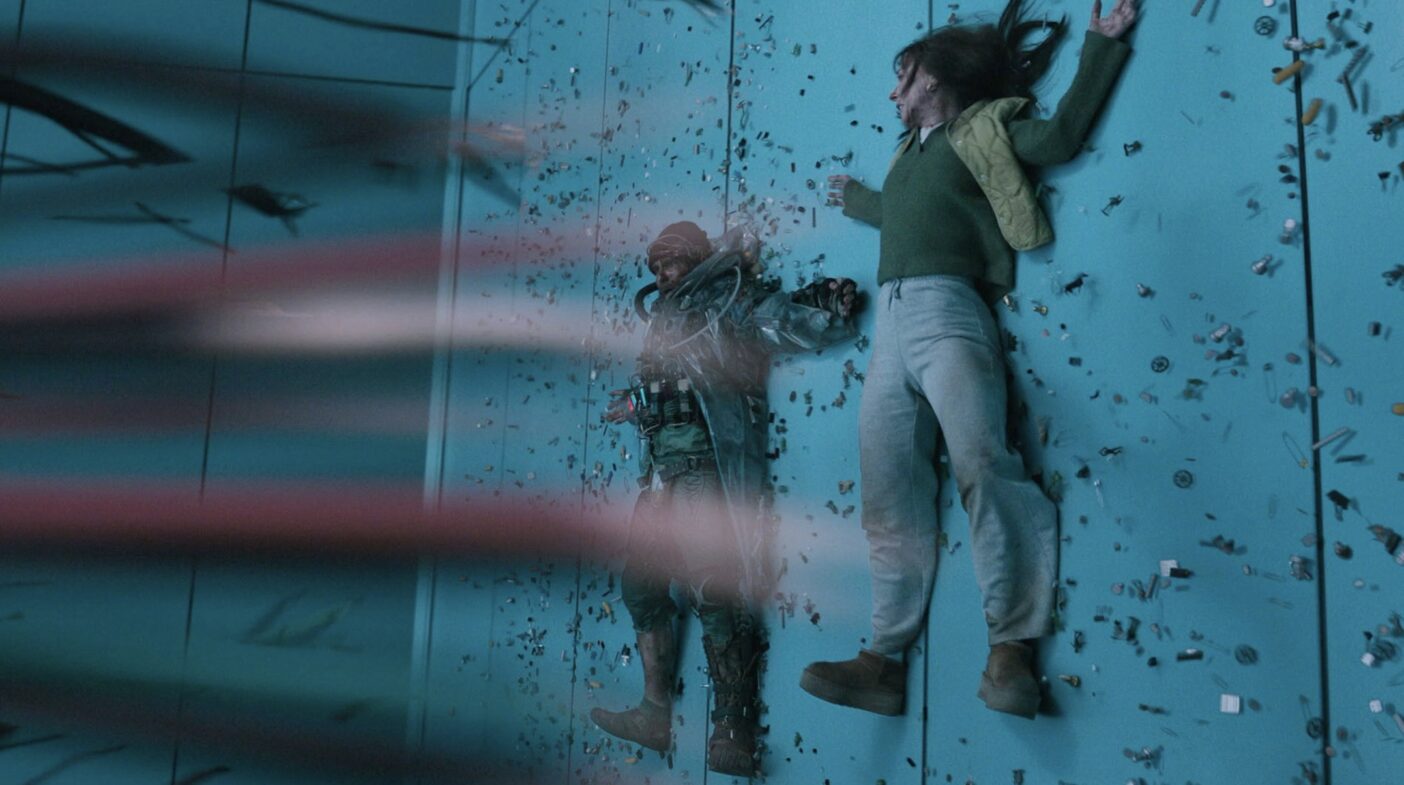
Sam Rockwell’s charismatic performance carries the movie. He is part prophet, part nihilist, effectively switching between panic and sardonic humour. Rockwell knows exactly how to “chew the scenery” and sell a big performance. Even when delivering long, exposition-heavy speeches full of sci-fi mechanics, he does so with sensitivity. Very few actors know when to go big and when to go small like the naturally likable Rockwell.
Haley Lu Richardson is also fantastic as Ingrid. She has been delivering interesting performances for years and deserves more industry credit. In the hands of someone less skilled, this character could be annoying; instead, Ingrid is a perfect representation of the nihilistic millennial. Beetz and Peña don’t have enough room to fully showcase their talents, but their natural charm carries their characters beyond the script’s requirements. Juno Temple is somewhat wasted in the modern timeline, but her flashbacks allow her to maximise her wide-eyed warmth as a fretful mother in a world of nonchalance.
Stylistically, the film is obnoxious and in-your-face. Verbinski’s energetic filmmaking works well for a world run by algorithms. The violence is heightened to the point of parody, and there is occasionally so much happening that the eye doesn’t know where to look. Yet, the ambition and creativity almost outweigh the haphazardness.
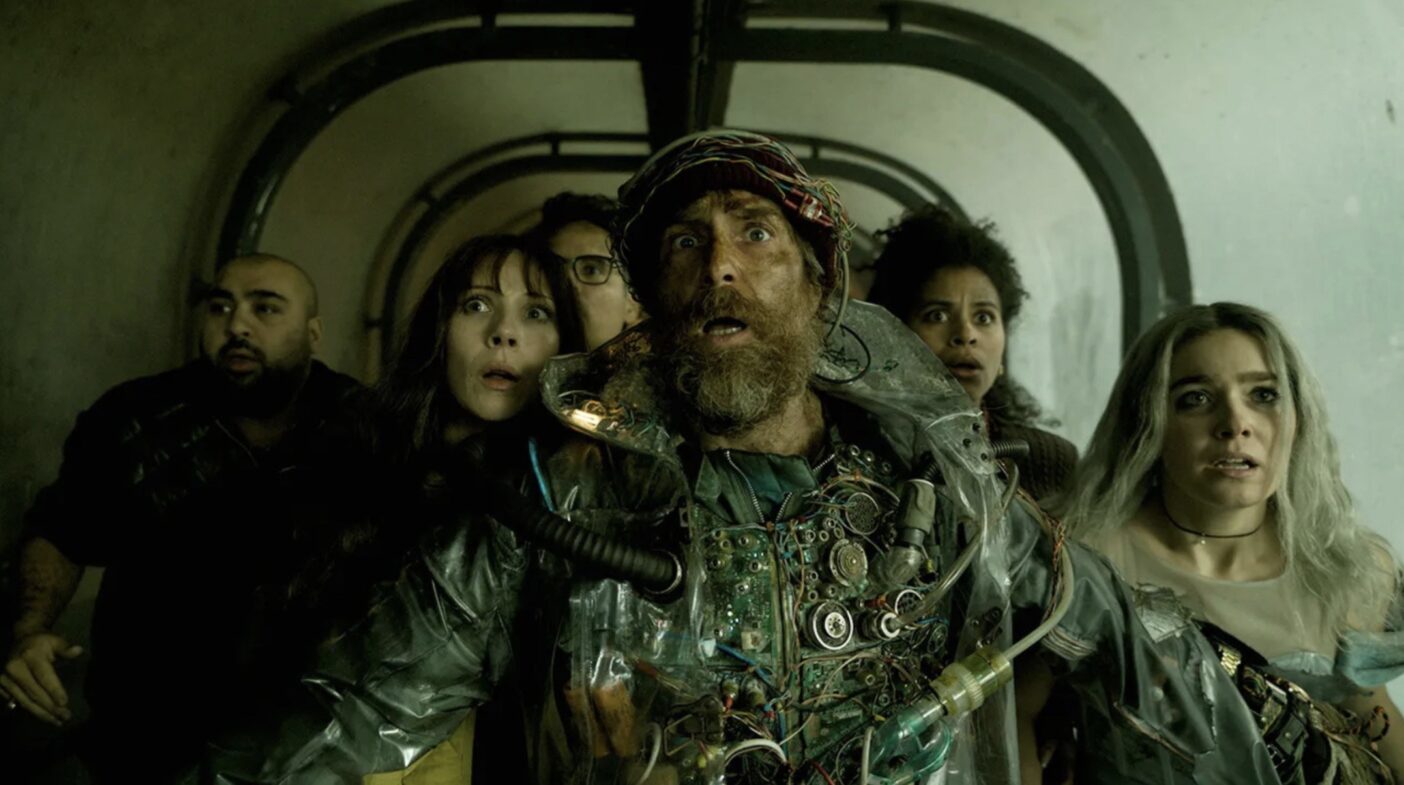
The action works because this isn’t a group of heroes; it’s a ragtag team of normal people with no useful skills. It would have been dire to see trained assassins take out the threat; here, their chaotic lack of a plan is what makes it charming. You don’t have to be “cool” to save the day—sometimes you just need to care.
Good Luck, Have Fun, Don’t Die is not subtle, and could be mistaken for an “old man yells at cloud” rant, but its heart and brain are in the right place. It gets away with its bluntness because it balances its argument against technology with Rockwell’s fantastic performance, genuine laughs, and creative action. The message is important: we can’t sit by and let A.I. destroy our lives, and we can all make small changes to reduce our reliance on tech.
This is genuinely funny satire. As silly as the screenplay is, there’s no doubt that writer Matthew Robinson is furious at the state of the world. The film has its finger firmly on the pulse of modern sentiment towards technology, yet possesses the chaotic filmmaking ethos of a retro 1990s outing. It has all the ingredients of a cult classic.
GERMANY • USA | 2026 | 134 MINUTES | 2.39:1 | COLOUR | ENGLISH

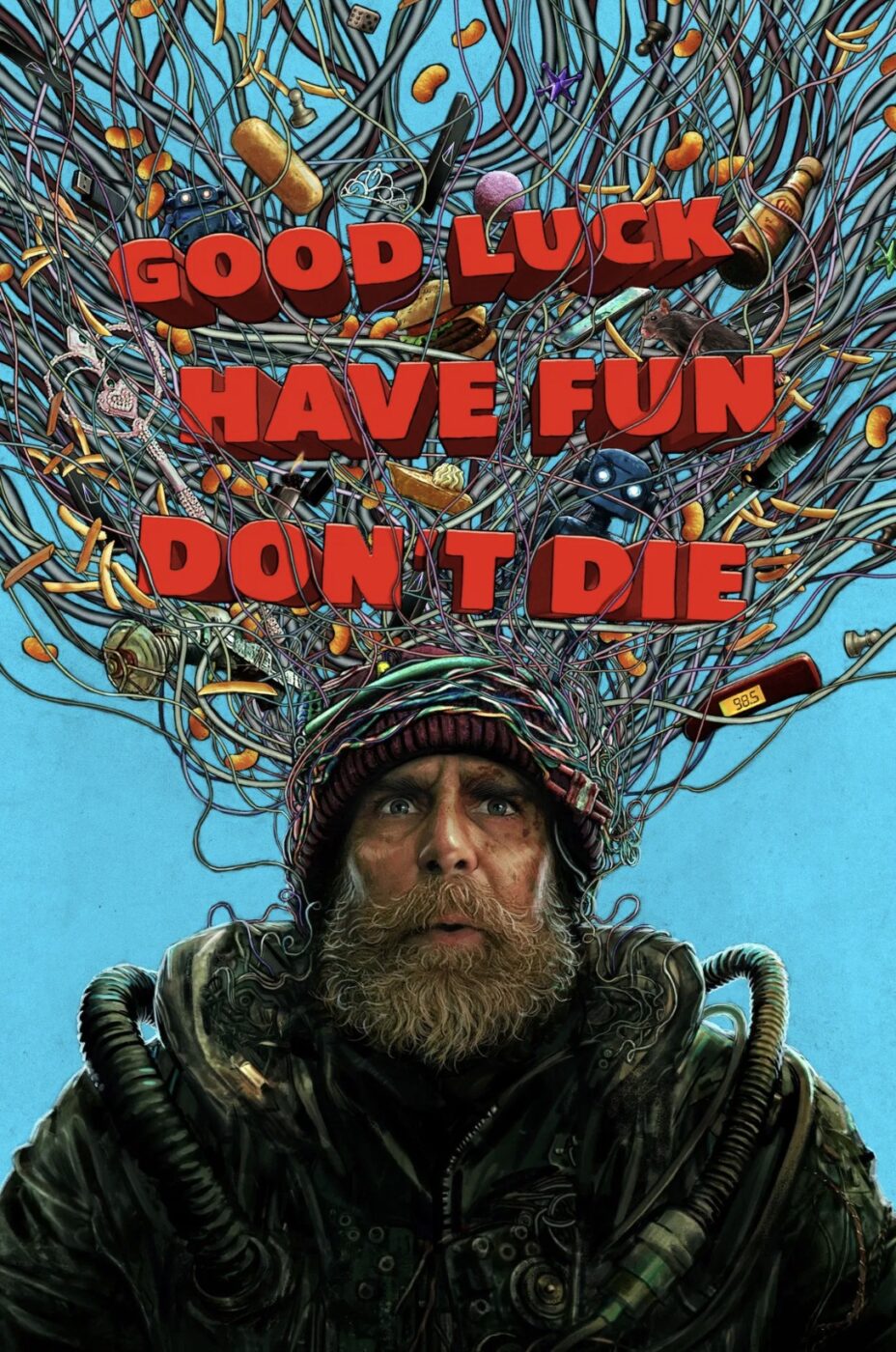
director: Gore Verbinski.
writer: Matthew Robinson.
starring: Sam Rockwell, Haley Lu Richardson, Michael Peña, Zazie Beetz, Asim Chaudhry & Juno Temple.