THESIS (1996)
While doing a thesis about violence, Ángela finds a snuff video where a girl is tortured until death. Soon she discovers that the girl was a former student in her faculty...

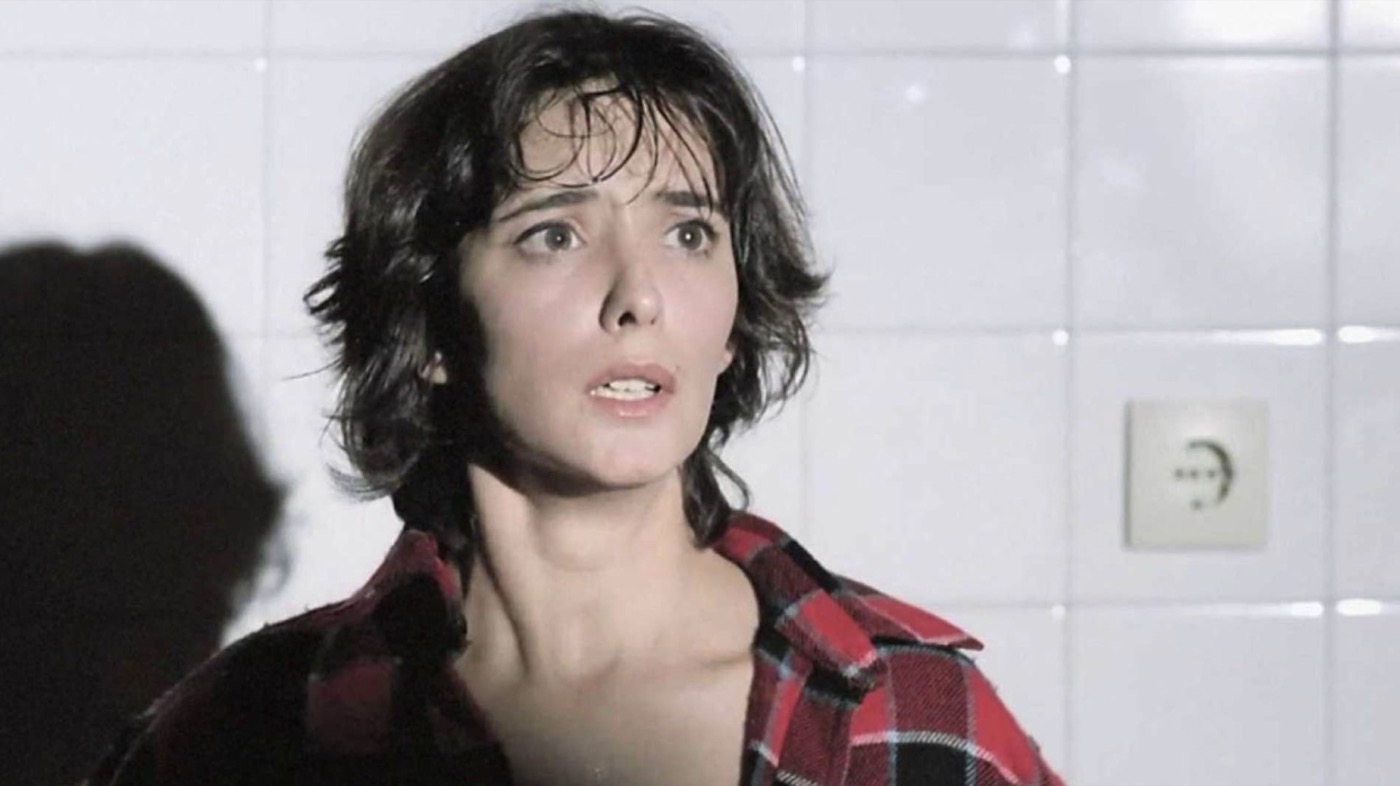

While doing a thesis about violence, Ángela finds a snuff video where a girl is tortured until death. Soon she discovers that the girl was a former student in her faculty...
It’s clear from the opening minutes of Thesis / Tesis that this is the work of a director in his professional infancy. Alejandro Amenábar’s directorial debut gets off to a rather clunky start, with dialogue that feels rigid and unnatural even through subtitles, as a station announcer advises passengers to disembark. As university student Ángela Márquez (Ana Torrent) joins the crowd on the platform, she attempts to catch a glimpse of the source of the disruption: a body ripped in half after being hurled into the path of an oncoming train. There is an unbearably tense moment as the camera pushes towards what has transfixed both the viewer and Ángela, leading us away from the orderly, single-file line of passengers exiting the station.
When Ángela is pulled away at the last second, it feels as though we have been wrenched away too. In the very next shot, the camera lingers in a library, pushing forward uncertainly until it rests high above a common area, offering an unobstructed view of the ground floor far below. It is a mirror image of the previous shot, except this time the view is not denied. It is a simple pairing of shots and camera movements, yet it has a beguilingly unnerving effect.
It is also a meaningful glimpse into the genius of the budding Spanish director, though his youth and inexperience cannot be entirely ignored. A blatant continuity error occurs before the five-minute mark, when Ángela’s thesis supervisor, Professor Figueroa (Miguel Picazo), sits up and leans towards her. Seconds later, following a reaction shot of Ángela, he performs the exact same movement. It is such a simple mistake that one wonders how it survived the final cut, though it becomes easier to understand when one considers that Amenábar was only 24 at the time of the film’s release.
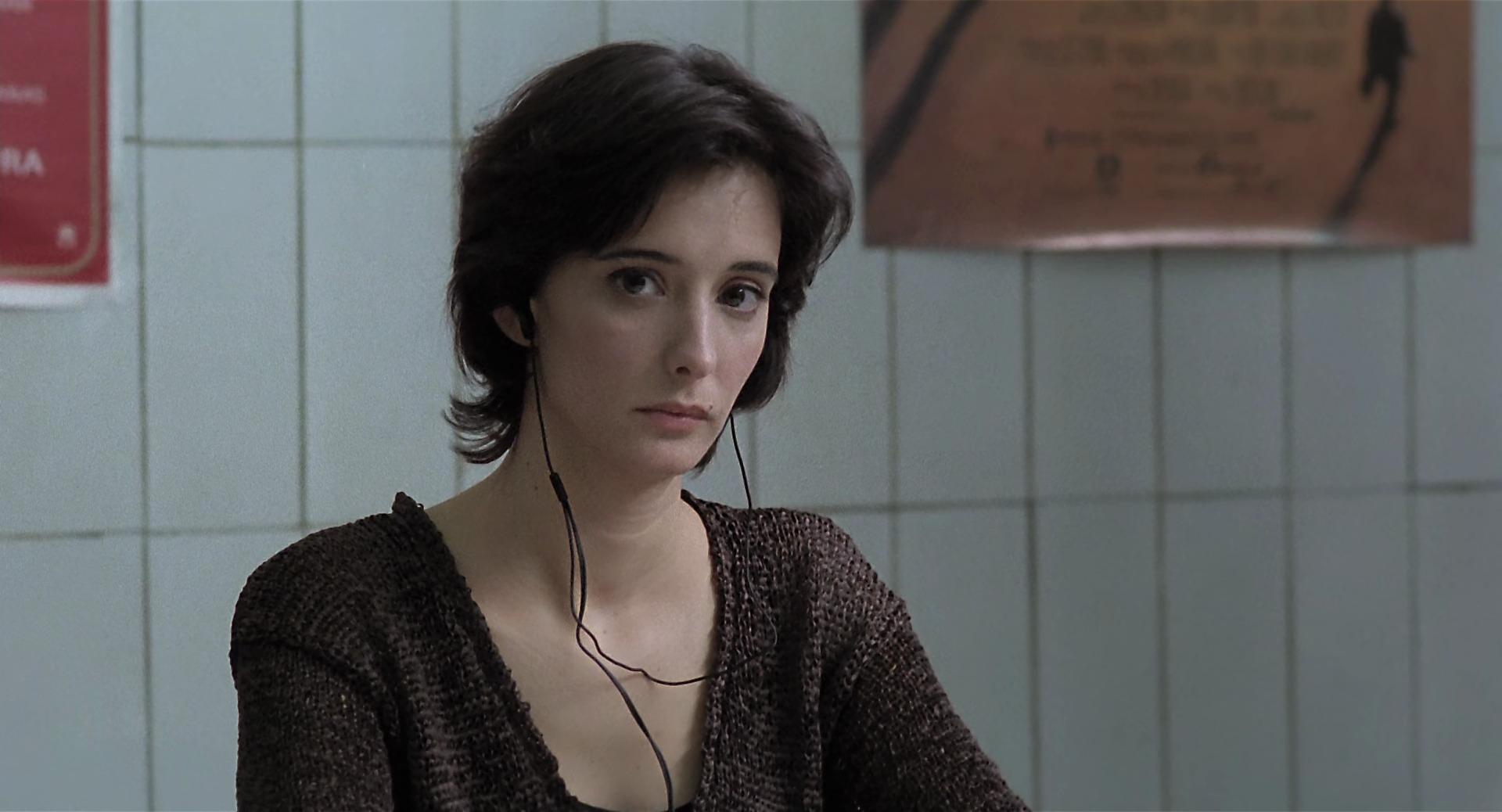
He was a bold, confident filmmaker from the outset, even if Thesis is far from a flawless experience. There is a scrappiness to the cinematography that overcomes its limitations, including the obvious budgetary ones. By proceeding as if he were not limited in the slightest, Amenábar makes it easy to overlook these impediments. It is also fitting that the work of a budding filmmaker should concern itself with a student specialising in cinema; Thesis explores film in a meta sense similar to how Scream (1996) did in the very same year. While Wes Craven’s film became a cultural milestone, Thesis has yet to enjoy its full time in the cinematic spotlight.
Amenábar’s film deserves more recognition for its exploration of the industry; indeed, it is perhaps more timely now than upon its release. Concerned with a snuff film that the protagonist’s professor uncovers on her behalf—and for which he is killed—the premise is perfectly suited to 21st-century anxieties regarding the dark web.
Even beyond this, stomach-churning gore videos are no longer just the stuff of urban legend; they are widely shared. For many teenage boys of my generation, watching ISIS beheadings or CCTV footage of brutal accidents was treated almost as a casual rite of passage. While such content remains horrifying, there is a gradual hardening of the stomach; the disturbance becomes less visceral over time.
This desensitisation is what fascinates Ángela. Preoccupied by violence and its depiction, she is so gripped by morbid curiosity that she willingly tumbles down every rabbit hole, no matter how dangerous. Most psychological thrillers benefit from “stupid” protagonists, but while Ángela makes some objectively dreadful decisions, she is no thoughtless waif. She is someone so fascinated by humanity’s darkest corners that she will stop at nothing to uncover them.
Like many who consume gruesome content, she cannot quite explain her interest. She only knows she is compelled to continue her inquiry, even after her professor’s death. The fatality might look accidental, but Ángela is wise enough to dismiss that. A killer is on the loose, and it all leads back to the tape in her possession: the brutal slaying of a young woman.
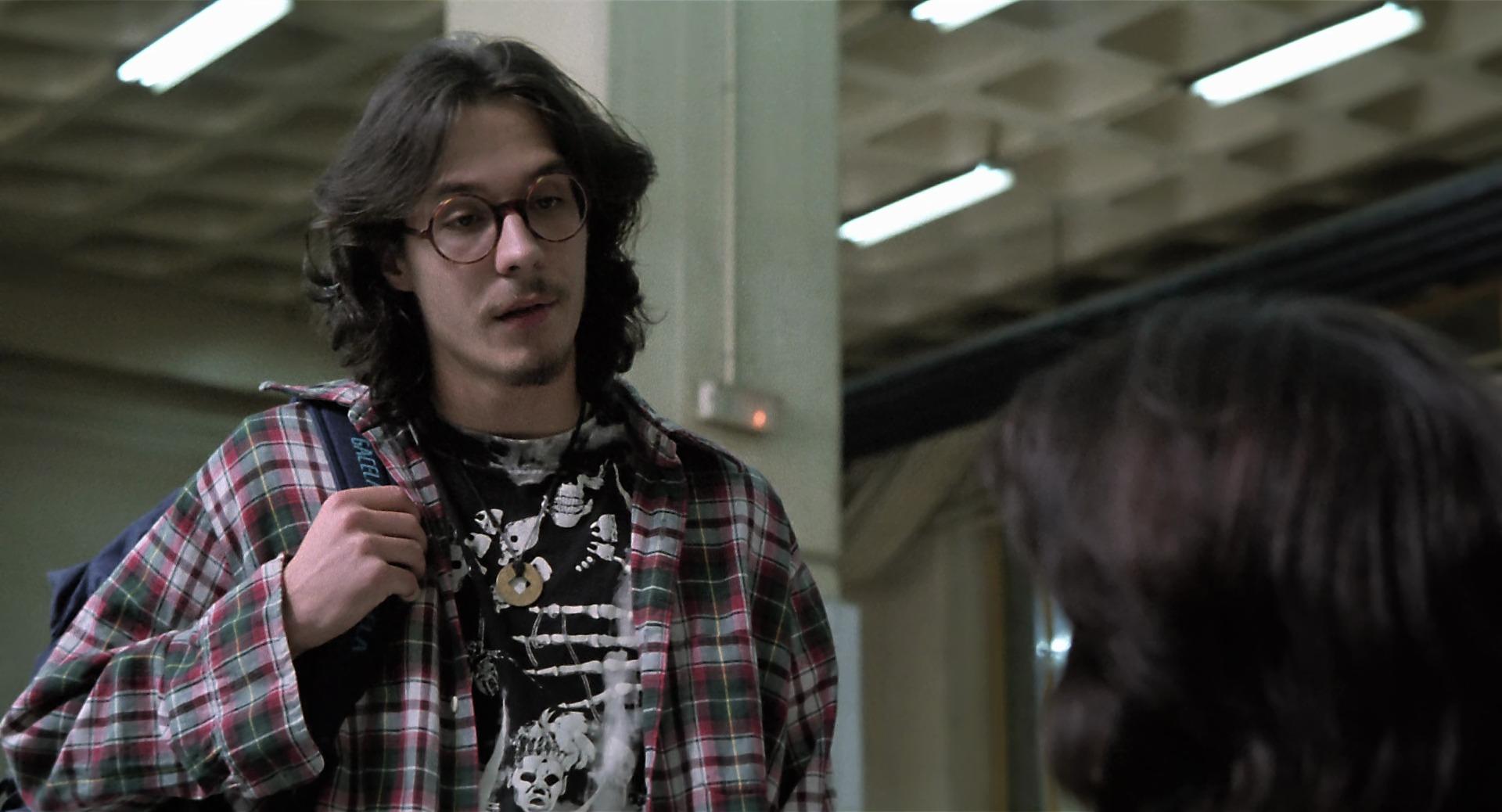
Chema (Fele Martínez), a creepy student who happily shows Ángela his collection of tapes in his serial-killer-esque apartment, is the obvious candidate for the villain. In fact, he is so obvious that one must question if the film could truly make him the killer, allowing his potential innocence to be toyed with. It’s a revolving door of suspicion in which Ángela is trapped.
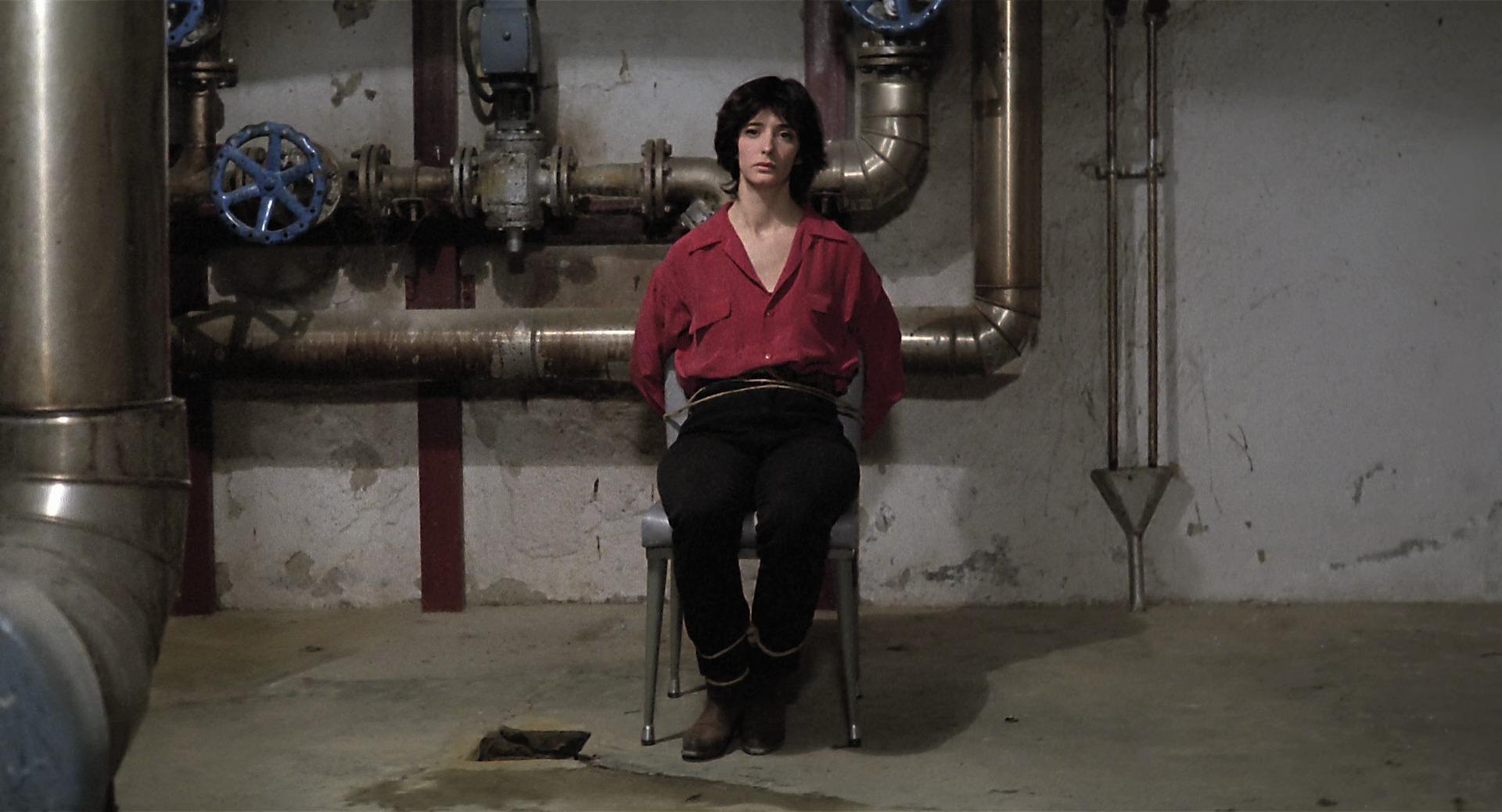
The other subject of her questioning, fellow student Bosco (Eduardo Noriega), appears confident and collected. Is this merely a mask for evil? Or is Ángela right to trust her gut and stay clear of the leering, aggressive Chema? As one Letterboxd reviewer noted, a surprising element of the film is a sequence where Chema takes a shower. He is a “human sleazeball”, especially in contrast to Bosco, who clearly has no issues attracting women.
Do these men want to sleep with Ángela or slay her? Neither she nor the viewer knows, but it’s certain that she will follow them to hell and back to find out. In many sequences, Ángela does everything in her power to jeopardise her safety, yet it doesn’t produce the hand-wringing annoyance common to generic horror movies. Anyone fascinated by cinema will be similarly enthralled by the darkness and the implications of the violence personified by the footage. There are sequences in Thesis where you may want to look away, but, like Ángela, you’re too fascinated to do so.
Consequently, the film is more of a thriller than horror, preying on curiosity rather than fear. For those of us who have never attempted a thesis, there is a dark humour in a protagonist essentially descending into hell to complete her studies. In fact, hell might as well be the thesis itself. The film defies the clinical conclusiveness Ángela seeks; as it should, for it is in the darkness that the most interesting curiosities lie.
The most prophetic aspect of Thesis is its portrayal of Chema as an “incel”. Much like snuff films, the growing presence of the internet has exacerbated this phenomenon. Usually, incels are straight men desperate for intimacy, yet they are more afflicted by their own self-defeating attitudes than the physical flaws they blame.
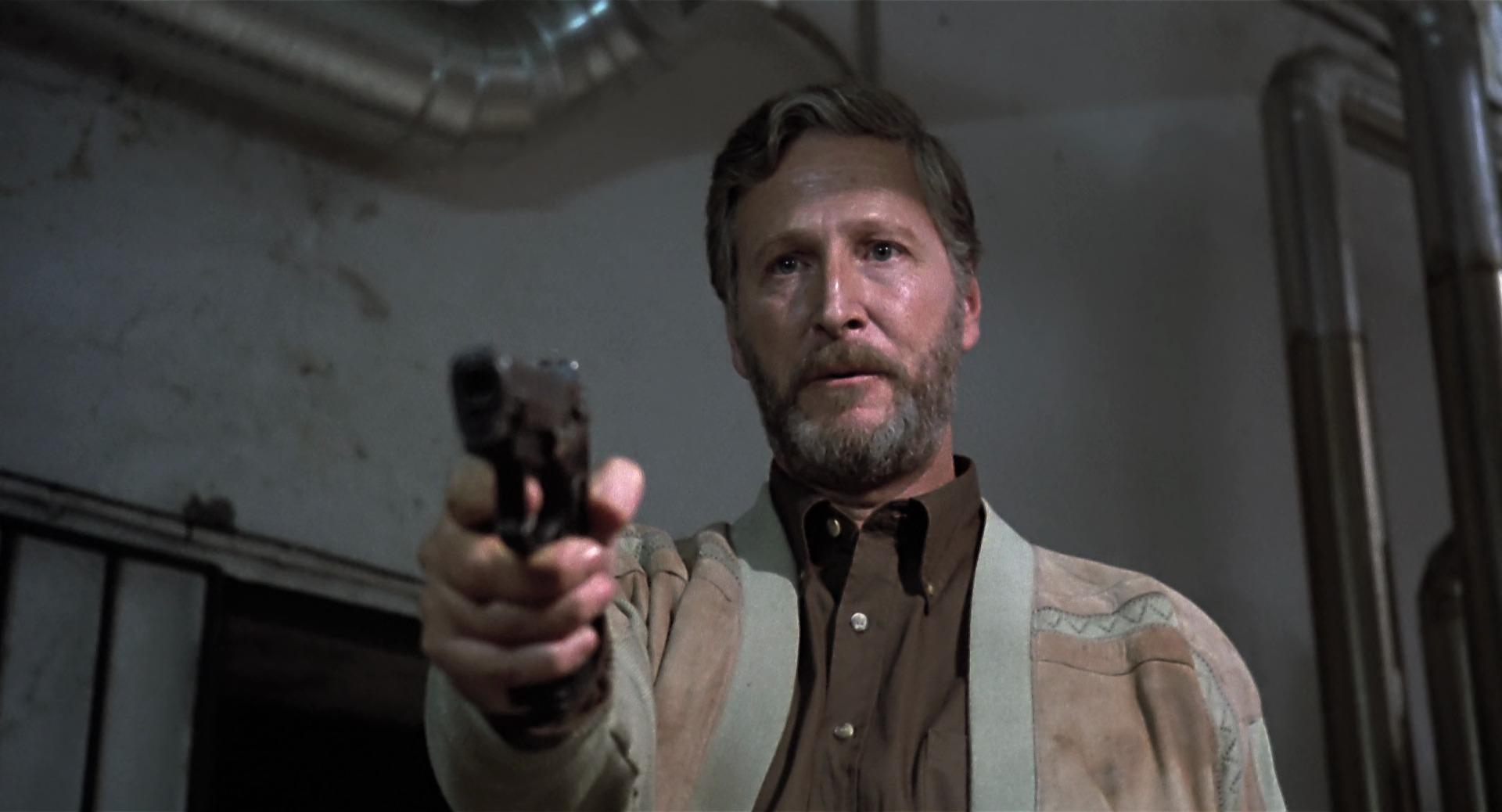
Chema constantly complains that Ángela is more interested in Bosco, but he speaks to her as if she were a piece of meat. He treats rejection as a foregone conclusion, effectively signing his own social death warrant.
It is a tragic but contemptible attitude, most evocative during a tense sequence where he and Ángela wander through rooms where the electricity has been cut. With no light to guide them, Ángela considers if she is about to be killed. All Chema can think about is his loneliness—specifically the kind he misattributes to a lack of casual sex.
The pair are constantly looking past one another. Ángela, despite her reckless decisions, proves far more grounded than Chema could ever hope to be. She is attracted to, pities, and fears both men, never knowing which response is correct. Sex and death are so closely interlinked in Thesis that you can never be sure which will occur next, though both feel inevitable.
Whenever the film’s footage is diegetic, it’s as if Thesis has become its own snuff film. While the minuscule budget isn’t always a joy to behold, it helps convey the impression that Ángela is always being watched. Whether in a crowded study hall or her own room, privacy is an illusion. Even if Thesis is imperfect, it constantly builds on this skin-crawling realisation, toying with the viewer with palpable glee.
SPAIN | 1996 | 125 MINUTES | 1.85:1 | COLOUR | SPANISH

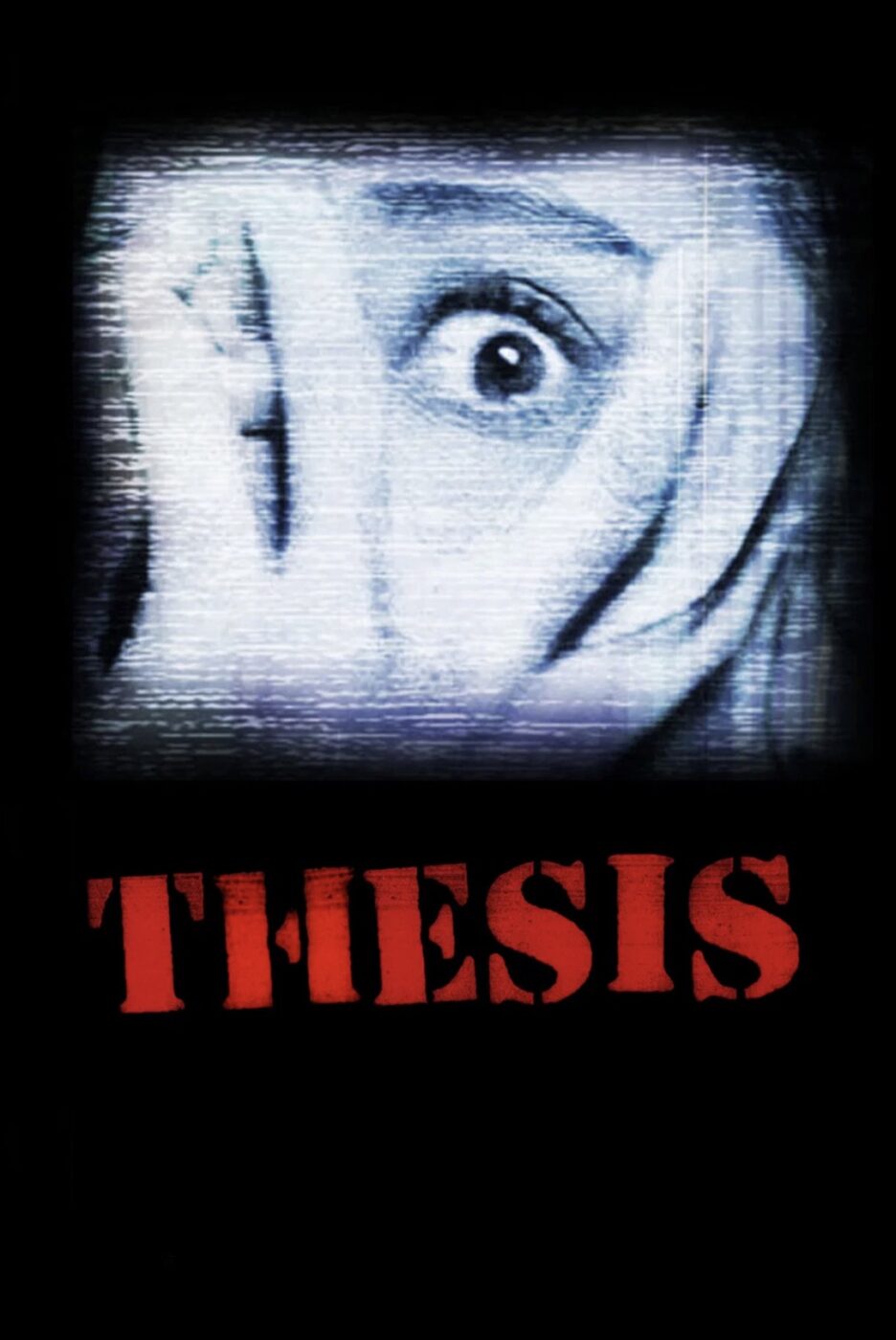
director: Alejandro Amenábar.
writer: Alejandro Amenábar (story by Alejandro Amenábar & Mateo Gil).
starring: Ana Torrent, Fele Martínez, Eduardo Noriega, Xabier Elorriaga, Miguel Picazo, Nieves Herranz, Rosa Campillo, Paco Hernández & Rosa Ávila.