MERCY (2026)
In the near future, a detective stands on trial accused of murdering his wife, with 90 minutes to prove his innocence to an advanced A.I.

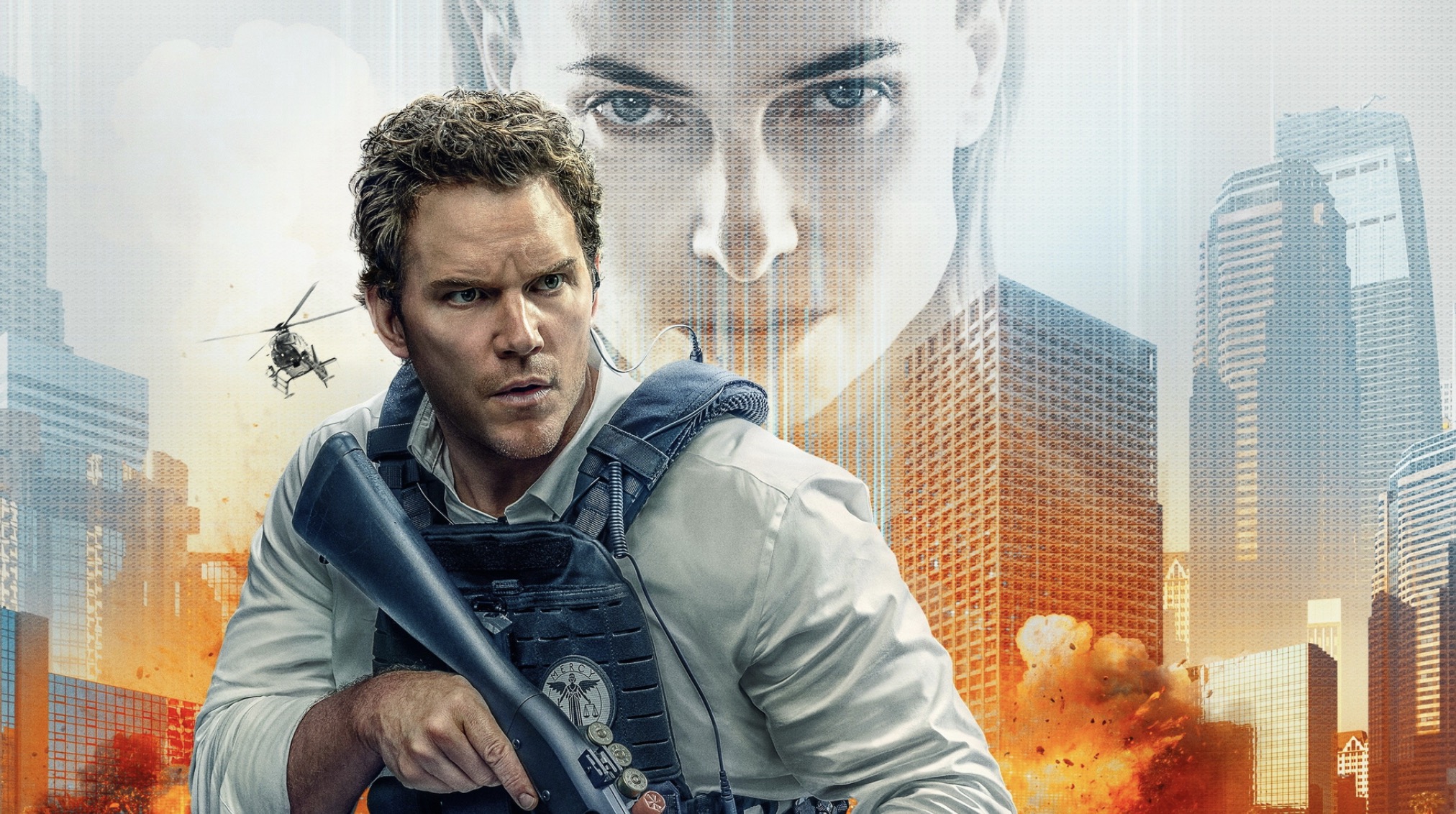

In the near future, a detective stands on trial accused of murdering his wife, with 90 minutes to prove his innocence to an advanced A.I.
Mercy is not a good film. Is it entertaining? Yes. Are the actors charismatic and likeable? For the most part, yes. But something is missing from this Screenlife courtroom drama, where the action unfolds via computer screens, mobile phones, and surveillance cameras. All the entertainment value, slick stunt work, and decent performances are completely undone by a pat ending that feels absurdly simplistic and a muddled message that plays more like pro-A.I. propaganda than a realistic, incisive critique of technology.
Ultimately, the audience is left with the impression that the filmmakers support A.I.-led trials where the accused are guilty until proven innocent. If that is truly the message director Timur Bekmambetov (Night Watch) and writer Marco van Belle are trying to push, it’s a prospect that should terrify the audience far more than any jump scare on screen.
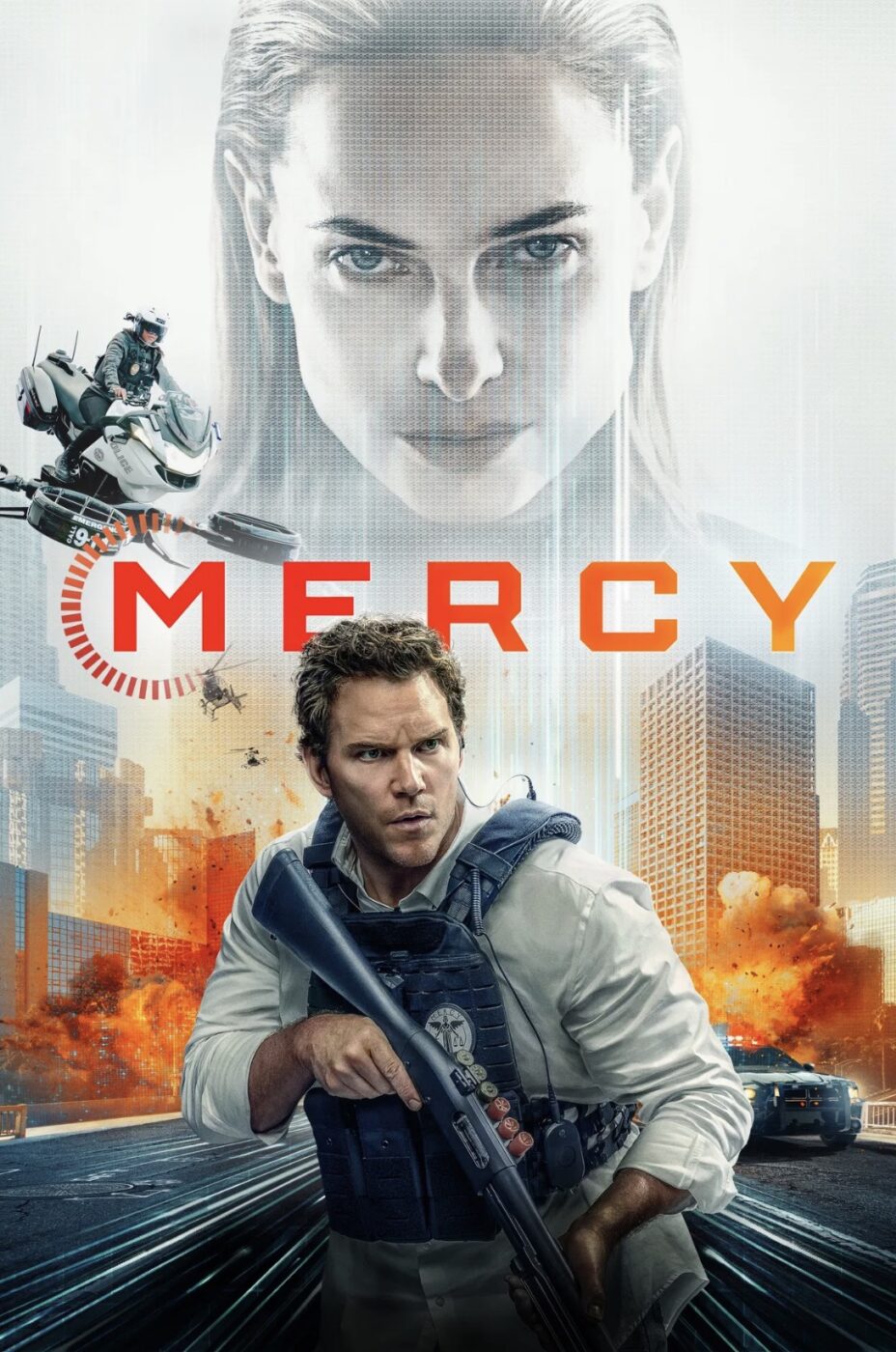
The premise is admittedly promising. We’re dropped into a near future where trials in a battle-torn Los Angeles are conducted by an A.I. system called “Mercy” and overseen by an A.I. avatar named Madox (Rebecca Ferguson). Detective Chris Raven (Chris Pratt) is on trial for the murder of his wife—a crime he has no recollection of and is certain he didn’t commit. He has 90 minutes to prove his innocence to the court or face execution in the chair where he sits strapped.
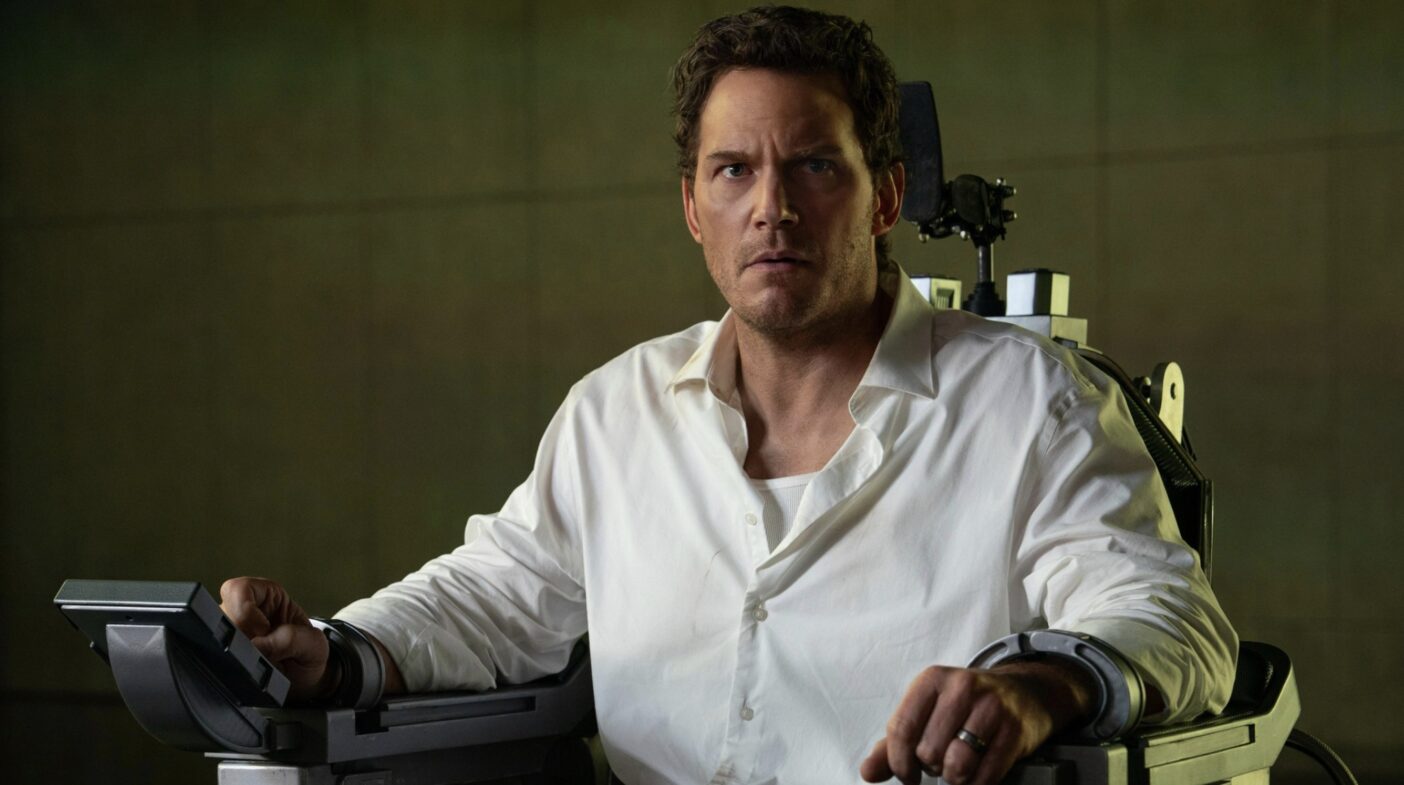
In the opening act, Raven’s desperation and confusion are palpable, as is his frustration at trying to make an algorithm understand human panic. The introductory commercial for the Mercy justice system is clever, echoing the Paul Verhoeven-style satire of RoboCop (1987) or Starship Troopers (1997), promising a sharp skewering of A.I. and the tech moguls who peddle it.
Unfortunately, that skewering never happens. Bekmambetov’s love affair with technology remains steadfast. The only criticism levelled at the A.I. justice system is that it might need a little “reprogramming”. Even then, there are barely any hints that a more human touch is necessary; Ferguson’s Madox quickly stops being a foil to Pratt’s character and begins to genuinely help him. No real explanation is offered for the algorithm’s complete turnaround from impartial observer to a hero determined to prove Raven’s innocence. It’s just one of many inconsistencies in the world Bekmambetov has conjured.
Following the Bekmambetov-produced disaster War of the Worlds (2025), the director has doubled down on his Screenlife technique, sticking two charismatic actors in a closed room while they watch the action unfold via police dash-cams, Zoom calls, and Instagram footage. While it’s slightly more bearable here than in his previous apocalyptic epic——this is a mystery, after all—it’s still jarring to watch talented actors reacting to video calls rather than real people. Pratt is a more versatile actor than Ice Cube and reacts realistically to the events on screen, which makes Mercy an easier watch. However, realistic reactions can’t hide the fact that the characters, and by extension the audience, are removed from the heart of the action.
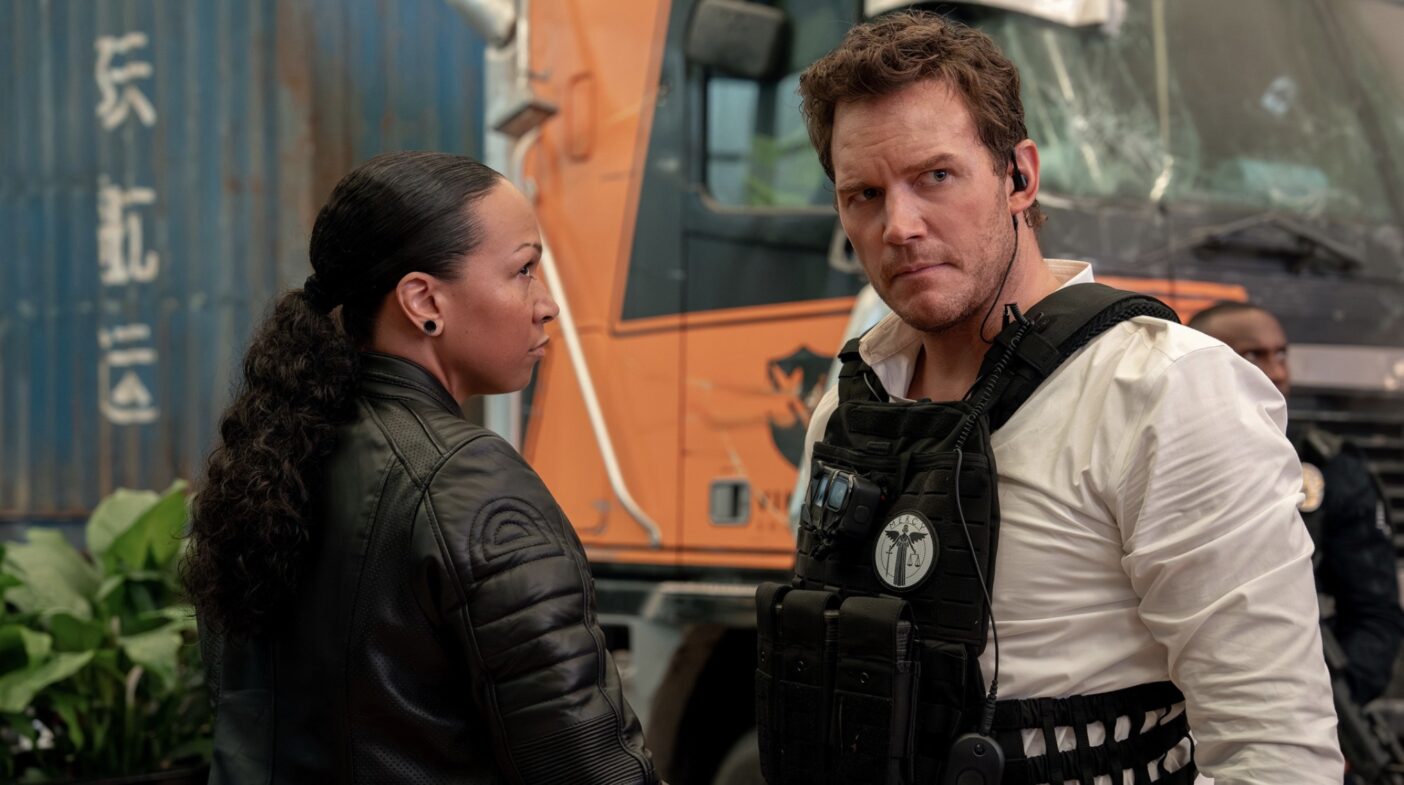
The film offers plenty of red herrings that hint at a more interesting revelation, but don’t get your hopes up; almost none of them come to fruition. Many details we’re led to believe are vital are dismissed and never mentioned again. The final reveal requires the audience to accept an entirely ridiculous proposition. Without giving too much away, suffice it to say that in a world where everyone is tracked and cameras are ubiquitous, there’s more than one way to prove a person’s location.
Ultimately, Bekmambetov’s tech-optimism is the film’s undoing. What should have been an incisive takedown of non-human systems—exploring justice over mercy and the need for nuance in the courtroom—is diluted by a desire to hand the hero every piece of evidence he needs. The film seems intent on making technology appear safe and its global application inevitable.
This is perhaps the most bothersome aspect of the film. While Raven and Madox rifle through private messages and family photos belonging to strangers, there’s no discussion of the ethical implications. It’s accepted as a matter of course that the protagonist should have access to any file or image that might be relevant, even if innocent people are harmed in the process.

Unlike The Accountant 2 (2025), which features a similar scene that poses a disturbing moral dilemma, Mercy doesn’t bat an eyelid at the violation of privacy. The most we get is a brief conversation between Raven and his daughter, Britt (Kylie Rogers), who is mildly upset that he accessed her private Instagram. The concern is immediately waved away to serve the plot. The Accountant 2 asks us how far we’re willing to go to solve a mystery; Mercy suggests that invading privacy is just part of the process.
Indeed, by the credits, we’re almost expected to cheer for the arrival of A.I. justice and welcome the ability to track everyone at all times. Perhaps we shouldn’t expect more from Bekmambetov, who is as much a tech mogul as he is a director. In his films, technology is a greater good to which humans must submit or be destroyed. While other artists see a dystopian nightmare, he sees the next step in evolution.
The underlying suggestion is that A.I. will eventually rule us, so why fight it? It’s smarter, faster, and has more data. Sure, there are “bugs”, but with the right programming to make it “humane”, there shouldn’t be a problem. Right?
This outlook is beyond naive. A.I. will never be human. You can program it as much as you like, but it won’t turn into Rebecca Ferguson. An algorithm cannot experience the world through love, hatred, fear, or joy. Bekmambetov positions this lack of emotion as a strength, but it’s actually A.I.’s greatest flaw. Tech moguls can create as much propaganda as they like, but human audiences won’t buy it. If there’s a saving grace for Mercy, it’s that critics have panned it and audiences are staying away. Hopefully, this failure will be enough to convince Amazon to scrap its Screenlife pipeline and treat generative A.I. as the threat to artistry that it is, rather than a divine saviour.
USA • RUSSIA | 2026 | 100 MINUTES | 2.20:1 | COLOUR | ENGLISH

director: Timur Bekmambetov.
writer: Marco van Belle.
starring: Chris Pratt, Rebecca Ferguson, Kali Reis, Annabelle Wallis, Chris Sullivan & Kylie Rogers.