LEFT-HANDED GIRL (2025)
A single mother and her two daughters relocate to Taipei to open a night market stall, each navigating the challenges of adapting to their new environment while striving to maintain family unity.


A single mother and her two daughters relocate to Taipei to open a night market stall, each navigating the challenges of adapting to their new environment while striving to maintain family unity.
Just over 20 years since her previous directorial feature, 2004’s Take Out (co-directed with Sean Baker), Shih-Ching Tsou has returned with her first ever solo effort as director. She had been working diligently behind the scenes as a producer on Baker’s other films since then, up to and including the critically acclaimed Anora (2024), but Left-Handed Girl / 左撇子女孩 still feels like a triumphant return to the silver screen. Producing credits are never so glamorous as directorial ones; casual cinemagoers, and even avid film fans, rarely look beyond the directors’ and writers’ names when figuring out who to credit for the successes or failures of films.
Tsou returns to her roots in more ways than one, employing low-budget means in her camerawork by shooting Left-Handed Girl on an iPhone. This was the same approach that Baker took with his feature Tangerine (2015), which Tsou produced and starred in, portraying an exasperated doughnut shop employee who is sick and tired of the antics of that film’s protagonists. While some shots here betray the scarcity of resources for this threadbare approach, some of the cinematography is so strong that I find it hard to fathom that a phone could have captured these shots. Perhaps this betrays my lack of understanding of modern technology more than I’d like to admit, and phones really are capable of producing movie magic. Whatever the case, Left-Handed Girl’s DIY process is never a barrier to emotional investment. On the contrary, it does wonders to draw us into the specificity of this world, which it’s clear Tsou has a natural grasp of.
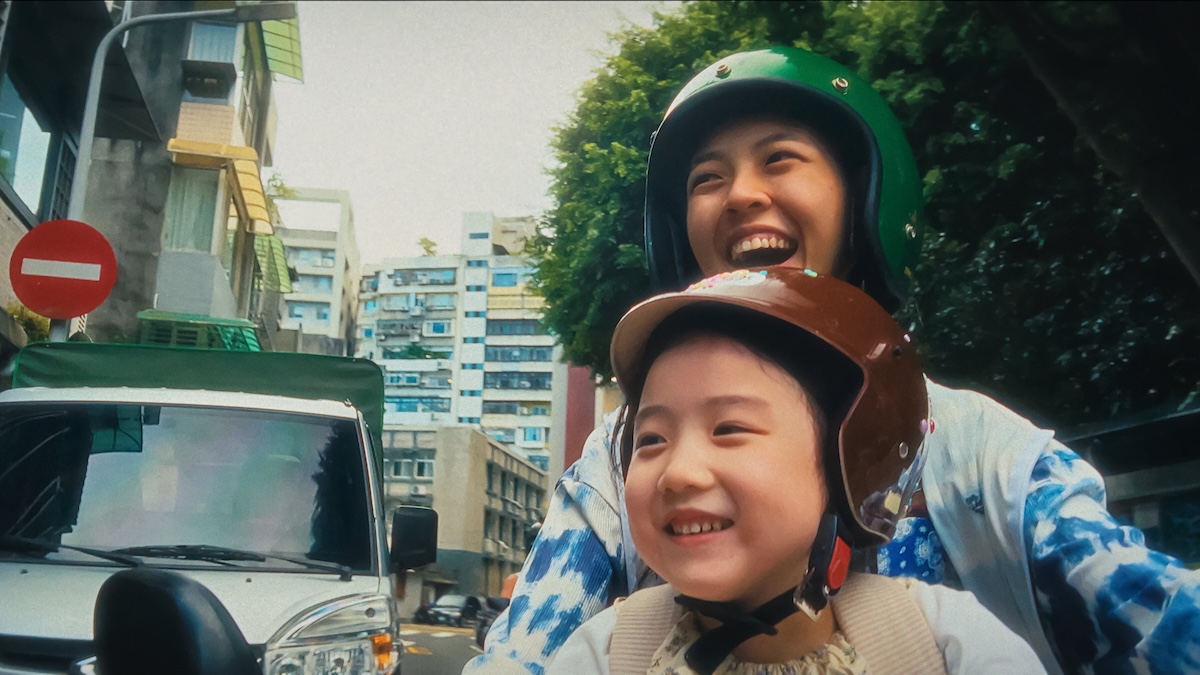
The other way she explores her roots with this film is by setting this family drama in Taiwan, her country of birth. Left-Handed Girl follows the exploits of one family, consisting of matriarch Shu-Fen (Janel Tsai) and her two daughters, I-Ann (Ma Shi-yuan) and I-Jing (Nina Ye), who have moved to Taipei to set up a noodle stand. While Shu-Fen struggles to stay afloat financially, I-Ann tries to navigate her father’s sickness, her casual relationship with her boss, and a desire to make something of her life. These are earnest struggles packaged in a brash, antagonistic young woman who doesn’t try to hide that she feels like she’s bearing the world on her shoulders (but is quick to conceal her tears, especially as life keeps finding a way to unveil old wounds and form new ones).
If that sounds bleak to the point of despairing, then worry not, since Left-Handed Girl balances comedy and drama with such ease that it’s a joy to watch even as you feel your stress levels steadily rising. It follows an enjoyable dramatic structure without feeling the need to adhere to it strictly, exploring the messiness of these characters’ lives in forensic detail. This is a hallmark of Baker’s films, but while his presence can certainly be found in this project (not least because he co-wrote it with Tsou back in 2010), this is not simply a Sean Baker imitation.

Left-Handed Girl might be brash, but never so much as Baker’s films, drilling down into the cultural and interpersonal specificity of these characters’ lives in favour of revelling in further audaciousness. That said, the specifics of Shu-Fen’s financial burden are a bit of a mystery, given the family unit’s bleak prospects in spite of I-Ann’s regular work at a betel nut stand. Whether I-Ann supplements her family’s income isn’t exactly clear, such that you can never tell how strapped for cash this family really is.
This is a family drama first and foremost, not a celebration of Shu-Fen’s industriousness or hard work. Her business is an afterthought aside from money troubles. The customers are strangers, and there’s no joy in the simple pleasures of making good food and serving it to members of the general public. This noodle stand isn’t a typical movie business; it’s a stand like any other, dwarfed by the dozens surrounding it. One nearby stand, occupied by a trade merchant of anything and everything, Johnny (Teng-Hui Huang), presents a budding relationship opportunity between the smitten, tireless Johnny and the overworked, weary Shu-Fen. It’s severely underdeveloped, yet sweet, funny, and awkward all the same.
Cringe comedy is particularly excellent here, especially when it intersects with icy tension so pronounced you can’t help but pity everyone involved (well, almost everyone; some side characters are totally contemptible). Whether it’s these performances or the film’s camerawork, Tsou’s greatest strength is in making this world feel as lived-in as possible. You are right there on the front lines with these characters, regardless of whether their dilemmas make you laugh or experience bitter pangs in your heart (often the two emotional experiences are entwined).
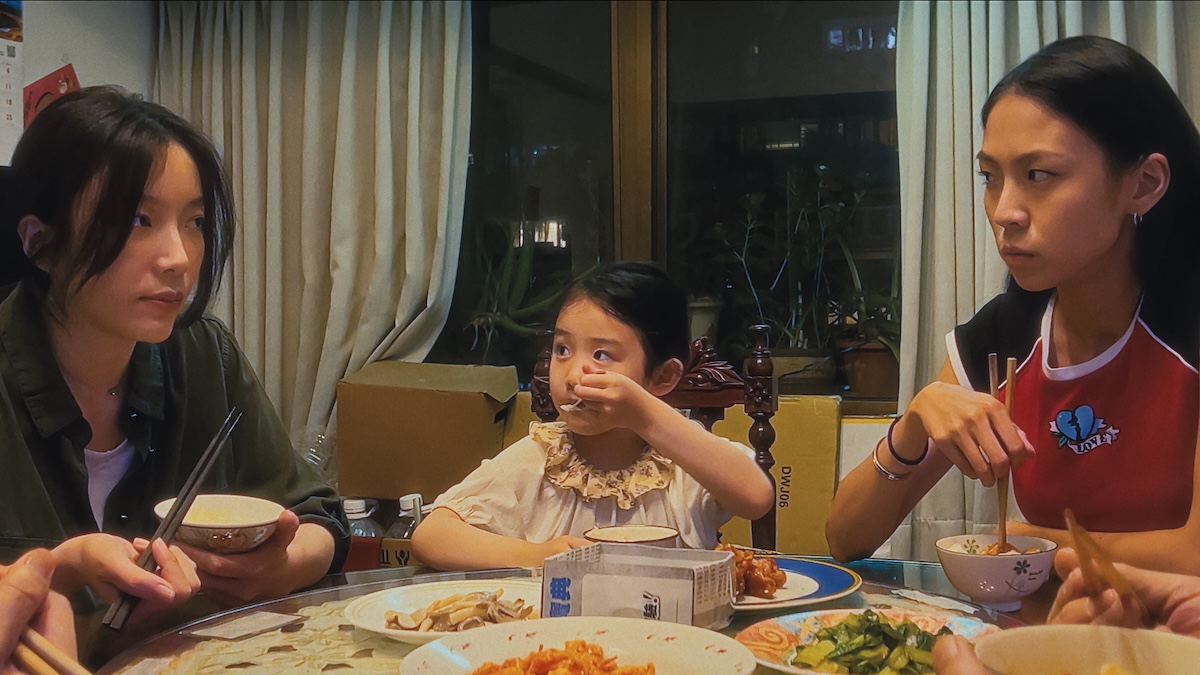
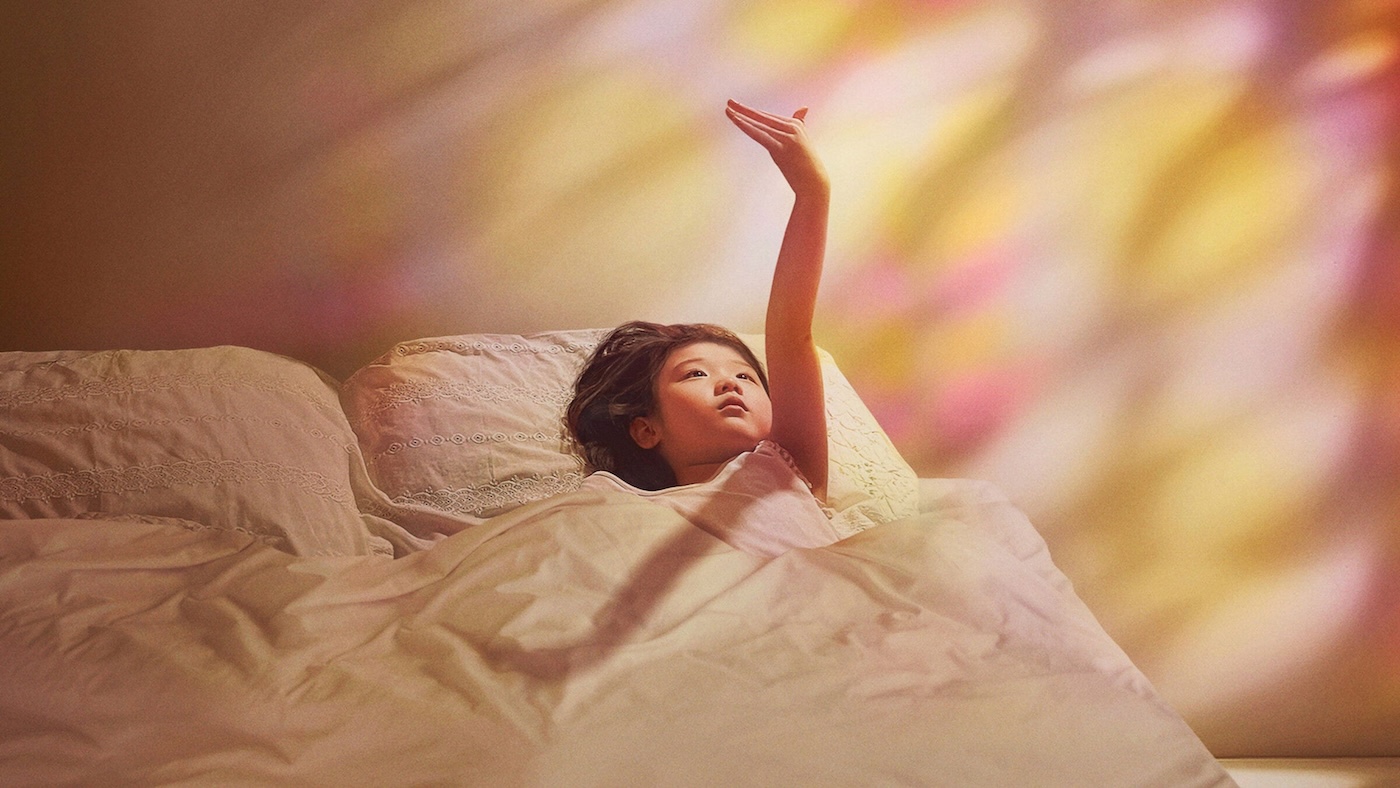
Even with this in mind, each storyline is afforded the respect it deserves. I-Jing is adorable, but her cuteness is never used as subterfuge in lieu of authentic characterisation. Tsou is just as adept as her frequent collaborator in drawing out an excellent performance from a child actor, giving Ye space to draw out an authentic portrayal, while Left-Handed Girl’s energetic, brisk camerawork puts I-Jing centre stage whenever we follow her portion of the multi-story plot.
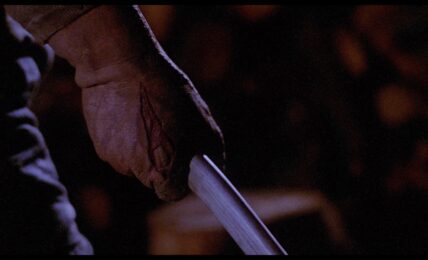
I-Jing, like her sister and mother, is lost within her own world, having been led by her old-fashioned grandfather to believe that one’s left hand is controlled by the devil. His efforts to get her to mainly use her right hand are successful. But unbeknownst to him or anyone else around I-Jing, she’s spiralling, convinced that stealing—or any other kind of wrongdoing—is controlled by her corrupted left hand. She even considers chopping it off for good in a scene which inspires both laughter and trepidation. But this is true of so many of the sequences here, where you can never quite tell what the film’s tonal shifts will make of these protagonists’ fate.

Between this family unit and their extended family, loved ones are continually cropping up in one another’s lives, but they are enmeshed in only the most superficial of ways. Anything real or significant is concealed or batted away, hidden in private corners that only we are privy to. Though appreciable, Left-Handed Girl isn’t always invigorating; as the movie appears to be winding down to a conventional ending, its simple sweetness no longer convinces, let alone invigorates. Luckily, that notion is turned on its head completely in an extended party sequence late in the film, which in turn dismantles one’s perception of the entire film.
Much will inevitably be made of Baker’s contribution to Left-Handed Girl, since his influence is unmistakable, but it appears Tsou is just as inspired by Taiwanese auteurs. Edward Yang’s Yi Yi (2000), from its multiple storylines across different generations to its bittersweet tone, appears to be a profound influence. While Left-Handed Girl can’t match the melancholy, wistful notes in Yang’s masterwork, it’s a brash yet sensitive exploration of a superficially connected, isolating environment. It’s also a promising step forward for a spirited director with a voice that cries out to be heard in future films.
TAIWAN • USA • UK • FRANCE | 2025 | 109 MINUTES | 2.35:1 | COLOUR | MANDARIN • TAIWANESE HOKKIEN

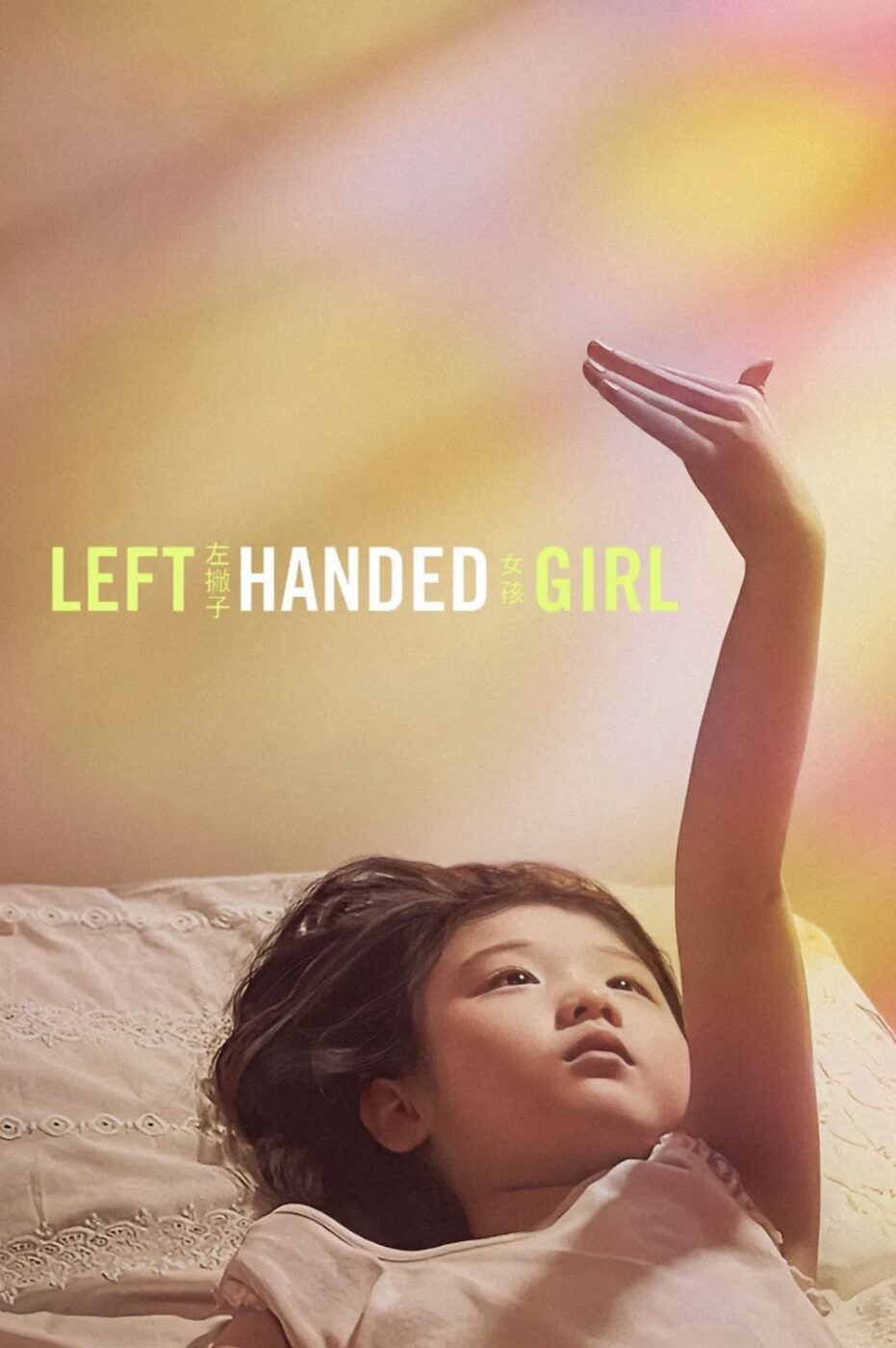
director: Shih-Ching Tsou.
writers: Shih-Ching Tsou & Sean Baker.
starring: Janel Tsai, Shih-Yuan Ma, Nina Ye, Brando Huang, Akio Chen, Xin-Yan Chao & Teng-Hung Hsia.