EARLY SPRING (1956)
A young man and his wife struggle within the confines of their passionless relationship while he has an extramarital romance.

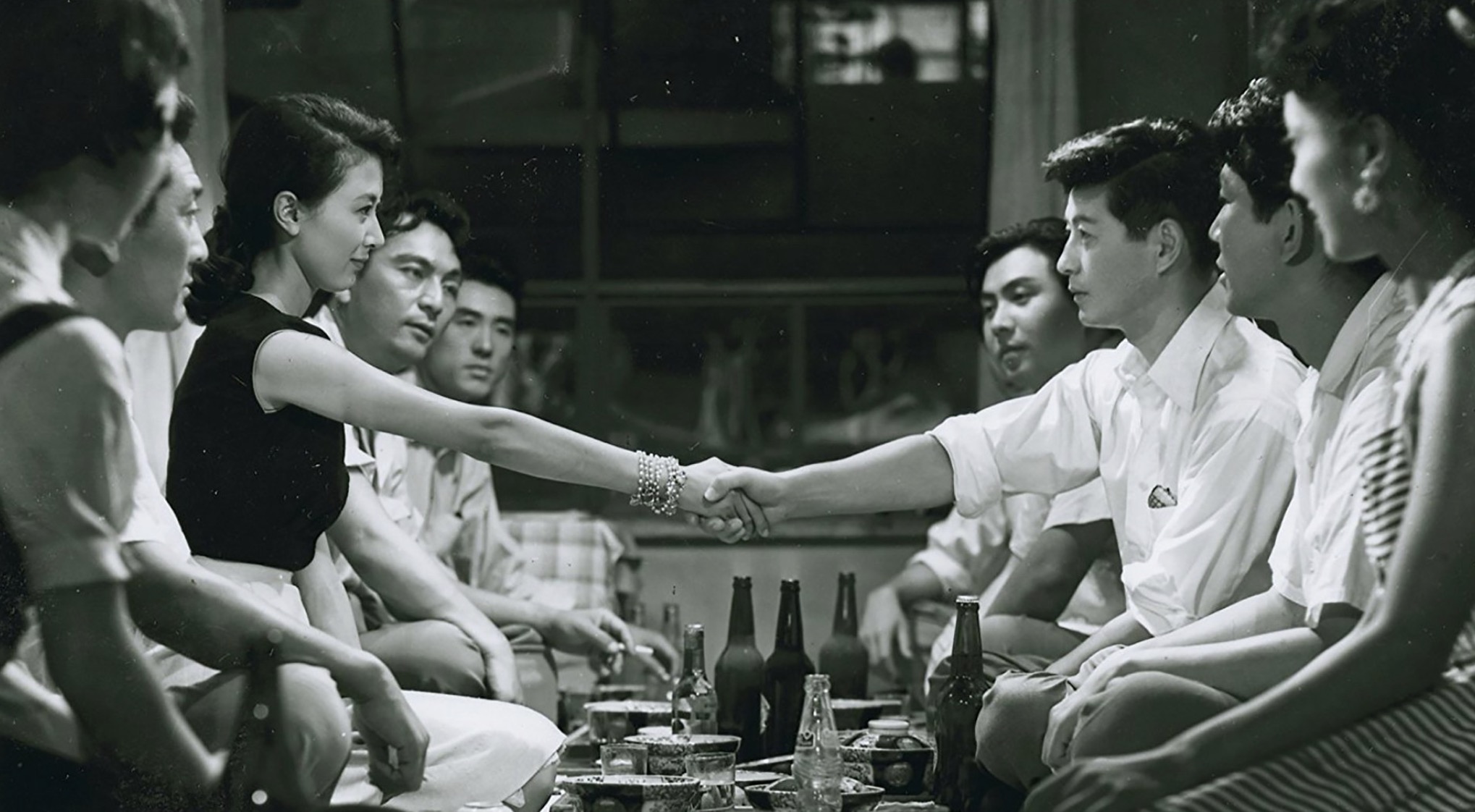

A young man and his wife struggle within the confines of their passionless relationship while he has an extramarital romance.
Whenever a creative work achieves monumental social success, its successors are almost inevitably destined to live in its shadow. The best an artist can do is produce another work of equal stature to avoid being overlooked; yet even that is often insufficient, as many audiences simply refuse to acknowledge a second form of greatness. Yasujirō Ozu’s Early Spring / 早春 / Sôshun is a prime example. Released just three years after the universally acclaimed Tokyo Story (1953), it’s remained almost entirely overshadowed.
While the film is rarely discussed by fans, it more than lives up to Ozu’s reputation. It is a compelling piece that explores the complexities of occupational and urban advancement born from the ashes of war, the sense of community within that progress, and the creeping ennui that can drive an individual towards immorality.
Like Tokyo Story, Early Spring depicts Tokyo’s immense post-war recovery. However, rather than focusing on the frantic pace of life and the subsequent neglect of family, it examines the burgeoning culture of white-collar work. This sector had become increasingly popular at the time; men of all ages are seen sporting the same uniform of white, short-sleeved shirts and pleated trousers.
They wake at dawn, eat, and walk collectively to the station to commute. This surge in “high-paying” work set tongues wagging across Japan, filling social discourse with praise for the “salaryman” life. It reached a point where blue-collar workers looked upon these roles with envy, despite their own labour offering views of lush greenery and the natural world.
As the proverb goes, “the grass is always greener,” but Ozu reveals the bleak reality of these white-collar roles: they are apathetic and amoral. To these corporations, a worker is merely a number—expandable, replaceable, and easily moved. Accepting a new position often necessitates a transfer across the country, frequently with little to no notice. To refuse is to see the opportunity handed immediately to someone else.
Ironically, these transfers are not always promotions. One might be expected to uproot their entire life and family for the same pay, simply because it suits the company’s logistics. It is a sad, absurd state of affairs—surpassed only by the tragedy of a worker who, after thirty years of service, finds their pension insufficient and is forced back into the workforce to make ends meet.
Ozu pulls no punches in Early Spring. It’s clear he isn’t a fan of the avaricious, corporate attitude of Japanese office life, nor the ever-increasing presence of capitalism. He shows a distinct respect for blue-collar workers, particularly in a scene between Shoji Sugiyama (Ryo Ikebe) and two war compatriots. While I may be biased because I work in this sector myself, blue-collar work feels more honest by comparison.
His disdain is profound. Ozu’s critique of white-collar business fits perfectly within his signature cinematic style: slow, meditative conversations that dance around the film’s themes, and events that highlight the dichotomy between tradition and progress—all inspired by the aesthetic of Noh theatre.
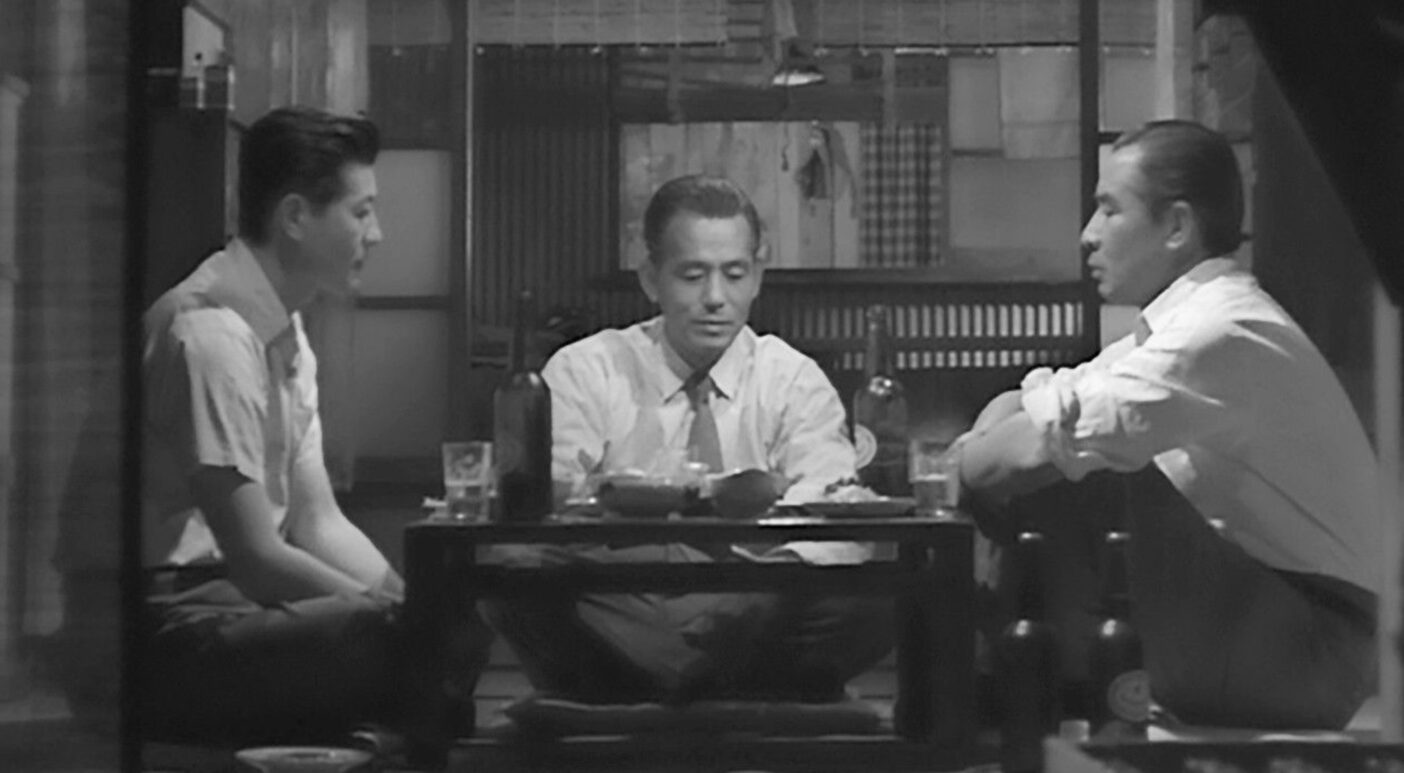
The nature of office work involves sharing space with a vast number of people; the “grunts” of the business all work in one large room. This creates a company culture that parallels familial bonds. Early Spring focuses heavily on these platonic communities that foster voyeurism and gossip. Colleagues constantly dissect the lives of others: from cruel claims that a worker might be faking tuberculosis to whispers about two colleagues spending suspicious amounts of time together. The latter forms the film’s dramatic core.
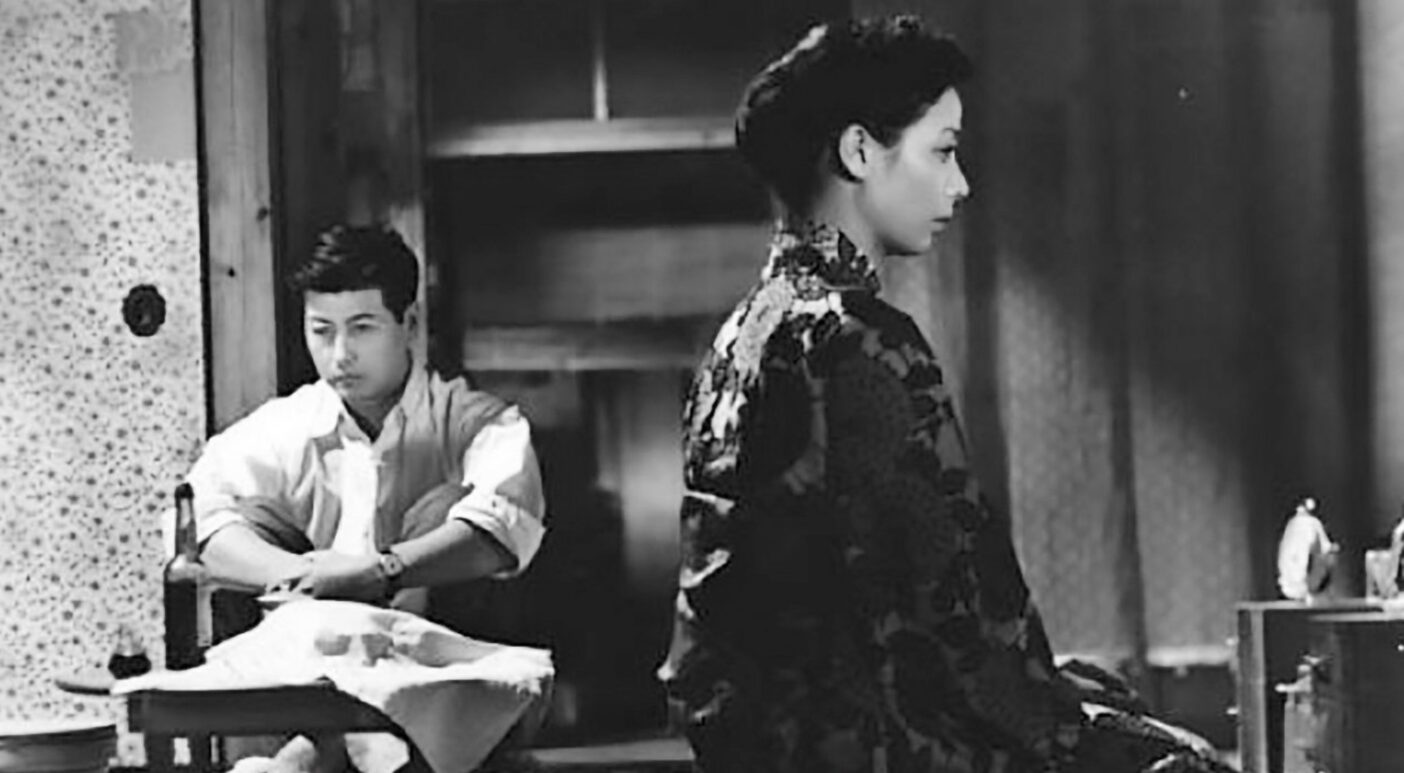
I don’t condone infidelity—it betrays trust and leads to immense psychological strain—but I recognise why people indulge in it: they’re unhappy. What I love about Early Spring is that the reason Shoji and Masako (Chikage Awashima) are unhappy in their marriage isn’t explicitly stated. In typical Ozu fashion, it’s alluded to, and the point of origin is devastating.
A couple facing such absurdity would usually end in divorce. However, Japan is often viewed as a monolithic nation of immutable values—loyalty, honour, and respect for family and country. Consequently, they stay together to avoid dishonouring themselves. This adherence to culture is a fallacy, as Shoji tries to have his cake and eat it too, his eyes eventually focusing on a petite, youthful woman.
Like much of Ozu’s filmography, Early Spring is a slow-burn that builds tension between the central couple. The foundation is laid by everyone connected to Shoji, Masako, and Chiyo “Goldfish” (Keiko Kishi). It’s well-paced, natural, and compelling, thanks to the multifaceted writing of Ozu and Noda.
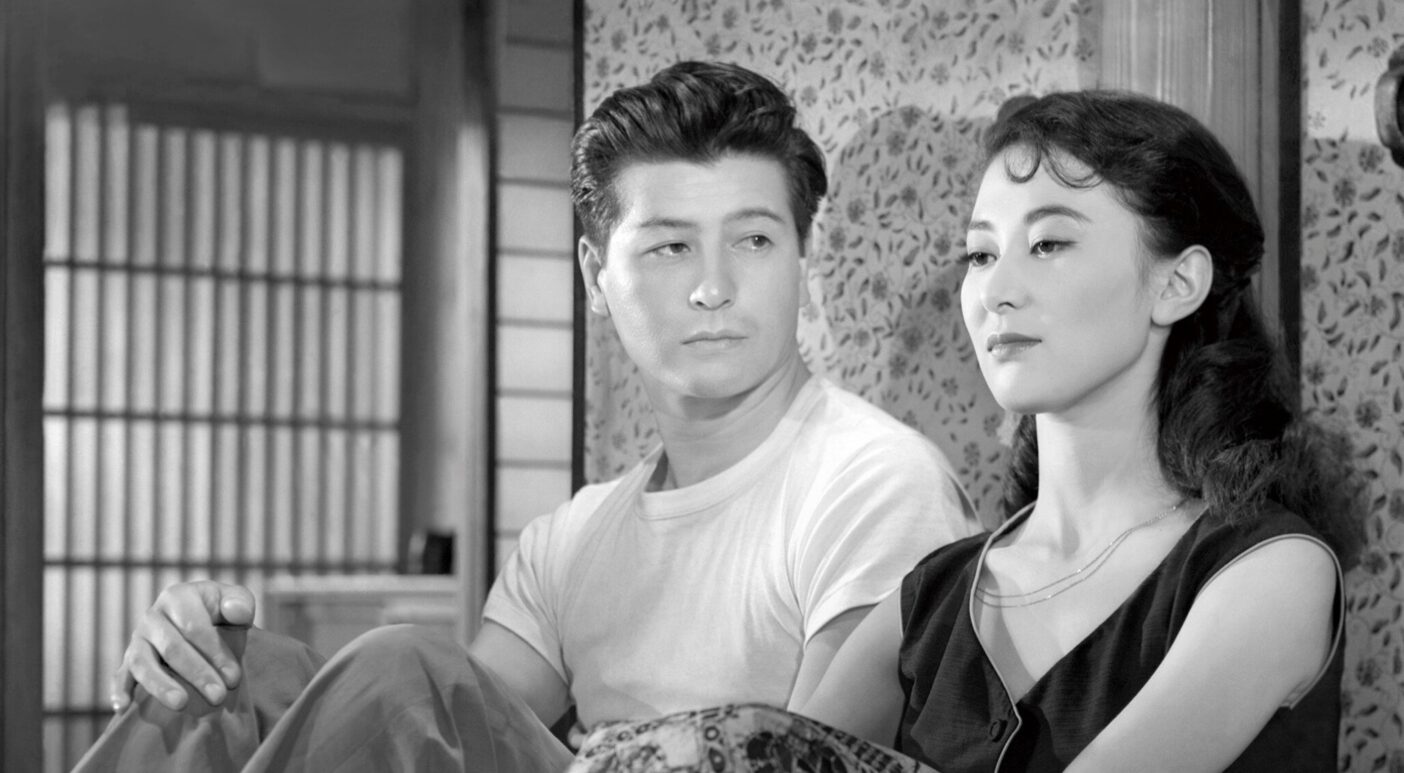
Unlike other Ozu films, Early Spring leans heavily into pessimism. Ozu was always open about the confines of traditionalism and the inevitability of progress, yet here he suggests that some progress—specifically capitalism—isn’t always good. Sometimes, progress leads to suffering that branches outward like a disease.
This illness is one of the mind, affecting autonomy and judgment. It isn’t just contagious; its symptoms are severe. When someone is afflicted with a physical ailment like tuberculosis—a historic illness in Japan—they find themselves wishing they were back at work with their friends. It’s parodic, yet deeply sad.
Ozu highlights this through the expert use of chiaroscuro, using inky shadows and bright lights to accentuate the drama. It’s beautiful to look at, especially given the cinematographic prowess of Yuharu Atsuta. Yet, despite everything Ozu gets right, I don’t enjoy the aftertaste of the finale.
The ending isn’t “bad”—it doesn’t ruin the quality of a film that is nearly as strong as Ozu’s celebrated masterpieces—but it does impact my enjoyment. The conclusion works narratively and aligns with cultural expectations, but after such a heavy tilt into pessimism, the ending feels at odds with the film’s profundity. It doesn’t feel like a natural payoff. It parallels moments in The Flavor of Green Tea Over Rice (1952), but that film’s lighter tone made such a conclusion more appropriate.
Early Spring is a masterful film that explores thematic waters Ozu rarely touched. However, not everything needs a comforting note. Sometimes, a downbeat ending is a better fit for a somber film than one everyone can cheerfully swallow. Candy isn’t always the right choice after a heavy meal; sometimes you need something decadent with flavours that last.
JAPAN | 1956 | 144 MINUTES | 1.37:1 | BLACK & WHITE | JAPANESE

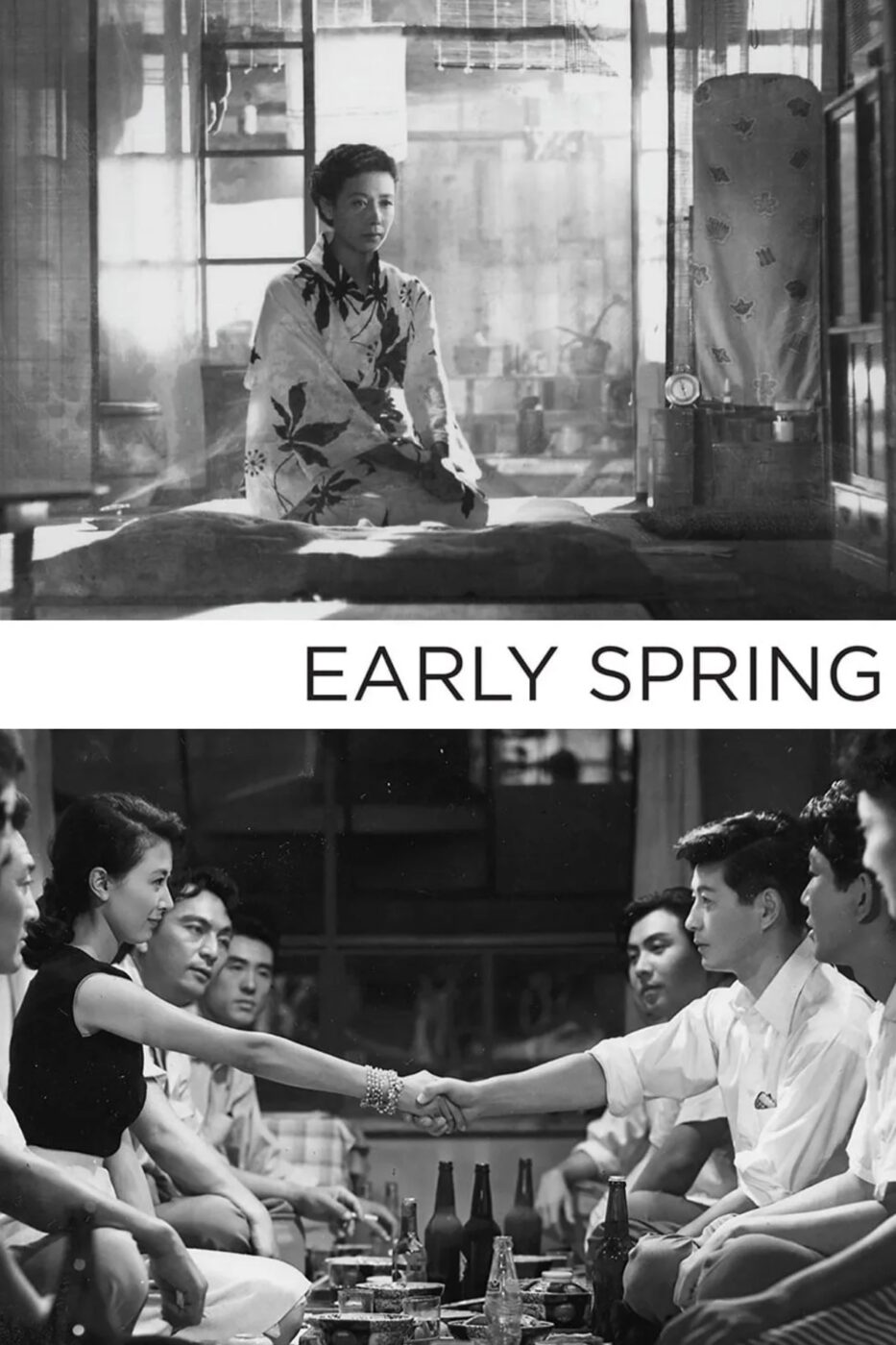
director: Yasujirō Ozu.
writers: Kōgo Noda & Yasujirō Ozu.
starring: Chikage Awashima, Ryō Ikebe, Keiko Kishi, Teiji Takahashi, Chishū Ryū, So Yamamura & Haruko Sugimura.